Book Review: The Elopement by Gill Hornby – an engaging story inspired by Jane Austen’s family

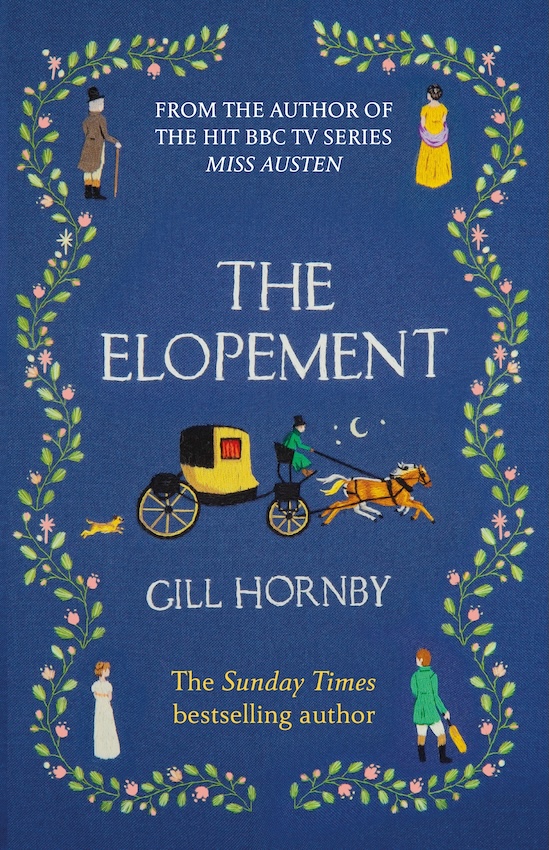
I’d already enjoyed Gill Hornby’s earlier book, Miss Austen, a novel about Cassandra, Jane Austen’s sister. But there’s obviously a lot more to tell, for the Austen’s are an interesting bunch. The Elopement is the third book about the family by Hornby, picking up their story with Fanny Knight, Jane Austen’s favourite niece, and Mary Dorothea, Fanny’s step-daughter.

This is a story of country life among the gentry in the early 1800s, large families and the rocky path to love. It begins with Fanny, in her late twenties, feeling as if she has missed the marriage boat, having spent many years mothering her younger brothers and sisters. When she is courted by an older neighbour, the politically ambitious Sir Edward Knatchbull, she accepts his hand.

Married life at Hatch, the Knatchbull manor house, includes five motherless children but somehow Fanny never quite takes a shine to the Knatchbull offspring, particularly the eldest, Mary Dorothea, the only girl. The boys get sent off to school from a young age, so are barely there. Fanny and Sir Edward contrive to have Mary educated with Fanny’s younger siblings at Godmersham Park, where Mary Dorothea becomes a firm favourite.

The story flips mostly between the two female characters: Fanny’s marriage to the pompous, devout and domineering Sir Edward, with whom she finds contentment, her avoidance of maternal responsibility for his children, her own struggles to be a mother; and Mary Dorothea, who seems like two – people quietly inoffensive with Fanny, and fun-loving and gossipy with Fanny’s sisters, particularly Cassie. As Mary and Cassie grow up, they bloom and go to balls – there’s a hint of a Jane Austen novel here, with suitors appearing in the wings. But no one is ever good enough to please everybody, particularly parents.

Sir Edward finds the young male Knights flippant and too fun-loving, particularly the eldest, Ned. So of course, Mary finds them charming, Ned in particular. The story follows the problems of making a match agreed on by the girls’ families. Not just Mary and Cassie but also Marianne, who ends up stepping in as a mother figure for her younger siblings after Fanny’s marriage.

It all gets a bit fraught for the young couple at the centre of the story, Sir Edward remaining intransigent, while Fanny is caught in the middle. A dutiful wife, she’s also strangely unaware of the secret trysts going on under her nose. You want to like Fanny, who means well, but it’s hard to see in her the niece of Jane Austen. She must have been brought up on the famous stories, and the recurring theme of the difficult path to love. Couldn’t she have a little more sympathy? More mettle?

I enjoyed The Elopement, but although the story is full of drama and conflict, the plot is a little slow-moving at times, sticking closely, it would seem, to events noted in Fanny’s collection of diaries. But you do get a good sense of the time, particularly of a woman’s lot; whether as wife, unmarried and useful relative, or as a mother. Hornby notes that giving birth was like Russian roulette, with dying in childbirth a distinct possibility even after a number of healthy births. The Austen’s were particularly fecund, producing endless large families – ample opportunity for losing a mother.

With the recent Jane Austen commemorations – 250 years since Jane Austen’s birth on 16 December – it was a good time to revisit her world. I enjoyed meeting Cassandra Austen again, still stepping in with wisdom and caregiving, an ageing mother at home, nieces requiring guidance, to say nothing of visits to the deserving poor. Gill Hornby does a brilliant job of capturing the tone of an Austen novel, and the book has the ring of authenticity, reflecting solid research. I’ve still Godmersham Park to read by Hornby, and wonder if there will be more Austen stories to look forward to after that. The Elopement is a four-star read from me.

Book Review: June in the Garden by Eleanor Wilde – a heartwarming story with a memorable protagonist

I’d heard such a lot of good things about this novel, particularly about the wonderful character of June Wilson – her unique point of view, her determination. June in the Garden is told from June’s perspective, describing the weeks following the death of her mother and her bid to find her biological father. At 22, she is bright and has a good eye for details, but is unable to filter out what matters or socialise well with others. When things are stressful, everything goes dark, and she loses it, not always able to remember what happened afterwards.

What June is really good at is gardening. So when her social worker tells her she must leave her council house in Scotland and offers her a bleak flat without a garden, or a hostel, June packs a bag and heads for the station. A letter with an address is all she has to go on, but there will be a few missteps along the way, including a ride in a police car, before she finally makes it to her father’s Notting Hill address. She’s not exactly welcomed here, but sneaks back to take up residence in the garden shed. Here at least she has an opportunity to be in her element – a rambling, if poorly maintained, garden.

The story follows June’s little adventures as she settles in and makes do with very little, the people she meets, including her young stepbrother and his dog, and her attempts to understand the common interactions of others, but which are often beguiling to June. Slowly she begins to make sense of this change in her life, particularly how things stand for her father and his second family. Will she ever win them over?

It all adds up to a charming feel-good story, with a brilliant neurodiverse character. We get June’s need for routine, her regimen of meals at a particular time each day, part of what keeps that crippling anxiety at bay. June still misses her mother, so she’s dealing with grief as well. But Mother is never far away, her urn safely in her bag or on a shelf in the shed. I loved her developing relationship with her stepbrother, twelve-year-old Henry, a sad and lonely boy, but someone she has to learn to trust.

But while the book is sympathetic and sensitive, it is not at all morose because June is such a triumph, so determined and honest. This adds to the humour of the story – not that we are laughing at June, but more at the way other people obfuscate, hiding their motives and feelings behind a facade of manners. June just blows a hole right through all that. And then there’s the gardens, particularly the flowers that June knows such a lot about. She’s got that botanical encyclopaedia with her for reference which she puts to good use.

If you feel like a charming, feel-good read, or have ever secretly thought a garden shed would be a nice place to live (with a few modifications, of course), June in the Garden might just be the thing. It’s a four-star read from me.

Book Review: The Silence In Between by Josie Ferguson – a remarkable historical novel about a family divided by the Berlin Wall

I’ve read quite a few books about World War II from the Allies’ point of view – the families caught up in the war, on either side of the Channel, the people who helped Jewish children escape at risk of their lives and the SOE recruits dropped behind enemy lines to help the Resistance or lead downed Allied airmen out of occupied territory. Loads about Bletchley Park too. But I haven’t come across nearly so many about what it was like from the German perspective.

While The Silence In Between describes what happens to ordinary people in East Berlin when the Wall went up, it also dips back to follow the lives of a mother and daughter during the war and the terrible treatment they received at the hands of Soviet forces in 1945. Events of both periods are firmly linked.

The book opens in 1961 with the Wall. Lisette has just had a baby, and while she is ready to take little Axel home, the hospital want to keep him in for a bit longer. She goes home to fetch some things for him and to spend the night with her husband and daughter, and that’s when the Wall goes up. Overnight, Lisette and Axel are separated. The situation is made more poignant by Lisette’s admission to herself that she loves Axel more than her daughter, teenage Elly. As the days and weeks pass with no means of contacting the hospital or any news of Axel, Lisette sinks into despair, losing her speech.

Elly’s life goes from carefree outings with friends to trying to manage her mother. She decides the only way to save her family is to bring Axel back herself. The Wall is patrolled by armed Soviet officers sent over from the USSR, ordered to shoot anyone attempting to cross the border. By chance Elly meets the one soldier who doesn’t shoot. She has a gift for hearing music in other people, and the music the soldier Andrei has tells her she can trust him. In the background is the awareness that there are people watching and reporting back, a spy in every apartment block. Secrecy is of the essence.

The story follows Elly’s plan to cross to West Berlin, which is told from Elly’s perspective, interwoven with Lisette’s narrative of her survival in Berlin during WWII. Lisette witnesses many terrible events, the barely acknowledged rounding up of the Jews; the pressure from nosy neighbour, Frau Weber, to meet her nephew, a Nazi officer; the lack of food; the fear of bombing, which becomes a reality as the war progresses. We learn why she never bonds with Elly, her worries for Julius, the boy she loves, fighting on the Eastern Front in a war he doesn’t agree with.

Throughout the book is music. Lisette is an accomplished pianist and gives lessons to a young girl who becomes like a sister. Elly has her own kind of musical synasthesia and a keyboard in her bedroom, which she loves to play, but for reasons she doesn’t understand, it only upsets her mother. If you check out Josie Ferguson’s website, there are pieces of music you can listen to that relate to some of the characters, composed by the author’s brother.

The Silence in Between is a gripping novel, beautifully written that had me constantly on edge. On the one hand I couldn’t wait to see what happened next, while also being almost too anxious to find out. I almost broke my rule about not reading the back of the book to see how it ended. But the book is much more than its story, and gives a good picture of what life was like on either side of the Wall, and the lot of women in Berlin during the war. Some of this makes for grim reading.

The Silence in Between is a brilliant debut, well-researched and gripping, offering a different view of the war as well as Berlin in 1961. Well recommended, it’s a five-star read from me.

Book Review: The Wolf Tree by Laura McCluskey – a did he fall or was he pushed, Scottish Noir mystery

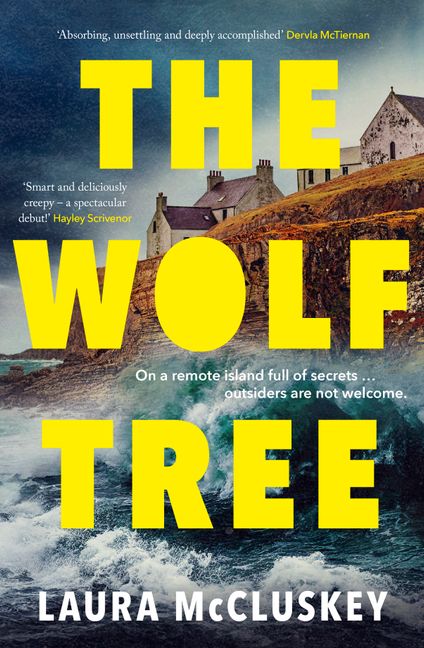
An island can provide just as much of a locked-room mystery as one in any building, particularly when it’s a remote island like Eilean Eadar, a wild and isolated spot off the West Coast of Scotland. In The Wolf Tree, we are in the shoes of DI Georgina (George) Lennox, who is just getting back to work after an attack that left her badly injured. This new case is supposed to be a box-ticking exercise, and she’s here along with her partner DI Richie Stewart to sign off on a probable suicide – a case to ease George back to work gently.

Of course, the reader knows that isn’t going to happen and things look problematic from the start. Even the boat crossing is wild and treacherous, the weather when they arrive, wet and freezing, the accommodation inconveniently at some distance from the little township. The two cops settle in, George doing her best to disguise from her older colleague and mentor her dependency on painkillers. The island has had to manage without a police presence, without a doctor, a school or social services of any kind for so long, so it isn’t surprising that the locals have learned to manage everything themselves. So they’re understandably reluctant to accept the interference of two cops from Glasgow.

Then there’s the case. Young Alan Ferguson, eighteen and busy applying for places at universities, had supposedly flung himself off the top of the island’s lighthouse. Alan was handsome and amiable, the only child of a widow, but she puts up a wall of animosity when George and Richie show up to ask questions. Hot on their tails, the priest arrives – a hearty, gregarious man, keen to help oil the wheels of the interview. The islanders, like Alan’s mother, are hostile towards mainlanders. It’s only the priest and the postmistress who are welcoming, or is that just nosiness?

Wariness towards incomers goes way back – the islanders had seen off the Protestant Reformation which turned the other western isles and much of Scotland. But Eadar is still staunchly Catholic. Or is it? What is the strange design that adorns the lintels of many of the houses, and why is George warned not to go anywhere near the woods. Pagan beliefs, mythology and superstition seem to hover on the fringes of everyday life. Then there’s the sound of howling wolves that disturbs George at night in a place where surely no wolves exist.

At twenty-eight, George is young to be a Detective Inspector, so it’s easy to imagine in her a tenacity her partner, eager to get back home with his family, seems to lack. It’s this tenacity that sees George asking awkward questions that Richie has to smooth over to avoid unpleasant confrontations. What will she have to do to earn the locals trust enough to talk to her? And what of the three lighthouse keepers who disappeared a hundred years ago? Can this mystery possibly have a connection to the death of Alan Ferguson?

It’s hard to determine which is more hostile and dangerous, the weather on Eadar or the people who live there. By the time we get to the end of the book, there are some stunning revelations and some spookily atmospheric scenes. George, in spite of terrible headaches, manages to think on her feet and probe the truth out of people in a case that will shock the whole community and mainlanders alike. She upsets Richie again and again with her disregard for her personal safety, and this looks unlikely to change anytime soon.

A first of a series, The Wolf Tree is a suspenseful and entertaining read, promising more tricky investigations for our two very different DIs. The Cursed Road is due for publication early next year. I particularly enjoyed the audiobook version of The Wolf Tree, which was read by Kirsty Cox. It’s a four-star read from me.

Book Review: The Names by Florence Knapp – a ‘sliding doors’ novel describing one character across three possible lives

I like a book that takes you on a different kind of journey, so that you don’t quite know what to expect next. You’re not always looking out for plot points, twists or turning points. The Names is the story of a baby boy, born to Cora and Gordon and the question of his name. His father insists he must be called Gordon, like him and his father before him, both doctors and both domineering men. But Cora would prefer Julian, an altogether gentler sounding name, while the baby’s older sister, Maia, thinks he should be Bear.

We get three different stories – one for Bear, another for Julian and the last for Gordon, showing the man he becomes, a new chapter for every seven years. But it’s also the story of Cora and the abuse she suffers at the hands of her husband. Each story offers a different set of outcomes, and the different effects this has on each of our core characters, Cora, Maia and Bear/Julian/Gordon.

It’s an interesting concept which keeps you hooked on the story, wondering what is going to happen next. I found I was enjoying one version of B/J/G more than another for one chapter, but this would be different in the next. To start with Bear wasn’t really all that interesting – he’s so confident, like his name, likeable and successful. But Florence Knapp makes sure there are interesting things that happen so that life isn’t always plain sailing.

Julian is damaged by what happens to him, and struggles to open up. He worries he’ll be like his father, that he has that same ability to hurt, and avoids relationships. Gordon is also damaged by his childhood and growing up, and learns things the hard way. He was difficult to read about to start with, but in the end I felt he was the most interesting of the three. You feel for all of them in different ways. Alongside the young man is his relationship with his sister, who is also going through some soul searching. What is it like to grow up with a parent who is capable of such violence? To what extent do you also inherit that gene?

But it was Cora who really has your sympathy. In one story, the author captures the manipulation, control and violence the elder Gordon inflicts on her, which makes for grim reading. The way it goes on through the years and how her husband shuts down her chances to live her own life, to be her own person. The hopelessness and acquiescence. I found I desperately wanted to stay with Cora’s story to see if she will make it out alive.

In the background there are other characters coming into the picture, as each starts to build their own life, and grows their family. There are some interesting descriptions of the work they do, particularly the work of silversmithing and archaeology. The Names would make great fodder for book groups and I will be interested to see what Florence Knapp writes next – a more traditionally plotted story, or something different again. The Names is an engaging debut and a four-star read from me.

Book Review: When the Cranes Fly South by Lisa Ridzén – a heart-felt story about old age, memory and making peace

Mostly, though, it’s about Bo and his dog Sixten. Bo is eighty-nine, and every day misses Fredrika, his wife who no longer lives in their home, who can’t really remember who anyone is anymore. Through much of his internal monologue he is talking to Fredrika, remembering their time together, which is pieced in with what’s happening in the present, along with recollections of his childhood.

Bo didn’t get along with his overbearing father, joining him at the sawmill, where he never seemed to do anything quite right. It was a relief to escape, and make a new life for himself, where he meets Fredrika, who like his mother, is calm, patient and cheerful, compared to Bo’s moodiness, his regrets, his inability to articulate his feelings. He is in this sense like his father, but he does a good job of keeping the temper in check. Then there’s Hans, their son, who is frequently upset with his father, worries that he shouldn’t be fetching in the wood, walking Sixten and generally getting up to mischief when he should be resting. Bo is so frail anything could happen out there and no one would be around to help.

The problem of the dog is an ongoing issue between them. Hans doesn’t think Sixten gets nearly enough exercise and would be better off with a family who can look after him properly. But Bo can’t bear to be without Sixten, and so father and son lock horns with an ensuing breakdown in communication. The relationship between father and son drives the plot for much of the novel. We’ve also got Bo’s friendship with Ture, the gay man he met decades ago at work who becomes his best friend. They still talk to each other by phone – Ture similarly having caregivers popping in to look after him.

It’s a quiet little book, and sometimes I thought as I read it, that there wasn’t really a lot happening. And yet it kept me turning the pages. Bo is such a well-thought-out character, a man nearing the end of his life, with plenty of time to think about things – the past, and about the people who mean most to him. Lisa Ridzén writes about the indignity of ageing, with Bo being so dependent on others for basic needs in a way that is realistic and insightful. It’s beautifully done and very moving. When The Cranes Fly South is a four-star read from me.

Book Review: The Red Shore by William Shore – an atmospheric new mystery series set on the Devon coast

William Shaw’s a well-regarded author of detective fiction; you may already have come across his Breen & Tozer, and Alexandra Cupidi series. In The Red Shore we meet London detective, Eden Driscoll, who gets a phone call out of the blue from Devon and Cornwall Police informing him that his sister is missing and her son taken into care. His understanding boss tells Eden to take as much time as he needs to sort things out. Eden thinks he’ll be back in a day or two, he’s working on an important case after all.

Eden hasn’t seen his sister Apple in over a decade, not since he ran away from his family at the age of fifteen. He felt bad about leaving his mother with Apple when his father died. But parenting was never their strong point, Dad being an overbearing man, his mother acquiescing too readily with his ambitions for a nomadic hippy lifestyle. Because of all this, Eden has never wanted a family of his own, doesn’t see himself settling down at all, let alone being a dad. He cringes from the idea of being the guardian of his nine-year-old nephew, Finn, a boy he never knew existed.

All this is an interesting story in itself, but layered on top is the mystery of what has happened to Apple. Eden’s sister, was an experienced sailor who seems to have gone overboard from her boat, the Calliope. Even more unlikely is the idea that she would have locked Finn in the cabin. When Eden asks for a look at the boat, DS Mike Sweet is sceptical when Eden assumes the presence of two recently used wine glasses suggests another person may have been on board. Sweet’s a nice chap, but seems inclined to go for easy options – suicide or an accident being the most likely scenarios.

So tracing the Apple’s movements will take a different kind of investigating. Molly’s irritating but she’s the only one who takes Eden seriously. There’s also Bisi, the social worker who is hoping Eden will find it in himself to be a father to Finn. Uncle and nephew don’t hit it off at first, but as Eden makes more of an effort, the idea that he could parent the boy starts to be a possibility, just as the trouble he gets into over his investigations causes alarm bells to go off with social services. This creates some terrific tension and emotional pull for the story, which also weaves in scenes from Eden’s childhood.

On top of all this, you’ve got a fabulous setting. Apple’s cottage is right on the estuary of the seaside town of Teignmouth, with a living room that opens out onto a beach. You’ve got lots of boating going on, adventures at sea, and the special vibe seaside towns have, with busy cafés and pubs catering to tourists and weekenders. It all adds up to a very satisfying read, with a plot that has you racing through the pages as Eden’s discoveries take him towards increasing danger, not only personally, but also for Finn.

I was very happy to discover this book recently, a new series I imagine will appeal to readers of Ann Cleeves’s books. I can’t wait for the next book featuring Eden Driscoll to find out if he settles in to a new life on the Devon coast. The Burning Tide is due for release next July. The Red Shore is a four-star read from me.

Book Review: Ghost Wedding by David Park- characters in two time-frames at a place where the past seeps into the present

This is one of those books that makes me say to myself, I must read more by this author. David Park is such a sensitive writer, his characters so subtly drawn, the storytelling original and thought-provoking.

Ghost Wedding takes us to a country manor near Belfast, now a wedding venue which Alex and Ellie are visiting. It’s the kind of place you have to book a year in advance, but Ellie has her heart set on it. So when the manager suggests that the newly refurbished boathouse might be available in time for their wedding, Alex agrees – anything to make Ellie happy.

Alex has all kinds of doubts, mostly because of guilt. For something that happened with his friends some time ago, for the way his father runs the family business and his own inability to please him. And then there’s his unhappy childhood and his mother’s mental health. How can Alex ever be worthy of Ellie? And why do they have to make such a big thing of getting married – the perfect wedding, the venue, the dress, the cake and everything else?

Alex is a good guy with regrets in the present day storyline that runs through the book, just as George Allenby does in the storyline that takes place a hundred years before. He’s the junior architect in charge of the construction of a lake and boathouse at the substantial home of the Remingtons. It’s back-breaking work and the digging out of mud during rainy weather only reminds George of his wartime experiences, in particular the comrades he lost at the Somme. He sees them from time to time when they shouldn’t really be there.

When the weather prevents his usual return home to Belfast one evening, George accepts the Remington’s offer of a bed for the night. Dinner is awkward between Mr Remington and his son Edward, who too young for the war, has done nothing with his life – another son who has disappointed his father. There’s also an attraction across the divisions of class when George meets Cora, one of the maids who work for the Remingtons – something George is ill-equipped to deal with.

The story switches between the two time-frames, and while there are ghosts of a sort, this isn’t really a ghost story, in the traditional sense, as the images of the dead tend to be connected with the feelings of our main characters, of their sense of the past. There’s sadness and inevitability about what happens, although there’s hope as well. It’s a beautifully crafted novel, David Park capturing the missteps between characters and their struggles to communicate, so they remain locked in their feelings of doubt and misery.

There’s a lot about class in the book – old money versus new money, the morality of making money, particularly that tied up with property, in both storylines. And the way the war not only tainted its survivors, but also made them somehow more worthy, not that they can ever talk about it. Secrets bubble away and not all are revealed, however troubling they may be. It all adds up to a layered and satisfying novel, as I would expect from David Park. Ghost Wedding is a four and a half star read from me.

Book Review: Death of a Stranger by John Pilkington – an entertaining historical mystery and the start of a promising new series

John Pilkington is an old hand when it comes to historical mysteries, with a number of series under his belt, among them the Thomas the Falconer series. Death of a Stranger takes us back to Elizabethan England in the first book featuring Matthew Cutler, a constable in the parish of Spitalfields. It’s 1594, when the murder of an Italian perfumer causes a need for answers, as well as anxiety among the other “strangers” or immigrants of the parish.

When a further threat against a French button maker occurs, the obvious conclusion is that someone is targeting the local “strangers”, either for being possible Papists or other reasons of their own. Matthew is fed assorted leads, a stonemason with a bitter nature since the loss of his daughter to the plague; a former acting friend of Matthew’s who had had a dispute with the perfumer. They’re all dead ends, but rather than dropping the matter as his employer, Alderman Skinner requests, Matthew determines to find justice for the dead man. Could someone be planting false clues?

What Matthew doesn’t yet know is how far his search for the truth will take him into the world of the movers and shakers of Elizabethan society, the perfumer having made house calls to favoured customers, some of them bored wives of powerful men. So there’s a lot to set the story going in interesting directions. Matthew hits wall after wall before he can convince his superiors that the case is worth pursuing.

As an investigator, Matthew is an interesting character. To begin with he’s educated, having fallen out with his magistrate father, and dropped out of his Cambridge studies after a year to become an actor. He lost his wife to the plague not long ago, and has two daughters in his care, his wife’s aunt living with them as housekeeper. He has come to the role of constable at the request of his gunmaker father-in-law.

As the story progresses, Matthew’s education and acting talent come in handy for questioning people of high public standing, an idea brought to him by Margaret Fisher, a comfortably off widow, friend and potential love interest. At first Matthew’s not convinced it’s a good idea – he’s used to being able to gain confessions from miscreants with the threat of the law and its grim punishments, but it’s a different story with the upper classes. I can imagine there will be plenty of potential for Matthew to don the clothes of Margaret’s late husband and the role of Sir Amos Gallett again in future books.

John Pilkington obviously knows his Elizabethan era well, for while Death of a Stranger is an entertaining story on its own, the period details make the story come alive. It was interesting to see a little of how humbler folk lived – so many historical novels concentrate on those at court – but I liked reading about the work of the gunsmith, the night watchman or the people at the local tavern, which doubles as a venue for the inquest.

Death of a Stranger is an enjoyable historical mystery, with John Pilkington writing in a style that sounds Elizabethan enough to add colour without being difficult for the modern reader. And Matthew Cutler is an engaging enough character for me to want to find out what he does next. I’ll certainly be on the look-out for the next book in the series. This first instalment is a four star read from me.

I read Death of a Stranger courtesy of Netgalley and Boldwood Books. The book is due for release on 14 November.

Book Review: Back When We Were Grown-Ups by Anne Tyler – revisiting an old favourite

While there are so many terrific new books out there to tempt and distract, I like to come back to old favourites now and then. A favourite author for me is Anne Tyler. Back When We Were Grown-Ups was first published in 2001 but has a kind of timeless quality which I find very appealing. It follows Rebecca who wonders how life would have been different if she hadn’t been swept off her feet by Joe Davitch all those years ago; if she’d finished college and gone on to marry her childhood sweetheart instead.

At barely twenty, Rebecca had met Joe at a party venue his family ran called the Open Arms, a large terrace house with high ceilings in a slightly rundown part of Baltimore. An odd coincidence makes her laugh, and Joe is drawn towards her apparently cheerful nature. But all the while, Rebecca had always seen herself as a fairly serious girl, intent on finishing her history degree.

Not only does she marry Joe instead, but she also takes on his three daughters, has one of her own and, when Joe dies in a car crash six years into their marriage, she runs the Open Arms as well. This doesn’t even include the elderly folk she looks after, first Joe’s mother, then Poppy, his uncle. The Open Arms needs constant repairs, and as the decades pass, there are grandchildren to babysit too.

She’s fifty-three when we meet her at the start of the book, organising a family barbecue and trying to make everyone happy. Which isn’t always easy – the Davitches are a prickly, discontented bunch at times, particularly the girls, who are prone to squabbling or disapproving of their sisters’ choices. Circumstances trigger Rebecca into wondering what happened to the boy she dumped for Joe, and she decides to look him up.

This really is a novel of characters – the four daughters all with their own set of problems are constantly in and out of the Open Arms, also the Davitch home which Rebecca still shares with Poppy, now approaching his 100th birthday. We’ve got the girls’ partners and offspring, as well as Zeb, Rebecca’s goofy brother-in-law, a hospital doctor who’s never married.

They’re all interesting and entertaining, but I particularly loved Poppy with his memories and enjoyment of food, his discourse on what it’s like to be so old and so on. And Peter, who at eleven is a new arrival into the family via his father’s marriage to one of the girls. He sticks out for being pale compared to the dark haired Davitches as well as shy and nerdy. Tyler captures beautifully the bickering dialogue of sisters, the way conversations waft in and out between characters, between topics as people pounce on ideas or lose the thread of what they were saying, with all the humour that results.

The story takes its time as Rebecca rethinks her life and tries to reconnect with her old flame, now a divorced physics professor, and ponders her choices. Was Joe ever in love with her, or was she just useful when he needed help? Some readers may find the pace a little slow as the scenes, often party scenes, pile one on top of the other. A baby is born, there’s a wedding and Poppy has his birthday bash, meals are served and tradespeople called in.

But without being an out and out comedy, I found myself chuckling my way through them all. I once came across a comment Tyler made about the fiction of Barbara Pym in which she stated: “she reminds us of the heartbreaking silliness of everyday life”. The same could be said of this novel, the way Tyler captures all the muddles, missteps and misconceptions. I loved it, finding it well-worth a reread, both relaxing and hugely entertaining – a four star read from me.