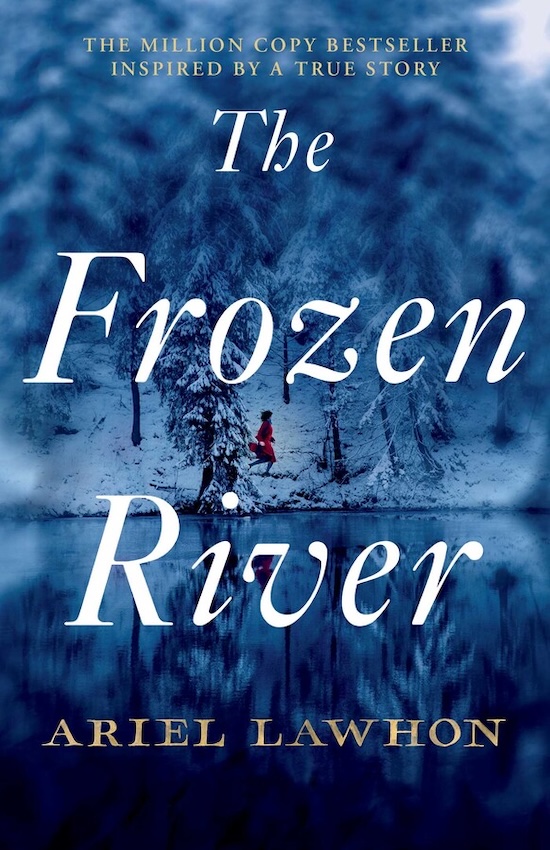
Book Review: The Frozen River by Ariel Lawhon – a midwife and her battle for justice in 18th century Maine

There’s something about settings in winter that can be very atmospheric. Ariel Lawson conjures up the depth of a very cold winter in The Frozen River, set in Maine in the late 1700s. Mere decades before, the militia had a fought long and hard to drive out the French as well as the native people of the area, ready for settlement. Martha Ballard, our protagonist, lives in the town of Hollowell with her family, her husband running a sawmill on the river, Martha the town midwife.

The story begins when Martha, with her medical expertise, is asked to examine a dead man, pulled from the river just before it ices over completely. As soon as she sets eyes on him, she is shocked to see that it is Joshua Burgess, one of two men accused of raping Rebecca Foster, her friend and the wife of a pastor. Rebecca had upset some townsfolk by making connections with the local Wabanaki people. What is also disturbing is that Joshua has been beaten and hanged.

When a newly-graduated doctor arrives and declares that the injuries sustained by the dead man are consistent with drowning, Martha is appalled to see her opinion discredited. She decides to find out what really happened, particularly when she learns that her son had an altercation with Joshua at the town dance on the night in question. She’s also determined to find justice for her friend Rebecca, who is still emotionally and physically scarred by her ordeal.

The plot really sweeps you along for the first half of the book and I couldn’t put it down. And then it kind of stalled. It was still interesting, in that the book is peppered with Martha’s diary entries, based on journals the real Martha Ballard kept, and you get a lot of the day-to-day life of a midwife in winter. The saddling up – she has a horrifically scary stallion called Brutus she’s still getting used to – and riding out in all weathers to tend to women in labour.

Apparently Martha never lost a mother during childbirth and her skills are recorded here, as well as those of a French speaking Black woman known as Doctor, who visits from time to time. But women skilled in medicine were not taken particularly seriously, and Martha often has a battle on her hands to make her patients and their husbands see sense. She’s a feisty character, always knows best, and a thorn in the side of powerful men. We also get a lot of her relationship with her husband Ephraim, still an intense passion now they’re in their fifties.

Then there are Matha’s battles against the local judge and businessman, Joseph North, the other man accused in the rape of her friend. He’s a nasty piece of work, and has the power to make things difficult for the Ballards. The ending is quite the showdown, if a little difficult for this reader to swallow. The author has written quite a lengthy explanation in a note at the end of the book about her reasoning here and the research which informed her story.

I’m glad I read The Frozen River as I had known little about this corner of history and the life of this interesting woman. I can see why the author wanted to fill in so much detail of her history, family and the settler township where she lived. I feel a more carefully edited version would have made a better novel. Overall it’s an engaging read and a three-star read from me.
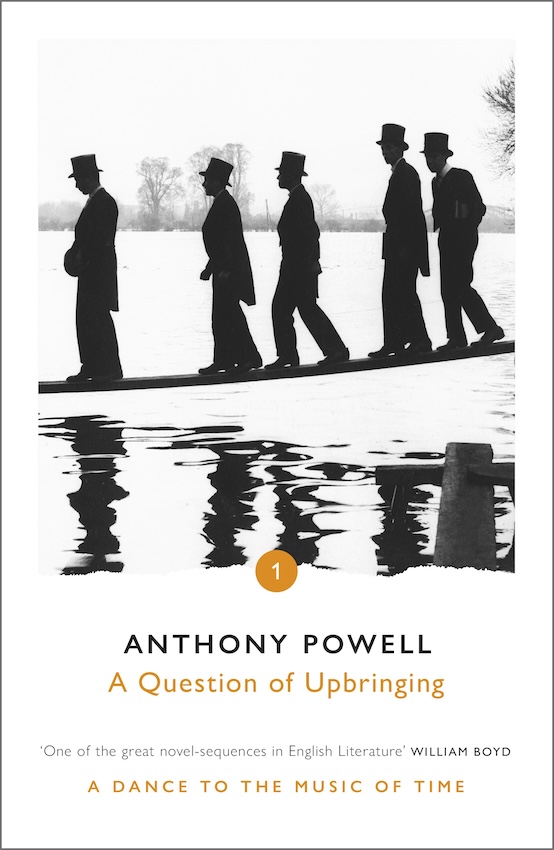
Book Review: A Question of Upbringing by Anthony Powell – a wryly intelligent evocation of growing up in early 20th century England

For some time I’ve been meaning to reread Anthony Powell’s A Dance to the Music of Time – the author’s career-defining sequence of twelve novels. And rather than crack on and make a start, I dropped the first book, A Question of Upbringing, into my list for the Classic Club’s Spin challenge. And at last, up it popped, so I got to work.

And you do have to work a little at the prose, the language is so rich, the sentences long and often convoluted. But there is a wry humour never far from the surface and the attention required is more than rewarded. I chuckled my way through much of the book as it describes the late teens of the main character, Nicholas Jenkins.

Nicholas is at his public school when we first meet him – he’s been down to the shops for some sausages to cook over the fire with his friends, Charles Stringham and Peter Templer. These boys all take different paths to Nicholas, who goes on to university, and they drift in and out of each other’s lives, along with another boy, Kenneth Widmerpool, who is unpopular and often made fun of. To be fair Nicholas feels uncomfortable about this – Widmerpool lives in much more straightened circumstances, with just a widowed mother who obviously dotes on her son. But that doesn’t mean he’s in any way likeable.

The story is told in several sections beginning with Nicholas’s last year or so at school. There’s a visit to Peter Templer’s home where he meets his friend’s quirky family and in particular Peter’s sister Jean, with whom he’s quite smitten. There follows a sojourn in France to help Nicholas improve his French before university. Here Nicholas comes across Widmerpool, of all people, who insists on speaking to him only in French, while Nicholas is a trying to make some headway with a girl.

Stringham was bending forward a little, talking hard. Templer had managed to get his pipe back into his pocket, or was concealing it in his hand, because, when I reached the level of the field, it had disappeared: although the rank, musty odour of the shag which he was affecting at that period swept from time to time through the warm air, indicating that the tobacco was still alight in the neighbourhood. Le Bas had in his had a small blue book. It was open. I saw from the type face that it contained verse. His hat hung from the top of his walking stick, which he had thrust into the ground, and his bald head was sweating a bit on top. He crouched there in the manner of a large animal – some beast alien to the English countryside, a yak or sea lion – taking its ease: marring, as Stringham said later, the beauty of the summer afternoon.

The final chunk of the book brings Nicholas to Oxford where he meets other interesting people at the tea parties of a professor known as Sillery. Stringham and Templar also reappear but the friendships they once had seem now under strain. Further amusing characters make appearances, such as the disapproving house-master, Le Bas, and Nicholas’s Uncle Giles, the family black sheep, who is of no fixed abode and constantly short of funds.

Not a lot happens that is extraordinary on any kind of grand scale, though there are some amusing incidents. This is not like many coming-of-age novels where a disturbing event makes a young person grow up in a hurry. Powell seems to be capturing something more realistic – what it’s like when you’re at an impressionable age and trying to make sense of the interactions of people around you, of how to decide what you want to do with your life, and with whom you want to spend it.

A Question of Upbringing is really all about the characters, of class and how much you can be yourself in a world where things are done a particular way. Nicholas is just beginning to find out, but he’s a great observer of others and you know you can expect more of this in the books that follow. This novel is set in the early 1920s, so as he matures there will be political and social changes going on around him, and even a war.

I hope I don’t wait so long to read the next in the series, A Buyer’s Market, as Powell is really worth spending time with. If you want a slower, more measured read, which captures a period of English life, these novels are quite brilliant. A classic kind of read in every sense.

Book Review: A Terrible Kindness by Jo Browning Wroe – a tragedy sparks this original coming-of-age story

I was at a writers festival recently where a former bookshop owner declared she pressed this book into the hands of every customer she could that ventured into her shop. A Terrible Kindness had caught my eye before that, reminding me of the episode of The Crown (on Netflix) that describes the terrible events surrounding the Aberfan disaster. A colliery spoil tip collapsed after weeks of heavy rain, forming a slurry that slipped downhill and smothered houses but worst of all a school. The death toll topped 140; 116 of the victims were children.

A Terrible Kindness describes the life of newly qualified undertaker William Lavery. We meet him at an undertaker’s dinner, to which he’s finally had the courage to invite Gloria, the love of his life. He’s just nineteen and has a bright future with Lavery and Sons, the business run by his uncle Robert, and he’s come top of his class in embalming. But the dinner is interrupted by the news about Aberfan and the call goes out for embalmers to head to the mining town to prepare the bodies for burial. William is a good-hearted sort and immediately volunteers.

William’s experiences at Aberfan will change his life for ever. Today, anyone helping at such a disaster would be offered counselling. But this is 1966 and it’s back to business when William gets home. This isn’t the only traumatic event that’s happened to William. He lost his father to cancer as a young boy, and something has happened to him at school. A promising singer, he has been selected for a prestigious school in Cambridge where for training as a chorister, his voice full of potential.

Two pieces of music haunt the book. I’d never heard Myfanwy before, but it’s a popular (and achingly sad) Welsh song composed in 1875. The other is Allegri’s Miserere, which I was more familiar with. In fact if you think of boy sopranos, then this is probably the music that springs to mind.

As he sits next to the window on the tired upholstery, with a spring nudging him in the backside, William is unexpectedly overwhelmed with a sense of his mother. Not the mother who moved to Swansea without him and now manages the biggest music shop in Wales, but the mother who took him to Cambridge, who knelt on the gravel in her stockings to tell him how proud she was, trying so hard not to cry. He stares out of the window, not bothering to wipe his face until he feels drips on his hand.

But the book is about a lot more than tragedy and music. William has to navigate a problematic relationship with his very loving mother. Evelyn adores William, he’s all she has left, and has high hopes that singing will save him from the family undertaking business. Robert Lavery was her husband’s twin brother, a living breathing reminder of what she has lost, and Howard, also in the business is Robert’s other half. Homosexuality couldn’t come out of the closet in 1966 and it’s a lingering awkwardness between Evelyn and Robert. But they all love William. As does Martin, the great friend William makes at school, and Gloria of course but is she prepared to wait for him to sort himself out?

These are all wonderful characters, all loving William, but how do you love anyone back when your heart’s full of pain. Jo Browning Wroe puts William through a lot before letting him find some resolution. For such an apparently blameless young man he certainly creates a storm around him.

The Aberfan disaster is hauntingly made real in the descriptions of the work of kind strangers tasked with a terrible job. It’s sensitively done as is the work William does in the mortuary at Lavery and Sons. You develop a new respect for the work of undertakers and learn a lot of the process. It definitely takes a certain kind of person and the author, having herself grown up in the business, is just the writer for this story.

A Terrible Kindness has polarised reviewers, particularly the way the Aberfan disaster is employed as a device to change a character, suggesting this is a little insensitive. Much of the story has little to do with Aberfan, but then perhaps that’s true of lots of wider events that can affect a character, like war for instance. As a reading experience, I felt I disengaged a little – you can get a little frustrated with William – and the story lags a little. But a little after the middle things pick up and I was pulled into the story again.

Overall, I’m glad I read A Terrible Kindness and hope Jo Browning Wroe has another book in the pipeline. She’s created an original and heartfelt story and has brought Britain in the 1950s and 60s to life. Her characters are ordinary and yet special at the same time. This debut novel gets three and a half stars from me.

Book Review: Tom Lake by Ann Patchett – a quiet novel about fame, marriage and finding your family

I confess it took me a fair while to get into Tom Lake, Ann Patchett’s new novel. And it may be that had I not already loved several of her previous books, I may have put it down and gone in search for a livelier, more compelling read. But no, I persevered. And yes, it’s another Covid novel.

The story is about Lara, who with her husband Joe, runs an orchard in Michigan. It’s cherry harvest season, and normally they’d have a load of hired help for fruit picking. But because there’s a lockdown the couple have to rely on their family instead – daughters Emily, Maisie and Nell. Maisie and Nell are taking a forced break from their classes – Maisie, studying to be a vet, helps out neighbours when their livestock and pets are sick, while Nell with ambitions to be an actress, is anxious about her loss of in-person lectures. Emily with her horticulture study behind her is all set to take over the orchard.

And while the girls are among the trees with their mother, they beg her to talk about her own early acting career and the summer she dated a famous actor. At first I thought the actor must have been called Tom Lake, but that is the name of the location of a summer theatre, where Lara, waiting for her first movie to be released, steps in at the last minute to play Emily in Our Town.

“Did you ever think that you were going to marry Duke?” Emily asks, bringing the story back to me.
Given that marriage is Topic A, I try to remember. Did I ever look at Duke in my bed asleep, the cigarettes on the nightstand, his arm thrown across my chest, and think, yes, you, every morning, forever?
“No,” I say.
“But you loved him,” Emily says.
“I was twenty-four.”
“That’s a yes,” Maisie says.

There’s a charming story before that about how Lara, then Laura, was just helping out with the auditions for a local amateur production and somehow ended up playing Emily. She’d no plans to act, was studying to be a teacher, but became Emily again for a student production. Things just serendipitously fall into place and Lara becomes a promising young actress, praised for her naturalness.

Then at Tom Lake, Lara meets Peter Duke, and he sweeps her off her feet, the two in the same production of Our Town, which, if you didn’t know before, is an iconic American play by Thornton Wilder. And this is where I felt the plot sagged a little. There is just such a lot of detail about rehearsals and the characters in the play and lots of names to remember, not only the characters of the play but also the actors playing them.

Lara meets Pallace, the gorgeous black dancer who is her understudy and they become friends. When Duke’s brother Sebastian visits he is smitten by Pallace and the four hang out together on their days off. Then around halfway into the story, things pick up. There’s a surprise that makes you think, Oh! and it’s a nice surprise really and I became quite immersed.

The more I think about the book now, I realise there’s a lot going on here. It’s a book that is about both the past and the future, while time hangs in the present, a cherry harvest to bring in and the ongoing anxiety about Covid. The past history of a mother and her abrupt change of career, her discovery of the man she will marry, so different from Duke, whom everyone is so obsessed with.

The cloud hanging over the orchard’s future in the shape of climate change. Without reliable frosts, you can’t grow cherries. You might not think the world a suitable place to bring up children. That certainly seems to be the feeling among Lara’s daughters, so it’s no wonder they beg to hear a story from long ago. A story with a hint of glamour and a summer season at a playhouse. But is the past all it’s cracked up to be? For while there’s a cloud hanging over the future, you can’t help but wonder, why did Lara throw in the towel on a promising acting career?

So in the end I did appreciate the craft that is here in Tom Lake. It’s a perfectly pitched, finely written and original novel. I realise I’ll have to see Our Town – there’s a film of the play starring Paul Newman as Stage Manager on Youtube which looks promising. I’ll probably watch it and go, ‘Oh, yes’ a few times as I think back to the book. In the meantime Tom Lake gets four out of five stars from me.

Book Review: Marple: Twelve New Mysteries – a dozen contemporary authors reimagine Agatha Christie’s famous sleuth

So here’s the thing. I’ve been reading Agatha Christie since I was a girl and even though I think I’ve read them all, in some instances multiple times, I still pick up an Agatha Christie when I want something light and relaxing. Her eighty or so volumes of crime fiction are still in print and have inspired TV series and movies, while Sophie Hannah has brought Christie’s detective Hercule Poirot to life in some brilliant new novels. I guess I’m not the only one who still reads Christie.

Not surprisingly, when twelve contemporary authors were asked to write a story for a new collection of mysteries for elderly spinster, Jane Marple to solve, I pricked up my ears. These authors include ones who have written books I’ve enjoyed immensely, particularly Ruth Ware, Elly Griffiths, Val McDermid and Lucy Foley. Marple is an interesting collection because it reflects not just the Christie we’ve all come to enjoy over the years, but a response to the original stories that is as individual as these authors themselves.

And the writers have done their homework, ensuring that the little tricks and mannerisms we remember from the original Marple stories turn up regularly here too. We’ve got the knitting and the cosy shawls encompassing Miss Marple’s elderly shoulders. The references to the people in the village who remind Miss Marple of aspects of human nature that are relevant to the case in hand. We’ve got connections to former stories such as A Caribbean Mystery and At Bertram’s Hotel. I loved Val McDermid’s story, ‘The Second Murder in the Vicarage’, told from the perspective of the poor vicar, now with a dead housemaid in his kitchen.

To have one murder in one’s vicarage is unfortunate; to have a second looks remarkably like carelessness, or worse.

This story isn’t as twisty as some of them, but is very witty and true to the original Miss Marple, and brings in good old Inspector Slack, harrumphing as always. For twisty stories, Lucy Foley (‘Evil in Small Places’) delivers a tidy story that reflects the dark side of small-town life. And only Miss Marple could have sorted out the twists in ‘The Open Mind’ by Naomi Alderman, which transports our sleuth to a Fellows’ dinner at Oxford where a poisoning dramatically takes place. As you might recall, Agatha Christie really knew her poisons.

… typical of Miss Marple to have found a housemaid who was walking out with the postman. And if the village had no postman, she would doubtless have acquired a gardener who was brother to a delivery boy.

Miss Marple’s empathetic nature and ability to inspire confidences crops up in a few stories too, including ‘The Jade Empress’ by Jean Kwok, where thanks to nephew Raymond, she’s been treated to a sea voyage to Hong Kong, and ‘A Deadly Wedding’ by Dreda Say Mitchell. Good old Raymond treats his aunt in several stories, including a holiday at a hotel on the Amalfi Coast in ‘Murder at the Villa Rosa’ by Elly Griffiths. This is another witty read (one of my favourites) told from the point of view of a crime author with writer’s block and a hero he can no longer abide.

Jane also has Raymond to thank for a trip to Manhattan, to see an adaptation of one of his stories on Broadway, and to Cape Cod, where Raymond’s granddaughter is spending summer with a school friend. But wherever she goes murder is never far away. Another standout for me was ‘The Mystery of the Acid Soil’ by Kate Moss, which had a very Christie-like flavour and a nice suspenseful ending. Rounding the lot off, ‘The Disappearance’ by Leigh Bardugo is loads of fun, and also brings back Dolly Bantry, one of my favourite minor characters, sticking her nose in at her old stamping ground, Gossington Hall.

The stories in Marple are engaging and quirky, and very much in the spirit of the original Miss Marple stories, some more so than others, but all worth a read. I’ll be happy to read these again, and am inspired to pick up Christie’s The Thirteen Problems which I love for the way that the quiet, overlooked Miss Marple solves a series of murders discussed by a group of people interested in crime. I’ve also got a few new authors I’m keen to try, which is the other other good thing about collections like this new one. Marple score a four out of five from me.

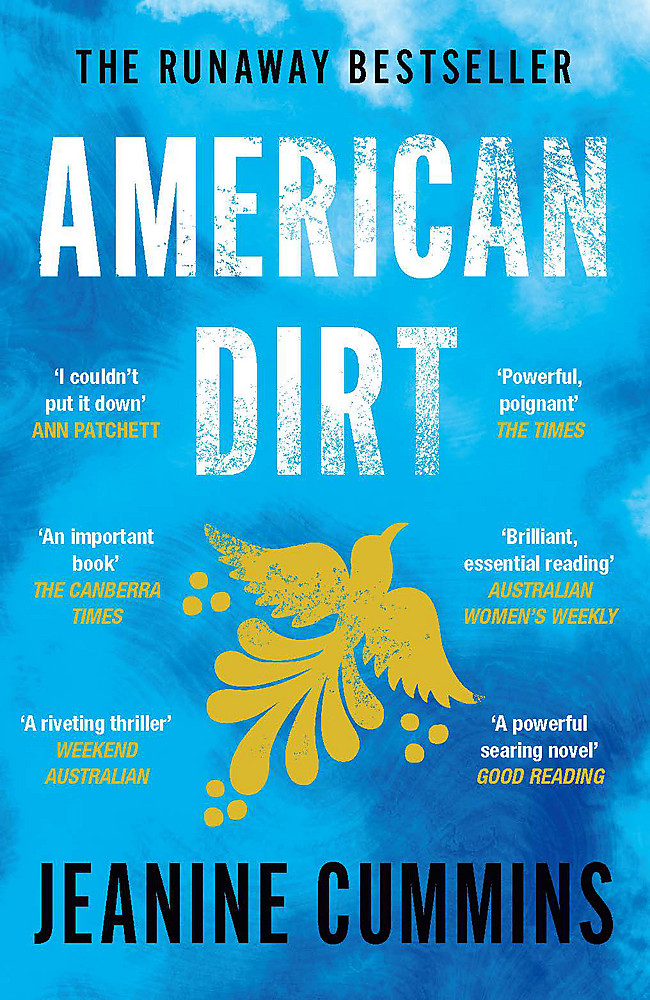
Book Review: American Dirt by Jeanine Cummins – a gritty, believable survival tale you can’t put down

This book came highly recommended, the back cover promising an unputdownable page-turner and in a sense it is. But it is also much more. Picking it up I was instantly caught up in the world of Lydia and her young son Luca, as they hide from drug cartel hitmen who have gatecrashed a barbecue celebration and murdered all her family. That’s sixteen people, including Lydia’s husband, Sebastián. The two hide out in the shower, holding their breath, and as a reader I was holding my breath too.

I held my breath through a lot of this book, actually. The story starts out in Acapulco, where Lydia lives with Sebastián, a journalist who writes exposés on the Mexican drug cartels who hold sway over the country. A fairly new cartel, Los Jardineros, has become dominant in Acapulco, once a peaceful tourist trap, but now its economy is in doubt as visitors stay away. Lydia befriends Javier, a regular visitor to her bookshop who shares her taste in books. Lydia suspects Javier is a little in love with her.

Sebastián writes an article about the cartel, in particular its sophisticated drug lord, a piece that isn’t particularly defamatory, but leaves no doubt about his identity. Even so the family feel no reason to go into hiding, even when Lydia realises who the drug lord really is. This back story is fed throughout the book, little by little, but the main thrust of the plot follows Lydia and Luca’s escape. They have so many near misses, as they first find a way out of Acapulco, then to Mexico City, and on further north in a bid to reach the United States. For the reader, it’s a nail-biting ride.

In another country, you would imagine the police would protect the fugitives, but so many police officers are in the pocket of the cartels, it is impossible to know who to trust. The same thing goes for the people who work at airports, immigration officers and bureaucrats, almost anyone it seems could be on the payroll of Los Jardineros. So using banks and cellphones is out, along with public transport. There is nothing for it but to join the stream of migrants who pass through Mexico from countries further south, like the young girls, Soledad and Rebeca who come from Honduras, and who show Lydia how to ride La Bestia, the cargo trains that head north.

She and Luca are actual migrants. That is what they are. And that simple fact, among all the other severe new realities of her life, knocks the breath clean out of her lungs. All her life she’s pitied those poor people. She’s donated money. She’s wondered with the sort of detached fascination of the comfortable elite how dire the conditions of their lives must be wherever they come from, that this is the better option. That these people would leave their homes, their cultures, their families, even their languages, and venture into tremendous peril, risking their very lives, all for the chance to get to the dream of some faraway country that doesn’t even want them.

Soledad and Rebeca have a harrowing story too, like many of the migrants that ride on top of trains. They must have, to risk their lives like this. It is insanely dangerous and the casualties horrific. And here is Lydia so desperate she is riding La Bestia with her eight-year-old son. At any moment they may be captured and sent back to where they came from. Many of them are, or never heard from again. Then there’s the border crossing to consider, and a trek across the desert. And all the while Lydia cannot be sure she’s not being watched, her movements tracked.

The characters of Lydia and Luca are well rounded and interesting. You get glimpses of Lydia in her shop, educated and well-read, of her life with Sebastián. Luca is a geography nut and uses his knowledge of countries and cities to brilliant effect. Lydia is desperate to protect his innocence and fears he will be scarred for life by these experiences – how can he not be?

It’s a gripping story, made all the more so by the possibility that something like this could really happen. It may be fiction, but it reads true and the migrant experience seems to be well-researched. Sometimes the novel form works well because it puts you in the shoes of someone who may not be so very different from you, who is driven to extreme actions by impossible circumstances. American Dirt is well worth picking up, but it may keep you up at night, so be warned. It will certainly give you a lot to think about. It’s a four and a half star read from me.

Classics Club Spin: Agnes Grey by Anne Brontë – a quieter Brontë novel but still a gripping read

Anne Brontë is probably the lesser read of the three Brontë sisters, with Charlotte Brontë’s Jane Eyre and Emily Brontë’s Wuthering Heights constantly turning up on our screens, reimagined for new generations of viewers. The characters of Mr Rochester and Heathcliffe, in many ways more anti-heroes than heroes, are impossible to forget, to say nothing of the dramatic reversals of fortune that make the stories so enthralling, the stirring settings, the passion.

We have a more restrained story here with Agnes Grey, the eponymous character based on Anne Brontë’s own experiences as a governess. Agnes is only nineteen when her father, a country parson, loses a small fortune to speculation. Thanks to her mother’s careful management, there is no pressure for the family to do anything other than hunker down and budget carefully to get them through. But Agnes is a plucky young thing and sees this as an opportunity to help her family out and see something of life. She decides to be a governess and sets off for Wellwood and the Bloomfield family.

Her first placement is a rude awakening. The Bloomfield parents are disengaged and unloving, the four children running their nurse ragged. Little Tom Bloomfield is arrogant and cruel, particularly to any wild animals he comes across. Agnes is supposed to teach Tom and his sisters Mary Ann and Fanny, but is ignored by her charges. She’s not allowed to punish them either. She soon realises that she earns no respect from above stairs, nor any support from the the staff below. It’s a lonely life, but she’s determined to give it her best. To her chagrin, Agnes is dismissed after two terms for incompetence.

Her second post is not a lot better. Horton Lodge is the home of the Murrays, who have two teenage daughters, Rosalie and Matilda and their younger brothers John and Charles, all terribly indulged, the youngest boy too lazy to learn anything. Matilda who has learnt to swear from her father, does anything to escape the schoolroom for the stables. Things become easier when the boys are sent off to school, their parents realising Agnes is unable to teach them. It doesn’t matter so much for the girls, it seems, so long as they develop good manners that will stand them well in society.

I sometimes felt degraded by the life I led, and ashamed of submitting to so many indignities; and sometimes, I thought myself a precious fool for caring so much about them, and feared I must be sadly wanting in Christian humility, or that charity which sufferereth long and is kind…

Poor Agnes. She’s intelligent, but so young to have to deal with the conniving of her arrogant charges. While in Agnes we see the plight of an impoverished gentlewoman and the lack of options for earning a living, well-to-do young ladies don’t seem to fare much better. Rosalie at eighteen is soon to be married off and her mother has her sights set on a local baronet, without consideration for her daughter’s happiness. Rosalie responds by flirting like mad with all the eligible males in the area, including the curate Agnes has fallen for. It shows Rosalie up as capricious and spiteful, but you can’t entirely blame her.

Anne Brontë’s The Tenant of Wildfell Hall is considered the stronger of the two novels she produced during her short life. I read somewhere it was the first really feminist novel, dealing with a woman who escapes her drunken, abusive husband – it caused quite a furore at the time. But this novel about a young woman’s struggles to make a life for herself is still interesting. I found it an engaging read and quite zoomed through the pages to see if things would improve for Agnes.

I am endlessly fascinated by the Brontë’s, and was happy to pick this up when it turned out to be the book selected for my Classics Club Spin challenge. (I had to read number 2 on my list). Head over to The Classics Club if you want to take up the spin challenge too.

Reading the Classics: My Hope-to-Read List from Classical Literature

The good folk over at The Classics Club are doing a great job of encouraging readers to seek out those books we might call ‘classical literature’ and give them a go. There are plenty of Books to Read Before You Die compilations out there but with all that wonderful new stuff being published all the time, it’s easy to forget about the ones we collect at church fairs with good intentions of crossing them off the list.

The good ones never really go away and publishers such as Penguin with their orange series, Virago’s Modern Classics (Hachette) and Persephone Books bring out lovely new editions that can be addictively collectible – to say nothing of public libraries. The Classics Club offers a chance to keep them on your radar with online discussion and sharing part of the deal. But first you have to make a list.

I confess my list is roughly thrown together and in no particular order. I have included a mix of books that are obvious classics and quite a few from early to mid 20th century women authors – a particular interest of mine. There are some I’ve read before and want to read again to see if I still like them. Tweaking and adding to the list is also a possibility. This is what I’ve come up with so far:

  1. Sanditon by Jane Austen 
  2. Agnes Grey by Anne Bronte 
  3. North and South by Elizabeth Gaskell 
  4. Elizabeth and Her German Garden by Elizabeth Von Arnim 
  5. Kim by Rudyard Kipling 
  6. The Return of the Soldier by Rebecca West 
  7. My Antonia by Willa Cather 
  8. The Happy Foreigner by Enid Bagnold 
  9. Open the Door by Catherine Carswell 
  10. Pomfrett Towers by Angela Thirkell 
  11. Diary of a Provincial Lady by E M Delafield 
  12. Frost in May by Antonia White 
  13. Company Parade by Storm Jameson
  14. Full House by M J Farrell (Molly Keane)
  15. The Weather in the Streets by Rosamond Lehmann
  16. Silas Marner by George Eliot
  17. Brideshead Revisited by Evelyn Waugh
  18. The End of the Affair by Graham Greene
  19. Cider with Rosie by Laurie Lee
  20. The Group by Mary McCarthy 
  21. A Question of Upbringing by Anthony Powell
  22. Friends and Relations by Elizabeth Bowen
  23. The Sweet Dove Died by Barbara Pym
  24. Victoria Cottage by D E Stevenson
  25. The Corner that Held Them by Sylvia Townsend Warner
  26. The Wings of a Dove by Henry James
  27. Of Human Bondage by W Somerset Maugham
  28. The Beat of the Heart by Elizabeth Bowen
  29. Cold Comfort Farm by Stella Gibbons
  30. Miss Pettigrew Lives for a Day by Winnifred Watson
  31. Justine by Alexander Durrell
  32. Chéri by Colette
  33. Harriet Hume by Rebecca West
  34. The Bell by Iris Murdoch
  35. Three Men in a Boat by Jerome K Jerome
  36. Round the Bend by Neville Shute
  37. The Women’s Room by Marilyn French
  38. The Grass Is Singing by Doris Lessing
  39. The Midwich Cuckoos by John Wyndham
  40. Song of Solomon by Toni Morrison
  41. We Have Always Lived in a Castle by Shirley Jackson
  42. The Scarlet Letter by Nathaniel Hawthorne
  43. Sons and Lovers by D H Lawrence
  44. The Sun Also Rises by Ernest Hemingway
  45. True Grit by Charles Portis
  46. Rob Roy by Sir Walter Scott
  47. Lorna Done by R D Blackmore
  48. Watership Down by Richard Adams
  49. The Sound and the Fury by William Faulkner
  50. Memoirs of a Fox Hunting Man by Sigfried Sassoon
  51. Tender Is the Night by F Scott Fitzgerald
  52. Their Eyes Were Watching God by Zora Neale Hurston
  53. The House on the Strand by Daphne du Maurier
  54. Harriet Said by Beryl Bainbridge
  55. Nightingale Wood by Stella Gibbons
  56. A Christmas Carol by Charles Dickens
  57. King Solomon’s Mines by H Rider Haggard
  58. To the Lighthouse by Virginia Woolf
  59. A Town Like Alice by Nevil Shute
  60. Green Dolphin Country by Elizabeth Goudge
  61. Revolutionary Road by Richard Yates
  62. Cranford by Elizabeth Gaskell
  63. The Foundling by Charlotte Brontë
  64. The Warden by Anthony Trollope
  65. Squadron Airborne by Elliston Trevor
  66. A Game of Hide and Seek by Elizabeth Taylor
  67. The Land of Spices by Kate O’Brien
  68. Green Hands by Barbara Whitton
  69. Lotte in Weimar by Thomas Mann
  70. Stoner by John Williams
  71. Under the Net by Iris Murdoch
  72. ‘The Forsythe Saga by John Galsworthy
  73. A Buyer’s Market by Anthony Powell
  74. The Acceptance World by Anthony Powell
  75. At Lady Molly’s by Anthony Powell
  76. Casanova’s Chinese Restaurant by Anthony Powell
  77. The Kindly Ones by Anthony Powell
  78. The Valley of Bones by Anthony Powell
  79. The Soldier’s Art by Anthony Powell
  80. The Military Philosophers by Anthony Powell
  81. Books Do Furnish a Room by Anthony Powell
  82. Temporary Kings by Anthony Powell
  83. Hearing Sweet Harmonies by Anthony Powell
  84. The Doves of Venus by Olivia Manning
  85. South Riding by Winifred Hotly
  86. One Pair of Hands by Monica Dickens
  87. Perfume by Patrick Suskind
  88. A Year in Provence by Peter Mayle
  89. Out of Africa by Karen Blixen
  90. How I live Now by Meg Rosoff
  91. Love in a Cold Climate by Nancy Mitford
  92. Goodbye to All That by Robert Graves
  93. Music in the Hills by D E Stevenson
  94. Susan Settles Down by Molly Clavering
  95. Quartet in Autumn by Barbara Pym
  96. All Passion Spent by Vita Sackville West
  97. O Pioneer! By Willa Cather
  98. The Rainy Moon and Other Stories by Colette
  99. Mandoa, Mandoa! by Winifred Hotly
  100. The Age of Innocence by Edith Wharton
  101. The Old Curiosity Shop by Charles Dickens
  102. Our Mutual Friend by Charles Dickens
  103. A Passage to India by E M Forster
  104. Howard’s End by E M Forster
  105. A Room with a View by E M Forster
  106. Jamaica Inn by Daphne du Maurier
  107. The Harp in the South by Ruth Park
  108. Station Life in New Zealand by Lady Barker
  109. Persuasion by Jane Austen
  110. Emma by Jane Austen
  111. To Kill a Mockingbird by Harper Lee
  112. Frankenstein by Mary Shelley
  113. Memoirs of a Geisha by Arthur Golden
  114. The Old Man and the Sea by Ernest Hemingway
  115. One Hundred Years of Solitude by Gabriel García Márquez
  116. Siddhartha by Herman Hesse
  117. The Unbearable Lightness of Being by Milan Kundera
  118. Around the World in Eighty Days by Jules Verne
  119. Midnight’s Children by Salman Rushdie
  120. The Tenant of Wildfell Hall by Anne Brontë
  121. Wuthering Heights by Emily Brontë
  122. The Waves by Virginia Woolf
  123. The Return of the Native by Thomas Hardy
  124. Miss Buncle’s Book by D E Stevenson
  125. The Makings of a Marchioness by Frances Hodgson Burnett
  126. Someone at a Distance by Dorothy Whipple
  127. Cheerful Weather for a Wedding by Julia Strachey
  128. Saplings by Noel Streatfield
  129. At Mrs Lippincote’s by Elizabeth Taylor
  130. The River by Rumer Goden
  131. Kingfisher’s Catch Fire by Rumer Goden
  132. George Beneath a Paper Moon by Nina Bawden
  133. Crewe Train by Rose Macaulay
  134. A Woman of My Age by Nina Bawden
  135. Suite Française by Irène Némirovsky
  136. Thank You, Jeeves by P G Wodehouse
  137. Bonjour Tristesse by Françoise Sagan
  138. The Nine Taylors by Dorothy L Sayers
  139. Everything that Rises Must Converge by Flannery O’Connor
  140. Wide Sargasso Sea by Jean Rhys
  141. The Prime of Miss Jean Brodie by Muriel Spark
  142. The Girls of Slender Means by Muriel Spark
  143. The Garden Party and other stories  by Katherine Mansfield
  144. Nor the Years Condemn by Robin Hyde
  145. The Godwits Fly by Robin Hyde
  146. Kidnapped by Robert Louis Stephenson
  147. The Golden Notebook by Doris Lessing
  148. The Shrimp and the Anemone by L P Hartley
  149. The Sixth Heaven by L P Hartley
  150. Eustace and Hilda by L P Hartley

Reading the Classics Part 2 -Another Classics Club Spin Challenge

Here’s my list for another round of the Classics Club Spin Challenge, the top twenty classic novels I’d be happy to read. The Classics Club choose a number, and I’ll read the corresponding title.

My list is inspired by a number of things. There are the books I’ve always meant to read (Sanditon, Kim, My Antonia and something by Graham Greene). There are books I read long ago and want to know if I still like them as much as I did then (The Happy Foreigner, Open the Door, Frost in May, Cider With Rosie and The Group). Then there are books that have been knocking around on my bookcases gathering dust. These include books in the Virago Modern Classics collection that I picked up at a waterfront stall way back when and forgot to read (Company Parade, Full House, The Weather in the Streets). I’ve always particularly loved books from the inter-war years from a woman’s perspective and the Virago books of this era include some absolute gems. Hopefully, one or two will appear in the spins to come.

If the challenge proves half as much fun as narrowing down my selection, I’ll be quite happy. Here’s my list:

  1. Sanditon by Jane Austen, 1817
  2. Silas Marner by George Eliot, 1851
  3. North and South by Elizabeth Gaskell, 1854
  4. A Tale of Two Cities by Charles Dickens, 1859
  5. Elizabeth and Her German Garden by Elizabeth Von Arnim, 1898
  6. Kim by Rudyard Kipling, 1901
  7. The Return of the Soldier by Rebecca West, 1918
  8. My Antonia by Willa Cather, 1918
  9. The Happy Foreigner by Enid Bagnold, 1920
  10. Open the Door by Catherine Carswell, 1920
  11. Diary of a Provincial Lady by E M Delafield, 1930
  12. Frost in May by Antonia White, 1933
  13. Company Parade by Storm Jameson, 1934
  14. Full House by M J Farrell (Molly Keane), 1935
  15. The Weather in the Streets by Rosamond Lehmann, 1936
  16. Pomfrett Towers by Angela Thirkell, 1938
  17. Brideshead Revisited by Evelyn Waugh, 1945
  18. The End of the Affair by Graham Greene, 1951
  19. Cider with Rosie by Laurie Lee, 1959
  20. The Group by Mary McCarthy, 1963

Book Review: The Long, Long Afternoon by Inga Vesper – a satisfying mystery but much, much more

Whatever’s going on in the world today, reading The Long, Long Afternoon makes me glad I don’t live in California circa 1959. Vespa does a brilliant job at evoking the racism, misogyny, and the straitjacket grip of societal expectation on everyday lives in this picture-perfect setting. And tells a gripping crime story at the same time.

The novel begins with the disappearance of Joyce Haney from her home; the only clues: some blood in the kitchen, a new-born baby’s stretch’n’grow and an empty beer bottle. Abandoned are her two preschool daughters – the older of them has been left to play outside, while the toddler cries disconsolately in her cot. That’s what Ruby finds when she comes upon the crime scene, ready for her cleaning shift one hot summer afternoon.

Ruby is a young black woman, distraught at what she finds, and struggles to deal with two children who are very upset. It isn’t a wonder that the neighbour, Mrs Ingram, arrives to take charge and calls the police. And it isn’t such a wonder that the cops arrest Ruby, as black people are always the default scapegoat whenever they’re found in connection with a crime. It’s lucky for Ruby, that the new detective, Mick Blanke, sees a gross injustice and gently prises from Ruby a statement before letting her go.

Mick’s from New York, used to dealing with hardened crims, but a lapse of judgement has sent him to the other side of the country to make a fresh start with his family. Nobody in this sleepy town police station takes him seriously and his fellow cops are inclined to take the easiest option to close a case. It’s lucky for Ruby, Mick doesn’t work that way. But if it wasn’t the convenient black person who is responsible for the disappearance, Mick is going to have to find the real culprit, and in a perfectly manicured world like Sunnylakes, you can bet nobody’s talking.

The story is told partly from Ruby’s point of view, partly from Mick’s with a few brief chapters via Joyce, showing her last day at home. The three characters are each struggling to find their voice in the world they’re stuck in. The expectations of post-war America for housewives to create the perfect home strangles Joyce and prescriptions of valium and similar drugs are de rigeur among her cohort. Ruby is caught up in the middle of a rising black movement, but she can’t see that anything’s going to change anytime soon. The question the author seems to be posing is: have we come all that far?

And then there’s the mystery to solve. Ruby gets involved as the only way to get behind the scenes of what really happened. Distrust of the police is rife, not only among the black community, but here in Sunnylakes, so Mick comes to rely on Ruby for inside knowledge – although it’s an awkward relationship. It’s lucky Mr Haney is desperate for some domestic help so she can return to the scene of the crime. But nobody wants Ruby snooping around where she shouldn’t which adds to the suspense.

Overall this is a very satisfying novel. Clues and facts emerge at a good pace. The two sleuths are complex and engaging. The themes of prejudice, the lingering effects of war and the American dream create an interesting backdrop, while the reader is aware that the 1960s civil rights movement, feminism and counter culture are just around the corner. The dialogue is entertaining and sounds authentic, at least to my Southern Hemisphere ear.

I whipped through The Long, Long Afternoon, although it’s not a relaxing read. Tension runs high and as I was back and forth to the kitchen, preparing the Christmas turkey, I really wanted to get back to Ruby and Mick, the hot swelter of a California summer mirroring the heat of my kitchen. This is one of those novels that ticks the genre fiction box as well as the literary fiction box and as a debut author, Vespa is certainly a new talent to keep an eye on. A four and a half out of five read from me.