Book Review: Meredith, Alone by Claire Alexander: a compelling story about a life spent indoors

It takes some skill to turn the life of an agoraphobic person into an interesting novel. But I was soon hooked by the story of Meredith who hasn’t left her house in 1214 days – that’s three years and three months. Something has happened to Meredith to leave her traumatised and solitary, something which has cut her off from her mother and sister Fiona, once her closest pal. The story weaves in the past with the present as we follow Meredith’s struggles to get out into the world again.

Meredith has made her home a haven with restful colours and orders everything she needs online. She works online as a freelance writer so she really has no need to go anywhere. It just shows you how easy it is to cut yourself off from the outside world if want to. She has her cat, Fred, and her best friend Sadie calls in regularly with her two young children so although the book is called Meredith, Alone, she still has people in her court.

Meredith has support from a group online, StrengthInNumbers, where she makes friends with Celeste and talks to a counsellor, Diane, who conducts regular online sessions. We catch up with Meredith when she has a new visitor – Paul, from Holding Hands. He drops in on Thursdays to make sure Meredith is OK. Paul has his own struggles, and is in between careers. The two become friends over jigsaw puzzles.

I have my fingers on the door handle. Diane and I decided that I would count backwards from twenty. When I reach five, I’ll open the door. By the count of one, I’ll have both feet on my front doorstep. I’ll take five steps down my path, then I’ll go back inside.
It feels good to have a plan.

The book charts Meredith’s attempts to leave her house, which spurs the book onwards, day by day. It also dives back into the past to reveal Meredith’s terrible childhood and the event that drove her indoors. It takes a while for the reader to get all the information you need for her situation to make sense. Without a varied setting, the plot relies on Meredith’s story to drive it along, the slow revelations and your eagerness for her recovery. And it works.

Meredith is good company – smart and for all that’s going on in her life, she keeps herself busy to avoid drowning in the miseries of her plight. The novel has a lot to say about all the pain people hide away from each other, the things that derail marriages and cut family ties. How you cover it up and carry on as best you can. Until you just can’t. But the book never feels weighed down by all this.

Reading Meredith, Alone so soon after Paper Cup, which I thought utterly brilliant, was probably not such a good idea. Both are connected by Glasgow and have main characters with mental health issues and who have broken off from their families. But these novels are very different in feel and Meredith, Alone has very little to suggest its wider setting, apart from the odd reference to Irn Bro. It’s no fault of this novel if it comes off as second best – it’s still a great read and Meredith a great character. It will make you think. So it’s a four out of five read from me.

Book Review: Paper Cup by Karen Campbell – walking in the shoes of a character at odds with the world

It can’t be easy to write from the point of view of a homeless person, particularly one like Kelly. She’s around fifty, an alcoholic whose thoughts never seem to stray far from where she’s going to get the next drink. You might think this makes Paper Cup uncomfortable reading too. And sometimes it is. But far outweighing all that is Kelly’s story and her telling of it. It helps that there’s a bunch of interesting and amusing characters around Kelly and the argo of Glasgow adds a touch of Billy Connelly. You might wonder if Glaswegians ever take themselves seriously.

Paper Cup is a kind of road novel, beginning during a Glasgow evening when a bride-to-be on her hen night makes a connection with the person dossing on a nearby bench. Fed up with the indignities of her evening, bride Susan flings down the bag of pound coins she’s earned for kisses from strangers but accidentally loses her engagement ring. Susan will be heading back to Galloway for her wedding a week away, and she’ll be aghast to discover her ring’s missing.

Kelly has been running from the past, a past that began in Galloway and has caused her to cut ties with her father and sister. What happened ruined Kelly’s life, setting her on a path of self-destruction and she’s been running from it all ever since, losing herself in alcohol. Suddenly, over twenty years later, there’s a reason to go back, and she has a week to get there. Along the way Kelly will meet people who help her, though many avoid her – she smells after all. And in her unlikely way, she’ll help others too, even saving a life and rescuing a dog. Kelly unwittingly becomes the unlikeliest of heroes and very readable.

She abhors it, this strange adolescent fury she feels. And this sharp recall of past events that keeps bowfing out on her – she doesny want that either. What is her mind playing at, opening doors and shaking out corners?
Just leave it well alone, Kelly.
Well, I’m trying, Kelly, I really am, but it seems we are running away with ourselves.

While it’s a kind of redemption story Paper Cup is also packed with humour. The way Kelly just brazen things out, getting away with all sorts, to feed and clothe herself – but then when you have nothing but what you carry with you, sometimes it’s the only way. She finds herself joining a kind of pilgrimage of sacred sites around the coast. She’ll learn about a leper colony and about two women condemned as witches for not adhering to the local faith. History repeats in its casting off of those who don’t fit in.

The novel is also reasonably pacy. With her deadline of one week to reach Susan before her wedding, there are moments when you feel Kelly hasn’t a hope of making it on time. And her wild disregard for rules throws her up against forces that want to stop her, including her own demons. Meanwhile she’s caught the attention of the news media who want to tell her story. You desperately want to give Kelly a hand and fortunately, eventually, someone does.

Paper Cup is a brilliant, heart-felt read, the writing is stunning and it will have you thinking. The next time you come across a homeless person, you might feel inclined to throw a coin into their paper cup. Or maybe you won’t. Either way, you might think about what has happened to them to bring them to the streets. This novel is one of my top reads for the year and gets a well-earned five out of five stars from me.

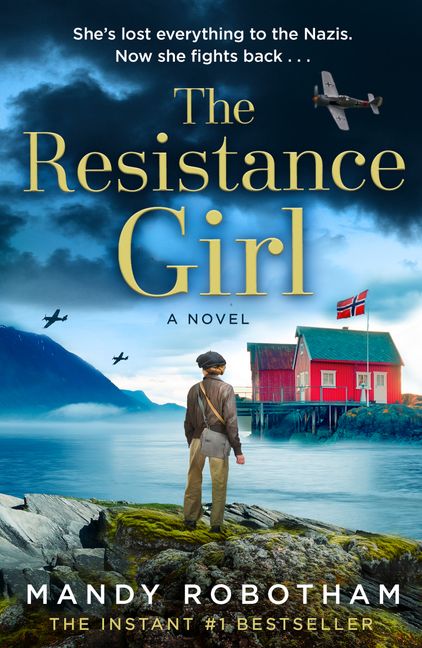
Book Review: The Resistance Girl by Mandy Robotham – a gripping read about a less-documented corner of the war

I’ve read a few novels about World War Two – heart-breaking stories for the most part about those who served, POWs and Concentration Camps, Intelligence Officers sent behind enemy lines and so on. But they’ve mostly been about the main players: France, Britain and Germany. I knew next to nothing about how the war affected Norway and this book was quite an eye-opener.

The resistance girl of the title is Rumi Orlstad. We meet her at a Bergen dockside railing at the war which has taken her fiancé. Magnus was lost at sea during his first voyage with the Shetland bus. I’d come across the bus in other books – the fleet of 30 odd fishing boats that ferried secret service agents and refugees between Sheltand and Norway – since 1940 under German occupation. The bus supported the Norwegian resistance, bringing supplies and instructors as well as assisting with sabotage.

Rumi’s father and step-brother help with the bus, and Rumi, motherless and alone, helps with the fishing business. It’s November, so there’s snow when she’s sent to bring two new British officers to a safe-house, both having parachuted into nearby countryside. She’s cross when she has to cut down Jens Parkes from the tree that’s caught his parachute, but luckily he can ski. Still reeling from her loss, they form an uneasy alliance. At least being half Norwegian, Jens looks the part and can blend in, hiding his radio transmitter among the clothing he collects for refugees – his cover.

While Jens gets on with supporting the cause, Rumi discovers her best friend has been sent to Lebensborn, one of many maternity camps devised by Himmler to produce an ideal Aryan race. It was felt that Norwegians – tall, blond and fair – had all the right attributes and so German officers stationed in Norway were encouraged to engage with young Norwegian women – a few married them and whisked them off to Germany. But many of these girls were just taken advantage off, like Rumi’s friend Anya, their babies planned for childless German couples.

This is where I found the book particularly interesting. Part of the narration is from the point of view of a housekeeper so it’s a bit like a fly-on-the-wall account. The housekeeper worked for the family that owned the house before the Germans requisitioned it – like so many larger properties – and she has no idea about what it’s to be used for. Little by little her fears grow as it all begins to make sense. The dormitories and the cots, the German midwives, the guards, the frightened young women.

How Rumi tries to help her friend forms a large part of the book, as well as her interactions with Jens and his dangerous missions. There are some excellent supporting characters too. The sinister Lothar Sellig – a German officer for the Abwehr – who keeps turning up like a bad penny, on his quest to clamp down on the resistance; Rumi’s neighbour Marjit who is like a mother figure to Rumi and having been a nurse during WWI is almost as determined and fearless as Rumi. She has a surprising connection with Jens.

Mandy Robotham has done plenty of research to bring the city of Bergen to life, its cafés and fishing industry, as well as the domestic settings, the traditional knitting and Norwegian meals. The horrors of what Norway endured under enemy occupation are described too: the fear of living alongside the enemy, the reprisals against insurrection. Himmler’s Lebensborn project seems particularly sinister, giving the novel some heft and the story builds towards a tense and exciting ending.

The Resistance Girl is a terrific story and would appeal to readers who have enjoyed Kate Quinn’s wartime novels. I enjoyed this book as an e-audiobook and the reader – Antonia Beamish – made the characters come alive and handled the Norwegian names like a native. Or so it seemed to me. I’ll be hunting out more by Mandy Robotham – this novel gets a four out of five from me.
Book Review: Where the Crawdads Sing by Delia Owens – a mystery that brings a marshy wilderness to life

I may be the last person I know to read this novel, but with the movie causing a lot of chat – both positive and negative, I thought it was about time.

Where the Crawdads Sing is one of those novels that sweeps you away. You can’t help but get lost in the world of Kya, abandoned by her family, by anyone she takes a shine to, but just gets on with the hand she’s dealt. The story starts in the early 1950s when Kya’s six, living with her family in a shack among marshes on the North Carolina coast. Her father’s a violent drunk with PTSD from his war service and has fallen out with his own once-grand family as well as his in-laws.

Kya’s mother is the first to leave and you struggle to understand how she could walk out on her family, particularly young Kya. But she’s a victim of so much abuse, it’s all she can do to get herself to safety. Soon Kya’s brothers and sisters leave too – they’re just old enough to make a life for themselves, but it’s a shame no one thought about their little sister. Meanwhile Kya, who teaches herself how to cook and keep herself alive, avoids the worst of her father’s mood swings, until he too leaves.

Kya has avoided school. Her single day in the classroom a rude awakening to prejudice and bullying. Still just a kid, she has learnt to navigate the marshes in her dad’s old boat. She discovers that the elderly black man who sells fuel, also sells fresh mussels so Kya finds a way to support herself. Thank goodness for old Jumpin’ and his kindly wife who look out for Kya, offering used clothing and affection.

And thank goodness for Tate, the boy a few years older, who teaches Kya to read and write. This opens doors for Kya and she is obviously very smart, soon recording the wildlife in her marsh not just with her collections of feathers and shells, the self-taught watercolours, but now with written descriptions too. But Tate is off to university and his life is set to take him in a different direction.

The story jumps forwards to 1969 with a murder investigation when the body of popular motor mechanic Chase Andrews is found at the bottom of a defunct fire tower. Did he fall or was he pushed? Sherriff Ed Jackson finds no fingerprints and enough to suggest foul play and soon his attention turns to the Marsh Girl. The old prejudices against Kya have never left and she becomes an easy scapegoat.

The murder investigation propels the story along, while weaving in Kya’s backstory, her growing up and her relationships with two young men. This is interesting enough, but what really makes the book special is the way Delia Owens brings the marsh to life – the watery passageways, the plants that grow there and the wildlife. This is described vividly in Kya’s distinctive voice which helps you see the world through her eyes.

“Crawdads” is an engrossing read and the character of young Kya as she learns to make a life for herself both heartbreaking and fascinating. The court case against Kya is gripping too, although I did find the plot lagged a little in the middle. And I couldn’t help thinking of Hardy’s Tess of the D’Urbervilles, which kind of skewed my reading of this novel. Perhaps this earlier work was an inspiration for Owen’s book or it may have just been me. I guess it’s true that every reader reads a different book. “Crawdads” gets three and a half out of five stars from me.

Book Review: The Way It Is Now by Garry Disher – old crimes surface in Aussie Noir mystery

I remember when Jane Harper’s stunning novel The Dry hit the shelves and suddenly we all wanted to read more Australian crime, or Aussie Noir as we soon called it. And all the while it seems Australian author Garry Disher has been producing reliably readable and award winning crime thrillers for years. I’d heard of him of course, but this I am ashamed to admit is the first Garry Disher novel I’ve read. At the end of which I could only shake my head and ask myself, what took me so long?

The Way It Is Now is Disher’s latest stand-alone novel. It’s about Charlie Deravin, a police officer on disciplinary leave who has nothing better to do or anywhere else to go but the old family beach house on Menlo Beach. While there’s plenty of surfing and Christmas to think of – his daughter’s visit is something to look forward to – there are reminders of the past at every turn.

The son of a cop, Charlie grew up in a society where the friends who came to family barbecues were other cops. And some of them are still around. But the most haunting thing for Charlie is the disappearance of his mother when he was a rookie policeman part of the team looking for a boy missing from a school camp. Assumed drowned, the child disappeared the same day as Charlie’s mother, a high school teacher who’d just popped home unexpectedly. Her car was found abandoned with evidence of a struggle. Newly separated, many people pointed the finger at Charlie’s dad.

The story weaves Charlie’s memories of the past with his ongoing relationship with his brother who hasn’t spoken to his father since, and his father now ailing but still receiving poison pen letters. There’s also the case Charlie has been suspended from, which caused him to fall out with his boss, but also brought a new love into his life. Anna was a whistle-blower in a case of jury tampering and someone’s trying to silence her. So nothing’s going well for Charlie. As Charlie uncovers the past, two dead bodies are found at a construction site and the police see even more links to Charlie’s dad. But Charlie has seen the toll the unsolved mystery has taken on his father and believes in his innocence. The book becomes a race to prove his innocence while the old man begins to fade.

While the plot is complex and interesting enough, humming along with plenty of suspense, Disher really excels with his characters. Charlie is likeable enough but flawed – the disappearance of his mother niggling in his mind for twenty years. This has put a strain on his marriage to say nothing of his work in Vice. There’re the old-school cops that he bumps onto at the beach, particularly Mark Valente who was like a second father to young Charlie and epitomises the old-boys club of local cops. Minor characters are no less interesting

While Valente seems a benign presence, he evokes a sense of not rocking the boat and keeping the past in its place. Charlie’s brother Liam loathes the man for his homophobic attitudes. Misogeny also lurks throughout the book – his mother’s nervousness around her lodger, the nasty rape case that was Charlie’s downfall, the attitudes to police wives. Disher brings it all to life in a way that seems authentic and adds a tone of menace.

I enjoyed The Way It Is Now as an audiobook, which was superbly read by Henry Nixon and made me feel I was at the beach on Australia’s Victoria coast. Disher evokes the Australian landscape well, so I’m going to see where else he takes me. This books gets a four out of five from me.

Book Review: It All Comes Down to This by Therese Anne Fowler – a compelling sisterly drama

Stories about sisters seem to pop up in all kinds of literature. They’re in those fairy stories I loved as a kid (Cinderella, The Twelve Dancing Princesses, Snow White and Rose Red), several Jane Austen novels, to say nothing of King Lear which we read in high school. What is it that we like about sister stories so much? Is it because you get to see a family from several different angles? Whatever the reason, I absolutely devoured It All Comes Down to This.

The book starts out in New York – another plus for me – where Marti Geller is getting her affairs in order. She has only a couple of weeks to live and is remarkably calm about it; the hospice people are wonderful. She has written in her will that the family cottage in Maine is to be sold and the proceeds divided among her three daughters. This creates a mixture of responses from the sisters, particularly as she has chosen her son-in-law as her executor.

Beck is appalled at the idea of the sale. The cottage has been their vacation home for decades, even if no one’s been there in a while. Her sisters could use the money, but Beck is looking for a bolt-hole. With her children grown-up she wants to finally write that novel. She’s an accomplished journalist, but the novel has been in the back of her mind for years. It doesn’t help that her husband Paul is an editor for a publishing company that has nurtured award winning novelists. Having him peering over her shoulder just stifles any creative juices. Secretly, Beck wonders if Paul might be gay.

Middle sister Claire is recently divorced, having admitted to her husband after too many drinks at a party, that he wasn’t the love of her life. She still carries a torch for someone else. As a girl, Claire struggled to compete with assertive Beck or pretty younger sister Sophie, the family darling, so she worked hard at school. Now Clare’s a paediatric heart surgeon, still with a huge student loan to pay off. The divorce has been another financial burden and she’s got a young son to think of. Selling the cottage in Maine would be a godsend.

While her older sisters married early and settled into family life, Sophie is single at thirty-six and trying to live the dream, or at least what her Instagram followers think is the dream. She works for an art gallery in New York, using her bubbly personality to seal deals with up and coming artists and their buyers. This involves travel and looking the part and being at all the right parties. She has maxed out all her credit cards and lives out of two suitcases, house-sitting to put a roof over her head, while everyone thinks she has a flat of her own which she sublets. Sophie could definitely use a hefty cash injection.

The narrative cycles between these three women as well as Paul, who has a burning secret of his own and C J Reynolds the cottage’s prospective buyer. C J is interesting in that he’s just served a term in prison for shooting at his father. Another character with family baggage. He settles into a friend’s lavish home on Maine with the idea of buying in the area and is surprised to have to share the house with two other unusual house guests: an elderly patrician woman and her newly orphaned grandson. This creates some wonderful scenes as the three learn to get along with each other.

The story burbles along between all of the above characters and while they are likeable enough, the author doesn’t shirk from showing us their faults and foibles. The story is paced nicely as Beck does her darnedest to hang on to the cottage and the lengths she will go to. Claire’s story is more of an emotional one while Sophie gets in a tighter and tighter spot as her financial house of cards looks set to crumble.

So, as I said, I simply plowed through the book, thoroughly entertained and curious about how it would work out for all five characters. But to tell the truth the ending fell a little flat for me. Was it a bit too fanciful, a bit rushed? Or was it that when it came down to it, I found the sisters just a bit foolish, annoyingly so even, and not quite likeable enough. So this one’s a three and a half out of five from me. I’ll still hunt out more books by this author though.

Book Review: The Driftwood Girls by Mark Douglas-Home – a twisty mystery involving fiction’s favourite oceanographer

I’d almost forgotten how much I’d enjoyed the previous ‘sea detective’ mysteries and so this book almost slipped under my radar. It’s been a while since The Malice of Waves, Douglas-Home’s previous novel about his beleaguered oceanographer sleuth. Cal McGill runs a small business out of his Edinburgh flat, mapping ocean currents for clients who are missing things – often loved ones – lost at sea. He has pictures of flotsam and jetsam on a pinboard that dominates his living/working space, some of them rather grisly. So yes, he’s an odd sort.

It’s not unusual for him to find himself in a tight spot and at the start of The Driftwood Girls everything seems to be going wrong. After talking to an elderly man who looked set to jump from a bridge, the news media have labelled him as the bad guy when the old fellow disappears. Clients have dropped him like a hot potato and he’s almost out of cash. Then he learns that his old uni friend Alex is dying and is called to make good a promise to bury him in the middle of Alex’s favourite lake, which being illegal, will have to be done post-burial and under cover of darkness.

Out of the blue, Cal is contacted by Kate Tolmie, desperate to find her sister Flora who left a mysterious note with Cal’s name on it. Twenty-years before Kate and Flora’s mother disappeared off the coast of France when she was due to return to her family via ferry. The disappearance was big news at the time but no clues have ever come to light. Kate also hopes Cal can find out what happened to her mother, and there’s a personal connection too. Flora was Alex’s fiancée.

The story switches to Texel, an island holiday spot in the Netherlands, where the body of a young English girl lost at sea washed up, also twenty-three years ago. Here her old school-mate Sarah has made her home, guilt-ridden for not being a better friend. Of course, only Cal can make the connection. And what’s the connection to the death of a beggar at an Edinburgh train station, stabbed in an adjacent alley. All clues point to Kate Tolmie being the killer but DS Helen Jamieson isn’t so sure.

Helen is the other great thing about these books. She, like Cal, is an awkward character, not getting on with her colleagues because of her need to examine all the facts to ensure the right person is put away. Imagine that! Her IQ is off the chart and she’s got a massive crush on Cal. The two have become friends over several cases, but Cal is a terrible person to be friends with as he disappears for months at a time and doesn’t keep in touch.

Friendship is a recurring theme throughout the book – the awkward friendship between Cal and Helen, Cal’s sporadic memories of time spent with Alex, and their friend Olaf. There’s Sarah and her elegant French neighbour, as well as her memories of lost friend Ruth. Friendship has its obligations which can cause strain as much as it enriches people and we can see that here. Then there are all those secrets. Cal is in for a few surprises about the old pals he lost touch with and it is fortunate that Helen is investigating as she helps connect the dots.

This is a lovely twisty read with some really evocative coastal settings that add a ton of atmosphere. You get enough of the science of oceanography for it to add interest without weighing the story down. Mark Douglas-Home deftly weaves together all the plot threads – and there are a few of them – in a way that keeps you up reading to see what happens. All in all it’s a very satisfying mystery, but I hope we won’t have to wait too long before Cal’s next investigation. A four out of five read from me.

Book Review: The Fell by Sarah Moss – an empathetic and gripping story of the pandemic

The Fell reads a bit like several interwoven stories, each from the perspective of a different character. The single day setting of the book gives it more of a short-story feel, in that you only get glimpses of the past while the immediate future is left up in the air. This concentrates the tension of what happens when Kate goes for a walk and seems to disappear.

The story is set in a small town in the Pennines where Kate lives with her son Matt and they’re just scraping by. Kate works as a waitress and she does a bit of pub singing, but that’s all come to a halt since a contact at work has become ill with the Covid virus and she’s forced to take a couple of weeks off and to isolate at home.

This is hard for Kate as she’s a keen walker. She’s up on the paths into the wilderness near her home normally every day. She loves nature and living her life with care for the environment. As we meet her, she’s running out of money and there’s not much in the cupboards, certainly not a lot to feed a hungry fifteen-year-old. The house always seems to be cold adding to the sense of times being tough. So you can’t blame Kate for escaping her worries in a fit of desperation and striding up the path to the fell. She only plans a quick walk before dark, but something happens and she doesn’t return.

The story flips from Kate’s character to Matt’s, a caring kid who worries about his mum. As time goes by, he is torn between phoning for help and the fear that his mother would be in terrible trouble. She could face a huge fine they can ill afford, so the hours tick by and Matt waits. He hesitatingly visits next door where Alice is also finding things tough.

Recently widowed, Alice has dinner with her daughter via Skype, but since her battle with cancer, her daughter never stops pestering her about her health. Even though Alice is on her own, it’s like someone is always peering over her shoulder, making her feel guilty about baking all those cookies and not taking better care of herself. She misses her friends and trips to town, stuck at home because of her age and vulnerable health.

The fourth narrator is emergency rescue responder Rob. Now divorced, he should be at home with his teenage daughter – it’s his rostered weekend. But when the call comes through that a walker’s gone missing, he knows his duty is to the missing woman. Kate has a teenager at home too – probably worried sick. Imagine if that was his daughter. He’s torn but it’s a life and death situation – with chilly November temperatures, hypothermia could be fatal if they don’t find Kate soon.

Moss has created four very believable and empathetic characters in a situation many of us will recognise. This is the first book I’ve read that where the Covid pandemic as a key part of the story, not just an interesting background. She conjures up the anxiety, isolation and insecurity felt by many during those difficult times. And also the obsessiveness: the bread baking and the sanitising of groceries.

You get the sense that everyone is battling themselves – to say nothing of social media shaming – doing the right thing on the one hand while desperate for some relief on the other. Some tiny treat. I remember that feeling well. Whether it’s just getting out of your house, playing computer games or eating cookies for dinner.

The Fell’s a short book, and you plough through the pages to see what happens next. I would have liked at least an epilogue to see if all that worry was justified and because I felt so invested in the characters I wanted a little bit of optimism for them. Something for them to look forward to. But this is a perfectly pared down story, and those focussed anxieties don’t let up until the end.

The Fell is also one of those books where there are no quotation marks, which kind of works, adding to that stream of consciousness narration, and I did get used to it. Eventually. The chapter headings are all lower case, which makes them oddly emphatic. But all this vanishes as you read, because of your connection with the characters. If it isn’t too soon for you to read a Covid novel, give this one a go. At the end of the day, it’s just a darn good story – and a four out of five read from me.

Book Review: The Winter Guest by W C Ryan – a ghostly murder-thriller amid the Irish troubles

The Winter Guest is my second W C Ryan novel, both books featuring ghosts, or at least characters who are able to see them. This isn’t a genre that normally grabs my interest, but Ryan makes the ghosts not too ghoulish, sometimes helpful and doesn’t let them take over the plot.

Tom Harkin is an intelligence officer for the IRA. It’s 1921 and Tom has been asked down to the funeral of former fiancée, Maud Prendeville, who’s been killed in a rebel ambush outside her home. Maud lived at Kilcolgan House, the run-down home of Lord Kilcolgan, her father. The family had not fared well during the WWI, losing Arthur, Maud’s brother. So there’s that.

And then Maud got caught up in the Easter Rising of 1916, siding with the rebels, which is unusual considering her family background, i.e., Anglo-Irish landed gentry and Anglican. After a narrow escape, she’s supposedly lead a quiet life, having sometime before broken off her engagement with Tom who she’d met at university. Gosh, she’s an interesting victim – it’s almost a shame we didn’t get to meet her properly, before the killer got her.

Maud had been at a card party at her uncle’s, Sir John Prendeville, and had unexpectedly decided not to stay the night – it’s dangerous to be out after dark, as violence erupts in so many ways. Not just the rebels, either. She gets a lift with District Inspector James Teevan, who is also dropping home Maud’s guest, family friend, Harry Cartwright. All three are discovered shot dead, but the IRA rebels swear they left Maud concussed, but still alive.

The elderly couple living at the gatehouse heard a shot go off a few minutes after the original shoot-out. So Tom’s been asked to put his intelligence officer hat on while he’s staying with the Prendevilles for the funeral to find out who murdered Maud. His cover as usual is that he’s an insurance assessor, evaluating a future claim on Maud’s estate.

This is a mystery where it doesn’t matter quite so much whodunit, as whose side they’re on and what secrets they’re hiding. As you read you have to get your head around the politics of the time. Since the Rising the British Army have come down hard on rebel activity, bolstering the local police force (The Royal Irish Constabulary, or RIC) with the Black and Tans recruited from ex-British solders, as well as Auxiliaries, a counter-insurgency unit. In charge of the local Auxies is Major Abercrombie, a shoot first, ask questions later sort of guy. Abercrombie was meant to have been in the car when it was ambushed.

And then there are the ghosts. Tom Harkin, still suffering from PTSD from his time in the war, feels a presence helping him avoid soldiers during curfew. He sees ghosts of men he knows are dead. It’s a shock to meet Sean Driscoll from his old regiment. He thought Driscoll had been killed in the same mortar attack that had wiped out many of his fellow soldiers. But somehow Driscoll survived and now he works for the Prendevilles. There’s a Prendeville ghost too, who Maud’s brother spots just before the ambush, seen only when a Prendeville is going to die.

The Winter Guest is more than an atmospheric country-house mystery – although there’s a ton of atmosphere in Kilcolgan House, with its failing masonry and lingering dead. It’s also a terrific snapshot of a time in history and the pressures of martial law, which seems to bring out the worst in many, and the best in a few. On top of that, Ryan rollicks up the tension as Tom Harkin slowly puts together what happened and why, leading to a nail-biting showdown at the end.

Tom unravels layers and motives, going back in time, plus a bunch of secrets that keep the reader guessing. I wouldn’t mind another mystery for Tom Harkin to solve – he’s an interesting and appealing character. But then I really liked Kate Cartwright from A House of Ghosts too. The author has written some historical fiction as William Ryan, but as W C Ryan, ghosts seem to be the connecting theme, rather than a regular sleuth. It’s an original idea and in Ryan’s skilled hands works really well. I’ll definitely be back for more. The Winter Guest is a four star read from me.

Book Review: American Dirt by Jeanine Cummins – a gritty, believable survival tale you can’t put down

This book came highly recommended, the back cover promising an unputdownable page-turner and in a sense it is. But it is also much more. Picking it up I was instantly caught up in the world of Lydia and her young son Luca, as they hide from drug cartel hitmen who have gatecrashed a barbecue celebration and murdered all her family. That’s sixteen people, including Lydia’s husband, Sebastián. The two hide out in the shower, holding their breath, and as a reader I was holding my breath too.

I held my breath through a lot of this book, actually. The story starts out in Acapulco, where Lydia lives with Sebastián, a journalist who writes exposés on the Mexican drug cartels who hold sway over the country. A fairly new cartel, Los Jardineros, has become dominant in Acapulco, once a peaceful tourist trap, but now its economy is in doubt as visitors stay away. Lydia befriends Javier, a regular visitor to her bookshop who shares her taste in books. Lydia suspects Javier is a little in love with her.

Sebastián writes an article about the cartel, in particular its sophisticated drug lord, a piece that isn’t particularly defamatory, but leaves no doubt about his identity. Even so the family feel no reason to go into hiding, even when Lydia realises who the drug lord really is. This back story is fed throughout the book, little by little, but the main thrust of the plot follows Lydia and Luca’s escape. They have so many near misses, as they first find a way out of Acapulco, then to Mexico City, and on further north in a bid to reach the United States. For the reader, it’s a nail-biting ride.

In another country, you would imagine the police would protect the fugitives, but so many police officers are in the pocket of the cartels, it is impossible to know who to trust. The same thing goes for the people who work at airports, immigration officers and bureaucrats, almost anyone it seems could be on the payroll of Los Jardineros. So using banks and cellphones is out, along with public transport. There is nothing for it but to join the stream of migrants who pass through Mexico from countries further south, like the young girls, Soledad and Rebeca who come from Honduras, and who show Lydia how to ride La Bestia, the cargo trains that head north.

She and Luca are actual migrants. That is what they are. And that simple fact, among all the other severe new realities of her life, knocks the breath clean out of her lungs. All her life she’s pitied those poor people. She’s donated money. She’s wondered with the sort of detached fascination of the comfortable elite how dire the conditions of their lives must be wherever they come from, that this is the better option. That these people would leave their homes, their cultures, their families, even their languages, and venture into tremendous peril, risking their very lives, all for the chance to get to the dream of some faraway country that doesn’t even want them.

Soledad and Rebeca have a harrowing story too, like many of the migrants that ride on top of trains. They must have, to risk their lives like this. It is insanely dangerous and the casualties horrific. And here is Lydia so desperate she is riding La Bestia with her eight-year-old son. At any moment they may be captured and sent back to where they came from. Many of them are, or never heard from again. Then there’s the border crossing to consider, and a trek across the desert. And all the while Lydia cannot be sure she’s not being watched, her movements tracked.

The characters of Lydia and Luca are well rounded and interesting. You get glimpses of Lydia in her shop, educated and well-read, of her life with Sebastián. Luca is a geography nut and uses his knowledge of countries and cities to brilliant effect. Lydia is desperate to protect his innocence and fears he will be scarred for life by these experiences – how can he not be?

It’s a gripping story, made all the more so by the possibility that something like this could really happen. It may be fiction, but it reads true and the migrant experience seems to be well-researched. Sometimes the novel form works well because it puts you in the shoes of someone who may not be so very different from you, who is driven to extreme actions by impossible circumstances. American Dirt is well worth picking up, but it may keep you up at night, so be warned. It will certainly give you a lot to think about. It’s a four and a half star read from me.