Book Review: Back When We Were Grown-Ups by Anne Tyler – revisiting an old favourite

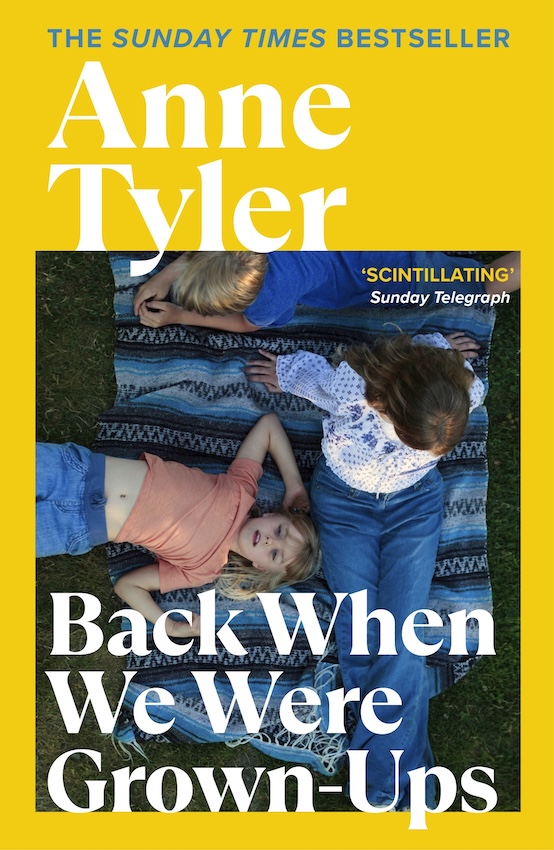
While there are so many terrific new books out there to tempt and distract, I like to come back to old favourites now and then. A favourite author for me is Anne Tyler. Back When We Were Grown-Ups was first published in 2001 but has a kind of timeless quality which I find very appealing. It follows Rebecca who wonders how life would have been different if she hadn’t been swept off her feet by Joe Davitch all those years ago; if she’d finished college and gone on to marry her childhood sweetheart instead.

At barely twenty, Rebecca had met Joe at a party venue his family ran called the Open Arms, a large terrace house with high ceilings in a slightly rundown part of Baltimore. An odd coincidence makes her laugh, and Joe is drawn towards her apparently cheerful nature. But all the while, Rebecca had always seen herself as a fairly serious girl, intent on finishing her history degree.

Not only does she marry Joe instead, but she also takes on his three daughters, has one of her own and, when Joe dies in a car crash six years into their marriage, she runs the Open Arms as well. This doesn’t even include the elderly folk she looks after, first Joe’s mother, then Poppy, his uncle. The Open Arms needs constant repairs, and as the decades pass, there are grandchildren to babysit too.

She’s fifty-three when we meet her at the start of the book, organising a family barbecue and trying to make everyone happy. Which isn’t always easy – the Davitches are a prickly, discontented bunch at times, particularly the girls, who are prone to squabbling or disapproving of their sisters’ choices. Circumstances trigger Rebecca into wondering what happened to the boy she dumped for Joe, and she decides to look him up.

This really is a novel of characters – the four daughters all with their own set of problems are constantly in and out of the Open Arms, also the Davitch home which Rebecca still shares with Poppy, now approaching his 100th birthday. We’ve got the girls’ partners and offspring, as well as Zeb, Rebecca’s goofy brother-in-law, a hospital doctor who’s never married.

They’re all interesting and entertaining, but I particularly loved Poppy with his memories and enjoyment of food, his discourse on what it’s like to be so old and so on. And Peter, who at eleven is a new arrival into the family via his father’s marriage to one of the girls. He sticks out for being pale compared to the dark haired Davitches as well as shy and nerdy. Tyler captures beautifully the bickering dialogue of sisters, the way conversations waft in and out between characters, between topics as people pounce on ideas or lose the thread of what they were saying, with all the humour that results.

The story takes its time as Rebecca rethinks her life and tries to reconnect with her old flame, now a divorced physics professor, and ponders her choices. Was Joe ever in love with her, or was she just useful when he needed help? Some readers may find the pace a little slow as the scenes, often party scenes, pile one on top of the other. A baby is born, there’s a wedding and Poppy has his birthday bash, meals are served and tradespeople called in.

But without being an out and out comedy, I found myself chuckling my way through them all. I once came across a comment Tyler made about the fiction of Barbara Pym in which she stated: “she reminds us of the heartbreaking silliness of everyday life”. The same could be said of this novel, the way Tyler captures all the muddles, missteps and misconceptions. I loved it, finding it well-worth a reread, both relaxing and hugely entertaining – a four star read from me.

Book Review: The God of the Woods by Liz Moore – a stunning thriller about family secrets and lost children in the wilderness

I found myself unable to put down this mystery-thriller set at a summer camp in the Adirondacks during the 1970s. The God of the Woods begins when thirteen-year-old Barbara goes missing towards the end of camp. Barbara’s parents, fragile Alice and autocratic Peter, are part of the wealthy Van Laar dynasty who own the camp and pay the staff who run it. They thought camp would be a good idea for Barbara as she’s been showing concerning behaviour at school and dresses like a punk.

Fourteen years before, the Van Laar’s son Bear also went missing, thought murdered by a local man who seemed to have a strange obsession with the boy. His grief stricken parents idolised Bear, who was by all accounts a popular and cheerful boy, his death something Alice could never get over. Unfortunately the suspect was never tried in court as he died suddenly – the case closed, leaving questions unanswered.

When a search is organised to find Barbara, young state trooper Judyta Luptack is determined to do her darnedest not just at finding Barbara, but in also discovering what happened to Bear, whose body has never been recovered. She suspects the Van Laars are hiding something. There’s also the recent escape of a serial killer from prison, who had been in the area when Bear disappeared. Could he have taken Barbara too?

The story dips back and forth through time, to when Alice first met Peter Van Laar, and her struggles to be seen as a person worthy of more than producing a Van Laar heir. The story is told from various perspectives, including Louise, one of the young staff running the camp who is hiding a secret. There’s also Tracy, the awkward girl who became Barabara’s friend, sent to camp following her parents’ divorce.

The story, weaving its way through these characters’ lives, and the suddenly changing timeline takes a bit of getting used to. I found myself having to really concentrate to keep up. But the sudden revelations, the cliff-hanger chapter endings and the issues each character carries with them, to say nothing of fears for the young Van Laars, keeps you on the edge of your seat as you read.

Class, power and money seem to be at the centre of things with the Van Laars and their wealthy friends, their alcohol-fuelled parties and casual disregard for the locals, their determination to keep their good name – all of which makes them unlikable. Although you can’t but help feel sorry for Alice. Other families have problems too – Judyta’s conservative Polish family are reluctant to let her live away from home, which means a long commute every day. Louise is worried about her alcoholic mother and her inability to properly care for her twelve year old brother. There’s also TJ, who has taken on the burden of running the camp, trying to fill her highly-regarded father’s shoes.

The God of the Woods is very much a literary thriller – it is so well put together, its characters all so interesting and complex, the natural wilderness setting, so peaceful one minute, full of danger the next, an evocative backdrop. The 1970s era gives us a glimpse of changing attitudes, but there’s still the paternalist misogyny lingering in the police force and wider society. It all gives you a lot to think about as you whip through the pages to find out what has really happened. It’s a brilliant mystery and a four and a half-star read from me.

Book Review: The Treasures by Harriet Evans – an immersive family saga and the first of a trilogy

I was happy to put my hand up for this Netgalley offering as I’ve enjoyed several Harriet Evans’ novels before. She often centres her novels around an atmospheric house (Keepsake in The Butterfly Summer; Vanes in The Beloved Girls; Fane Hall in The Stargazers), which I’ve always found appealing. A bit like Manderley in Daphne du Maurier’s Rebecca.

Early on in The Treasures we hear mention of a house called Sevenstones. I imagined a grand old English manor, full of secrets and mystery. In actual fact Sevenstones has more of a cottage feel, a country bold-hole where various members of the cast of characters arrive when they need a break. For some, including Tom Raven’s parents, it was a chance to take a break from the war – World War II that is – and where relationships were forged.

But we first meet Tom as a young boy, living in a two-room cottage with his much loved Dad in Scotland. At the age of nine, he is uprooted by his Aunt Jenny, leaving the simple life behind for more opportunities in London and public schooling, even though his aunt and Uncle Henry really have no idea about children or even running a house without staff. We’re in the 1950s, and there are bomb craters everywhere, and children from the upper classes aren’t to mix with the lower orders, or so Tom’s told.

There’s also another grander house in this book – Valhalla, the American home of the Kynastons. Alice is growing up as best she can, with a father battling demons and debts owed on his orchards. When he takes his life, it seems Alice and her mother are to lose their home on the grounds of Valhalla. Wilder Kynaston was a good family friend and offers them a lifeline, but there’s a price to pay.

We’re well into 1960s by now, and as Jack and Alice grow up on opposite sides of the Atlantic, another war has arrived, and with it the rise of the protest movement, women’s lib and the chance of new freedoms and ways of thinking. The novel takes you through these changes as our two young characters’ stories are set to intersect. But family secrets lurk, throwing roadblocks in their way.

Harriet Evans captures the time really well, and the dilemmas faced by young women like Alice who are trying to forge a new path for themselves, only to find they’re still chivvying for the boyfriends they tie themselves to. The men of the establishment still hold all the power, while choices for women remain limited. But there are others too, like the fathers of both Alice and Jack, who have been left haunted by the past, plagued by guilt or disappointment, also unable to be the people they want to be.

I was curious that the book starts with a modern day setting and a character, Emma, who doesn’t appear again, discovering the ‘treasures’ of the title. These are little mementos Alice has been given by her father on each of her birthdays. But I now see that this novel is the first of a trilogy – I’ll be intrigued to see how the story continues to fill in the gaps in the books that follow. The Treasures is a rich, immersive read with terrific characters you empathise with.

The Treasures is due for release on 12 June. It’s a four-star read from me.

Book Review: The Berry Pickers by Amanda Peters – an emotional read about identity, guilt and the effects of childhood trauma

Amanda Peters won a cluster of awards, including a Carnegie Medal, for this novel. I’d also heard many recommendations from other readers, so have had this on my to-read list for some time. The Berry Pickers explores what happens when a young Mi’kmaq girl goes missing from the berry fields where her family are working. They are a family of five children, who with their parents travel from Nova Scotia to Maine every year to work in the berry fields to supplement their income.

Every year, they set up camp with other families, and there’s a strong sense of community as the pickers get to work. It’s the early 1960s when six-year-old Joe loses sight of his four-year-old sister Ruthie to look at something for a moment. When he returns, she is gone. An extensive search over the days and weeks that follow yields no clues while the police are reluctant to get involved; there’s even a suggestion that the family were careless. You can’t help feeling they would have been far more helpful for a local family, or a white family.

Joe grows up with this tragedy on his conscience, as well as the loss of his older brother Charlie in a fairground altercation. This sets in place a rage that will affect him for much of his life. When we meet him at the start of the book, Joe is dying of cancer. Now in his fifties, he still does not know what happened to his little sister. Is it too late now for him to find out?

The narrative flips between Joe’s story and that of Norma, a young girl growing up in a middle-class white home. Norma is disturbed by strange dreams and questions about why she is so much darker-skinned than her parents. Her mother, Lenore, is very loving, but over protective and watchful, not letting Norma out to play except in the back garden, hidden from view. It’s a strange, suffocating childhood, which has long-reaching effects on Norma and her adult life.

The plot follows the two main characters through the years – Joe trying to deal with his rage and Norma still questioning her identity, but unable to talk to her emotionally fragile mother about it. Both stories are immensely sad and this makes for quite an emotional read. There’s also the racism constantly directed at Joe and his family, particularly in the years following the loss of Ruthie and Charlie. The authorities are swift to criticise but offer no justice.

Which isn’t to say that the book is didactic or preachy. The storytelling through its two main characters brings the reader into their worlds, raising ideas about culture, motherhood, childhood trauma as well as grief and forgiveness, simply but effectively. It’s a terrific read, powerful and gripping. A four-star-and-a-half-star read from me.

Book Review: Three Days in June by Anne Tyler – a charming novella about marriage, laced with humour and insight

If I had to choose a favourite author, (heavens, what a decision!), Anne Tyler would definitely be on my shortlist. I’ve been reading and rereading her for decades. So picking up her latest book, Three Days in June, I was instantly in my happy place, absorbed in a seemingly ordinary story about ordinary people, and which was unsurprisingly fascinating.

This time we’ve got Gail, who is sixty-one, an assistant school principal who’s about to lose her job. So she’s not happy about that. She leaves work in a huff and then finds her ex-husband, Max, on the doorstep with a cat from the shelter he helps out at. Max is visiting for their daughter’s wedding the following day, but can’t stay with Debbie because her fiancé Kenneth is allergic to cats. Gail isn’t happy about this sudden imposition either, and no way is she about to adopt a cat. No, thank you!

The cat soon settles in, and so does Max, and the former couple get caught up in the wedding arrangements – the wedding rehearsal, shopping for clothes and so on. But the hint of an indiscretion on Kenneth’s part has Gail worried that Debbie is making a huge mistake. She should know. The story flips back in time to the events that eventually led to Gail’s and Max’s divorce.

The clock gathered itself together with a whirring of gears and struck a series of blurry notes. Nine o’clock, I was thinking; but no, it turned out to be ten. I’d been sitting there in a sort of stupor, evidently. I stood up and hung my purse in the closet, but then outside the window I saw some movement on the other side of the curtain, some dark and ponderous shape laboring up my front walk. I tweaked the curtain aside half an inch. Max, for God’s sake. Max with a duffel bag slung over one shoulder, and a bulky square suitcase dangling from his left hand.

Anne Tyler packs a lot into this little book. We get a good deal of character development and insight into the family. There’s the usual gentle humour, which is always a plus, and the characters are wonderful. I instantly warmed to Max, also a teacher, working in a school where he doesn’t earn a lot and rents the same flat he’s lived in for years. He’s a scruffy, gentle bear of a man who doesn’t get in a flap. Early on you feel he’s a good fit for Gail, who’s a bit uptight and pernickety and not so good with people.

There’s also Debbie, a lively, determined kind of girl who doesn’t shirk from speaking her mind. There’s also Gail’s mother, who’s rather amusing in her little digs at her daughter, plus the well-to-do and at times hoity-toity in-laws. The way the different family members bounce off each other is very realistic but also delightfully entertaining.

Three Days in June is classic Anne Tyler – a lovely, warm-hearted read that charms from the first page to the last. I couldn’t help thinking it would make a nice little film, a cut above many wedding movies, that’s for sure. If you’re feeling in the mood for an uplifting read it’s well worth picking up. And check out Tyler’s backlist – she’s had a host of book award nominations, winning a Pulitzer for Breathing Lessons. Three Days in June is a four star read from me.

Book Review: Tell Me Everything by Elizabeth Strout – a welcome return to the world of Bob Burgess

The Burgess Boys was the first novel by Elizabeth Strout I ever read. I was soon a fan of Strout’s particular way of storytelling, never missing a book since and catching up with Olive Kitteridge, Lucy Barton and co, the small towns of Amgash Illinois, or as with this book, Crosby, Maine.

But I never forgot the wonderful character of Bob Burgess, the self-deprecating legal-aid lawyer, working the cases that don’t bring in a fat pay-cheque. He’s got plenty of history with his well-to-do, more confident brother, Jim – another lawyer and winner of a famous case people still talk about.

In Tell Me Everything, we catch up with Bob, who in the previous Lucy Barton book (Lucy by the Sea) has become Lucy’s friend. They take walks most days together, Bob having a furtive cigarette. Our other Elizabeth Strout character of note, Olive Kitteridge also enters the plot, having a story she wants to share with Lucy. Bob brings Lucy to visit the elderly Olive in her care facility, and Olive immediately detects that Bob is in love with Lucy. This is awkward, as Bob is married to Margaret, a church minister, and Lucy has settled in Crosby with her ex-husband William.

Lucy is a famous author, though a quietly unassuming one. Olive finds her a bit mousey but the two soon get along well, sharing stories of ordinary folk. They’re often rather sad stories, but the two feel they are worthy of sharing, as being otherwise undocumented lives. I feel this is Elizabeth Strout’s goal too – to write about ordinary folk, their burdens and their hopes, their failures and secrets, as well as the talents they don’t know they have. Some are more ordinary than others.

When elderly Gloria Beach goes missing from Shirley Falls, suspicion lands on her son Matthew, a strange, shy, reclusive man who has always lived with his mother. Bob finds himself reluctantly agreeing to defend Matthew against what seems to be an imminent charge of murder. Again, what is on the surface hides a grim set of family secrets, “lives of quiet desperation” indeed. So Bob has a lot going on with the legal case and his feelings for Lucy. A terrible illness in his brother’s family throws more light onto his relationship with Jim and events from the past.

Poor old Bob. He’s such a nice guy but gets caught up in everyone else’s troubles. He’s what Lucy calls a “sin-eater” – he seems more ministerial than his wife, Margaret, who he’s beginning to have some doubts about. On top of everything else, Margaret is having a difficult time with a partitioner.

I rattled through Tell Me Everything, particularly interested in the murder case and wanting to find out what had happened. But there’s nothing sensational here, it’s all very much like real life, another tragedy in an already tragic family. How Bob spots what happened and deals with it reveals an astuteness that is easily hidden within his seeming ordinariness.

Tell Me Everything is another terrific addition to the canon of novels about characters I have come to care about. They’re so realistic with their good points and bad, but Olive, Lucy and Bob are all people who take an interest in the lives of others, even people they hardly know. The stories of these people that come to the surface are often somewhat bleak, heartbreaking even, but they’re nonetheless fascinating. Tell Me Everything‘s a four-and-a-half-star read from me.

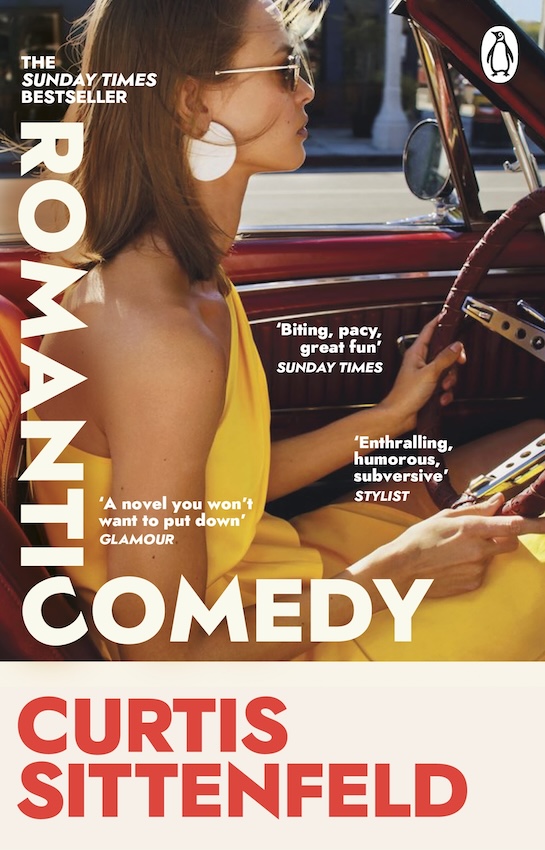
Book Review: Romantic Comedy by Curtis Sittenfeld – a warm and witty novel that explores the affairs of the heart

I loved Eligible, Curtis Sittenfeld’s modern interpretation of Pride and Prejudice, written for The Austen Project and published in 2016. It was smart, funny and romantic, and a very clever update. So I was expecting a similar vibe with Romantic Comedy, a novel about a sketch writer for a late night TV show and an unexpected romance.

Sally Milz has been writing comedy sketches for The Night Owls for almost ten years and has seen a lot of talent come and go. When fellow writer Danny starts dating Annabel, a beautiful actress who is also super talented and bright, Sally is peeved. Why is it that fairly ordinary guys like Danny can date and even plan a future with women who are way out of their league, when it never happens the other way around? There have been several Danny/Annabel type matches at the studio alone but you never see an ordinary-looking woman, or even a mildly pretty one, catching the eye of handsome star in his prime.

The arrival of Noah Brewster, a hugely successful and drop-dead gorgeous music star, as a guest host on the show gives Sally the perfect opportunity for a sketch to highlight this anomaly. The Danny Horst Rule would star Noah as the gorgeous guy who tries to date an average girl. Sally gets more of her skits voted in for the show that week, and so gets to spend more time with Noah at rehearsals. She finds him surprisingly nice, and what’s more, he apparently likes her. He’s easy to talk to and seems to seek her out.

The story follows their interactions and Sally’s growing attraction to Noah, a relationship that she discounts, because there’s no way a guy like that would ever think of her romantically, is there? We meet other people on The Night Owls, particularly fellow actors like Viv and Henrietta, who are Sally’s friends and sounding boards, whose advice is sometimes helpful, and often hilarious. Viv herself has met an eye doctor she’s attracted to so there’s advice going both ways. And we get a bit of Sally’s backstory – a failed marriage, the colleague who broke her heart.

Working on The Night Owls, Sally works excruciatingly long days, and nights, taking naps in her office, but then she’s a perfectionist and gives her work her all. She has decided never again to date a colleague, and has no time for more than an occasional night spent with someone she doesn’t care about. When Noah upsets the applecart of her carefully managed feelings, she doesn’t know what to do.

I heard someone say my name, but at first I was so deeply asleep that I incorporated the voice into my dream. I thought it was Bernard, the janitor, coming to empty my trash can, and, seamlessly, I mumbled, “You can leave the molluscs.” I felt a hand lightly pat my shoulder, and the person said, “Sally, I’m really sorry to bother you” – not a commonly uttered phrase at TNO – and I pulled the T-shrit off my eyes and the earplugs from my ears, sat straight up, and said, “What do you want?”
Hunched over the couch at such an angle that my sitting up had brought our faces within a few inches of each other was Noah Brewster.

This was a fun read for the most part. I found the look behind the scenes of a television show fascinating and Sittenfeld peoples it with plenty of interesting characters and scenarios. Danny’s and Annabel’s relationship has its ups and downs and so there’s plenty going on. There are ups and downs for Sally and Noah too, and a lot of the story has the reader wondering: will they or won’t they? There’s Covid and the lock-downs, long-distance communication and a lot of soul searching. So while this is in many ways a romantic comedy, it’s also at times a serious look at love and life.

Curtis Sittenfeld has written a smart, thoughtful and very romantic novel which has moments of laugh-out-loud humour. My only quibble is that Sally can be difficult company at times, with a tendency to shoot herself in the foot to make a point. Sometimes I wanted to give her a good telling off. So while I didn’t enjoy Romantic Comedy quite as much as Eligible, it’s still entertaining and clever – and a three-and-a-half-star read from me.

Book Review: The Librarianist by Patrick DeWitt – a quirky and heartfelt novel with a memorably unmemorable main character

Working in a library, of course I was drawn to this book, with its cover showing an old-fashioned library book date-slip. But what the heck is a librarianist? How did that one slip past me, of all people? I just had to find out.

Bob Comet is the librarianist of the title, an everyman kind of character who has always lived for books. Maybe that’s what librarianist means. He is described as “not unhappy” and seventy-one years of age, a solitary man who fills his days with simple pleasures, such as reading, cooking, and walking.

We catch up with Bob in 2005 when he rescues an elderly woman he bumps into at a 7-Eleven, where he’s gone for coffee. The young cashier doesn’t know what to do with her; she’s been staring at the chilled drinks fridge for getting on for an hour. Bob reads a label attached to her clothing and discovers her name is Chip. He manages to get her home to a care facility and before you know it he’s a volunteer, expanding his world and getting to know the residents.

A coincidence at the care facility occurs that shocks Bob and propels the story back to Bob’s youth. We’re back in the 1940s and 50s when Bob’s love of books begins. You get the impression that it is books that rescue Bob from the reality of the hurly-burly of school, his life at home with a mother that doesn’t understand him, and his general aloneness. He becomes a librarian, and takes on his mother’s house when she dies. You imagine a quiet, solitary, bookish life for Bob, and he does too. And then he meets Connie.

The book describes his relationship with Connie, similarly a person who doesn’t fit in but for quite different reasons. There’s also his sudden friendship with Ethan, who turns up at the library carpark one day, too afraid to go back to his apartment across the road, and the angry policeman inside it. Bob’s life has suddenly a friend and some romance in it – until suddenly it doesn’t.

Why read at all? Why does anyone do it in the first place? Why do I? There is the element of escape, which is real enough—that’s a real-enough comfort. But also we read as a way to come to grips with the randomness of our being alive. To read a book by an observant, sympathetic mind is to see the human landscape in all its odd detail, and the reader says to him or herself, Yes, that’s how it is, only I didn’t know it to describe it. There’s a fraternity achieved, then: we are not alone. Sometimes an author’s voice is familiar to us from the first page, first paragraph, even if the author lived in another country, in another century.” Bob held up his stack of Russians. “How can you account for this familiarity? I do believe that, at our best, there is a link connecting us.

But before we catch up with Bob in 2006 again, where the story left off, there’s an odd chunk of the novel that takes us back to 1945 and an eleven-year-old Bob running away from home. Where he gets to and the people he meets makes for an entertaining enough interlude, full of memorable characters, but I couldn’t help asking myself what it was all about. I couldn’t help wondering why it didn’t seem to have an impact on the Bob we meet later, who returns home eventually, remarkably unchanged. Years later, however, he sometimes wistfully dreams about the seaside hotel that took him in for four days..

The Librarianist might not follow the usual rules for novel plotting in some ways, and the ending is perhaps a little odd, too. But it’s a diverting read, and you can’t help getting to like Bob and the people we meet as seen through his eyes. Patrick DeWitt’s prose is delightful, witty, wry and perceptive, bringing Bob and his times to life.

The novel reminded me a little of some of Anne Tyler’s earlier fiction with its characters that don’t fit in, and the events that pull them out of their lethargy or solitary habits. I’ve always got time for a novel like this, particularly if it’s as nicely written as this one. I’ll pick up another DeWitt novel sometime, I’m sure. The Librarianist is a four-star read from me.

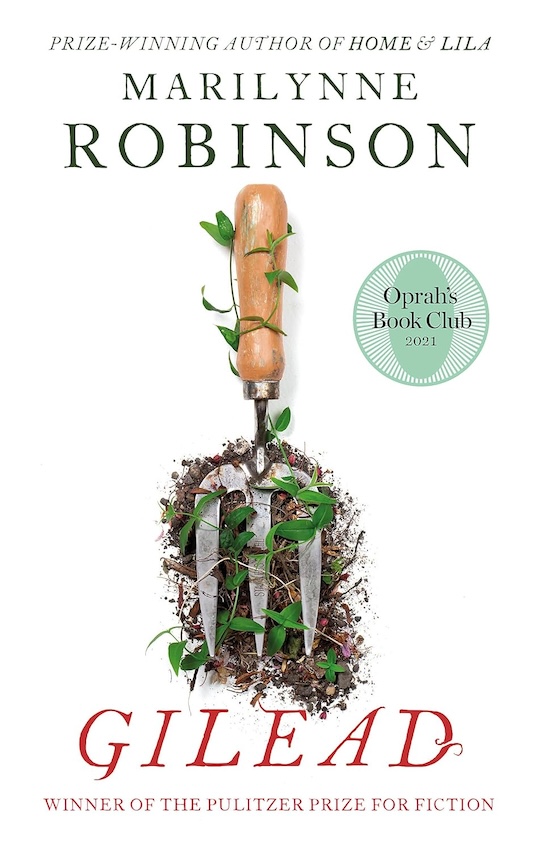
Book Review: Gilead by Marilynne Robinson – a love letter from a father to his son and a wonderful contemplation on life itself

In Gilead, John Ames is writing a memoir for his son, a small boy of seven, intended for him to read later, long after his father has gone. Ames, well into his seventies, has a weak heart and fears leaving his boy to grow up without a father. So he wants to write it all down – from his own childhood and his life as the son and grandson of preachers to what’s going on around him in the present. We get bits of history – the Civil War and the Underground Railroad, World War I, the Spanish Flu, and the Great Depression, and how all these events impacted on ordinary folk in small towns like Gilead.

While he’s telling his story, Ames is irritated by the return of Jack, the black sheep son of his good friend Rev. Robert Boughton. Unlike Ames, whose first wife died in childbirth along with their daughter, Boughton has a large family, most of whom live some distance away. Jack, in spite of his chequered history, seems a favourite of his father’s, while Ames is constantly censuring himself for harbouring an ongoing dislike for the younger man, which of course isn’t very Christian of him.

Ideas about what it is to lead a good life in the way God intends us to blend with stories about the characters, their pasts and particularly their problems. Jack’s story is heart-rending, and there’s more about him in the two other Gilead novels: Home and Jack, which I will get to, I’m sure. But what is particularly moving in this book is the tone of the writing, the voice of John Ames. You get such immense love in the way Ames is writing to his son coupled with the sadness that he won’t see him grow up. But with that is also the joy of someone who notices the wonder in simple things.

There’s a shimmer on a child’s hair, in the sunlight. There are rainbow colours in it, tiny, soft beams of just the same colours you can see in the dew sometimes. They’re in the petals of flowers, and they’re on a child’s skin. Your hair is straight and dark, and your skin is very fair. I suppose you’re not prettier than most children. You’re just a nice-looking boy, a bit slight, well scrubbed and well mannered. All that is fine, but it’s your existence I love you for, mainly. Existence seems to me now the most remarkable thing that could ever be imagined. I’m about to put on imperishability. In an instant, in the twinkling of an eye.
The twinkling of an eye. That is the most wonderful expression. I’ve thought from time to time it was the best thing in life, that little incandescence you see in people when the charm of a thing strikes them, or the humor of it. ‘The light of the eyes rejoiceth the heart.’ That’s a fact.

I find myself getting teary-eyed just thinking about Gilead, and the character of John Ames, the heart-felt thoughts of a humble man. You do get quite a bit of religious contemplation, with Biblical references and ideas for sermons, which might not suit every reader. But it’s more wise than preachy and fills out the character of our storyteller. I read this as an audiobook, superbly narrated by Tim Jerome – it was as if John Ames was talking to me in the same room – but I’m glad to have a physical copy to flip through too. Gilead is a beautiful book, which won a number of awards, including a Pulitzer Prize – a modern classic and a five-star read from me.

Book Review: Hello Beautiful by Ann Napolitano – an engaging story about sisters and finding your family

I seemed to miss the Little Women references when I picked up Ann Napolitano’s latest novel, Hello Beautiful. Maybe I was distracted by all the basketball, but I was about three quarters of the way through when the penny dropped and it all made a lot more sense. Until then, I was wondering where it was all going as it just seems to be a nice story about a family, about love and loss, lies and betrayal, all nestling among the intriguingly varied personalities of the Padavano sisters.

None the less, this was an easy book to get lost in. The story bounces between several characters and over several decades as the Padavano girls grow up and make lives for themselves. They are a close Italian American family living in Chicago with their parents, a couple who married out of necessity – with Julia on the way – and struggle with a marriage that is broken. Into all this comes William, himself from a broken family, with parents who have never healed from the loss of his older sister, who have never been able to love him instead.

William’s character is both sad and compelling. He’s been rescued by basketball, and his height gives him a terrific advantage on the court, as well as a scholarship to study in a new town and leave his loveless childhood behind. Julia Padavano discovers him at one of her classes and somehow persuades him into a possible future as a History professor, and as her husband. Her family gives William the warmth and security he’s lacked all his life.

Willam knew all the players except the freshmen, and once or twice after finishing his sandwich he let the guys convince him to take a few shots from the corner. He knew his knee couldn’t take pivoting or even jogging from one spot to the other, so he stood still and drilled one long shot after another while his former teammates hooted with pleasure. When the ball swished through the net, William’s breathing slowed to normal, and he could pretend that he still inhabited a recognisable life.
With the basketball in his hands, he could forget that his father-in-law had dropped dead, his sister-in-law slept on his couch, and every time he saw his wife he was startled.

We also have Sylvie, Julia’s closest sister. Unlike Julia, Sylvie fails to push herself towards college, instead immersing herself in novels and helping out at the library where she kisses random boys among the shelves. Her dream is to find one, intense true love, and until then isn’t interested in dating. At home, her mother spends her life in the garden, growing saleable produce, her father quoting Walt Whitman and drinking too much. There are also the twin sisters: artistic Cecelia and nurturing Emeline.

The future seems settled for Julia and William, when a series of events upset the applecart and cracks appear in the extended family. Then, as so often happens, life goes on around the cracks, characters settle in and hunker down until another earth-shattering event brings the past back into focus and there is potential for a reckoning, and for healing.

I am glad that I didn’t spend a lot of time trying to figure out which sister was Meg or Jo, Beth or Amy, as it wouldn’t have done me any good as things turned out. It doesn’t really matter in the grand scheme of things. But this was a nice read, if a not particularly compelling one. It is a story where emotions run high, either expressed outwardly, or contained and mulled over or contained and ignored.The characters of the sisters and particularly William, are all easy to engage with, and interesting.

There are themes around mental health – how do you get over a childhood that is missing love? And about finding your place in life as a young person, of being accepted for who you are. I found quite a lot to like but the story did lag a little around the middle – the stretched-out timeline doesn’t help. Fortunately it all picks up near the end with the hope of at least one reconciliation and some impetus from the younger generation. I’ll be interested to check out another novel by Ann Napolitano. Hello Beautiful is a solid three-star read from me.