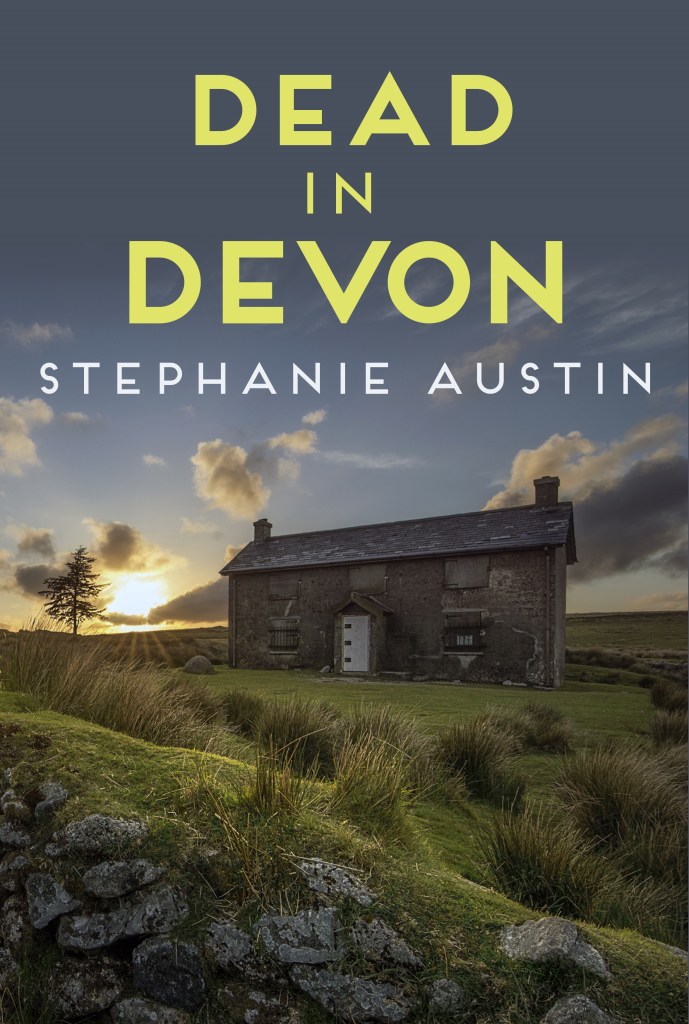
Lockdown Reading 2: Dead in Devon by Stephanie Austin

I was inspired to grab a handful of murder mysteries to get me through lockdown, a time when you mightn’t feel like reading anything too demanding. Dead in Devon is the first in Austin’s series featuring Juno Browne, Domestic Goddess for hire (housework, dog-walking, and random odd jobs). We’re in cosy mystery territory here, so the heroine is a natural busy-body, primed to solve the murder.

The setting is the pretty Devon town of Ashburton, where everyone knows everyone else’s business. Titian-haired, twenty-something Juno has no family and makes a basic living with her bright yellow van. Old Nick has a dodgy reputation in the antique trade and wants Juno to work for him. When he’s murdered, Juno believes that those two Russian thugs she discovered putting the frighteners on Nick are the culprits.

The police, good cop Inspector Ford and bad cop DC (Cruella) DeVille, don’t have a lot to go on – Nick had obviously ripped off someone, and with his previous custodial history, had friends in low places. But Juno has become fond of the old fellow and can’t help investigating.

The traders Nick did deals with may offer clues and include Paul, a handsome furniture restorer, Albert (Piano-teeth) Evans and one of Juno’s cleaning clients, snooty Verbena Clarke. Then there are Nick’s estranged children, Helena and Richard, who accuse Juno of being a gold-digger. The cast of characters also includes Morris and Ricky, a gay couple who hire out costumes to drama companies around the country. They are the perfect confidantes for Juno and encourage her romantic efforts by helping her with outfits picked from famous plays and musicals. Even the dogs Juno walks have interesting personalities.

Austin adds plenty of pace balancing sequences of lively dialogue with action scenes so there’s plenty here to keep you amused. She has made much of her background in amateur theatre and knowledge of antiques to add colour to the story. My only quibble was that I more or less guessed the perpetrator, but it was all so entertaining I didn’t mind too much. Three and a half out of five from me.

Old Favourite: Case Histories by Kate Atkinson

We never thought there’d be a new Jackson Brodie novel. After four brilliant mysteries (and a superb television adaptation starring Jason Isaacs), we thought Atkinson had called it a day, returning to the historical literary fiction she’s so good at. Then nine years since the last Brodie was published, out came Big Sky and the crowds all cheered.

I haven’t got my hands on the new book yet, wanting to do things properly and reread the previous four. I’ve had them there on the bookcase waiting for a special occasion. So I picked up Case Histories thinking, I know what happens so will I still enjoy it?

The story gets off to a fairly gentle, atmospheric start, with the setting of Cambridge during a summer heatwave, following a family of young girls, the elder three doting on the youngest and sweetest, little Olivia. Then the unthinkable happens – little Olivia goes missing.

Thirty years later, Olivia’s sisters, Amelia and Julia, make a discovery that prompts them to hire a private detective. Enter Jackson Brodie – ex-army and-ex police and with a ton of baggage regarding his ex-wife, his eight-year-old daughter, to say nothing of the tragedy of his childhood.

Two more cases hit Jackson’s books at the same time: a grieving man haunted by the murder of his daughter ten years before; a woman who has lost touch with the niece she promised to look out for when her sister was arrested for killing her husband.

The cases shake Jackson out of the stupor that has beset him as he spends long days surveilling an air hostess on behalf of her jealous husband and being at the beck and call of a crazy cat-lady who neglects to pay him. Through the book, someone seems intent on killing Jackson, so the story is livened up by several fights.

Not that it needs enlivening as the story sparkles with humour and terrific characters. They are all notable for various reasons: Mr Wyre’s devotion to his dead daughter mirrors the powerful bond and fear Jackson feels over his own daughter, Marlee, who at eight is pert and has a habit of blurting things out at the wrong time. Julia and Amelia are eccentric opposites – Julia’s outrageous flirting adding to the humour of the book, contrasting with the awkward spinsterishness of her sister. Binky, the crazy cat lady, is a treat for her old colonial airs, and has an odd connection with the sisters and the secrets surrounding them.

I loved this book a second time around. Having finished it, I could pick it up and start it all over again – it was that good. Being character driven rather than plot driven, Case Histories is nevertheless a complete page-turner. The prose is all you could wish for too – smart, witty and honed to perfection.

And then there’s Jackson. He’s an archetypal sleuth – troubled, with a messy past; he’s clever but gets into scrapes through his dogged determination to keep digging. And he’s got that Yorkshire no-nonsense manner that makes relationships with women difficult as he struggles to articulate his feelings (while women readers find him totally gorgeous). It’s no wonder Atkinson brought him back for more outings and even after nine years, the new book’s popularity would suggest he’s a welcome return. Case Histories is a rare five star read from me.

A Very British Mystery

It must be the cooler weather, or just wanting a bit of mid-year R & R, but lately I’ve been devouring cosy mysteries. All have one thing in common – English rural settings. For some reason, there is nothing more entertaining than visualising a charming English village, complete with manor houses, welcoming inns and period churches, and then throwing in a whole lot of murder and mayhem.

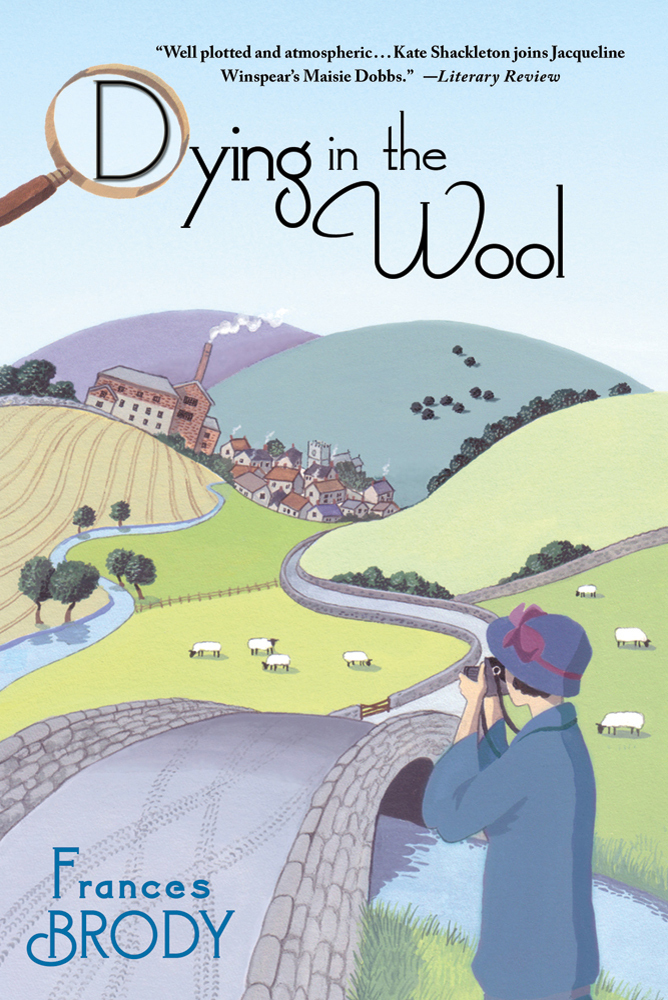
First off I went to Bridgestead in Yorkshire, a village which is also home to a woollen mill. In Dying in the Wool, private investigator, and general nosey parker, Kate Shackleton accepts her first commission from soon-to-be-married chum Tabitha. Tabs wants her father to walk her down the aisle, but no one has seen him since the war (WWI, that is) when he ran away from the nursing home where he was being treated for depression. Is he alive or is he dead? That’s the problem. Soon there’s murder, danger and a bunch of characters with plenty to lose, so it’s just as well Kate has a right-hand man: Jim Sykes, an ex-copper too smart for the force. They make a great team. Tootling about in her 1913 Jowett, Kate is independent, undaunted and a sparky narrator. The 1920s era makes a brilliant backdrop too and I learned a lot about the textile industry. I’m looking forward to getting my hands on the next in this cosy series by Frances Brody, A Medal for Murder.

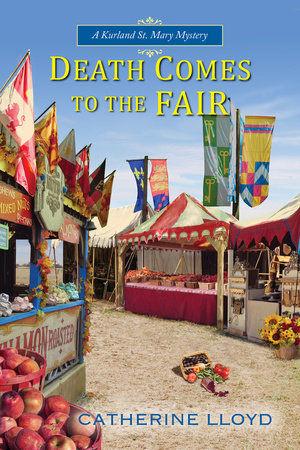
The Kurland St Mary series by Catherine Lloyd makes you imagine what would happen if Elizabeth Bennett and Darcy decided to investigate murders together. Or maybe Jane Eyre and Mr Rochester. The Austen era is more accurate for the series, but the Bronte characters seem to fit better somehow. Sir Robert Kurland is a Napoleanic Wars veteran, with the big house up the hill. He gets grumpy because of his leg injury. Lucy is the rector’s daughter who knows how to handle his moods and has an independent streak at odds with what was expected of women of her station. In Death Comes to the Fair, the two are planning their wedding but murder gets in the way when the verger is found with his head bashed in by a gargoyle. You can’t get more period mystery than that. The book introduces all the people who surprisingly hated Ezekiel Thurrock, farming folk mostly, and a story that goes back to events in the 1600s with some interesting stuff about superstition and witchcraft.

I’ve also been catching up with the Superintendent Richard Jury series by American author, Martha Grimes. It’s terrific that ebook versions of the earlier novels are coming out and I picked up The Old Fox Deceiv’d, the second in the series, for a couple of dollars – a genuine bargain. You might think that with Jury investigating, the stories would be more police procedural than cosy. But you couldn’t get a less stereotypical policeman. His mate is Melrose Plant who, with his abandoned title and lovely manners, has entree into the world of people with power, privilege and mansions. Plant loves nothing better than helping his chum Jury on a case. The books are each named after an English pub – here The Old Fox Deceiv’d is in the coastal village of Rackmoor, a bleaker spot you’d have trouble to find, this being Yorkshire in winter. When a woman in mummer’s costume is stabbed, Scotland Yard are called in and Jury and Plant carry on their detecting together, helped by home-alone twelve-year-old Bertie Makepiece and his dog. All the hallmark ingredients of a Richard Jury novel are here: humour, quaint characters, money and position, buried secrets and haunting tragedies. Good food too. What’s not to love?