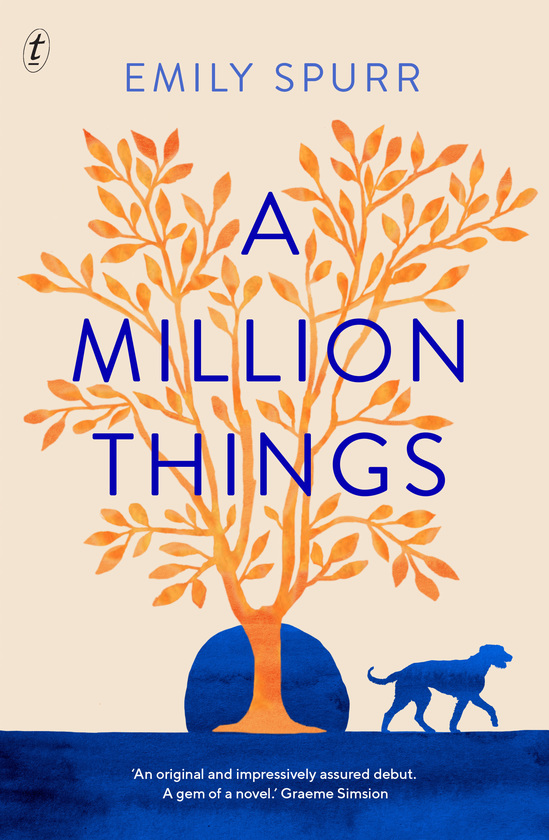
I was drawn to this book by its compelling storyline – a young girl all alone, trying to pretend nothing is wrong after her mother disappears. Well, that’s how it seemed to start with. The book’s told from the point of view of ten-year-old Rae – but it’s not your standard first-person narrative voice. Often Rae is talking to a ‘you’ – the mother who isn’t there.
It would be easy to assume that the mother is missing because she hasn’t come home. But Rae’s mother has been mentally ill for quite some time. No wonder Rae knows about the routine of managing meals and getting herself to school, of walking Splinter, the dog. Rae has had to be the grown-up a lot of the time. Only this time Rae’s mother has ended her life in the backyard shed. With no one else to turn to, Rae must manage as best she can on her own.
Rae decides to keep going on her own. She becomes adept at keeping up appearances. She gets herself off to school, takes care of the house, and feeds the dog. There’s no time for grief. If only that nosy old lady next door wasn’t always on her front verandah watching. But Lettie has secrets of her own, things she doesn’t want anybody knowing about. It’s only when Rae hears her calling for help one day that the two discover that they need each other.
Each time you’d go, noises muffled and sharpened and silence got loud. I’d stand still, trying not to breathe, waiting for the door to open and for you to come back through it. The silence you left after you grabbed the keys from the bowl on the table and slammed out the door would stand like a person beside me. The bang made me jump every time. Even though I knew it was coming. Knew from the second your eyes lost focus and tightened and you stopped seeing me and saw only this thing ruining your life.
Things become more complicated by the arrival of new people along the street, Oscar who is the same age as Rae, just wants to make friends, but when he parrots critical comments of his mother about Lettie, Rae finds herself sticking up for her neighbour. She doesn’t want social services nosing around.
It is heartbreaking the lengths Rae will go to pretend everything is normal, alleviated in some part by her growing friendship with Lettie. We slowly get pieces of Lettie’s story, her family tragedy. The tension builds as all the plates Rae tries to keep spinning descend one by one and a dramatic event brings help from an unexpected quarter.
This is one of those books that has you holding your breath – you are so much in Rae’s impossible world. The friendly banter between Rae and Lettie lightens things a little, but the old woman’s situation is horrendous as well. You feel how easy it is for life to get on top of you and the book becomes a sensitive portrait of the effects of mental illness, but of resilience as well. The reluctance to let someone else into your life when you need help; of not wanting anything to change. Of holding onto the grief that ensnares you, that keeps the missing loved one there as a constant presence.
A Million Things was shortlisted for the Victorian Premier’s Unpublished Manuscript Prize and won the BookBrowse Best Debut Novel 2021. Emily Spurr is certainly a writer to watch. A Million Things gets four stars from me.

 Judith McKinnon