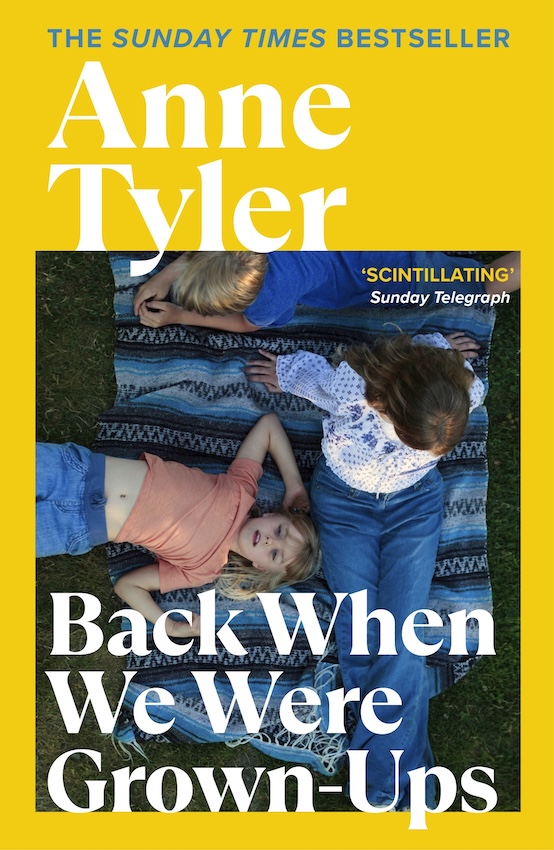
Book Review: Back When We Were Grown-Ups by Anne Tyler – revisiting an old favourite

While there are so many terrific new books out there to tempt and distract, I like to come back to old favourites now and then. A favourite author for me is Anne Tyler. Back When We Were Grown-Ups was first published in 2001 but has a kind of timeless quality which I find very appealing. It follows Rebecca who wonders how life would have been different if she hadn’t been swept off her feet by Joe Davitch all those years ago; if she’d finished college and gone on to marry her childhood sweetheart instead.

At barely twenty, Rebecca had met Joe at a party venue his family ran called the Open Arms, a large terrace house with high ceilings in a slightly rundown part of Baltimore. An odd coincidence makes her laugh, and Joe is drawn towards her apparently cheerful nature. But all the while, Rebecca had always seen herself as a fairly serious girl, intent on finishing her history degree.

Not only does she marry Joe instead, but she also takes on his three daughters, has one of her own and, when Joe dies in a car crash six years into their marriage, she runs the Open Arms as well. This doesn’t even include the elderly folk she looks after, first Joe’s mother, then Poppy, his uncle. The Open Arms needs constant repairs, and as the decades pass, there are grandchildren to babysit too.

She’s fifty-three when we meet her at the start of the book, organising a family barbecue and trying to make everyone happy. Which isn’t always easy – the Davitches are a prickly, discontented bunch at times, particularly the girls, who are prone to squabbling or disapproving of their sisters’ choices. Circumstances trigger Rebecca into wondering what happened to the boy she dumped for Joe, and she decides to look him up.

This really is a novel of characters – the four daughters all with their own set of problems are constantly in and out of the Open Arms, also the Davitch home which Rebecca still shares with Poppy, now approaching his 100th birthday. We’ve got the girls’ partners and offspring, as well as Zeb, Rebecca’s goofy brother-in-law, a hospital doctor who’s never married.

They’re all interesting and entertaining, but I particularly loved Poppy with his memories and enjoyment of food, his discourse on what it’s like to be so old and so on. And Peter, who at eleven is a new arrival into the family via his father’s marriage to one of the girls. He sticks out for being pale compared to the dark haired Davitches as well as shy and nerdy. Tyler captures beautifully the bickering dialogue of sisters, the way conversations waft in and out between characters, between topics as people pounce on ideas or lose the thread of what they were saying, with all the humour that results.

The story takes its time as Rebecca rethinks her life and tries to reconnect with her old flame, now a divorced physics professor, and ponders her choices. Was Joe ever in love with her, or was she just useful when he needed help? Some readers may find the pace a little slow as the scenes, often party scenes, pile one on top of the other. A baby is born, there’s a wedding and Poppy has his birthday bash, meals are served and tradespeople called in.

But without being an out and out comedy, I found myself chuckling my way through them all. I once came across a comment Tyler made about the fiction of Barbara Pym in which she stated: “she reminds us of the heartbreaking silliness of everyday life”. The same could be said of this novel, the way Tyler captures all the muddles, missteps and misconceptions. I loved it, finding it well-worth a reread, both relaxing and hugely entertaining – a four star read from me.
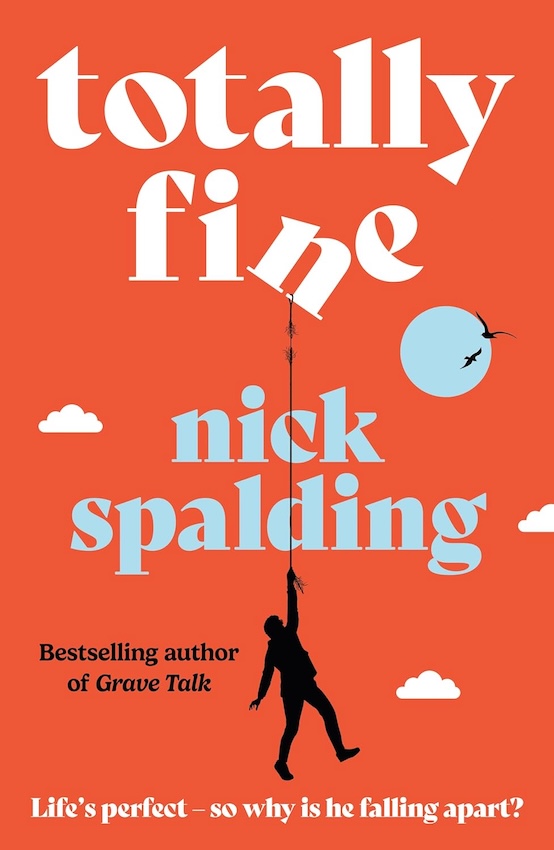
Book Review: Totally Fine by Nick Spalding – an entertaining comedy of manners with a touch of philosophy amid the humour

The main character in Nick Spalding’s new novel is Charlie King, who could be a really annoying person if he was in your life, if he wasn’t so well meaning. Obviously his girlfriend Annie sees this in him, as do his long-time buddies, Leo and Jack, but really, life with a Charlie King around would be exhausting.

Charlie makes his living planning events, all kinds of parties and marketing do’s for the middle classes. And he’s really good at it. The story begins with the birthday party he’s planned at a bowling alley for Annie’s young nephew, with a Jurassic Park theme, actors in costumes and fake dinosaurs, the works. A panic attack hits Charlie, triggered by an annoying song by the Black Eyed Peas – the same song that was on the radio when he had that car accident a while ago – something he’d never told Annie about. In fact he’s rather blotted it from his mind.

Doing his best to put the incident at the birthday party behind him, He gets back to work. But something isn’t right and he makes a big mistake at a gender-reveal party, which sees his business suddenly going south. Charlie decides the time out this offers is the perfect opportunity to confront his issues. But when he realises that his best mates Leo and Jack are also suffering from anxiety, Charlie decides they can all fix their problems together. Because that’s what Charlie does – fixes things up and makes everything perfect. If he can do that with events, he can do that with personal problems, right?

The story follows Charlie’s harrying his friends into different therapeutic options, from magic mushrooms, to navel-gazing in the wilderness. This creates plenty of amusing and visually interesting scenes. Throughout everything, he ignores Annie’s advice to consult a doctor, or his friend’s growing resentment. He seems unable to see what’s under his nose or understand his own problem. Why is he so afraid to see a doctor?

Totally Fine is an entertaining look at some of society’s ills – the pressure to perform, the endless distractions demanding our attention, the need to seem strong to the ones we love when inside we need help. Nothing really new but maybe ramped up here for the digital age. This is shown through one man’s problems, and as a professional tasked with providing his clients with the perfect social media opportunities, Charlie is the perfect protagonist for this. Perfectly imperfect, that is.

It’s a light, fun read, if you don’t mind a bit of schoolboy humour from time to time. It’s touch and go whether everything will turn out “totally fine” for Charlie and his friends, but you can bet there will be lessons learned. I read this after some darker novels, and it was a relaxing read that was just right. Nick Spalding is the author of around 20 books, mostly humorous fiction about modern life with his new book, Totally Fine, just released this week. I read it courtesy of Netgalley, and it’s a three-star read from me.

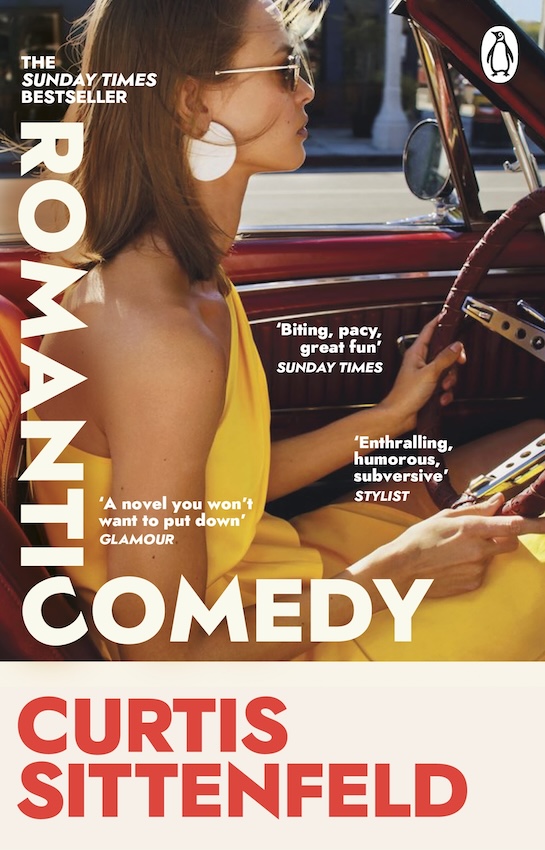
Book Review: Romantic Comedy by Curtis Sittenfeld – a warm and witty novel that explores the affairs of the heart

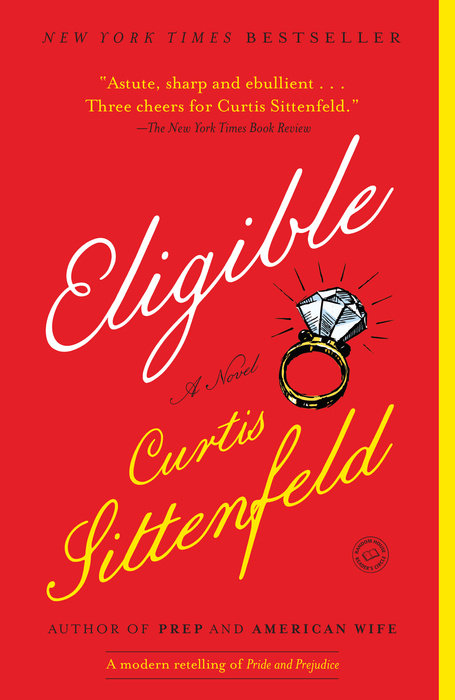
I loved Eligible, Curtis Sittenfeld’s modern interpretation of Pride and Prejudice, written for The Austen Project and published in 2016. It was smart, funny and romantic, and a very clever update. So I was expecting a similar vibe with Romantic Comedy, a novel about a sketch writer for a late night TV show and an unexpected romance.

Sally Milz has been writing comedy sketches for The Night Owls for almost ten years and has seen a lot of talent come and go. When fellow writer Danny starts dating Annabel, a beautiful actress who is also super talented and bright, Sally is peeved. Why is it that fairly ordinary guys like Danny can date and even plan a future with women who are way out of their league, when it never happens the other way around? There have been several Danny/Annabel type matches at the studio alone but you never see an ordinary-looking woman, or even a mildly pretty one, catching the eye of handsome star in his prime.

The arrival of Noah Brewster, a hugely successful and drop-dead gorgeous music star, as a guest host on the show gives Sally the perfect opportunity for a sketch to highlight this anomaly. The Danny Horst Rule would star Noah as the gorgeous guy who tries to date an average girl. Sally gets more of her skits voted in for the show that week, and so gets to spend more time with Noah at rehearsals. She finds him surprisingly nice, and what’s more, he apparently likes her. He’s easy to talk to and seems to seek her out.

The story follows their interactions and Sally’s growing attraction to Noah, a relationship that she discounts, because there’s no way a guy like that would ever think of her romantically, is there? We meet other people on The Night Owls, particularly fellow actors like Viv and Henrietta, who are Sally’s friends and sounding boards, whose advice is sometimes helpful, and often hilarious. Viv herself has met an eye doctor she’s attracted to so there’s advice going both ways. And we get a bit of Sally’s backstory – a failed marriage, the colleague who broke her heart.

Working on The Night Owls, Sally works excruciatingly long days, and nights, taking naps in her office, but then she’s a perfectionist and gives her work her all. She has decided never again to date a colleague, and has no time for more than an occasional night spent with someone she doesn’t care about. When Noah upsets the applecart of her carefully managed feelings, she doesn’t know what to do.

I heard someone say my name, but at first I was so deeply asleep that I incorporated the voice into my dream. I thought it was Bernard, the janitor, coming to empty my trash can, and, seamlessly, I mumbled, “You can leave the molluscs.” I felt a hand lightly pat my shoulder, and the person said, “Sally, I’m really sorry to bother you” – not a commonly uttered phrase at TNO – and I pulled the T-shrit off my eyes and the earplugs from my ears, sat straight up, and said, “What do you want?”
Hunched over the couch at such an angle that my sitting up had brought our faces within a few inches of each other was Noah Brewster.

This was a fun read for the most part. I found the look behind the scenes of a television show fascinating and Sittenfeld peoples it with plenty of interesting characters and scenarios. Danny’s and Annabel’s relationship has its ups and downs and so there’s plenty going on. There are ups and downs for Sally and Noah too, and a lot of the story has the reader wondering: will they or won’t they? There’s Covid and the lock-downs, long-distance communication and a lot of soul searching. So while this is in many ways a romantic comedy, it’s also at times a serious look at love and life.

Curtis Sittenfeld has written a smart, thoughtful and very romantic novel which has moments of laugh-out-loud humour. My only quibble is that Sally can be difficult company at times, with a tendency to shoot herself in the foot to make a point. Sometimes I wanted to give her a good telling off. So while I didn’t enjoy Romantic Comedy quite as much as Eligible, it’s still entertaining and clever – and a three-and-a-half-star read from me.

Book Review: Less Than Angels by Barbara Pym – anthropology meets comedy of manners

I seem to have got caught in the 1950s, first with the Charlotte Bingham memoir, and now with this book published in 1955.

Less Than Angels follows a group of people connected to an anthropology faculty at a London university. It opens in a café where Catherine, a freelance writer for women’s magazines, is sitting watching people go by from her seat by the window. Outside two anthropology academics are hurrying to a party at a new research centre that has been donated by a wealthy widow named Mrs Foresight.

At the party we meet Esther Clovis who is one of those ‘excellent women’ who keep everything ticking along, while the more senior men strut and proclaim. These include elderly Professor Mainwaring, once obviously devilishly handsome, who has secured the funding by charming his way into Mrs Forsight’s good books and who gets to choose the recipients of the research grants later in the book.

Esther is not an attractive character, but Pym gives her feelings none the less and makes her interesting. Here she is as the party is about to start, worrying about the students who have gathered in the library to study and how to throw them out nicely. In the end she invites them to stay for the party and we meet them all.

I confess I was a little put off by this lengthy party scene at the beginning of the book. So many characters to keep track of, including two young men in their third year, Digby and Mark, who add a touch of comedy, and new student Deirdre, who has begun to wonder why she decided on anthropology in the first place. Deirdre is a wistful, restless girl with the kind of languid beauty that goes with all that. She lives with her widowed mother and a ‘spinster’ aunt in a leafy suburb. They live next door to failed anthropologist, Alaric Lydgate, who has an alarming collection of African masks which he wears in the privacy of his garden.

It was odd to think that he himself had once been on the threshold of that kind of life and that he had thrown it all away, as it were, to go out to Africa and study the ways of a so-called primitive tribe. For really, when one came to consider it, what could be more primitive than the rigid ceremonial of launching a debutante on the marriage market?

The story really picks up when Tom Mallow returns from his stint in Africa to write his thesis, and to his domestic arrangements with Catherine, who has a bohemian style flat. Catherine obviously loves Tom, who seems surprised by his own easy charm with women, but he’s soon drawn to Deirdre.

So the story has a kind of love triangle in the centre of it, with a myriad of interesting characters and the small politics of a university faculty in the background. When it comes to anthropology, Pym seems to know her stuff – she was at one time the editor of the journal of the International Institute of African Languages and Cultures in London. And perhaps this has inspired her because while the novel’s academics are absorbed in the study of African tribes, their customs, values and intergenerational connections, Pym seems to casting her own anthropological eye over the British middle classes.

Barbara Pym has often been described as a twentieth century Jane Austen and this is particularly so when it comes to her thoughts on being a woman in her time, the sexism and the rocky road of making a place in the world for oneself. Universal themes, but enhanced with Pym’s sparkling wit and gentle send-up of social formalities. Once I’d settled into the book, I found this a brilliant story, both entertaining and thought-provoking – but then, I’ve been a Barbara Pym fan for decades, so I knew I was in safe hands. Less Than Angels is a four-and-a-half star read from me.

Book Review: Good Riddance by Elinor Lipman – a witty New York comedy full of the unexpected

I’m often drawn to these sorts of New York comedies. I like the smart and snappy dialogue, the invigorating big city atmosphere – the apartments and the quirky characters who are always eating out or talking about eating out. I really enjoyed Elinor Lipman’s On Turpentine Lane, so was keen to snap this one up too. Both novels showcase this author as a writer of very original storylines.

In Good Riddance, the story follows Daphne Maritch, studying to be a chocolatier after a failed marriage and a recent move to a new apartment. It’s not long since her mother died, bequeathing Daphne, among other things, a 1968 Pickering High School yearbook. June Maritch was just a few years older than her students that year and had attended all the class of ’68 reunions, as well as annotating her yearbook with snarky comments about her former pupils.

Daphne doesn’t see any reason to keep the yearbook, and consigns it to the dumpster, where it is discovered by her neighbour, a budding documentary film maker. Geneva Wisenkorn sees all kinds of potential from interviewing the old classmates, showing them the yearbook and speculating about their teacher.

Suddenly Daphne rethinks her hasty ditching of the evidence. She doesn’t want her mother seen in a poor light and doesn’t trust her neighbour not to make her family look ridiculous. Her father was for many years principal at Pickering after all. Throw in a politician with a scandalous secret that also affects Daphne and suddenly she’s feels desperate to shut down the doco and reclaim the yearbook.

There’s a romantic twist to the story in the form of Jeremy, the young actor across the hall, who becomes Daphne’s co-conspirator. And things are complicated by Daphne’s father moving to New York. He plans to see a bit of life in the city he’s always dreamt of. When her dad takes on a dog-walking job, he has a chance to meet all kinds of women.

Lipman throws in loads of fun situations, including Daphne’s tagging along with Geneva to a reunion, a wedding, a funeral and a dramatic situation requiring Daphne to administer first aid. There’s a load of humorous dialogue and the characters butt heads and wind each other up spectacularly. It’s a fun read all round, but I have to say Daphne isn’t for me a particularly appealing character. She can be rather shouty and shrill. Maybe she needs more chocolate.

But on the whole, Good Riddance is an amusing read and Lipman’s writing crackles on the page. I whizzed through the book and will certainly read more by this author. Good Riddance is a three star read from me.

Book Review: Vinegar Girl by Anne Tyler – a delightful read inspired by Shakespeare

A few years ago the publishing house Hogarth, commissioned some well-known authors to write retellings of some of Shakespeare’s plays in novel form. Jo Nesbo did Macbeth, Gillian Flynn Hamlet and Margaret Atwood The Tempest – among others. Vinegar Girl is Anne Tyler’s retelling of The Taming of a Shrew. This play sounds somewhat old-fashioned today with its story of a ‘difficult’ young woman softening into an obedient wife. Even the word ‘shrew’ is a hard term to swallow – is there even a male equivalent?

Tyler manages this by allowing Kate Battista, the heroine of her story, to remain a forthright and no-nonsense kind of person until the end. She meets her match in Pyotr, her father’s research assistant, but being Polish, he’s used to women like Kate, in fact he much prefers them. With his limited English, it’s easy to understand what Kate says because she doesn’t bother with the niceties. In Pyotr, Tyler has created the one man who will accept Kate as she is. So not tamed – not at all. The story then hinges around Kate coming on board with her father’s idea of an arranged marriage.

Tact, restraint, diplomacy. What was the difference between tact and diplomacy? Maybe “tact” referred to saying things politely while “diplomacy” meant not saying things at all. Except, wouldn’t “restraint” cover that? Wouldn’t “restraint” cover all three?”

At twenty-nine, Kate is still living at home, working in a kindergarten, where she’s often in trouble for being too blunt with parents, but the children adore her. Her mother long dead, it was mostly left to Kate to help bring up her much younger sister, Bunny, who at fifteen is everything Kate isn’t. Bunny is flirty, charming, and ditsy, but that doesn’t stop her from being a little cunning. Kate dropped out of college when she fell out with her professor. But she’s obviously smart. Maybe even as smart as her academic father, Dr Battista, who is hoping soon to make a breakthrough in his research.

The problem for Dr Battista is that Pyotr needs a green card to stay in the States, his three year working visa about to expire. Pyotr is a brilliant scientist and without him, their work on autoimmune disorders would flounder. But if Pyotr were to marry an American, the green card would be no problem. So the morning when her father asks to bring her his forgotten lunch, left at home in the kitchen, is a surprise for Kate. Even though Dr Battista often forgets his lunch, he usually doesn’t worry, because he hardly ever knows it’s lunchtime. He just carries on working. Of course, it’s just an opportunity for Pyotr to meet Kate. Kate is soon suspicious and then appalled.

“Well, in my country they say that you can catch more flies with honey than with vinegar.”

“Yes, they would,” Pyotr said mysteriously. He had been walking a couple of steps ahead of Kate, but now he dropped back and, without any warning, slung an arm around her shoulders and pulled her close to his side. “But why you would want to catch flies, hah? Answer me that, vinegar girl.” 

The story is told from Kate’s point of view, and while she’s prickly and a bit odd at times, she soon gets under your skin. Tyler is always brilliant with odd-ball characters, quirky families and people who are not society’s shining stars. And I love her for this. An assortment of support characters – an attractive fellow teacher, the drop-out next door that is supposedly tutoring Bunny in Spanish, uncles and an aunt – add colour as well as complicate the plot, which builds nicely to a dramatic and hilarious climax. I’m sure Shakespeare would have approved.

Vinegar Girl is a quick, light read but so delightful and fun it really brightened my day – it only takes a day to read it. The novel may not have the complexity or the heft of some of Tyler’s more acclaimed novels, but it’s still a lovely little story and well worth picking up. I am so glad I did – it’s a four star read from me.

Book Review: The Sweeney Sisters by Lian Dolan

The pretty seaside town of Southport Connecticut is where the well-heeled come to play – there’re the golf clubs and country clubs and the yacht club and you can bet everyone knows everyone and their business too. It’s also where Liza, Maggie and Tricia Sweeney grew up, their old home now somewhat ramshackle – as their lovely mum Maeve had put it, “shabby and chic before Shabby Chic was chic.”

At the start of The Sweeney Sisters, gallery owner Liza learns the devastating news that her father has died in his sleep of an apparent heart attack. Being the only daughter still living in Southport, it’s Liza who phones her sisters – free spirited artist, Maggie, and control-freak lawyer Tricia – as well as placating Julia, her father’s long-term housekeeper. Tricia swings into legal mode, determined to manage the fallout – William Sweeney was a literary lion, taught in schools and universities, with drinking and gambling habits to making him interesting.

Bill Sweeney was also about to deliver a memoir to his publishers, having long since spent the hefty advance, but there’s no sign of it on his computer, or in the boat-shed he used as an office. The house on an expensive piece of real estate was mortgaged up to the hilt as well. At least he left a will with his solicitor and old friend, Cap Richardson. But after the funeral, Cap reveals the disturbing news that there is in fact a fourth Sweeney sister, Serena Tucker, suddenly the elder Sweeney sister and amazingly, the result of a an affair between Bill and their neighbour Birdie, a cool WASPish woman, always in tennis clothes and a source of derision among the girls.

As Bill Sweeney’s publishers get more demanding, the younger sisters come to terms with having a new sister and the four of them slowly get to know each other. Serena, a high-achieving journalist, is the only writer among them, and having won a DNA test had only recently learned of her parentage. It is a lingering sadness to her that Bill had refused to see her.

There are some interesting minor characters as well: Raj the archivist sent by Bill’s university to catalogue and box up Bill’s papers and who makes a hit with Tricia; Maggie’s friend Tim the sous chef who helps out with the catering; the ethereal, hippie poet Maeve, long dead but always in her daughters’ hearts. But mostly it’s the story of the four girls and their coming to terms with the upshot of their father’s death. Each acquires a new awareness by the end of the book, with new plans for the future. The book is also very witty, a lovely little comedy of manners, with some smart story-telling as one bombshell leads to another. Throw in some snappy dialogue and there’s just so much to enjoy. An easy four out of five star read from me.

Book Review: Eligible by Curtis Sittenfeld

There was a time when I was an avid Jane Austen reader adding an Austen novel to my reading talley each year. And then there was such a plethora of TV and movie adaptations and they were enjoyable, sure, but somehow my interest waned. Then along came the Austen Project – four modern novels based on four Austen novels, written by well-known authors and kicking off with Joanna Trollope’s Sense and Sensibility.

I’d quite liked Trollope’s version; it was fun but the characters were annoying. Perhaps the characters in the Austen were too – it’s not my favourite Austen by a long chalk. So I forgot about TAP altogether. And then I happened upon Eligible, Curtis Sittenfeld’s take on Pride and Prejudice. Honestly, I enjoyed this book so much I could have sat down and read it through all over again.

Eligible is set in Cincinnati, mostly, with episodes also in New York and California. Mrs Bennett is excited about a certain Chip Bingley who has come to town as an ER doctor at a Cincinnati hospital. Chip is the recent star of a TV reality series called Eligible (somewhat like The Batchelor), where he broke down in tears during the last episode, unable to choose a bride between the two lovelies who made the final. With five unmarried daughters, Mrs B’s keen to orchestrate a social event where they can meet Chip.

Journalist Liz Bennett has been living in New York for years along with her yoga instructor sister Jane but both are recalled to Cincinnati to help when their father has heart surgery. They can’t rely on their mother to feed him a healthy diet and their younger sisters, still living at home though well into their twenties, are useless. Mary spends her time in her room working on her PhD, while Lydia and Kitty are obsessed with working out and don’t even have jobs.

Liz is really the only one who doesn’t need a top up from the Bank of Mom & Dad, and she is appalled at the state of repair of the Bennett family home. When medical bills make it seem impossible to hang onto the house that has been in the family for generations, Liz steps in to try to persuade her parents to sell and the younger Bennetts to get paid employment.

Then there’s the rest of the P&P cast. Darcy, of course, another high flyer at the hospital but with the original snooty disposition we have come to know and love so well; Jasper Wick(ham), a former colleague, best friend and married lover of Liz; Charlotte is Liz’s old friend from home, too plump to attract a Chip Bingley, but a career whizz nevertheless. Women can do anything as we know, in spite of failing on the marriage market, a sentiment emphasised by long-term feminist and women’s rights campaigner, Kathy de Bourgh. Liz has been trying to interview Kathy de Bourgh for her Women Who Dare column for what seems forever.

Throw in an African American realtor and a trans gym owner and you have plenty more to send Mrs Bennett into a spin. Much comedy ensues and the story builds to a brilliant reality tv finale which rounds the story off nicely.

Curtis Sittenfeld has captured all the silliness of modern life in a way that fits the Pride and Prejudice story beautifully. We’ve got the witty dialogue, the terrific characterisation, the misunderstandings and miscommunications you’d expect, all suitably updated. I’d forgotten how much I loved the original and want to read it again. For this and several hours of wonderful entertainment I’m going to give this one a five out of five.

Book Review: Better Luck Next Time by Kate Hilton

Canadian author, Kate Hilton describes her latest novel as a divorce comedy, although there’s a wedding as well, and a treasure trove of family secrets. In the opening pages, Zoe is not looking forward to Christmas, as she is reluctant to reveal that she is getting a divorce. Christmas is tense enough, without dropping that bombshell.

Along with Zoe’s parents, who are hosting the festive meal, plus her brother Zack, we meet Zoe’s uncle and feminist icon Aunt Lydia, and Lydia’s daughters and grandchildren. Zack has won fame and fortune writing a TV sitcom loosely based on the lives of his famous aunt and her family, for which he has never been quite forgiven.

Lydia’s daughter, Beata, is particularly bitter about it, but she has enough to deal with with her teenage son, Oscar, discovering that he wasn’t the product of a sperm-bank after all and has already made contact with his father. Enter, Will, an old pal of Zoe’s from her university days, and also a colleague of Beata’s partner, Eloise. Eloise just happens to be the lawyer handling Zoe’s divorce.

Meanwhile, still on Christmas day, things are obviously not going well in Zoe’s cousin Mariana’s marriage to shiftless but charming Devlin. Things reach a crunch when Mariana snatches up Devlin’s phone and smashes it to bits in the kitchen.

Hilton gets her book off to a flying start, with so much going on with in the lives of Zoe, Mariana and Beata. They’re all great characters – engaging and interesting – while the impossibly high bar set by Aunt Lydia for the younger women in her family hovers in the background. No wonder they keep secrets from each other – secrets, which are due to all come out sooner or later.

The book reminded me a little of Emma Hope’s Expectation, in that we have the same well-meaning pressure from an older generation of feminist women on their daughters whose lives haven’t quite turned out as they’d planned. In Better Luck Next Time, we are reminded how hard it can be for women to ‘do it all’ – manage children, careers, marriage and be true to themselves. Mariana is a journalist who has had to sacrifice writing the important political stories she’s so good at so she can support her family. She ends up writing publicity for a ‘wellness’ company, an industry Hilton sends up beautifully.

There are plenty of amusing scenes, including a feminist rally that turns nasty and a bridal shower which makes you wonder why anyone would ever get married. The book gallops towards another, somewhat, happier Christmas, an ending where its characters have learned a lot about life, love and themselves. This is a funny yet thoughtful novel, with characters you really warm to and plenty of digs at the fads and obsessions of modern life. Just what you want in a comedy for our times. A four star read from me.

Book Review: Alternate Side by Anna Quindlen

There is something about a New York novel – and Alternate Side could be the quintessential New York novel – that always seems to appeal. Maybe it’s because New York is one of those cities that people dream of calling home (like Paris or London, for that matter) – the culture, the food, the parties the opportunities…

And so it is for Nora Nolan, who turns up in New York after college, and here meets Charlie. Alternate Side is partly the story of their marriage, and their finest achievements as a couple – their twins, Rachel and Oliver. And then there’s their house. The Nolans live on a quiet block of infinitely expensive Victorian houses, with a dead-end which makes it even more of an enclave.

They attend parties and barbecues with their neighbours, watch each other’s children grow up, use the same handyman: Puerto Rican Ricky from the Bronx. They all have nannies and housekeepers – for the Nolans, it’s Charity from Jamaica. And to give Nora credit, she does sometimes feel conflicted that all the people she knows have immigrant hired help, black or hispanic, who come from poor neighbourhoods.

Their children, their dogs, and housing prices: the holy trinity of conversation for New Yorkers of a certain sort. For the men, there were also golf courses and wine lists to be discussed; for the women, dermatologists.”

The story begins with Charlie beaming with glee, having finally been offered a space in the street’s only parking lot – an empty section which once contained a house and now has room for a select half dozen cars. As you can imagine, these spaces are highly sought after. When a violent incident occurs, involving Ricky and one of the Nolans’ more insufferable neighbours, things are never quite the same for anybody. Suddenly the gaps between the haves and the have-nots are obvious to all, not just Nora, as issues of racism and entitlement in connection with the block make the news.

Alternate Side is about keeping up appearances, as well as that old adage, be careful what you wish for, you might just get it. Everything seems to fall into Nora’s lap – her job setting up a jewellery museum (only in New York, right?) is one of a string of interesting work opportunities that always seem to come her way. Her marriage: Charlie appeared just at the right time when Nora was suffering from a broken heart. What is it Nora really wants? That is the question.

“People go through life thinking they’re making decisions, when they’re really just making plans, which is not the same thing at all.”

The story though is very much in the telling. Anna Quindlen writes with both wit and wisdom and I found myself chuckling at the snappy dialogue and Nora’s wry outlook, her interactions with Phil, the panhandler who takes up space on the path outside the jewellery museum, the obnoxious notes distributed by neighbour George about rules on use of the parking lot. There is so much to enjoy here as well as a story to make you think – and all set in New York. I loved it. A four and a half out of five from me.