Book Review: Tenderfoot by Toni Jordan – a coming-of-age novel set in the world of greyhound racing

There has been a lot about the greyhound racing industry in the news lately, with information coming to light over the cruelty towards the dogs, the frequent euthanising of young animals. This novel couldn’t be more timely but I didn’t need a lot of prompting to pick it up, having immensely enjoyed Toni Jordan’s previous novels, Dinner with the Schnabels and Prettier if She Smiled More.

Tenderfoot by Toni Jordan, is a coming-of-age novel about 12-year-old Andie. Set in 1970s Queensland, Andie narrates the story, decades later, of the year her parents marriage ended and she lost her dad, and with him the four greyhounds that made up his business.

Andie loves those dogs, especially Tippy, but they are not pets. We are introduced to the nefarious world of greyhound racing, gambling and addiction. Jordan keeps what really happens to the dogs off centre stage, which is fortunate, so we never really know the specifics of what happens to Shep, Crumbs, Sally and Tippy who used to live in the basement – the how and the when. Anyone who has a fondness for dogs might still find this sobering reading, so be warned.

Through it all Andie is a brilliant character, determined to win back her dad, her friends and her dog, solve the mystery of what happened to Macavity, her former bestie’s cat. All this despite her difficult mother, Mum’s shady boyfriend Steve, and a world that seems to block her ambitions at every turn. Andie is a determined battler with an eternal optimism that she can make everything normal again.

Jordan balances the seriousness of what happens – a promising child of parents who constantly let her down, the greyhound and gambling business, the adults with their own demons – with humour that comes from children interacting with adults who aren’t as adult as they should be. The characters come to life through dialogue, something the author does really well – the caustic remarks and endless criticism from Andie’s Mum, the sly innuendo that bounces between her and Steve, the playground politics that Andie struggles with.

Jordan recreates the 1970s, down to the choice of sweets available at the corner store. You also get a scorching Queensland climate for plenty of atmosphere and a poor neighbourhood where gambling is for some the only hope. It all comes together well for a thought-provoking and moving read – five stars from me. I read the novel courtesy of Netgalley. Tenderfoot is due for release on 26 August.

Book Review: The Party by Tessa Hadley – coming of age in postwar Britain

A new Tessa Hadley is always worth picking up, and this one is a novella, the perfect choice for when life’s a bit busy. The Party is set in the decade or so after World War II in Bristol, with two sisters who are desperate to enjoy their youth and experience life. It’s told from the perspective of seventeen-year-old Evelyn, in her first year studying French at university, where her older sister, Moira, studies art.

Moira knows some interesting people, particularly Bohemian Vincent who gets the story started by hosting a party at a dodgy pub down on the docks. It’s a rainy night and Evelyn changes in the ladies’ toilets into figure-hugging black, stashing away the more demure clothes she’d left home in. Moira isn’t expecting her sister to turn up, but introduces her to the people at her table, among them two older men who are appear sophisticated and well-off – handsome but offhand Paul, creepy and not handsome at all Sinden.

I love the way Hadley conjures up the discomfort of the scene – the miserable rain, the impractical shoes, the need to pee, the grotty pub. The things a young girl puts herself through for a bit of excitement. This party is the first of three chapters. The second takes us to the girls’ home life with their younger brother and parents – a father who disappears for long intervals and a tensely respectable mother. Here the girls have to pretend they were out with nice friends the night before, with no ‘drink’ taken.

The third chapter focuses on the other ‘party’ which the girls are pressured into attending at the mansion-like home of Paul’s family. Hadley highlights the naïveté of the girls, their powerless, and the predatory behaviour of Sinden, the older man. As you read, you see all the alarm bells that would have the girls’ mother up in arms. Also, the lack of happiness at the house – a sick brother, absent parents and the need for distraction.

While the storyline might seem dark and worrying, there’s such sharp wit in the writing and even a sense of adventure, particularly in the way it captures the exuberance of youth. The settings are varied and contrasting and seen through Evelyn’s eyes you can imagine being seventeen when everything can be a bit of a surprise, but you take it all at face value anyway, even if that means putting up with things you shouldn’t need to.

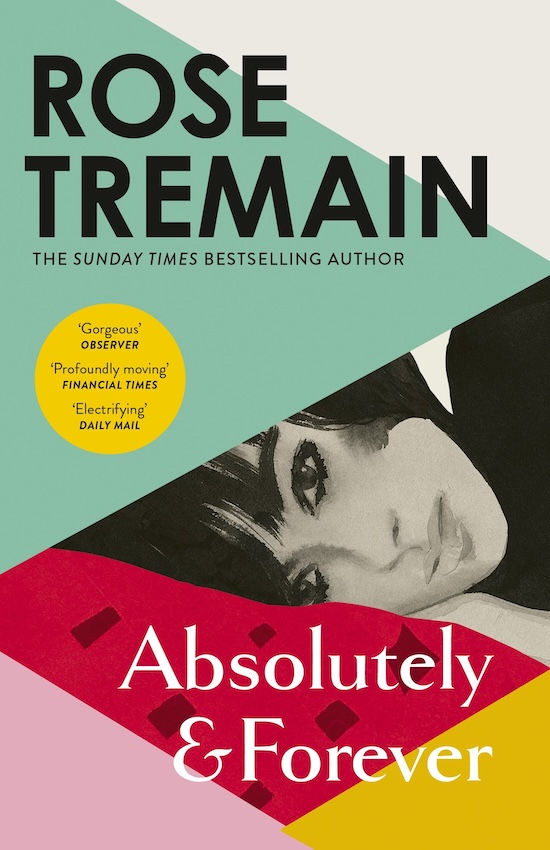
The Party is such a brilliant read, reminding me a little of Rose Tremain’s novel Absolutely and Forever. It’s only 115 pages long but packs a lot in. I’m beginning to be quite a fan of the novella. On the back cover, Kate Atkinson declares that Tessa Hadley is her favourite author, and well, I don’t blame her – Hadley is hard to beat. The Party is a five-star read from me.

Book Review: The Life Cycle of the Common Octopus by Emma Knight – an perceptive coming-of-age novel set in Edinburgh

I had no idea what to expect from this novel. Neither the title nor the cover gives a lot away, but I was soon caught up in the story of a young girl embarking on student life in Edinburgh. Pen and bestie Alice are from Toronto, and although neither wish to cramp the other’s style, they are there for each other as each explores opportunities as first year students together. They become friends with Jo, whose family have a country house they can decamp to, and whose brother, Fergus is soon attracted to Pen. All three girls, particularly Alice, are gorgeous in their own way.

Alice wants student life to be about experiences as much as study. She’s also hoping to land a role in a play and then, if that goes well, a part in an Edinburgh Festival production. She’s larger than life, a bit of a party animal and open to a dalliance with a lecturer – just another box to tick off. Pen, on the other hand, is quieter, more studious and intellectual. Studying in Edinburgh gives her a chance to connect with an old friend of her father’s, a famous author of mystery novels, Lord Elliot Lennox.

Pen wants to be a journalist, so talking to a writer makes sense. But she’s also digging around for reasons behind her parents’ divorce. Why did her father fall out with his best friend, a friend remembered with her middle name? Was there something between him and Lennox’s wife, Christina? Pen writes to Lennox asking to visit him in his stately home, and finds herself welcomed into the family by his wife Christina. She strikes up a friendship with George, a niece with a young baby, and is soon smitten by older son Sasha. But often while she’s there, Elliot Lennox stays in his study, only surfacing for meals.

She and Pen had been friends since well before they had discovered the need to construct an outer shell, like that of an invertebrate animal, to protect the soft inner substance of the self. Childhood friendships often lose their hold at that point, when one sees that the person one loved has learned to disguise herself and will no longer be reachable, or at least not often. What made Alice feel certain, as Pen helped herself to the roll of toilet paper on her desk to wipe her nose, that this friendship could take them through every stage of their lives, cushioning them against the bone-crushing loneliness of being human, was that they did not have to pretend with each other. Silently, she vowed to remember this.

So we have a couple of story threads: Pen’s student life on campus and her growing interest in Elliot Lennox and his family. There’s also her own family issues, too, and secrets from the past. The writing is nicely turned, and thoughtful. But Pen is an introspective sort, so we get a lot of introspection. Lots of Pen making herself miserable about the Lennox family, and what they all think of her, and about Sasha in particular. Just as well Alice is busy getting into strife and dealing with the fallout. This helps give the plot a bit of action.

Emma Knight is insightful on student life, that age when there’s so much to explore and experiment with. Both girls get things wrong, and help each other to move on. But there’s also an underlying thread about parenthood, particularly the demands on mothers, the difficulty of being your true self when there are others depending on you. Christina is a case in point, running a huge estate and keeping everything ticking over so her husband can write books. And she’s a mother on top of that. Which is where the octopus analogy comes in, in case you’re wondering.

This is a book you have to be patient with, it nearly lost me about half way through, but enough happened to keep me curious – particularly about what happened all those years ago and with whom. And the honed writing helps too. I wish I had been at eighteen as clever as Pen with the smart delivery of opinions, which even sparks Elliot Lennox’s approval. But it does make for a somewhat wordy novel, at times. I think Emma Knight is an author to watch, though, and will happily seek out her next book.

I read an advanced reading copy of The Life Cycle of the Common Octopus, courtesy of Netgalley. The book is due for release in bookshops on 10 April and it is a three-and-a-half-star read from me.

Book Review: Western Lane by Chetna Maroo – a beautiful imagining of a family’s grief through a child’s eyes

In some ways, Western Lane follows a well trodden path – a young person going through a difficult time, finding an outlet for their feelings through a sport, and then the promise of success. I’m sure I’ve seen a few movies like this, from the Karate Kid to Rocky. This time it’s squash, but the sport is really just something to give the plot a bit of structure, because overall this is a story about a family dealing with the loss of their mother.

Our narrator is Gopi, who is only eleven when her mother dies. She has two older sisters, Khush and Mona, who demonstrate their grief in different ways, while their Pa is patently struggling. His work is erratic – he’s an electrician and doesn’t always turn up when he says he will. His sister-in-law, the girls’ Aunt Ranjan is worried about them when the family visit their Pa’s brother in Edinburgh. Aunt Ranjan says he should consider giving one of the girls to her and Uncle Pavan to bring up.

Pavan and Ranjan have not been able to have children, are comfortably off, and are fond of the girls. Gopi, being the youngest, seems the likeliest candidate, but Pa can’t bear the thought of it. And imaging losing your mother at such a young age and then being uprooted from your home and family. So on their return to London, Pa and the girls deal with their problems by avoiding them. They hit the squash courts.

Of all the girls, it’s Gopi who has some talent and squash becomes a regular part of her routine. She meets Ged, who’s always at Western Lane because his mother works there. While Gopi plays squash with Ged, her Pa is becoming friendly with Ged’s mother. In the background the local Indian community are watching the family, eager to step in and offer advice, whether it’s appreciated or not. There’s pressure on the girls to do things right, as their mother would have done.

So there are a number of story threads in play, as well as glimpses of Indian culture, the food, the traditions which at times comfort, at others restricts. The reader very much gets a sense of Gopi, wth all that she is going through, what she’s feeling and the red flags. Can she be herself, be allowed to excel at squash as well as being a good daughter? There’s all the worry about her Pa, and her sisters, but she’s just so young. How can she have a normal childhood?

Western Lane is a lovely book, not very long, but nicely judged and the writing is gorgeous. I learnt a lot about squash, the feel of being on the court, the bounce of the speeding ball. It’s done in a way that makes it interesting for even a non-sports-minded person like me. The audiobook was superbly read by Maya Soroya and she really nails Gopi – a child struggling in a world that’s difficult to understand. The novel was shortlisted for the 2023 Booker Prize so I was curious to see why. It’s definitely worth picking up and I’ll be keen look out for more by this author. A four-and-a-half star read from me.


Book Review: Back Trouble by Clare Chambers – an oldie but a goodie from a favourite author

If you enjoyed Clare Chambers’s last book, Small Pleasures, as much as I did, you’ll be pleased to know her new book, Shy Creatures, is out soon. I’ve always loved this author’s particular way with empathy and humour, so when I found an earlier book by Chambers at a second-hand bookshop, I was delighted, in spite of having read it years before.

Back Trouble, first published in 1994, is about Philip, who is about to turn forty, and his life for the most part seems to have gone to custard. We first catch up with him at an awkward family New Year’s celebration. His insurance broker brother Raymond is over from Canada with a new batch of photos of his children, recounting their successes (the football and the gymnastics), while Philip has never felt less like celebrating. With the failure of his publishing company he is in debt up to his eyeballs and the love of his life having gone home to New Zealand, life couldn’t get any worse, could it?

A cold chip from an overflowing municipal bin sends Philip head over tail and the ensuing back injury leaves him bedridden. There’s nothing to do but to fish out the notebook and pens from under his bed and begin to write the story of his childhood – a New Year’s challenge flung out by Raymond, to be completed in three months – just a thousand words a day – no probs. We are reminded that this is the 1990s and the Internet is in its infancy, although probably a more modern-day Philip wouldn’t be diverted by technology as he’d be out of data anyway – he’s that strapped for cash.

The kitchen was the first room to be tackled. One of the men from the building site had given Dad and industrial-sized drum of bottle green paint from the batch which his brother, who worked for the Council, had been using to paint the park railings. Cost was Dad’s only criterion in selecting materials. This meant garish rolls of wallpaper from the bargain bucket outside the DIY shop, the top six inches of every roll faded by the sun, and brushes which moulted into the paint. He had an idiosyncratic way of decorating. Being both nervous and impatient he didn’t believe in preparing surfaces, always fearing that something terrible might be lurking beneath a layer of bubbly paper or flaking paint. So instead of stripping paintwork, or even washing it, he would set straight to work, brushing gloss over old gloss, dust, mould and even, in one instance, a dead spider which lay preserved like a Pompeian relic in its shell of green paint.

Philip is such a self-deprecating narrator – he has no illusions about where he’s at as he approaches forty – and his story is warmly humorous as it rattles along to a nicely surprising ending. There are some poignant moments too, particularly in Philip’s childhood, with adults not behaving as they ought to and the weight of knowledge that falls on a young boy growing up. It is easy to blame Philip’s careless yet penny-pinching father, but other adults also turn out to be unreliable or even predatory.

Odd allusions to Great Expectations add an interesting twist. There are a raft of curious characters, quirky, helpful or otherwise, which may be another nod to Dickens, particularly the scene at Philip’s grandmother’s house – the blind matriarch and hoarder of useless furniture, including four unplayable pianos, terrifying in her fierceness; the black-toothed Auntie Florrie smoking her woodbines; Punnet the obese black labrador. It’s like stepping back in time.

For a small book, Clare Chambers packs quite a lot in and it’s hugely entertaining. I know she can always be relied upon for an original and big-hearted read so I am so looking forward to Shy Creatures, released on Amazon at the end of the month. Back Trouble is a four-star read from me.

Book Review: Absolutely and Forever by Rose Tremain – a short and bitter-sweet novel about lost love and finding your way

I was warned that this book was somewhat melancholy, and in a way it is. Absolutely and Forever is about first love, specifically Marianne Clifford’s falling in love at fifteen with handsome and clever Simon Hurst. It is a love she just can’t seem to get over, and years after Simon has disappeared from her life, she still thinks about him in a yearning kind of way.

This might make Marianne appear somewhat daft. But don’t be put off; every moment we spend with her is entertaining. Tremain has written a dryly witty, self-aware character, born at time when a good marriage was often considered life’s ultimate goal for any young woman. We’re thrown into the late 1950s; Bill Haley and the Comets is on every party’s turntable and parents are eyeing up young men with prospects for their daughters. Particularly middle class parents in the Home Counties.

Absolutely and Forever made the shortlist of the Walter Scott Prize for Historical Fiction and although it didn’t win, you can see why it was noticed. Tremain captures the period so well, and through Marianne’s eyes we see how the times, they are a changing. At school, Marianne’s best friend is brave, outspoken Petronella who goes on to university to study sociology and spends the entire book urging Marianne to forget Simon and discover what she’s good at. You can tell Marianne’s smart, but this lesson takes a while for her to master.

On certain days, particularly when I was in the typewriter room of the college and fifteen typewriters were clattering and pinging and the carriages were being shunted left to right, left to right, and the wall clock was clicking away time, measuring our typing speeds, I felt my mind disintegrating. I thought, I’m in a madhouse; life has brought me here, to an asylum of a kind. It wasn’t the old and wondrous Love Asylum, it was now the Grief Asylum, where my heart was being shunted back and forth, back and forth, inside a chamber of despair.

The story takes Marianne through many ups and downs, including tragedy, and a surprise ending. Both turn out to be oddly liberating for our MC. So, yes, there is enough of a story here to keep you reading. But it’s the language that really had me hooked. At one point, Hugo, the man who falls for Marianne enough to put up with her melancholy, says the one thing he really loves about her is that he never knows what she’s going to come out with next. Tremain gives Marrianne’s narrative plenty of charm and flavour.

You can’t help thinking, thank goodness for the Swinging Sixties and women’s lib. For if they hadn’t come along would girls still be growing up pinning all their hopes of happiness on a man and forgetting they have a brain? Absolutely and Forever is a welcome reminder, and at a mere 180 odd pages a nicely-crafted, diversion you can read in a day. A four-and-a-half star read from me.

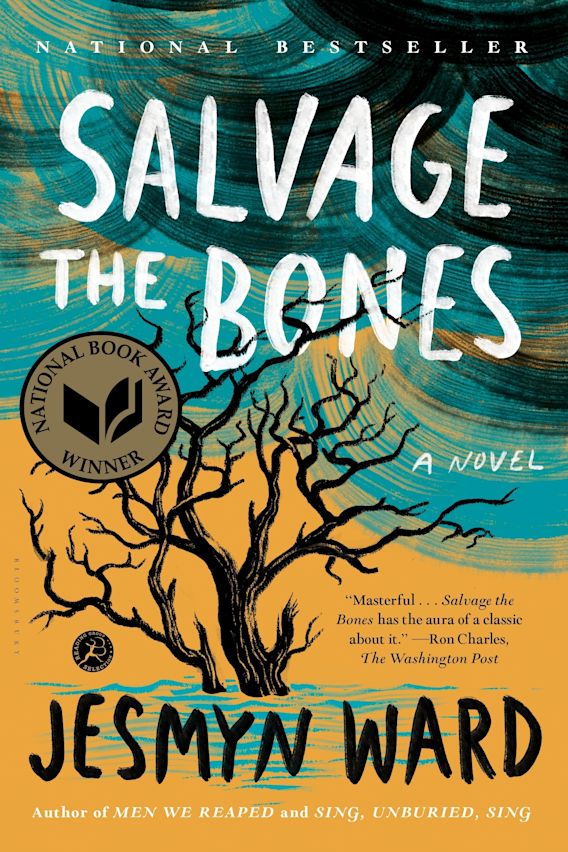
Book Review: Salvage the Bones by Jesmyn Ward – a struggling family, a desperate girl and a hurricane

It’s so easy to go for a book that’s a nice relaxing read and totally forget the wider world. But this time I took up Salvage the Bones with the idea that this might be a fairly gritty read and, well, yes it was. But it is just so instantly immersing and the storytelling so engaging that once I’d picked it up, I really didn’t have much say in the matter.

The story follows a poor African-American family living in Mississippi in the days leading up to Hurricane Katrina. This family has such a lot to deal with. Told from the point of view of fifteen-year-old Esch, we’re soon in her world – a house on the outskirts of town which she shares with older brothers Skeetah and Randall, a much younger brother, Junior, and their alcohol-dependent father.

Daddy is very hurricane-aware and weather warnings impel him to get his house in order – the bottled water and extra supplies, gathering the timber to board up the windows, but his children have other things on their minds. Randall has hopes of going to basketball camp – he’s got potential, and if he can perform well at an upcoming game, he can earn some sponsorship. Skeetah is more entrepreneurial; his pit bull is due to give birth to puppies and China being such a good fighter, he thinks he can sell the pups for a good price.

Junior has been cared for since day one by his older siblings and is a bit of a loose cannon, though very much loved. And that’s the thing. There is such a lot of love in this family between the siblings, but without a lot of parental guidance things pretty soon go haywire. And no one is more desperate than Esch – in love with one of her brother’s friends who is blatantly using her, and pregnant. But Esch is also a reader, dipping into a book of mythology from school, especially drawn to the story of Jason and empathising with the ill-used princess Medea.

After Mama died, Daddy said, What are you crying for? Stop crying. Crying ain’t going to change anything. We never stopped crying. We just did it quieter. We hid it. I learned how to cry so that almost no tears leaked out of my eyes, so that I swallowed the hot salty water of them and felt them running down my throat. This was the only thing that we could do. I swallow and squint through the tears, and I run.

The plot is really compelling as the siblings resort to all kinds of escapades to help fulfil their ambitions, or to just get by. It’s a very different world, there’s danger and lawlessness, and the story doesn’t shy away from the violence inherent in these kids’ lives, and of their acceptance of it as a kind of normal. But there’s also camaraderie and loyalty, a tight-knit community that sticks together. Plenty to keep a story going as it is, but on top of everything else, there’s a hurricane coming.

The story builds up to a dramatic climax – the weather event we are expecting makes its presence felt and it’s truly life and death. Earlier in the year, in my neck of the woods, we also experienced a cyclone (that’s what we call hurricanes here), and as I was reading this was well aware of the kinds of situations that people can find themselves in if they don’t get out in time, or if things get a lot worse than predicted.

I raced through this book, particularly the final chapters, engrossed in Esch’s world, but also dazzled by the writing. Jesmyn Ward won a National Book Award for this novel, a prize she’s won again for Sing, Unburied, Sing, and she’s brilliant, confronting, but also immensely readable. I’ll be putting Ward on my must-read list and give this book five stars out of five.

Book Review: The Whalebone Theatre by Joanna Quinn – an English country house, a quirky heroine and a looming war

There’s something about novels set in English manor houses – the setting is almost a character in itself. In Joanna Quinn’s debut novel we have Chilcombe, the home of the Seagraves, a house that has seen better days, but still mired in the old traditions of class. Jasper Seagrave is so desperate to pass on his estate to a son, that he marries young Rosalind, who in the period following World War I has little choice in suitors. Jasper is in his forties, short and stout, with a wild young daughter, Cristabel.

We meet Cristabel, age four, scruffy and dirty, and brandishing a stick as the carriage pulls up with her new step-mother. She’s a fierce little girl who grows into a fierce young woman, as her family shifts and changes around her, bringing a new sister – Flossie, known, at first, as the Veg; and eventually a longed-for male heir, the much adored Digby. By now Chilcombe is home to an Uncle Willoughby and the scene of endless parties.

War hero Willoughby brings a string of hangers on, some of them surprisingly useful and all of them interesting characters. But it’s the three children, particularly Cristabel who are the stars of the story. Left to their own devices, the children run wild, with little parental input. Digby is the only one who goes to school, the girls partially educated by a series of French governesses. The family get introduced to a bohemian set who appear on the beach one summer – the loud and charismatic Russian painter, Taras, with his wife and two lithe models, plus a family of wild, dark-haired children.

Taras and his family have a lasting effect on the younger Seagraves. While this is largely Cristabel’s story – her desperate attempts to be her own person in a world full of constraints, I enjoyed Digby’s story and particularly Flossie’s. While the other two sign up to do their bit against Hitler, Flossie is more passive, but eventually finds out what she’s good at and what she wants from life. You really have to feel sorry for young girls with no chance at a decent education.

‘Has it occurred to you that Cristabel might be less of a galumpher if she visited London more often?’ said Perry. ‘Has she ever been there? Has she ever been anywhere? Astonishingly, it won’t be that long before she’ll be a debutante. She needs to learn how to behave. Nobody minds a spirited girl from the shires. A practical sort. But they will mind if she won’t use a fork.’

‘Surely she uses a fork.’

Willoughby laughed. ‘I’m afraid not, my dear. She’s taken to eating off her hunting knife. Like a pirate. I rather enjoy it.’

This is a kind of coming of age novel, with its three characters discovering what it is to be themselves in a world set to change. Life after the war will bare little resemblance for how it was before – particularly in the grand country houses.

Joanna Quinn describes a changing society, an England devastated by the first war, the fast set drowning its sorrows in champagne, while a younger generation is ready to break the rules and find their own paths in life. The war welcomes the skills of the three siblings, but how will any of them find fulfilment when the war is over?

I adored The Whalebone Theatre. The writing is fresh, the characters are wonderful and the plot has plenty of surprises and turns. And Quinn does her settings really well – the house on the Dorset coast; Paris under German occupation. There’s a lot to enjoy and I look forward to what Quinn comes up with next. This book gets four stars out of five from me.

Book Review: The Lincoln Highway by Amor Towles – the rocky road to adulthood in 1950s America

The latest novel from Amor Towles, author of A Gentleman in Moscow which I simply adored, is quite a different kind of book. Perhaps Towles needed a change from setting a novel almost entirely within the confines of a hotel – albeit a fairly grand one.

This time he’s taken us on a kind of road trip. And instead of a man of experience and taste as our main character, we’ve got several friends around eighteen years old, young men who met at Salina, a correctional facility for youth. It’s 1954 America – a conservative period full of opportunity. But these are lost boys, lacking parental love and guidance, having to overcome a misstep on their path to adulthood if they have a chance of making a life for themselves. We see them as they set out to do this in different and at times conflicting ways.

First up is Emmett, whose father died while he was away, leaving a farm in hock to the bank, awaiting a mortgagee sale. His younger brother, Billy, only eight, has been cared for by the neighbours, a farmer and his kindly, maternal daughter Sally. She has a soft spot for Emmett, but can only show this by cleaning the boys’ house and bringing them lovingly cooked meals. Otherwise, she’s usually giving Emmett a piece of her mind or stony silences.

After Emmett has been returned to his family home by the warden, Duchess and Woolly, two escapees from Salina, surprise Emmett, having stowed away in the trunk of the warden’s car. Duchess has been worried about sensitive, childlike Woolly, who has been struggling. So Duchess, an impulsive charmer, has taken matters into his own hands, seen an opportunity to save his friend, and get his hands on enough money to set them all up in life.

Sensible Emmett is appalled, having promised to take Billy to California in search of their mother and build a new life with the small stash of savings his father has left him. So many side-trips, diversions and interruptions hamper Emmett’s best of intentions and the four of them end up heading for New York one way or another.

Billy’s one consolation all the time he has been missing his mother, his brother’s time in Salina, his father’s passing and the loss of their home, has been a compendium of epic journeys by the heroes of literature – Achilles, Jason and Theseus for example – one for every letter of the alphabet. That and a handful of postcards written by the boys’ mother showing her progress west. And the best way to get there according to Billy is the Lincoln Highway.

I learned a lot of interesting things in this book. How to ride the empty cargo wagons on a freight train while avoiding being clocked by the guards. A trick with a cork and an empty wine bottle. How if you plan to stowaway in the trunk of a car, put teaspoon in your pocket so you can pop the lid when you want to get out.

The funny thing about a picture, thought Woolly, the funny thing about a picture is that while it knows everything that’s happened up until the moment it’s been taken, it knows absotively nothing about what will happen next. And yet, once the picture has been framed and hung on a wall, what you see when you look at it closely are all the things that were about to happen. All the un-things. The things that were unanticipated. And unintended. And unreversible.

Echoes of Billy’s compendium appear among the characters – not only the journey the boys take to New York, but in the helpful cargo train rider, Ulysses, who rescues Billy from a thief posing as a preacher. As you can see the novel has a picaresque quality about it, and that reminds you of stories like Don Quixote and Candide with the varied people the boys meet, the kind and the duplicitous, and the continued reversals of fortune.

And then you have the allusions to the tragic heroes like Macbeth who have a fatal flaw that can so easily lead them into disaster. Each of the boys has his own character fault that led him astray and on to Salina, and which they each must master if they want to avoid disaster. So the characters are affected not only by external events of fate or coincidence, but by those of their own making, their desires and needs.

There is so much going on in The Lincoln Highway I am sure I need to read it again to get the most of it. But again, Towles is such a delightful writer that every sentence is a joy. Situations that have the reader sighing an “Oh, no!” are nicely balanced with humorous ones and the story is paced and developed perfectly to its conclusion. I possibly didn’t like it quite as much as A Gentleman in Moscow, but it’s still a four and a half read from me, and I can’t wait to see what Towles comes up with next.

Book Review: The Headmaster’s Wife by Thomas Christopher Greene – a riveting story, artfully crafted

I’d heard a few recommendations of this 2014 novel set in a New England school. You get to the middle and suddenly you can’t put it down, people told me. And yes, in a way, that was true.

The Headmaster’s Wife is the story of a marriage in trouble, set in the enclave of a small private prep school, a claustrophobic world where privacy and personal freedom can be in short supply. Tradition holds sway at Lancaster, an exclusive boarding school for wealthy students aiming for Ivy League universities. A few scholarships bring in students from poorer backgrounds, such as Betsy Pappas, a brilliant student from a small town north of Lancaster, the product of hippy parents, and Russell Hurley, a plumber’s son who is there because he’s so good at sport.

Not so, Arthur Winthrop. He’s the son of a Lancaster headmaster, and the grandson of a Lancaster headmaster, and carrying on in the same family tradition (a good literature degree from Yale and a teaching career), is now the headmaster of the title. We catch up with Arthur at the start of the book when he’s lost his way. Walking through Central Park in the snow, he has some sort of mental breakdown, removes his clothes, before finding himself in police custody and requested to explain his behaviour.

The story flips back to his obsession with a student, Betsy Pappas, who is not only attractive, but really gets Russian literature. Meanwhile his wife plays a lot of tennis, or spends time in their son’s room, missing Ethan who has disappointed his father by joining the army instead of going to Yale. The succession of Winthrops as Lancaster headmasters will likely end with Arthur.

And she thinks perhaps that is what love is: letting someone else see that part of you that shatters like glass… They will grow old together, broken together, and as long as they both don’t completely shatter at the same time, they might find a way to pick each other off the ground.

While the Headmaster’s Wife is about the Winthrops and their marriage, there’s also a mystery/suspense element that keeps you hooked. Communication problems, suppressed feelings as well as power and its abuse hover in the background. I was also reminded of that often quoted line from Philip Larkin’s poem, “This Be the Verse”. You know the one.

To say more would spoil one or two surprises that give the book the impetus that keeps you reading. The story structure is original, and you can’t help but admire the clever storytelling, the fine writing, but the book will tug at your heartstrings too. I was glad of the recommendation to pick this up, as it’s a quiet, unassuming looking book that would have otherwise escaped my radar. The Headmaster’s Wife scores a four out of five from me.