Book Review: A Million Things by Emily Spurr – a resilient young heroine struggling with loss

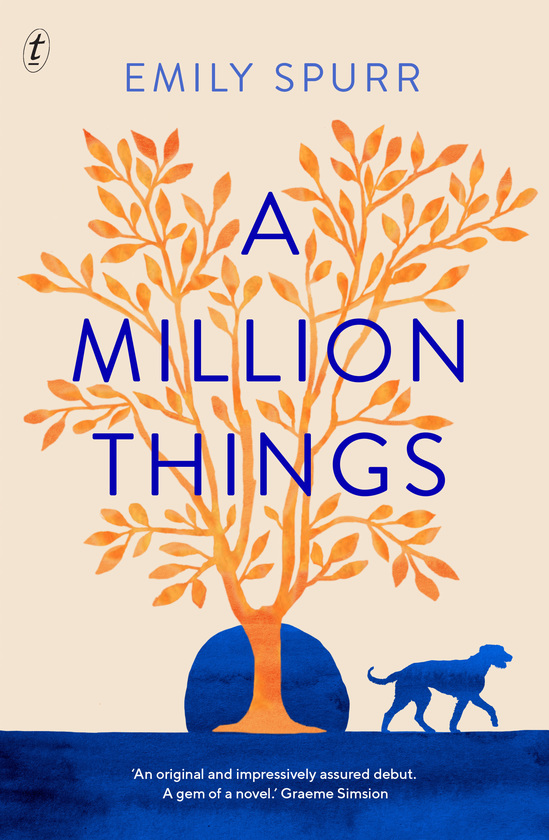
I was drawn to this book by its compelling storyline – a young girl all alone, trying to pretend nothing is wrong after her mother disappears. Well, that’s how it seemed to start with. The book’s told from the point of view of ten-year-old Rae – but it’s not your standard first-person narrative voice. Often Rae is talking to a ‘you’ – the mother who isn’t there.

It would be easy to assume that the mother is missing because she hasn’t come home. But Rae’s mother has been mentally ill for quite some time. No wonder Rae knows about the routine of managing meals and getting herself to school, of walking Splinter, the dog. Rae has had to be the grown-up a lot of the time. Only this time Rae’s mother has ended her life in the backyard shed. With no one else to turn to, Rae must manage as best she can on her own.

Rae decides to keep going on her own. She becomes adept at keeping up appearances. She gets herself off to school, takes care of the house, and feeds the dog. There’s no time for grief. If only that nosy old lady next door wasn’t always on her front verandah watching. But Lettie has secrets of her own, things she doesn’t want anybody knowing about. It’s only when Rae hears her calling for help one day that the two discover that they need each other.

Each time you’d go, noises muffled and sharpened and silence got loud. I’d stand still, trying not to breathe, waiting for the door to open and for you to come back through it. The silence you left after you grabbed the keys from the bowl on the table and slammed out the door would stand like a person beside me. The bang made me jump every time. Even though I knew it was coming. Knew from the second your eyes lost focus and tightened and you stopped seeing me and saw only this thing ruining your life.

Things become more complicated by the arrival of new people along the street, Oscar who is the same age as Rae, just wants to make friends, but when he parrots critical comments of his mother about Lettie, Rae finds herself sticking up for her neighbour. She doesn’t want social services nosing around.

It is heartbreaking the lengths Rae will go to pretend everything is normal, alleviated in some part by her growing friendship with Lettie. We slowly get pieces of Lettie’s story, her family tragedy. The tension builds as all the plates Rae tries to keep spinning descend one by one and a dramatic event brings help from an unexpected quarter.

This is one of those books that has you holding your breath – you are so much in Rae’s impossible world. The friendly banter between Rae and Lettie lightens things a little, but the old woman’s situation is horrendous as well. You feel how easy it is for life to get on top of you and the book becomes a sensitive portrait of the effects of mental illness, but of resilience as well. The reluctance to let someone else into your life when you need help; of not wanting anything to change. Of holding onto the grief that ensnares you, that keeps the missing loved one there as a constant presence.

A Million Things was shortlisted for the Victorian Premier’s Unpublished Manuscript Prize and won the BookBrowse Best Debut Novel 2021. Emily Spurr is certainly a writer to watch. A Million Things gets four stars from me.

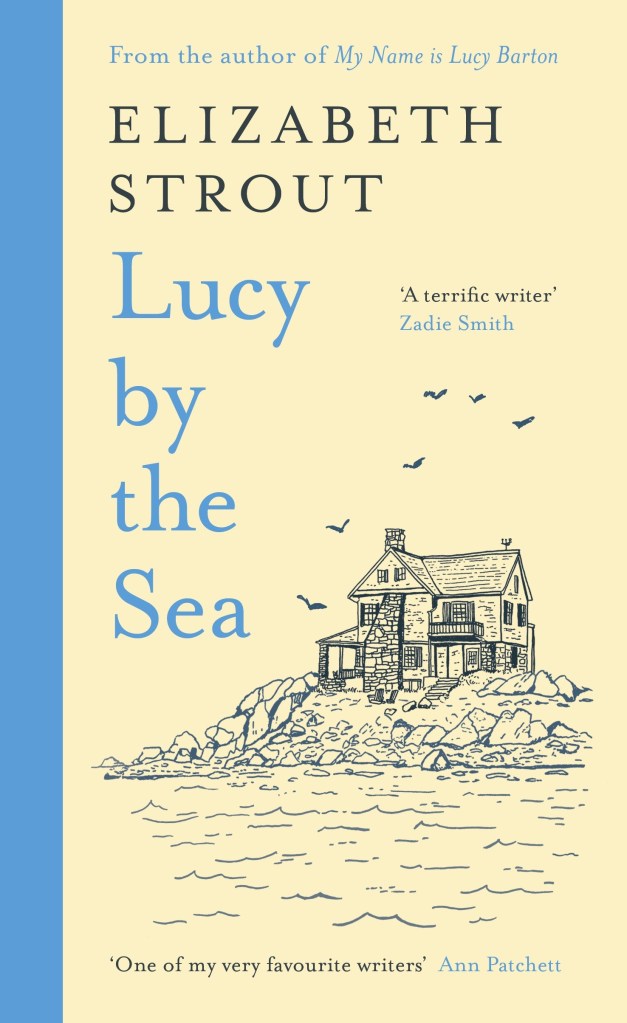
Book Review: Lucy by the Sea by Elizabeth Strout – a memoir-like novel that relives those dark early days of Covid

If you’re an Elizabeth Strout fan like I am, you’ll have come across Lucy Barton before. She’s an easier character to like than Olive Kitteridge, the character of the eponymous novel which earned Strout a Pullitzer Prize. Lucy is a novelist who has come from a very humble beginning in a small town. So she tends to turn her author’s eye on the world – watching people’s interactions and thinking.

Lucy’s upbringing and her relationship with her mother are the subject of the first book, My Name Is Lucy Barton. Her hometown, Amgash is the subject of the stories in Anything Is Possible, and is where Lucy returns to visit her siblings who are still there, after her long absence in the city. Oh, William is Lucy’s story again, and concerns her relationship with William, her first husband. And this continues in Lucy by the Sea, which is also what some people might call a “Covid novel”.

And I found this a bit difficult to start with. William is a scientist, and as he watches the news about the virus decides it’s time to leave New York. He wants Lucy to leave too and persuades her to pack a suitcase and go with him to the small seaside town of Crosby in Maine. They’re only going for a few weeks. He also insists their two daughters, Becka and Chrissy to move out of the city too – although Becka resists. William’s the only one who can see what’s coming.

The novel takes you back to those terrible early days – the deaths, and the lockdowns, the personal distancing and the fear. We see it all through Lucy’s eyes and being a writer, she’s observant and sensitive. New York was hard hit and news footage on TV is must-see viewing for William. When they venture out to go shopping the locals give them the cold shoulder and one day they find an angry sign on their car telling them to go back to New York.

A strange compatibility was taking place gradually between William and me. I had even forgotten about how I used to have to go down to the water and swear because he wasn’t listening to me when we had supper. I mean, we were essentially stuck together, and we sort of adapted to it.

Thank heavens for Bob Burgess, the genial lawyer (and also a main character in The Burgess Boys, which I also highly recommend). Bob makes them welcome, finds them some Maine licence plates and becomes a good friend of Lucy’s. The story takes us through the months that follow, the couple’s fears for their daughters, William’s attempt to reconnect with his lost sister, their settling in at Crosby as well as shifts in their own relationship. There is more sadness than joy, but there is still hope by the last pages.

For quite a way through this novel I felt a lot more uncomfortable as I read than I usually do with Strout’s fiction. And this is because she brings to life that terrible time as Covid first took hold and also the political events that followed – the divisions in society shown on the TV, and so on. But somewhere towards the end, I felt the wisdom of the book and I went from wanting to rush through the book to get it finished to taking my time and enjoying it.

Much is made of Lucy having come from poverty. Strout has made this an asset, even if it troubles Lucy, as it means she can talk to just about anybody. I love her openness and truthfulness. Her attempts to understand people from other walks of life and across the political spectrum. I wish more authors did this. And William is forced in this book to confront again the terrible way he treated Lucy years before. It seems the Covid crisis makes everyone focus on what really matters in their lives.

Lucy by the Sea is well worth the read, even if you wonder what else can be written about this character. It is a thoughtful novel, and makes you think. And the writing is so natural, it really seems like your inside someone’s head. But if you’re not ready to relive that awful time, give it another year or two. It’s a four-star read from me.

Book Review: The Weekend by Charlotte Wood

This is such a different sort of novel from Wood’s earlier work, The Natural Way of Things, which was a dystopian novel with an underlying tone of menace. I thought it was a stunning read and was happy to hear she had a new book out. The Weekend is a more character driven novel, told with wit and insight, following three women in their seventies who have lost their former glory, are bitter or desperate – is it too late to recover, recharge and reinvent themselves?

The women are old friends who are missing the fourth of their circle, Sylvie, who has recently died. They gather at Sylvie’s beach house just on Christmas to clean it and clear out the junk, ready to sell. First there’s Jude – she’s the bossy one who likes things done properly. She’s worked in a fashionable restaurant, makes a terrific pavlova, and has been the mistress of a wealthy married man for decades. After the house clear-out, she and David will steal a precious few days together. Jude is the first to arrive, but where are the other two? So typical of them to let her down.

We catch up with Wendy, who has car trouble, sweltering as she waits for the breakdown service – we’re in Australia and Christmas is in summer. Adding to her discomfort is her ancient dog, Finn, seventeen, blind, deaf and incontinent – a raft of conditions that make him constantly fretful. If only Wendy would listen to her daughter and have the dog put down. But Finn has been her consolation ever since her husband passed away. It’s hard to imagine Wendy is an academic of some repute who has written books on feminism that have been received with widespread critical acclaim.

Then there’s Adele, an actress who keeps missing the train, facing a bunch of problems including imminent homelessness, and a lack of available stage roles which is galling for someone who dazzled with her Blanche DuBois, Mother Courage, Lady Macbeth – so many brilliant performances. Then there’s the lack of cash – at least she’s well turned out, her figure still good for her age, her stunning breasts still shapely, her recent pedicure money well-spent.

Most often when Adele was exposed, or shamed, she turned for courage to the moment every actor knew: the moment on stage, entirely yours, waiting in the pitch-dark before the lights came up, the most powerful privacy a person could have. The fear drained away and adrenaline replaced it, and you were ready on your mark, in the darkness….In that moment of taut, pure potential, everything, everyone, was yours.

Jude doesn’t expect a lot from Adele, but has made a list none the less and the three crack on, each imagining the past, their petty grievances, their fears and insecurities. They don’t seem to be getting along at all – was it only Sylvie who kept them all connected?

The Weekend is a wonderful story about friendship and the odd ties that bind it, the feelings that threaten to break it, told in brilliant, witty prose. I hadn’t expected to like it as much as I did, but found myself drawn into a story about three women in the autumn years of their lives – a time when there may not be many more chances for new horizons, but still, who knows? There is just enough plot to keep things bubbling along, with some revelations towards the end that bring things to a head.

I loved the way Wood creates physical discomfort that mirrors the discomfort of the characters’ interactions: the rusty inclinator – a lift-like contrivance that clunks its passengers up to the house; a drenching storm; Wendy’s uncomfortable sandals; Adele caught out needing a pee at the beach with no facilities in sight; anything to do with the dog, Finn. And clearing out a house you have all those years of accumulated junk – the flotsam and jetsam that make a life – now decaying and useless.

It all adds up to a brilliant read, which reminded me a little of Jane Gardam, another writer who has created some brilliant older characters (see Old Filth trilogy), or maybe it was the similar wry tone. The Weekend earned Wood a spot on the Stella Prize shortlist and I will be keeping her on my radar, eager to see what she comes up with next. A four and a half out of five read from me.

Book Review: Mum and Dad by Joanna Trollope

Sometimes when you come to a hiatus in your reading, something a little familiar is just what you need to get going again. Mum & Dad is the twenty-first novel by Trollope dealing with everyday life, family and relationships. You might say they follow a well-worn path. Often a couple, their family or friends, are tested by some bolt from the blue, leaving them to dig deep, examine themselves and their relationships with those around them to find a way forward.

In the case of Mum & Dad, the family is the Beachams, an old family going back to the Domesday Book, with a more recent tradition of naming their first born son Gus. Monica Beacham, who loathed her domineering father-in-law refused in a rare act of defiance and so named her first son Sebastian. If only Monica had continued to be more of her own person, as forty-plus years later we find her with her husband in Spain, where Gus has become an award-winning wine-maker and at seventy-tree is a grumpy old man. And at the start of the book, a grumpy old man who has just had a stroke. Think bear with a toothache.

Monica finds herself in a panic – how to manage the winery and deal with Gus, a husband from whom she has become increasingly estranged. At least she has Pilar, her faithful housekeeper and then there’s younger son Jake who seems only too willing to abandon his life in London to rush out to help her. If only her older children were on board with that idea. Parked in English boarding schools when their parents moved to Spain, while younger brother Jake got to stay with Mum and Dad, there is an undercurrent of resentment. It doesn’t help that Sebastian’s wife Anna just doesn’t get along with Monica – Anna is too controlling, Sebastian never taken seriously by his now teenage boys, Marcus and Dermot. Lately Sebastian feels Anna doesn’t much like him anymore. He’s a bit of a sad sack.

Monica also has a niggling guilt over her daughter Katie, who was miserable at her boarding school, and must have felt abandoned by her parents while Monica played the dutiful wife. Katie has since thrown everything into her career – she’s a successful lawyer – but her family of three daughters sometimes comes off second best, while she and partner Nic seem to be growing apart. But how can you be a good mother if you don’t have the experience of being cared for as a child?

As Monica and her three children have been all slowly drifting towards various kinds of discord and disaster, the catalyst of Gus’s stroke shocks them into all into taking stock. Eventually all three will visit their mother, with or without their spouses and children. They’ll have to connect with each other to find out what’s really going on and things may get a lot worse before they begin to get better. It’s a classic Trollope story, but also a very satisfying one. What makes it work for me are the characters. Not only do they have depth and interesting interplay with their families, they each grow and develop through the book. They’re not always all that likeable, but they seem very real.

I whizzed through Mum & Dad, enjoying the enfolding drama and the settings which switch between London and Spain. And as I read, I remembered that the other thing I like about Trollope is that her books are easy to relate to, picking up changing social conventions and idioms. She shows really well how different generations within a family see things and what they can teach other, even the youngest has her say. Trollope’s books only come out every couple of years, but when they do, I know I will find them worth the wait. A four out of five star read from me.

Book Review: The Sweeney Sisters by Lian Dolan

The pretty seaside town of Southport Connecticut is where the well-heeled come to play – there’re the golf clubs and country clubs and the yacht club and you can bet everyone knows everyone and their business too. It’s also where Liza, Maggie and Tricia Sweeney grew up, their old home now somewhat ramshackle – as their lovely mum Maeve had put it, “shabby and chic before Shabby Chic was chic.”

At the start of The Sweeney Sisters, gallery owner Liza learns the devastating news that her father has died in his sleep of an apparent heart attack. Being the only daughter still living in Southport, it’s Liza who phones her sisters – free spirited artist, Maggie, and control-freak lawyer Tricia – as well as placating Julia, her father’s long-term housekeeper. Tricia swings into legal mode, determined to manage the fallout – William Sweeney was a literary lion, taught in schools and universities, with drinking and gambling habits to making him interesting.

Bill Sweeney was also about to deliver a memoir to his publishers, having long since spent the hefty advance, but there’s no sign of it on his computer, or in the boat-shed he used as an office. The house on an expensive piece of real estate was mortgaged up to the hilt as well. At least he left a will with his solicitor and old friend, Cap Richardson. But after the funeral, Cap reveals the disturbing news that there is in fact a fourth Sweeney sister, Serena Tucker, suddenly the elder Sweeney sister and amazingly, the result of a an affair between Bill and their neighbour Birdie, a cool WASPish woman, always in tennis clothes and a source of derision among the girls.

As Bill Sweeney’s publishers get more demanding, the younger sisters come to terms with having a new sister and the four of them slowly get to know each other. Serena, a high-achieving journalist, is the only writer among them, and having won a DNA test had only recently learned of her parentage. It is a lingering sadness to her that Bill had refused to see her.

There are some interesting minor characters as well: Raj the archivist sent by Bill’s university to catalogue and box up Bill’s papers and who makes a hit with Tricia; Maggie’s friend Tim the sous chef who helps out with the catering; the ethereal, hippie poet Maeve, long dead but always in her daughters’ hearts. But mostly it’s the story of the four girls and their coming to terms with the upshot of their father’s death. Each acquires a new awareness by the end of the book, with new plans for the future. The book is also very witty, a lovely little comedy of manners, with some smart story-telling as one bombshell leads to another. Throw in some snappy dialogue and there’s just so much to enjoy. An easy four out of five star read from me.

Book Review: Redhead by the Side of the Road by Anne Tyler

One of the things I’ve always liked about Anne Tyler is her knack for unlikely characters. There’s never going to be a stereotypical character in a Tyler novel – they’re often a bit quirky, but oddly ordinary as well. Certainly they’re not the kind of people you meet a lot in fiction. Take Micah Mortimer for instance, the main character in Redhead by the Side of the Road.

You have to wonder what goes through the mind of a man like Micah Mortimer. He lives alone; he keeps to himself; his routine is etched in stone.

Micah’s one of those quiet, fanatically tidy, routine driven men of a certain age, whose life could go on the same way for decades. He looks after his apartment building for a reduction in rent (sending out emails about the importance of flattening milk cartons before they go in the recycling), while running his Tech Hermit business, solving people’s home computer problems.

Not only is Micah pernickerty about his cleaning routine (kitchen floors every Monday), he likes to think of himself as a model driver, sticking to the rules, taking care when parking, while an imagined Driving God smiles benignly. All the same his inclination to do the right thing also extends towards people, like his neighbours, but sometimes he misses important signals.

Two things happen that upset his routine. The teenage son of a former girlfriend turns up on his doorstep, wondering if Micah might be his father. Brink Adams (Wouldn’t you know he’d have a name like “Brink”, surmises Micah – something about the blazer and the haircut) ends up staying the night, upsetting the order of Micah’s day, leaving him to wonder why Brink isn’t at college and how to get in touch with his mother.

And when his girlfriend, Cass, phones him with her own problem, fearing eviction because of her cat, Micah doesn’t offer much consolation and Cass dumps him. Suddenly his head is filled with what might have been, not only with Cass, but with Lorna, Brink’s mother, all those years ago.

This is a quiet little story – just nudging 180 pages – and as such seems perhaps less substantial than novels like A Spool of Blue Thread, or Searching for Caleb, with their look at families through the generations and the interactions of characters over time, their secrets and motivations. And yet, Tyler really nails the character of Micah and creates a beautiful little drama about him. It really is the perfect little book and sometimes a small story is just right. An easy four out of five from me.