Book Review: The Impossible Thing by Belinda Bauer -a duel timeframe mystery from the cutthroat world of egg collecting

Belinda Bauer is a crime writer from Wales who frequently turns up in the crime fiction awards lists – winning a Gold Dagger for Blacklands, as well as the Theakston Old Peculier Crime Novel of the Year for Rubbernecker. I’ve always enjoyed her books, and would find it hard to pick a favourite, but Rubbernecker was, I recall, a cracker – following the story of a young autistic man and his determination to deal, in his own way, with the death of his father. In Rubbernecker, Patrick signs up for an anatomy class, where groups have to examine a corpse to determine cause of death. It’s his mother’s idea – a way to help him get over his obsession with dying. And this is how he gets tangled up in solving a murder.

It seems guillemots nest on cliffs, clustered in such tight proximity with each other that the mother bird lays a distinctive egg that will be easy to recognise among all the others. The colours are so varied, collectors would vie to obtain the most unusual. This is now quite illegal, but a hundred years or so ago, men would dangle on ropes over cliffs every nesting season to pick out eggs that they could sell. Which is how me meet our other main character, Celie Sheppard.

Celie is so different from her dark, robust looking siblings, her father disowns her and abandons the family to manage Medland Farm themselves. Her mother leaves baby Celie in the care of Robert, the “idiot” boy who helps on the farm in return for bed and board. Celie survives rather than thrives, and the two make an odd pair, both ignored by the other Sheppards. Egg collecting is a nice little earner at neighbouring farms but at Medland Farm there’s a rocky overhang making it impossible. Until skinny little Celie tells Robbie she can fit through a crack in the rock if he’ll hold her rope.

Celie’s story is one of ambition and trust, heroes and villains, love and also tragedy – particularly for the poor bird who gives up her very saleable egg every nesting season. You’re taken into the world of egg collecting – not just the perilous procedure involved, but also the greed and one-upmanship among the traders and collectors.

Nick and Patrick are also an unusual pair, but are oddly complimentary. Patrick is very smart but lacking in social awareness – something he realises and is working on. Nick isn’t all that bright but can be chatty and friendly. As even owning a rare, collectible egg is illegal, Nick refuses to get the police involved, so the two set about tracking down the stolen egg themselves. This will put them in the path of danger, as well as highlighting the motivations of egg obsessives, natural historians, wildlife custodians, and vigilantes.

The Impossible Thing is another cracking read from Bauer. I loved it, although the animal cruelty described is not for the squeamish. Bauer balances Celie’s more poignant story with the humour of Nick’s situation, his often at cross purposes dialogue with Patrick, their hare-brained schemes. There are some madcap action scenes, and the pace picks up to finish the story with a flourish.

This is also a very original novel, not only in its source material but with its two main characters, both outsiders, but both very likeable. And this makes it interesting. I am not sure if Bauer will bring Patrick back for another adventure, but I was delighted to meet him again and enjoyed his quirky smartness. The Impossible Thing is a four-star read from me.

The Impossible Thing will be released at the end of February. I read a proof copy of the book courtesy of Netgalley in return for an honest review.

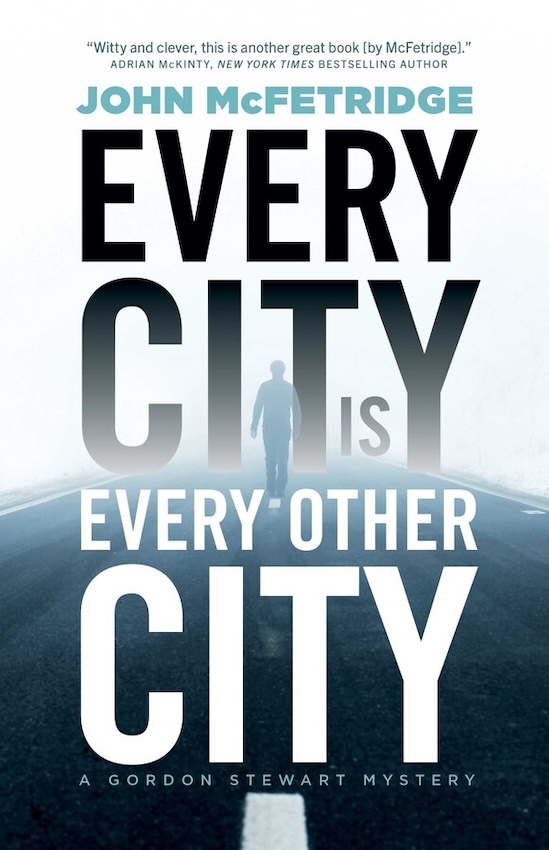
Book Review: Every City Is Every Other City by John McFetridge – a quirky Canadian update of the classic gumshoe mystery

Taking a punt on an author you’ve never heard of before can bring up some nice surprises. The title of this crime novel made me curious and I was soon happily ensconced in this e-audiobook about a part-time private investigator.

Gordon Stewart makes much of his name – you can read it either way, he says. A first name that could be a surname or vice versa. Mostly though, he’s just Gord, a location scout for the movie industry. This work means he’s got an eye for detail, and is good at sniffing things out – useful skills in a private investigator which is something he does when the movie work is quiet.

Lana, a work colleague, talks Gord into finding out what happened to her Uncle Kevin, an out-of-work electrician who has left his wife and gone off in his truck with his rifle. Finding the truck on a back road near the woods, police have written off the disappearance as suicide. He may have been depressed but Lana’s aunt is adamant Kevin’s still alive and wants to know where he is.

There’s also the story of the surveillance job Gord takes on for OBC (Old Boys Club) Security Inc – a case that has similarities to the Harvey Weinstein sexual assault case. Gord’s not keen, but Teddy at OBC can help with official records to help find Uncle Kevin so Gord feels obligated. This gets awkward when Ethel, the actress he has started seeing, discovers which side OBC is working for and decides to do some sleuthing on her own.

Every City Is Every Other City is a different kind of crime novel – maybe it’s the laid-back Canadian humour, or perhaps it’s the blend of PI sleuthing with glimpses of the less glamorous side of movie-making. Key elements of the story concern issues of the day – feminism and the Me-Too movement, for instance, as well as men’s mental health and the importance of work. McFetridge is very smart with dialogue, and his characters are nicely ordinary but interesting at the same time. The plot simmers along quietly, packing in enough tension to keep you turning the pages, with an ending that is both witty and heart-warming.

There’s also a lot of interesting detail about the entertainment industry. I love the way Gord knows just the right locations for somewhere in Ontario that can look like a New York street corner or a small town in America. Ethel’s an improv performer which comes in handy later when she’s trying to pretend she has a good reason to be somewhere she shouldn’t. Her world is also quite fascinating.

Ethel’s quite a character, the bright-spark extrovert opposite Gord’s low key personality. Both are quite appealing in their own way and their relationship adds another story thread. Even Gord’s dad is quirky in the way a man who has lost his wife a long time ago might be – fixing up his house rather than replacing anything, so that it looks mired in the 1980s, which delights Ethel.

Having characters that are fun to hang out with is always a plus, while I particularly liked the reading of this e-audiobook. This is courtesy of Tim Campbell, who takes you nicely into Gord’s head with a flat, gum-shoe kind of monotone that reminded me a little of old movies, and contrasting this well with Ethel’s more lively delivery and that of other characters. I stumbled upon this audiobook quite by accident and it made me realise I haven’t read a lot of Canadian literature in a while – something I’m keen to remedy, as I’d enjoyed it in the past. Every City Is Every Other City is a four-star read from me.

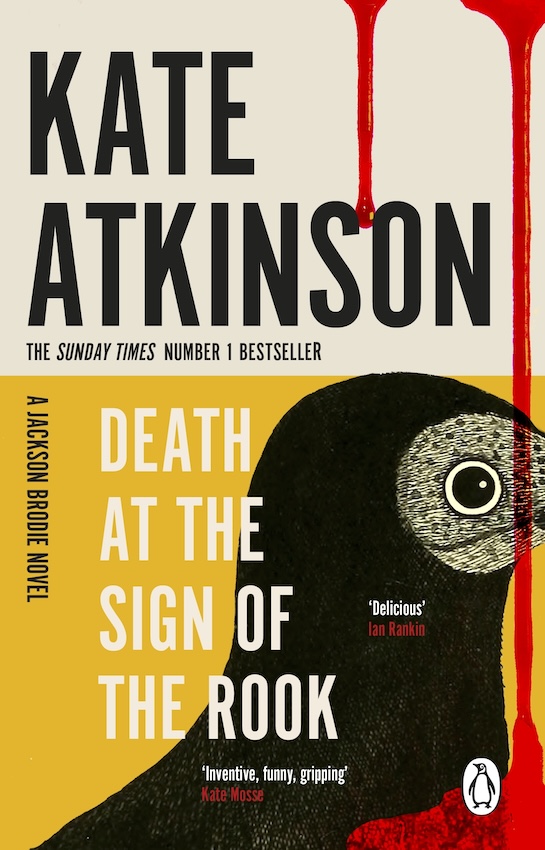
Book Review: Death at the Sign of the Rook by Kate Atkinson – more fun and games with the latest Jackson Brodie mystery

I have to admit to being a Jackson Brodie fan since we met the beleaguered private investigator in the first book, Case Histories. I’ve read them more than once as well as enjoying immensely the TV adaptations starring Jason Isaacs. So here we are, five years since the last one (Big Sky), with another in the series – something I wasn’t really expecting, and you can imagine my delight.

Atkinson has a habit of not really continuing where she left off in the last book. Instead we seem to catch up with Jackson some years later, or with a completely different set of circumstances. Sometimes he’s flush and others he’s down on his luck. In Death at the Sign the Rook, Jackson is living with his girlfriend, Tatiana, and has had enough income from his PI work to buy himself a lovely big Land Rover Defender. His new case involves the theft of what looks like a Renaissance painting – a portrait of a Woman with a Weasel, which until recently hung on the bedroom wall, out of reach of prying eyes, of an elderly lady who has recently died.

It seems Dorothy Padgett’s carer Melanie Hope has taken it, and just disappeared without notice, leaving only an old mystery novel: Hark! Hark! The Dogs Do Bark by Nancy Styles. Dorothy’s daughter Hazel and her son Ian want Jackson to track Melanie down rather than calling the police – the painting may have some dodgy provenance. We get Jackson’s usual internal sizing up of the situation with Dorothy’s grasping offspring, squabbling over their mother’s possessions.

The story weaves in and out of Jackson’s investigation, bringing in several other main characters, beginning with Lady Milton over at her cash-strapped stately home, Burton Makepeace. LM has similarly lost a valuable painting, this one a Turner, at the same time as her companionable housekeeper Sophie disappeared. She is struggling to keep control of things while her eldest son Piers is trying to turn the big house into a hotel complete with staged murder mystery evenings. She’s an impossible character to like with her old-world thinking and arrant snobbery, but you can’t help feeling a bit sorry for her.

There’s also the boring vicar, Simon Cate, who has had a complete loss of faith, but battles on regardless, a fondness for animals, his only saving grace. And then there’s Ben, ex-military and a bit sorry for himself having lost a leg on his last tour, while missing his mates in the Army. He’s living with his sister, and learning to look after bees. We also meet Reggie Chase again – you’ll remember her from previous books – now a Yorkshire police detective.

These threads all slowly weave the characters into a plot involving a blizzard, a murderer on the run who’s armed and dangerous, and a murder mystery evening at Burton Makepeace. Somehow all of the characters end up there – we’re given a hint of what’s to come in a kind of prologue – and Jackson’s going to feel glad he bought the Defender. As usual it isn’t always the crooks that are the baddies, or not all of them anyway, and Jackson may or may not err on the wrong side of the law.

Atkinson is a master of creating a tantalising story with plenty of humour and surprise twists. However, I did feel this story took a while to get going. We get stuck for chunks of narrative with Simon the vicar, and Lady Milton, both of whom can be a bit tiresome. But once the story gets going, there’s plenty to enjoy and the ending’s a cracker. Not the best Jackson Brodie, but still worth reading. A three-and-a-half star read from me.

Book Review: The Bookshop Detectives: Dead Girl Gone by Gareth Ward and Louise Ward – a humorous take on the bookshop mystery, packed with local colour

I went to an author talk recently at which authors Gareth and Louise Ward described how they came to write a book together set in the New Zealand village of Havelock North where they live and where they own a bookshop. The Bookshop Detectives: Dead Girl Gone is a delightful cosy mystery and part of the humour for me, anyway – and this is a very funny book – comes from the way the main characters, Garth and Eloise Sherlock, owners of Sherlock Tomes, are seemingly versions of the authors and their world.

In real life, Gareth and Louise were also, once upon a time, coppers back in the UK, or Blighty as they call it. And they do have a large dog with a sensitive personality who is often at the shop – I’ve been there a few times, so I know. The world of these booksellers just seems made for a cosy mystery series, doesn’t it? At the talk I was amused to learn that the dog, Stevie, was a more prominent character in the first drafts, until the editor cut out large chunks with “too much Stevie” scrawled in the margin. So for lovers of mysteries where pets save the day and solve the murder, this doesn’t quite happen, although I am happy to say, Stevie does play a pivotal role in things.

The story revolves around a cold case, the disappearance of schoolgirl, Tracey Jervis, decades before. A bright student with a talent for poetry, Tracey left home, heading for the circus, and was never seen again. There were rumours of her being caught in a clinch with a teacher, but the work she did helping a politician with his campaign seems to have thrown up more questions. As well as being politically ambitious, Franklin White is a property developer, with an arrogance that makes him easy to loathe. And then there’s Tracey’s controlling father; and what about the ex-boyfriend?

Meryl is an artist, as she’s told us often, although I’ve never seen any of her work in Havelock North’s galleries or that other purveyor of fine art, the local coffee shop. She barges past me pulling a granny trolley, which she is far too young to be using. ‘What other calendars have you got?’ she asks, seeming indifferent to the fact that I haven’t set up for the day, or even yet switched the lights on.
Despite having been ordered from the reps in February, the main drop of calendars hasn’t arrived yet. They get later each year and the shipping issues we’ve had thanks to Covid have only made matters worse. ‘They’re in a box up at the counter,’ I tell Meryl. ‘We’ve just had a couple of the smaller suppliers so far.’ I grab two piles of magazines banded with plastic strips from outside the door and hurry after her.
‘What about “Nice Jewish Guys”?’
When we first opened the shop, and didn’t know what we were doing, we got an eclectic mix of calendars of which perhaps the most bizarre was ‘Nice Jewish Guys’. We put a photo of Eloise swooning over it up on Facebook as a bit of a giggle and sold all four copies the same day. Ever since it has been a firm seller every year, though the calendar rep told us we’re the only retailer in New Zealand that stocks it.

Garth and Eloise had never heard of Tracey Jarvis until a mysterious package is delivered to the shop with a copy of a book inside – See You in September, by real-life local author, Charity Norman. The book has been annotated with a message – a call to action to reinvestigate Tracey’s disappearance, and on the package is a reference to Eloise’s old police badge number, which was hardly something anyone local would know. The couple can’t help wondering if there’s a link to a nasty criminal Eloise had helped put away years ago and who casts a lingering shadow.

Other story threads are woven in, the most notable being the decision of one of the world’s best-selling authors to launch her latest book at Sherlock Tomes, a colossal and mind-boggling event that has to be kept under wraps. Then there’s the flower pilferer that is pinching flowers from the shop’s window box as well as the menace provided by some thuggish gang members who try to put a stop to the Tracey Jarvis investigation.

Everything comes together neatly, the plot building to a simmering conclusion full of surprises and fair dose of action. But while the book lives up to it’s ‘cosy mystery’ label, it’s also a view into the enchanting world of bookshops and the people who visit, its quirky and loveable staff, and the curious characters who inhabit the village. Dead Girl Gone is the first in a series, with a second book already in the pipeline to look out for. Can’t wait! This one’s a four-star read from me.

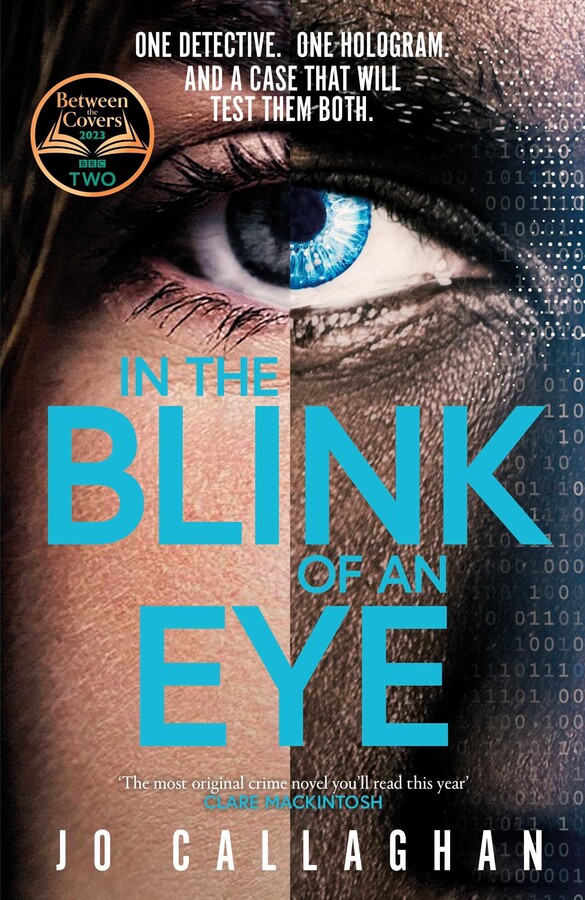
Book Review: In the Blink of an Eye by Jo Callaghan – a police pairing that breaks the mould

I always like to check out the Theakston’s Old Peculier Crime Novel of the Year awards – the shortlists are full of my favourite mystery authors (Elly Griffiths, Ruth Ware, Abir Mukherjee, and that’s just for starters). This year’s winner was Jo Callaghan’s debut novel, In the Blink of an Eye, which breaks new ground in that there’s a new police officer on the team, and it’s AI. The premise of this novel was just too good to ignore.

DCS Kat Frank has been away from the Warwickshire police on bereavement leave, and her husband’s death is still a bit raw. Her son, Cam, who has just completed his A Levels, has been having therapy, his anxiety over losing a second parent who has a dangerous job never far from his thoughts. So Kat has requested a safe option for her return to work, something less on the frontline. Her boss and mentor Chief Constable McLeish has a surprise in store. He’s signed Kat up to run a missing person’s cold case team that also will be trialling AIDEs (Artificially Intelligent Detecting Entities).

Kat is not happy. She’s an intuitive cop who follows her gut. You can’t solve cases with an algorithm, she declares. Meanwhile the scientist who has designed the AIDE, Professor Okonedo, with her own axe to grind, is sceptical of Kat’s skills and of the police in general. Reluctantly Kat agrees to the trial, taking on ambitious DI Rayan Hassan and shrinking violet, yet empathetic, DS Debbie Browne. Okonedo introduces AIDE Lock, a bracelet-type band that you can talk to like Siri, and which can whip up facts, statistics and probabilities in seconds. In holographic form, it’s remarkably like a person.

With hundreds of cold cases to chose from, Lock determines that recently missing young males will be more easily found. But Lock and Kat disagree over which. Kat’s preferred case is Tyrone Walters, a high-achieving young black man from a deprived area. Lock prefers Will Robinson, a young white male not much older from a wealthy home. According to Locke, statistics suggest the Robinson case would be easier to solve because he’s white. Kat is appalled as this racial bias and has a feeling that Tyrone has been a victim of foul play..

Ultimately, Hassan suggests the trial review both cases, and Professor Okonedo assures Kat that Lock can “perform the functions of many officers in just a fraction of the time”. This makes Kat only bristle more, but she reluctantly agrees. If only the team realised that what starts out as a test, a case chosen by statistics versus one chosen by gut feeling, will converge into a single case that is still active.

Picking up her briefcase, Kat paused at the door. She needed to leave her new team with something more motivational than her obvious irritation. ‘Remember, less than one per cent of missing people turn up dead, so we still have a good chance of finding both boys alive.’

‘Just to clarify, that figure represents one per cent of all the missing,’ said Lock’s voice from her wrist. ‘Only four per cent of adults are still missing one week after being reported, which is the category that Tyrone and Will fall within. So, in actual fact, there is a twenty-five percent chance that both boys are already dead.’

This really was an edge of the seat read, as woven into the narrative are scenes from the point of view of someone who has been kidnapped, drugged and immobilised. The clock is ticking and we can only hope that Kat and Lock will sort out their differences enough to solve the crime and save the missing lads. While Kat is learning how to manage Lock and use its obvious skills – downloading data, scanning social media for clues, extrapolating info, etc. – Lock is learning too. And it needs to, particularly with reading body language and developing social skills.

This makes the book really interesting as it takes time before Kat and Lock gel enough to be useful together. For a lot of the time they’re the angry cop and the irritatingly rational cop. Slowly, Kat’s team start to come into their own: Hassan in spite of his confident manner has a softer side and stuff going on at home, while Browne has a big problem to deal with, but fortunately Kat has enough patience to bring her out. Although mostly Kat is on edge, drinks too much and tends to fly off the handle.

It will be interesting to see how Kat and her officers, as well as Lock, evolve over the course of this series – there’s already a second book, Leave No Trace, plus a third to be published in April next year. Quite the feast. Whatever your thoughts on AI, In the Blink of an Eye illuminates it in real-world scenarios. Jo Callaghan has done a lot of research on the subject and how she imagines AI in a policing environment is fascinating. It’s a four-star read from me, and I can’t wait for the TV series. It would be a cracker.

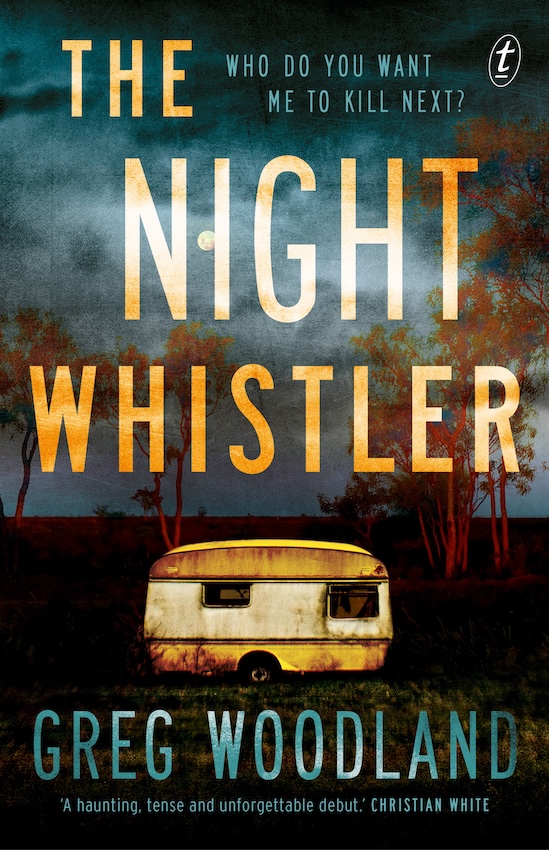
Book Review: The Night Whistler by Greg Woodland – a new cop in a small town that’s simmering with secrets

Readers of these posts will know that Aussie Noir is one of my favourite sub-genres. Having recently read Greg Woodland’s debut crime novel, I am pleased to have discovered what looks like a promising new series. The Night Whistler has all that readers have come to enjoy about Aussie Noir: an evocative, rural Australian setting; small town secrets; and a cop that’s up against it. Set in the 1960s, the story evocatively conjures up the era – the music, the social order plus the edgy restlessness of a long, hot summer.

Mick Goodenough (pronounced like “no-good” backwards, as opposed to “good enough”) has been sent to Moorabool, a smug little town that’s something of a culture shock. A former Sydney detective, he’s been busted down to the rank of Probationary Constable after a case went horribly wrong. Falling foul of his superiors and with a drinking problem that has cost him his marriage, Mick has hit rock bottom but, fortunately, it seems, you can’t keep a good cop down.

The narrative alternates between Mick’s story and that of twelve-year-old Hal, similarly a new kid in town, along with little brother Evan. The two boys are investigating a creek near their house when they come across the body of a mutilated dog. The boys are understandably upset, but go on to give the animal something of a burial, little knowing that the dog is one of a string of such killings that the police won’t take seriously. That is until Mick Goodenough recognises the traits of a perpetrator that will likely take a more serious turn. When the dead dog turns out to be Mick’s, it only spurs him on.

While there’s a killer just getting up steam, Mick is having to deal with arrogant Sergeant Bradley who is wary of Mick’s city cop ways, and lords it over his team. This includes a fellow Probationary Constable who sucks up to Bradley and world-weary Senior Constable Bligh, who becomes an unexpected ally. Meanwhile Mick is desperate to see his teenage daughter again, if only his ex-wife will agree to send her down on the train.

Hal’s father is the bright new spark at Prime Foods, which is why the family have moved to Moorabool. He’s got a fancy new car and wandering eyes. At the Prime Foods Christmas Picnic, we see a microcosm of the town, the braying and overbearing Mayor Dianne Curio, and her bombastic husband, as well as the racism carelessly handed out to Jenna, a young Aboriginal woman who is friendly to Hal and his mother.

Finding the dead dog sets Hal on a mission to uncover the killer – he’s been reading Sherlock Holmes. He gets a hand from young Allie, an Aboriginal girl who teases him relentlessly but shows him how to fish for yabbies in the creek. The two make a great pairing, but obviously they are soon going to be out of their depth. Worse still, Hal’s mother begins getting nuisance calls from someone whistling “Are you lonesome tonight” and making threats. Sergeant Bradley ignores her call for help, even when Mick suggests this isn’t just a snowdropper.

Greg Woodland quickly creates a simmering sense of menace as the story builds towards a gripping ending. But there’s also plenty of banter between Hal and his brother and with Ally, between the kids and their parents and other adults that adds some humour and light relief. Then there’s all the pressure on Mick: the pressure not to probe too much in a town where it pays not to ask too many questions.

For a debut novel, The Night Whistler is expertly constructed, the characters well drawn and interesting, while bringing the setting, both time and place, to life. But we shouldn’t be surprised. Greg Woodward is an experienced screenwriter with a bunch of award-winning films under his belt. The second book featuring Hal and Mick, The Carnival Is Over, is already on my ever-growing list of must-reads. The Night Whistler, excellently narrated by Nic English in audiobook format, is a four-star read from me.

Book Review: Body of Lies by Sarah Bailey – a riveting crime novel packed with surprises

I’d given up hope of another Detective Gemma Woodstock novel so was ecstatic to see this one come out earlier this year. If we’re talking Aussie Noir detectives, I might have to put Woodstock ahead of Jane Harper’s Aaron Falk (The Dry; Forces of Nature; Exiles), Woodstock scoring points for instinct, putting two and two together, feistiness and courage. If only she could get her life together.

But in Body of Lies, it seems Woodstock is at last doing well on the home-front. She has recently returned to her hometown of Smithson – she’d escaped it after the first book, lived dangerously for a time in Melbourne, but with a new relationship going well, she has come back to her old job. Gemma wants to be a good mother to her son, and has a new baby, but with the help of Mac, the man best pal Candy says is a saint, it all looks fairly promising.

Gemma’s still on maternity leave – Scarlett is just nine-months old – when she becomes caught up in a crime. Her dad’s had a health scare, so Gemma is at the hospital when the lights go out and a body is stolen from the morgue. But even before that, we’d had a white-knuckle scene with a car being chased off the road – the somewhat inebriated witness says it’s murder and so do the forensics. A murder and a stolen body before page 20!

Gemma is like a bloodhound, her detective nose is twitching and she wants in on the case. Jonesy, her old boss, is keen to have her help, as they’re short-staffed. But she’ll have to answer to DS Everett who finds Gemma pushy and inclined to do her own thing. Gemma finds Everett lacking in imagination and reluctant to share information. They’re going to have to work as a team but for a chunk of the book that seems unlikely to happen.

I’m halfway through Monday’s points when I smell Everett, a woody cologne that doesn’t fit with the musty aroma of the office. He stands in the doorway in an expensive suit, and not for the first time I wonder what led him to leave Melbourne and take a role in Smithson. It’s rare that a senior detective relocates to a small town mid-career. Smithson has become more of a drawcard in recent years, but in my experience, city cops only give up their plum metro roles when a problematic personality is being off-loaded or – like in my situation – when someone wants a fresh start due to personal reasons.

The body stolen from the morgue has yet to be identified, and that is surprisingly difficult in a town where everybody knows everybody. Before long the plot is complicated by the discovery of a newborn baby in a park by the lake, and then there’s another murder. Are the crimes all connected? Meanwhile Gemma is making a hash of juggling work and home life. Mac is busy on his own cases, and Gemma can’t help feeling there’s something he’s not telling her.

I always enjoy Gemma Woodstock as she’s such a determined police officer, as well as a thorn in the side to those in authority. She takes a lot of risks and stirs up a lot more trouble for herself, so you know that she’s going to put herself in harm’s way at least a couple of times before the end of the book. And so it is here, the plot racing away with some revelations you would never guess at and a thrilling, action-packed ending. Her relationships with new colleagues take some surprising and interesting turns too, making for a well-rounded and satisfying storyline.

This will probably be the final book in the series, which is perhaps a shame, although it would be nice for Gemma if life settled down a little for once. I’ve enjoyed her way of thinking, her banter with Candy the journalist and the avuncular Jonesy. But I’m sure Sarah Bailey has more exciting stories up her sleeve; perhaps she has a new detective waiting in the wings. Body of Lies is a four-star read from me.

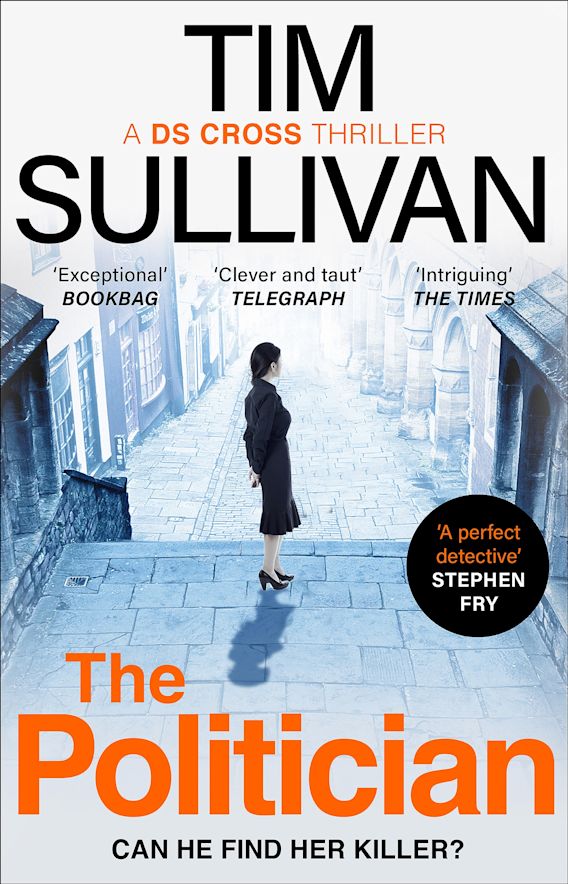
Book Review: The Politician by Tim Sullivan – a quirky detective and a pacy, intricately-plotted crime story

Tim Sullivan is an accomplished screenwriter and director who has turned his talents to a crime fiction series featuring an autistic detective. DS George Cross works for the Serious Crime Unit in Bristol, his sometimes difficult manner with his colleagues tolerated because of his impressive case clearing rate. Paired with DS Josie Ottey, a single mother of teenagers and a more empathetic officer, the two make a balanced team, Ottey often schooling Cross in better ways to manage people, whether colleagues – like eager young Alice MacKenzie and their blustering senior officer DCI Carson – or the recently bereaved.

In The Politician we’ve got a murder that looks like a home invasion gone wrong. Peggy Frampton was a former mayor, now a kind of online agony aunt, who has been found murdered in her own home, her bedroom ransacked. Her husband, a well-known local barrister was in London at the time, but the investigation soon throws up cracks in their marriage.

Cross immediately discovers clues that throw doubt on the likelihood of a panicked burglar having committed the crime and delves into Peggy’s ongoing dispute with a property developer and his plans for a heritage building. And what about all that angry invective hurled at her online regarding her often blunt advice? It seems that although she had a lot of popular support as mayor, she has also made a lot of enemies. But it will take forever to sift through all the online messages, and in spite of a large team pulled in to work the case, it takes Cross and Ottey a while to make any headway.

‘DS Cross,’ he announced customarily, holding up his warrant card for all to see as he marched into the mortuary the next morning.
‘Clare Hawkins, pathologist,’ came the reply, scalpel held high as a further mark of identification, should there be any doubt.
‘I know who you are,’ he retorted, surprised.
‘Likewise.’
‘Likewise, what?’
‘I know who you are.’
‘I’m required to identify myself.’
‘Every time you come here? Says who?’
This had him stumped. The truth was he wasn’t sure who required it in these circumstances, or even if it were required at all. It had just become part of his routine. So he changed the subject as quickly and in as businesslike a manner as possible.
‘Have you ascertained a cause of death?’

While we are served a nicely-paced plot, reading The Politician is also about the journey as every interview, team briefing and exploration of new evidence throws Cross in a new situation to be himself. This is always entertaining as he rubs people up the wrong way, or responds to sayings, metaphors and euphemisms as if they are factual statements. Sullivan puts his screenwriting skills to good effect with some excellent and often hilarious dialogue.

But the storyline is also richly layered, with a subplot describing Cross’s relationship with his parents – his elderly father with his new passion for model railways, and the mother who left when Cross was a young child. She has recently reappeared in his life, but the mystery of her leaving is another puzzle for Cross to put together. For either mystery, it will be Cross’s ability to analyse facts objectively and without bias that will lead him to the truth.

Sullivan has come up with a brilliant character in George Cross who is both quirky and fascinating. How his mind works, how he pieces facts together and uses all the help available to him, from spreadsheets – a lot of his previous career was in Fraud – to people with specialist knowledge, show him to be a brilliant detective. His endless patience in the interview room always seems to pay off too.

The Politician is my second DS Cross audiobook – The Patient is also an excellent read; both narrated by Finlay Robertson who does a stunning job of bringing Cross, Ottey and co. to life. I have enjoyed them so much that this is now a ‘must-read’ series for me. I am fortunate that so far there are another four books, with more in the offing. The Politician is a four-and-a-half star read from me.

Book Review: Cutters End by Margaret Hickey – a gripping new Aussie Noir series with a troubled cop

It’s hard not to pick up a book with a cover showing a dry Aussie outback setting. Those small towns in the rural backwaters of Australia just seem to seethe with all kinds of tension. Broken hearts and lost dreams, the struggle with a harsh environment wearing people down, young people abandoning home for the cities. You can’t help wondering if the author will be the next Jane Harper (author of The Dry).

With Cutters End, we’re in opal mining country, an industry on its last legs, the kind of place you pass through on the Stuart Highway heading north to Alice Springs. It’s also the place where a local hero and father met an unexplained death, discovered trapped beneath his vehicle and apparently burned to death. Back in 1990 this was explained as an accident at the inquest, but Suzanne Miller, a TV host with a flagging career, says it’s time for a reinvestigation. Michael Denby saved her and her mother from floodwaters when she was a small child and he deserves better.

DS Mark Ariti, similarly with a flagging career, is on leave when his superior officer discovers that he knew one of the witnesses at the time – one Ingrid Mathers who Mark dated at high school. Mark’s bumped up to Acting Inspector and sent to re-interview Ingrid and to see if he can jog her memory about the days around New Year 1990 when she was hitchhiking with her friend Joanne. But Ingrid’s not very forthcoming, although the reader has the inkling that she’s got a secret or two.

Mark catches up with Joanne, now living the high life in Sydney, similarly reticent. Why don’t the two women talk to each other any more? More clues pull Mark back to Cutters End, and the Mendamo Roadhouse, once owned by creepy Gerald, where Ingrid hitched a ride with somebody called Ron or Don. He bounces ideas off his new sidekick, DC Jagdeep Kaur, and picks up gossip at the three rather disappointing pubs in Cutters End.

Finally, Cutters End. The Stuart Highway a blade cutting through the centre of town, railway line alongside it like a rival sibling. Two main streets, a petrol station, the town hall, council offices, a supermarket, dingy motel, a primary school and, in the back streets, houses with sad facades and secret interiors.
The opal mining boom was bust, had been for decades, and although the welcome sign read ‘Cutters End, a town on the move!’ Mark doubted it. This town, like many across the country, had the look of a dying dog waiting to be shot. But still, he knew too well that dogs don’t die easy – those pleading eyes, that sense of loyalty and long history. The faded pride of what they once were.

When the woman at the service station where you get the best coffee in town tells Mark to find out about the two missing girls, the story goes in an interesting new direction. More than a couple of young women seem to have disappeared from the area, all of them hitching a ride and chancing their luck with whoever picks them up. Did they just move on and then take off overseas without letting anyone know? Build a better life? Or is there a more sinister explanation?

The story is peppered with interesting local characters: John Baber, the kindly ex-school teacher turned van driver who local businesses rely on for deliveries; mentally damaged Foobie who takes inappropriate pictures of people and becomes a source of useful information; Sergeant Darryl Wickman, the town’s long-serving police officer who has a way with the townspeople and a wise-cracking relationship with Jagdeep.

But it’s the undercurrent of evil so typical in these stories that has you on edge. The ugly circumstances of Denby’s death, the casual misogyny and disregard for vulnerable young women, the tight-lipped attitudes of the locals. Mark is struggling to make headway in all directions, either with his case or in his marriage, and like so many cops in these sorts of novels, never seems able to say the right thing.

There are evocative reminders of the time, not only the terrible haircuts and ugly sweaters, but also the real-life backpacker murders in New South Wales and the serial killer Ivan Milat. These crimes happened around the same time that our fictional Denby was killed. They conjure up all kinds of thoughts and feelings around how we protect our young people from predatory behaviour, about violence against women and whether anything much has changed for the better.

Cutters End is the first in a series about troubled cop, Mark Ariti. It’s a terrific read if you enjoy authors like Jane Harper, Garry Disher, Chris Hammer and Sarah Bailey, and a welcome addition to the genre. There are a couple more to look forward to (Stone Town and Broken Bay) with The Creeper out later this year. Can’t wait. Cutters End is a four star read from me.

Book Review: The Murder Rule by Dervla McTiernan – a pacy legal thriller with a few dramatic twists

Dervla McTiernan is the author of the Cormac Reilly series of crime novels set in Galway, Ireland. After three books McTiernan quickly earned a place on my must-read list. So imagine my surprise to find book number four, The Murder Rule, is a departure from the series and is set in Maine and Virginia.

We’re with Hannah, a law student near to graduation, who finds a place as an intern on The Innocence Project, a legal team that take on dodgy convictions, including death-row cases. As you can imagine, the work is intense, emotions running high.

“No one is innocent in this story” says the tagline on the cover, so I was expecting possibly an unreliable narrator. And yes, pretty much from the get-go, we learn Hannah will do whatever it takes to get what she wants. She shows this in how she persuades the Innocence Project director, Robert Parekh to take her on, and the hours she is willing to spend, long into the night to prove her worth.

What Hannah really wants is to be part of the small team focussed on the Michael Dandridge case. After eleven years in prison, his case has come up for retrial due to questionable evidence. Even so, he could still end up with the death penalty. Dandridge had been sent down for the rape and murder of a young mother, something he’s always denied – his confession, he says, beaten out of him by the sheriff. Hannah’s phone conversations with her fragile mother, Laura, reveals a hidden agenda.

 ”I’m sorry,” Hanna said, as sincerely as she could manage.
 ”You should be,” he said, still with a trace of amusement. “But here’s the thing.” He gestured broadly around the room. “Here at the Project, we are not the police and we’re not the FBI. We have a very limited budget to pay investigators. I need students who are imaginative, inventive, and willing to be creative when it comes to pursuing our cases. Working here does not mean sitting behind a desk drafting motions – our staff attorneys take care of that. We need students to do the hard grind of investigating facts and tracking down new evidence. If you could be as dogged with that as you were with trying to get a place here, maybe you could be of use to me.”
 Hannah could feel the flush rising in her cheeks. She made herself hold his gaze. This was not the time to play the shy girl.

Interspersed with Hannah’s narrative are entries from Laura’s diary describing her summer spent in Maine working for a cleaning company to save money for college. At one secluded summer house she meets Tom, the son of wealthy parents, and the two click. If only that creepy Mike wasn’t around. After seeing what he has hidden in his room, he makes her nervous.

The story builds towards the Dandridge trial, as Hannah does what she can to fulfil her promise to her mother, impressing her team with her commitment and ingenuity. However, fellow Dandridge interns Sean and Camila, are smart cookies too and soon ask questions. So there’s plenty of tension and no one Hannah can trust. Meanwhile her fragile mother is struggling with Hannah being away, so there are tearful phone conversations between them.

There’s a tense last act with plenty of danger and near misses as new facts come to light with some shocking twists. The scene’s all set for a dramatic courthouse finale which may seem a little unlikely in the real world, but is entertaining nevertheless. It all comes together in a pacy novel that’s perfect escapist reading. I kind of miss the Galway setting of the previous books though.

McTiernan is a brilliant storyteller and I’ll be on the look out for her next book, What Happened to Nina?, which is set in Vermont and due out soon. The Murder Rule is a four-star read from me.