Book Review: The Names by Florence Knapp – a ‘sliding doors’ novel describing one character across three possible lives

I like a book that takes you on a different kind of journey, so that you don’t quite know what to expect next. You’re not always looking out for plot points, twists or turning points. The Names is the story of a baby boy, born to Cora and Gordon and the question of his name. His father insists he must be called Gordon, like him and his father before him, both doctors and both domineering men. But Cora would prefer Julian, an altogether gentler sounding name, while the baby’s older sister, Maia, thinks he should be Bear.

We get three different stories – one for Bear, another for Julian and the last for Gordon, showing the man he becomes, a new chapter for every seven years. But it’s also the story of Cora and the abuse she suffers at the hands of her husband. Each story offers a different set of outcomes, and the different effects this has on each of our core characters, Cora, Maia and Bear/Julian/Gordon.

It’s an interesting concept which keeps you hooked on the story, wondering what is going to happen next. I found I was enjoying one version of B/J/G more than another for one chapter, but this would be different in the next. To start with Bear wasn’t really all that interesting – he’s so confident, like his name, likeable and successful. But Florence Knapp makes sure there are interesting things that happen so that life isn’t always plain sailing.

Julian is damaged by what happens to him, and struggles to open up. He worries he’ll be like his father, that he has that same ability to hurt, and avoids relationships. Gordon is also damaged by his childhood and growing up, and learns things the hard way. He was difficult to read about to start with, but in the end I felt he was the most interesting of the three. You feel for all of them in different ways. Alongside the young man is his relationship with his sister, who is also going through some soul searching. What is it like to grow up with a parent who is capable of such violence? To what extent do you also inherit that gene?

But it was Cora who really has your sympathy. In one story, the author captures the manipulation, control and violence the elder Gordon inflicts on her, which makes for grim reading. The way it goes on through the years and how her husband shuts down her chances to live her own life, to be her own person. The hopelessness and acquiescence. I found I desperately wanted to stay with Cora’s story to see if she will make it out alive.

In the background there are other characters coming into the picture, as each starts to build their own life, and grows their family. There are some interesting descriptions of the work they do, particularly the work of silversmithing and archaeology. The Names would make great fodder for book groups and I will be interested to see what Florence Knapp writes next – a more traditionally plotted story, or something different again. The Names is an engaging debut and a four-star read from me.

Book Review: When the Cranes Fly South by Lisa Ridzén – a heart-felt story about old age, memory and making peace

Mostly, though, it’s about Bo and his dog Sixten. Bo is eighty-nine, and every day misses Fredrika, his wife who no longer lives in their home, who can’t really remember who anyone is anymore. Through much of his internal monologue he is talking to Fredrika, remembering their time together, which is pieced in with what’s happening in the present, along with recollections of his childhood.

Bo didn’t get along with his overbearing father, joining him at the sawmill, where he never seemed to do anything quite right. It was a relief to escape, and make a new life for himself, where he meets Fredrika, who like his mother, is calm, patient and cheerful, compared to Bo’s moodiness, his regrets, his inability to articulate his feelings. He is in this sense like his father, but he does a good job of keeping the temper in check. Then there’s Hans, their son, who is frequently upset with his father, worries that he shouldn’t be fetching in the wood, walking Sixten and generally getting up to mischief when he should be resting. Bo is so frail anything could happen out there and no one would be around to help.

The problem of the dog is an ongoing issue between them. Hans doesn’t think Sixten gets nearly enough exercise and would be better off with a family who can look after him properly. But Bo can’t bear to be without Sixten, and so father and son lock horns with an ensuing breakdown in communication. The relationship between father and son drives the plot for much of the novel. We’ve also got Bo’s friendship with Ture, the gay man he met decades ago at work who becomes his best friend. They still talk to each other by phone – Ture similarly having caregivers popping in to look after him.

It’s a quiet little book, and sometimes I thought as I read it, that there wasn’t really a lot happening. And yet it kept me turning the pages. Bo is such a well-thought-out character, a man nearing the end of his life, with plenty of time to think about things – the past, and about the people who mean most to him. Lisa Ridzén writes about the indignity of ageing, with Bo being so dependent on others for basic needs in a way that is realistic and insightful. It’s beautifully done and very moving. When The Cranes Fly South is a four-star read from me.

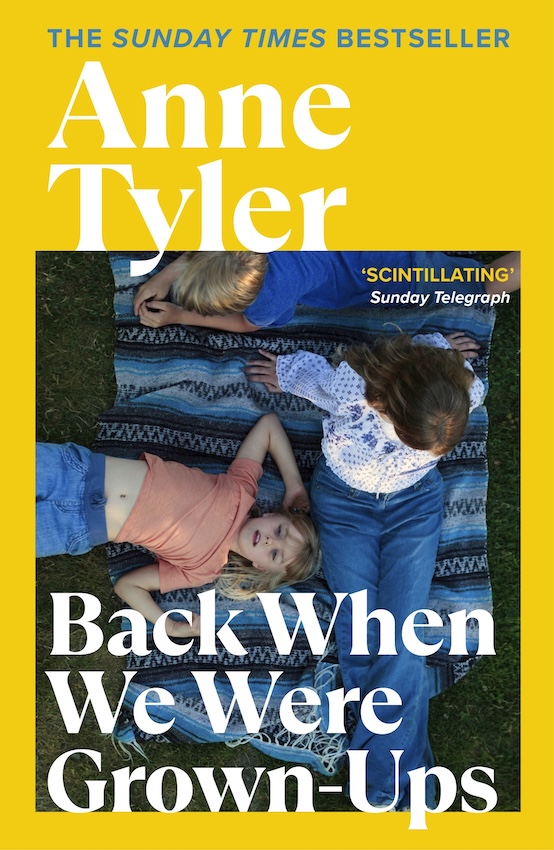
Book Review: Back When We Were Grown-Ups by Anne Tyler – revisiting an old favourite

While there are so many terrific new books out there to tempt and distract, I like to come back to old favourites now and then. A favourite author for me is Anne Tyler. Back When We Were Grown-Ups was first published in 2001 but has a kind of timeless quality which I find very appealing. It follows Rebecca who wonders how life would have been different if she hadn’t been swept off her feet by Joe Davitch all those years ago; if she’d finished college and gone on to marry her childhood sweetheart instead.

At barely twenty, Rebecca had met Joe at a party venue his family ran called the Open Arms, a large terrace house with high ceilings in a slightly rundown part of Baltimore. An odd coincidence makes her laugh, and Joe is drawn towards her apparently cheerful nature. But all the while, Rebecca had always seen herself as a fairly serious girl, intent on finishing her history degree.

Not only does she marry Joe instead, but she also takes on his three daughters, has one of her own and, when Joe dies in a car crash six years into their marriage, she runs the Open Arms as well. This doesn’t even include the elderly folk she looks after, first Joe’s mother, then Poppy, his uncle. The Open Arms needs constant repairs, and as the decades pass, there are grandchildren to babysit too.

She’s fifty-three when we meet her at the start of the book, organising a family barbecue and trying to make everyone happy. Which isn’t always easy – the Davitches are a prickly, discontented bunch at times, particularly the girls, who are prone to squabbling or disapproving of their sisters’ choices. Circumstances trigger Rebecca into wondering what happened to the boy she dumped for Joe, and she decides to look him up.

This really is a novel of characters – the four daughters all with their own set of problems are constantly in and out of the Open Arms, also the Davitch home which Rebecca still shares with Poppy, now approaching his 100th birthday. We’ve got the girls’ partners and offspring, as well as Zeb, Rebecca’s goofy brother-in-law, a hospital doctor who’s never married.

They’re all interesting and entertaining, but I particularly loved Poppy with his memories and enjoyment of food, his discourse on what it’s like to be so old and so on. And Peter, who at eleven is a new arrival into the family via his father’s marriage to one of the girls. He sticks out for being pale compared to the dark haired Davitches as well as shy and nerdy. Tyler captures beautifully the bickering dialogue of sisters, the way conversations waft in and out between characters, between topics as people pounce on ideas or lose the thread of what they were saying, with all the humour that results.

The story takes its time as Rebecca rethinks her life and tries to reconnect with her old flame, now a divorced physics professor, and ponders her choices. Was Joe ever in love with her, or was she just useful when he needed help? Some readers may find the pace a little slow as the scenes, often party scenes, pile one on top of the other. A baby is born, there’s a wedding and Poppy has his birthday bash, meals are served and tradespeople called in.

But without being an out and out comedy, I found myself chuckling my way through them all. I once came across a comment Tyler made about the fiction of Barbara Pym in which she stated: “she reminds us of the heartbreaking silliness of everyday life”. The same could be said of this novel, the way Tyler captures all the muddles, missteps and misconceptions. I loved it, finding it well-worth a reread, both relaxing and hugely entertaining – a four star read from me.

Book Review: Fonseca by Jessica Francis Kane – a novel of Penelope Fitzgerald’s sojourn in Mexica

In her new book, Jessica Francis Kane takes several months from the life of Penelope Fitzgerald and weaves them into the kind of novel Penelope Fitzgerald might have written herself. As you may recall, Penelope Fitzgerald is the author The Bookshop, which was made into a movie, and Offshore, which won the Booker Prize – and a lot more.

Fonseca charts a time in Fitzgerald’s life when she had two small children and another on the way. She and her husband Desmond were living beyond their means, editing a literary magazine which was yet to make their fortune, and hampered by Desmond’s drinking problem. We’re in that post-war period, the early 1950s, and the war has taken its toll on Desmond, and so the two are keen to make a go of their literary review. But the bank manager has his concerns, and the family is likely to lose their home.

Penelope learns of a couple of elderly women sitting on the proceeds of a silver mine in Mexico, former friends of her late mother’s, when one contacts Fitzgerald with the news that they have nobody to leave their money to. Why doesn’t she send her boy Valpy to stay for a while to see how they get on? It’s a long journey by sea and bus and things are different from what they expect when they arrive.

The women expect an older boy and they don’t expect Fitzgerald to have tagged along. Fitzgerald discovers there are other people hovering, dropping in for evening drinks each night, who hope to get something too. There’s a lot of drinking, and the nights are cold. Penelope sleeps on a couch so her son can have the bed, and there’s no chair with the desk where she hopes to work. Somehow she and Valpy manage to stay three months as Christmas approaches and the weather becomes colder than what they have packed for.

Jessica Francis Kane brings to life this quirky household – the tricky old women, the staff who can be difficult to communicate with. Over time, Penelope explores the area, meets people – mostly, but not only, expats – and learns about local customs. Valpy is a bright boy for his age and delightful. There are misunderstandings and superstitions that put a spanner in the works of Penelope’s best intentions.

Apart from the possibility of money, the time away gives Penelope time to consider her marriage, particularly when another potential heir arrives, “the Delaney”, who is charming, adding another strand to the story. You also get the feeling that she might be incubating the stories that will later make her name.

Jessica Francis Kane has obviously done more than simply research Penelope Fitzgerald’s life and the period she spent in Mexico. You get the feeling that she has lived with and loved Fitzgerald’s literature for a long time. Probably no one else could have written this book. I suddenly want to read and reread more by Fitzgerald. Altogether, Fonseca is a brilliant read – clever, well written and with fascinating characters. A five-star read from me.

I received Fonseca as a reader’s copy from Netgally. The book is due to be released on 12 August.

Book Review: The Library by Bella Osborne – a feel-good read about an unlikely friendship and a library in trouble

A public library can be one of those places that offer a respite from the anxieties of everyday life. And while they’re not the silently bookish places they used to be, hosting community groups, classes and story times, they can still be a place of refuge in a way a shopping mall just isn’t. Bella Osborne has taken this idea to create a story around two lonely people and a friendship that develops at the library.

Maggie is seventy-two, a widow who runs a small holding on the outskirts of town. It’s a lonely life but she fills it with her love for her livestock, yoga and books. Her membership of a book group that meets every Saturday is the highlight of her week. Sixteen-year-old Tom is struggling to keep everything together at home where he lives with an alcoholic father. It’s a battle to make ends meet, and his dad wants him to give up school to join him at the factory – they could use the extra wages. But Tom has his sights on a better life, and Farah, a cute girl, if only she’d look his way.

Tom has as an odd idea that Farah uses the library and visits on the pretext of choosing some romance books for his mother. Soon he’s lugging home a pile of books he has no intention of reading. Maggie gets mugged outside the library on her way to her bus-stop and Tom helps her to her feet. Over time an unlikely friendship forms and Tom discovers the wonders of reading, farm life and finally has someone supportive in his life. Maggie has a glimpse of what having a family of her own might have looked like and feels less alone.

They sat side by side on the cool metal seats and waited for the bus. ‘I think this week’s book club read will be more up my street.’
He was looking about. He seemed to have lost interest in her. She got the book out anyway and showed it to him.
The Fault in Our Stars.’ He nodded. ‘You might like it,’ she said. He nodded again before realising his mistake.
‘Nah. Doubt it.’ Tom looked away.
‘It’s okay, Tom. The others don’t know and I won’t be telling them.’
‘Know what?’ He pulled his shoulders back and stared her down.
‘That it’s you reading the books and not your mum.’
His shoulders sagged with every word, until he was back to his rounded-shoulder posture. ‘How’d you know?’
‘The way you read the blurbs before choosing the books. The conversation about Me Before You.’ She gave a shrug. ‘I’m a bit like a dog with a bone when something doesn’t add up.’
He turned to look up the road for the bus, as if willing it to arrive, but there was ages yet. ‘Well done, Miss Marple.’

When the town council announces plans to shut their library down, Maggie reignites the feisty young woman she was in the sixties, demonstrating at marches, holding placards and making a nuisance of herself. She ropes in young Tom and her book club pals, but it’s an uphill battle when the library door-count has probably been dropping for decades. But as the Joni Mitchell song goes: “you don’t know what you’ve got till it’s gone” and a library is more than just books, it can be the heart of a community.

You can guess how the story will pan out, but there are a few surprises along the way. Maggie is hiding a secret, and so is Tom’s dad. Meanwhile Tom’s issues with his father add complexity as he faces extra pressure when he needs to focus on study if he has any hope of university. But it’s the humour in the odd little mishaps and misunderstandings that makes this a fun read. Maggie and Tom’s friendship is not always plain sailing so there’s some tension there too. Plus, there are puppies.

The Library is a light but engaging read, and anyone who has a fondness for libraries will relate to the characters and their campaign. There’s plenty of book talk too, especially when Tom, with nothing better to do, discovers that romantic fiction is a whole lot better than he expected. This is a warm, feel-good sort of story, cheering and heartfelt and a four-star read from me.

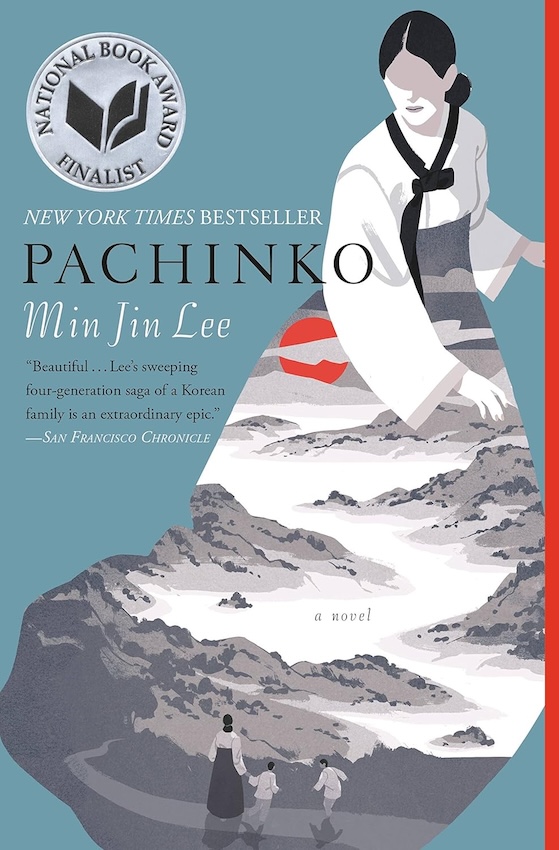
Book Review: Pachinko by Jin Min Lee – an immersive family saga of a Korean family over generations

I’d heard so many recommendations for this novel, and spotting it was available to watch as a TV series, decided I needed to read the book first – and I’m so glad I did. Pachinko is such a memorable novel, taking you into a world I had little knowledge of – a Korean family through the generations and their attempts to survive Japanese invasion of their homeland, a world war and making a new life in Japan.

The main character through it all is Sunja, who lives with her mother in their boarding house in an island fishing village. There is an obvious presence of the Japanese – harvests taken to Japan, rules that must be obeyed and any hint of insurrection severely punished. Times are hard, but the women do well enough until Sunja finds herself pregnant at sixteen to handsome trader, Koh Hansu. Sunja looks likely to suffer a terrible disgrace but rescue comes from an unlikely direction.

Baek Isak arrives ill with tuberculosis, looking for shelter, seemingly on death’s door. Sunja and her mother nurse him back to health, saving his life. But Isak is a good man, a young missionary who is passing through on his way to a church in Osaka. He suggests marriage would be good for both him and Sunja. She will travel with him to a new life in Japan.

In Osaka, Koreans struggle to make a living, and few landlords will rent them houses, so they live in a kind of shanty town of cobbled together dwellings. It’s a culture shock, but Isak’s brother Yoseb and sister-in-law Kyunghee are so welcoming, Sunja slowly imagines a future where there is both family and love. The story follows Sunja and Isak, and the generations that follow, through at times terrible hardship as World War II takes hold and life becomes even tougher. In spite of what happens, Sunja shows grit and determination to give her sons, Noa and Mozasu, a better life.

The story takes its name from Pachinko parlours, a form of gambling that is tolerated in Japan, a bit like a penny arcade where there are rows of slot machines. Perhaps this is a metaphor for the story in the way that characters are at the mercy of fortune, struggling to take hold of their own destiny in a country where there is so much discrimination. Women too, both Japanese and Korean, are also assigned roles that are hard to break out of. The story takes you up until the late 1980s – before K-pop and fusion cuisine, which have made Korean culture popular in the west.

There was consolation: The people you loved, they were always there with you, she had learned. Sometimes, she could be in front of a train kiosk or the window of a bookstore, and she could feel Noa’s small hand when he was a boy, and she would close her eyes and think of his sweet grassy smell and remember that he had always tried his best. At those moments, it was good to be alone to hold on to him.

And yet it is the Pachinko business that gives the younger generations of Sunja’s family a chance to build a future, perhaps even a small fortune. Before that, Sunja and Khyungee sold home-made kimchi and sweets to help put food on the table – a hard-scrabble life, but which forges a bond between the women.

This is an at times harrowing story, and you can’t help feeling for the characters and what they’re up against. There are world events taking place in the background that impact on them, as well as changes in culture and the way people live that give the story a sense of scope. It’s all fascinating, moving and riveting while Sunja is a character you won’t ever forget. It’s one of those both beautiful and sad books that stay with you, and a five-star read from me.

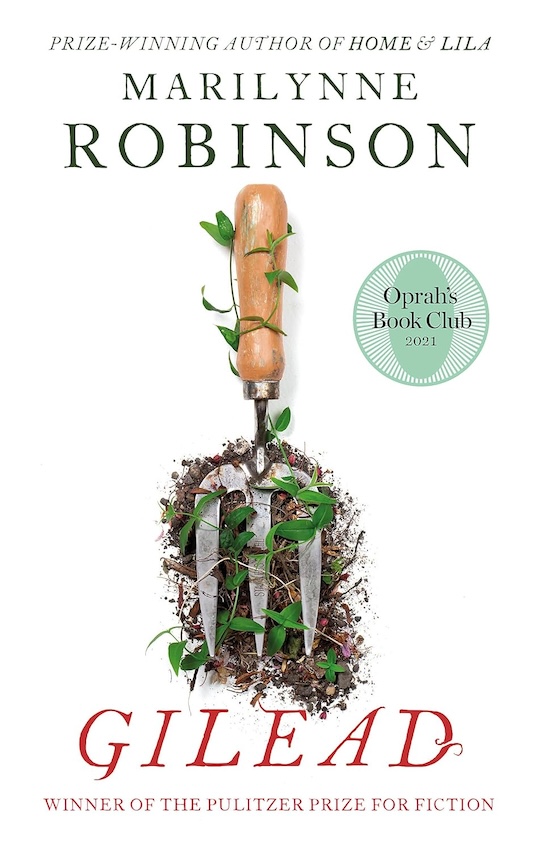
Book Review: Gilead by Marilynne Robinson – a love letter from a father to his son and a wonderful contemplation on life itself

In Gilead, John Ames is writing a memoir for his son, a small boy of seven, intended for him to read later, long after his father has gone. Ames, well into his seventies, has a weak heart and fears leaving his boy to grow up without a father. So he wants to write it all down – from his own childhood and his life as the son and grandson of preachers to what’s going on around him in the present. We get bits of history – the Civil War and the Underground Railroad, World War I, the Spanish Flu, and the Great Depression, and how all these events impacted on ordinary folk in small towns like Gilead.

While he’s telling his story, Ames is irritated by the return of Jack, the black sheep son of his good friend Rev. Robert Boughton. Unlike Ames, whose first wife died in childbirth along with their daughter, Boughton has a large family, most of whom live some distance away. Jack, in spite of his chequered history, seems a favourite of his father’s, while Ames is constantly censuring himself for harbouring an ongoing dislike for the younger man, which of course isn’t very Christian of him.

Ideas about what it is to lead a good life in the way God intends us to blend with stories about the characters, their pasts and particularly their problems. Jack’s story is heart-rending, and there’s more about him in the two other Gilead novels: Home and Jack, which I will get to, I’m sure. But what is particularly moving in this book is the tone of the writing, the voice of John Ames. You get such immense love in the way Ames is writing to his son coupled with the sadness that he won’t see him grow up. But with that is also the joy of someone who notices the wonder in simple things.

There’s a shimmer on a child’s hair, in the sunlight. There are rainbow colours in it, tiny, soft beams of just the same colours you can see in the dew sometimes. They’re in the petals of flowers, and they’re on a child’s skin. Your hair is straight and dark, and your skin is very fair. I suppose you’re not prettier than most children. You’re just a nice-looking boy, a bit slight, well scrubbed and well mannered. All that is fine, but it’s your existence I love you for, mainly. Existence seems to me now the most remarkable thing that could ever be imagined. I’m about to put on imperishability. In an instant, in the twinkling of an eye.
The twinkling of an eye. That is the most wonderful expression. I’ve thought from time to time it was the best thing in life, that little incandescence you see in people when the charm of a thing strikes them, or the humor of it. ‘The light of the eyes rejoiceth the heart.’ That’s a fact.

I find myself getting teary-eyed just thinking about Gilead, and the character of John Ames, the heart-felt thoughts of a humble man. You do get quite a bit of religious contemplation, with Biblical references and ideas for sermons, which might not suit every reader. But it’s more wise than preachy and fills out the character of our storyteller. I read this as an audiobook, superbly narrated by Tim Jerome – it was as if John Ames was talking to me in the same room – but I’m glad to have a physical copy to flip through too. Gilead is a beautiful book, which won a number of awards, including a Pulitzer Prize – a modern classic and a five-star read from me.

Book Review: Hello Beautiful by Ann Napolitano – an engaging story about sisters and finding your family

I seemed to miss the Little Women references when I picked up Ann Napolitano’s latest novel, Hello Beautiful. Maybe I was distracted by all the basketball, but I was about three quarters of the way through when the penny dropped and it all made a lot more sense. Until then, I was wondering where it was all going as it just seems to be a nice story about a family, about love and loss, lies and betrayal, all nestling among the intriguingly varied personalities of the Padavano sisters.

None the less, this was an easy book to get lost in. The story bounces between several characters and over several decades as the Padavano girls grow up and make lives for themselves. They are a close Italian American family living in Chicago with their parents, a couple who married out of necessity – with Julia on the way – and struggle with a marriage that is broken. Into all this comes William, himself from a broken family, with parents who have never healed from the loss of his older sister, who have never been able to love him instead.

William’s character is both sad and compelling. He’s been rescued by basketball, and his height gives him a terrific advantage on the court, as well as a scholarship to study in a new town and leave his loveless childhood behind. Julia Padavano discovers him at one of her classes and somehow persuades him into a possible future as a History professor, and as her husband. Her family gives William the warmth and security he’s lacked all his life.

Willam knew all the players except the freshmen, and once or twice after finishing his sandwich he let the guys convince him to take a few shots from the corner. He knew his knee couldn’t take pivoting or even jogging from one spot to the other, so he stood still and drilled one long shot after another while his former teammates hooted with pleasure. When the ball swished through the net, William’s breathing slowed to normal, and he could pretend that he still inhabited a recognisable life.
With the basketball in his hands, he could forget that his father-in-law had dropped dead, his sister-in-law slept on his couch, and every time he saw his wife he was startled.

We also have Sylvie, Julia’s closest sister. Unlike Julia, Sylvie fails to push herself towards college, instead immersing herself in novels and helping out at the library where she kisses random boys among the shelves. Her dream is to find one, intense true love, and until then isn’t interested in dating. At home, her mother spends her life in the garden, growing saleable produce, her father quoting Walt Whitman and drinking too much. There are also the twin sisters: artistic Cecelia and nurturing Emeline.

The future seems settled for Julia and William, when a series of events upset the applecart and cracks appear in the extended family. Then, as so often happens, life goes on around the cracks, characters settle in and hunker down until another earth-shattering event brings the past back into focus and there is potential for a reckoning, and for healing.

I am glad that I didn’t spend a lot of time trying to figure out which sister was Meg or Jo, Beth or Amy, as it wouldn’t have done me any good as things turned out. It doesn’t really matter in the grand scheme of things. But this was a nice read, if a not particularly compelling one. It is a story where emotions run high, either expressed outwardly, or contained and mulled over or contained and ignored.The characters of the sisters and particularly William, are all easy to engage with, and interesting.

There are themes around mental health – how do you get over a childhood that is missing love? And about finding your place in life as a young person, of being accepted for who you are. I found quite a lot to like but the story did lag a little around the middle – the stretched-out timeline doesn’t help. Fortunately it all picks up near the end with the hope of at least one reconciliation and some impetus from the younger generation. I’ll be interested to check out another novel by Ann Napolitano. Hello Beautiful is a solid three-star read from me.

Book Review: After the Funeral – a short story collection that’s as compelling as any novel

I rarely seem to pick up short story collections these days. There are always so many brilliant new novels coming out all the time, and you get used to the way the plot teasingly unfolds with the longer form, the unrolling of scenes and the character development. But sometimes a short story is just such a wonderful thing. A small, complete entertainment. It can say a lot too.

And that’s what you get with Tessa Hadley’s latest collection, After the Funeral. These twelve stories are for the most part family stories, delving into the reactions and emotions when something happens that upsets the applecart in relationships, between siblings, between parents and daughters and with couples. The subtle undercurrents of the class system are also there. Things are suitable or not suitable, or plainly ludicrous in a particular milieu.

Several stories have children dealing with parents acting alarmingly. The title story has two daughters whose world changes after the sudden death of their father, leaving their beautiful mother, who is something of an airhead, to provide for her family. It’s the 1970s and women didn’t necessarily equip themselves with career prospects back then. A family connection soon sets her up with a job in the office of a dentist. Of course the dentist falls in love with her. In “Cecilia Awakened”, Hadley perfectly captures that feeling you have when you discover as Ceclia does at fifteen, what an embarrassment family holidays, and in particular, parents, can be.

Many of the stories have their roots in the last decades of the twentieth century, while others dip back into the past from the present day. In “The Bunty Club”, three sisters return to the family home when their mother is dying in hospital. They are such different characters, and in a few deft paragraphs, Hadley vividly describes their characters as older women, bookish Pippa, capable Gillian and glamorous Serena – what drives them apart and what can bring them together again.

— Bathroom’s empty! Gillian said. — You should get in before Serena embarks on any aromatherapy. I wish she’d wash the bath out when she’s finished.
— She’s up already, Pippa said. — Look! Worshipping in the garden.
Gillian came to stand beside her. They were spying, and meant to say something dry and funny about their sister, taking advantage of watching her unseen: dancing in the long grass, flitting like a sprite in her black cotton tiered skirt and satiny top – which she’d most likely got from a charity shop, because she was solemn about waste and recycling.

“Funny Little Snake” is set in hippy era London, and is a heart-breaking story of middle-class neglect of a young child, and the woman who attempts to rescue her. In fact there isn’t a lot of good parenting on offer in the collection – distant or missing fathers, mothers wrapt up in their own lives, families recreating themselves after loss or divorce. Tessa Hadley’s writing is too crisp and sharp for the stories to seem downbeat; interesting developments make them crackle with energy.

I’d already enjoyed an earlier novel, The Past, by Tessa Hadley, which was another brilliant look at a family and shares some of the themes on display here so I was expecting to enjoy this collection. I read these stories one after another, but a collection like this could happily sit on the bedside table, ready to be dipped into again and again. But they are so moreish, I dare you not to keep reading until they’re all finished. After the Funeral gets four and a half stars from me.

Book Review: Prettier if She Smiled More by Toni Jordan – another hilarious round with the Schnabels

I hadn’t realised until I started it, that Toni Jordan’s latest novel features a bunch of the same characters we met in Dinner with the Schnabels – one of my favourite reads from 2022. In Prettier if She Smiled More, we follow the story of Kylie Schnabel who at the start of the book is about to experience three disasters that upend her life – all before Wednesday. By the end of the week, nothing will be the same.

Kylie Schnabel, if you remember, is the oldest sibling, daughter of Schnabel matriarch Gloria. She works as a pharmacist and likes to think she has everything under control. She’s very serious and is a stickler for detail, hardworking and a little abrupt. She’s been working at the same small suburban pharmacy since she graduated, living frugally and planning her life around one day buying the shop from her genial boss Tim who’s approaching retirement.

Life’s all going to plan, until one day it isn’t. Kylie gets to work on Monday to discover that Tim is selling his shop to a chain of pharmacies, a big business conglomerate all set to modernise and refurb. Gail from Pharmacy King insists Kylie reapply for her job – just a formality, and even though Kylie has a work ethic second to none and has won a Young Pharmacist of the Year award, the reader knows it’s going to be tricky. Kylie’s sometimes grim, no-nonsense manner is going to be a problem.

Then there’s Colin, Kylie’s partner, who is supposedly away at a business conference but activity on his Fitbit suggests he’s getting up to some extra-curricular hanky-panky. Kylie suddenly sees unpatchable cracks in their relationship. When Gloria breaks her ankle and needs full-time care, Kylie finds herself back at her childhood home, dealing with a mother who doesn’t want to be looked after and somehow ends up baby-sitting Caesar, a tiny Pomeranian.

There are plenty of funny moments, and Kylie’s internal monologue is always entertaining – she’s such a force of nature. But coming home where the decor is still stuck in the 1980s and there are so many reminders of her childhood, suddenly the past comes back with a wallop. Why has Kylie’s bedroom been turned into a sewing room, while her siblings, Tansy and Nick’s rooms are still intact, just as they left them? Then there’s her parent’s acrimonious divorce and memories of her childhood anguish, of being the eldest and having to be the sensible one when her mother was in pieces.

‘Your … father, is this?’ Ramona said, picking up one of the photos. ‘Is very handsome, but familiar somehow?…
  …In those years before Photoshop, what could be done about David, who was in the centre of many of the said photos and who Gloria wished dead several times a day in a variety of painful ways? Facing the grinning face of her ex-husband every day in her own home was untenable.
  Gloria’s solution had been to cut out a range of Kevin Costner heads of varying sizes from different magazines and glue them over similarly sized David heads. Now the family photos lined up on the mantel were of Gloria and Kevin, standing proudly behind their children, young Kylie, Tansy and Nick.

There’s a lot for Kylie to deal with, all in one week, including a tennis open day for Gloria, who is a children’s tennis coach. There’s finding a nurse who will want to stay with her mother so that she can get back to work when Gloria has other ideas. Kylie’s brother Nick talks her into going on a date with one of his mates. And on top of everything, Kylie has agreed to host the family lunch on Sunday. As the pressure mounts, something has to give.

Prettier if She Smiled More is a smart and often hilarious second-chances kind of novel. The format is similar to Dinner with the Schnabels, with one character having a lot to get done as the days of a single week slip by and each day heralds more problems. The final chapter brings everything to a head and somehow everything gets fixed, but in a way Kylie, the meticulous over-planner, would never have predicted a week earlier. I loved it and wouldn’t say no to another Schnabel novel if Toni Jordan feels so inclined. This one’s gets an easy five out of five stars from me.