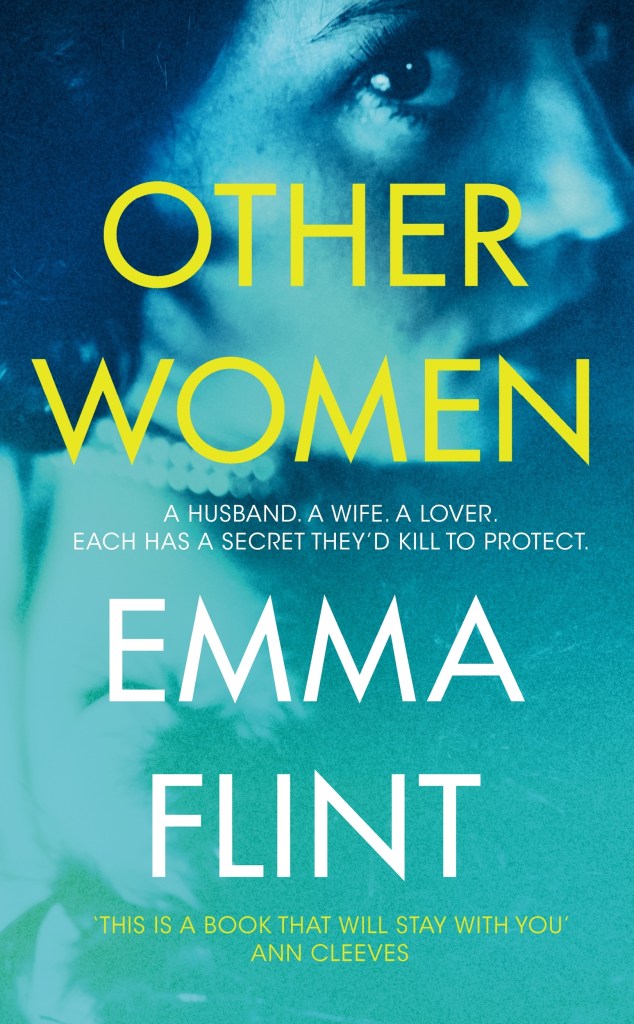
Book Review: Other Women by Emma Flint – a compelling crime story based on true events

I really had no idea what to expect from this novel when I picked it up – the description on the cover – “A husband, a wife, a lover. Each has a secret they’d kill to protect” is more beguiling than informative. Which is a bit of clever marketing probably. But it doesn’t really matter as I was soon caught up in the story which is told from the perspectives of two women.

First we have Bea, who is a working woman in the 1920s, living in a ladies’ club in Bloomsbury. She’s good at her office job and has worked her way up to have some responsibility. At thirty-seven, she feels she’s missed out on marriage and a family, but is happy with her life. She is independent and can afford to treat herself now and then. Her life is sharply compared with that of her somewhat self-satisfied sister Jane, who has married well and is a little sneering of her sister’s London lifestyle.

But at work, everything changes when a new salesman joins the team, the handsome and very charming Tom Ryan. The other girls gossip and flirt with Tom, while Bea keeps her head down and tries to ignore him. But she can’t deny the power of his personality. We follow the affair that develops, how Tom singles out Bea; their shared love of literature and self-improvement. Bea discovers another side to her that she’d mostly ignored, her capacity to love and be loved.

The story interweaves Bea’s story with that of Kate some months later as Kate deals with her husband’s arrest and the court case that follows. She is repeatedly questioned by the police about particular dates and the whereabouts of Tom, while trying to maintain a home for her daughter, and a veneer of respectability. She worries that her landlady will loose patience and they’ll be out on the streets.

I am his wife.
I am only his wife.
This is all I know how to say. To the policemen who come to the house, who take me to the police station, who ask me questions, I say over and over, ‘I don’t understand. I am only his wife.’
And they both look at me – the fat one with the moustache and the thin one with the coarse ginger hair – they look at me as though I am a child they are disappointed in.

Kate is also employed by Morley’s in the office, but at another branch. She needs her work to keep her small family afloat but how to do this with all the police activity, the newspaper interest. Kindly policeman, Inspector Wilde, is a quietly probing interrogator, patient and biding his time.

The court case that develops is based on true events. Emma Flint captures the fascination it engenders in the press and those who crowd onto the the public benches, the prejudices against the victim and the sympathy for the plaintiff. How the case unfolds is a brilliant piece of story-telling, particularly Kate’s role in the revelation of what happened, her feelings as a wife and mother balanced against her need to do the right thing.

Other Women is a haunting novel that brings to life the characters of two women who have been connected by a terrible event. It captures the post-war years and a time when Britain was still recovering from the tragic loss of a so many young men, and what this meant for women in the years following. The writing is exquisite – very atmospheric, evocative and empathetic.

As I began to read the early chapters, I wasn’t sure whether I was going to enjoy Other Women, but Emma Flint makes it all so compelling and believable and I know the novel will haunt me for days and weeks to come. Flint’s a master storyteller and writes with conviction and power. Her earlier book, Little Deaths picked up quite a few nominations for book prizes, and I imagine Other Women might well do the same. It gets four and a half stars from me.
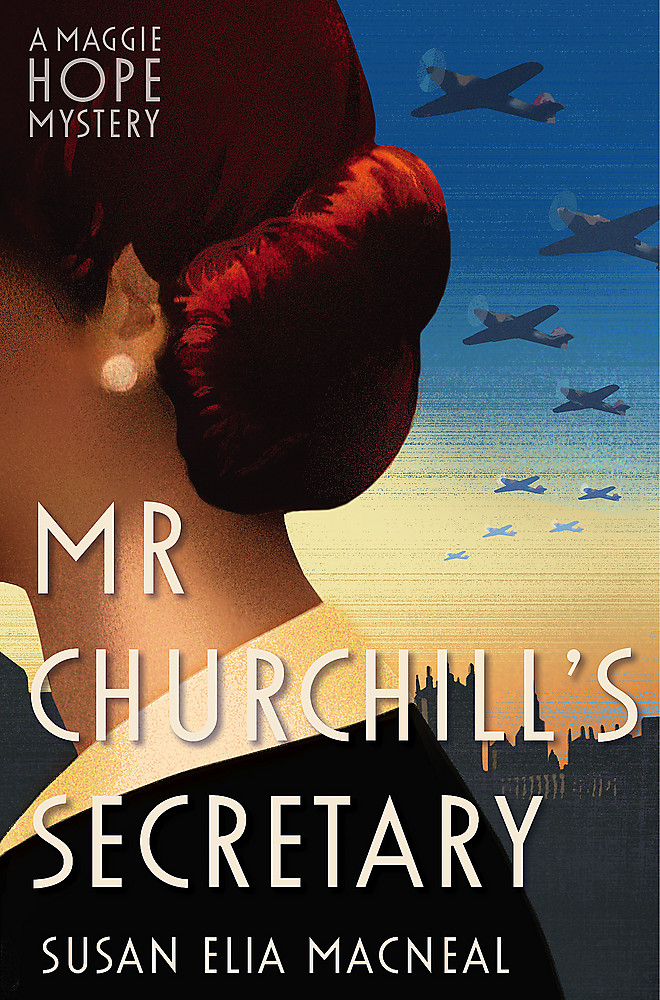
Book Review: Mr Churchill’s Secretary by Susan Elia MacNeal – a light but lively WWII mystery

This novel is the first in a wartime mystery series that features American-raised Maggie Hope, a young woman with a formidable brain. Which is how it should be. I like a brainy female sleuth. You know she’s going to have to figure things out rather than stumble around, picking up clues by accident.

Maggie has moved to London not so long ago. She was supposed to sell her grandmother’s house and then settle back into her studies in mathematics, taking up her place at an American university. She graduated top of her class and academic expectations are high. But along comes a war, World War II, that is, and Maggie wants to do her bit. She loves London and decides to apply for an under secretary position in the prime minister’s office. She doesn’t get it, of course. She’s a girl and they only take men, but when her friend, David suggests she try for a job as the PM’s secretary, she reluctantly gives it a go.

Maggie is desperate to use her maths brain, but at Number 10, she’s thrown by Churchill’s odd habits and cryptic commands, while being urged to keep her head down and do what she’s told by her superiors. Fortunately she has a cheery group of friends to hang out with, including her flatmates: Paige, an old classmate from America’s Deep South and hearty, Irish Chuck plus a pair of scatty twin sisters. David, is always dropping by. His life has always been a little risky as he’s gay when you weren’t really allowed to be so what’s a little war in the general scheme of things? He keeps everyone’s spirits up but his best friend John is moody and somewhat awkward around Maggie.

The story switches to that of Claire who is visiting the Saturday Club, a group of Nazi sympathisers, and Michael, who is letting off bombs around the place for Ireland. While the narrative builds towards a plot agains the PM, Maggie has questions about her parentage. There’s something her guardian, Aunt Emily, is not telling her. When she goes to find her parents’ graves, her mother is there for all to see, but her father’s grave is missing.

Things get more complicated with codes appearing in mysterious places and a visit to Bletchley Park, while pretty much everyone among the cast of characters is in danger from something. Whether it’s the bombs raining down on London, or Nazi sympathisers determined not to have their plans foiled, Maggie’s life has just got a lot more perilous. Things go down to the wire for Maggie, the PM and an iconic building in London, but luckily there’s Maggie’s amazing brain to save the day.

Anyone imagining this series to be ideal for fans of Jacqueline Winspear’s Maisie Dobbs, might want to reconsider. I think they are quite different beasts. The Winspear books reveal a lot about the war, and recent history, often taking a little understood aspect and making it the basis of a story. Her characters are really put through the ringer and there’s a strong emotional charge.

The Maggie Hope books would seem to be a more imaginative bunch of stories and are quite a lot lighter in tone. There’s lots of dancing in nightclubs, romance and general socialising, more about the music of the time, what people were wearing which adds colour and sets the scene. I shall probably continue with the series, but my reasons for picking up a Maggie Hope book will be for a lighter kind of entertainment. Mr Churchill’s Secretary gets three stars from me.

Book Review: The Whalebone Theatre by Joanna Quinn – an English country house, a quirky heroine and a looming war

There’s something about novels set in English manor houses – the setting is almost a character in itself. In Joanna Quinn’s debut novel we have Chilcombe, the home of the Seagraves, a house that has seen better days, but still mired in the old traditions of class. Jasper Seagrave is so desperate to pass on his estate to a son, that he marries young Rosalind, who in the period following World War I has little choice in suitors. Jasper is in his forties, short and stout, with a wild young daughter, Cristabel.

We meet Cristabel, age four, scruffy and dirty, and brandishing a stick as the carriage pulls up with her new step-mother. She’s a fierce little girl who grows into a fierce young woman, as her family shifts and changes around her, bringing a new sister – Flossie, known, at first, as the Veg; and eventually a longed-for male heir, the much adored Digby. By now Chilcombe is home to an Uncle Willoughby and the scene of endless parties.

War hero Willoughby brings a string of hangers on, some of them surprisingly useful and all of them interesting characters. But it’s the three children, particularly Cristabel who are the stars of the story. Left to their own devices, the children run wild, with little parental input. Digby is the only one who goes to school, the girls partially educated by a series of French governesses. The family get introduced to a bohemian set who appear on the beach one summer – the loud and charismatic Russian painter, Taras, with his wife and two lithe models, plus a family of wild, dark-haired children.

Taras and his family have a lasting effect on the younger Seagraves. While this is largely Cristabel’s story – her desperate attempts to be her own person in a world full of constraints, I enjoyed Digby’s story and particularly Flossie’s. While the other two sign up to do their bit against Hitler, Flossie is more passive, but eventually finds out what she’s good at and what she wants from life. You really have to feel sorry for young girls with no chance at a decent education.

‘Has it occurred to you that Cristabel might be less of a galumpher if she visited London more often?’ said Perry. ‘Has she ever been there? Has she ever been anywhere? Astonishingly, it won’t be that long before she’ll be a debutante. She needs to learn how to behave. Nobody minds a spirited girl from the shires. A practical sort. But they will mind if she won’t use a fork.’

‘Surely she uses a fork.’

Willoughby laughed. ‘I’m afraid not, my dear. She’s taken to eating off her hunting knife. Like a pirate. I rather enjoy it.’

This is a kind of coming of age novel, with its three characters discovering what it is to be themselves in a world set to change. Life after the war will bare little resemblance for how it was before – particularly in the grand country houses.

Joanna Quinn describes a changing society, an England devastated by the first war, the fast set drowning its sorrows in champagne, while a younger generation is ready to break the rules and find their own paths in life. The war welcomes the skills of the three siblings, but how will any of them find fulfilment when the war is over?

I adored The Whalebone Theatre. The writing is fresh, the characters are wonderful and the plot has plenty of surprises and turns. And Quinn does her settings really well – the house on the Dorset coast; Paris under German occupation. There’s a lot to enjoy and I look forward to what Quinn comes up with next. This book gets four stars out of five from me.

Book Review: Bloomsbury Girls by Natalie Jenner – a post-war story and bookish delight

When I picked up Bloomsbury Girls, I hadn’t realised that it follows an earlier novel, The Jane Austen Society. The newer book continues the story of bright, young thing, Evie Stone, who is now fresh out of Cambridge and a bit miffed.

Evie has been passed over for a research position, and for a male graduate who isn’t half as clever. This is 1949 and women have only recently been allowed to be conferred degrees, so she shouldn’t be surprised. Turning up in London for a job interview, she administers first aid to the manager when he collapses. While he’s recovering, they’re a man down, so Evie finds herself hired.

Soon settled in on the third floor, Evie has to catalogue the mass of rare books bought at auctions by Frank Allen, one of the owners. She has an ulterior motive, but the lack of order makes finding any particular book quite challenging. Fortunately Evie has a quick and methodical mind.

The other ‘girls’ of the title are aspiring author Vivian Lowry and unhappily married Grace Perkins. Grace loves her work at the bookshop – it’s a place she can escape a husband who has had a breakdown and who makes her life a misery. If it weren’t for her two young boys, she would leave him. At the shop she has a good friend in Vivian, who since losing her fiancé during the war, has become an angry young female, pouring all her feelings into the notebooks she carries with her.

Also on the staff is Alec McDonough, who is head of fiction and who has a fascination for Vivian. He too is an aspiring author, but any chance he and Vivian might share their work are hampered by the sparks that fly between them, occasionally romantic, but mostly they’re darts of fury from Vivian. Ashwin Ramaswamy is down in the basement, studying tiny organisms among the shelves of science and nature books.

Ash is also disappointed, having come from India to make something of himself, but struggles with the racism he experiences in London. It isn’t surprising that he and Evie become friends. They’re both up against it. Meanwhile, Lord Baskin, with his financial interest in the shop, finds more and more excuses to pop in since Grace arrived on the scene.

While there are several romantic threads to the story, the main thrust of the plot concerns Evie’s secret mission and to achieve her aims, help comes from a few surprising quarters. Will Evie find what she is looking for? Can Grace begin again and find happiness for herself and her boys? Will Vivian overcome her anger and succeed as a writer? Is there any hope for women to achieve their dreams in post-war Britain?

The novel includes some real-life characters, including Daphne du Maurier, Samuel Beckett and Peggy Guggenheim. They’re nicely brought to life as they interact with Evie and her colleagues. It all comes together in a light, feel-good read packed with warmth and humour. And there’s a smart literary quality too, giving you the impression that the author really knows her twentieth century literature.

It doesn’t really matter if you haven’t read The Jane Austen Society – although I for one will be hunting down this debut novel. Bloomsbury Girls is a fun, satisfying story – a four star read from me. There’s another book, Every Time We Say Goodbye in the pipeline, but not out until next year. Clearly, Jenner’s an author to watch.

Book Review: The Marriage Portrait by Maggie O’Farrell – a tense and evocative story from the Italian Renaissance

This novel is inspired by the Robert Browning poem ‘My Last Duchess’ as well as the historical figure of Lucrezia, Duchess of Ferrara, who met an untimely death at the age of sixteen, supposedly murdered by her husband. I hadn’t known anything of the real duchess, but remember reading the poem in English Lit classes at uni and not realising it at the time that the duchess described had died so young.

It’s a shocking story in anybody’s book – Browning’s Dramatic Lyrics or this one, and so I demurred while The Marriage Portrait sat on my bedside table, distracting myself with every other book until, with nothing much else to read I finally picked it up. I shouldn’t have worried, having enjoyed Maggie O’Farrell’s books enormously in the past and it was only a page or two before I was engrossed in the story, as well as in awe at the writing.

Lucrezia is a difficult child, the least favourite it seems in her family, and as she grows she seems a thin little thing, quite unlike her lively, dark-haired older sisters. She’s smart though, sitting in a corner where the children are taught their lessons, but learning much faster the Latin and Greek, the history and geography than her siblings. Her real talent is art, although she could be a master spy the way she sneaks around the palace, listening at doors.

When her older sister Maria suddenly dies before her wedding can take place, Lucrezia is promised to Maria’s fiancé instead, to unite the grand houses of Medici and Ferrara, even though Lucrezia is only thirteen. She’s a spirited child, who likes her freedom, but also cherishes the safety of her home – her life has been a sheltered one. So at the time of her wedding a couple of years later, she is ill prepared to be the docile wife of a powerful ruler.

The gown rustles and slides around her, speaking a glossolalia all of its own, the silk moving against the rougher nap of the underskirts, the bone supports of the bodice straining and squealing against their coverings, the cuffs scuffing and chafing the skin of her wrists, the stiffened collar hooking and nibbling at her nape, the hip supports creaking like the rigging of a ship. It is a symphony, an orchestra of fabrics, and Lucrezia would like to cover her ears, but she cannot.

O’Farrell makes Lucrezia interesting, believable and vividly real, a complex character, as is her new husband Alfonso, who is on the surface so charming and solicitous, but also desperate for the heir that will secure his position. The book begins with Alfonso whisking Lucrezia off to a hunting lodge, away from the prying eyes of his palace, and where Lucrezia feels he is to do away with her. She has seen this other side to him before – the merciless capacity for violence, the lack of forgiveness. Will Lucrezia succumb and give in or will she fight back for her survival?

Sixteenth century Italy is brought to life – a time of a flowering of the arts which are lushly shown here in paintings, architecture and music. The intense richness of the language, vividly present tense, mirrors the gorgeousness of this Renaissance world. Yet this is also a time when well-born young women are just pawns on the chessboard of power to be married off by their fathers. Like Lucrezia they may have little idea of the politics around them or what will be expected of them.

This makes the novel a tense and gripping read as the story bounces between the hunting-lodge present where the moments tick away until Alfonso will act against his duchess, and the back-story that fills in Lucrezia’s life and how she has come to be in this predicament. It all seems so much more vivid because of the way O’Farrell writes – the intensity of Lucrezia’s feelings, the undercurrents that pass between characters, as well as the sensory details – the feel of fabric on skin, Lucrezia’s painterly eye that sees every colour and shade, the shock of seeing mountains for the first time, the descriptions of the music Alfonso gets lost in.

The Marriage Plot is a book that delivers on every level, giving you a glimpse into the past, an edge-of-the-seat story, as well as gorgeous writing. It isn’t surprising it’s been selected for the Women’s Prize for Fiction longest – I’ll be eager to see if it makes the shortlist, announced on 26 April. It will also be interesting to see what O’Farrell comes up with next. This book gets a full five stars from me.

Book Review: Miss Austen by Gill Hornby – the story of the famous writer’s sister

When Jane Austen died, she left thousands of letters sent to family and friends, of which many were destroyed by her sister, Cassandra. This is the Miss Austen of Gill Hornby’s novel. The story begins with the elderly Cassandra visiting the vicarage where her long-dead fiancé grew up, the home of her very dear and also departed friend Eliza.

Jane and Cassandra both wrote to Eliza, and Cassandra is sure there must be a cache of letters somewhere, full of heartfelt disclosures and secrets, as well as (knowing Jane) waspish comments about other family and acquaintances. It is imperative that Cassandra finds these before they are made public. Cassandra was the carer and confidante of Jane in life, and now, twenty years after her sister’s death, she wants to preserve her good name and not allow Jane to be the subject of speculation and gossip.

And so here she is at the vicarage where as a young woman, she farewelled her beloved Tom on a voyage to the Caribbean, a chance for him to win a living from his patron and secure the means for he and Cassandra to marry. Memories come flooding back and the story dips back in time to those early years and the promises she made to Tom before his departure.

Meanwhile Eliza’s daughter Isabella is rattling around in the vicarage with her grim but loyal servant Dinah, her father the vicar having recently died. Isabella has the job of finding somewhere else to live as well as packing up all the chattels and furnishings that have been a part of her life since childhood. But Cassandra is appalled to see that Isabella doesn’t seem to know how to begin, obviously so ground down by years with an autocratic and belittling father she has a complete lack of initiative.

So we have two story threads here: Cassandra’s efforts to encourage Isabella to find a house with her other spinster sisters – for what could be more pleasant than to live with sisters?; and the early years of Cassandra’s own life with her beloved Jane as revealed by the letters she finds.

I listened to Miss Austen as an audiobook read by Juliet Stevenson and if there is a Juliet Stevenson fan club out there, I should probably become a member because her reading is utterly superb. She brings to life the characters so well along with the nuances of tone in the writing, the conversations and voices of Jane and Cassandra, plus all the peripheral characters ,to recreate the Austen sisters’ world.

There are multiple characters – the girls had five brothers, plus friends and new acquaintances, which echo some of the themes and interactions from Jane Austen’s novels. Gill Hornby has done a really good job with this, and while there are many novels out there that pay homage to Jane Austen, mostly through further stories about some of her much-loved characters, this book about Cassandra is one of the better ones I’ve come across.

Of course we can’t expect a raft of happy endings here. Jane Austen didn’t live long, and the Austens struggled to find a permanent home after their father died. Neither Jane nor Cassandra ever married and there seems to have been both grief and a sense of missed opportunities over this. And yet, Hornby sneaks in a rather charming and amusing ending to the story, casting the truculent Dinah in a whole new light. Cassandra herself is wonderful company and as an elderly unmarried woman, a believable and refreshing heroine. Miss Austen is a four out of five read from me.

Reading the Classics: Olivia Manning’s The Balkan Trilogy Part 1 – The Great Fortune

This round of the Classics Club Spin sent me off to Romania, 1939, for the first of six books that are based on Manning’s own experiences, and which are combined together as her Fortunes of War series. I have only read the first book: The Great Fortune , which is a decent, meaty read for a number of reasons.

The story begins with a train journey. Newley weds, Guy and Harriet Pringle are on their way to Bucharest in Romania. Guy teaches English at a Bucharest university as part of a cultural programme sponsored by the British government. He’s met Harriet during the summer vacation and married her before bringing her to the Balkans just as Germany invades Poland.

So when the Pringles arrive at their hotel, Harriet is confronted not only by persistent beggars, many of them deformed from birth to help their earning potential, but also an influx of Polish refugees. Harriet and Guy are temporarily staying here until they can find a flat, because Guy has always tended to couch surf among his wide and varied set of acquaintances. He’s a popular young man who thrives on interacting with others, talking literature and politics into the small hours.

Guy’s also a devotee of Marxism which he sees as a potential solution in a country where the peasants are struggling under a powerful elite. Romania has a strong economy with plentiful resources, among them a highly productive agricultural sector. But with a war starting up, much of this produce is exported and the ensuing hike in the cost of living puts a terrible strain on the poorest. Meanwhile the Pringles hob-nob with assorted academics and civil servants at various plush restaurants.

As Harriet passed between the tables with Clarence, there was a little murmur of comment: first that she should make this public appearance with someone other than her husband, then the common complaint that English teachers – they were all regarded as ‘teachers’ – could afford to come to a restaurant of this class. In Rumania a teacher was one of the lowest-paid members of the lower-middle class, earning perhaps four thousand lei a month. Here was proof that the English teachers were not teachers at all but, as everyone suspected, spies.

We get another view of Bucharest society through the eyes of Prince Yakimov, also newly arrived, who has fallen on hard times. It isn’t clear quite how he comes to be in Bucharest, except that he needs to make his remittance last a bit longer and the city seems cheap. He hasn’t a clue how to earn a living. Yakimov is technically British, his father having escaped Russia at the time of revolution, but now drifts from hotel to hotel living on credit. His finely tailored clothes, his name and good manners soon have him invited to parties given by the aristocracy, in the hope they can fleece him at cards.

But mostly this is Harriet’s story. The poor girl has to get used to sharing Guy, not only with his many friends, but also with Sophie, who’d hoped to marry Guy herself, and therefore acquire a British passport. Other characters include gloomy Clarence, Guy’s colleague, who soon takes an interest in Harriet, and Guy’s boss, Inchcape, who has been put in charge of British propaganda for the Balkans. The story bubbles along full of lively conversations on the political situation, the locals as well as relationships and anything else – often very lifelike and stimulating dialogue.

Olivia Manning has masterfully recreated a time and place in a way that seems very vivid – she was similarly married to a British academic at a Bucharest university, and this shows in her descriptions of the people of the city, its buildings and parks, its cafés and restaurants. You really feel you are there with Harriet and you suffer with her all the anxiety of fitting in and waiting for Guy to come home. All the while, events are taking a turn for the worse with the outbreak of war. She worries she will never be able to return to England, that Hitler will invade Britain, that Hitler will invade Romania.

Running through the book is a wonderful cast of characters, and a smattering of dry humour. Harriet is one of those quiet observers who doesn’t suffer fools gladly, but is often stuck with odd company and not much to do. Scenes with Yakimov offer a mix of hilarity and desperation. The story is set over four parts but comes together nicely towards a strong conclusion, with Guy deciding to produce a Shakespeare play. This brings out the best and worst in the members of the cast, all taken from his friends and colleagues.

I really enjoyed The Great Fortune, although it wasn’t a book to rush through, requiring lots of concentration to keep up with who was who. But I still hope to read more in the series, including Manning’s follow-up books that make up The Levant Trilogy which describes the Pringles’ life in Egypt as the war rages on. Manning also wrote a number of stand-alone novels that could also be well worth checking out – she’s a terrific writer. The Good Fortune gets four stars from me.

Book Review: The Bookseller of Inverness by S G MacLean – a stunning Scottish thriller of intrigue and revenge

It’s hard for me not to feel a lump in my throat when reading a book that describes so vividly the events around the Jacobite uprisings that aimed to put a Stuart back on the throne. The butchery and barbarism of the government forces at the Battle of Culloden, the subsequent hunting down of Jacobites through Scotland and the harsh penalties enacted on those that were captured, including the ‘traitor’s death’, are hard to read about without feeling, well, rather cross.

With The Bookseller of Inverness, S G Maclean brings this history to life. It’s a murder mystery set in the Highland city of Inverness, the bookseller of the title, Iain MacGillivray, a veteran of Culloden who has somehow survived, though scarred both physically and mentally. He’s a brooding man of thirty-four, silent and dour as he runs his shop and lending library, coming to life a little at dances where he’s a popular fiddler.

Iain’s world is turned upside down and he is hauled out of his melancholy when several events happen in rapid succession. A stranger is found murdered in his bookshop – he’d previously been fossicking for a book he was desperate to find. And we have the return to Scotland of Iain’s father, Hector, who if found by the authorities will surely face death for his connection to Bonnie Prince Charlie, the Young Pretender.

On his desk lay a dirk like the one he had once habitually carried, before the bearing of arms or the wearing of tartan had been forbidden to Highlanders. Tied to the hilt of his knife, though, was a white silk rosette. Iain’s heart began to quicken. It was the white cockade, as worn in his own blue bonnet and in that of practically every other soldier of the prince’s army in the ’45. The white cockade, the most recognisable of all the Jacobite symbols, on the hilt of the knife that had been used to cut the throat of the man sitting dead in his locked bookshop.

Hector tells Iain about The Book of Forbidden Names, which has coded messages revealing traitors to the Jacobite cause. These are not just people who have sided with the government, but those who have ratted on the prince’s followers leading to their capture. Both sides would give their eye teeth for this book, including the victim found in Iain’s shop. Iain thinks he knows where another copy of the book might be, and soon more bodies turn up. It seems there is a killer out there with revenge in mind.

The novel is a brilliant murder mystery/thriller, but it is also an evocative imagining of Inverness in the 1750s, and boasts a wonderful cast of characters. There are the Grandes Dames, the elderly women who gather in Iain’s grandmother’s parlour who add a lighter tone to the story with their gossip; Mairi Farquharson, Iain’s grandmother rules the roost and is fearless in her standing up to English soldiers; Donald Mòr, Iain’s oddball bookbinder, is a master craftsman but spends most of the weekend either drunk or in the cells; the mysterious Ishbel MacLeod, the confectioner and her adopted son Tormod who hangs out with Donald.

Iain’s father Hector is a marvellous invention, a risk-taker and flirt, who in his sixties shows no signs of slowing down. Iain has a difficult time reining him in. There are some nasty English soldiers garrisoned at the town to collect rents and supposedly manage any Jacobite stirrings, but there are good army officers too.

MacLean has done loads of research and adds a lengthy bibliography at the end of the book. Here she explains also about the divisions within the Scots, those for or against the Jacobite cause, those who changed sides and those clans who were divided. Like all good historical fiction, her novel makes you want to read more about what really happened.

The background to the novel may sound a little grim, but The Bookseller of Inverness is a rollicking adventure laced with dry Scottish humour. There’s a bit of romance and the storyline has plenty of interesting twists. Iain is a bit of a hot-headed blunderer, not your Poirot kind of sleuth, and gets himself into some odd corners, but with people like his crazy bookbinder, Donald Mòr, at hand, he manages to get away with it. Underneath his terse manner lies a fierce loyalty to his family.

It would be terrific to think we might join Iain again for another mystery and some more Scottish history, but this book seems to be a stand-alone novel. And the ending leaves things nicely tied up too. But we can live in hope. I enjoyed it so much I’m giving it five stars, and can’t wait to read some more from S G MacLean.

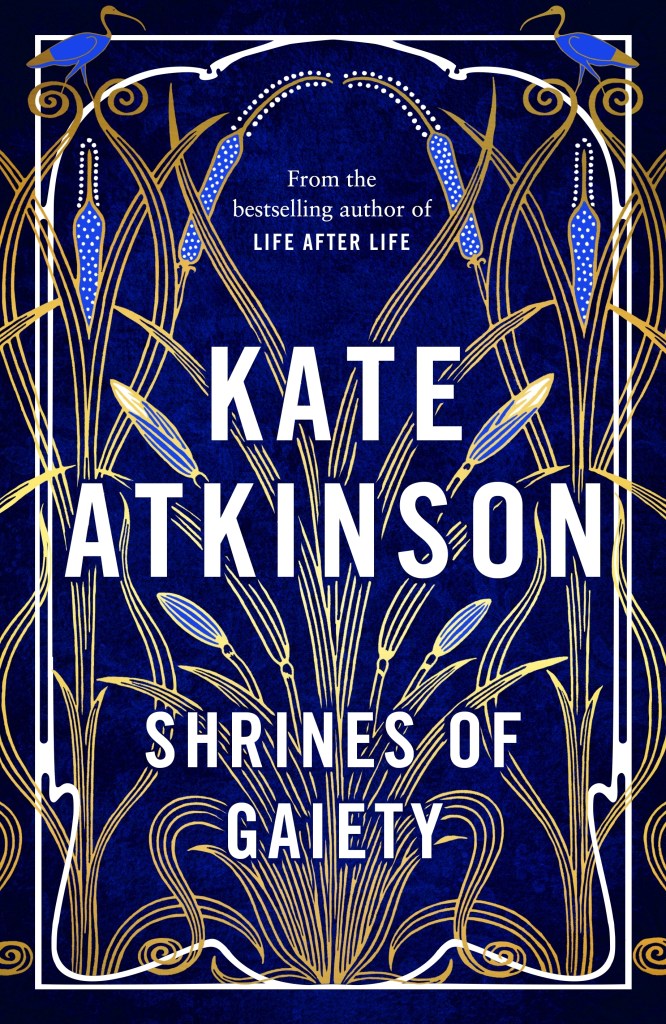
Book Review: Shrines of Gaiety by Kate Atkinson – a story from flapper era set in London’s seedy Soho

I find it so easy to slip into a Kate Atkinson novel, whatever the storyline, because the writing is just so smart. In Shrines of Gaiety, the main focus of the story is the goings-on of a family of nightclub owners in 1920s London, overseen by the matriarch, Nellie Coker. A Scottish woman widowed young and with a family to support, she’s done a few dodgy things to make her fortune, intent not only on supporting her children, but advancing them in society.

We meet Nellie as she’s leaving after a short stint in Holloway, the London prison for women. One of her nightclubs had been raided and liquor found being sold on the premises. Usually she gets a tip-off from a policeman – Inspector Maddox from Bow Street police station – but not this time. Is Maddox still loyal? There’s someone else sniffing around – a gangland boss who’s keen to get his hands on a set of nightclubs and settle an old score.

Observing Nellie leaving Holloway is Chief Inspector Frobisher, the detective tasked with cleaning up Soho’s nightlife and the rot that has set in at Bow Street. With him is Gwendolen, a librarian from York who is on the hunt for two young girls who have run away to London to go on the stage. London has a habit of swallowing up young women and a few have been turning up dead, fished out of the Thames.

Gwendolen is an interesting character as she has the fortitude of someone who has nursed during the recent war, but post-war life has been a little tame, living in genteel poverty with her listless mother. When her mother dies, she discovers an inheritance which gives her the freedom to travel to London, where she can explore a new life. The missing girls set her off on a mission. Both Frobisher and Nellie Coker offer Gwendolen interesting opportunities.

As well as following Frobisher’s policing, and Gwendolen’s snooping, we meet the younger Cokers: eldest son Niven, who is battle hardened from the war, unflappable and smart. His sister Edith is Nellie’s natural successor, practical, though not as pretty as her sisters. But something has unhinged Edith lately. With their Cambridge education, Betty and Shirley are primed to marry into the aristocracy, though they also lend a hand with the clubs. Younger son Ramsay is rather effete and an easy victim of anyone trying to get at Nellie, but nevertheless has literary aspirations. Young Kitty at eleven suffers from neglect and is largely uneducated while no-one notices that she’s also in danger.

‘Give Mr Frazzini a box of chocolates, will you?’ Nellie said to Betty.

Nellie sold the boxes for fifteen shillings each but bought them wholesale from somewhere in the north for a shilling a box, all prettied up with ribbons (a penny each) by soldiers disabled in the war. The dance hostesses made a great fuss of persuading their partners to buy the boxes for them and then, after a few chocolates had been eaten, the boxes made their way back to the storeroom they’d come from and were refilled, ribbons adjusted, and sent out to be sold again.

The narrative bounces around all of them, as well as Freda and Florence, the two missing girls, creating a giddy plot that will keep you on your toes. I’ve heard this book described as Dickensian, and I suppose it is with its varied cast of characters, and the way the criminal element rubs shoulders with the law, the sudden reversals of fortune – there’s even a gang of women pickpockets. The story paints a picture of the mad excesses of the 1920s, the jazz and the flappers, the endless partying as everyone tries to forget the recent war.

I enjoyed this book enormously because the writing is lively and amusing and you really can’t guess what will happen next. The situation looks dire for the stray women caught up in the seamy side of Soho, but even those with money can lose everything on the turn of a card. Help and goodness are in short supply but come from unexpected quarters. I chuckled my way through the book at some points; nervous for particular characters at others. At the end of the book, Atkinson gives potted histories of what happens next to all the major players, which may please or annoy some readers I confess to being a little annoyed but it’s still a four out of five stars read from me.

Book Review: Mother’s Boy by Patrick Gale – an imagined life of Cornwall’s favourite poet

I’ve read a ton of novels by Patrick Gale – I love his writing for its warmth, perception and the characters. They’re always shown with all their flaws, and yet they make for oddly likeable company. Gale reveals what makes them them interesting and ordinary at the same time.

Like Charles Causley, Cornwall’s favourite poet – the subject of the latest Gale book, Mother’s Boy. The story takes us back to the early part of the twentieth century, and the courtship of Causley’s parents, both of them working in service: Laura as a maid in a small household and Charlie who drives a pony and trap for a local doctor. They marry while World War I is getting up steam and see little of each other for years. Charles is born in 1917, his father shipped home eventually, but with TB.

The story clips along through the years, with chapters about Charles’s early life as a boy in Launceston while his father is still alive, school life and his knack for language, a talent for the piano and his discovery of poetry. There are two unlikely friendships, the butcher’s boy who once bullied him and Ginger, the annoying boy who followed him around and listened outside as Charles practised on the piano. His mother’s thrill to find Charles a safe job at a desk; Charles’s disappointment that he won’t be continuing his education.

Then another war, and Charles’s acceptance into the navy as a coder. There are several chapters that progress the war, and Charles’s romantic connection with two men. Each chapter shows a new discovery or aspect of the war through key events or changes to Charles’s life, the novel finishing a few years after the war.

Parallel to Charles’s story is Laura’s, working away at her little laundry business, her days ruled by the weather and the rigid timetable required to get it all done. Her love for Charles is a constant. Fortunately for Laura, the ache of missing Charles while he is away at war is tempered by the evacuees she takes on, the Americans setting up bases around the town and later the prisoners of war who inhabit one base once the soldiers have headed across to France.. So we get an interesting glimpse of the war at home.

And while she suffered, Charles was either out at his play-reading group or rehearsing with his dance band or drinking beer with friends, or else he was shut in his room, stabbing away at his typewriter or listening intently to the radio, as often not to some programme about the international situation and politics, which made her head spin if she tried to follow it, and telling her to knit more quietly.

The two main characters are so nicely drawn, so empathetic, that you feel you know them well. Charles is refined and educated, a lover of good theatre and literature, his working class mother often bemused by the things he says. The story ambles along through the years with sudden events that make you really feel for mother and son; some happy moments but also the tragedies that you’d expect because of the war.

You get a strong sense of what it was like to be born different, both artistic as well as gay in a time and place when such things were problematic; and yet Charles manages to be true to himself in a way that works for him. But at what cost? The story pulls you along, each chapter adding something new on both an intimate scale as well as within the wider world. I thought I’d close the book and think, yes that was an interesting read and very true to its subject matter. And then wham! The final scene, in its quiet living room setting, quite blew me away. There was a lump in my throat. There were tears.

Patrick Gale’s novels often have a way of creeping up behind you, leaving you a little stunned, but in a nice way. His author’s notes reveal that Causely was often asked why he hadn’t written a full memoir, not just the few autobiographical fragments that remained after his death in 2003. Causley’s reply was that it was all there in the poems. The poem Angel Hill, quoted in full at the end of the book, could be a case in point and ties in beautifully with Gale’s novel, particularly that final scene.

Mother’s Boy is a stand-out novel by an accomplished writer whose work never disappoints. If you like this book, it is worth checking out the author’s notes on his website wihich add detail and some interesting photos. You can tell that Charles Causley has become close to his heart, and Laura too. I love books where you feel the author has poured his heart into a story. I feel this is the case here and why it gets a five out of five from me.