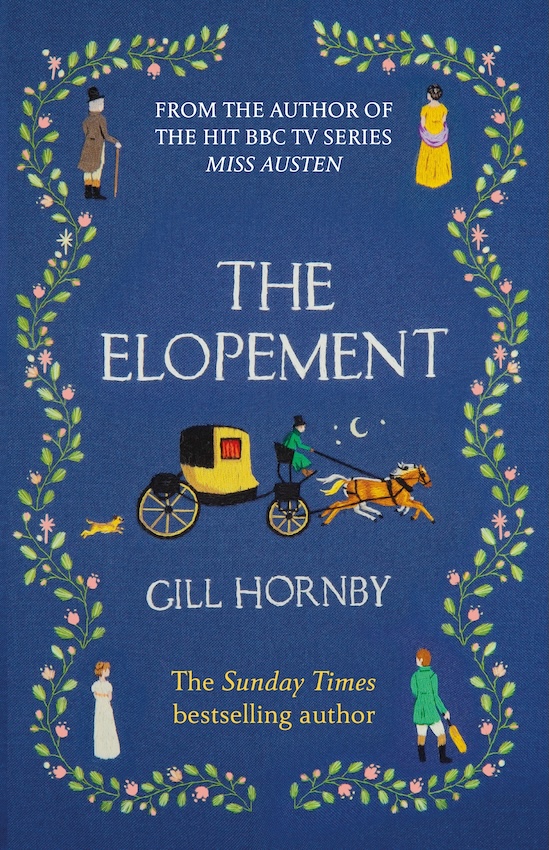
Book Review: The Elopement by Gill Hornby – an engaging story inspired by Jane Austen’s family

I’d already enjoyed Gill Hornby’s earlier book, Miss Austen, a novel about Cassandra, Jane Austen’s sister. But there’s obviously a lot more to tell, for the Austen’s are an interesting bunch. The Elopement is the third book about the family by Hornby, picking up their story with Fanny Knight, Jane Austen’s favourite niece, and Mary Dorothea, Fanny’s step-daughter.

This is a story of country life among the gentry in the early 1800s, large families and the rocky path to love. It begins with Fanny, in her late twenties, feeling as if she has missed the marriage boat, having spent many years mothering her younger brothers and sisters. When she is courted by an older neighbour, the politically ambitious Sir Edward Knatchbull, she accepts his hand.

Married life at Hatch, the Knatchbull manor house, includes five motherless children but somehow Fanny never quite takes a shine to the Knatchbull offspring, particularly the eldest, Mary Dorothea, the only girl. The boys get sent off to school from a young age, so are barely there. Fanny and Sir Edward contrive to have Mary educated with Fanny’s younger siblings at Godmersham Park, where Mary Dorothea becomes a firm favourite.

The story flips mostly between the two female characters: Fanny’s marriage to the pompous, devout and domineering Sir Edward, with whom she finds contentment, her avoidance of maternal responsibility for his children, her own struggles to be a mother; and Mary Dorothea, who seems like two – people quietly inoffensive with Fanny, and fun-loving and gossipy with Fanny’s sisters, particularly Cassie. As Mary and Cassie grow up, they bloom and go to balls – there’s a hint of a Jane Austen novel here, with suitors appearing in the wings. But no one is ever good enough to please everybody, particularly parents.

Sir Edward finds the young male Knights flippant and too fun-loving, particularly the eldest, Ned. So of course, Mary finds them charming, Ned in particular. The story follows the problems of making a match agreed on by the girls’ families. Not just Mary and Cassie but also Marianne, who ends up stepping in as a mother figure for her younger siblings after Fanny’s marriage.

It all gets a bit fraught for the young couple at the centre of the story, Sir Edward remaining intransigent, while Fanny is caught in the middle. A dutiful wife, she’s also strangely unaware of the secret trysts going on under her nose. You want to like Fanny, who means well, but it’s hard to see in her the niece of Jane Austen. She must have been brought up on the famous stories, and the recurring theme of the difficult path to love. Couldn’t she have a little more sympathy? More mettle?

I enjoyed The Elopement, but although the story is full of drama and conflict, the plot is a little slow-moving at times, sticking closely, it would seem, to events noted in Fanny’s collection of diaries. But you do get a good sense of the time, particularly of a woman’s lot; whether as wife, unmarried and useful relative, or as a mother. Hornby notes that giving birth was like Russian roulette, with dying in childbirth a distinct possibility even after a number of healthy births. The Austen’s were particularly fecund, producing endless large families – ample opportunity for losing a mother.

With the recent Jane Austen commemorations – 250 years since Jane Austen’s birth on 16 December – it was a good time to revisit her world. I enjoyed meeting Cassandra Austen again, still stepping in with wisdom and caregiving, an ageing mother at home, nieces requiring guidance, to say nothing of visits to the deserving poor. Gill Hornby does a brilliant job of capturing the tone of an Austen novel, and the book has the ring of authenticity, reflecting solid research. I’ve still Godmersham Park to read by Hornby, and wonder if there will be more Austen stories to look forward to after that. The Elopement is a four-star read from me.

Book Review: The Murder of Mr Wickham by Claudia Gray – a cosy mystery that brings back the characters of Jane Austen

You may have noticed there’s quite a collection of novels based on one or other of the six completed novels of Jane Austen. I have read a few and enjoyed them greatly. But Claudia Gray takes this genre to a new level with her delightful mystery, The Murder of Mr. Wickham.

Honestly, if anyone in Jane Austen’s ouevre deserved to be bumped off it is surely George Wickham. He’s that rascal that threatened to ruin Lydia Bennett in Pride and Prejudice, as well as spoiling the marriage prospects of her sisters. He’d almost ruined Darcy’s sister as well. In Claudia Gray’s novel, we catch up with Wickham at a house party, not at Pemberley, the seat of the Darcies, but at Donwell Abbey, the home of Mr Knightly and his wife, Emma, from that other Jane Austen novel.

Guests at the house party include Mr Knightly’s old friend Fitzwilliam Darcy, his wife Elizabeth and their son Jonathan, a handsome but socially awkward young man of around twenty. Then there’s cousin Edmund Bertram and his wife Fanny (from Mansfield Park) as well as the Wentworths, Frederick and Anne (from Persuasion) who were renting Emma’s childhood home when a staircase collapsed and urgent repairs required.

Also joining the guest-list are the Brandons, Colonel Brandon that is and his young wife Marianne (from Sense and Sensibility). That just leaves Northanger Abbey, which is represented by seventeen-year-old Juliet Tilney, the daughter of Henry Tilney and Catherine, now a novelist who Emma admires. Emma has taken a shine to Juliet and invited her so that the girl can see new people and a change of scenery. With Jonathan Darcy staying, here’s also a hint of Emma’s propensity to match-make.

So you can see that Claudia Gray has really pushed the boat at to draw on all six novels for inspiration and does a terrific job, throwing Austen’s characters together and seeing what happens.

There’s already a tense atmosphere as Mr Knightly is troubled by the financial losses his younger brother has incurred due to a venture masterminded by none other than George Wickham. The same venture has also caught out Captain Wentworth, losing him a chunk of the money that he won as prizes as a naval officer in the war with Napoleon. It was this money that enabled him to hold his head high against the snobbery of Anne’s family. But without it, he fears he’s let Anne down and they may need to return to sea.

Since Pride and Prejudice George Wickham has had a further twenty plus years to cause misery to the Darcies, and more crimes come out of the woodwork when the bounder turns up at Donwell Abbey to call in some debts. It’s the middle of a stormy night when the murder takes place, the guests all restless and anxious for various reasons.

The only two characters who don’t make the suspects list are young Juliet, who had never met the victim before her visit, and Jonathan Darcy, who spent the night calming his horse in the stables when the storm was at its most severe. They never would have thought of investigating the crime themselves if it hadn’t been for the magistrate of the district, Frank Churchill (remember him from Emma?), who assumes the killer must be among the Donwell staff, or passing “gypsies”. Juliet, in particular, is appalled at the idea of someone going to the gallows unjustly.

The two team up, secretly sharing their findings at midnight in the billiard room, and Jonathan finds it so much easier to talk to Juliet than he might have otherwise, now there’s something practical to talk about. The story has plenty of pace and builds to an unexpected resolution as more and more secrets are revealed. In the crucible of a murder investigation, relationships are tested and new understandings emerge.

I enjoyed The Murder of Mr. Wickham immensely, which has all the wit of an Austen novel, Claudia Gray bringing the characters to life beautifully. The good news is this is the first in what looks like a new series featuring Juliet and Jonathan as unlikely but very appealing sleuths. I’m giving it four and a half stars – the audiobook version is narrated with aplomb by Billie Fulford-Brown – and am keen to see what happens in The Late Mrs Willoughby, which is Book No. 2.

Book Review: Miss Austen by Gill Hornby – the story of the famous writer’s sister

When Jane Austen died, she left thousands of letters sent to family and friends, of which many were destroyed by her sister, Cassandra. This is the Miss Austen of Gill Hornby’s novel. The story begins with the elderly Cassandra visiting the vicarage where her long-dead fiancé grew up, the home of her very dear and also departed friend Eliza.

Jane and Cassandra both wrote to Eliza, and Cassandra is sure there must be a cache of letters somewhere, full of heartfelt disclosures and secrets, as well as (knowing Jane) waspish comments about other family and acquaintances. It is imperative that Cassandra finds these before they are made public. Cassandra was the carer and confidante of Jane in life, and now, twenty years after her sister’s death, she wants to preserve her good name and not allow Jane to be the subject of speculation and gossip.

And so here she is at the vicarage where as a young woman, she farewelled her beloved Tom on a voyage to the Caribbean, a chance for him to win a living from his patron and secure the means for he and Cassandra to marry. Memories come flooding back and the story dips back in time to those early years and the promises she made to Tom before his departure.

Meanwhile Eliza’s daughter Isabella is rattling around in the vicarage with her grim but loyal servant Dinah, her father the vicar having recently died. Isabella has the job of finding somewhere else to live as well as packing up all the chattels and furnishings that have been a part of her life since childhood. But Cassandra is appalled to see that Isabella doesn’t seem to know how to begin, obviously so ground down by years with an autocratic and belittling father she has a complete lack of initiative.

So we have two story threads here: Cassandra’s efforts to encourage Isabella to find a house with her other spinster sisters – for what could be more pleasant than to live with sisters?; and the early years of Cassandra’s own life with her beloved Jane as revealed by the letters she finds.

I listened to Miss Austen as an audiobook read by Juliet Stevenson and if there is a Juliet Stevenson fan club out there, I should probably become a member because her reading is utterly superb. She brings to life the characters so well along with the nuances of tone in the writing, the conversations and voices of Jane and Cassandra, plus all the peripheral characters ,to recreate the Austen sisters’ world.

There are multiple characters – the girls had five brothers, plus friends and new acquaintances, which echo some of the themes and interactions from Jane Austen’s novels. Gill Hornby has done a really good job with this, and while there are many novels out there that pay homage to Jane Austen, mostly through further stories about some of her much-loved characters, this book about Cassandra is one of the better ones I’ve come across.

Of course we can’t expect a raft of happy endings here. Jane Austen didn’t live long, and the Austens struggled to find a permanent home after their father died. Neither Jane nor Cassandra ever married and there seems to have been both grief and a sense of missed opportunities over this. And yet, Hornby sneaks in a rather charming and amusing ending to the story, casting the truculent Dinah in a whole new light. Cassandra herself is wonderful company and as an elderly unmarried woman, a believable and refreshing heroine. Miss Austen is a four out of five read from me.

Book Review: The Clergyman’s Wife by Molly Greeley

The Clergyman’s Wife makes me want to pick up Pride and Prejudice again, as it revisits the story of Lizzy Bennett’s friend, Charlotte Lucas. As you may recall, Charlotte is twenty-seven when she meets Mr Collins in the Austen novel. She is too plain to have sparked any interest from a suitor and without a dowry is doomed to spinsterhood. When Collins fails to snare one of the older Bennett girls, he settles for Charlotte, and she for him.

Greeley’s novel picks up the story several years later, showing Charlotte as the young mother of baby Louisa, living at the parsonage on Lady Catherine de Bourgh’s estate. Collins is still cringingly sycophantic towards his benefactress, passing on her advice to his wife about how to raise a baby and other domestic affairs. Lady Catherine is just as bossy and overbearing as ever. Charlotte passes her days quietly avoiding her husband if she can, but for the most part contented in her lot. She’s a sensible and pragmatic sort of girl.

When Lady Catherine bestows some rose bushes on the young couple, local farmer, Mr Travis, is given the job of ripping out a stump and preparing the flower bed. Charlotte chances upon him in the garden early one morning, Travis sweaty with exertion, Charlotte lugging a restless Louisa, both of them tousled and not yet dressed for the day. Travis and Charlotte strike up a conversation and as summer merges into autumn, a friendship develops.

The story is very much within the mind of Charlotte as she discovers feelings she has never experienced before and considers what it might be like to marry for love instead of convenience or duty. She had always said to herself she wasn’t a sentimental sort of person, but Travis has made her less than steady and distracts her thoughts. It is soon obvious he feels the same way for her.

The novel is very heartfelt and sympathetic to Charlotte and the sad events of her life she has had to hide from others. It examines the difficulties of being expected to live up to society’s expectations and how even the comparatively comfortably off can struggle to meet these demands. The powerlessness of women comes through again and again to say nothing of the poor, dependent as they are on the bounty of the likes of Lady Catherine, who will only see what she wants to see. She is such a loathsome creature, you want to shout at her.

I was a little disappointed that the scope of a couple of seasons gives Charlotte little opportunity to change her lot although we leave her with renewed determination – pragmatic yet again. But the novel brings rural England in the Regency period nicely to life, and you can’t help getting caught up in the emotions that run high. I was a little doubtful about the use of present tense, but soon got used to it – it doesn’t have to read like Austen, after all, and the storytelling nonetheless sounds authentic, only marred occasionally by the odd Americanism.

I love the character of Charlotte Collins – she has such a good heart, while striving in small ways to be her own person. She definitely deserves to have her story told at least as much as those Bennett girls that keep popping up in Pride and Prejudice sequels. The Clergyman’s Wife is Molly Greeley’s first book, a three and a half out of five read from me. I shall definitely seek out her next, The Heiress, which takes another shadowy character from Pride and Prejudice, poor Anne de Bourgh, the daughter of ghastly Lady Catherine, a seen-and-not-heard character who spends entire scenes, lolling on a chaise longue, often asleep. It will be interesting to see how Greeley wakes her up.

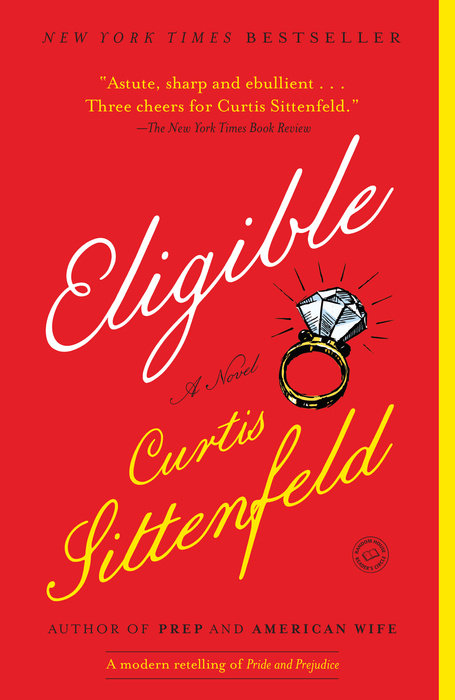
Book Review: Eligible by Curtis Sittenfeld

There was a time when I was an avid Jane Austen reader adding an Austen novel to my reading talley each year. And then there was such a plethora of TV and movie adaptations and they were enjoyable, sure, but somehow my interest waned. Then along came the Austen Project – four modern novels based on four Austen novels, written by well-known authors and kicking off with Joanna Trollope’s Sense and Sensibility.

I’d quite liked Trollope’s version; it was fun but the characters were annoying. Perhaps the characters in the Austen were too – it’s not my favourite Austen by a long chalk. So I forgot about TAP altogether. And then I happened upon Eligible, Curtis Sittenfeld’s take on Pride and Prejudice. Honestly, I enjoyed this book so much I could have sat down and read it through all over again.

Eligible is set in Cincinnati, mostly, with episodes also in New York and California. Mrs Bennett is excited about a certain Chip Bingley who has come to town as an ER doctor at a Cincinnati hospital. Chip is the recent star of a TV reality series called Eligible (somewhat like The Batchelor), where he broke down in tears during the last episode, unable to choose a bride between the two lovelies who made the final. With five unmarried daughters, Mrs B’s keen to orchestrate a social event where they can meet Chip.

Journalist Liz Bennett has been living in New York for years along with her yoga instructor sister Jane but both are recalled to Cincinnati to help when their father has heart surgery. They can’t rely on their mother to feed him a healthy diet and their younger sisters, still living at home though well into their twenties, are useless. Mary spends her time in her room working on her PhD, while Lydia and Kitty are obsessed with working out and don’t even have jobs.

Liz is really the only one who doesn’t need a top up from the Bank of Mom & Dad, and she is appalled at the state of repair of the Bennett family home. When medical bills make it seem impossible to hang onto the house that has been in the family for generations, Liz steps in to try to persuade her parents to sell and the younger Bennetts to get paid employment.

Then there’s the rest of the P&P cast. Darcy, of course, another high flyer at the hospital but with the original snooty disposition we have come to know and love so well; Jasper Wick(ham), a former colleague, best friend and married lover of Liz; Charlotte is Liz’s old friend from home, too plump to attract a Chip Bingley, but a career whizz nevertheless. Women can do anything as we know, in spite of failing on the marriage market, a sentiment emphasised by long-term feminist and women’s rights campaigner, Kathy de Bourgh. Liz has been trying to interview Kathy de Bourgh for her Women Who Dare column for what seems forever.

Throw in an African American realtor and a trans gym owner and you have plenty more to send Mrs Bennett into a spin. Much comedy ensues and the story builds to a brilliant reality tv finale which rounds the story off nicely.

Curtis Sittenfeld has captured all the silliness of modern life in a way that fits the Pride and Prejudice story beautifully. We’ve got the witty dialogue, the terrific characterisation, the misunderstandings and miscommunications you’d expect, all suitably updated. I’d forgotten how much I loved the original and want to read it again. For this and several hours of wonderful entertainment I’m going to give this one a five out of five.

Book Review: Longbourn by Jo Baker

lbPride and Prejudice by Jane Austen is one of the most beloved of classics, and has been filmed and televised again and again. In Longbourn, Jo Baker takes the reader downstairs among the meal preparations, the endless laundry, boot-polishing and bell-answering by the hard-working servants, much of it shown from the point of view of Sarah, a maid in the Bennett household.

The events of the original book seem like the tip of the iceberg as far as physical activity is concerned – Mrs Bennett’s anxious hanky-wringing, Mr Bennett’s library brooding, Jane and Elizabeth’s thoughtful chats and needlework, while gentlemen call and invitations are answered.

It all drives such an effort in keeping up appearances, the work of which falls to the small staff of Mr and Mrs Hill and two maids, one of whom, Polly, is just a child. Their working day seems to stretch forever, and the reader feels the pain of Sarah’s chilblains and her yearning to see something of the world. Continue reading “Book Review: Longbourn by Jo Baker”