Book Review: Hemlock Bay by Martin Edwards – a cosy mystery with plenty of Golden Age panache

I was in the mood for a cosy mystery and was intrigued by this new book by Martin Edwards, the fifth in a series about the investigations of Rachel Savernake, a young woman of private means with an interest in murder. Edwards has immaculate credentials, being something of an expert in Golden Age murder mysteries. He’s the President of the Detection Club, a group formed in 1930 by crime writers such as Agatha Christie and Dorothy L Sayers and where Knox Commandments are sacrosanct.

These are rules about what a crime novel must and mustn’t do – things like the murderer must appear early on in the story, the detective must declare any clues they discover as they discover them and also must not be the killer. Among others. Martin Edwards has also been awarded the Diamond Dagger for outstanding contribution to crime fiction, so I felt this book was definitely worth a shot.

As Hemlock Bay begins, we are soon reading the diary of Basil Palmer who is planning a murder in the North of England seaside resort of the title. He wants to dispose of the man responsible for his wife’s death – someone he has never met. Pushing him off a cliff seems a good idea. Around the same time, our amateur sleuth, Rachel, has just bought a painting, also of Hemlock Bay, by well-known Surrealist painter Virginia Penrhos, which shows, if you look carefully enough, someone lying dead at the bottom of a cliff.

Rachel lives in a large London house with her chauffeur Trueman, his wife Hetty, and Trueman’s sister Martha. Hetty cooks and Martha is a kind of companion-maid, but they all get on well, as equals almost – a kind of family of amateur sleuths. There’s some history here that you no doubt get more of in the earlier books, which I have yet to read. While this scenario does arouse the reader’s curiosity, it was perfectly fine to read Hemlock Bay as a standalone novel.

When London crime reporter Jacob Flint interviews a clairvoyant claiming to have had a vision of someone being pushed from a cliff at Hemlock Bay, he pays a call on Rachel. What he reveals sets them all off together for a summer stay at the seaside resort with the aim of preventing the murder. Flint has had some previous lucky breaks following Rachel’s nous for crime – also in the previous books – and this seems set to happen again here.

The story is peppered with many interesting characters – among them Sir Harold Jackson, who with wife Sadie, turned Hemlock Bay into a luxury resort; Virginia Penrhos, who is staying there in a lighthouse with her moody lover, Fion, and Louis Carson, schemer an all-round dodgy character and his charming wife Pearl. The perspective flips around among our sleuths and Basil’s diary, with a lot of time spent with Flint, who is energetic and determined, and also a bit in love with Rachel.

It all comes together with a twisty plot and a barrel of surprises at the end, as Rachel reveals who did what and why – a scene rather like many a Golden Age mystery, with all the suspects and witnesses gathered together, listening with baited breath. Martin Edwards has set the story up with clues peppered throughout for the careful reader, and these are listed in the Cluefinder at the back of the book – a popular trope from fifty years ago.

The result is a pleasurable read, a clever cosy mystery, with engaging characters, plenty of warmth and humour and smart writing. Everything you could want with a relaxing crime story. In the background is enough period detail – talks of the Slump (it’s 1930, so we know hard times are a coming), fashionable pastimes for the wealthy (including naturism) – to add enough colour without slowing down the plot. Hemlock Bay is a treat – a four-star read from me.

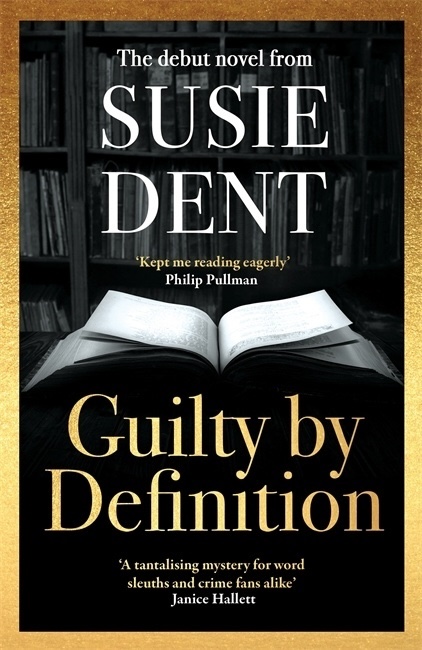
Book Review: Guilty by Definition by Susie Dent – an enthralling mystery for word lovers

How to head up a book’s chapters is a big decision for any fiction author. Do you give them enticing titles or apposite quotes, or just leave them numbered? Susie Dent begins each of the chapters in Guilty by Definition with an interesting word and a dictionary-style description. Some are really old, like “mathom, noun (Old English): a precious thing; a valuable gift”; others more recent, like the verb “broggle (seventeenth century): to poke with a pointed instrument”; and there’s one or two that are quite new, like “zugzwang, (twentieth century): the obligation to make a move, but every move is detrimental”.

The main characters in the novel are lexicographers, editors for the Clarendon English Dictionary, so words are their thing. Not just words and their meanings, but their history, their earliest known usage and how they have changed over time. This alone would have been quite interesting as the characters are all engaging, have secrets and things happening in their personal lives. The team of four are headed by Martha, whose sister Charlie was a PhD student who went missing a decade before. Martha had escaped to Germany for a decade and hasn’t been long home, slotting back into the house she grew up in with her widowed father.

Also working at Clarendon we have Alex, a stylish older woman with a penchant for nice things; Safiya, a lively young woman who shares a flat with others her age; and Simon, who misses family life since his divorce. Their boss is Jonathan, a Shakespearean expert who is television’s go-to commentator for all things to do with the bard. He has good looks and charm in spades, perfect for the media.

They’re all just puddling along, lost in the rarified world of words, when a cryptic letter, penned by someone calling themselves Chorus, has them reaching for their pencils to decipher its clues. The letter starts them off on a quest to investigate Charlie’s disappearance, something Martha feels very sensitive about, as you might expect. Charlie was the golden girl of the family, and with Martha’s mother now dead, her father is still apparently grieving all this time later.

Then there are the postcards. This Chorus seems to be sending them not just to the core group at Clarendon, but other witnesses they visit to ask about Charlie. Seemingly quotations from Shakespeare, some of them verge on “poison pen”. There are more letters, and some wonderful scenes as Martha and co. delve into archives, visit old acquaintances, and uncover some disturbing facts about Charlie. We see Oxford in all its glory – old ruins and scholarly institutions, May Day celebrations, cafés and watering holes, leafy parks ideal for cycling. I was often googling as I read for images so I could imagine the settings all the better.

It all adds up to a wonderful read, erudite and witty, but not without its darker moments, as you’d expect of a good whodunit. Which this is. If you love cryptic crosswords, this will be a delight, but there’s still plenty to enjoy without trying to figure out the clues. I am thrilled to see that Martha will be back next year in another mystery in the series – Death Writ Large, out next March. Guilty by Definition is a four-and-a-half star read from me.

Book Review: The Unquiet Grave by Dervla McTiernan – a pacy new Cormac Reilly crime thriller

I’ll read anything by Dervla McTiernan, so was happy to put my hand up for her new book in the police Sergeant Cormac Reilly series, The Unquiet Grave, when it was offered by Netgalley. This is the fourth mystery featuring Reilly, and I’ve always found him an interesting character – unrelenting yet sensitive, logical but also good at reading people. He always seems to be up against it, whether it’s relationship problems, pressure to close a case early or issues with colleagues. Or all three – which is what we have here.

In previous books, Reilly has struggled to fit in, returning to Galway after years in the force in Dublin. A stickler for doing things by the book, he’s been a whistle blower, which is why, in the new book, he’s being headhunted to run a team investigating police malpractice – not a job to earn him popularity. While he’s mulling this over, he and his sidekick, Constable Peter Fisher, are called to a body discovered in a bog. Fitted out to look like a ritual killing, of the kind discovered in ancient burials, the presence of underwear suggests otherwise.

The body turns out to be that of a polarising head teacher at the local school – Thaddeus Grey, who disappeared two years ago. Found on the outskirts of town near his house, Grey expected high standards of the students, and it turns out, was a bit of a bully. Cormac soon narrows his focus to three students who particularly bore the brunt of Grey’s unpleasantness. But when another body is found in similar circumstances, his bosses and the press are jumping on the idea that it’s a serial killer. Cormac soon has a battle on his hands to bring the actual killer or killers to justice.

Meanwhile, Cormac’s ex-girlfriend, Emma, now married and expecting a child, is desperately worried about her husband Finn who has gone missing in Paris. The French police give her the brush off as he’s not a French citizen and she gets the feeling everyone thinks she’s a hysterical female, whose husband suddenly has cold feet about being a family man. Finn was a cyber security expert in the forces until recently, so Cormac pulls a few strings with an old army mate and gets things going with a police investigation. But nobody’s optimistic.

There’s a further plot thread involving a computer tech. wizard planning a fraud against the lottery company he works for. How all these story threads come together is a masterpiece of crime mystery plotting and keeps the story humming along. What makes it particularly interesting are the moral dilemmas faced by Cormac and Peter as they try to find justice for those caught up in crime, as well as problems in their personal lives.

These issues add layers of complexity that give the story a bit more heft. There’s danger too, with some pacy, edge-of-the-seat moments. Add the relentless Galway weather – it’s either freezing or raining or both, and we’ve got the atmospheric settings I’ve come to expect from McTiernan, who takes us to Paris, London, Dublin as well as some boggy rural corners.

All in all I wasn’t disappointed with The Unquiet Grave and it was great to check in with Cormac Reilly again – I do hope there will be more in the series. I really enjoyed the e-audiobook edition of the novel, published by HarperAudio and read by Aoife McMahon, who captured the personalities of all the characters, which were many and varied. With a publishing date of 30 April, The Unquiet Grave is a four-star read from me.

Book Review: Murder Before Evensong by Rev. Richard Coles – an ecclesiastical cosy that takes you back to the ’80s

The cosy mystery genre is as varied as any, and some are definitely better than others. I am always on the lookout for the feel of Agatha Christie’s Miss Marple stories when I pick one up, so this one with its classic English village setting seemed promising. Murder Before Evensong introduces us to the parish of Champton, a village with a lord of the manor, Lord Bernard de Floures of Champton House, and a rectory, the home of our sleuth, Rev. Daniel Clement.

When Daniel suggests the installation of toilets at St Mary’s during a church service, he couldn’t possibly have imagined the fallout. A posse of flower ladies are appalled that the space required will mean the loss of the back pews. Daniel is reluctant to back down, but soon has his hands full with other matters. There’s the arrival of his actor brother Theo doing background research for a new role as a TV vicar in a ‘gentle comedy’. He wants to follow Daniel around to get a sense of what he does.

Then there’s the annual open day at Champton House, with the whole village mucking in, managing the door, running guided tours, serving tea. But the day ends in tragedy, with Daniel discovering Bernard’s cousin Anthony Bowness, who’d been archiving the family’s papers, dead in a back pew of St Mary’s. Anthony, a troubled man, often came here to pray, which is where Daniel’s naughty dachshunds come upon the body, stabbed in the neck by a pair of secateurs. What secrets had Anthony uncovered? And who knew how to kill so effectively, picking the exact spot for the carotid artery?

There are more murders before the last page, and multiple suspects. Nathan, the de Floures odd-job man, has a shady past, and the grandfather he lives with an even shadier one. And no one knows what to make of Bernard’s younger son, Alex, with his wild enthusiasms for art installations and his unsuitable friends. Other characters seem to be hiding secrets, and the village’s role in the war can’t be discounted either.

The story is well plotted, adding enough interest to keep the reader guessing and turning the pages. But the steady humour of the writing and the interplay between a host of quirky village characters lift this cosy above the average. Author, the Reverend Richard Coles, obviously knows well the life of an Anglican priest, and as a former member of the band the Communards, seems keen to evoke the 1980s here – Cagney and Lacey on the telly, Wham on the radio. But in a village like this, you feel it could be any time, that things don’t change a lot.

Daniel is a thoughtful, always considerate rector, at times struggling with the demands of those around him – not just his parishioners. His perceptive but interfering mother Audrey has to be constantly held in check, as do the two dachsunds, Cosmo and Hilda. The tiny general store and post-office is often the scene of gossipy councils of war between the anti-toilet brigade which contrasts nicely with scenes at the old-fashioned rectory and the palatial Champton House.

The writing is terrific too. Coles blends in Biblical and other ecclesiastical references to add authenticity without overburdening the story, which is generally lively and full of wit. I chuckled my way through, not particularly caring whodunit, as I was enjoying the journey so much. I’ll definitely be keen to continue with this series – the fourth is out later this year, so there’s a few to catch up with. Murder Before Evensong is a four-star read from me.

Book Review: Tell Me Everything by Elizabeth Strout – a welcome return to the world of Bob Burgess

The Burgess Boys was the first novel by Elizabeth Strout I ever read. I was soon a fan of Strout’s particular way of storytelling, never missing a book since and catching up with Olive Kitteridge, Lucy Barton and co, the small towns of Amgash Illinois, or as with this book, Crosby, Maine.

But I never forgot the wonderful character of Bob Burgess, the self-deprecating legal-aid lawyer, working the cases that don’t bring in a fat pay-cheque. He’s got plenty of history with his well-to-do, more confident brother, Jim – another lawyer and winner of a famous case people still talk about.

In Tell Me Everything, we catch up with Bob, who in the previous Lucy Barton book (Lucy by the Sea) has become Lucy’s friend. They take walks most days together, Bob having a furtive cigarette. Our other Elizabeth Strout character of note, Olive Kitteridge also enters the plot, having a story she wants to share with Lucy. Bob brings Lucy to visit the elderly Olive in her care facility, and Olive immediately detects that Bob is in love with Lucy. This is awkward, as Bob is married to Margaret, a church minister, and Lucy has settled in Crosby with her ex-husband William.

Lucy is a famous author, though a quietly unassuming one. Olive finds her a bit mousey but the two soon get along well, sharing stories of ordinary folk. They’re often rather sad stories, but the two feel they are worthy of sharing, as being otherwise undocumented lives. I feel this is Elizabeth Strout’s goal too – to write about ordinary folk, their burdens and their hopes, their failures and secrets, as well as the talents they don’t know they have. Some are more ordinary than others.

When elderly Gloria Beach goes missing from Shirley Falls, suspicion lands on her son Matthew, a strange, shy, reclusive man who has always lived with his mother. Bob finds himself reluctantly agreeing to defend Matthew against what seems to be an imminent charge of murder. Again, what is on the surface hides a grim set of family secrets, “lives of quiet desperation” indeed. So Bob has a lot going on with the legal case and his feelings for Lucy. A terrible illness in his brother’s family throws more light onto his relationship with Jim and events from the past.

Poor old Bob. He’s such a nice guy but gets caught up in everyone else’s troubles. He’s what Lucy calls a “sin-eater” – he seems more ministerial than his wife, Margaret, who he’s beginning to have some doubts about. On top of everything else, Margaret is having a difficult time with a partitioner.

I rattled through Tell Me Everything, particularly interested in the murder case and wanting to find out what had happened. But there’s nothing sensational here, it’s all very much like real life, another tragedy in an already tragic family. How Bob spots what happened and deals with it reveals an astuteness that is easily hidden within his seeming ordinariness.

Tell Me Everything is another terrific addition to the canon of novels about characters I have come to care about. They’re so realistic with their good points and bad, but Olive, Lucy and Bob are all people who take an interest in the lives of others, even people they hardly know. The stories of these people that come to the surface are often somewhat bleak, heartbreaking even, but they’re nonetheless fascinating. Tell Me Everything‘s a four-and-a-half-star read from me.

Book Review: The Twins by L V Matthews – a twisty psychological thriller with dark family secrets

This novel is the sort of psychological thriller that has you hooked from the beginning. Yes, it’s about twins, and I know there have been so many stories about twins, you often feel you’ve heard them all before. But that didn’t stop me picking this one up and getting immersed in the story of Margot and Cora.

For twins, the two couldn’t be more different. Margot is quiet and responsible, a dedicated nanny to a well-to-do London family. She has a comfortable life and makes sure everything is as it should be for her young charges. It’s a twenty-four seven kind of gig, but you get the feeling Margot is creating a warm and loving environment because that seems to have been absent in her own childhood.

Cora on the other hand lives in a cramped flat across town with a flatmate, and the two are complete hedonists, living on the edge, while Cora will stop at nothing to get that big break as dancer. She’s confident, a bit crass, breezy and somewhat heartless. Glimpses of her at school, a decade before, reveal she’d been in with the in-crowd, while Margot lingered in the background, friendless and the butt of jokes.

The Twins begins with a mishap during a family holiday on a yacht which sees Margot lose the medication that keeps her anxiety at bay, and slowly memories start to creep back. These are events from her late teens, when something terrible happened involving the death of the twins’ younger sister Annie. Desperate to know more, Margot toys with the idea of seeing a therapist, an idea that Cora vehemently opposes. What is the secret that Cora wants to keep from Margot?

The story flips between the two sisters as we watch Margot attempt to reclaim the past, questioning her grandmother, in a care-home, her own memory now patchy. She trawls the internet to find the one person who might help her – Cora’s high-school boyfriend and Margot’s secret crush. Meanwhile Cora trains for a role in a dance performance that echoes parts of their story.

As more and more shadowy secrets rise to the forefront of Margot’s mind, you can’t help but feel for her and worry that when she finds out the truth it will be worse than not-knowing. She’s a much more sympathetic character than Cora, who seems like the dark to Margot’s light. Besides which, Margot’s grip on her life seems more and more rickety. This really racks up the tension.

Altogether, this is a nicely escapist read that keeps you hooked. However there was one point at which I wanted to throw the book across the room – a twist that I wasn’t expecting, not at all. I wasn’t even sure I wanted to finish the book after that. But I’m glad I did. It all comes together quite well and it makes the book seem rather more psychologically interesting than it might have been.

So if you like a good twisty, suspenseful read, this one’s worth persevering with, even if it is about twins. There is a really nasty character who makes a good villain; and the story plays with the fickleness of memory and the effects of trauma to create an interesting psychological situation. The plot really keeps you on your toes as a reader, so The Twins definitely does the job. A four-star read from me.

Book Review: Stone Town by Margaret Hickey – atmospheric outback noir and a new case for our troubled cop

This book is the second of Hickey’s books featuring Detective Senior Sergeant Mark Ariti, whose life was going nowhere in the first book, Cutter’s End, until he was rescued by a case that took him back to where he lived as a boy. Now he’s living in his late mother’s house in Booralama and has taken charge of the local police station with a wider region of small towns to look after. This is rural Australia, north of Adelaide, and Mark soon has a new case, bringing us to the small town of the title.

Mark is called out on a night of torrential rain. Three teenagers have discovered a body on land that was once mined for gold, now popular with bird-watchers. But what was Aidan Sleeth doing, wandering about at night, some distance from home. A property developer, he’d been buying up land to turn what was a haven for wildlife into sections for new homes and making enemies along the way. Which might be why he’s been shot in the head, execution style.

As it often goes in these country towns, no one wants to talk about it. The teenagers are too upset, their families protective. The neighbours are reluctant to get involved. Whether Mark likes it or not, two detectives are sent from Adelaide to help with the case, both in their own ways arrogant, the senior detective taking over his office, the junior detective making brash comments that jar. And they’re more worried about a missing officer than the murder they’re supposed to be investigating.

Detective Sergeant Natalie Whitstead has been doing surveillance work on the wife of an organised crime boss, Tony Scopelliti, currently serving a sentence in prison. When her car is discovered near Stone Town, Mark can only assume she’s dead, her body thrown down a mineshaft. Brief chapters in italic type would suggest otherwise, making the reader feel like a child calling out at a Punch ‘n Judy show, “she’s over here” and hoping the police will find her in time.

Of course the two cases will at some point converge, and Mark, an experienced and sensible officer, will show up the Adelaide cops, who turn out to be more complex characters than first assumed. If that isn’t enough, his old mate Superintendent Conti has warned Mark that there’s a leak to suggest one of his new colleagues is getting information back to Scopelliti. Can Mark keep an ear out?

So Mark has a lot on his plate. To make things more interesting, he’s going through a few personal issues: missing his kids since his divorce, grief for his late mother, as well as that feeling you have when you’re over fifty and back at your childhood home – a sense that life has passed you by. As a reader you can’t but like the guy but also you worry about him.

What I really liked about the story was the way Hickey captures rural life, particularly the old allegiances among people who have grown up in an area and unfortunately for some, know all their secrets. Wherever Mark goes, people fondly remember his mother, a woman who was close friends with fellow members the Country Women’s Association, who to many seem to have a strong say on how things are done. Mark’s interactions with these women and other crusty characters, particularly at the pub, often add to the gentle humour that runs through the story.

I thoroughly enjoyed Stone Town, and will definitely be keen to check in with Senior Sergeant Ariti again. Hickey has written three in the series as well as a couple of stand-alone titles. If you’ve enjoyed other Aussie Rural Noir authors such as Jane Harper, Garry Disher and Sarah Bailey, Margaret Hickey is well worth giving a try. Stone Town is a four-star read from me.

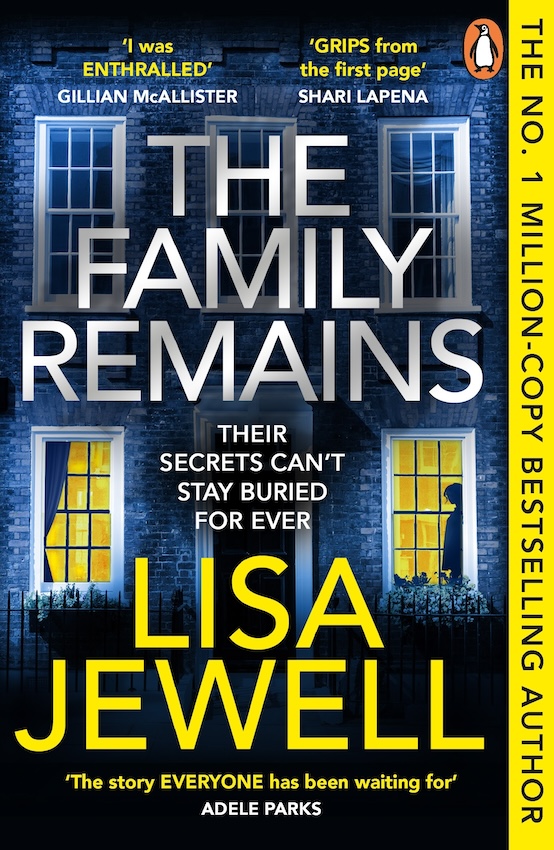
Book Review: The Family Remains by Lisa Jewell – a twisty, psychological thriller sequel that will have you hooked

The sequel, The Family Remains picks up the story of the younger generation, having been reunited in the first book and who are now trying to each build a future. This includes Libby Jones, the daughter Lucy had as a teenager, brought up by adoptive parents and who inherited the house in Chelsea. But the shadows of what went before still linger and there’s a sense that Henry and Lucy in particular are still looking over their shoulders.

When a bag of bones is found by mudlarkers on the riverbank, DI Samuel Owusu traces them back to the old Lamb residence and all the things that Henry and Lucy hoped would be forgotten about forever may now come to light. But Henry and then Lucy are on a quest to find Phin, Libby’s father, supposedly working in a safari park in Botswana, but who has high-tailed it, for some reason, to Chicago.

So while Henry and Lucy are hunting down Phin, DI Owusu is trying to piece together the life of Birdie Dunlop-Evers, a former member of a pop-group, reported missing in the 1990s. The story also works in the story of Rachel, a jewellery designer, who is told at the start of the book of the death of her estranged husband. We’re well aware of the particularly nasty type of guy Michael was – we met him in the earlier book when he was married to Lucy.

Golly, there’s a lot going on here, so never before was there a better reason to read the earlier book before the sequel. But somehow it all makes sense, and even if it’s a while since you read The Family Upstairs, you never feel completely bamboozled. Yes, you will have questions, loose ends and half-forgotten pieces of the overall puzzle. But Lisa Jewell will have you hooked, never the less, as I was.

I steamed through this novel in a couple of days, desperate to know if things would work out all right in the end. There’s always the sense that even though Henry and Lucy and even perhaps Phin, have been driven to do desperate and even quite bad things, they were very damaged children. We still feel for them, as well as Rachel, getting caught up in a relationship with a monster. It’s a twisty, original psychological thriller and as such a compelling read, but it’s very empathetic too.

And the characters are just so interesting. DI Owusu is a really nice guy, thoughtful, intelligent and sympathetic, which helps balance out the potential darkness and selfishness of Henry. Rachel’s story takes us into a character who has lived for the moment when it comes to relationships and suddenly in her thirties, feels it’s time to make a commitment. If only she hadn’t settled on Michael. But it’s Lucy I really enjoyed the most – she is so fragile on the one hand and yet has had to be strong and think on her feet for her children.

It is probably the characters and their unique situation that prompted so much demand from readers for the sequel that Lisa Jewell hadn’t planned to write. Which is probably why her books are so good, so moreish. Whenever I feel like a book to unwind with, she’s a top choice. If only I could make them last a day or two longer. This one’s a four-star read from me.

Book Review: When We Were Orphans by Kazuo Ishiguro – an unsolved mystery and a journey back to pre-war Shanghai

I’d had this book on my bookcase from a decade or two before, and thought I’d revisit it in audiobook form. But the writing was just so engaging, the narrative voice of the main character drawing me in, I got the paperback out after all, the better to absorb it all at my own pace.

When We Were Orphans begins with its main character, Christopher Banks, having recently moved to London after graduating from Cambridge, when he bumps into an old friend from school. Over the course of their conversation it emerges that Christopher was considered a bit of odd character as a boy, while the two think about what they want to do with their lives. And it seems that Christopher has always wanted to be a private investigator. We’re in the early 1930s, the Golden Age of the detective novel, which is what may have inspired him.

This may seem a little ridiculous, but Christopher is deadly earnest, and soon sets about fulfilling his ambition. But the big mystery that has dogged his life so far has always been the disappearance of his parents when Christopher was a young boy. The story flips back to his childhood in Shanghai, where his father had a job with a company that was involved with the trade of opium.

It is slightly surprising to me, looking back today, to think how as young boys we were allowed to come and go unsupervised to the extent we were. But this was, of course, all within the relative safety of the International Settlement. I for one was absolutely forbidden to enter the Chinese areas of the city, and as I know, Akira’s parents were no less strict on the matter. Out there, we were told, lay all manner of ghastly diseases, filth and evil men. The closest I had ever come to going out of the Settlement was once when a carriage carrying my mother and me took an unexpected route along that part of the Soochow creek bordering the Chapei district; I could see the huddled low rooftops across the canal, and had held my breath for as long as I could for fear the pestilence would come airborne across the narrow strip of water. No wonder then that my friend’s claim to have undertaken a number of secret forays into such areas made an impression on me.

Eventually, Christopher makes his way back to find his parents, which he is confident he can do, now that he’s become renown as a top detective. He does this regardless of the fact that China has been invaded by Japanese armed forces and nothing from his childhood is the same. Among the expats he meets there is Sarah Hemmings, a girl he’d found attractive at one time, now married to Sir Cecil, an aging diplomat who she is attempting to inspire into stopping the tide of war. Delusion among the expats seems to be catching.

Christopher ploughs on looking for his parents – surely they can’t really still in the house where they were taken all these years later? But he is convinced he will succeed, as is everyone else – he’s a famous detective after all. Yet he’s also something of an unreliable narrator – Ishiguro contrasts the workings of Christopher’s mind, his blindness to reality, with the chaos all around him. Is he a symbol of British interests in the East, of colonialism and the imagined superiority of the British Empire? There are a lot of ideas at play here.

When We Were Orphans was shortlisted for a Booker Prize although it hasn’t been a favourite with the critics.. I found the plot lagged a little towards the end, while the ending itself seemed a little rushed. But I did enjoy the world the author created and the characters, though obviously flawed, are still interesting and engaging enough to spend time with. Ishiguro sets up wonderful scenes, and creates settings you can really visualise. The writing is as it always is with Ishiguro, fabulous. I am glad I picked this up for a second time – another reason to hang on to those old books bought decades before, just in case. Even so, it’s probably only a three-and-a-half star read from me.

Book Review: Gabriel’s Moon by William Boyd – much more than your average spy novel

I’m always keen to read anything by William Boyd – his prose is crafted, his characters complex and there is always an interesting historical setting. And story-wise, you can never tell what’s going to happen next.

With Gabriel’s Moon we are in London, at least some of the time, in the early 1960s, and our complex protagonist this time is Gabriel Dax. He’s a travel writer at that time when travel writing was really popular, and at thirty, is already very successful.

The book opens with a prologue describing the house fire that killed his mother and when, as a six-year-old, Gabriel was lucky to escape with his life. Ever since, Gabriel has struggled to sleep – with nightmares of the fire plus troubling missing elements of his memory. He has sleeping pills, and not surprisingly he drinks a lot. A doctor recommends he see a therapist and these sessions lead him to investigate just what really happened that night.

Gabriel’s recent jaunt abroad has taken him to Léopoldville, and the newly independent Republic of the Congo. He takes an opportunity to interview the new prime minister, Patrice Lumumba, who wants to set the record straight. It seems his life is in danger, and there are names he wants recorded, should he be assassinated. This is way out of Gabriel’s usual sphere as a writer, but he does what he’s asked, making taped recordings of the interview.

But Gabriel’s work hasn’t always been just about travel. His brother Sefton, being something in the Foreign Office, has on occasion asked Gabriel to make deliveries for him to the Continent. When Faith Green, a secretive woman Gabriel has clocked reading his book on the plane home, contacts him with a commission of her own, his first instinct is to refuse. Faith works for MI6 and is something of a femme fatale. But the money’s good, and the trip to Spain tempting. Before you know it, Gabriel’s involved in more and more dangerous work for Faith and in spite of his niggling doubts, seems unable to refuse.

Gabriel’s an interesting character and not always likeable. You want to give him a good shake, tell him not to drink so much and get a grip on his life. There are sadly not many people he gets close enough to call friends. His girlfriend Lorraine hasn’t a clue about what is going on in his head, while he and his brother are somewhat distant having been brought up by different relatives after the death their mother. So there’s no one there to offer a reality check. How he handles the increasingly tricky situations he gets himself into sees a new Gabriel emerge.

Undercurrents of the political situation with the USSR, the Cuban Missile Crisis, as well as social politics of the time round the story out and the period really comes to life. There are glimpses of the ordinary, such as Gabriel’s ongoing battle with a savvy mouse in his flat; the pest-eradication advice from Tyrone, his streetwise locksmith. The book reminded me a little of A Bird in Winter by Louise Doughty – another really intelligent and nuanced spy novel with a main character on their own and battling for survival. This makes both books really engaging and gripping.

Then there are the settings. As well as Congo, there’s Warsaw and Cádiz, rural England and sixties London. If you’re after a satisfying, pacy but intelligent novel, Gabriel’s Moon might just do the trick. It’s a four-star read from me.