Book Review: Palace of the Drowned by Christine Mangan – a taut and atmospheric psychological drama

I’d heard so many good things about Christine Mangan’s books and now I probably want to read them all. Palace of the Drowned is set in 1966, and follows author Frances Croy (Frankie) who has had a difficult year. Once fêted for her work, her last book received a terrible review and, perhaps foolishly, she took it to heart. Fuelled by alcohol, Frankie behaved badly, and events spiralled out of control. In an effort to put it all behind her and have a good rest, she follows her best friend Jack’s advice and heads to Venice where Jack’s family own half a palazzo.

It’s late spring, Venice is cool but devoid of tourists, which is a blessing. But there are odd sounds in the palazzo – Frankie feels she is being watched, and the housekeeper is unfriendly to the point of hostility. As someone who has had a recent spell in ‘hospital’, Frankie’s easily unnerved. Venice is full of things that are hard to pin down – the watery light, the way it’s so easy to get lost in the labyrinthine alleyways, and Frankie not being a traveller by nature, becomes rattled, struggling to communicate.

Frankie is already fragile when a young woman, Gilly, accosts her, claiming to have met her before and then insists on meeting up for coffee and for drinks. Gilly is a huge fan of Frankie’s work and just won’t leave Frankie alone. She’s both annoying but also oddly charming. The story follows Frankie’s attempts to write again, her increasing unease, as well as Jack and her husband Leonard’s arrival. The couple are cautious around Frankie, walking on eggshells around her while Gilly gets more brazen.

Tension builds, coming to a head with a terrible weather event. The flood of 4 November caused a huge amount of damage to Venice and Christine Mangan uses this as a high point in the drama of the plot. There is so much water, not just in Venice, but also later in London where there’s not surprisingly a lot of rain. On the topic of liquids, the characters seem to drink a lot too, meals avoided, or have baths. Nothing seems solid.

The characters are brilliantly rendered. Harold, her friendly but pushy publisher, the pesky Gilly, and Frankie herself, who would probably have been fine if she hadn’t seen so much as an air raid warden during the war, or lost her parents suddenly to a pointless accident. People around her are both supportive, but also lose patience with her, much like I felt as a reader. You want so much to like Frankie, but she’s so much her own worst enemy – although sometimes it seems there’s a bit of competition for that honour. Who can she really trust? And people are so fickle towards creatives, aren’t they? Loving them one day, descrying them the next.

This is such a well-put-together novel, unsettling and intense. The audio-book version is excellently read by Emily Pennanant-Rea. Even the cover of Palace of the Drowned is evocative and perfect. There are, so far, two more novels by Christine Mangan – Tangerine and The Continental Affair – both now on my to-read list. The Palace of the Drowned is a four-and-a-half star read from me.

Book Review: The God of the Woods by Liz Moore – a stunning thriller about family secrets and lost children in the wilderness

I found myself unable to put down this mystery-thriller set at a summer camp in the Adirondacks during the 1970s. The God of the Woods begins when thirteen-year-old Barbara goes missing towards the end of camp. Barbara’s parents, fragile Alice and autocratic Peter, are part of the wealthy Van Laar dynasty who own the camp and pay the staff who run it. They thought camp would be a good idea for Barbara as she’s been showing concerning behaviour at school and dresses like a punk.

Fourteen years before, the Van Laar’s son Bear also went missing, thought murdered by a local man who seemed to have a strange obsession with the boy. His grief stricken parents idolised Bear, who was by all accounts a popular and cheerful boy, his death something Alice could never get over. Unfortunately the suspect was never tried in court as he died suddenly – the case closed, leaving questions unanswered.

When a search is organised to find Barbara, young state trooper Judyta Luptack is determined to do her darnedest not just at finding Barbara, but in also discovering what happened to Bear, whose body has never been recovered. She suspects the Van Laars are hiding something. There’s also the recent escape of a serial killer from prison, who had been in the area when Bear disappeared. Could he have taken Barbara too?

The story dips back and forth through time, to when Alice first met Peter Van Laar, and her struggles to be seen as a person worthy of more than producing a Van Laar heir. The story is told from various perspectives, including Louise, one of the young staff running the camp who is hiding a secret. There’s also Tracy, the awkward girl who became Barabara’s friend, sent to camp following her parents’ divorce.

The story, weaving its way through these characters’ lives, and the suddenly changing timeline takes a bit of getting used to. I found myself having to really concentrate to keep up. But the sudden revelations, the cliff-hanger chapter endings and the issues each character carries with them, to say nothing of fears for the young Van Laars, keeps you on the edge of your seat as you read.

Class, power and money seem to be at the centre of things with the Van Laars and their wealthy friends, their alcohol-fuelled parties and casual disregard for the locals, their determination to keep their good name – all of which makes them unlikable. Although you can’t but help feel sorry for Alice. Other families have problems too – Judyta’s conservative Polish family are reluctant to let her live away from home, which means a long commute every day. Louise is worried about her alcoholic mother and her inability to properly care for her twelve year old brother. There’s also TJ, who has taken on the burden of running the camp, trying to fill her highly-regarded father’s shoes.

The God of the Woods is very much a literary thriller – it is so well put together, its characters all so interesting and complex, the natural wilderness setting, so peaceful one minute, full of danger the next, an evocative backdrop. The 1970s era gives us a glimpse of changing attitudes, but there’s still the paternalist misogyny lingering in the police force and wider society. It all gives you a lot to think about as you whip through the pages to find out what has really happened. It’s a brilliant mystery and a four and a half-star read from me.

Book Review: The Party by Tessa Hadley – coming of age in postwar Britain

A new Tessa Hadley is always worth picking up, and this one is a novella, the perfect choice for when life’s a bit busy. The Party is set in the decade or so after World War II in Bristol, with two sisters who are desperate to enjoy their youth and experience life. It’s told from the perspective of seventeen-year-old Evelyn, in her first year studying French at university, where her older sister, Moira, studies art.

Moira knows some interesting people, particularly Bohemian Vincent who gets the story started by hosting a party at a dodgy pub down on the docks. It’s a rainy night and Evelyn changes in the ladies’ toilets into figure-hugging black, stashing away the more demure clothes she’d left home in. Moira isn’t expecting her sister to turn up, but introduces her to the people at her table, among them two older men who are appear sophisticated and well-off – handsome but offhand Paul, creepy and not handsome at all Sinden.

I love the way Hadley conjures up the discomfort of the scene – the miserable rain, the impractical shoes, the need to pee, the grotty pub. The things a young girl puts herself through for a bit of excitement. This party is the first of three chapters. The second takes us to the girls’ home life with their younger brother and parents – a father who disappears for long intervals and a tensely respectable mother. Here the girls have to pretend they were out with nice friends the night before, with no ‘drink’ taken.

The third chapter focuses on the other ‘party’ which the girls are pressured into attending at the mansion-like home of Paul’s family. Hadley highlights the naïveté of the girls, their powerless, and the predatory behaviour of Sinden, the older man. As you read, you see all the alarm bells that would have the girls’ mother up in arms. Also, the lack of happiness at the house – a sick brother, absent parents and the need for distraction.

While the storyline might seem dark and worrying, there’s such sharp wit in the writing and even a sense of adventure, particularly in the way it captures the exuberance of youth. The settings are varied and contrasting and seen through Evelyn’s eyes you can imagine being seventeen when everything can be a bit of a surprise, but you take it all at face value anyway, even if that means putting up with things you shouldn’t need to.

The Party is such a brilliant read, reminding me a little of Rose Tremain’s novel Absolutely and Forever. It’s only 115 pages long but packs a lot in. I’m beginning to be quite a fan of the novella. On the back cover, Kate Atkinson declares that Tessa Hadley is her favourite author, and well, I don’t blame her – Hadley is hard to beat. The Party is a five-star read from me.

Book Review: The Radio Hour by Victoria Purman – a feel-good story taking you behind the scenes of a 1950s radio drama

I was instantly charmed by The Radio Hour and soon drawn into the world of its main character, Martha Berry. About to turn 50, Martha’s been working at ABC, the big, state-owned Australian broadcasting corporation, for decades and knows all the ins and outs of radio production.

Shunted from department to department, Martha’s always been there when another secretary has left to get married – there are no married women at ABC. She’s sensible, pragmatic and knowledgeable – everything her new boss isn’t. That’s Quentin Quinn, fresh-faced and twenty-something, on his first ever radio serial, As the Sun Sets.

Radio dramas of this kind were popular entertainment for those at home – often a break in the housewife’s busy day, the stories and characters adored equally. But waiting in the wings is a threat to this happy status quo – television. Quinn is soon out of his depth. He’d much rather be writing an action show with cops and robbers, not a soap following the lives of a butcher, his wife and daughter and the people who step into the shop.

Quinn starts the day late, spends long lunches out drinking and leaves early, while the first airing of As the Sun Sets looms closer and there’s still no script. What’s Martha supposed to do? A fond reader of the classics, Martha knows a thing or two about storylines and characters, to say nothing of the things that women at home worry about. She’s well liked by her mother’s friends and joins their conversations on the verandah when she returns from work. And then there’s April, May and June, the three young secretaries she befriends at ABC. She lends an ear to their worries and they welcome her advice.

Martha’s led a quiet life at home with her widowed mother and has never pushed herself forward for anything. But once’s she’s helped select the cast and booked the recording studio, she can’t let the show down. Before you know it Martha is writing for As the Sun Sets, pretending to an increasingly drunk-on-the-job Quinn that the scripts are all his work – she’s just typing them up.

On the surface The Radio Hour is a light, feel-good read, and it captures so well the 1950s era and values. But the casual misogyny dished out on a daily basis to the female staff, the sexist management structure and the predatory behaviour of some of the men towards the young women in their midst will make your blood boil. How Martha and her female colleagues fight back gives the story something to cheer about, but you know it’s going to be a long haul.

Victoria Purman has obviously done some homework and references real people as background figures, such as, Gwen Meredith, a well-known writer of radio drama and role model for Martha, and the ‘had enough’ character, Joyce Wiggins is inspired by real-life producer Joyce Belfrage. The author even worked at ABC in her early career as a journalist, though quite some time after the events of her novel. This all shines through in a story that brims with authenticity and interesting radio production detail.

I enjoyed The Radio Hour immensely. I loved Martha and her friends and will certainly look out for more by this author – she’s got quite a backlist of historical fiction. I received a complimentary copy of this book. Opinions expressed in this review are completely my own. The Radio Hour is a four-star read from me.

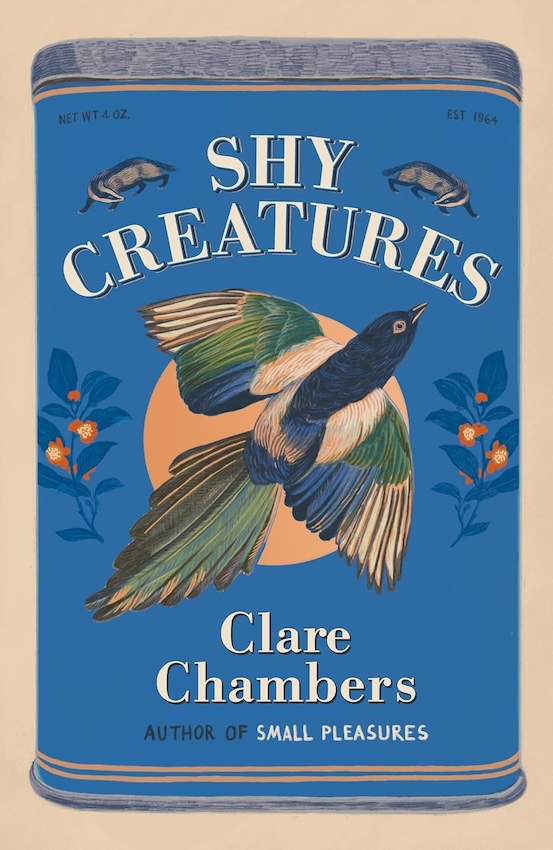
Book Review: Shy Creatures by Clare Chambers – a remarkable story, engrossing and heart-warming

I bought Shy Creatures as soon as it came out as an ebook, and unlike many previously purchased novels, it didn’t sit on my bedside table languishing while I was distracted by other books passing by. It beckoned to me and I was soon engrossed – and gosh, what a satisfying read it is.

Shy Creatures is set for the most part in 1964. Helen Hansford is an art therapist at Westbury Park, a facility for mental health patients. She has been having an affair with Gil Rudden, one of the doctors, which is complicated by his wife being a distant cousin of her mother’s. Gil has promised Helen that as soon as his children are old enough to leave home, he will divorce his wife and marry her. Helen accepts the status quo and muddles on with a less than satisfactory home life, a nagging mother, and a job where she doesn’t feel she makes a lot of difference.

For all that, Helen is passionate about her work and the way Westbury Park is run. The gates are always open, and while some therapy involves dulling the patients’s minds with drugs, doctors like Gil have more modern ideas, which is one of the reasons Helen fell for him. An incident at a nearby house leads Helen and Gil to discover a man who has been shut up indoors for at least ten years along with his only relative, a frail and elderly aunt.

William Tapping, now in his late thirties, has been found in a bad way, in a state of undress, a beard down to his stomach and apparently mute. The house is in a state of disrepair, filthy windows letting in no light, the garden a jungle. When social services intervene, William and his aunt are whisked away to Westbury Park. Here Aunt Louisa implores Helen to find a container hidden in the flour bin that no one else should see, but while she’s at the house, Helen also discovers some drawings in William’s room that display the work of a talented artist.

At the discovery of this cache, Helen’s pulse quickened and she felt a tingle of excitement. No one who had passed through the art therapy room during her residency had shown anything approaching this level of talent. Of all the professionals at Westbury Park, she was uniquely placed to help this hidden man emerge from his place of silence. Even Gil did not have her advantage.

The story follows Helen’s efforts to make a connection with William through art as well as her tracking down some old acquaintances – people he knew at school – in an attempt to find out more about him. We have the ups and downs of Helen’s relationships with Gil, as well as her family, particularly with a teenage niece who has a kind of breakdown. Woven into all of this is William’s story, going back steadily in time until we get to the day when his life changed dramatically, putting in place the kind of house arrest his family imposed on him.

It’s a fascinating story with Clare Chambers’s usual wit and brilliantly evoked characterisation – one of the things that puts her books on my must-read list. And it’s a sad story too, as we consider William’s wasted years. The author recreates the era of the sixties – the music and clothes as well as social attitudes to women, to the mentally frail. The limited choices for girls once they leave school – particularly if they want to please their mothers. We also have the war years, and the privations of rationing, the nightly fear of air raids.

If there’s a theme that often appears in books by this Clare Chambers, it is about finding a place in society when you’re not a natural fit. Many of her characters are on the quirky side and with William, we have someone who quite possibly never will find a suitable niche in the world – particularly a world like Britain in 1964. This, plus Helen’s relationship woes pulls you through the story, along with the eventual revelation of a terrible secret. It’s another brilliant read from Clare Chambers – I can’t recommend it enough – a five-star read from me.

Book Review: Rules of Civility by Amor Towles – a story of love, friendship and making the right connections in 1930s New York

If I had a list of authors who can make a laundry list sound interesting, Amor Towles would surely be near the top of it. (If anyone has already curated a list like that, I’d love to see it – just saying.) Rules of Civility is Towles’s first novel and the writing is just as good as the later books that have made his name: A Gentleman in Moscow and The Lincoln Highway. There’s the same nuanced prose, the characters that seem to breathe on the page, the originality of the storyline.

In this novel we’re in New York City, mostly over a year that begins on New Year’s Eve 1937. Twenty-somethings Katherine Kontent and her roommate, Eve Ross, are out to celebrate, finding themselves in a lacklustre nightclub, where complicated jazz solos make it kind of interesting. Here they stumble upon Tinker Grey, a slightly older, impeccably dressed and very handsome young man.

The three strike up a friendship that pulls them all in different directions. Both girls are drawn to Tinker, but he’s just so enigmatic, it’s hard to tell if either can win his heart. In the meantime they just hang out together, enjoying the vibe they create as a small group of friends. An accident pushes a guilt-ridden Tinker towards Eve, and Katherine shrugs off her disappointment and gets on with life.

It is Katherine’s voice who narrates the story and we follow her progress from a typing pool, to a publishing house and then the competitive world of a society magazine. She’s sharp, witty and hard working, but then she needs to be – she’s rubbing shoulders with an Ivy League-educated elite, while she herself is from fairly humble beginnings. Everything she has she’s had to earn herself. In the background Tinker and Eve waft in and out of her life, while other relationships come and go.

The book is peopled with lively, colourful New Yorkers – the drinking buddies Katherine makes through the girls she works with; well-heeled and influential friends and acquaintances of Tinker’s; the raw, working class guys who hang out with Tinker’s artist brother. Katherine has a gift for fitting in and adding to whichever group she meets and in this way is the perfect narrator.

In front of the boardinghouse Tinker was standing beside a Mercedes coupé as silver as mercury. If all the girls at Mrs. Martingale’s saved a year’s pay, we couldn’t have afforded one.
Fran Pacelli, the five-foot-nine City College dropout from North Jersey who lived down the hall, whistled like a hard hat appreciating the hem of a skirt. Eve and I went down the steps.
Tinker was obviously in a good mood. He gave Eve a kiss on the cheek and a You look terrific. When he turned to me, he smiled and gave my hand a squeeze. He didn’t offer me the kiss or the compliment, but Eve was watching and she could tell that she was the one who’d been short-changed.

A lot happens in just one year, and you can’t help thinking that for many in 1938, times were tough. But not among the glittering social set of New York. The story builds to some surprising revelations, particularly about Tinker but also about others who pass through Katherine’s orbit, the main action of the story bookended by her visit to a photographic exhibition decades later and a kind of catch-up with what has happened in the meantime.

It all makes for a satisfying read: the brilliantly rendered view of 1930s New York, the story of a woman determined to make her own way, the glorious writing. Rules of Civility is just as good as the other books by Amor Towles, and I look forward to his collection of short stories, Table for Two, as well as whatever else he’s got in the pipeline. I know they’ll all be five-star reads, just like this one.

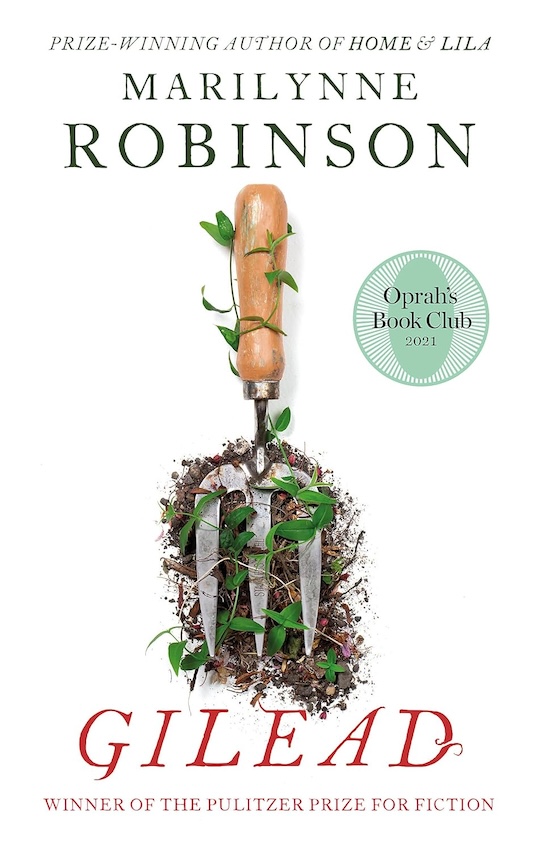
Book Review: Gilead by Marilynne Robinson – a love letter from a father to his son and a wonderful contemplation on life itself

In Gilead, John Ames is writing a memoir for his son, a small boy of seven, intended for him to read later, long after his father has gone. Ames, well into his seventies, has a weak heart and fears leaving his boy to grow up without a father. So he wants to write it all down – from his own childhood and his life as the son and grandson of preachers to what’s going on around him in the present. We get bits of history – the Civil War and the Underground Railroad, World War I, the Spanish Flu, and the Great Depression, and how all these events impacted on ordinary folk in small towns like Gilead.

While he’s telling his story, Ames is irritated by the return of Jack, the black sheep son of his good friend Rev. Robert Boughton. Unlike Ames, whose first wife died in childbirth along with their daughter, Boughton has a large family, most of whom live some distance away. Jack, in spite of his chequered history, seems a favourite of his father’s, while Ames is constantly censuring himself for harbouring an ongoing dislike for the younger man, which of course isn’t very Christian of him.

Ideas about what it is to lead a good life in the way God intends us to blend with stories about the characters, their pasts and particularly their problems. Jack’s story is heart-rending, and there’s more about him in the two other Gilead novels: Home and Jack, which I will get to, I’m sure. But what is particularly moving in this book is the tone of the writing, the voice of John Ames. You get such immense love in the way Ames is writing to his son coupled with the sadness that he won’t see him grow up. But with that is also the joy of someone who notices the wonder in simple things.

There’s a shimmer on a child’s hair, in the sunlight. There are rainbow colours in it, tiny, soft beams of just the same colours you can see in the dew sometimes. They’re in the petals of flowers, and they’re on a child’s skin. Your hair is straight and dark, and your skin is very fair. I suppose you’re not prettier than most children. You’re just a nice-looking boy, a bit slight, well scrubbed and well mannered. All that is fine, but it’s your existence I love you for, mainly. Existence seems to me now the most remarkable thing that could ever be imagined. I’m about to put on imperishability. In an instant, in the twinkling of an eye.
The twinkling of an eye. That is the most wonderful expression. I’ve thought from time to time it was the best thing in life, that little incandescence you see in people when the charm of a thing strikes them, or the humor of it. ‘The light of the eyes rejoiceth the heart.’ That’s a fact.

I find myself getting teary-eyed just thinking about Gilead, and the character of John Ames, the heart-felt thoughts of a humble man. You do get quite a bit of religious contemplation, with Biblical references and ideas for sermons, which might not suit every reader. But it’s more wise than preachy and fills out the character of our storyteller. I read this as an audiobook, superbly narrated by Tim Jerome – it was as if John Ames was talking to me in the same room – but I’m glad to have a physical copy to flip through too. Gilead is a beautiful book, which won a number of awards, including a Pulitzer Prize – a modern classic and a five-star read from me.

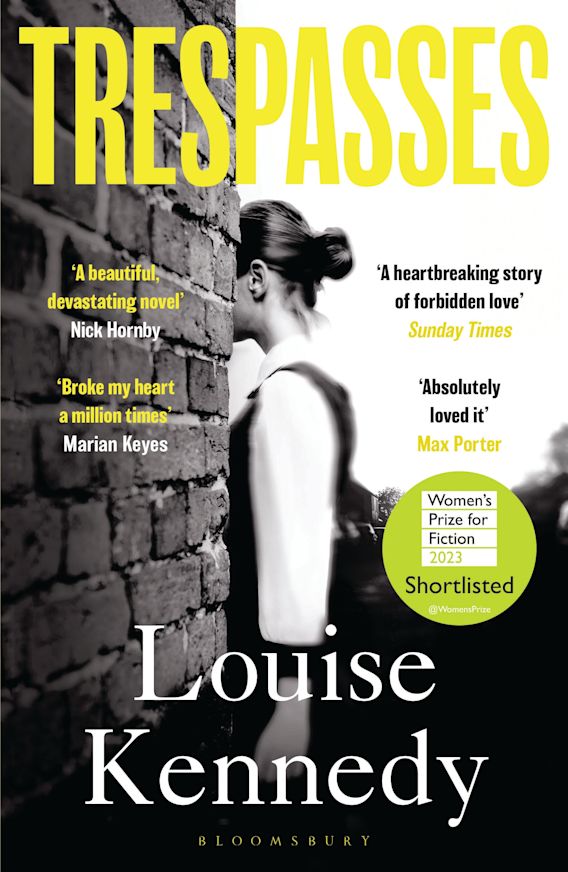
Book Review: Trespasses by Louise Kennedy – a novel about love and war, and crossing the line

I had previously picked Trespasses up a couple of times but moved onto something else. I knew I wanted to read it, but I kept thinking it could never be as good as Milkman by Anna Burns, which is similarly set in Northern Ireland. Then I downloaded it as an audiobook and am so glad I persevered.

Trespasses is set in a town on the outskirts of Belfast in 1975, so we’re well into the time of the Troubles, with sectarian violence a common phenomenon. Cushla is a young school teacher at a Catholic school who moonlights at her family’s pub. It is here that she meets Michael Agnew, an older, married man, also a barrister as well as being a Protestant. So many red flags.

The two begin an affair and Michael introduces Cushla to some of his friends who are learning to speak “Irish” and Cushla being fairly fluent agrees to help teach them. All the while she is self-conscious among these people – that she stands out for her youth, for being a Catholic. But Cushla keeps Michael a secret from her family, her alcoholic mother, her brother who runs the pub. It would only infuriate Eamonn and bring disrepute on them all. She would most certainly lose her teaching position.

Cushla is the story’s narrator, and her voice has that resigned self-awareness of her predicament, not just the affair, but of the difficulties of being hopeful in a country torn apart by violence. Where at any moment, British security forces might descend on a social gathering looking for Republican insurgents, or stop cars at a roadblock and cause their owners varying kinds of inconvenience. To say nothing of car bombs and random shootings and other acts of violence.

Another thread to the story is Cushla’s world as a teacher and her looking out for young Davy McGeown, one of her pupils. His home life is a constant struggle, with a parent from each side, an out of work father and neighbours who make their life hell. Through it all, Davy is bright and cheery and Cushla is drawn to help the McGeowns, in spite of the disapproval of others.

Before lessons they did The News. Cushla hated doing The News, but the headmaster insisted. He said it encouraged the children to be aware of the world around them. Cushla thought they already knew too much about the world around them. Davy stood up, always the first to volunteer. His red jumper was dark with damp at the shoulders and neckline.
There was as bomb in Belfast, he said.
He says that every day, said Jonathan, who sat beside him.
Well, today he’s right. Thank you Davy, said Cushla.
Jonathan got to his feet. It wasn’t in Belfast, he said. A booby-trap bomb that was intended for a British Army foot patrol exploded prematurely, killing two boys near the border. They died instantly.
Booby trap. Incendiary device. Gelignite. Nitroglycerine. Petrol bomb. Rubber bullets. Saracen. Internment. The Special Powers Act. Vanguard. The vocabulary of a seven-year-old child now.

The two story threads will eventually become entangled and the reader has a sense of impending doom. Well, there’s always impending doom in any novel set during the Troubles, isn’t there? It’s a bit like Chekov’s gun. And Cushla seems to take such a lot of risks. You can’t help but admire her for her determination to do what’s right by people. Michael too, with his sympathies for young men pulled in by the security forces on flimsy evidence, his attempts to help them. They are both crossing the line and some sort of reckoning seems inevitable.

This is an engrossing read with vivid and memorable characters. The banter between Cushla and her alcoholic and sentimental mother, her brother who’s trying to save the pub, the old codgers who never miss a session there, the kids at the school. The dialogue is terrific, and really comes alive as narrated by Brid Brennan who reads Davy particularly well. I’m glad I rediscovered Trespasses – the book was shortlisted for a bunch of awards, including The Women’s Prize for Fiction, and it’s easy to see why. It’s a four-star read from me..

Book Review: The Stargazers by Harriet Evans – madness and music plus a crumbling country mansion

The Stargazers is one of those family sagas spanning the generations where dark events of the past threaten to derail the younger generation’s future. At the centre of this story is Fane Hall, the grand family mansion that was once a glittering venue for parties and weekend guests.

But since the loss of Iris’s father in the Somme, the new Lord Ashley, Iris’s Uncle Clive, will be taking over Fane Hall and she and her mother will be forced to leave. Iris can never forget her belief that Fane belongs to her – if she had been a boy there would be no doubt – and for decades to follow, it is Iris’s searing ambition, to reclaim Fane.

The story flips forward to 1969 and we meet a young couple – Sarah a gifted cellist and her writer husband Daniel – who are delighted to have bought a house in The Row in London’s Hampstead. The house needs a lot of work which is why it’s so cheap, but the two are very much in love and soon settle in and make friends with the neighbours. Among them the beautiful Lara, who had lived in the house from childhood when it was bubbling with family life. Though she becomes friendly with Sarah she finds entering the house disturbing. There’s talk of her tragic family – the loss of a brother and her beloved parents.

Sarah’s own upbringing was the opposite. Iris was a cruel and remote parent and the story flips back to reveal a childhood of deprivation and abuse. She and her sister, Vic, now rarely speak, have fallen out years ago, but at one point Vic was Sarah’s saviour and the sisters were everything to each other. We go back to their time at school, to Sarah’s flowering talent as a cellist, to their time at Fane and meeting Uncle Clive, who is crumbling just as much as the house is.

Iris watches them all turn slowly towards her. What a disappointment she is, for if she had been born male, everything would have been all right. She would have saved the family, saved Fane Hall from Uncle Clive. This is not how it should have been. Because it is her house.

There are all these threads to untangle, questions to answer. Who is the mysterious Bird Boy, and what caused the rift between the sisters? What happened to the house at Fane and what is Iris’s hand in it all? But the story also captures the difficulties of being a parent – Sarah struggles with her moody, headstrong daughter and with being Daniel’s wife. And how do you raise a child with love, when your own childhood was so deprived? Daniel is charming and popular, bringing people into the house for all-day Sunday lunch, while Sarah would dearly love some peace and quiet, to be herself. Will she ever play the cello again?

The story slowly fills in the blanks, but builds in plenty of suspense as well. There’s danger, but there are surprises too making for a very engaging story. I thought the plot was great, the characters interesting, but the writing was a little sloppy at times, as if it needed a bit more crafting or an editorial eye. Even so, I was happy to while away a few hours immersed in Sarah’s story. I have a read a few novels by Harriet Evans and will no doubt pick her up again for a relaxing read. The Stargazers gets three and a half stars from me.

Book Review: The Lincoln Highway by Amor Towles – the rocky road to adulthood in 1950s America

The latest novel from Amor Towles, author of A Gentleman in Moscow which I simply adored, is quite a different kind of book. Perhaps Towles needed a change from setting a novel almost entirely within the confines of a hotel – albeit a fairly grand one.

This time he’s taken us on a kind of road trip. And instead of a man of experience and taste as our main character, we’ve got several friends around eighteen years old, young men who met at Salina, a correctional facility for youth. It’s 1954 America – a conservative period full of opportunity. But these are lost boys, lacking parental love and guidance, having to overcome a misstep on their path to adulthood if they have a chance of making a life for themselves. We see them as they set out to do this in different and at times conflicting ways.

First up is Emmett, whose father died while he was away, leaving a farm in hock to the bank, awaiting a mortgagee sale. His younger brother, Billy, only eight, has been cared for by the neighbours, a farmer and his kindly, maternal daughter Sally. She has a soft spot for Emmett, but can only show this by cleaning the boys’ house and bringing them lovingly cooked meals. Otherwise, she’s usually giving Emmett a piece of her mind or stony silences.

After Emmett has been returned to his family home by the warden, Duchess and Woolly, two escapees from Salina, surprise Emmett, having stowed away in the trunk of the warden’s car. Duchess has been worried about sensitive, childlike Woolly, who has been struggling. So Duchess, an impulsive charmer, has taken matters into his own hands, seen an opportunity to save his friend, and get his hands on enough money to set them all up in life.

Sensible Emmett is appalled, having promised to take Billy to California in search of their mother and build a new life with the small stash of savings his father has left him. So many side-trips, diversions and interruptions hamper Emmett’s best of intentions and the four of them end up heading for New York one way or another.

Billy’s one consolation all the time he has been missing his mother, his brother’s time in Salina, his father’s passing and the loss of their home, has been a compendium of epic journeys by the heroes of literature – Achilles, Jason and Theseus for example – one for every letter of the alphabet. That and a handful of postcards written by the boys’ mother showing her progress west. And the best way to get there according to Billy is the Lincoln Highway.

I learned a lot of interesting things in this book. How to ride the empty cargo wagons on a freight train while avoiding being clocked by the guards. A trick with a cork and an empty wine bottle. How if you plan to stowaway in the trunk of a car, put teaspoon in your pocket so you can pop the lid when you want to get out.

The funny thing about a picture, thought Woolly, the funny thing about a picture is that while it knows everything that’s happened up until the moment it’s been taken, it knows absotively nothing about what will happen next. And yet, once the picture has been framed and hung on a wall, what you see when you look at it closely are all the things that were about to happen. All the un-things. The things that were unanticipated. And unintended. And unreversible.

Echoes of Billy’s compendium appear among the characters – not only the journey the boys take to New York, but in the helpful cargo train rider, Ulysses, who rescues Billy from a thief posing as a preacher. As you can see the novel has a picaresque quality about it, and that reminds you of stories like Don Quixote and Candide with the varied people the boys meet, the kind and the duplicitous, and the continued reversals of fortune.

And then you have the allusions to the tragic heroes like Macbeth who have a fatal flaw that can so easily lead them into disaster. Each of the boys has his own character fault that led him astray and on to Salina, and which they each must master if they want to avoid disaster. So the characters are affected not only by external events of fate or coincidence, but by those of their own making, their desires and needs.

There is so much going on in The Lincoln Highway I am sure I need to read it again to get the most of it. But again, Towles is such a delightful writer that every sentence is a joy. Situations that have the reader sighing an “Oh, no!” are nicely balanced with humorous ones and the story is paced and developed perfectly to its conclusion. I possibly didn’t like it quite as much as A Gentleman in Moscow, but it’s still a four and a half read from me, and I can’t wait to see what Towles comes up with next.