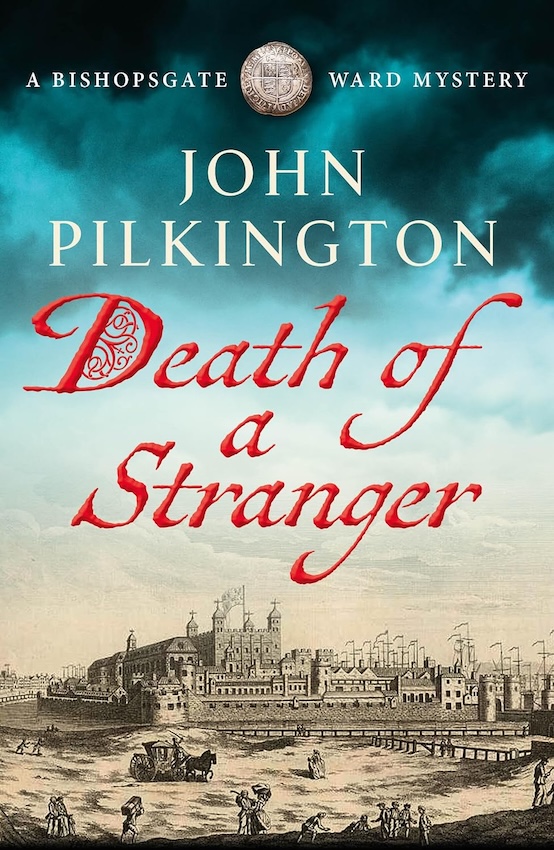
Book Review: Death of a Stranger by John Pilkington – an entertaining historical mystery and the start of a promising new series

John Pilkington is an old hand when it comes to historical mysteries, with a number of series under his belt, among them the Thomas the Falconer series. Death of a Stranger takes us back to Elizabethan England in the first book featuring Matthew Cutler, a constable in the parish of Spitalfields. It’s 1594, when the murder of an Italian perfumer causes a need for answers, as well as anxiety among the other “strangers” or immigrants of the parish.

When a further threat against a French button maker occurs, the obvious conclusion is that someone is targeting the local “strangers”, either for being possible Papists or other reasons of their own. Matthew is fed assorted leads, a stonemason with a bitter nature since the loss of his daughter to the plague; a former acting friend of Matthew’s who had had a dispute with the perfumer. They’re all dead ends, but rather than dropping the matter as his employer, Alderman Skinner requests, Matthew determines to find justice for the dead man. Could someone be planting false clues?

What Matthew doesn’t yet know is how far his search for the truth will take him into the world of the movers and shakers of Elizabethan society, the perfumer having made house calls to favoured customers, some of them bored wives of powerful men. So there’s a lot to set the story going in interesting directions. Matthew hits wall after wall before he can convince his superiors that the case is worth pursuing.

As an investigator, Matthew is an interesting character. To begin with he’s educated, having fallen out with his magistrate father, and dropped out of his Cambridge studies after a year to become an actor. He lost his wife to the plague not long ago, and has two daughters in his care, his wife’s aunt living with them as housekeeper. He has come to the role of constable at the request of his gunmaker father-in-law.

As the story progresses, Matthew’s education and acting talent come in handy for questioning people of high public standing, an idea brought to him by Margaret Fisher, a comfortably off widow, friend and potential love interest. At first Matthew’s not convinced it’s a good idea – he’s used to being able to gain confessions from miscreants with the threat of the law and its grim punishments, but it’s a different story with the upper classes. I can imagine there will be plenty of potential for Matthew to don the clothes of Margaret’s late husband and the role of Sir Amos Gallett again in future books.

John Pilkington obviously knows his Elizabethan era well, for while Death of a Stranger is an entertaining story on its own, the period details make the story come alive. It was interesting to see a little of how humbler folk lived – so many historical novels concentrate on those at court – but I liked reading about the work of the gunsmith, the night watchman or the people at the local tavern, which doubles as a venue for the inquest.

Death of a Stranger is an enjoyable historical mystery, with John Pilkington writing in a style that sounds Elizabethan enough to add colour without being difficult for the modern reader. And Matthew Cutler is an engaging enough character for me to want to find out what he does next. I’ll certainly be on the look-out for the next book in the series. This first instalment is a four star read from me.

I read Death of a Stranger courtesy of Netgalley and Boldwood Books. The book is due for release on 14 November.
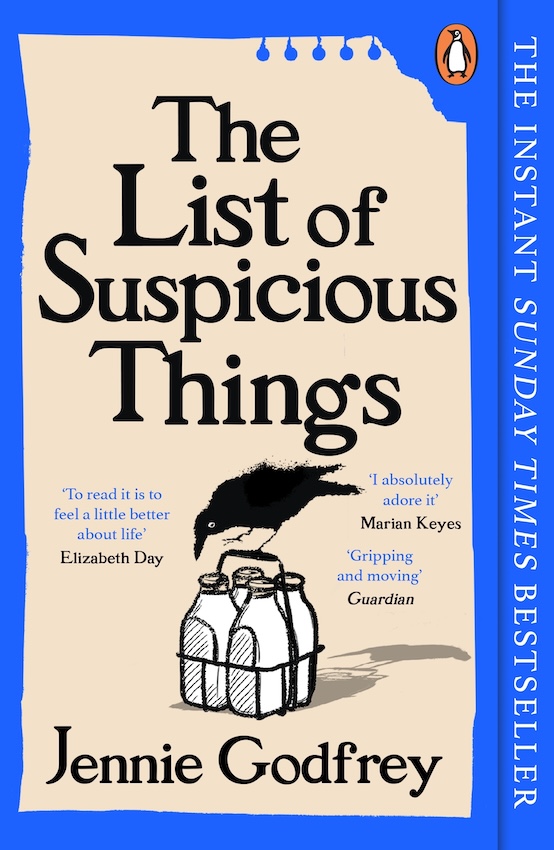
Book Review: The List of Suspicious Things by Jennie Godfrey – a story about friendship, growing up and a small town’s dark secrets

The List of Suspicious Things is a debut novel which takes you back to 1979. Thatcher has just been elected PM and the Yorkshire Ripper is at large, killing young women, while the police have few clues to his identity. In Miv’s Yorkshire town the mills have closed down, so things are already tough, and likely to get tougher. At home, Miv’s mother never speaks, Auntie Jean delivers food to the table and terse comments, while her dad seems a bit lost.

When the family thinks a move down south might be a good idea, Miv is desperate. At twelve, she’s bright but a bit socially gauche, partly due to her home life, so her friendship with Sharon is too precious to lose. She’ll do anything to save it so decides to investigate and catch the Yorkshire Ripper. She buys a notebook and makes lists, and with Sharon’s help, begins to look for suspicious characters close to home.

As names are added to the list, the reader is introduced to the people of the town, beginning with Mr Bashir who runs the corner shop. He’s one of the nicest adults Miv knows but he has dark eyes and a moustache, so makes the list. There’s a truck driver from her father’s work, people she knows from church and a teacher among others. Other people in the community include Helen at the library – because where else do you go for information in 1979?

Of course, the girls don’t catch the Ripper, but their investigations uncover some of the darker elements going on in the town – the racism, the misogyny, the prejudice against those who are a bit different. Miv learns one or two secrets that are a bit close to home, and finds herself caught up in some of the fallout. She’s a girl who is left too much to her own devices, there’s just too much going on at home for consistent parenting. But then in 1979, kids were often left to find their own entertainment and the town is their playground.

Through Miv you also see the struggles of the adults in the story. Sometimes the narrative shifts to Austin, Miv’s dad; Helen; or Mr Bashir, who each have personal sadness and secrets. The setting – the late ’70s is well realised. Mr Bashir is always singing along to his favourite Elton John songs, jeans go from bellbottoms to stovepipes and Sharon buys a glittery lipgloss to try. And it’s also very Yorkshire, though not posh Yorkshire – the kids go ‘laiking about’ and at least one character’s house has an outdoor loo.

While overall I enjoyed the book, I did feel at times that it was rather overloaded with issues. So many dark things happen with a lot to fall on Miv’s small shoulders. Still, The List of Suspicious Things is a quirky and interesting novel, easy to get lost in. I was reminded of Joanna Cannon’s The Trouble with Goats and Sheep – another novel about two young girls investigating – in this case a neighbour’s disappearance – also set in the ’70s, and which is well worth checking out. The List of Suspicious Things is a three-star read from me.

Book Review: Hemlock Bay by Martin Edwards – a cosy mystery with plenty of Golden Age panache

I was in the mood for a cosy mystery and was intrigued by this new book by Martin Edwards, the fifth in a series about the investigations of Rachel Savernake, a young woman of private means with an interest in murder. Edwards has immaculate credentials, being something of an expert in Golden Age murder mysteries. He’s the President of the Detection Club, a group formed in 1930 by crime writers such as Agatha Christie and Dorothy L Sayers and where Knox Commandments are sacrosanct.

These are rules about what a crime novel must and mustn’t do – things like the murderer must appear early on in the story, the detective must declare any clues they discover as they discover them and also must not be the killer. Among others. Martin Edwards has also been awarded the Diamond Dagger for outstanding contribution to crime fiction, so I felt this book was definitely worth a shot.

As Hemlock Bay begins, we are soon reading the diary of Basil Palmer who is planning a murder in the North of England seaside resort of the title. He wants to dispose of the man responsible for his wife’s death – someone he has never met. Pushing him off a cliff seems a good idea. Around the same time, our amateur sleuth, Rachel, has just bought a painting, also of Hemlock Bay, by well-known Surrealist painter Virginia Penrhos, which shows, if you look carefully enough, someone lying dead at the bottom of a cliff.

Rachel lives in a large London house with her chauffeur Trueman, his wife Hetty, and Trueman’s sister Martha. Hetty cooks and Martha is a kind of companion-maid, but they all get on well, as equals almost – a kind of family of amateur sleuths. There’s some history here that you no doubt get more of in the earlier books, which I have yet to read. While this scenario does arouse the reader’s curiosity, it was perfectly fine to read Hemlock Bay as a standalone novel.

When London crime reporter Jacob Flint interviews a clairvoyant claiming to have had a vision of someone being pushed from a cliff at Hemlock Bay, he pays a call on Rachel. What he reveals sets them all off together for a summer stay at the seaside resort with the aim of preventing the murder. Flint has had some previous lucky breaks following Rachel’s nous for crime – also in the previous books – and this seems set to happen again here.

The story is peppered with many interesting characters – among them Sir Harold Jackson, who with wife Sadie, turned Hemlock Bay into a luxury resort; Virginia Penrhos, who is staying there in a lighthouse with her moody lover, Fion, and Louis Carson, schemer an all-round dodgy character and his charming wife Pearl. The perspective flips around among our sleuths and Basil’s diary, with a lot of time spent with Flint, who is energetic and determined, and also a bit in love with Rachel.

It all comes together with a twisty plot and a barrel of surprises at the end, as Rachel reveals who did what and why – a scene rather like many a Golden Age mystery, with all the suspects and witnesses gathered together, listening with baited breath. Martin Edwards has set the story up with clues peppered throughout for the careful reader, and these are listed in the Cluefinder at the back of the book – a popular trope from fifty years ago.

The result is a pleasurable read, a clever cosy mystery, with engaging characters, plenty of warmth and humour and smart writing. Everything you could want with a relaxing crime story. In the background is enough period detail – talks of the Slump (it’s 1930, so we know hard times are a coming), fashionable pastimes for the wealthy (including naturism) – to add enough colour without slowing down the plot. Hemlock Bay is a treat – a four-star read from me.

Book Review: Murder Before Evensong by Rev. Richard Coles – an ecclesiastical cosy that takes you back to the ’80s

The cosy mystery genre is as varied as any, and some are definitely better than others. I am always on the lookout for the feel of Agatha Christie’s Miss Marple stories when I pick one up, so this one with its classic English village setting seemed promising. Murder Before Evensong introduces us to the parish of Champton, a village with a lord of the manor, Lord Bernard de Floures of Champton House, and a rectory, the home of our sleuth, Rev. Daniel Clement.

When Daniel suggests the installation of toilets at St Mary’s during a church service, he couldn’t possibly have imagined the fallout. A posse of flower ladies are appalled that the space required will mean the loss of the back pews. Daniel is reluctant to back down, but soon has his hands full with other matters. There’s the arrival of his actor brother Theo doing background research for a new role as a TV vicar in a ‘gentle comedy’. He wants to follow Daniel around to get a sense of what he does.

Then there’s the annual open day at Champton House, with the whole village mucking in, managing the door, running guided tours, serving tea. But the day ends in tragedy, with Daniel discovering Bernard’s cousin Anthony Bowness, who’d been archiving the family’s papers, dead in a back pew of St Mary’s. Anthony, a troubled man, often came here to pray, which is where Daniel’s naughty dachshunds come upon the body, stabbed in the neck by a pair of secateurs. What secrets had Anthony uncovered? And who knew how to kill so effectively, picking the exact spot for the carotid artery?

There are more murders before the last page, and multiple suspects. Nathan, the de Floures odd-job man, has a shady past, and the grandfather he lives with an even shadier one. And no one knows what to make of Bernard’s younger son, Alex, with his wild enthusiasms for art installations and his unsuitable friends. Other characters seem to be hiding secrets, and the village’s role in the war can’t be discounted either.

The story is well plotted, adding enough interest to keep the reader guessing and turning the pages. But the steady humour of the writing and the interplay between a host of quirky village characters lift this cosy above the average. Author, the Reverend Richard Coles, obviously knows well the life of an Anglican priest, and as a former member of the band the Communards, seems keen to evoke the 1980s here – Cagney and Lacey on the telly, Wham on the radio. But in a village like this, you feel it could be any time, that things don’t change a lot.

Daniel is a thoughtful, always considerate rector, at times struggling with the demands of those around him – not just his parishioners. His perceptive but interfering mother Audrey has to be constantly held in check, as do the two dachsunds, Cosmo and Hilda. The tiny general store and post-office is often the scene of gossipy councils of war between the anti-toilet brigade which contrasts nicely with scenes at the old-fashioned rectory and the palatial Champton House.

The writing is terrific too. Coles blends in Biblical and other ecclesiastical references to add authenticity without overburdening the story, which is generally lively and full of wit. I chuckled my way through, not particularly caring whodunit, as I was enjoying the journey so much. I’ll definitely be keen to continue with this series – the fourth is out later this year, so there’s a few to catch up with. Murder Before Evensong is a four-star read from me.

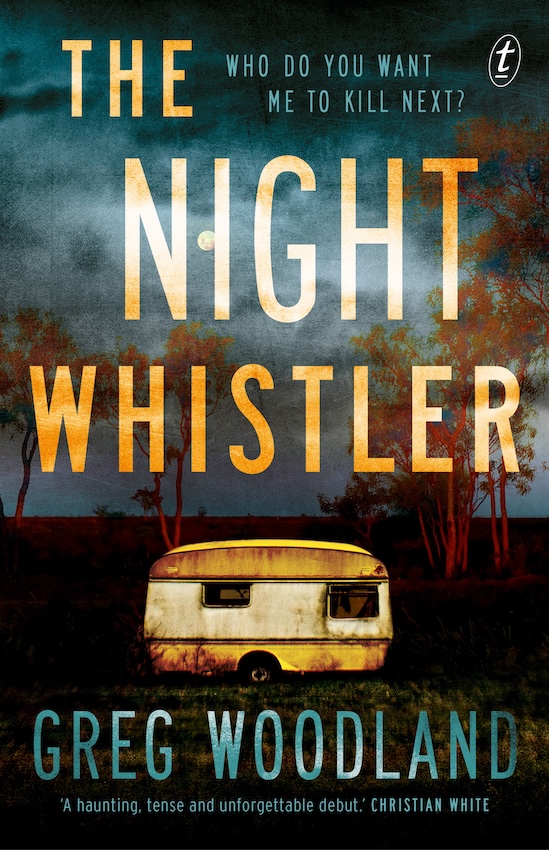
Book Review: The Night Whistler by Greg Woodland – a new cop in a small town that’s simmering with secrets

Readers of these posts will know that Aussie Noir is one of my favourite sub-genres. Having recently read Greg Woodland’s debut crime novel, I am pleased to have discovered what looks like a promising new series. The Night Whistler has all that readers have come to enjoy about Aussie Noir: an evocative, rural Australian setting; small town secrets; and a cop that’s up against it. Set in the 1960s, the story evocatively conjures up the era – the music, the social order plus the edgy restlessness of a long, hot summer.

Mick Goodenough (pronounced like “no-good” backwards, as opposed to “good enough”) has been sent to Moorabool, a smug little town that’s something of a culture shock. A former Sydney detective, he’s been busted down to the rank of Probationary Constable after a case went horribly wrong. Falling foul of his superiors and with a drinking problem that has cost him his marriage, Mick has hit rock bottom but, fortunately, it seems, you can’t keep a good cop down.

The narrative alternates between Mick’s story and that of twelve-year-old Hal, similarly a new kid in town, along with little brother Evan. The two boys are investigating a creek near their house when they come across the body of a mutilated dog. The boys are understandably upset, but go on to give the animal something of a burial, little knowing that the dog is one of a string of such killings that the police won’t take seriously. That is until Mick Goodenough recognises the traits of a perpetrator that will likely take a more serious turn. When the dead dog turns out to be Mick’s, it only spurs him on.

While there’s a killer just getting up steam, Mick is having to deal with arrogant Sergeant Bradley who is wary of Mick’s city cop ways, and lords it over his team. This includes a fellow Probationary Constable who sucks up to Bradley and world-weary Senior Constable Bligh, who becomes an unexpected ally. Meanwhile Mick is desperate to see his teenage daughter again, if only his ex-wife will agree to send her down on the train.

Hal’s father is the bright new spark at Prime Foods, which is why the family have moved to Moorabool. He’s got a fancy new car and wandering eyes. At the Prime Foods Christmas Picnic, we see a microcosm of the town, the braying and overbearing Mayor Dianne Curio, and her bombastic husband, as well as the racism carelessly handed out to Jenna, a young Aboriginal woman who is friendly to Hal and his mother.

Finding the dead dog sets Hal on a mission to uncover the killer – he’s been reading Sherlock Holmes. He gets a hand from young Allie, an Aboriginal girl who teases him relentlessly but shows him how to fish for yabbies in the creek. The two make a great pairing, but obviously they are soon going to be out of their depth. Worse still, Hal’s mother begins getting nuisance calls from someone whistling “Are you lonesome tonight” and making threats. Sergeant Bradley ignores her call for help, even when Mick suggests this isn’t just a snowdropper.

Greg Woodland quickly creates a simmering sense of menace as the story builds towards a gripping ending. But there’s also plenty of banter between Hal and his brother and with Ally, between the kids and their parents and other adults that adds some humour and light relief. Then there’s all the pressure on Mick: the pressure not to probe too much in a town where it pays not to ask too many questions.

For a debut novel, The Night Whistler is expertly constructed, the characters well drawn and interesting, while bringing the setting, both time and place, to life. But we shouldn’t be surprised. Greg Woodward is an experienced screenwriter with a bunch of award-winning films under his belt. The second book featuring Hal and Mick, The Carnival Is Over, is already on my ever-growing list of must-reads. The Night Whistler, excellently narrated by Nic English in audiobook format, is a four-star read from me.

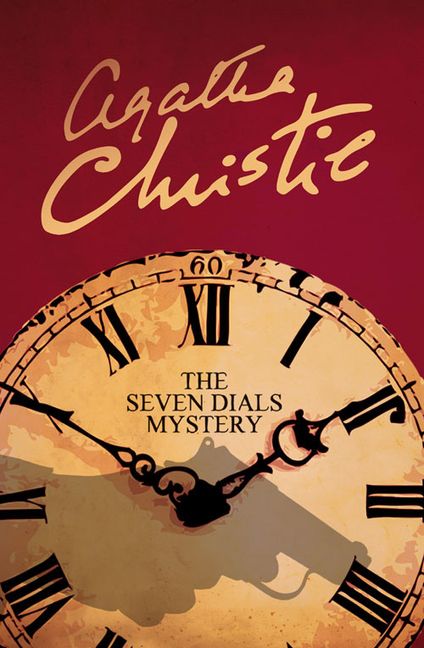
Book Review: The Seven Dials Mystery by Agatha Christie – a Golden Age thriller soon to be adapted by Netflix

I was intrigued to learn that Netflix had picked up The Seven Dials Mystery for the small screen and not remembering a lot about it, hunted it out among my collection of dusty old Agatha Christie paperbacks. First published in the 1920s, the opening scenes make it sound a little like a P G Wodehouse novel.

We’re in an English country mansion known as Chimneys which has been rented out for the summer by a wealthy industrialist, Sir Oswald Coote, and his wife Lady Coote. For some reason there are a bunch of young people staying that don’t seem to be anything to do with the Cootes, a typical Wodehouse type of house party.

When Gerry Wade becomes increasingly tardy about coming down for breakfast, much to Lady Coote’s growing discomfort, Jimmy Thesiger and his friends decide to teach him a lesson. They go into town to buy a collection of alarm clocks. The plan is to sneak them into his room to rouse him the next morning at the ungodly hour of 6:30. Only even that doesn’t seem to work, particularly when it is discovered that Gerry, far from sleeping through the cacophony of eight alarm clocks going off, is dead.

Chimneys is the home of Lord Caterham and his daughter Lady Eileen (Bundle) Brent. Bundle is also the heroine of a previous book, The Secret of Chimneys, and is always on the go in her Hispano-Suiza. Being a fearless young woman with time on her hands, she is easily bored. Before long Jimmy teams up with Bundle to solve the crime. Unlike his friends who have jobs in London, Jimmy’s a man of leisure; his valet Stevens has the same aplomb and consideration for Jimmy’s every comfort you might expect of Jeeves.

Bundle made a grimace.
“Why need people die in my room?” she asked with some indignation.
“That’s just what I’ve been saying,” said Lord Caterham, in triumph. “Inconsiderate. Everybody’s damned inconsiderate nowadays.”
“Not that I mind,” said Bundle valiantly. “Why should I?”
“I should,” said her father. “I should mind very much. I should dream things, you know – spectral hands and clanking chains.”
“Well,” said Bundle. “Great Aunt Louisa died in your bed. I wonder you don’t see her spook hovering over you.”
“I do sometimes,” said Lord Caterham, shuddering. “Especially after lobster.”
“Well, thank heaven I’m not superstitious,” declared Bundle.

Bundle’s and Jimmy’s friend Bill Eversleigh works in the Foreign Office, as did the victim, Gerry Wade. A second victim directs the investigation to Seven Dials, once a seedy part of London, now the name of a nefarious night-club and headquarters of a sinister sounding gang. With a second murder victim it is easy to assume it’s all something to do with a spy network of sorts, and the pace cranks up as our amateur sleuths team up with Gerry Wade’s step-sister, who’s a lot sharper than she looks, and follow clue after clue.

But Agatha Christie is a master of surprises, and there will be more than one shock for the reader before the end of the book. Of course, the killer is unmasked, in typical Christie style, and in spite of references to hangman’s nooses, there’s also a touch of romance in the air.

The Seven Dials Mystery really immerses the reader in a very different era of crime fiction and for some a book like this will seem terribly old fashioned. But with the huge array of cosy mysteries on the market, many set in similar periods, you can see why the Queen of Crime’s books are still big sellers. They are a lovely kind of escapism and the dialogue is full of fun, lending itself well to screen adaptations. And then there’s the settings, the costumes, that car! I shall look forward to the Netflix adaptation – in the right hands the story should come to life beautifully. This book scores three and a half stars from me.

Book Review: The Shadows of London by Andrew Taylor – a ripping read set during the reign of Charles II

Andrew Taylor has had a lot of practice in the art of mystery-thriller writing. At one point in his long career he gave us the Bergerac series, which was also televised – I fondly remember watching it aeons ago with my parents. There have been numerous more series and standalone novels, and in 2009, Taylor was awarded the Diamond Dagger, the Crime Writers Association’s most prestigious award for a lifetime’s contribution to crime writing in the English language.

But in my view, he was just warming up. His latest series is one of my favourite historical mystery series – the James Marwood and Cat Lovett novels set in the years following the Great Fire of London – hence the series title: Ashes of London. The two main characters are frequently at odds with each other, but somehow their paths always cross, usually when there’s murder involved.

As you might recall, Marwood is a rising young man in the corridors of government and in The Shadows of London we catch up with him as an assistant to Lord Arlington, the King’s most trusted advisor. Cat has meanwhile been busy with her architecture business – there’s so much work to do in a city half destroyed by the Great Fire. Her latest project involves rebuilding an almshouse, but work grinds to a halt when a body is found at the site, the man’s face battered beyond recognition.

The local magistrate, Mr Rush, was previously involved in the project, but had a falling out with Cat’s client, Robert Hadgraft, and puts a hold on any work until the murder is resolved. Cat is desperate to resume work as she needs to keep her workers committed to the building work and somehow pay off her suppliers. She turns reluctantly to Marwood to see if he can persuade Arlington to intercede on her behalf. Before you know it, the two are investigating the murder, and yes, again, the unpleasantly conniving Duke of Buckingham appears on the scene.

Marwood has had run-ins with Buckingham before, in particular with the Duke’s vicious henchman, Durrell, whose distinctive appearance is noted by a witness connected to the recent murder. The story is all set for more regal intrigue and takes you to Newmarket, where the King and his court turn up for the spectacle of horse racing. But before we get there we meet Louise, a maid of honour to the Queen, left behind at Whitehall because of an ailment.

Louise is the other thread to the story – a young impoverished noblewoman, once a maid of honour to the King’s late sister. Charles II has given her a home along with one or two other French ladies-in-waiting following his sister’s death. But Louise is worried that her youthful beauty will be irresistible to the King. The Ashes of London series sheds a light on a number of the King’s characteristics, some of them endearing, but here we see him as something of a sexual predator. And Louise should be worried. On top of everything else she has as secret, a problem she’s turned to the Duke of Buckingham, of all people, to handle.

Louise thought with the cold, merciless clarity of a trapped animal that the ambassador would have made a fine preacher had he not chosen instead to be a pander.
Colbert leant even closer. He skewered her with those uncomfortable eyes. His voice hardened. ‘Kings are not like other men. They are chosen of God, and to serve them is a great blessing. To serve two would be doubly blessed. Do you agree?’
‘I seek to serve God and my king, sir,’ she said in a voice that was barely audible above the noises outside. ‘Always.’
He sat back and gave her a thin smile. ‘Of course. I had expected no less of you.’

Everything builds nicely into a thrilling well-paced story, as Marwood juggles the demands of his work with the murder investigation while his enemies close in. There’s a new love interest, and when all seems lost, help comes from a surprising direction. There’s a ton of period colour and insight into the workings of court so you know Taylor has done his homework. But also there’s the perilous situation for women of the time. Cat struggles to be taken seriously as an architect, but at least she strives to be independent. Other women, no matter what class they belong to, have little choice when it comes to their future, doing anything they can to keep a roof over their heads.

The Shadows of London is number six in the series, and I confess to feeling a lump in my throat as I turned the last page because I simply didn’t want it to end. Although it has a very good ending, and you have a feeling that Marwood and Buckingham will have more scores to settle, so there’s promise for more books. I certainly hope so – I’m sure there’s lots more to say about the era of Charles II, and loads more interesting history to mine. The Shadows of London gets five stars from me.

Book Review: The Murder of Mr Wickham by Claudia Gray – a cosy mystery that brings back the characters of Jane Austen

You may have noticed there’s quite a collection of novels based on one or other of the six completed novels of Jane Austen. I have read a few and enjoyed them greatly. But Claudia Gray takes this genre to a new level with her delightful mystery, The Murder of Mr. Wickham.

Honestly, if anyone in Jane Austen’s ouevre deserved to be bumped off it is surely George Wickham. He’s that rascal that threatened to ruin Lydia Bennett in Pride and Prejudice, as well as spoiling the marriage prospects of her sisters. He’d almost ruined Darcy’s sister as well. In Claudia Gray’s novel, we catch up with Wickham at a house party, not at Pemberley, the seat of the Darcies, but at Donwell Abbey, the home of Mr Knightly and his wife, Emma, from that other Jane Austen novel.

Guests at the house party include Mr Knightly’s old friend Fitzwilliam Darcy, his wife Elizabeth and their son Jonathan, a handsome but socially awkward young man of around twenty. Then there’s cousin Edmund Bertram and his wife Fanny (from Mansfield Park) as well as the Wentworths, Frederick and Anne (from Persuasion) who were renting Emma’s childhood home when a staircase collapsed and urgent repairs required.

Also joining the guest-list are the Brandons, Colonel Brandon that is and his young wife Marianne (from Sense and Sensibility). That just leaves Northanger Abbey, which is represented by seventeen-year-old Juliet Tilney, the daughter of Henry Tilney and Catherine, now a novelist who Emma admires. Emma has taken a shine to Juliet and invited her so that the girl can see new people and a change of scenery. With Jonathan Darcy staying, here’s also a hint of Emma’s propensity to match-make.

So you can see that Claudia Gray has really pushed the boat at to draw on all six novels for inspiration and does a terrific job, throwing Austen’s characters together and seeing what happens.

There’s already a tense atmosphere as Mr Knightly is troubled by the financial losses his younger brother has incurred due to a venture masterminded by none other than George Wickham. The same venture has also caught out Captain Wentworth, losing him a chunk of the money that he won as prizes as a naval officer in the war with Napoleon. It was this money that enabled him to hold his head high against the snobbery of Anne’s family. But without it, he fears he’s let Anne down and they may need to return to sea.

Since Pride and Prejudice George Wickham has had a further twenty plus years to cause misery to the Darcies, and more crimes come out of the woodwork when the bounder turns up at Donwell Abbey to call in some debts. It’s the middle of a stormy night when the murder takes place, the guests all restless and anxious for various reasons.

The only two characters who don’t make the suspects list are young Juliet, who had never met the victim before her visit, and Jonathan Darcy, who spent the night calming his horse in the stables when the storm was at its most severe. They never would have thought of investigating the crime themselves if it hadn’t been for the magistrate of the district, Frank Churchill (remember him from Emma?), who assumes the killer must be among the Donwell staff, or passing “gypsies”. Juliet, in particular, is appalled at the idea of someone going to the gallows unjustly.

The two team up, secretly sharing their findings at midnight in the billiard room, and Jonathan finds it so much easier to talk to Juliet than he might have otherwise, now there’s something practical to talk about. The story has plenty of pace and builds to an unexpected resolution as more and more secrets are revealed. In the crucible of a murder investigation, relationships are tested and new understandings emerge.

I enjoyed The Murder of Mr. Wickham immensely, which has all the wit of an Austen novel, Claudia Gray bringing the characters to life beautifully. The good news is this is the first in what looks like a new series featuring Juliet and Jonathan as unlikely but very appealing sleuths. I’m giving it four and a half stars – the audiobook version is narrated with aplomb by Billie Fulford-Brown – and am keen to see what happens in The Late Mrs Willoughby, which is Book No. 2.

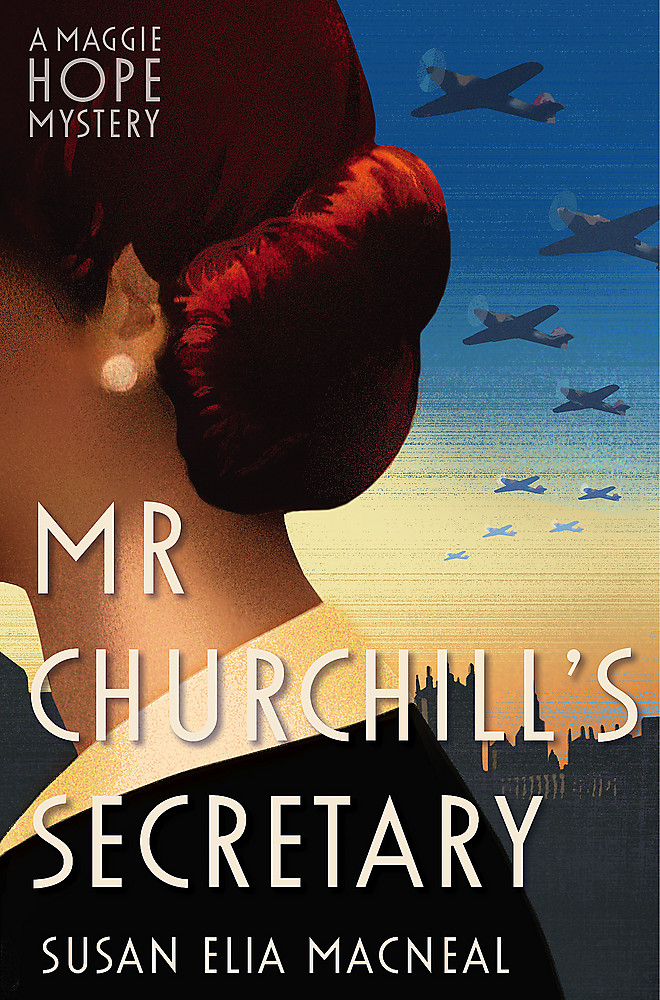
Book Review: Mr Churchill’s Secretary by Susan Elia MacNeal – a light but lively WWII mystery

This novel is the first in a wartime mystery series that features American-raised Maggie Hope, a young woman with a formidable brain. Which is how it should be. I like a brainy female sleuth. You know she’s going to have to figure things out rather than stumble around, picking up clues by accident.

Maggie has moved to London not so long ago. She was supposed to sell her grandmother’s house and then settle back into her studies in mathematics, taking up her place at an American university. She graduated top of her class and academic expectations are high. But along comes a war, World War II, that is, and Maggie wants to do her bit. She loves London and decides to apply for an under secretary position in the prime minister’s office. She doesn’t get it, of course. She’s a girl and they only take men, but when her friend, David suggests she try for a job as the PM’s secretary, she reluctantly gives it a go.

Maggie is desperate to use her maths brain, but at Number 10, she’s thrown by Churchill’s odd habits and cryptic commands, while being urged to keep her head down and do what she’s told by her superiors. Fortunately she has a cheery group of friends to hang out with, including her flatmates: Paige, an old classmate from America’s Deep South and hearty, Irish Chuck plus a pair of scatty twin sisters. David, is always dropping by. His life has always been a little risky as he’s gay when you weren’t really allowed to be so what’s a little war in the general scheme of things? He keeps everyone’s spirits up but his best friend John is moody and somewhat awkward around Maggie.

The story switches to that of Claire who is visiting the Saturday Club, a group of Nazi sympathisers, and Michael, who is letting off bombs around the place for Ireland. While the narrative builds towards a plot agains the PM, Maggie has questions about her parentage. There’s something her guardian, Aunt Emily, is not telling her. When she goes to find her parents’ graves, her mother is there for all to see, but her father’s grave is missing.

Things get more complicated with codes appearing in mysterious places and a visit to Bletchley Park, while pretty much everyone among the cast of characters is in danger from something. Whether it’s the bombs raining down on London, or Nazi sympathisers determined not to have their plans foiled, Maggie’s life has just got a lot more perilous. Things go down to the wire for Maggie, the PM and an iconic building in London, but luckily there’s Maggie’s amazing brain to save the day.

Anyone imagining this series to be ideal for fans of Jacqueline Winspear’s Maisie Dobbs, might want to reconsider. I think they are quite different beasts. The Winspear books reveal a lot about the war, and recent history, often taking a little understood aspect and making it the basis of a story. Her characters are really put through the ringer and there’s a strong emotional charge.

The Maggie Hope books would seem to be a more imaginative bunch of stories and are quite a lot lighter in tone. There’s lots of dancing in nightclubs, romance and general socialising, more about the music of the time, what people were wearing which adds colour and sets the scene. I shall probably continue with the series, but my reasons for picking up a Maggie Hope book will be for a lighter kind of entertainment. Mr Churchill’s Secretary gets three stars from me.

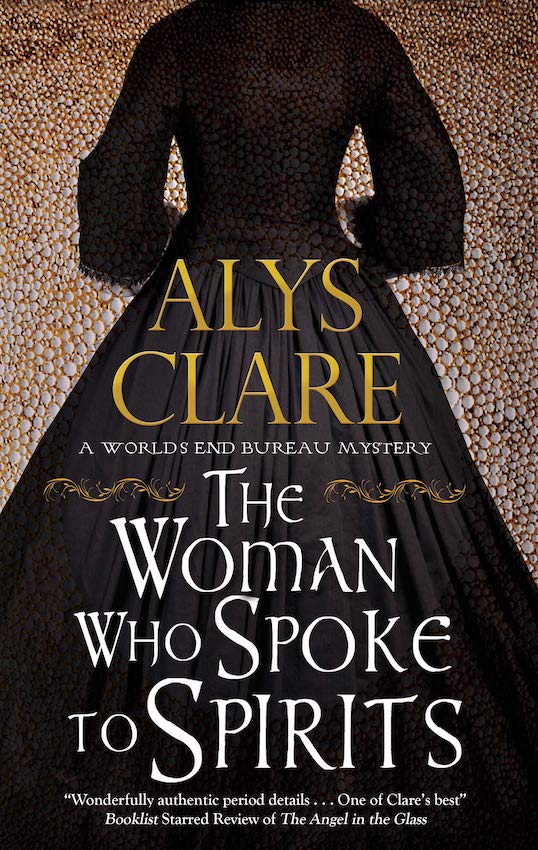
Book Review: The Woman Who Spoke to Spirits by Alys Clare – a new crime-solving partnership hits Victorian London

Alys Clare is known for her medieval mysteries, particularly the Hawkenlye and Aelf Fen books. I hear they’re really good, but these were the times when life was “nasty, brutish and short”, so I’ve always steered clear, maybe unnecessarily. But I was pleased when Clare decided to jump forward a few centuries to set her new series in 1880s London.

Lily Raynor is a private investigator who is beginning to make a name for herself with her ability to get to the bottom of things with tact and discretion. Working from her late grandparents’ apothecary shop, she finds herself too busy to manage all the filing, note-taking and plant watering at her World’s End Bureau, so decides to hire an assistant. Of the six candidates on her shortlist, only the last is in any way promising. Although Felix Wilbraham isn’t quite what she had in mind.

Felix is a from a well to-do background, but falling out with his dear papa, has been living a hand to mouth existence of late. He’s down to his last pennies when he eagerly accepts Lily’s offer of employment. And so marks the beginning of a new crime-fighting partnership. Felix has excellent penmanship and the enthusiasm of a lively puppy. He hasn’t a clue about pot plants but after his month’s trial, becomes indispensable to Lily, not just for filing and making tea, but in the field of inquiry.

The story cracks on with two cases for the bureau. Lily attends a private member’s club to interview Lord Berwick who is worried about his son – a weak young who has become besotted with an ageing actress. But she’s not Lady Berwick material so Lily is asked to investigate her background and to see if she’s merely toying with young Julian and if there’s anything about her that might cool Julian’s ardour. Meanwhile Felix interviews a Mr Stibbins who is worried about his wife. They are a happy couple, and Mrs Stibbins helps out the bereaved through her work as a medium. But lately she has a feeling that her life is in danger.

So two quite different cases. But as the smart reader will remember from the prologue, Mrs Stibbins isn’t the only woman in danger – a young girl has been murdered in the vicinity and soon the bureau is caught up with the matter of women, mainly prostitutes, who have gone missing. This really cranks up the danger, especially when Lily plays a duplicitous game. The story builds to a nail-biting ending to reveal a criminal with a particularly original bent.

This is an intelligently plotted and engaging story with two likeable main characters. Lily has a background in midwifery, but a shadow clouding her past she thinks of as The Incident, has seen her eager to change profession. She has an interesting association with a canal boatman who has a gypsy-like alternative life-style and an other-worldly wisdom.

Felix’s experiences as an older woman’s plaything, along with his knowledge of the seamier theatre world, help him with the Berwick case. So both he and Lily have secrets that they are as yet unwilling to share with each other. This sets the scene for some interesting character development and dynamics that will no doubt affect their working relationship.

This is a very entertaining and relaxing period mystery that never gets too dark, in spite of the grimmer side of Victorian London emerging from time to time. You get a strong sense of the rigidity of a class system that keeps people in their place and that women like Lily are pushing boundaries by determining their own futures. She’s a complex character and I look forward to getting to know her better through the series. (Book number two is The Outcast Girls.) The Woman Who Spoke to Spirits scores a four out of five from me.