Book Review: The Visitors by Caroline Scott – The Enchanted April meets Birdsong with a smidgeon of du Maurier

Sometimes you just pick up a book for no particular reason and it’s a very pleasant surprise. The Visitors has a gorgeous cover, so that was probably what attracted me, and luckily it turned out to be quite a find. Don’t judge a book by the cover – how often have we heard that maxim, but the truth is that we often do.

This book is Esme’s story. It’s the early 1920s and Esme’s a war widow and housekeeper to fussy, but kindly, Mrs Pickering in Yorkshire. Mrs P sends Esme off to Cornwall – her doctor’s recommended rest and recovery after Mrs P had a bout of flu. Esme is to make sure the house belonging to her brother is suitable for an extended stay over summer. Gilbert, himself a war veteran, has set up a kind of seaside retreat for himself and several other men from his unit, all in need of healing. They throw themselves into art and gardening and it’s all a bit too Bohemian for Mrs P’s tastes.

Esme doesn’t hit it off with Sebastian, sent to the station to fetch her – he thinks she’s been sent to snoop – but the others soon charm her. There’s Clarrie who makes delicious meals from the garden’s bounty; Hal who doesn’t speak but who puts together miniature ships in bottles; and then there’s Rory, somewhat wild and unkempt looking, in whom Esme discovers a fellow nature lover. Esme herself writes a weekly nature diary for the Huddersfield Courier, so there are plenty of descriptions of birdlife, flowers and the variations of the weather.

Soon we’re swept into a gorgeous setting, and this in itself would be a pleasant place to be as a reader, but there’s the war and its legacy to be dealt with. Esme is still grieving for her husband Alec, killed in 1916, and as he was from Penzance is hoping a visit to his childhood home will fill in a few gaps. She’d hardly got a chance to get to know him before the war began and off he went.

But the war has its secrets and there are a few big surprises that make the story much more than a charming summery read. I found myself tugged emotionally here and there as scenes from the war – Rory also puts pen to paper – are woven through the plot. Meanwhile Esme’s own personal discoveries create a shift in her feelings and open her up to new possibilities. The plight of the women left behind with the loss of so many young men, hovers in the background. It all comes together beautifully, with some great characters in Esme and Rory, but also Mrs P and Gilbert and even Sebastian, all of whom are interesting company.

And yet it’s probably the setting of Cornwall that was most memorable for me, not just the pretty scenery, the weather, the flowers and the sea. There’s the history and folklore as well. Reading The Visitors, it’s hard to imagine who wouldn’t want to up-stakes and move there. It reminded me a little of The Enchanted April by Elizabeth von Arnim with its characters similarly finding an idyllic place to heal. All in all the book was a pleasant surprise and I shall be hunting out more from Caroline Scott. This one’s a four out of five read from me.

Book Review: On Hampstead Heath by Marika Cobbold

Marika Cobbald’s new book On Hampstead Heath is a witty comment on our times, a kind of comedy of errors, with an unlikely heroine at its heart. Thorn Marsh is a news editor, a passionate believer in the role of the news media to uncover the truth and to keep the public well-informed. At forty-four, her career is everything, but when her paper is taken over by a media conglomerate she is shifted from the news desk to the midweek supplement to write The Bright Side. A prickly, curmudgeonly individual, she is the last person to write happy, inspiring stories.

Along with Thorn, there’s a bunch of quirky characters to enjoy. Nancy, Thorn’s mother who never loved but she has her reasons; Mira, Thorn’s new editor, who gives Thorn a good run for her money when it comes to dry one-liners; Lottie, Thorn’s neighbour, a Holocaust survivor and secret dope smoker and who is more like a mother figure than Nancy; Lottie’s niece, Jemima, disapproving and disappointed.

She turned an accusing eye on me. ‘The media have a great deal to answer for in all of this, affording celebrity status to people whose main contribution to society is putting their heads in a tank of maggots. My Year Fives thought Florence Nightingale was a contestant on Love Island.’

‘I only recently found out that a Kardashian isn’t a rifle,’ Lottie said, and finished her gin.

Desperation and alcohol lead Thorn to make up a story using a photo snapped on Hampstead Heath curtesy of her still friendly ex-husband, Nick.  Suddenly the world is sharing and retweeting her story about The Angel of the Heath, a flame haired apparition on the Viaduct Bridge, who had recently turned Thorn’s head rescuing her neighbour’s dog.

Lies pile up on top of lies as Thorn digs a hole from which it seems impossible to extricate herself. She has only herself to blame, and pours out her story to Nick and Lottie. She learns the hard way that getting the best story isn’t the only thing in life.

While there’s a good deal of desperation, Thorn is such a likeably difficult character and a dry, dark humour bubbles through every sentence. Thorn grows from someone who only lived for her job to someone who learns to love not only others but herself. But it’s never treacly or too serious and the ending is superb.

I loved On Hampstead Heath, but then I’ve always really enjoyed Cobbold’s books. But it has been a long stretch between the new book and her last one – ten years in fact. Hopefully we won’t have to wait as long for her next novel. On Hampstead Heath gets a four and a half out of five from me.

Book Review: The Last Romantics by Tara Conklin – sibling relationships under the spotlight

This is one of those books that you think will be about one thing and it turns out to be something completely different. The back-cover description talks about a tragedy one fateful summer, but exactly how that tragedy evolves doesn’t emerge until much later. And then there’s the title. Mmmm. I guess it might be true that we all read a different book when we pick up the same novel, but The Last Romantics is beguiling on several levels.

Not that this is a bad thing. On the contrary, I’m quite keen to be beguiled now and again, and The Last Romantics is also very appealing. The story opens in 2079, when we meet Fiona Skinner for the first time. She’s a very elderly famous poet onstage at a writer’s event before an audience of adoring fans. The young interviewer asks Fiona about the origin of her most famous love poem, a question she’s avoided for years. But it takes her back to the beginning, when she was a young child and the novel slips into the distant past.

We’re back to 1981, and Fiona describes her family following the death of the father. Fiona’s only four, but her brother, Joe, is old enough to be hurt and furious, while their mother is lost, unable to react at all. Two older sisters make up the family, Caroline who is gentle and sensitive, while eldest sister Renee at eleven takes on the responsibility for them all. She’s the one who makes sure that homework is done, clothes are washed and there’s food on the table, while their mother shuts herself away in her room for the best part of three years, a time that becomes known as The Pause.

We follow this family over the decades but mostly it’s about the relationship between Fiona and Joe who was her childhood hero. You can see the effect The Pause has had on all of them on the kinds of people they become, but always it is Joe who is the most fragile, swinging from being the man with it all to being on the brink of disaster. Fiona is one of those characters who is a watcher and observer, cataloguing her sex life with different men in a hugely popular blog. She’s the perfect narrator as she analyses her family interactions and looking back sees where she went wrong.

In a way this is a story of regrets, but families can be tough and eventually forgive and rebuild. The book has that gentle humour that you see with siblings – the elbow digs and eye-rolling. And the early pages capture the family through Fiona’s young eyes, the meaningful moments and human frailty caught in the gaze of an innocent. It is a novel that ebbs and flows as the years progress, a little flagging at times and full of events at others – which makes it more like real life in some ways. There’s sadness in the book but you can see how this inspires the poet that Fiona becomes.

I really enjoyed the book over all. It’s real and yet has an ephemeral quality as Fiona, an at times unreliable narrator, misreads the people who love her. Love is a key theme, in all its forms but family love mostly, and what happens when you put it to the test. If you want a different kind of love story, The Last Romantics is well worth picking up. It’s a four out of five read from me.

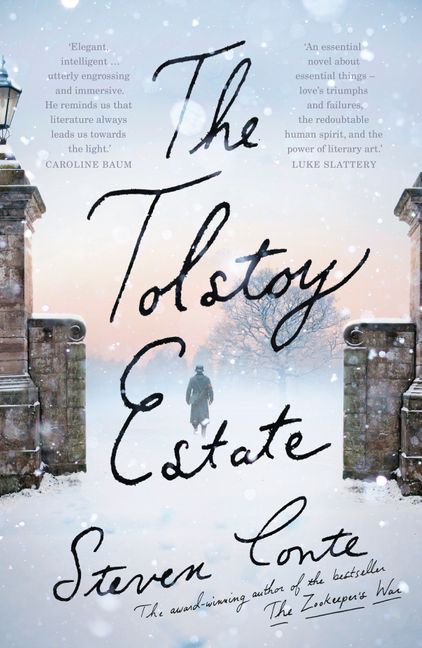
Book Review: The Tolstoy Estate by Steven Conte – a stunning novel about love, war and snow

I’d been saving this book for a dry spell, thinking it might be a special kind of book and I was right – it is. The Tolstoy Estate is set mostly in the middle of the Barbarossa Campaign, Hitler’s ill-fated attempt to beat the Russian winter and the huge volley of soldiers fighting to keep the Nazis out of Moscow. It’s the late autumn of 1941 when we catch up with Captain Paul Bauer, a surgeon assigned to a field hospital which sets up shop in Yasnaya Polyana, Leo Tolstoy’s old home. It’s a smart move – the Soviet army is never going to bomb a literary shrine.

Oozing disgust and obstruction at every turn is Katerina Dmitrievna, the curator at the estate, who is a fiercely loyal Soviet citizen. She never misses a chance to remind Paul and his equally loyal Nazi commanding officer, Lieutenant Colonel Metz, that they are doomed. The winter, fast approaching, will be the death of them – their uniforms just don’t cut the mustard. If you needed convincing, Tolstoy captured brilliantly the defeat of Napolean’s army in War and Peace. Paul, somewhat dazzled by Katerina, accepts from her a copy of the book in German from Tolstoy’s own library. He read it as a boy in the last war from which his own brother did not return.

“…it was a bit late, five months into Operation Barbarossa, to be fretting about safety, personally or otherwise… If the Greatest Warlord of All Time had had any regard for human life, he would not have provoked a contest whose savagery made France seem in retrospect like a war of flowers.”

While the story follows the events of the six weeks Metz and his surgical team spent at Yasnaya Polyana, and the struggle of the German army to take the city of Tula, this is much more than a war story. Through a wide array of the characters, all brilliantly different from each other, we watch how people thrown together in an extreme situation cope. How they rub off against each other and how the difficult conditions make their idiosyncrasies stand out. Weidemann, the second in command is devoted to his gramophone, Metz develops an obsession with Tolstoy’s ghost while Captain Molineux plays practical jokes, often very offensive ones but charms his way out of trouble.

In this respect, the book reminded me a little of Joseph Heller’s Catch-22, with its varied characters and dry, fatalistic humour. Bauer consoles himself with War and Peace and thoughts of Katerina. Both are caught up in the middle of regimes that interfere with any attempt to determine their own futures.

…at night he took to lying in his bedroll and blankets, engrossing himself in War and Peace. As usual he found it consoling. Whatever the fate of individuals might be, Tolstoy seemed to say, the rhythms of life would remain the same. The young would be foolish, hopeful and wild, would fall in love and out of it, become sadder, maybe wise. Some would meet their deaths sooner than others, yet there would come a day when everyone engaged in the struggles of their age would without exception die, bequeathing the world they had made to those strangers, their children, who would struggle to change it again.

The Tolstoy Estate is a wonderful read and Conte has done plenty of research to supply the details that make the book so vivid, including the harrowing surgery that Bauer and the other medics perform in terrible circumstances. I might add that as an often squeamish sort of reader when it comes to gory details, I was not put off by any of this, and found it added a lot to the story and helps round out Bauer’s character. The story was engrossing and gripping as war stories tend to be, but also because you know that battling the Russian winter, the survival rate for these men is slim.

I loved this book so much so that once I’d finished it I’d have been happy to start it all over again. It is well deserving of its short-listing for the Walter Scott Prize last year – I usually manage to find a gem among this yearly line-up, and this one was stunning. Conte is an Australian author, his first book (The Zookeeper’s War) winning the 2008 Prime Minister’s Award. The new book is only his second, which attests to the time Conte has taken to create his best possible work. The Tolstoy Estate gets a five out of five from me.

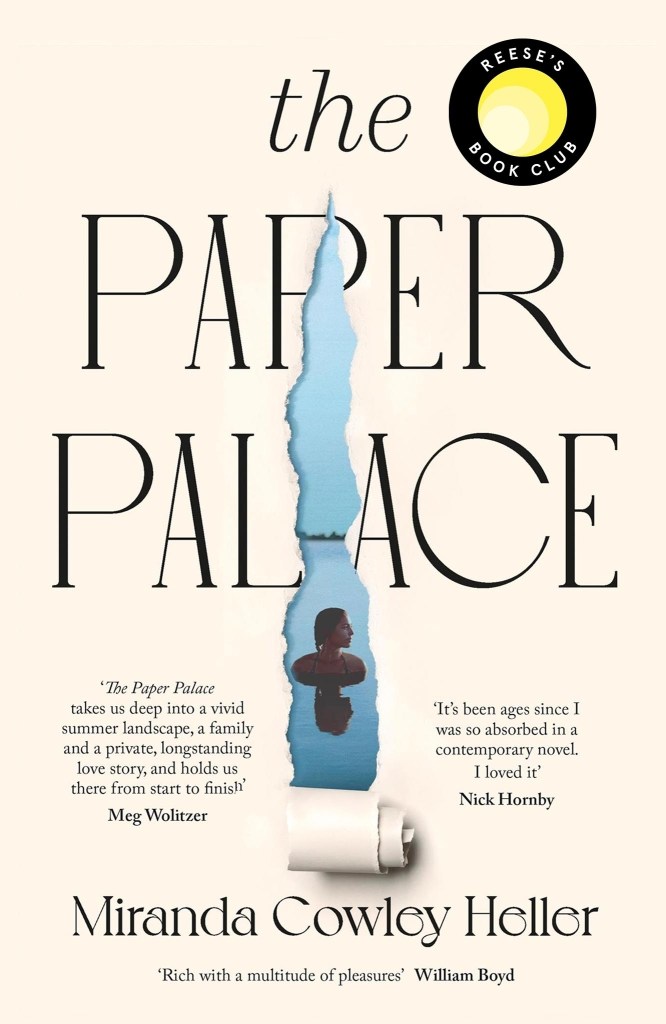
Book Review: The Paper Palace by Miranda Cowley Heller – an intense story about family, secrets and the path not taken

You can’t help feeling sorry for Eleanor (Elle) who spends the decades that span The Paper Palace unable to forget her dearest friend and soulmate. She and Jonas have been driven apart by a terrible secret – a horrific sequence of events that casts a shadow over the rest of their lives. We follow them through the years from when they first met, one Cape Cod summer, to the present day several decades later, having built their lives without each other. But we all know that secrets like theirs are sure to come out sooner or later.

The Paper Palace is the nickname given to the holiday home where much of the action takes place, in particular the single day that connects the plot. It’s the day friends and relations have come together to remember Elle’s sister. The summer home has been in the family for generations, a collection of bush-carpentry buildings that include a large kitchen/living space and a number of cabins right on the edge of a wide, swimmable pond. Here, Elle and her older sister Anna ran wild ever summer, a relief from those chilly New York winters, growing up as their parents divorce, take on new lovers, remarry and divorce again.

Elle’s mother, Wallace, states that divorce is good for children, and makes other odd declarations such as that unhappy people are more interesting. Jonas’s partner, Gina, perpetually sunny and straightforward, obviously cuts no ice with Wallace. Elle and Anna are beautiful, confident girls in spite of their mother’s remoteness, her stark comments, her lack of awareness of how her life choices affect her children. Somehow they survive their childhood, have careers and relationships.

But everything comes back to one event in Elle’s teenage years and its consequences, until a much later revelation casts a new light on a decision she made a long time ago. This plot device plus the now and before structure makes you gallop through the pages to learn how that secret will impact on the future. The writing is sharp and funny at times, but best of all is the evocation of summer and long summer vacations. There are butterflies, racoons and shorebirds: bonfires on the beach; walks through the forest as well as swimming and boating. It’s almost like you’re on holiday with them all, in one of the spare cabins. There is definitely a filmic quality, and I can see movie rights being discussed even now.

I just wish I liked the characters more. Elle has a decent career and happy marriage in spite of the events of her growing up but still agonises over Jonas, a character who me for was never quite real. Anna can be cruel, the various parental figures weak, offhand or just plain strange. People are either beautiful in an unspecified way, or if they are ugly, their flabbiness and skin conditions are described in detail. Nobody is just a bit ordinary. This was a little distasteful to me and detracted from the sympathy I should have had for the main characters. And while the story was engaging, it was also somewhat exhausting and I found it a relief to finish. A three out of five read from me.

Book Review: The Kitchen Front by Jennifer Ryan – a wartime novel about friendship, rivalry and rationing

Jennifer Ryan cements her reputation for World War Two fiction about the women stuck at home with her third novel, The Kitchen Front. Her previous books, The Chilbury Ladies’ Choir and The Spies of Shilling Lane, similarly threw together unlikely allies and mined small-town prejudices, keeping up appearances and the difficulties of maintaining anything like normal life when there’s a war on.

Ryan has a knack for discovering interesting story threads in the archives of wartime social history and memoirs. Here she’s latched on to the concept of cooking competitions that encouraged housewives to make rationed ingredients stretch further and items like whale meat (ugh!) which weren’t rationed somehow palatable. Here we’ve four main characters each vying for a radio slot on The Kitchen Front hosted by fastidious bon-vivant, Ambrose Hart.

Lady Gwendoline Strickland seems a likely candidate as she already hosts wartime cooking demonstrations in Fenley Village Hall. But she doesn’t get all that much cooking practice in, having all the trappings of a manor house kitchen, a cook and kitchenmaid. And a wealthy husband – a not very nice wealthy husband, but still, she’s got a lot of clout.

Then there’s Audrey, Lady G’s sister, who is toughing it out as a war widow, raising three boys and keeping the wolf from the door by baking pies and cakes that sell locally. She barely makes ends meet, and to make matters worse, she’s in debt to her sister for a mortgage on her home, the home she and Gwendoline grew up in. Without the house and grounds, she wouldn’t have the garden and orchards for her ingredients. So Audrey’s under a lot of pressure.

Also in the running is the Stricklands’ cook, Mrs Quince, one of the most famous manor house cooks in the country. But Mrs Quince is getting on and relies heavily on Nell, the kitchenmaid, who’s been learning at the cook’s elbow ever since she left the orphanage at fourteen. The two enter Ambrose’s competition jointly, and Mrs Q encourages shy Nell to speak up and come out of her shell.

The final entrant is London chef, Zelda Dupont. Zelda (not her real name) has always been on struggle street, but has worked her way up to be sous chef at a top London Hotel. When it’s bombed and she finds herself jobless, alone and pregnant, she winds up in Fenley, overseeing the staff canteen at a pie factory. Few know she’s in the family way, although her landlady has twigged and makes her life hell. If her boss finds out, she’ll be out of work too. Winning the competition could save her bacon.

The competition nicely shapes the plot of the novel and Ryan throws in lots of recipes and wartime tips for making those rations go further (Sheep’s Head Roll, anybody?). But really, this is a story about friendship and family, about pulling together, facing up to the truth and making a go of things. It’s a lovely, warm-hearted story, with a couple of villains you love to hate, and a touch of romance. It has that feel-good factor in spades, but there’s enough humour to keep things from getting mawkish. A charming, relaxing read, getting a four out of five from me.

Book Review: The Authenticity Project by Clare Pooley

Book connections can be puzzling. What led me to seek out this novel was probably a recommendation in connection with another book I enjoyed, but what it was escapes me. This story similarly connects random characters, one leading onto the next.

It begins when elderly Julian leaves an exercise book in Monica’s café, with the title The Authenticity Project carefully lettered on the cover. Inside Julian describes his loneliness since his wife died, and how he lost friends and relationships, now going days without talking to anyone. He closes with the challenge to whoever picks up the book to ‘tell your truth’.

Monica does. She writes about her longing for a family, in particular, a husband and a baby. She’s in her late thirties and fears she’s left it too late. But Monica doesn’t just tell her truth, she decides to help Julian. She’s looked him up online and discovered he’s a once famous artist, and a minor celebrity in his day. Her plan is to weasel him out of his cave by advertising for an artist to teach drawing at her café. He regularly stops by for coffee, so is sure to see it. She leaves the exercise book in a bar where it is picked up by Hazard, a stock broker with addiction issues and so the story goes on.

Hazard is an interesting character in that he’s a really obnoxious on the one hand, but has the self-awareness to take himself off on a retreat to Thailand to detox. Perhaps a new Hazard hides beneath all that drug and alcohol fuelled brashness. The exercise book is just the trigger he needs. He’s read both Julian’s and Monica’s ‘truths’ and decides to help Monica from his tropical hideaway.

More characters join the chain. Happy-go-lucky, live-for-the-moment Riley, an Australian gardener, who doesn’t understand the English with all their hangups. New mother, Alice, who has a social media addiction, as well as the husband and baby Monica craves. But they don’t make her happy. They’re all interesting and entertaining in their way, although it’s Monica and Hazard who are the most engaging and complex, the ones who can’t make up their mind what they want or how to get it.

The Authenticity Project is a light and entertaining novel. The changing viewpoints work well because everyone is trying to fix things for others, creating dramatic tension, and a community of sorts emerges. It made me wish Monica’s café was just up the road so I could pop in, join an art class or curl up on a sofa with a book. The references to famous people of the eighties Julian used to hang out with, his designer wardrobe and old LP collection, add plenty of colour and I loved the Fulham setting. It’s a a feel-good kind of read, maybe just the thing for the holidays with an original, well-executed storyline. I’m giving this one a three and a half out of five.

Book Review: Unsettled Ground by Claire Fuller – an atmospheric and psychological story set in rural Wiltshire

I’ve had my eye out for this book ever since it was shortlisted for the Women’s Prize for Fiction. Unsettled Ground is the story of twins, Jeanie and Julius Seeder, who at fifty-one are still living at home with their mother, Dot, when she suddenly dies. All at once they have to figure out what to do, how to manage. Dot obviously took care of the family finances, but the cake tin that stored all their cash, from Julius’s odd jobbing and the women’s piecemeal market gardening, is virtually empty. Their electricity has been disconnected because of unpaid bills, then Jeanie discovers even more debts, to say nothing of the funeral costs.

Unfinished schooling, a basic, almost off-the-grid lifestyle and a lack of real-world experience mean the twins struggle to figure out how to make ends meet or get the help they need. Jeanie is barely literate, while Julius was traumatised when his father was killed in a farming accident, which means he can’t travel by car without motion sickness. Bridget, their mother’s old friend grudgingly drives Jeanie to appointments while pouring out unwanted advice. When their landlord’s wife issues an eviction notice unless arrears in rent of thousands of pounds are paid off, things are desperate indeed.

The plot pulls you in from the start as curve-ball after curve-ball are lobbed the twins’ way. You read on hoping they make a break from the past to find some happiness. Or, at 51, is it too late? Julius has always resented the need to stay, his mother, Dot, using Jeanie’s fragile health to keep him around. Dot had always felt that making music, gardening and living off the land were all that anybody needed, creating a small family sanctuary. But all it does is fill the twins with mistrust towards the agencies that might help them and the bullying they received at school casts a long shadow.

Told from Jeanie and Julius’s point of view, you have immense sympathy for these characters, while getting a taste of what it’s like to live in a small, insular community that isn’t always kind. And at the heart of it all are one or two family secrets that will overturn everyone’s assumptions. It’s an interesting psychological study of maternal love, guilt and fear inspired by ignorance. The setting of rural Wiltshire during a cold snap in spring is an evocative background – you get the sense of nature in all its glory, ready to invade, to rot and overrun.

It’s a bit like there are two sides to everything here – the good and the bad: the good side of mothering and the dark turn it can take; of neighbours, of nature and of love. It’s a powerful story that gives you lots to think about as well as a cracking good read, with more than a hint of the old adage: be careful what you wish for. The saving grace for the twins is music, peppering the story with old folk songs that Dot has passed on to her children. Claire Fuller used a playlist while writing the book which she describes here on her website. This is my first novel by Claire Fuller, and I am sure it won’t be my last. Unsettled Ground earns a four out of five from me.

Book Review: Sorrow and Bliss by Meg Mason

This novel is a very intimate look at someone’s mental illness, which could in itself drive the reader into a depressed state if it weren’t for the scintillating prose which is a times laugh-out-loud funny. Martha Friel is turning forty at the beginning of the book, her marriage crumbling around her, as she looks back at her life to pinpoint the moments of significance to try and make sense of it all.

She is the child of eccentric parents. Her mother is a sculptor of minor significance who drinks a lot and drives her father, a poet who cannot quite bring himself to publish a long awaited collection, to leave them. You could say the apple doesn’t fall far from the tree when you look at Martha and her mother, who is difficult and at times cruel. But her father always returns, shutting himself away in his study among his books and poetic thoughts. Martha has a sister, Ingrid, who manages to lead a more balanced life, marrying Hamish and producing unplanned-for children with alarming regularity.

Then there is Aunt Winsome and Uncle Rowland who live in Belgravia and have funded Martha’s parents’ house and the girls’ schooling because being an unpublished poet and a sculptor of minor significance is no way to support a family. There are cousins, Nicholas, Oliver and Jessamine, as well as Oliver’s friend Patrick who’s father lives in Hong Kong and who has nowhere else to go at Christmas. As well as the closeness between the two sisters, much of the story is that of Patrick and Martha’s relationship.

That is what life was, and how it continued for three years after that. The ratios changing on their own, broken, completely fine, a holiday, a leaking pipe, new sheets, happy birthday, a technician between nine and three, a bird flew into the window, I want to die, please, I can’t breathe, I think it’s a lunch thing, I love you, I can’t do this any more, both of us thinking it would be like this forever.

Martha’s terrible rages, her problems with sounding normal at work or at parties, her unreliability, her snarky remarks, make her difficult to get on with and yet she inspires great affection from those who make the effort. She’s smart and shows odd moments of empathy.

The reason I had gone to London was for Peregrine’s funeral.
He had fallen down the central staircase at the Wallace Collection and died when he struck his head on a marble newel post at the bottom. One of his daughters gave the eulogy and looked earnest when she said it was exactly how he would have wanted to go. I wept, realising how much I loved him, that he was my truest friend, and that his daughter was right. If it hadn’t been him, Peregrine would have been acutely jealous of anyone who got to die dramatically, in public, surrounded by gilt furniture.

And while we get to see what Martha’s unspecified condition looks like, and the difficulties of getting appropriate medical help, the novel also gives thought to what makes people happy, the simple things often that people take for granted. Maybe it’s only when life is at its darkest, that you get to really understand this. I loved the characters in particular. Martha’s family are individually either odd or difficult, but they are all interesting and have their redeeming points. Patrick has his own sorrows – his lack of family, his struggles with his problematic love for Martha.

Meg Mason writes with such flair and understanding I surprised myself with how much I enjoyed Sorrow and Bliss. It is one of those funny/sad books, which can be entertaining and profound in equal measure. Mason is a New Zealand born author who lives in Sydney and this is her first book published in Britain. It is easily one my favourite reads for the year and really deserves its five out five from me.

Book Review: The Famished Heart by Nicola White – an unusual crime story set in 1980s Dublin

I picked up The Famished Heart, initially thinking it would be a bit like Dervla McTiernan’s brilliant crime series featuring Cormac Reilly. They both have lead police officers who don’t fit in with their colleagues and a boss who probably doesn’t like them either. You get a good deal of police station politics in both. But this book is more of a slow-burner that reminded me of some of Ruth Rendell’s Wexford novels (now there’s a blast from the past!) with its focus on a small community and psychological drama.

We’ve got three main narrative points of view. Father Timoney is the unlucky priest called to visit two middle-aged sisters in his parish who haven’t been seen in weeks. What he finds would shock even the most seasoned of clerics: the Macnamara sisters have apparently starved to death, possibly willingly for religious reasons. Timoney has his own problems too. He’s only been in his parish a few months, has a dwindling congregation, an unheated church that is an architectural monstrosity, and a spiteful housekeeper. Throw in back pain and a lack of confidence and he’s really struggling.

Frances Macnamara is the sister that got away. She’s a glamorous actress who, now in her forties, is finding it hard to get well-paid roles, leaving her strapped for cash. She’s in New York when she receives the news of her sisters’ deaths. Flying home she teams up with a niece who was supposed to look in on her aunts, but there’d been a falling out with the older sister and she’s living in a grungy flat. So there’s nowhere for Frances to stay but in the house where it all happened. They soon get the keys because the police don’t think the deaths suspicious.

Well, Detective Inspector Vincent Swan thinks they’re suspicious; someone’s wiped any fingerprints from the door handles and made a crude arrangement of some ornamental animals. But Swan’s being stood down while there’s an investigation into police brutality. He’s not a violent man, unlike the two officers also under investigation, the kind of officers he really doesn’t get along with. Just as well Detective Garda Gina Considine is on the job. She’s the only female officer on the team and suffers sexism on a daily basis – this is Dublin in the ’80s, after all. But she’s smart and a good pairing for sensitive and thoughtful Swan.

Just when you think this story is all about religious mania – and to some extent it is – another death leads our two detectives in another direction and the plot really heats up. You finish the book thinking this is a satisfying mystery, but you’ve also come to know the characters really well. White writes about relationships superbly – throwing people together and seeing how they spark off each other and then come to new realisations. This makes you want to check in with Vincent Swan another time, so it’s good news that this is the start of a series. The second book is an earlier novel and book number three is out next year. A Famished Heart scores a four out of five from me.