Book Review: The Lamplighters by Emma Stonex

I’ve read a few books where lighthouses appear in the story, often in a metaphorical sense as an evocation of hope or constancy, or even desire. These ideas also appear in Emma Stonex’s novel The Lamplighters, but here the story follows the lives of lighthouse keepers and their families and the very real lighthouse which is the men’s home for a large part of their working year. Inspired by real events, the book takes us into the world of three lighthouse keepers in 1972, and what happens when their lighthouse is found abandoned, the keepers missing, but the door locked and bolted from inside.

You have to be certain kind of person to be in the lighthouse service. Principal Keeper, Arthur Black, likes the quiet and solitude of his eight-week stints on the remote lighthouse known as the Maiden. The service gives the men a cottage on the nearby Cornish coast, but he doesn’t seem to miss his wife, Helen, who waits for his return. He’s considered a good man, able and sound and obviously kindly, but have all his years in lighthouses taken their toll?

Postcards never finished; postcards never sent. I tear them up and drop them into the sea so I can watch them float away. In another life, a lucky one, I see the pieces washing onto shore. She’ll find them, gather them to her, put them back together. It will all make sense.

Assistant Keeper, Bill Walker, is from a family of lighthouse keepers and was never given the choice to be anything else. You can tell he’s had enough but then he’s almost at the end of his eight-week stint, so naturally he’s looking forward to his time on shore. At home with three young children, his wife Jenny finds the eight weeks the hardest, and fills her days filling the cake tins, and drinking.

The third keeper is the young Supernumerary Assistant Keeper, Vincent Bourne. He’s had a tough life, in and out of foster homes, and then in and out of prison. But when he meets Michelle, he determines to turn his life around and have the proper family he’d missed out on. The Service offers him a chance and when he’s made Assistant Keeper, he’ll get a cottage too. So while it might be easy to blame the mysterious disappearances on bad-lot Vinnie, he seems the least likely to lose it and do something rash.

The story flips to 1992, when an adventure-thriller writer revisits the events of twenty years before, planning to write a book and solve the puzzle. Told through the viewpoints of the three women left with no answers, but a financial to keep quiet, secrets start to emerge. The tension escalates, as the story switches back to the days leading up to the tragedy, as well as describing the sensitive relationships of the women on land. The ending is taut and you rush through the pages to find out what happened, in a small way comforted in the resolution for those left behind.

This is a masterful novel, written in elegant and at times poetic prose – maybe it’s hard to avoid if you are writing about the sea and the weighty themes we traditionally associate with lighthouses. The novel makes these themes all the more real but in new ways. It’s a psychological novel too, getting inside the heads of the men and their women, picking out their motives and triggers, their passions and resentments.

Emma Stonex has done her research well and the books she lists as inspiration are books that look well worth a read. I can’t help thinking that lighthouse keepers are forgotten heroes and want to know more. I’m going to stick my neck out and give The Lamplighters a rare five out five.

Book Review: The Clergyman’s Wife by Molly Greeley

The Clergyman’s Wife makes me want to pick up Pride and Prejudice again, as it revisits the story of Lizzy Bennett’s friend, Charlotte Lucas. As you may recall, Charlotte is twenty-seven when she meets Mr Collins in the Austen novel. She is too plain to have sparked any interest from a suitor and without a dowry is doomed to spinsterhood. When Collins fails to snare one of the older Bennett girls, he settles for Charlotte, and she for him.

Greeley’s novel picks up the story several years later, showing Charlotte as the young mother of baby Louisa, living at the parsonage on Lady Catherine de Bourgh’s estate. Collins is still cringingly sycophantic towards his benefactress, passing on her advice to his wife about how to raise a baby and other domestic affairs. Lady Catherine is just as bossy and overbearing as ever. Charlotte passes her days quietly avoiding her husband if she can, but for the most part contented in her lot. She’s a sensible and pragmatic sort of girl.

When Lady Catherine bestows some rose bushes on the young couple, local farmer, Mr Travis, is given the job of ripping out a stump and preparing the flower bed. Charlotte chances upon him in the garden early one morning, Travis sweaty with exertion, Charlotte lugging a restless Louisa, both of them tousled and not yet dressed for the day. Travis and Charlotte strike up a conversation and as summer merges into autumn, a friendship develops.

The story is very much within the mind of Charlotte as she discovers feelings she has never experienced before and considers what it might be like to marry for love instead of convenience or duty. She had always said to herself she wasn’t a sentimental sort of person, but Travis has made her less than steady and distracts her thoughts. It is soon obvious he feels the same way for her.

The novel is very heartfelt and sympathetic to Charlotte and the sad events of her life she has had to hide from others. It examines the difficulties of being expected to live up to society’s expectations and how even the comparatively comfortably off can struggle to meet these demands. The powerlessness of women comes through again and again to say nothing of the poor, dependent as they are on the bounty of the likes of Lady Catherine, who will only see what she wants to see. She is such a loathsome creature, you want to shout at her.

I was a little disappointed that the scope of a couple of seasons gives Charlotte little opportunity to change her lot although we leave her with renewed determination – pragmatic yet again. But the novel brings rural England in the Regency period nicely to life, and you can’t help getting caught up in the emotions that run high. I was a little doubtful about the use of present tense, but soon got used to it – it doesn’t have to read like Austen, after all, and the storytelling nonetheless sounds authentic, only marred occasionally by the odd Americanism.

I love the character of Charlotte Collins – she has such a good heart, while striving in small ways to be her own person. She definitely deserves to have her story told at least as much as those Bennett girls that keep popping up in Pride and Prejudice sequels. The Clergyman’s Wife is Molly Greeley’s first book, a three and a half out of five read from me. I shall definitely seek out her next, The Heiress, which takes another shadowy character from Pride and Prejudice, poor Anne de Bourgh, the daughter of ghastly Lady Catherine, a seen-and-not-heard character who spends entire scenes, lolling on a chaise longue, often asleep. It will be interesting to see how Greeley wakes her up.

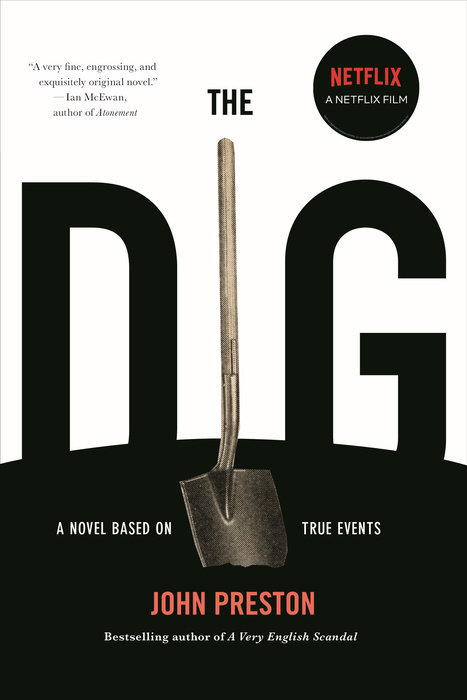
Book Review: The Dig by John Preston

This could be the greatest story you’ve never heard of – well, it was for me until the Neflix movie version came out earlier this year. It had a terrific cast including Carey Mulligan and Ralph Fiennes playing Mrs Pretty, owner of Sutton Hoo, and the man (Basil Brown) she hires to investigate the ancient burial mounds on her Suffolk property. The film had much going for it, including costuming that had me longing for the comfort of classic tailoring.

When I came across the book by John Preston – first published in 2007 – I was happy to revisit the story which is just so interesting. Not only did Sutton Hoo offer up a hoard of fantastic Anglo Saxon treasures: a stunning metal helmet, bowls, amulets and jewellery – a quick trip to google will show you – but it was also encased in a ninety foot ship. Of course the ship’s timber had long since rotted to nothing, so how Basil, and the archaeologists who followed, sensitively excavate the site to reveal it is a wonder.

When Basil discovers a coin the site is soon shown to date from around the seventh century AD – so not a Viking hoard, as first thought, but Anglo Saxon. Suddenly people’s opinions of the what were termed the Dark Ages were challenged. The departure of the Romans from Britain didn’t seem to herald a time of barbarism, barren of any artistic sophistication after all, if the stunning artefacts were anything to go by.

And while the reimagining of all this is enthralling enough, the characters are engaging too. We follow several viewpoints, beginning with Edith Pretty, a frail widow in her late fifties who wants to excavate the mounds before her health fails or there’s a German invasion – this is the summer of 1939. She has a young son, who’s at a loose end having lost his governess, so he chums up with Basil. We’re also in the mind of Basil who’s not an academic, but knows his soil. When the British Museum gets involved, he and Mrs Pretty are sidelined.

This creates plenty of tension and intellectual snobbery which brings in some terrific scenes and personality clashes. Also on the dig is newly married Peggy Piggott (apparently a relative of the author’s) who is helping her university professor husband. Already cracks are appearing in their marriage, and things get complicated when Edith’s young cousin, Rory, turns up on his bike with his photographic equipment.

While the film gives you the visuals to imagine the excavation site, the book adds lots of interesting detail – although the author has taken a few factual liberties, as he explains, ‘for dramatic effect’. I would recommend both for anyone who loves history and archaeology, or a cracking good story. Incidentally, John Preston is also the author of A Very English Scandal – another book on my wish list. The Dig gets a comfortable four out five from me.

Book Review: Anxious People by Fredrik Backman

I’d heard so many good things about Anxious People that it’s been on my Must Read list for a while. And yet a book about an attempted bank heist which turns into a hostage drama isn’t my usual cup of tea. But this is no crazy Bruce Willis and thugs with sub-machine guns story. It’s about ordinary people, strangers who get caught up in an interesting situation and kind of get to know each other.

As the title would suggest, they’ve got problems. The bank robber, following a broken marriage is also suddenly unemployed. No income means no means to pay the rent and that means no home for the kids. The bank won’t lend the robber money either. The story is also about Jack and Jim – the two police officers called to the scene of a hostage situation at an apartment hosting an open home. It’s New Year’s Eve, not an ideal time for an open home, but the door’s open, so that’s where the bank robber escapes to. We learn Jack’s story – how he mightn’t have joined the police, alongside his father, Jim (a bumbling but kindly officer), if he hadn’t witnessed a suicide on a bridge.

The suicide’s story is similar to the bank robber’s. How the banks lost the victim’s savings and assets, which left him with nothing and a family to support. Jack tries to stop him, and fails. The next day visiting the bridge he stops a young girl from jumping too. The girl is later revealed as a character in the story, unbeknownst to Jack, as is the bank manager who couldn’t help the first victim. Jack’s experience as a fifteen year old drives him to want to help people, though these days he mostly just seems to help his father.

Meanwhile the story of how the bank robber escaped and the backstories of the hostages are explored as the book progresses. There is plenty of humour and philosophical meanderings. Thoughts on what makes a happy marriage, a happy life are mulled over by the bank robber and the hostages as they all start getting to know each other. There’s a ton of quotable moments – if you want a snapshot just check out those listed on GoodReads.

“They say that a person’s personality is the sum of their experiences. But that isn’t true, at least not entirely, because if our past was all that defined us, we’d never be able to put up with ourselves. We need to be allowed to convince ourselves that we’re more than the mistakes we made yesterday. That we are all of our next choices, too, all of our tomorrows.” 

The hostage drama turns into quite a nice little get-together over pizza. Fortunately for all concerned there’s a massive traffic jam on the highway out of Stockholm and the designated police negotiator takes a long time to arrive. So everything’s left to Jack and Jim, and the hostages themselves, to work out a solution.

Anxious People is a quirky, feel-good read with plenty of twists, secrets revealed and interesting connections. The story jumps between character to character, dips back in time and allows the hostages to tell their stories and come up with answers. I haven’t read Backman’s previous books (A Man Called Ove, My Grandmother Asks Me to Tell You She’s Sorry are two titles that spring to mind), but now I’m keen to read more. This one’s a four out of five read from me.

Book Review: Still Life by Sarah Winman

Sarah Winman’s new book begins in 1944 Italy, as English troops are engaged in the push back agains the Germans. We’ve got a meeting between two unlikely friends: Evelyn Skinner a sixty-something art historian sojourning in Tuscany with fellow lesbian Margaret; and a young soldier, Ulysses Temper. Temps, as his mates call him, chances upon Evelyn and introduces her to his erudite Captain Darnley and the three discover a painting which has a big effect on the young soldier.

Oh, drop the Miss, for God’s sake, said Evelyn, sitting down next to him. My name’s Evelyn. And yours?

Ulysses.

Ulysses! How wonderful! And is there a Penelope waiting for your return?

Nah. Just a Peggy. And I doubt she’s waiting, and he turned the ignition and the jeep pulled away.

Temps is from London’s East End, the son of a globe-maker, a fitting occupation for a man named Ulysses. He paints delicate versions of the Earth on carefully prepared spheres, but his experiences in Florence will stay with him long after his return. A chance interception of an attempted suicide will bring him back here, but not before we’ve been introduced to his fellow Eastenders who make up a kind of family, and the 1940s spin into the 1950s.

Winman creates some wonderful characters here, all of them centred on the Stoat and Parrot – the pub owned by Col, a cantankerous publican with permanent dyspepsia. Col runs through girlfriends in alphabetical order, blaming the Shakespeare-spouting parrot for the desertion of his wife. But he’s got a disabled daughter to raise, a naive innocent. Fortunately Peggy’s on hand, taking the girl under her wing along with old-timer Cress who talks to a tree and keeps an eye out for everyone.

Peggy is Ulysses’s wife – a hasty marriage brought on by the start of war, but his time away has Peggy form an attachment to American soldier, Eddie, and left her with a daughter, Alys. When Eddie fails to return, Peggy belts out her blues in song at the Stoat and Parrot, accompanied by Pete, when he’s not in a show. The reader gets enough of the gritty post-war London with it’s slow rebuild and pea-soup fogs to want better for this odd family of characters. It comes in the form of a legacy which has Ulysses, Cress and young Alys (who Ulysses loves like his own daughter) move to Florence accompanied by Claude, the parrot.

From here, the story weaves through the decades, and Ulysses makes new friends and learns to love the Italian lifestyle. He chucks out his demob suit for a sharp Italian look and Cress learns to cook pasta. Our friends from the Stoat and Parrot will drift here for visits and longer stays, watching the big world events play out – the moon landings, student demonstrations, assassinations of Martin Luther King and JFK – as the world recreates itself after the recent wars.

Still Life is a feast for the senses. The food alone in this book is worth reading it for – I pulled out an Italian cookbook destined for a second-hand fair, determined to revisit some of these classic dishes. As well as the food and wine we have sweltering summers, scented gardens, wonderful art (and poetry), the music of the day, romantic attachments of all kinds, shown with sensitivity and warmth.

I loved the characters, but particularly Ulysses, who unlike his namesake, is sensitive, charming and caring, quietly missing Peggy who he can’t seem to forget. Still Life is a lively book full of lifelike people who learn to live and love again in a wonderful new place (there’s also a quirky lack of punctuation when it comes to dialogue, which took a bit of getting used to). It’s also a hymn to Florence, and if you’ve been there before, Still Life will bring it all back for you. A book that charms on many levels, it’s a four out of five read from me.

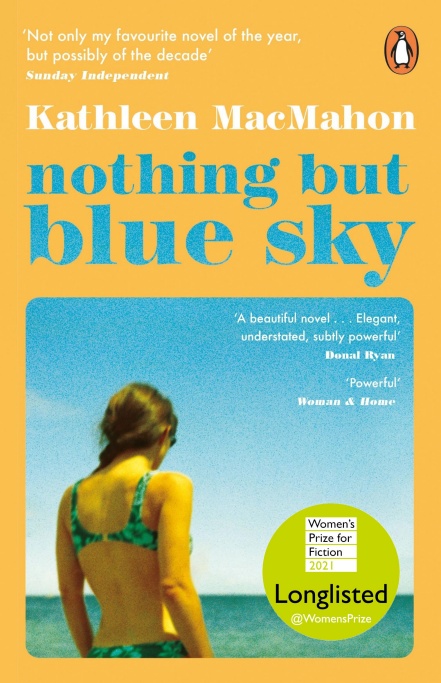
Book Review: Nothing But Blue Sky by Kathleen MacMahon

When winter starts to bite, there’s nothing like a book cover showing a summery scene to make you want to pick it up. Kathleen MacMahon’s latest book, Nothing But Blue Sky describes a succession of summer holidays spent abroad, mostly on the sunny Costa Brava. 

David Dowling is recently bereaved – his wife, Mary Rose, killed in a plane crash while she was on her way to a wedding. Ever since they were newly married, the couple have holidayed at the same Spanish seaside town, visiting the same restaurant over the years, the same bar for their pre-dinner aperitif. They’ve people watched, making up stories in particular about a glamorous French family.

In many ways, this is the story of a marriage. David is a cynical foreign correspondent, who doubts his capacity for happiness. His parents seemed to live in a loveless marriage, his father bullying his mother, just as his older brother bullied David. When David meets Mary Rose, he is swept up into the world of his girlfriend’s family, a home full of joy and conversation and people who actually seem to like each other. David discovers another way to live, but can’t quite shake off his inner doubts, his bad cop to Mary Rose’s good cop routine.

When Mary Rose dies, David’s grief is all-consuming. He revisits the events of his marriage – Mary Rose’s goodness and optimism, their childlessness, the way they just seemed to gel, their disagreements. The book weaves their story together in chapters that read a little like a succession of short stories highlighting different aspects of their relationship.

A summer holiday with friends, soon after the air crash, is a miserable affair for David, so he bravely takes himself off to Aiguaclara one more time, and the possibility of starting again takes shape. 

MacMahon draws you slowly into the novel, and in David has created a brilliant character study. How do you deal with feelings, when you’ve spent a lot of your life suppressing them? David is a difficult character but oddly likeable, and you want him to learn a little empathy and trust. This is such a sensitive portrayal about love and loss, about happiness and grief, nuanced and yet also very entertaining. 

The book reminded me a little of novels I’ve read by Anne Enright as well as Andrea Levy. I can’t wait to read more by MacMahon. Nothing But Blue Sky earns a four and a half out of five from me.

Book Review: Home Stretch by Graham Norton

I listened to Home Stretch as an audiobook, and this is a terrific option in this case as the book is read by the author. Graham Norton has a warm and vivid reading style – he has the kind of voice that sounds friendly and the humour never seems all that far away, even when the plot takes a serious turn. Which it does quite often.

The story concerns young Connor, who is caught up with a bunch of local teenagers on the eve of a wedding, tagging along on a trip to the beach. He’s the son of a publican in one of those tiny Irish coastal towns where everybody knows everybody and there’s no hiding any secrets, or so we might suppose. When the car crashes and three are killed, including the bride and groom, another girl left fighting for her life, Connor carries the shame of being the driver responsible.

After the court case, Connor is sent to Liverpool to work for a cousin’s building business and sets out to forget his family, his town and all that has gone on before. But Connor has another secret – he is gay – something he has never been able to mention to his family; this is 1987 after all. When fate conspires to send Connor to London and later to the US, it seems like he can never go home.

The story weaves between Connor’s and that of his sister, Ellen, rescued from shame by Connor’s fellow crash survivor, Martin, the doctor’s son. Martin seems to be the white knight, dazzling Ellen with thoughts of new beginnings. Things don’t quite turn out for Ellen as she may have hoped, and eventually the past will come back and secrets will emerge. Can Connor ever make his way home again and find acceptance in his family?

The story switches between viewpoints and jumps through the decades to the time of the referendum that voted for legalising gay marriage in Ireland. Even Connor’s dad put up a ‘vote yes’ poster in the pub, so the book mirrors changes in society as well as several dawning realisations among the main characters. I felt this was perhaps a more personal story from this author, and it is easy to imagine Norton weaving in some of his own experiences and insight about the gay scene and the shifts in public perception over time.

My only reservation was that sometimes we seem to be fairly galloping through the years and I could happily have stayed awhile longer here and there. But at least this keeps the reader hooked on the story, wondering if Connor will ever make it home to face the past. The book is told with very real feeling and any parent will relate to the fear of never seeing their child again. Norton has such a deep empathy for his characters, even the ones we are not supposed to like are not painted entirely black – there is understanding for them as well.

I loved the dialogue which is very real and lively – Norton having a keen ear for the way people express their personalities in speech. And then there’s the humour, just twinkling away in the background, caught in the banter of characters’ interactions, the way they perceive themselves, the foolishness of youth, the misunderstandings. Home Stretch is a heartfelt and entertaining read, and I thoroughly recommend the audiobook version and Graham Norton’s splendid performance. A three and a half out of five read from me.

Book Review: The Weekend by Charlotte Wood

This is such a different sort of novel from Wood’s earlier work, The Natural Way of Things, which was a dystopian novel with an underlying tone of menace. I thought it was a stunning read and was happy to hear she had a new book out. The Weekend is a more character driven novel, told with wit and insight, following three women in their seventies who have lost their former glory, are bitter or desperate – is it too late to recover, recharge and reinvent themselves?

The women are old friends who are missing the fourth of their circle, Sylvie, who has recently died. They gather at Sylvie’s beach house just on Christmas to clean it and clear out the junk, ready to sell. First there’s Jude – she’s the bossy one who likes things done properly. She’s worked in a fashionable restaurant, makes a terrific pavlova, and has been the mistress of a wealthy married man for decades. After the house clear-out, she and David will steal a precious few days together. Jude is the first to arrive, but where are the other two? So typical of them to let her down.

We catch up with Wendy, who has car trouble, sweltering as she waits for the breakdown service – we’re in Australia and Christmas is in summer. Adding to her discomfort is her ancient dog, Finn, seventeen, blind, deaf and incontinent – a raft of conditions that make him constantly fretful. If only Wendy would listen to her daughter and have the dog put down. But Finn has been her consolation ever since her husband passed away. It’s hard to imagine Wendy is an academic of some repute who has written books on feminism that have been received with widespread critical acclaim.

Then there’s Adele, an actress who keeps missing the train, facing a bunch of problems including imminent homelessness, and a lack of available stage roles which is galling for someone who dazzled with her Blanche DuBois, Mother Courage, Lady Macbeth – so many brilliant performances. Then there’s the lack of cash – at least she’s well turned out, her figure still good for her age, her stunning breasts still shapely, her recent pedicure money well-spent.

Most often when Adele was exposed, or shamed, she turned for courage to the moment every actor knew: the moment on stage, entirely yours, waiting in the pitch-dark before the lights came up, the most powerful privacy a person could have. The fear drained away and adrenaline replaced it, and you were ready on your mark, in the darkness….In that moment of taut, pure potential, everything, everyone, was yours.

Jude doesn’t expect a lot from Adele, but has made a list none the less and the three crack on, each imagining the past, their petty grievances, their fears and insecurities. They don’t seem to be getting along at all – was it only Sylvie who kept them all connected?

The Weekend is a wonderful story about friendship and the odd ties that bind it, the feelings that threaten to break it, told in brilliant, witty prose. I hadn’t expected to like it as much as I did, but found myself drawn into a story about three women in the autumn years of their lives – a time when there may not be many more chances for new horizons, but still, who knows? There is just enough plot to keep things bubbling along, with some revelations towards the end that bring things to a head.

I loved the way Wood creates physical discomfort that mirrors the discomfort of the characters’ interactions: the rusty inclinator – a lift-like contrivance that clunks its passengers up to the house; a drenching storm; Wendy’s uncomfortable sandals; Adele caught out needing a pee at the beach with no facilities in sight; anything to do with the dog, Finn. And clearing out a house you have all those years of accumulated junk – the flotsam and jetsam that make a life – now decaying and useless.

It all adds up to a brilliant read, which reminded me a little of Jane Gardam, another writer who has created some brilliant older characters (see Old Filth trilogy), or maybe it was the similar wry tone. The Weekend earned Wood a spot on the Stella Prize shortlist and I will be keeping her on my radar, eager to see what she comes up with next. A four and a half out of five read from me.

Book Review: The Lost Girls of Paris by Pam Jenoff

I read the audio version of The Lost Girls of Paris, having first been intrigued by the book when it came out. Perhaps I was a little reluctant to read about female agents dropped into France during the war, as I knew many fell straight into enemy hands only to be tortured and killed. The title of the book offers no consolation but trialling the first few minutes of the audiobook, I found I was immediately hooked.

It’s New York in 1946, and Grace Healey is on her way to work after a tumble in the sack with an old friend of her late husband. She’d bumped into Mark on the street, had too much to drink, etc. etc. and now she feels a little ashamed of herself. She feels scruffy in yesterday’s clothes and is running late. Near Grand Central Station, she comes across the aftermath of an accident – a woman hit by a car and killed, a sobering moment for sure. Determined to clean herself up in the station bathroom, Grace discovers an abandoned suitcase and takes a peek inside to look for the owner’s identity. There are no obvious clues, but tucked within is a packet of photographs showing women in uniform.

The sight of the photos does something to Grace and before she knows it, she’s stuffed them into her handbag before hurrying off to work. Planning to return them later, events conspire against her. Grace learns the photos belonged to the dead woman, Eleanor Trigg, a former British secret service officer in charge of women agents sent to France. She becomes determined to find out what Trigg was doing in New York and the significance of the photos. Slowly, the story of the women agents who lost their lives in the build-up towards D-Day unfolds.

The novel is told partly from Grace’s point of view, with her developing and bumpy relationship with Mark as a back story. We also have the narrative voice of Eleanor Trigg herself, a former Polish refugee, with indispensable skills at the conference table at SOE headquarters. When male agents keep getting captured in France, Eleanor points out that they are too easily spotted in a country where nearly all the younger men have been sent to camps as either POWs or for work. She suggests sending women. The idea seems shocking at first, but before long, Eleanor finds herself in charge of their recruitment and supervision.

The third narrator is Marie, noticed on a train reading Baudelaire in the original French and offered an interview. Marie is just scraping by, trying to maintain payments on her London home, her husband having decamped for South America and leaving her with a young daughter, now in the care of an aunt. It’s hard to imagine why Marie would be a good agent, apart from the faultless French, as she’s always asking questions and struggles with the training. Only her rapport with Josie, a former street kid with plenty of nous and well-honed survival skills, keeps Marie going. We follow Marie through her first missions in France as a radio operator, her friendships with fellow agents, particularly the gruff young man in charge of operations.

The story keeps you on the edge of your seat, with the Allied invasion looming, the liberation of France can’t be far away. But this only adds to the risks Marie and co must take, sabotaging the enemy’s potential to fight back and that will mean reprisals. Meanwhile, Grace struggles to learn more about Eleanor and the women agents who failed to return after the war. No one knows what happened to them, they just disappeared.

I enjoyed the characters of Marie, Eleanor and especially Grace, who is still coming to terms with being a war widow, but is determined to forge an independent life for herself in New York, rather than relying on her comfortably off parents. There are some interesting minor characters – I particularly enjoyed Grace’s boss, an overworked solicitor advocating for recently arrived immigrants. The writing however was a little overwrought at times when I felt the events of the story often spoke for themselves. This was a little disappointing as this is such a story worth telling. Still, the narration of the audiobook made it all whizz by and the ending was reasonably satisfying. A three out of five read from me.

Book Review: The Silent Patient by Alex Michaelides

There’s nothing like a good psychological thriller to while away a wet weekend. The Silent Patient ticks all the boxes, combining a troubled narrator who in this case is a psychotherapist, an even more troubled patient and the mystery surrounding the death of her husband.

Theo Faber has recently taken a post at The Grove, a care facility for troubled minds and is particularly interested in one patient. Alicia is a former artist of some note who has remained unable to talk since supposedly murdering her husband, the famous photographer Gabriel Berenson. The media have made a lot of their story which has done heaps to push up the value of Gabriel’s work.

If Theo can persuade Alicia to speak about the night her husband died, Alicia may begin to heal. But because of her suicide attempts, Alicia is highly medicated at The Grove, doesn’t interact with other staff or patients, nor does she respond to any kind of therapy. The story is told mostly through the voice of Theo, himself a survivor of a terrible childhood and for whom psychotherapy has changed his life. He is convinced he can help Alicia and manages to persuade his boss, the avuncular Dr Diomedes and Christian, Alicia’s surly psychologist, to reduce her meds and let him try.

As well as tensions at The Grove, which is under threat of closure, not to mention volatile patients who do violent things, Theo gets into trouble by breaking rules. He interviews Alicia’s friends and relatives – the brother-in-law solicitor, Max, who has a bit of a temper; Alicia’s cousin Paul who still lives in the ramshackle house they grew up in with his monstrous mother; and Alicia’s old friend and art curator, Jean-Felix, who like pretty much everyone else is holding something back. Michaelides also allows Alicia’s own voice to tell the story through a hidden diary, which throws up some interesting questions. Then there’s Alicia’s symbolic and dramatic art. Her last picture is titled Alcestis after the Ancient Greek story popularised by Euripides about another wife driven to silence by love.

We have all the ingredients for a suspenseful and nuanced thriller, drawing you in through the thoughts of the therapist/patient combo of Theo and Alicia. In the background there are dangers lurking and a sense of impending doom. But it wouldn’t be a good thriller without a few interesting plot twists and Michaelides is a master at this. Already known for his work as a screenwriter, this is his first novel and it would be easy to see the book as a movie. But I also really enjoyed the writing and am happy to learn he’s sticking with fiction for now and has a new book on the horizon. For me the pages whizzed by as I raced to find out what really happened to Alicia and Gabriel. A four out of five read from me.