Book Review: Home Stretch by Graham Norton

I listened to Home Stretch as an audiobook, and this is a terrific option in this case as the book is read by the author. Graham Norton has a warm and vivid reading style – he has the kind of voice that sounds friendly and the humour never seems all that far away, even when the plot takes a serious turn. Which it does quite often.

The story concerns young Connor, who is caught up with a bunch of local teenagers on the eve of a wedding, tagging along on a trip to the beach. He’s the son of a publican in one of those tiny Irish coastal towns where everybody knows everybody and there’s no hiding any secrets, or so we might suppose. When the car crashes and three are killed, including the bride and groom, another girl left fighting for her life, Connor carries the shame of being the driver responsible.

After the court case, Connor is sent to Liverpool to work for a cousin’s building business and sets out to forget his family, his town and all that has gone on before. But Connor has another secret – he is gay – something he has never been able to mention to his family; this is 1987 after all. When fate conspires to send Connor to London and later to the US, it seems like he can never go home.

The story weaves between Connor’s and that of his sister, Ellen, rescued from shame by Connor’s fellow crash survivor, Martin, the doctor’s son. Martin seems to be the white knight, dazzling Ellen with thoughts of new beginnings. Things don’t quite turn out for Ellen as she may have hoped, and eventually the past will come back and secrets will emerge. Can Connor ever make his way home again and find acceptance in his family?

The story switches between viewpoints and jumps through the decades to the time of the referendum that voted for legalising gay marriage in Ireland. Even Connor’s dad put up a ‘vote yes’ poster in the pub, so the book mirrors changes in society as well as several dawning realisations among the main characters. I felt this was perhaps a more personal story from this author, and it is easy to imagine Norton weaving in some of his own experiences and insight about the gay scene and the shifts in public perception over time.

My only reservation was that sometimes we seem to be fairly galloping through the years and I could happily have stayed awhile longer here and there. But at least this keeps the reader hooked on the story, wondering if Connor will ever make it home to face the past. The book is told with very real feeling and any parent will relate to the fear of never seeing their child again. Norton has such a deep empathy for his characters, even the ones we are not supposed to like are not painted entirely black – there is understanding for them as well.

I loved the dialogue which is very real and lively – Norton having a keen ear for the way people express their personalities in speech. And then there’s the humour, just twinkling away in the background, caught in the banter of characters’ interactions, the way they perceive themselves, the foolishness of youth, the misunderstandings. Home Stretch is a heartfelt and entertaining read, and I thoroughly recommend the audiobook version and Graham Norton’s splendid performance. A three and a half out of five read from me.

Book Review: The Weekend by Charlotte Wood

This is such a different sort of novel from Wood’s earlier work, The Natural Way of Things, which was a dystopian novel with an underlying tone of menace. I thought it was a stunning read and was happy to hear she had a new book out. The Weekend is a more character driven novel, told with wit and insight, following three women in their seventies who have lost their former glory, are bitter or desperate – is it too late to recover, recharge and reinvent themselves?

The women are old friends who are missing the fourth of their circle, Sylvie, who has recently died. They gather at Sylvie’s beach house just on Christmas to clean it and clear out the junk, ready to sell. First there’s Jude – she’s the bossy one who likes things done properly. She’s worked in a fashionable restaurant, makes a terrific pavlova, and has been the mistress of a wealthy married man for decades. After the house clear-out, she and David will steal a precious few days together. Jude is the first to arrive, but where are the other two? So typical of them to let her down.

We catch up with Wendy, who has car trouble, sweltering as she waits for the breakdown service – we’re in Australia and Christmas is in summer. Adding to her discomfort is her ancient dog, Finn, seventeen, blind, deaf and incontinent – a raft of conditions that make him constantly fretful. If only Wendy would listen to her daughter and have the dog put down. But Finn has been her consolation ever since her husband passed away. It’s hard to imagine Wendy is an academic of some repute who has written books on feminism that have been received with widespread critical acclaim.

Then there’s Adele, an actress who keeps missing the train, facing a bunch of problems including imminent homelessness, and a lack of available stage roles which is galling for someone who dazzled with her Blanche DuBois, Mother Courage, Lady Macbeth – so many brilliant performances. Then there’s the lack of cash – at least she’s well turned out, her figure still good for her age, her stunning breasts still shapely, her recent pedicure money well-spent.

Most often when Adele was exposed, or shamed, she turned for courage to the moment every actor knew: the moment on stage, entirely yours, waiting in the pitch-dark before the lights came up, the most powerful privacy a person could have. The fear drained away and adrenaline replaced it, and you were ready on your mark, in the darkness….In that moment of taut, pure potential, everything, everyone, was yours.

Jude doesn’t expect a lot from Adele, but has made a list none the less and the three crack on, each imagining the past, their petty grievances, their fears and insecurities. They don’t seem to be getting along at all – was it only Sylvie who kept them all connected?

The Weekend is a wonderful story about friendship and the odd ties that bind it, the feelings that threaten to break it, told in brilliant, witty prose. I hadn’t expected to like it as much as I did, but found myself drawn into a story about three women in the autumn years of their lives – a time when there may not be many more chances for new horizons, but still, who knows? There is just enough plot to keep things bubbling along, with some revelations towards the end that bring things to a head.

I loved the way Wood creates physical discomfort that mirrors the discomfort of the characters’ interactions: the rusty inclinator – a lift-like contrivance that clunks its passengers up to the house; a drenching storm; Wendy’s uncomfortable sandals; Adele caught out needing a pee at the beach with no facilities in sight; anything to do with the dog, Finn. And clearing out a house you have all those years of accumulated junk – the flotsam and jetsam that make a life – now decaying and useless.

It all adds up to a brilliant read, which reminded me a little of Jane Gardam, another writer who has created some brilliant older characters (see Old Filth trilogy), or maybe it was the similar wry tone. The Weekend earned Wood a spot on the Stella Prize shortlist and I will be keeping her on my radar, eager to see what she comes up with next. A four and a half out of five read from me.

Book Review: The Lost Girls of Paris by Pam Jenoff

I read the audio version of The Lost Girls of Paris, having first been intrigued by the book when it came out. Perhaps I was a little reluctant to read about female agents dropped into France during the war, as I knew many fell straight into enemy hands only to be tortured and killed. The title of the book offers no consolation but trialling the first few minutes of the audiobook, I found I was immediately hooked.

It’s New York in 1946, and Grace Healey is on her way to work after a tumble in the sack with an old friend of her late husband. She’d bumped into Mark on the street, had too much to drink, etc. etc. and now she feels a little ashamed of herself. She feels scruffy in yesterday’s clothes and is running late. Near Grand Central Station, she comes across the aftermath of an accident – a woman hit by a car and killed, a sobering moment for sure. Determined to clean herself up in the station bathroom, Grace discovers an abandoned suitcase and takes a peek inside to look for the owner’s identity. There are no obvious clues, but tucked within is a packet of photographs showing women in uniform.

The sight of the photos does something to Grace and before she knows it, she’s stuffed them into her handbag before hurrying off to work. Planning to return them later, events conspire against her. Grace learns the photos belonged to the dead woman, Eleanor Trigg, a former British secret service officer in charge of women agents sent to France. She becomes determined to find out what Trigg was doing in New York and the significance of the photos. Slowly, the story of the women agents who lost their lives in the build-up towards D-Day unfolds.

The novel is told partly from Grace’s point of view, with her developing and bumpy relationship with Mark as a back story. We also have the narrative voice of Eleanor Trigg herself, a former Polish refugee, with indispensable skills at the conference table at SOE headquarters. When male agents keep getting captured in France, Eleanor points out that they are too easily spotted in a country where nearly all the younger men have been sent to camps as either POWs or for work. She suggests sending women. The idea seems shocking at first, but before long, Eleanor finds herself in charge of their recruitment and supervision.

The third narrator is Marie, noticed on a train reading Baudelaire in the original French and offered an interview. Marie is just scraping by, trying to maintain payments on her London home, her husband having decamped for South America and leaving her with a young daughter, now in the care of an aunt. It’s hard to imagine why Marie would be a good agent, apart from the faultless French, as she’s always asking questions and struggles with the training. Only her rapport with Josie, a former street kid with plenty of nous and well-honed survival skills, keeps Marie going. We follow Marie through her first missions in France as a radio operator, her friendships with fellow agents, particularly the gruff young man in charge of operations.

The story keeps you on the edge of your seat, with the Allied invasion looming, the liberation of France can’t be far away. But this only adds to the risks Marie and co must take, sabotaging the enemy’s potential to fight back and that will mean reprisals. Meanwhile, Grace struggles to learn more about Eleanor and the women agents who failed to return after the war. No one knows what happened to them, they just disappeared.

I enjoyed the characters of Marie, Eleanor and especially Grace, who is still coming to terms with being a war widow, but is determined to forge an independent life for herself in New York, rather than relying on her comfortably off parents. There are some interesting minor characters – I particularly enjoyed Grace’s boss, an overworked solicitor advocating for recently arrived immigrants. The writing however was a little overwrought at times when I felt the events of the story often spoke for themselves. This was a little disappointing as this is such a story worth telling. Still, the narration of the audiobook made it all whizz by and the ending was reasonably satisfying. A three out of five read from me.

Book Review: The Silent Patient by Alex Michaelides

There’s nothing like a good psychological thriller to while away a wet weekend. The Silent Patient ticks all the boxes, combining a troubled narrator who in this case is a psychotherapist, an even more troubled patient and the mystery surrounding the death of her husband.

Theo Faber has recently taken a post at The Grove, a care facility for troubled minds and is particularly interested in one patient. Alicia is a former artist of some note who has remained unable to talk since supposedly murdering her husband, the famous photographer Gabriel Berenson. The media have made a lot of their story which has done heaps to push up the value of Gabriel’s work.

If Theo can persuade Alicia to speak about the night her husband died, Alicia may begin to heal. But because of her suicide attempts, Alicia is highly medicated at The Grove, doesn’t interact with other staff or patients, nor does she respond to any kind of therapy. The story is told mostly through the voice of Theo, himself a survivor of a terrible childhood and for whom psychotherapy has changed his life. He is convinced he can help Alicia and manages to persuade his boss, the avuncular Dr Diomedes and Christian, Alicia’s surly psychologist, to reduce her meds and let him try.

As well as tensions at The Grove, which is under threat of closure, not to mention volatile patients who do violent things, Theo gets into trouble by breaking rules. He interviews Alicia’s friends and relatives – the brother-in-law solicitor, Max, who has a bit of a temper; Alicia’s cousin Paul who still lives in the ramshackle house they grew up in with his monstrous mother; and Alicia’s old friend and art curator, Jean-Felix, who like pretty much everyone else is holding something back. Michaelides also allows Alicia’s own voice to tell the story through a hidden diary, which throws up some interesting questions. Then there’s Alicia’s symbolic and dramatic art. Her last picture is titled Alcestis after the Ancient Greek story popularised by Euripides about another wife driven to silence by love.

We have all the ingredients for a suspenseful and nuanced thriller, drawing you in through the thoughts of the therapist/patient combo of Theo and Alicia. In the background there are dangers lurking and a sense of impending doom. But it wouldn’t be a good thriller without a few interesting plot twists and Michaelides is a master at this. Already known for his work as a screenwriter, this is his first novel and it would be easy to see the book as a movie. But I also really enjoyed the writing and am happy to learn he’s sticking with fiction for now and has a new book on the horizon. For me the pages whizzed by as I raced to find out what really happened to Alicia and Gabriel. A four out of five read from me.

Book Review: Small Pleasures by Clare Chambers

Clare Chambers writes the kind of novel that I particularly like, finding the unique in ordinary characters, rounded out with gorgeous writing full of perception and wit. We hadn’t had anything new from her for a while, so when Small Pleasures appeared I let out a whoop of joy and wasn’t in the least surprised to see the book make the Women’s Prize for Fiction long-list. And of course, when I got my hands on a copy, I devoured it.

Small Pleasures is set in southern England in 1957 and is based around two unrelated events which really happened that year. The first is a rail disaster introduced on the first page of the book as a newspaper report dated 6 December, in which two trains collided in thick fog, leaving 80 dead and many more wounded. But over the page we skip back to June with another story from the North Kent Echo, which is where Jean Swinney works as a reporter.

It’s a small piece on parthenogenesis under the dramatic headline: Men No Longer Needed for Reproduction! Scientists have been studying reproduction in frogs and rabbits, the story says, developing embryos without fertilisation by sperm, and hinting at the possibility that this could take place in larger mammals, even humans. The article elicits a mailbag full of letters, including one from a Mrs Tilbury who states her daughter was born ‘without the involvement of any man’.

Jean’s role on the paper is largely what might once have been called the ‘women’s pages’ – household hints and reports on weddings. Not surprisingly, she’s tasked with making contact with Mrs T – the nature of the story is a bit too delicately feminine for the mostly male newsroom. Jean soon warms to Gretchen Tilbury and her daughter and learns that in the months around young Margaret’s date of conception, Gretchen was a teenager suffering from immobilising rheumatoid arthritis and the patient of a nursing home.

As Jean tries to piece together the facts around Margaret’s birth, encouraging the mother and daughter to take part in a scientific study, her world is suddenly expanded by the Tilburys’ friendship, including Mr Tilbury – Howard – who is kindly and perceptive. She visits the family out of office hours, which is often problematic as Jean also cares for a malingering, agoraphobic mother in a kind of genteel poverty. Theirs is a life of small pleasures indeed.

Small pleasures – the first cigarette of the day; a glass of sherry before Sunday lunch; a bar of chocolate parcelled out to last a week; a newly published library book, still pristine and untouched by other hands …

We are definitely in post-war Britain here. London is the victim of those terrible pea-soup fogs, and unmarried women are expected to look after ageing parents, relinquishing their independence. People are always making do with less it seems. Even Jean’s handy hints column is a little depressing:

Never throw away an old plastic mackintosh. The hood cut off will make a useful toilet bag. The large back panel may be used to line a suitcase to ensure safety from damp should the case get wet when travelling.

But as Jean begins to enjoy her new friendships – a godmotherly relationship with Margaret, as well as the possibility of happiness of a deeper kind – the reader cannot quite forget the image of that rail crash reported on page one. Sooner or later that event is going to raise its ugly head, a bit like Chekov’s gun. For me this gave the book an almost unbearable suspense, and the pages flew by.

Small Pleasures is a brilliant novel if you like stories about lives of quiet desperation told with charm and understanding – Barbara Pym and Anne Tyler spring to mind. I felt absolutely wretched for Jean at times, hopeful at others. Chambers always makes you really care about her characters and I finished the book knowing that the story will stay with me for days afterwards, and it has. A four and a half out of five read from me.

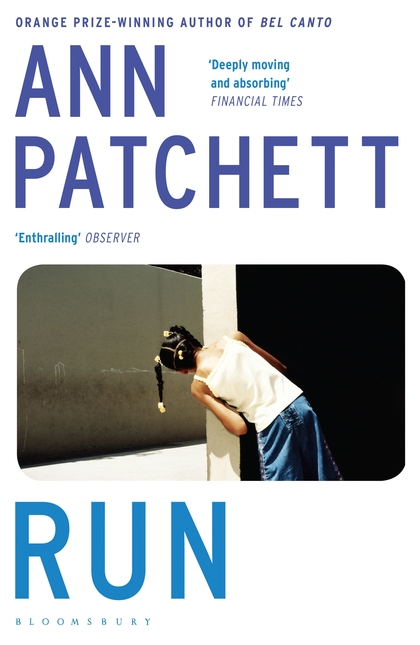
Book Review: Run by Ann Patchett

Another book-fair find, this earlier work by Ann Patchett is well worth picking up. Bracketed between an opening chapter describing how the late and lovely Bernadette Doyle came to acquire a statuette of the Virgin that looks just like her and a chapter decades later when one of her sons is about to receive his degree, most of the story takes place over a couple of days during a Boston winter.

Ex-mayor, Bernard Doyle loves going to political lectures but his two adopted sons, Teddy and Tip, aren’t so keen. Doyle has high hopes for his sons – the political ambitions he was unable to achieve himself. We catch up with Tip in the university lab where he studies fish, waiting for Teddy who is always late. Snow is falling as the two rush to the seats Doyle has saved for them to hear Jesse Jackson.

Later in the street, Tip pleads with his father to return to his lab then steps blindly into the path of a car, saved at the last second by a woman who pushes him aside. She is hit and badly injured, the family gathering round her to wait for the ambulance, while her young daughter, Kenya, tries to keep her warm and be the responsible adult at only eleven. As her mother is taken off to hospital, and there is no one else to care for Kenya, the Doyle family are drawn to this spirited and practical young girl and find themselves stepping in. While they wait for news of the woman’s prognosis, they all discover connections they couldn’t have possibly imagined.

Told from the varying viewpoints of Tip, Teddy, their older brother (the prodigal Sullivan), as well as Doyle, Kenya and her mother, surprises are revealed in conversations brought on by the accident. In many ways it is a small story, just a day or two during a bitterly cold Boston winter, but there are links far back into the past. It all comes together to create a very original and engaging story – some things you won’t see coming – with themes around what makes a family, racial inequality, honour and reputation as well as what we might do for the ones we love.

Patchett draws characters with great empathy, showing their faults and weaknesses, as well as their yearnings to do better, the love and the friction they share with family members. And as with her more recent books, Commonwealth and The Dutch House, she’s great with how she writes about siblings. Overall, it’s a very satisfying read, well written and nicely put together. It’s always worth checking out the back catalogues of authors like Patchett (this one is from 2007). Run is a four out of five star read from me.

Book Review: Mum and Dad by Joanna Trollope

Sometimes when you come to a hiatus in your reading, something a little familiar is just what you need to get going again. Mum & Dad is the twenty-first novel by Trollope dealing with everyday life, family and relationships. You might say they follow a well-worn path. Often a couple, their family or friends, are tested by some bolt from the blue, leaving them to dig deep, examine themselves and their relationships with those around them to find a way forward.

In the case of Mum & Dad, the family is the Beachams, an old family going back to the Domesday Book, with a more recent tradition of naming their first born son Gus. Monica Beacham, who loathed her domineering father-in-law refused in a rare act of defiance and so named her first son Sebastian. If only Monica had continued to be more of her own person, as forty-plus years later we find her with her husband in Spain, where Gus has become an award-winning wine-maker and at seventy-tree is a grumpy old man. And at the start of the book, a grumpy old man who has just had a stroke. Think bear with a toothache.

Monica finds herself in a panic – how to manage the winery and deal with Gus, a husband from whom she has become increasingly estranged. At least she has Pilar, her faithful housekeeper and then there’s younger son Jake who seems only too willing to abandon his life in London to rush out to help her. If only her older children were on board with that idea. Parked in English boarding schools when their parents moved to Spain, while younger brother Jake got to stay with Mum and Dad, there is an undercurrent of resentment. It doesn’t help that Sebastian’s wife Anna just doesn’t get along with Monica – Anna is too controlling, Sebastian never taken seriously by his now teenage boys, Marcus and Dermot. Lately Sebastian feels Anna doesn’t much like him anymore. He’s a bit of a sad sack.

Monica also has a niggling guilt over her daughter Katie, who was miserable at her boarding school, and must have felt abandoned by her parents while Monica played the dutiful wife. Katie has since thrown everything into her career – she’s a successful lawyer – but her family of three daughters sometimes comes off second best, while she and partner Nic seem to be growing apart. But how can you be a good mother if you don’t have the experience of being cared for as a child?

As Monica and her three children have been all slowly drifting towards various kinds of discord and disaster, the catalyst of Gus’s stroke shocks them into all into taking stock. Eventually all three will visit their mother, with or without their spouses and children. They’ll have to connect with each other to find out what’s really going on and things may get a lot worse before they begin to get better. It’s a classic Trollope story, but also a very satisfying one. What makes it work for me are the characters. Not only do they have depth and interesting interplay with their families, they each grow and develop through the book. They’re not always all that likeable, but they seem very real.

I whizzed through Mum & Dad, enjoying the enfolding drama and the settings which switch between London and Spain. And as I read, I remembered that the other thing I like about Trollope is that her books are easy to relate to, picking up changing social conventions and idioms. She shows really well how different generations within a family see things and what they can teach other, even the youngest has her say. Trollope’s books only come out every couple of years, but when they do, I know I will find them worth the wait. A four out of five star read from me.

Book Review: A Long Petal of the Sea by Isabel Allende

I thought I already knew about the Spanish Civil War (1936-39), thanks to all those English and American writers who went there to fight and wrote about it later. Then there was Pablo Picasso’s Guernica which I remember studying at one time. But really I hardly knew anything. I certainly didn’t know quite how brutal it was.

Isabel Allende’s new novel, A Long Petal of the Sea, gave me a lot more insight, I am happy to say. It is mostly the story of Victor Dalmau, a medic on the Republican (Communist) side, glad he doesn’t have to fire a gun. He learns so much in the harsh reality of battlefield surgery and makes a name for himself by restarting a young soldier’s heart who has been left for dead. He’d like to finish his training as a doctor, but as the war ends, it becomes a fight for survival, with Republicans fleeing across the border to France to avoid slaughter.

Among the refugees is Roser, a promising musician who lived with Victor’s family. Roser is carrying the child of Guillem, Victor’s brother. Guillem is most certainly dead and chance to start a new life in Chile forces Victor and Roser to marry. Chile needs musicians more than it needs doctors, but the two make a new life together, and the novel follows their hard work and difficulties, their successes and new friendships. Among these is Felipe del Solar, who introduces Victor to Salvador Allende who is eventually to become President of Chile. Felipe also introduces Victor to his beautiful sister.

Chile is kind to the Dalmau family, but waiting in the wings is another Fascist insurrection and it seems a bit like history repeating itself. Another round of mysterious disappearances, of killings and concentration camps. Isabel Allende weaves into the story of ordinary people some major events and at times the book read more like non-fiction than fiction. This worked well for me and saved me the trouble of constantly reaching for the Internet, as it filled in all the factual stuff you needed to know in an accessible way.

Among the real people who make an appearance is Pablo Neruda, Chile’s famous poet. It is Neruda who had described Chile as ‘a long petal of the sea and wine and snow … (with) a belt of black and white foam’. Neruda, as Chile’s consul in Paris, organises the ship that brings the Dalmaus to Chile and fittingly his poetry introduces each chapter, e.g.:

I have slept with you
the whole night long
while the dark earth turns
with the living and the dead
("Night on the Island" - The Captain's Verses)

Allende deals with some big themes in her book – displacement, nationhood, the effects of war, family issues and so on. But it is also a love story and the way she writes this is with much humanity, sensitivity and tenderness. You can’t help falling in love a little with the characters themselves – especially gentle, hard-working and reliable Victor and fiery, clever and determined Roser. Allende shows us what is both ordinary and special about each of them.

This is such a stunning book, handling some really terrible scenes from history with a lightness of touch but still making them real. I frequently felt a lump in my throat as I read. A five out of five star read from me.

Book Review: The Lost Lights of St Kilda by Elisabeth Gifford

The plot-line for The Lost Lights of St Kilda is fairly classic: boy meets girl; boy falls in love with girl and she with him; circumstances tear them apart and years later, boy tries to find girl again and wonders if it’s too late. Nothing very original here, but what makes this novel so very interesting are the settings.

The story opens with Fred, a prisoner of war courtesy of the Germans, following his capture at St Valery. It’s 1940, and while many British servicemen were evacuated at Dunkirk, he’s stuck in a dark, dank prison cell with others from the 51st Highland Division, dreaming of home. Fred’s in his thirties, has lived all around the world with his work as a geologist, but what he can’t stop thinking about is the girl he left behind a dozen years before when he was researching the rock strata on St Kilda.

St Kilda is a wild and rugged island group off the coast of Scotland. Quite a way off the coast of Scotland. Lewis and Harris are part of the Outer Hebrides, and are hardly within cooee. St Kilda’s home to thousands of seabirds, particularly gannets and fulmars which earn the islanders their livelihood. It’s pretty much subsistence living – it has to be as there’s no regular postal service, no radio communication, so the locals rely on visiting fishing boats and such for mail and supplies.

There’s also a bit of tourism in the summer – visitors make day trips to buy St Kilda handcrafts and to photograph ‘Britain’s last hunter-gatherers’. You can imagine what a smart St Kilda girl like Chrissie thinks of that. Chrissie’s story is woven in with Fred’s. She’s a plucky young girl when we meet her and her narrative describes among other things her fondness for the laird’s son. Archie Macleod is a charismatic but wayward young man who visits the island as a child and instantly causes trouble. Later during his final year at Cambridge, he turns up with Fred Lawson, the two of them settling in for a summer that will change their lives.

Through Fred’s eyes we see a dying way of life. The breathtakingly dangerous work the St Kilda men do each year to harvest fulmar chicks for their oil and meat, abseiling off the steep cliffs that border the main island of Hirta. Then there’s the evenings spent around the fire, the women weaving, the singing and storytelling. The intense devotion the families have for their children who are precious, because so many have died as infants.

Events conspire to have Fred making a new life for himself, though his story is mainly about his wartime bid for freedom, his survival through a terrible winter and his struggle to get back to his girl not knowing what he will find when he gets there. It’s a hymn to the sterling work of French Resistance and ordinary people, often at great cost, to get Allied escapees home.

I loved this book. There is plenty of dramatic tension among the characters, particularly Chrissie, Fred and Archie who are each sympathetic in their own way. Even Archie, who continues to cause trouble as an adult, is well fleshed out, battling his private demons. But mostly it’s the geography that steals the the show here, sending you to the Internet and the haunting images of a lost way of life. A four out of five read from me.

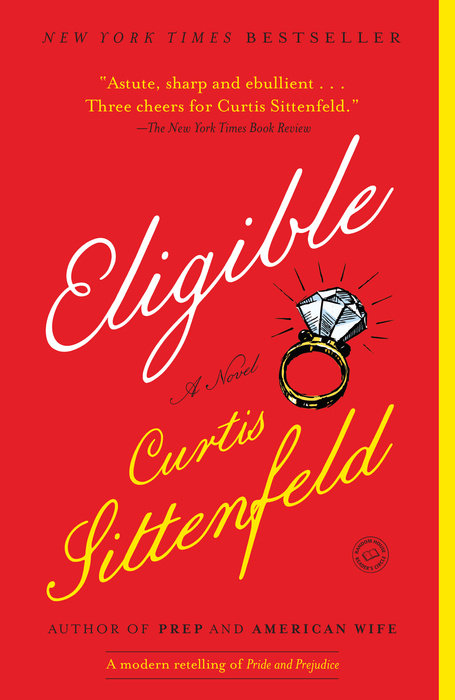
Book Review: Eligible by Curtis Sittenfeld

There was a time when I was an avid Jane Austen reader adding an Austen novel to my reading talley each year. And then there was such a plethora of TV and movie adaptations and they were enjoyable, sure, but somehow my interest waned. Then along came the Austen Project – four modern novels based on four Austen novels, written by well-known authors and kicking off with Joanna Trollope’s Sense and Sensibility.

I’d quite liked Trollope’s version; it was fun but the characters were annoying. Perhaps the characters in the Austen were too – it’s not my favourite Austen by a long chalk. So I forgot about TAP altogether. And then I happened upon Eligible, Curtis Sittenfeld’s take on Pride and Prejudice. Honestly, I enjoyed this book so much I could have sat down and read it through all over again.

Eligible is set in Cincinnati, mostly, with episodes also in New York and California. Mrs Bennett is excited about a certain Chip Bingley who has come to town as an ER doctor at a Cincinnati hospital. Chip is the recent star of a TV reality series called Eligible (somewhat like The Batchelor), where he broke down in tears during the last episode, unable to choose a bride between the two lovelies who made the final. With five unmarried daughters, Mrs B’s keen to orchestrate a social event where they can meet Chip.

Journalist Liz Bennett has been living in New York for years along with her yoga instructor sister Jane but both are recalled to Cincinnati to help when their father has heart surgery. They can’t rely on their mother to feed him a healthy diet and their younger sisters, still living at home though well into their twenties, are useless. Mary spends her time in her room working on her PhD, while Lydia and Kitty are obsessed with working out and don’t even have jobs.

Liz is really the only one who doesn’t need a top up from the Bank of Mom & Dad, and she is appalled at the state of repair of the Bennett family home. When medical bills make it seem impossible to hang onto the house that has been in the family for generations, Liz steps in to try to persuade her parents to sell and the younger Bennetts to get paid employment.

Then there’s the rest of the P&P cast. Darcy, of course, another high flyer at the hospital but with the original snooty disposition we have come to know and love so well; Jasper Wick(ham), a former colleague, best friend and married lover of Liz; Charlotte is Liz’s old friend from home, too plump to attract a Chip Bingley, but a career whizz nevertheless. Women can do anything as we know, in spite of failing on the marriage market, a sentiment emphasised by long-term feminist and women’s rights campaigner, Kathy de Bourgh. Liz has been trying to interview Kathy de Bourgh for her Women Who Dare column for what seems forever.

Throw in an African American realtor and a trans gym owner and you have plenty more to send Mrs Bennett into a spin. Much comedy ensues and the story builds to a brilliant reality tv finale which rounds the story off nicely.

Curtis Sittenfeld has captured all the silliness of modern life in a way that fits the Pride and Prejudice story beautifully. We’ve got the witty dialogue, the terrific characterisation, the misunderstandings and miscommunications you’d expect, all suitably updated. I’d forgotten how much I loved the original and want to read it again. For this and several hours of wonderful entertainment I’m going to give this one a five out of five.