Book Review: Rules of Civility by Amor Towles – a story of love, friendship and making the right connections in 1930s New York

If I had a list of authors who can make a laundry list sound interesting, Amor Towles would surely be near the top of it. (If anyone has already curated a list like that, I’d love to see it – just saying.) Rules of Civility is Towles’s first novel and the writing is just as good as the later books that have made his name: A Gentleman in Moscow and The Lincoln Highway. There’s the same nuanced prose, the characters that seem to breathe on the page, the originality of the storyline.

In this novel we’re in New York City, mostly over a year that begins on New Year’s Eve 1937. Twenty-somethings Katherine Kontent and her roommate, Eve Ross, are out to celebrate, finding themselves in a lacklustre nightclub, where complicated jazz solos make it kind of interesting. Here they stumble upon Tinker Grey, a slightly older, impeccably dressed and very handsome young man.

The three strike up a friendship that pulls them all in different directions. Both girls are drawn to Tinker, but he’s just so enigmatic, it’s hard to tell if either can win his heart. In the meantime they just hang out together, enjoying the vibe they create as a small group of friends. An accident pushes a guilt-ridden Tinker towards Eve, and Katherine shrugs off her disappointment and gets on with life.

It is Katherine’s voice who narrates the story and we follow her progress from a typing pool, to a publishing house and then the competitive world of a society magazine. She’s sharp, witty and hard working, but then she needs to be – she’s rubbing shoulders with an Ivy League-educated elite, while she herself is from fairly humble beginnings. Everything she has she’s had to earn herself. In the background Tinker and Eve waft in and out of her life, while other relationships come and go.

The book is peopled with lively, colourful New Yorkers – the drinking buddies Katherine makes through the girls she works with; well-heeled and influential friends and acquaintances of Tinker’s; the raw, working class guys who hang out with Tinker’s artist brother. Katherine has a gift for fitting in and adding to whichever group she meets and in this way is the perfect narrator.

In front of the boardinghouse Tinker was standing beside a Mercedes coupé as silver as mercury. If all the girls at Mrs. Martingale’s saved a year’s pay, we couldn’t have afforded one.
Fran Pacelli, the five-foot-nine City College dropout from North Jersey who lived down the hall, whistled like a hard hat appreciating the hem of a skirt. Eve and I went down the steps.
Tinker was obviously in a good mood. He gave Eve a kiss on the cheek and a You look terrific. When he turned to me, he smiled and gave my hand a squeeze. He didn’t offer me the kiss or the compliment, but Eve was watching and she could tell that she was the one who’d been short-changed.

A lot happens in just one year, and you can’t help thinking that for many in 1938, times were tough. But not among the glittering social set of New York. The story builds to some surprising revelations, particularly about Tinker but also about others who pass through Katherine’s orbit, the main action of the story bookended by her visit to a photographic exhibition decades later and a kind of catch-up with what has happened in the meantime.

It all makes for a satisfying read: the brilliantly rendered view of 1930s New York, the story of a woman determined to make her own way, the glorious writing. Rules of Civility is just as good as the other books by Amor Towles, and I look forward to his collection of short stories, Table for Two, as well as whatever else he’s got in the pipeline. I know they’ll all be five-star reads, just like this one.

Book Review: The Library by Bella Osborne – a feel-good read about an unlikely friendship and a library in trouble

A public library can be one of those places that offer a respite from the anxieties of everyday life. And while they’re not the silently bookish places they used to be, hosting community groups, classes and story times, they can still be a place of refuge in a way a shopping mall just isn’t. Bella Osborne has taken this idea to create a story around two lonely people and a friendship that develops at the library.

Maggie is seventy-two, a widow who runs a small holding on the outskirts of town. It’s a lonely life but she fills it with her love for her livestock, yoga and books. Her membership of a book group that meets every Saturday is the highlight of her week. Sixteen-year-old Tom is struggling to keep everything together at home where he lives with an alcoholic father. It’s a battle to make ends meet, and his dad wants him to give up school to join him at the factory – they could use the extra wages. But Tom has his sights on a better life, and Farah, a cute girl, if only she’d look his way.

Tom has as an odd idea that Farah uses the library and visits on the pretext of choosing some romance books for his mother. Soon he’s lugging home a pile of books he has no intention of reading. Maggie gets mugged outside the library on her way to her bus-stop and Tom helps her to her feet. Over time an unlikely friendship forms and Tom discovers the wonders of reading, farm life and finally has someone supportive in his life. Maggie has a glimpse of what having a family of her own might have looked like and feels less alone.

They sat side by side on the cool metal seats and waited for the bus. ‘I think this week’s book club read will be more up my street.’
He was looking about. He seemed to have lost interest in her. She got the book out anyway and showed it to him.
The Fault in Our Stars.’ He nodded. ‘You might like it,’ she said. He nodded again before realising his mistake.
‘Nah. Doubt it.’ Tom looked away.
‘It’s okay, Tom. The others don’t know and I won’t be telling them.’
‘Know what?’ He pulled his shoulders back and stared her down.
‘That it’s you reading the books and not your mum.’
His shoulders sagged with every word, until he was back to his rounded-shoulder posture. ‘How’d you know?’
‘The way you read the blurbs before choosing the books. The conversation about Me Before You.’ She gave a shrug. ‘I’m a bit like a dog with a bone when something doesn’t add up.’
He turned to look up the road for the bus, as if willing it to arrive, but there was ages yet. ‘Well done, Miss Marple.’

When the town council announces plans to shut their library down, Maggie reignites the feisty young woman she was in the sixties, demonstrating at marches, holding placards and making a nuisance of herself. She ropes in young Tom and her book club pals, but it’s an uphill battle when the library door-count has probably been dropping for decades. But as the Joni Mitchell song goes: “you don’t know what you’ve got till it’s gone” and a library is more than just books, it can be the heart of a community.

You can guess how the story will pan out, but there are a few surprises along the way. Maggie is hiding a secret, and so is Tom’s dad. Meanwhile Tom’s issues with his father add complexity as he faces extra pressure when he needs to focus on study if he has any hope of university. But it’s the humour in the odd little mishaps and misunderstandings that makes this a fun read. Maggie and Tom’s friendship is not always plain sailing so there’s some tension there too. Plus, there are puppies.

The Library is a light but engaging read, and anyone who has a fondness for libraries will relate to the characters and their campaign. There’s plenty of book talk too, especially when Tom, with nothing better to do, discovers that romantic fiction is a whole lot better than he expected. This is a warm, feel-good sort of story, cheering and heartfelt and a four-star read from me.

Book Review: The Librarianist by Patrick DeWitt – a quirky and heartfelt novel with a memorably unmemorable main character

Working in a library, of course I was drawn to this book, with its cover showing an old-fashioned library book date-slip. But what the heck is a librarianist? How did that one slip past me, of all people? I just had to find out.

Bob Comet is the librarianist of the title, an everyman kind of character who has always lived for books. Maybe that’s what librarianist means. He is described as “not unhappy” and seventy-one years of age, a solitary man who fills his days with simple pleasures, such as reading, cooking, and walking.

We catch up with Bob in 2005 when he rescues an elderly woman he bumps into at a 7-Eleven, where he’s gone for coffee. The young cashier doesn’t know what to do with her; she’s been staring at the chilled drinks fridge for getting on for an hour. Bob reads a label attached to her clothing and discovers her name is Chip. He manages to get her home to a care facility and before you know it he’s a volunteer, expanding his world and getting to know the residents.

A coincidence at the care facility occurs that shocks Bob and propels the story back to Bob’s youth. We’re back in the 1940s and 50s when Bob’s love of books begins. You get the impression that it is books that rescue Bob from the reality of the hurly-burly of school, his life at home with a mother that doesn’t understand him, and his general aloneness. He becomes a librarian, and takes on his mother’s house when she dies. You imagine a quiet, solitary, bookish life for Bob, and he does too. And then he meets Connie.

The book describes his relationship with Connie, similarly a person who doesn’t fit in but for quite different reasons. There’s also his sudden friendship with Ethan, who turns up at the library carpark one day, too afraid to go back to his apartment across the road, and the angry policeman inside it. Bob’s life has suddenly a friend and some romance in it – until suddenly it doesn’t.

Why read at all? Why does anyone do it in the first place? Why do I? There is the element of escape, which is real enough—that’s a real-enough comfort. But also we read as a way to come to grips with the randomness of our being alive. To read a book by an observant, sympathetic mind is to see the human landscape in all its odd detail, and the reader says to him or herself, Yes, that’s how it is, only I didn’t know it to describe it. There’s a fraternity achieved, then: we are not alone. Sometimes an author’s voice is familiar to us from the first page, first paragraph, even if the author lived in another country, in another century.” Bob held up his stack of Russians. “How can you account for this familiarity? I do believe that, at our best, there is a link connecting us.

But before we catch up with Bob in 2006 again, where the story left off, there’s an odd chunk of the novel that takes us back to 1945 and an eleven-year-old Bob running away from home. Where he gets to and the people he meets makes for an entertaining enough interlude, full of memorable characters, but I couldn’t help asking myself what it was all about. I couldn’t help wondering why it didn’t seem to have an impact on the Bob we meet later, who returns home eventually, remarkably unchanged. Years later, however, he sometimes wistfully dreams about the seaside hotel that took him in for four days..

The Librarianist might not follow the usual rules for novel plotting in some ways, and the ending is perhaps a little odd, too. But it’s a diverting read, and you can’t help getting to like Bob and the people we meet as seen through his eyes. Patrick DeWitt’s prose is delightful, witty, wry and perceptive, bringing Bob and his times to life.

The novel reminded me a little of some of Anne Tyler’s earlier fiction with its characters that don’t fit in, and the events that pull them out of their lethargy or solitary habits. I’ve always got time for a novel like this, particularly if it’s as nicely written as this one. I’ll pick up another DeWitt novel sometime, I’m sure. The Librarianist is a four-star read from me.

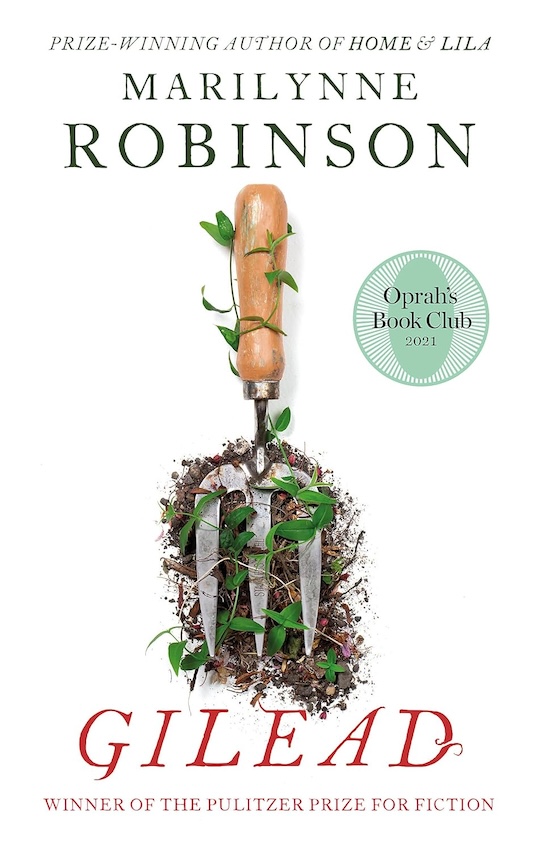
Book Review: Gilead by Marilynne Robinson – a love letter from a father to his son and a wonderful contemplation on life itself

In Gilead, John Ames is writing a memoir for his son, a small boy of seven, intended for him to read later, long after his father has gone. Ames, well into his seventies, has a weak heart and fears leaving his boy to grow up without a father. So he wants to write it all down – from his own childhood and his life as the son and grandson of preachers to what’s going on around him in the present. We get bits of history – the Civil War and the Underground Railroad, World War I, the Spanish Flu, and the Great Depression, and how all these events impacted on ordinary folk in small towns like Gilead.

While he’s telling his story, Ames is irritated by the return of Jack, the black sheep son of his good friend Rev. Robert Boughton. Unlike Ames, whose first wife died in childbirth along with their daughter, Boughton has a large family, most of whom live some distance away. Jack, in spite of his chequered history, seems a favourite of his father’s, while Ames is constantly censuring himself for harbouring an ongoing dislike for the younger man, which of course isn’t very Christian of him.

Ideas about what it is to lead a good life in the way God intends us to blend with stories about the characters, their pasts and particularly their problems. Jack’s story is heart-rending, and there’s more about him in the two other Gilead novels: Home and Jack, which I will get to, I’m sure. But what is particularly moving in this book is the tone of the writing, the voice of John Ames. You get such immense love in the way Ames is writing to his son coupled with the sadness that he won’t see him grow up. But with that is also the joy of someone who notices the wonder in simple things.

There’s a shimmer on a child’s hair, in the sunlight. There are rainbow colours in it, tiny, soft beams of just the same colours you can see in the dew sometimes. They’re in the petals of flowers, and they’re on a child’s skin. Your hair is straight and dark, and your skin is very fair. I suppose you’re not prettier than most children. You’re just a nice-looking boy, a bit slight, well scrubbed and well mannered. All that is fine, but it’s your existence I love you for, mainly. Existence seems to me now the most remarkable thing that could ever be imagined. I’m about to put on imperishability. In an instant, in the twinkling of an eye.
The twinkling of an eye. That is the most wonderful expression. I’ve thought from time to time it was the best thing in life, that little incandescence you see in people when the charm of a thing strikes them, or the humor of it. ‘The light of the eyes rejoiceth the heart.’ That’s a fact.

I find myself getting teary-eyed just thinking about Gilead, and the character of John Ames, the heart-felt thoughts of a humble man. You do get quite a bit of religious contemplation, with Biblical references and ideas for sermons, which might not suit every reader. But it’s more wise than preachy and fills out the character of our storyteller. I read this as an audiobook, superbly narrated by Tim Jerome – it was as if John Ames was talking to me in the same room – but I’m glad to have a physical copy to flip through too. Gilead is a beautiful book, which won a number of awards, including a Pulitzer Prize – a modern classic and a five-star read from me.

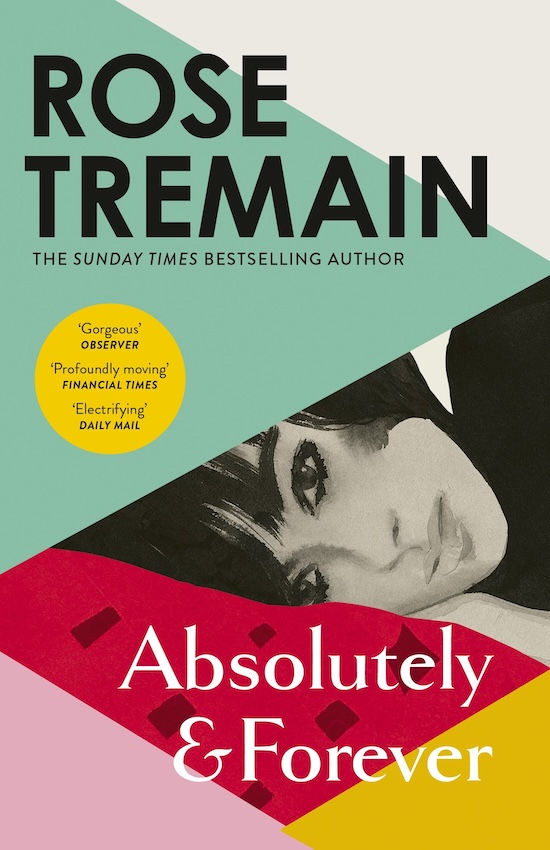
Book Review: Absolutely and Forever by Rose Tremain – a short and bitter-sweet novel about lost love and finding your way

I was warned that this book was somewhat melancholy, and in a way it is. Absolutely and Forever is about first love, specifically Marianne Clifford’s falling in love at fifteen with handsome and clever Simon Hurst. It is a love she just can’t seem to get over, and years after Simon has disappeared from her life, she still thinks about him in a yearning kind of way.

This might make Marianne appear somewhat daft. But don’t be put off; every moment we spend with her is entertaining. Tremain has written a dryly witty, self-aware character, born at time when a good marriage was often considered life’s ultimate goal for any young woman. We’re thrown into the late 1950s; Bill Haley and the Comets is on every party’s turntable and parents are eyeing up young men with prospects for their daughters. Particularly middle class parents in the Home Counties.

Absolutely and Forever made the shortlist of the Walter Scott Prize for Historical Fiction and although it didn’t win, you can see why it was noticed. Tremain captures the period so well, and through Marianne’s eyes we see how the times, they are a changing. At school, Marianne’s best friend is brave, outspoken Petronella who goes on to university to study sociology and spends the entire book urging Marianne to forget Simon and discover what she’s good at. You can tell Marianne’s smart, but this lesson takes a while for her to master.

On certain days, particularly when I was in the typewriter room of the college and fifteen typewriters were clattering and pinging and the carriages were being shunted left to right, left to right, and the wall clock was clicking away time, measuring our typing speeds, I felt my mind disintegrating. I thought, I’m in a madhouse; life has brought me here, to an asylum of a kind. It wasn’t the old and wondrous Love Asylum, it was now the Grief Asylum, where my heart was being shunted back and forth, back and forth, inside a chamber of despair.

The story takes Marianne through many ups and downs, including tragedy, and a surprise ending. Both turn out to be oddly liberating for our MC. So, yes, there is enough of a story here to keep you reading. But it’s the language that really had me hooked. At one point, Hugo, the man who falls for Marianne enough to put up with her melancholy, says the one thing he really loves about her is that he never knows what she’s going to come out with next. Tremain gives Marrianne’s narrative plenty of charm and flavour.

You can’t help thinking, thank goodness for the Swinging Sixties and women’s lib. For if they hadn’t come along would girls still be growing up pinning all their hopes of happiness on a man and forgetting they have a brain? Absolutely and Forever is a welcome reminder, and at a mere 180 odd pages a nicely-crafted, diversion you can read in a day. A four-and-a-half star read from me.

Book Review: You Are Here by David Nicholls – a witty, feel-good read about hiking and the human heart

I’d seen a bit of David Nicholls on the small screen – the movie of One Day and the TV adaptation of Us – but You Are Here is the first time I’ve actually read a David Nicholls novel. And having just turned the last page, I realise now what I’ve been missing. Because, You Are Here is simply wonderful. The writing, the humour, the characters and the emotions. They’re all there in a perfect package – all that you could want in a book.

The story’s narration alternates between two people: Marnie, a long time single and thirty-eight, who works as a freelance editor from her rented flat in London; and Michael, a recently-separated geography teacher from York. Both are a bit sad and lonely. Marnie has been bruised by her marriage to overbearing, unfaithful Neil, and now that her friends all seem to be married, mostly with kids, she’s dropped out of the loop, doesn’t see anyone, often stays in her flat for days on end. Michael has not recovered from his wife leaving him or from an assault which left him with bouts of PTSD and feeling a coward.

So it’s up to mutual friend Cleo to fix them both up with someone, if only she can drag Marnie north for a hike – a chunk of the Coast to Coast Walk, which Michael, a committed walker, is keen to complete, preferably alone for as much as possible. Michael does a lot of walking as he hates going home. Cleo brings along her thirteen-year-old son as well as gorgeous Conrad, a pharmacist also from London, she’s hoping to set Marnie up with. A pity Tessa couldn’t make it – she loves doing triathlons so would suit Michael well with his love of the outdoors.

But he must not teach. He would be travelling with adults who had no need or desire to learn about drumlins and moraines. The train ticked and hummed, then began to crawl, rattling past sooty Victorian buildings, warehouses, and the new light industry at the edge of town, the sky widening like a cinema screen, opening on to farm and woodland. Seated diagonally across the aisle, the woman with the poorly fitted rucksack was typing noisily but without a table, so that the laptop kept slipping down her new trousers towards her new boots. What was so important that it should take precedence over the view? She was certainly making a big show of it, tutting and blowing up her fringe. It was a nice face, amused and amusing, with a city haircut (was it a ‘bob’? He wanted to call it a ‘bob’) and more make-up than you’d expect on a walker, sometimes rolling her eyes or clapping her hand to her flushed cheek at the words on the screen. He noticed that she was perspiring slightly. Noticed, too, that he’d stopped looking at the view.

But things don’t go as planned for Cleo, and it’s just as well, when soon the weather conspires to leave just Michael and Marnie on the walk, Conrad with no wet weather gear, and Cleo’s son missing his friends. Michael might have hoped Marnie would pike out too, but she’s invested so much in outdoor gear for the trip, and has packed three nice dresses and 12 pairs of knickers, so it seems absurd not to tag along for another day at least.

The two make an awkward couple at first, struggling through the rain and having hiked a number of New Zealand’s ‘great walks’ for the most part in the rain, I really felt for them. But it’s the grit that makes the pearl, and if they can get along enough, who knows what might happen. As a reader, you soon realise the two are better suited than Michael would be with Tessa or Marnie would be with Conrad – Michael is what Cleo describes as wry, and seems to get Marnie’s sense of humour, the jokes no one else seems to notice.

This is a delightful read – I steamed through it – the writing is just so polished but not in a way that makes you think it’s polished. The dialogue is lively and funny – you can tell this will make another lovely movie. But underneath, Nicholls is aware that he’s dealing with two people who have stuff to deal with. He shows a fine understanding of the workings of the human heart and while there is a lot that has you laughing out loud, there are also moments that make you sigh or clutch your chest.

As I said before, this is a perfect book, with two engaging characters you are happy to spend time with, even on a hill walk in the rain. There is a lot of scenery, which is described as much as it needs to be but not so much that it intrudes. I enjoyed the B&Bs and hotels with their themed rooms – one naming its rooms for freshwater fish (Michael finds himself in Chubb). So you get the experience of the walk without having to put on hiking boots. All in all David Nicholls doesn’t put a hiking booted-foot wrong. You Are Here is a five-star read from me.

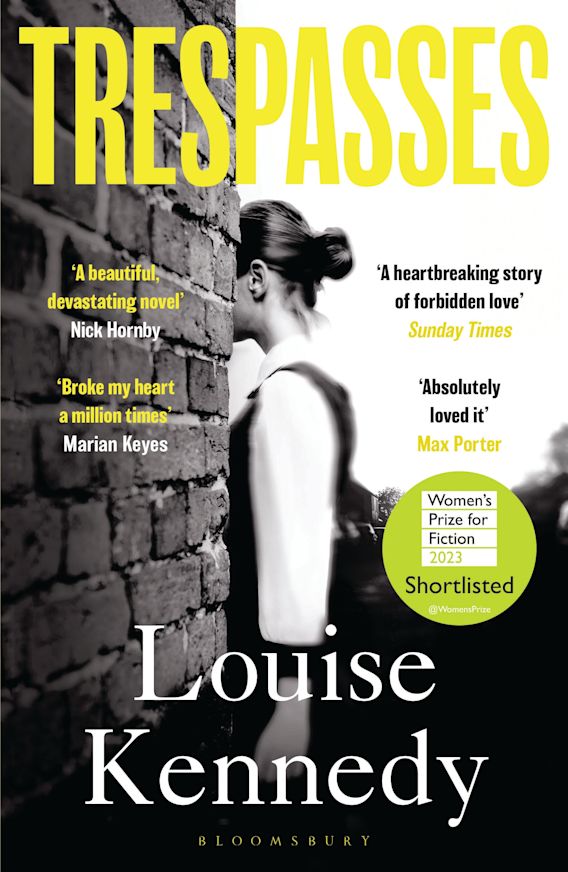
Book Review: Trespasses by Louise Kennedy – a novel about love and war, and crossing the line

I had previously picked Trespasses up a couple of times but moved onto something else. I knew I wanted to read it, but I kept thinking it could never be as good as Milkman by Anna Burns, which is similarly set in Northern Ireland. Then I downloaded it as an audiobook and am so glad I persevered.

Trespasses is set in a town on the outskirts of Belfast in 1975, so we’re well into the time of the Troubles, with sectarian violence a common phenomenon. Cushla is a young school teacher at a Catholic school who moonlights at her family’s pub. It is here that she meets Michael Agnew, an older, married man, also a barrister as well as being a Protestant. So many red flags.

The two begin an affair and Michael introduces Cushla to some of his friends who are learning to speak “Irish” and Cushla being fairly fluent agrees to help teach them. All the while she is self-conscious among these people – that she stands out for her youth, for being a Catholic. But Cushla keeps Michael a secret from her family, her alcoholic mother, her brother who runs the pub. It would only infuriate Eamonn and bring disrepute on them all. She would most certainly lose her teaching position.

Cushla is the story’s narrator, and her voice has that resigned self-awareness of her predicament, not just the affair, but of the difficulties of being hopeful in a country torn apart by violence. Where at any moment, British security forces might descend on a social gathering looking for Republican insurgents, or stop cars at a roadblock and cause their owners varying kinds of inconvenience. To say nothing of car bombs and random shootings and other acts of violence.

Another thread to the story is Cushla’s world as a teacher and her looking out for young Davy McGeown, one of her pupils. His home life is a constant struggle, with a parent from each side, an out of work father and neighbours who make their life hell. Through it all, Davy is bright and cheery and Cushla is drawn to help the McGeowns, in spite of the disapproval of others.

Before lessons they did The News. Cushla hated doing The News, but the headmaster insisted. He said it encouraged the children to be aware of the world around them. Cushla thought they already knew too much about the world around them. Davy stood up, always the first to volunteer. His red jumper was dark with damp at the shoulders and neckline.
There was as bomb in Belfast, he said.
He says that every day, said Jonathan, who sat beside him.
Well, today he’s right. Thank you Davy, said Cushla.
Jonathan got to his feet. It wasn’t in Belfast, he said. A booby-trap bomb that was intended for a British Army foot patrol exploded prematurely, killing two boys near the border. They died instantly.
Booby trap. Incendiary device. Gelignite. Nitroglycerine. Petrol bomb. Rubber bullets. Saracen. Internment. The Special Powers Act. Vanguard. The vocabulary of a seven-year-old child now.

The two story threads will eventually become entangled and the reader has a sense of impending doom. Well, there’s always impending doom in any novel set during the Troubles, isn’t there? It’s a bit like Chekov’s gun. And Cushla seems to take such a lot of risks. You can’t help but admire her for her determination to do what’s right by people. Michael too, with his sympathies for young men pulled in by the security forces on flimsy evidence, his attempts to help them. They are both crossing the line and some sort of reckoning seems inevitable.

This is an engrossing read with vivid and memorable characters. The banter between Cushla and her alcoholic and sentimental mother, her brother who’s trying to save the pub, the old codgers who never miss a session there, the kids at the school. The dialogue is terrific, and really comes alive as narrated by Brid Brennan who reads Davy particularly well. I’m glad I rediscovered Trespasses – the book was shortlisted for a bunch of awards, including The Women’s Prize for Fiction, and it’s easy to see why. It’s a four-star read from me..

Book Review: Hello Beautiful by Ann Napolitano – an engaging story about sisters and finding your family

I seemed to miss the Little Women references when I picked up Ann Napolitano’s latest novel, Hello Beautiful. Maybe I was distracted by all the basketball, but I was about three quarters of the way through when the penny dropped and it all made a lot more sense. Until then, I was wondering where it was all going as it just seems to be a nice story about a family, about love and loss, lies and betrayal, all nestling among the intriguingly varied personalities of the Padavano sisters.

None the less, this was an easy book to get lost in. The story bounces between several characters and over several decades as the Padavano girls grow up and make lives for themselves. They are a close Italian American family living in Chicago with their parents, a couple who married out of necessity – with Julia on the way – and struggle with a marriage that is broken. Into all this comes William, himself from a broken family, with parents who have never healed from the loss of his older sister, who have never been able to love him instead.

William’s character is both sad and compelling. He’s been rescued by basketball, and his height gives him a terrific advantage on the court, as well as a scholarship to study in a new town and leave his loveless childhood behind. Julia Padavano discovers him at one of her classes and somehow persuades him into a possible future as a History professor, and as her husband. Her family gives William the warmth and security he’s lacked all his life.

Willam knew all the players except the freshmen, and once or twice after finishing his sandwich he let the guys convince him to take a few shots from the corner. He knew his knee couldn’t take pivoting or even jogging from one spot to the other, so he stood still and drilled one long shot after another while his former teammates hooted with pleasure. When the ball swished through the net, William’s breathing slowed to normal, and he could pretend that he still inhabited a recognisable life.
With the basketball in his hands, he could forget that his father-in-law had dropped dead, his sister-in-law slept on his couch, and every time he saw his wife he was startled.

We also have Sylvie, Julia’s closest sister. Unlike Julia, Sylvie fails to push herself towards college, instead immersing herself in novels and helping out at the library where she kisses random boys among the shelves. Her dream is to find one, intense true love, and until then isn’t interested in dating. At home, her mother spends her life in the garden, growing saleable produce, her father quoting Walt Whitman and drinking too much. There are also the twin sisters: artistic Cecelia and nurturing Emeline.

The future seems settled for Julia and William, when a series of events upset the applecart and cracks appear in the extended family. Then, as so often happens, life goes on around the cracks, characters settle in and hunker down until another earth-shattering event brings the past back into focus and there is potential for a reckoning, and for healing.

I am glad that I didn’t spend a lot of time trying to figure out which sister was Meg or Jo, Beth or Amy, as it wouldn’t have done me any good as things turned out. It doesn’t really matter in the grand scheme of things. But this was a nice read, if a not particularly compelling one. It is a story where emotions run high, either expressed outwardly, or contained and mulled over or contained and ignored.The characters of the sisters and particularly William, are all easy to engage with, and interesting.

There are themes around mental health – how do you get over a childhood that is missing love? And about finding your place in life as a young person, of being accepted for who you are. I found quite a lot to like but the story did lag a little around the middle – the stretched-out timeline doesn’t help. Fortunately it all picks up near the end with the hope of at least one reconciliation and some impetus from the younger generation. I’ll be interested to check out another novel by Ann Napolitano. Hello Beautiful is a solid three-star read from me.

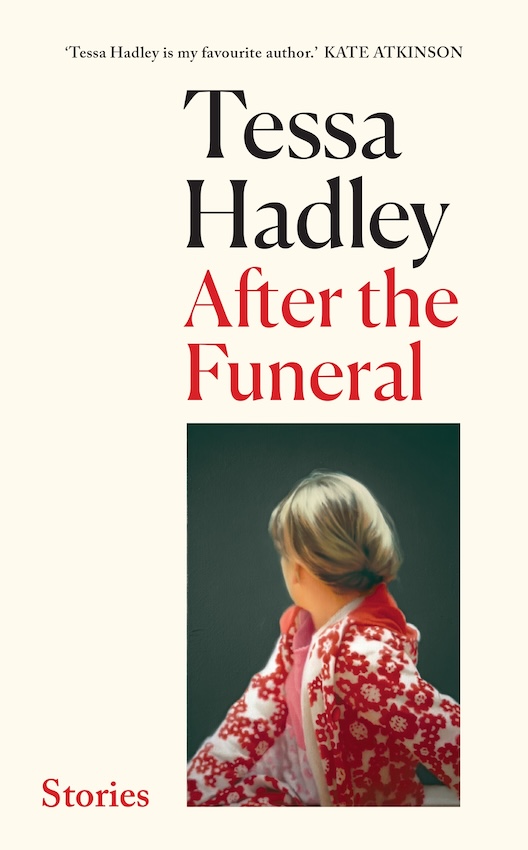
Book Review: After the Funeral – a short story collection that’s as compelling as any novel

I rarely seem to pick up short story collections these days. There are always so many brilliant new novels coming out all the time, and you get used to the way the plot teasingly unfolds with the longer form, the unrolling of scenes and the character development. But sometimes a short story is just such a wonderful thing. A small, complete entertainment. It can say a lot too.

And that’s what you get with Tessa Hadley’s latest collection, After the Funeral. These twelve stories are for the most part family stories, delving into the reactions and emotions when something happens that upsets the applecart in relationships, between siblings, between parents and daughters and with couples. The subtle undercurrents of the class system are also there. Things are suitable or not suitable, or plainly ludicrous in a particular milieu.

Several stories have children dealing with parents acting alarmingly. The title story has two daughters whose world changes after the sudden death of their father, leaving their beautiful mother, who is something of an airhead, to provide for her family. It’s the 1970s and women didn’t necessarily equip themselves with career prospects back then. A family connection soon sets her up with a job in the office of a dentist. Of course the dentist falls in love with her. In “Cecilia Awakened”, Hadley perfectly captures that feeling you have when you discover as Ceclia does at fifteen, what an embarrassment family holidays, and in particular, parents, can be.

Many of the stories have their roots in the last decades of the twentieth century, while others dip back into the past from the present day. In “The Bunty Club”, three sisters return to the family home when their mother is dying in hospital. They are such different characters, and in a few deft paragraphs, Hadley vividly describes their characters as older women, bookish Pippa, capable Gillian and glamorous Serena – what drives them apart and what can bring them together again.

— Bathroom’s empty! Gillian said. — You should get in before Serena embarks on any aromatherapy. I wish she’d wash the bath out when she’s finished.
— She’s up already, Pippa said. — Look! Worshipping in the garden.
Gillian came to stand beside her. They were spying, and meant to say something dry and funny about their sister, taking advantage of watching her unseen: dancing in the long grass, flitting like a sprite in her black cotton tiered skirt and satiny top – which she’d most likely got from a charity shop, because she was solemn about waste and recycling.

“Funny Little Snake” is set in hippy era London, and is a heart-breaking story of middle-class neglect of a young child, and the woman who attempts to rescue her. In fact there isn’t a lot of good parenting on offer in the collection – distant or missing fathers, mothers wrapt up in their own lives, families recreating themselves after loss or divorce. Tessa Hadley’s writing is too crisp and sharp for the stories to seem downbeat; interesting developments make them crackle with energy.

I’d already enjoyed an earlier novel, The Past, by Tessa Hadley, which was another brilliant look at a family and shares some of the themes on display here so I was expecting to enjoy this collection. I read these stories one after another, but a collection like this could happily sit on the bedside table, ready to be dipped into again and again. But they are so moreish, I dare you not to keep reading until they’re all finished. After the Funeral gets four and a half stars from me.

Book Review: Goyhood by Reuven Fenton – a hilarious road-trip story full of unexpected detours

People often expect twins to be alike – even the non-identical ones. But you couldn’t find two brothers more different than David and Marty Belkin, the main characters in Reuven Fenton’s debut novel Goyhood. We meet them during a heatwave in small-town Georgia when they’re twelve, the day that young Marty, soon to become Mayer, has an epiphany.

The boys are doing it tough, living with a mother who frequently absents herself and drinks too much. So it’s not surprising that when Marty is offered a chance to study at an Orthodox Jewish school, or yeshiva, in New York, he jumps at it.

Switch forward thirty odd years and Mayer is still a student of holy scripture, that’s all he has to do, thanks to the generosity of his father-in-law. His marriage to Sarah is not a happy one, weighed down by difficulties in conceiving a child. Things are all set to change again for Mayer when he gets the news that his mother has died. He will have to sit shiva for her and he’ll see his twin brother again for the first time in decades.

David has had a completely different life to Mayer, having to learn the lessons of life the hard way. There have been a lot of drugs and career misfires, but now he’s made his fortune in the e-cigarette market and turns up to collect Mayer at the airport looking the essence of prosperity. The two hardly recognise each other. A letter written shortly before their mother’s death reveals the bombshell that the boys aren’t technically Jewish which throws Mayer into a spin. With the help of their old rabbi, Yossi, he’ll have the chance to remedy that situation, in a week’s time.

But David’s still a wild boy at heart and persuades his twin to travel to New York with him for the appointment for his ‘conversion’ in a muscle car he nicknames Daisy. They take their mother’s ashes with them, the plan being to scatter them somewhere she would enjoy, and along the way collect an unappealing dog, but not Mayer’s luggage, which has not arrived with him at the airport. David has plans that Mayer should enjoy his week of ‘goyhood’ and live a little, while Mayer is like a rabbit caught in the headlights.

“And due to an unprecedented turn of events, we find ourselves facing an entire week with empty schedules.”
“You’re talking about a vacation,” Mayer said.
“A rehabilitation period to wrap our heads around the existential vortex we’ve fallen into.”
“A vacation.”
“A pilgrimage.”
“I don’t need a vacation. I don’t want to wrap my head around this. If it were up to me, I’d spend the week in a medically induced coma.”
“Listen, Ese, if there’s one thing I’ve learned, it’s when the going gets tough, the tough get in the car and drive.”

The story builds in tension as Mayer is pulled in different directions – his sense that he must live according to religious principals constantly under fire. As Mayer struggles to rein his brother in, Sarah is continually on the phone about his luggage and her sudden plans to join him at his mother’s house. She would be appalled by what Marty has been up to with David and all this adds brilliantly to the story’s humour.

Meanwhile there is plenty of temptation on offer to a man who has never been tried before, particularly when the two hit New Orleans and David offers a ride to Charlayne, an attractive acquaintance of his who is about to walk the Appalachian Trail. David is the sort who lives for the moment and acts on impulse, so the road trip takes some unexpected turns.

Fenton piles on one madcap scene after another, putting our characters through their paces, and even allowing the dog, Popeye, a moment of glory. Intermingled with all this is some deep soul-searching – by the end of the book, the reader has an inkling that change is in the air for Mayer, and possibly for David as well.

It all adds up to an entertaining, feel-good read enhanced by lively dialogue as the characters bounce off each other. The writing is polished and witty and the story never lags for a moment. I enjoyed it immensely and will be keen to read more by this author. Due for release on 28 May, Goyhood is a four-star read from me..