Book Review: Salvage the Bones by Jesmyn Ward – a struggling family, a desperate girl and a hurricane

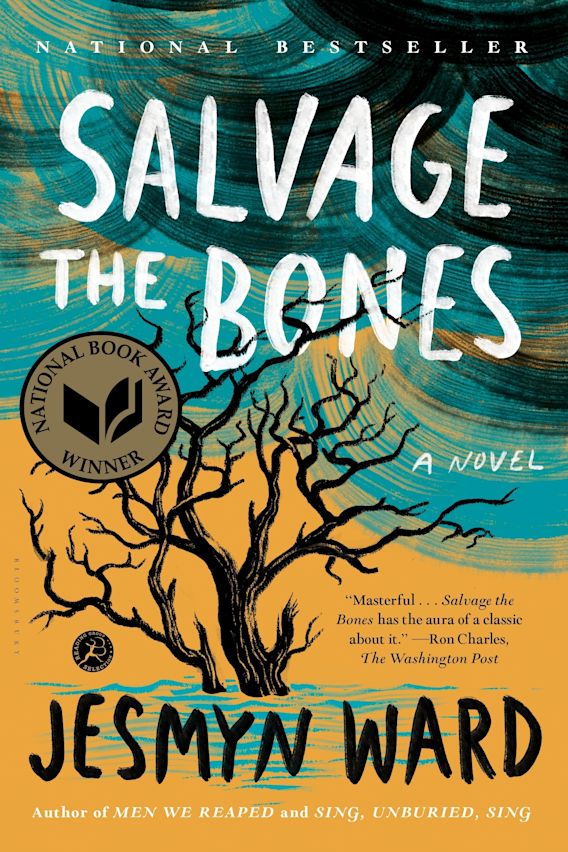
It’s so easy to go for a book that’s a nice relaxing read and totally forget the wider world. But this time I took up Salvage the Bones with the idea that this might be a fairly gritty read and, well, yes it was. But it is just so instantly immersing and the storytelling so engaging that once I’d picked it up, I really didn’t have much say in the matter.

The story follows a poor African-American family living in Mississippi in the days leading up to Hurricane Katrina. This family has such a lot to deal with. Told from the point of view of fifteen-year-old Esch, we’re soon in her world – a house on the outskirts of town which she shares with older brothers Skeetah and Randall, a much younger brother, Junior, and their alcohol-dependent father.

Daddy is very hurricane-aware and weather warnings impel him to get his house in order – the bottled water and extra supplies, gathering the timber to board up the windows, but his children have other things on their minds. Randall has hopes of going to basketball camp – he’s got potential, and if he can perform well at an upcoming game, he can earn some sponsorship. Skeetah is more entrepreneurial; his pit bull is due to give birth to puppies and China being such a good fighter, he thinks he can sell the pups for a good price.

Junior has been cared for since day one by his older siblings and is a bit of a loose cannon, though very much loved. And that’s the thing. There is such a lot of love in this family between the siblings, but without a lot of parental guidance things pretty soon go haywire. And no one is more desperate than Esch – in love with one of her brother’s friends who is blatantly using her, and pregnant. But Esch is also a reader, dipping into a book of mythology from school, especially drawn to the story of Jason and empathising with the ill-used princess Medea.

After Mama died, Daddy said, What are you crying for? Stop crying. Crying ain’t going to change anything. We never stopped crying. We just did it quieter. We hid it. I learned how to cry so that almost no tears leaked out of my eyes, so that I swallowed the hot salty water of them and felt them running down my throat. This was the only thing that we could do. I swallow and squint through the tears, and I run.

The plot is really compelling as the siblings resort to all kinds of escapades to help fulfil their ambitions, or to just get by. It’s a very different world, there’s danger and lawlessness, and the story doesn’t shy away from the violence inherent in these kids’ lives, and of their acceptance of it as a kind of normal. But there’s also camaraderie and loyalty, a tight-knit community that sticks together. Plenty to keep a story going as it is, but on top of everything else, there’s a hurricane coming.

The story builds up to a dramatic climax – the weather event we are expecting makes its presence felt and it’s truly life and death. Earlier in the year, in my neck of the woods, we also experienced a cyclone (that’s what we call hurricanes here), and as I was reading this was well aware of the kinds of situations that people can find themselves in if they don’t get out in time, or if things get a lot worse than predicted.

I raced through this book, particularly the final chapters, engrossed in Esch’s world, but also dazzled by the writing. Jesmyn Ward won a National Book Award for this novel, a prize she’s won again for Sing, Unburied, Sing, and she’s brilliant, confronting, but also immensely readable. I’ll be putting Ward on my must-read list and give this book five stars out of five.

Book Review: The Bookbinder of Jericho by Pip Williams – a war-at-home story set among Oxford’s printing presses

Pip William’s first novel, the inordinately successful The Dictionary of Lost Words was always going to be a tough act to follow. But when The Bookbinder of Jericho came my way I was soon swept up in Peggy’s story – the work she does at the Oxford’s Clarendon Press in the bindery’s folding room with other women. It’s a segregated working environment, the women collating the pages from the printing room, folding them ready for stitching and binding, a man’s job. Just as it’s men who are always the machine operators and compositors, mechanics and readers.

Oxford itself is also segregated along class lines. Peggy and twin sister Maude live on a canal boat, still missing their mother who died several years before. The are ‘town’, the ordinary working folk who live outside the walls that separate the academic inhabitants of Oxford – or ‘gown’. But we’re on the brink of World War I, and things are set to change.

Peggy can’t help trying to read the books they are folding; she’s smart and yearns for a higher education. Her mother was also a reader, and their canal boat is crammed with books and parts of books that didn’t made the grade, But her sister needs her, or so she thinks, and Peggy sticks by her side. Maude is a little fey, her fingers always busy folding even in her spare time, her conversation a parroting of the phrases of others. The arrival of Belgian refugees, and in particularly Lotte, a grief-stricken woman who joins them at the folding bench, shakes up Peggy’s relationship with her sister, challenging her excuses for avoiding change.

I’d been walking past Somerville all my life, imagining what it was like for the women on the other side of the wall. Now, here I was, a little bit of Jericho littering an Oxford quad. I remembered when I first thought of being one of them – I’d been listening when I shouldn’t have been. She’d be well suited to the Oxford High School, my teacher had said. I know that, Ma had replied, but she won’t leave Maude. My teacher persisted. I think she’s bright enough for college. Ma sighed, It’s not always enough, though, is it? I’d thought of the income I could start earning at the Press, the difference it would make. I’d stopped listening

Other characters breeze through the book and rock Peggy’s world. There’s Gwen, the upper class girl she meets when the two volunteer to read to wounded soldiers. Gwen is ‘gown’, but finds Peggy’s world fascinating. Peggy can’t be sure if her friendship’s genuine or is she just a pet project? Then there’s Bastiaan, the badly scarred Belgian soldier Peggy is drawn to during her hospital visits. He would definitely be ‘gown’ if he were at home, studying architecture, but war has a levelling effect and the two meet as equals.

Tilda is the girls’ mother’s great friend, a flamboyant actress who becomes a VAD at the front, her letters revealing the horrific realities of life in the field hospital at Etaples. There’s Rosie in the canal boat ‘next door’, whose son Jack marches off to war with so many of the boys from the Press. We also momentarily meet Vera Brittain (Testament of Youth) when Peggy attends a function for the refugees at Somerville – the women’s college Peggy eyes with longing.

As Peggy’s views of things are challenged by her new acquaintances, the war grinds on, news of horrific battles and casualty lists filtering back to Oxford. The book is divided into parts which roughly equate to a year in the war, and a book from the presses. In the background there’s another battle going on – the battle for women’s rights, the suffrage movement on hold for the duration. This enlivens the conversations Peggy has with Gwen, but it’s hard for Peggy not to feel bitter. The vote for women when it comes will only be for women over thirty and landowning ones at that – the vote by no means universal.

As the plot goes, The Bookbinder of Jericho isn’t exactly riveting reading. Like Peggy’s life, all the action seems to be happening to someone else, somewhere else. Peggy seems to be in a kind of holding pen, waiting. As a reader I found myself waiting too. What makes the book interesting is the world Pip Williams has created. The little enclave in the printing presses of Oxford is well researched and described in detail. Lovingly so. Then there’s Peggy and Maude’s canal boat and life on the water. Everything tucked into corners to make the most of the space. The frugality of their world – apart from paper, which is everywhere.

So The Bookbinder of Jericho gets top marks for characterisation and world building, for bringing history to life. But I did find myself rushing through it to get to ‘the good bits’ rather than savouring it. There’s still a lot to like and even more to think about so I’ll probably read this author again. This novel’s gets three and a half out of five stars from me.

Book Review: The War Pianist by Mandy Robotham – wartime danger across the airwaves

This is one of those wartime novels featuring a heroine who is just an ordinary girl toughing it out against Hitler. She probably never wanted to get involved in the Resistance or working as a spy for SOE, but something has triggered her desire to get involved. There will be a couple of military aircraft from the era on the front cover, discretely in a corner so you know it’s a war story. A ton of books like this have been written lately, and they can be a fun read, but how do you tell which are the good ones?

I’d really enjoyed the audiobook version of The Resistance Girl by Mandy Robotham, which took me to the war in Norway. It had engaging characters, a really nasty malefactor, a bit of romance, plenty of suspenseful dodging of the enemy, and the promise of a happy ending. But I learned a lot about the war in Norway and how it affected people, the heroic ways they fought back. The story didn’t shy away from some of the horrific events of the war but describes them off-stage so nothing’s ever too harrowing for the reader.

And it’s much the same here with The War Pianist. Marnie works at the BBC in London helping to prepare radio scripts for airing. Her parents have decamped to Scotland and apart from cousin Susie who is wondering about leaving London too, her only family is Gilbert, her adored grandfather, still running his tailoring business near Trafalgar Square. But after a bombing raid by the Luftwaffe, Marnie is horrified to discover the shop has been levelled and her grandfather is dead.

Reeling with grief, Marnie goes back to the shop one day in search of a memento of her beloved relative only to find hidden away in a basement cupboard, a radio set for transmitting. Gilbert was a man with a secret, and Marnie worries that he might have been a spy. As she carries the radio away with her she is brought to a halt by an ARP warden who turns out to be someone else keeping a secret. Willem is a Dutch Resistance fighter in London to help shore up support from Britain on the behest of Queen Wilhelmina.

Willem persuades Marnie to take over from Gilbert, sending coded messages to Corrie, Willem’s fellow Resistance fighter in Amsterdam. Marnie knows all about radios from her work at the BBC, and she and her grandfather used to play games in Morse Code when she was young. So Marnie, fired up with rage against Hitler because of the Blitz and her grief, is the perfect recruit to step into Gilbert’s shoes. But she has to be careful, as there are reports of fifth columnists supporting the enemy at large, who are watching and listening. Who can she trust?

When the inevitable sirens stir the BBC’s populace into the basement that evening, something in her – she doesn’t know what – is drawn in the opposite direction, up onto the roof of Broadcasting House. Climbing out into a sky already glowing orange and a wind warmed by fiery destruction, she stands aghast. It’s as if Hitler has taken a match to a box of fireworks and simply sprinkled the contents across London – the red tracer fire of ack-ack guns meeting mandarin sparks from a fresh explosion, tiny pockets of green-blue glow like fireflies amid the rubble as the gas mains are hit below. A rainbow of destruction that’s both vivid and grotesque.

The story weaves Marnie’s story in with Corrie’s in Amsterdam, where things are a lot more desperate under the Nazi Occupation. It’s only 1940 and the resistance is in its early stages while reprisals and food shortages are the order of the day. There are reports of devastation in other cities like Rotterdam and fear is widespread. But Corrie continues with her radio, messages kept as brief as possible to avoid her site of transmission being pinpointed by the enemy.

The story takes Marnie across to Amsterdam where the plot ramps up a lot. Here the evil Nazi officer, Lothar Selig, is keen to make his mark – he also turns up in The Resistance Girl – when one of the Willem’s team disappears. There’s an emotional connection, so this gives the story a bit more punch. Marnie is also torn emotionally, but will do anything to help and her radio skills become crucial. The story builds to a taut ending and it’s a satisfying read, without ever being too grim centre stage.

I confess I didn’t enjoy this quite as much as The Resistance Girl, although it’s still a pacy read and interesting for the most part. The romantic element seemed a bit forced, maybe because the character of Willem is not particularly well developed. I might give Robotham another go, or if I’m in the mood for a good wartime story, I’ll head back to Pam Jenoff or Kate Quinn, who are pretty solid in this genre. The War Pianist gets three out of four stars from me.

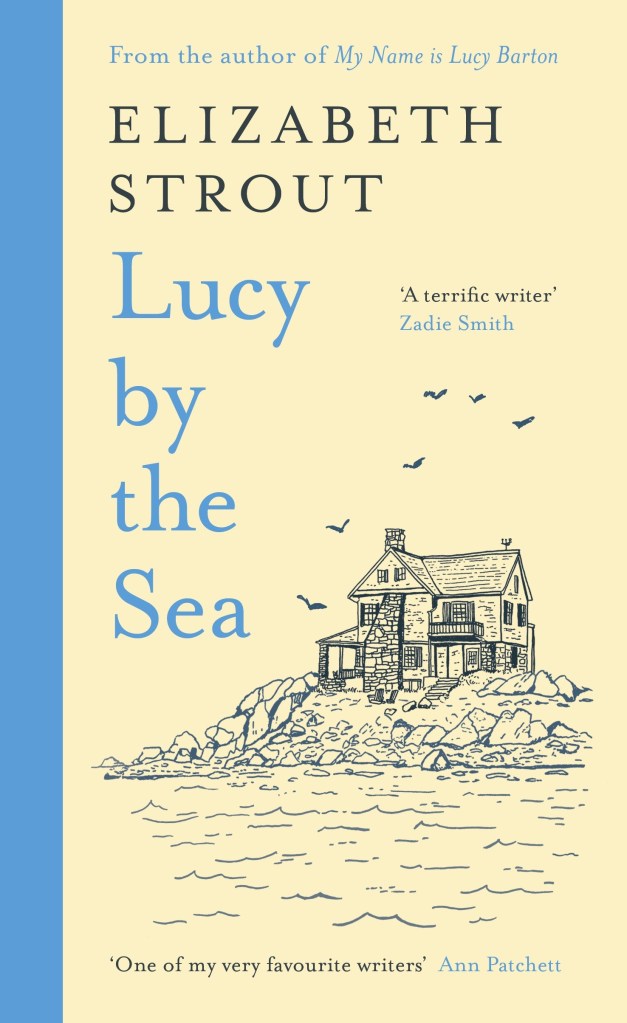
Book Review: Lucy by the Sea by Elizabeth Strout – a memoir-like novel that relives those dark early days of Covid

If you’re an Elizabeth Strout fan like I am, you’ll have come across Lucy Barton before. She’s an easier character to like than Olive Kitteridge, the character of the eponymous novel which earned Strout a Pullitzer Prize. Lucy is a novelist who has come from a very humble beginning in a small town. So she tends to turn her author’s eye on the world – watching people’s interactions and thinking.

Lucy’s upbringing and her relationship with her mother are the subject of the first book, My Name Is Lucy Barton. Her hometown, Amgash is the subject of the stories in Anything Is Possible, and is where Lucy returns to visit her siblings who are still there, after her long absence in the city. Oh, William is Lucy’s story again, and concerns her relationship with William, her first husband. And this continues in Lucy by the Sea, which is also what some people might call a “Covid novel”.

And I found this a bit difficult to start with. William is a scientist, and as he watches the news about the virus decides it’s time to leave New York. He wants Lucy to leave too and persuades her to pack a suitcase and go with him to the small seaside town of Crosby in Maine. They’re only going for a few weeks. He also insists their two daughters, Becka and Chrissy to move out of the city too – although Becka resists. William’s the only one who can see what’s coming.

The novel takes you back to those terrible early days – the deaths, and the lockdowns, the personal distancing and the fear. We see it all through Lucy’s eyes and being a writer, she’s observant and sensitive. New York was hard hit and news footage on TV is must-see viewing for William. When they venture out to go shopping the locals give them the cold shoulder and one day they find an angry sign on their car telling them to go back to New York.

A strange compatibility was taking place gradually between William and me. I had even forgotten about how I used to have to go down to the water and swear because he wasn’t listening to me when we had supper. I mean, we were essentially stuck together, and we sort of adapted to it.

Thank heavens for Bob Burgess, the genial lawyer (and also a main character in The Burgess Boys, which I also highly recommend). Bob makes them welcome, finds them some Maine licence plates and becomes a good friend of Lucy’s. The story takes us through the months that follow, the couple’s fears for their daughters, William’s attempt to reconnect with his lost sister, their settling in at Crosby as well as shifts in their own relationship. There is more sadness than joy, but there is still hope by the last pages.

For quite a way through this novel I felt a lot more uncomfortable as I read than I usually do with Strout’s fiction. And this is because she brings to life that terrible time as Covid first took hold and also the political events that followed – the divisions in society shown on the TV, and so on. But somewhere towards the end, I felt the wisdom of the book and I went from wanting to rush through the book to get it finished to taking my time and enjoying it.

Much is made of Lucy having come from poverty. Strout has made this an asset, even if it troubles Lucy, as it means she can talk to just about anybody. I love her openness and truthfulness. Her attempts to understand people from other walks of life and across the political spectrum. I wish more authors did this. And William is forced in this book to confront again the terrible way he treated Lucy years before. It seems the Covid crisis makes everyone focus on what really matters in their lives.

Lucy by the Sea is well worth the read, even if you wonder what else can be written about this character. It is a thoughtful novel, and makes you think. And the writing is so natural, it really seems like your inside someone’s head. But if you’re not ready to relive that awful time, give it another year or two. It’s a four-star read from me.

Book Review: The Night She Disappeared by Lisa Jewell – another stylish psychological thriller from an always-reliable author

I often pick up a Lisa Jewell novel when I want a light, engrossing read. The Night She Disappeared is one of those books where the rich girl from a loveless family makes friends with the much loved poor girl with problems – and disaster ensues.

Tallulah lives in a village with her divorced mother and brother and is doing fine until an unplanned pregnancy has her reconsidering her options. She’s barely out of school so enrols at the nearest polytechnic, a bus ride away and organises her life around her baby. She didn’t plan on living with her boyfriend, Zach, but he is insistent he wants to get back together and she unbends and lets him move in with her at her Mum’s home. Mother, Kim is delighted as she sees in Zach someone who adores her daughter and will be a good father.

But Tallulah meets Scarlett at the bus stop – glamorous, dangerous looking Scarlett, who is at the same college, doing art to Tallulah’s social work course and the two become unlikely friends. Scarlett lives at Dark Place, a large house across the woods that has a dark history, but has had lavish amounts spent on it. As the weeks and months roll by, Tallulah compartmentalises her life between college, home life with her family and Zach, and secret meetings with Scarlett.

The story flips between Tallulah’s story and a year or so later when Sophie moves into the village with her partner Shaun. He’s the new head teacher at Maypole, a private school a mere woodland stroll from Dark Place, where Tallulah and Zach were at a party they night they disappeared. Sophie is an author of cosy mysteries, but here she’s suddenly aware of an unsolved mystery right on her doorstep.

When Sophie finds a sign saying “Dig here” and an arrow, she can’t help herself. What she finds soon draws her into Tallulah’s story, as well as meeting Kim working the bar at the local pub, a woman she wants to help. But in the background there’s her own relationship to consider. Shaun is obviously stressed. He has only chosen the job at Maypole to help fund the expensive schooling his ex-wife has insisted on for their daughters. And he and Sophie have never lived together before. They used to enjoy London so much too. Raking up what happened on the school’s doorstep isn’t going to help Shaun settle in to his new job.

Meanwhile Kim is battling away, trying to manage the baby as well as keeping alive her hope for Tallulah’s return. There are a bunch of minor characters who have a role in what happened and who could be suspects in the case. There’s a nice policeman who listens and does what he can. The story moves to an astonishing and gripping ending and I’d be amazed if you manage to put it all together before it’s all revealed. It might even give you goosebumps.

I am happy to say that The Night She Disappeared did its job; it’s a stylish, engaging, relaxing read. The main characters who tell their story are easy to empathise with, even if they do silly things or fail to stick up for themselves. And the plot is nicely measured out between them to keep you hooked. I’m not sure I enjoyed it as much as others I’ve read by Jewell, but it’s still an easy four out of five stars from me.

Book Review: Good Riddance by Elinor Lipman – a witty New York comedy full of the unexpected

I’m often drawn to these sorts of New York comedies. I like the smart and snappy dialogue, the invigorating big city atmosphere – the apartments and the quirky characters who are always eating out or talking about eating out. I really enjoyed Elinor Lipman’s On Turpentine Lane, so was keen to snap this one up too. Both novels showcase this author as a writer of very original storylines.

In Good Riddance, the story follows Daphne Maritch, studying to be a chocolatier after a failed marriage and a recent move to a new apartment. It’s not long since her mother died, bequeathing Daphne, among other things, a 1968 Pickering High School yearbook. June Maritch was just a few years older than her students that year and had attended all the class of ’68 reunions, as well as annotating her yearbook with snarky comments about her former pupils.

Daphne doesn’t see any reason to keep the yearbook, and consigns it to the dumpster, where it is discovered by her neighbour, a budding documentary film maker. Geneva Wisenkorn sees all kinds of potential from interviewing the old classmates, showing them the yearbook and speculating about their teacher.

Suddenly Daphne rethinks her hasty ditching of the evidence. She doesn’t want her mother seen in a poor light and doesn’t trust her neighbour not to make her family look ridiculous. Her father was for many years principal at Pickering after all. Throw in a politician with a scandalous secret that also affects Daphne and suddenly she’s feels desperate to shut down the doco and reclaim the yearbook.

There’s a romantic twist to the story in the form of Jeremy, the young actor across the hall, who becomes Daphne’s co-conspirator. And things are complicated by Daphne’s father moving to New York. He plans to see a bit of life in the city he’s always dreamt of. When her dad takes on a dog-walking job, he has a chance to meet all kinds of women.

Lipman throws in loads of fun situations, including Daphne’s tagging along with Geneva to a reunion, a wedding, a funeral and a dramatic situation requiring Daphne to administer first aid. There’s a load of humorous dialogue and the characters butt heads and wind each other up spectacularly. It’s a fun read all round, but I have to say Daphne isn’t for me a particularly appealing character. She can be rather shouty and shrill. Maybe she needs more chocolate.

But on the whole, Good Riddance is an amusing read and Lipman’s writing crackles on the page. I whizzed through the book and will certainly read more by this author. Good Riddance is a three star read from me.

Book Review: Bloomsbury Girls by Natalie Jenner – a post-war story and bookish delight

When I picked up Bloomsbury Girls, I hadn’t realised that it follows an earlier novel, The Jane Austen Society. The newer book continues the story of bright, young thing, Evie Stone, who is now fresh out of Cambridge and a bit miffed.

Evie has been passed over for a research position, and for a male graduate who isn’t half as clever. This is 1949 and women have only recently been allowed to be conferred degrees, so she shouldn’t be surprised. Turning up in London for a job interview, she administers first aid to the manager when he collapses. While he’s recovering, they’re a man down, so Evie finds herself hired.

Soon settled in on the third floor, Evie has to catalogue the mass of rare books bought at auctions by Frank Allen, one of the owners. She has an ulterior motive, but the lack of order makes finding any particular book quite challenging. Fortunately Evie has a quick and methodical mind.

The other ‘girls’ of the title are aspiring author Vivian Lowry and unhappily married Grace Perkins. Grace loves her work at the bookshop – it’s a place she can escape a husband who has had a breakdown and who makes her life a misery. If it weren’t for her two young boys, she would leave him. At the shop she has a good friend in Vivian, who since losing her fiancé during the war, has become an angry young female, pouring all her feelings into the notebooks she carries with her.

Also on the staff is Alec McDonough, who is head of fiction and who has a fascination for Vivian. He too is an aspiring author, but any chance he and Vivian might share their work are hampered by the sparks that fly between them, occasionally romantic, but mostly they’re darts of fury from Vivian. Ashwin Ramaswamy is down in the basement, studying tiny organisms among the shelves of science and nature books.

Ash is also disappointed, having come from India to make something of himself, but struggles with the racism he experiences in London. It isn’t surprising that he and Evie become friends. They’re both up against it. Meanwhile, Lord Baskin, with his financial interest in the shop, finds more and more excuses to pop in since Grace arrived on the scene.

While there are several romantic threads to the story, the main thrust of the plot concerns Evie’s secret mission and to achieve her aims, help comes from a few surprising quarters. Will Evie find what she is looking for? Can Grace begin again and find happiness for herself and her boys? Will Vivian overcome her anger and succeed as a writer? Is there any hope for women to achieve their dreams in post-war Britain?

The novel includes some real-life characters, including Daphne du Maurier, Samuel Beckett and Peggy Guggenheim. They’re nicely brought to life as they interact with Evie and her colleagues. It all comes together in a light, feel-good read packed with warmth and humour. And there’s a smart literary quality too, giving you the impression that the author really knows her twentieth century literature.

It doesn’t really matter if you haven’t read The Jane Austen Society – although I for one will be hunting down this debut novel. Bloomsbury Girls is a fun, satisfying story – a four star read from me. There’s another book, Every Time We Say Goodbye in the pipeline, but not out until next year. Clearly, Jenner’s an author to watch.

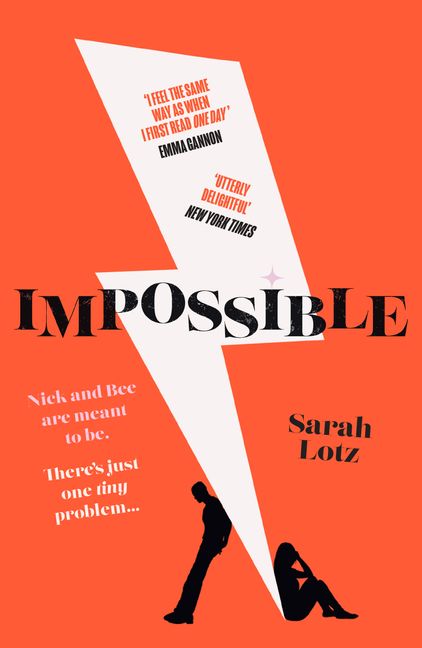
Book Review: Impossible by Sarah Lotz – an original and quirky fantasy-romance

I have to confess I nearly didn’t finish Sarah Lotz’s recent novel, Impossible (also marketed as The Impossible Us). The novel is largely email correspondence between two characters who meet accidentally when Nick sends a grumpy message to a customer who owes him money, and it somehow ends up in Bee’s (Rebecca’s) inbox. Bee’s dinner with a Tinder date isn’t going well and she distracts herself with flippant email banter with Nick.

The story of their romance is told largely in emails because, for mysterious reasons, the two seem doomed never to meet in person. At first they are separated by a train ride – Nick’s in Leeds; Bee in London. When they do decide to meet they discover they belong in alternate realities – how many versions of the world there are, they have no idea. But in Nick’s dimension the world has made huge inroads to solve climate change as well as some obvious political differences; Bee’s dimension is the world as we know it.

Being stranded in different versions of the world makes no sense to either of them, but Nick comes across an organisation called the Berenstains who have had dealings with this anomaly. Berenstains member Geoffrey provides some light relief, tasked with keeping an eye on Nick, and staking him out like someone from a comedy-spy movie. There are rules about the situation, in particular, no meddling with the versions of people you know from a reality that’s different from your own.

Nick and Bee are all set to break this rule, Bee hunting out the Nick in her reality, who happens to be a famous author. This is galling for the original Nick, who is a literary hack, ghost writing for authors with limited talent. Meanwhile Nick seeks out the version of Bee in his reality, a Becca with a child, the wife of a powerful businessman, which is equally perplexing. She has given up her fashion design career for a family, quite unlike Bee, who has a wedding dress make-over business. Bee worries that Becca is unfulfilled and could be in a controlling relationship.

The story lurches from one complication to another as Nick and Bee set out to overcome their cross-dimensional problem to find happiness. There are plenty of humorous scenes and weird and wonderful characters – Tweedy, the elderly County type, showing Nick how to use a gun; Magda and Jonas, Bee’s elderly neighbours who epitomise lifelong devotion as a couple; Erika, Nick’s no-nonsense Nordic landlady – among others.

And even if it did at first remind me of the movies You’ve Got Mail crossed with The Lake House, the story is still original and cleverly put together. And yet in the middle it seemed to drag for me. I think it was all those emails. I’ve read epistolary novels before and enjoyed them. But here there’s a lot of bad language, which I find tiresome, and the banter which Bee and Nick find so amusing wasn’t particularly amusing for me. I began not to care particularly whether Bee and Nick found happiness as I didn’t like them very much – it’s probably a generational thing. Two thirds through I was so desperate for some elegantly crafted writing I took a breather with some Jane Austen before going back in.

But I did go back in, because it is impossible not to want to know what happens in the end. And Sarah Lotz ties it all up well. She’s a seasoned screenwriter who obviously knows about plotting and this is her seventh novel. I can imagine Impossible would adapt well to the screen. Would I recommend it? Yes, probably, but with some reservations. It gets a fairly generous 3 stars from me.

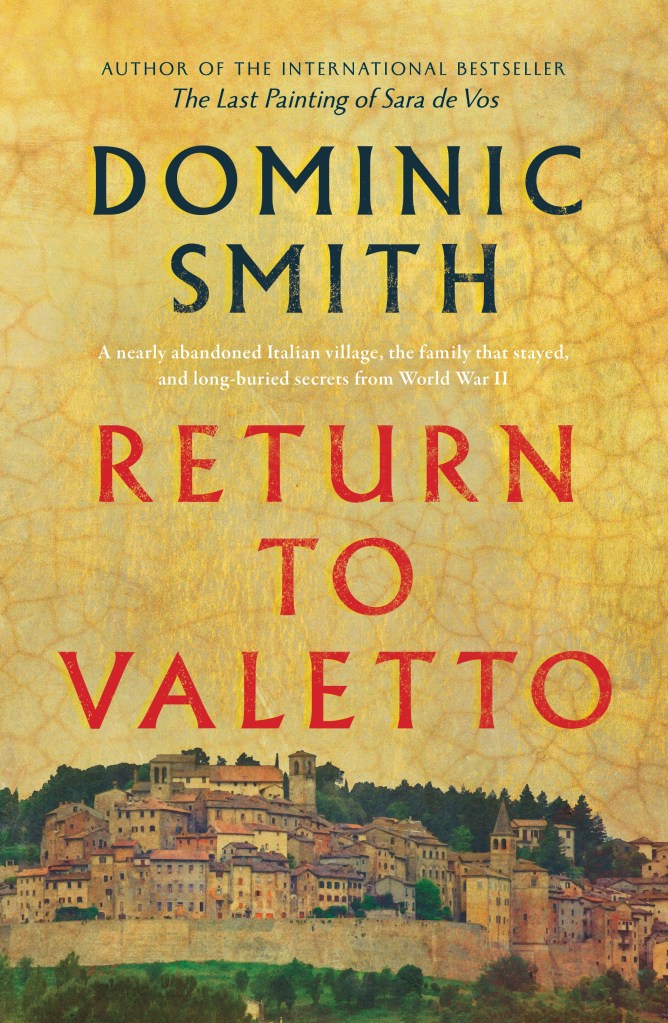
Book Review: Return to Valetto by Dominic Smith – back to Italy with a gorgeous evocation of place and atmosphere

Well, yes I know this book is about a lot more than its setting. There’s a man’s lingering grief for his late wife. A family of elderly women and a secret they never got to grips with from World War II. There’s some parent-child dynamics and a potential love affair. And all of it comes together in a captivating story that maybe takes a little while to get going, but once you get in, has you nicely hooked.

But when I look back on this book in months and maybe even years to come, I know it will be the setting that I’ll think about first. Valetto is Dominic Smith’s invented town in Umbria, which sits on a pedestal of volcanic rock. Much of the old town has fallen down into surrounding valleys, a 1971 earthquake urging many of its inhabitants to relocate. It has become a kind turreted and terracotta island, connected to the surrounding landscape by a footbridge.

Hugh is an American historian who specialises in the study of abandoned towns – there’s hundreds of them dotted around Italy and what better place to begin than Valetto, the childhood home of his mother and where even today his grandmother and three aunts still live. The Serafino women, all widows, are a big chunk of the population which has dwindled to just 10. In a few weeks it is to be his grandmother’s 100th birthday and a party has been planned.

A spanner in the works is the woman who has taken possession of Hugh’s cottage on the Serafino property, supposedly given to her mother for services rendered when Hugh’s grandfather, Aldo, was a resistance fighter during the war. Elissa Tomassi is adamant that the cottage is legally hers, just as Hugh’s aunts are convinced she’s a squatter with no legal tenure. Hugh is sure there can be a way to keep everyone happy and is caught in the middle. But he has to get to the bottom of what happened during the war and discovers not one but two family mysteries to solve.

The past will take Hugh back to Elissa’s home town in the north of Italy to find out what Aldo did in the closing years of the war. He’ll also discover a link between his mother and the Elissa’s that is a trickier memory to unlock and will reveal a crime that has been swept under the carpet. The story builds to a powerful and moving conclusion that has you glued to the final chapters as past deeds are dealt with.

What could be done with the wreckage of the past? As a historian I’d always believed that studying the past could reveal hidden meanings and patterns, that motifs lurked in the underbrush, but now I saw the neap tide of history washing up flotsam on an empty beach.

I enjoyed Return to Valetto enormously, not only for the setting which seems to be a big part of every scene. The late autumn mist across the valley that comes and goes and adds even more mystery. The large old villa that is the Serafino home with its cavernous rooms and crumbling frescoes. There’s the old family restaurant established by his grandmother, where you can see abandoned place settings and dusty menus from a night in 1971. (Oh, did I forget to mention this books is also a hymn to Italian regional cuisine?)

And the characters are a joy. The three aunts, each with their own peculiar ways and at times difficult interactions with each other. I have a particular fondness for books about aunts, going back to P G Wodehouse’s Bertie Wooster stories, and here Iris, Rose and Violet are brilliant. The grandmother with her iron determination to host an unforgettable birthday celebration with an ever-growing guest list and a despairing cook. Both Hugh and Elissa have daughters that make an appearance, so it’s an inter-generational tale as well.

I can’t help feeling Dominic Smith had a wonderful time researching and writing this book as his love for history, particularly social history, as well as all things Italian shines through. This is the second novel by this author I have read and recall that Bright and Distant Shores was one of my top reads for the year it came out. I’ve heard lots of good things about The Last Painting of Sarah de Vos as well. Return to Valetto gets the full five stars from me.

By the way, the fictional town of Valetto is inspired by Civita di Bagnoregio in Lazio – in case you want to visit, either in person or via the Internet.

Book Review: Early Morning Riser by Katherine Heiny – a warm-hearted story filled with quirky characters

I’d heard a lot of recommendations for this book and picking it up was happily expecting a fairly light, cheerful read. And in many ways it is. What makes Early Morning Riser particularly worth reading is the warm humour that runs through the story, and the character of Jane who is a bit of a battler.

Jane teaches a Grade 2 class in the small town of Boyne City, where everyone knows everyone. Maybe it’s the size of the town but it’s astonishing for Jane to discover her new boyfriend, Duncan, seems to have slept with most of the local women. And then there’s her mother. Fortunately Mom lives a three hour drive away, because she’s such a negative person, never stopping to think first before speaking her mind. Dating Duncan also seems to mean the presence of Aggie, Duncan’s ex-wife, who is at all the social get-togethers the new couple are invited to.

It’s easy for Jane to feel a little jealous of Aggie, and this niggles its way through a lot of the book, which takes place over seventeen years. Aggie has a lush, peachy beauty, is the most amazing cook and knows all about what’s going on in the town due to her job in real estate. So even though she has been divorced from Duncan for ten years and is happily married to Gary, a dull, grey, unsociable man, it still galls Jane when Aggie is on the scene. She’s also a reminder that Duncan and marriage just don’t go together.

“Does Gary have to come too?” 
“You know as well as I do that Gary doesn’t like to be alone after dark,” Duncan said. “He says the toilet whispers.” 

As well as Jane’s good friend Frieda – an endlessly positive, mandolin-playing woman destined, it seems, to be forever single – there’s Jimmy. Much of what happens in the story involves Jimmy. Around Duncan’s age, Jimmy still lives with his elderly mother and hasn’t the IQ to manage life on his own. He turns up to work at Duncan’s wood-turning workshop but is there more for company than usefulness. Jane feels remorse for events that leave Jimmy on his own and much of the ensuing decisions she makes are to do with her guilt and making amends.

The story meanders through the years and the ins and outs of Jane’s and Duncan’s relationship. It’s a quiet little read about small-town life and the reasoning behind people’s big decisions and all the little messes they get themselves into. I loved the humour and found myself chuckling as I read. Heiny does kids really well and Jane’s interactions with her class are hilarious.

The natural, warm-hearted writing, the quirky characters as well as Heinz’s understanding of what makes people tick reminded me a little of Anne Tyler’s books – so of course I was going to enjoy this. Though I was occasionally put off by the little bits of popular wisdom doled out as Jane makes this or that realisation. Early Morning Riser was a pleasant break from some more serious reading and gets three and a half out five stars from me.