Book Review: The Fell by Sarah Moss – an empathetic and gripping story of the pandemic

The Fell reads a bit like several interwoven stories, each from the perspective of a different character. The single day setting of the book gives it more of a short-story feel, in that you only get glimpses of the past while the immediate future is left up in the air. This concentrates the tension of what happens when Kate goes for a walk and seems to disappear.

The story is set in a small town in the Pennines where Kate lives with her son Matt and they’re just scraping by. Kate works as a waitress and she does a bit of pub singing, but that’s all come to a halt since a contact at work has become ill with the Covid virus and she’s forced to take a couple of weeks off and to isolate at home.

This is hard for Kate as she’s a keen walker. She’s up on the paths into the wilderness near her home normally every day. She loves nature and living her life with care for the environment. As we meet her, she’s running out of money and there’s not much in the cupboards, certainly not a lot to feed a hungry fifteen-year-old. The house always seems to be cold adding to the sense of times being tough. So you can’t blame Kate for escaping her worries in a fit of desperation and striding up the path to the fell. She only plans a quick walk before dark, but something happens and she doesn’t return.

The story flips from Kate’s character to Matt’s, a caring kid who worries about his mum. As time goes by, he is torn between phoning for help and the fear that his mother would be in terrible trouble. She could face a huge fine they can ill afford, so the hours tick by and Matt waits. He hesitatingly visits next door where Alice is also finding things tough.

Recently widowed, Alice has dinner with her daughter via Skype, but since her battle with cancer, her daughter never stops pestering her about her health. Even though Alice is on her own, it’s like someone is always peering over her shoulder, making her feel guilty about baking all those cookies and not taking better care of herself. She misses her friends and trips to town, stuck at home because of her age and vulnerable health.

The fourth narrator is emergency rescue responder Rob. Now divorced, he should be at home with his teenage daughter – it’s his rostered weekend. But when the call comes through that a walker’s gone missing, he knows his duty is to the missing woman. Kate has a teenager at home too – probably worried sick. Imagine if that was his daughter. He’s torn but it’s a life and death situation – with chilly November temperatures, hypothermia could be fatal if they don’t find Kate soon.

Moss has created four very believable and empathetic characters in a situation many of us will recognise. This is the first book I’ve read that where the Covid pandemic as a key part of the story, not just an interesting background. She conjures up the anxiety, isolation and insecurity felt by many during those difficult times. And also the obsessiveness: the bread baking and the sanitising of groceries.

You get the sense that everyone is battling themselves – to say nothing of social media shaming – doing the right thing on the one hand while desperate for some relief on the other. Some tiny treat. I remember that feeling well. Whether it’s just getting out of your house, playing computer games or eating cookies for dinner.

The Fell’s a short book, and you plough through the pages to see what happens next. I would have liked at least an epilogue to see if all that worry was justified and because I felt so invested in the characters I wanted a little bit of optimism for them. Something for them to look forward to. But this is a perfectly pared down story, and those focussed anxieties don’t let up until the end.

The Fell is also one of those books where there are no quotation marks, which kind of works, adding to that stream of consciousness narration, and I did get used to it. Eventually. The chapter headings are all lower case, which makes them oddly emphatic. But all this vanishes as you read, because of your connection with the characters. If it isn’t too soon for you to read a Covid novel, give this one a go. At the end of the day, it’s just a darn good story – and a four out of five read from me.

Book Review: The Headmaster’s Wife by Thomas Christopher Greene – a riveting story, artfully crafted

I’d heard a few recommendations of this 2014 novel set in a New England school. You get to the middle and suddenly you can’t put it down, people told me. And yes, in a way, that was true.

The Headmaster’s Wife is the story of a marriage in trouble, set in the enclave of a small private prep school, a claustrophobic world where privacy and personal freedom can be in short supply. Tradition holds sway at Lancaster, an exclusive boarding school for wealthy students aiming for Ivy League universities. A few scholarships bring in students from poorer backgrounds, such as Betsy Pappas, a brilliant student from a small town north of Lancaster, the product of hippy parents, and Russell Hurley, a plumber’s son who is there because he’s so good at sport.

Not so, Arthur Winthrop. He’s the son of a Lancaster headmaster, and the grandson of a Lancaster headmaster, and carrying on in the same family tradition (a good literature degree from Yale and a teaching career), is now the headmaster of the title. We catch up with Arthur at the start of the book when he’s lost his way. Walking through Central Park in the snow, he has some sort of mental breakdown, removes his clothes, before finding himself in police custody and requested to explain his behaviour.

The story flips back to his obsession with a student, Betsy Pappas, who is not only attractive, but really gets Russian literature. Meanwhile his wife plays a lot of tennis, or spends time in their son’s room, missing Ethan who has disappointed his father by joining the army instead of going to Yale. The succession of Winthrops as Lancaster headmasters will likely end with Arthur.

And she thinks perhaps that is what love is: letting someone else see that part of you that shatters like glass… They will grow old together, broken together, and as long as they both don’t completely shatter at the same time, they might find a way to pick each other off the ground.

While the Headmaster’s Wife is about the Winthrops and their marriage, there’s also a mystery/suspense element that keeps you hooked. Communication problems, suppressed feelings as well as power and its abuse hover in the background. I was also reminded of that often quoted line from Philip Larkin’s poem, “This Be the Verse”. You know the one.

To say more would spoil one or two surprises that give the book the impetus that keeps you reading. The story structure is original, and you can’t help but admire the clever storytelling, the fine writing, but the book will tug at your heartstrings too. I was glad of the recommendation to pick this up, as it’s a quiet, unassuming looking book that would have otherwise escaped my radar. The Headmaster’s Wife scores a four out of five from me.

Book Review: Black Rabbit Hall by Eve Chase – secrets and lies in an evocative Cornish setting

I love these novels set in old English country houses, specially when family secrets, heartbreak and mystery are added to the mix. Old houses can add a Gothic quality, as it is with Black Rabbit Hall, although that’s not the house’s real name. Pencraw’s a dilapidated mansion on the Cornish coast, subject to storms and heady summer heat and it’s the home to the Alton family when they’re not in London.

The young Altons are a blessed with loving parents – beautiful Nancy who hails from New York, and Hugo who is struggling to maintain the old house, with its leaky roof and unreliable floorboards. The couple are devoted to each other, and adore their kids: little Kitty, nature-loving Barney, fifteen-year-old Toby and his twin sister Amber who narrates most of the story. Their world comes crumbling down when Nancy dies suddenly in a riding accident, and the children become more wild and unkempt.

Amber does her best to fill in as a mother figure to the two younger children while Toby acts more weirdly than ever. He has a fixation with what to do if civilisation comes to an end – it’s 1968 and the Cold War and the nuclear arms race are all go. He’s a survivalist but not in a good way and argues constantly with his father. It doesn’t come as a surprise when Hugo invites an old flame to visit but it’s a shock when she arrives with her seventeen-year-old son, Lucien. Caroline is the opposite of their warm, spontaneous mother, but she’s got money and might just save Black Rabbit Hall.

The story flips between Amber’s narration and Lorna’s some thirty odd years later. Lorna and her fiancé Jon are looking for a wedding venue, and Amber has a distant memory of visiting Black Rabbit Hall as a child with her mother. There is an emotional pull here for Lorna as her mother has recently died, lacing the memory with nostalgia. Finding the house almost defeats them, but it’s also a shock when they get there and it seems the Hall is not quite ready for hosting weddings, despite what the website says.

Jon and Amber look set to fall out over the Hall, Amber still excited about finding the perfect setting for the wedding, Jon more realistic having noticed the general state of disrepair. Then there is the lack of staff, the house inhabited by the frail and elderly Mrs Alton and Dill, her flustered general factotum. Amber is talked into visiting for a weekend to help make up her mind – no pressure! What she experiences when she’s at the Hall is more about disturbing distant memories and uncovering family secrets that giving the place a trial run. What is it about Black Rabbit Hall that seems to prod deep into her consciousness?

The story slowly comes together as we go back through the years to fill in the gaps as the Alton children have to deal with family upheaval while still grieving for Nancy. Lorna also teases out hints from the past which make her doubt her future with Jon. In each narrative there is a gathering storm and sense of impending doom, which has you galloping through the book to find out what happens. It all comes to a startling and intense ending but there is resolution as well.

For me the book had hints of Daphne du Maurier, not only with the Cornish setting, but with the cruel, Mrs Danvers-like malefactor and the Gothic qualities of the house. Chase also does a great job with the family dynamics, particularly the way she writes about siblings and the intense connections between the twins, the pressure on the older sister to keep things together and the difficulty for her to be her own person.

Black Rabbit Hall is the perfect read if you like old country house mysteries and evocative settings. The characters are easy to empathise with, honestly they break your heart, and there is an interesting dichotomy between long summer days where nothing seems to happen and events hurtling characters into rash behaviour. This is my second Eve Chase novel – I’d previously enjoyed The Wilding Sisters – and it didn’t disappoint. I’ll be heading back for more. Black Rabbit Hall (which incidentally won the Saint Maur en Poche prize for best foreign fiction) gets a four out of five from me.

Book Review: A Tidy Ending by Joanna Cannon – a beguiling psychological dramedy

You never quite know what you’re getting yourself into when you pick up a Joanna Cannon novel. Each is unique, but there’s a few common themes. The Trouble with Goats and Sheep has two young girls concerned with the disappearance of a neighbour and what unravels in their cul-de-sac during a simmering 1970s summer. Three Things About Elsie is set in a retirement village with its elderly protagonist trying to keep a grip on reality while haunted by a secret from the past. A vein of dark humour runs through both books and it is the same here with A Tidy Ending.

Linda just wants to be like other women she sees in the catalogues delivered to her new house, addressed to Rebecca Finch. Rebecca used to live in the house Linda and Terry have just moved to – just around the corner from their old house. In her early forties, Linda’s either wearing the same old housecoat she’s had for decades, or clothing from the charity shop where she works part-time. According to her mother, she’s just too ‘big boned’ to aspire to anything more glamorous. But surely there’s more to life than pushing the hoover around and fish-fingers for tea.

Although she’s married to Terry, it’s a lonely kind of marriage and Linda doesn’t have any friends. She tries to suggest going for a coffee with Ingrid down the road, but Ingrid just never quite has the time. You can’t help wondering if it’s because of something that happened to Linda when she was a child and the terrible events around the death of her father. Meanwhile, a young woman has been strangled nearby. There’s nothing like a murder to get the neighbours talking and Linda and her mother are soon swept up in speculation. Even Terry, normally sat in front of the telly watching sport, takes an interest.

The story follows the extraordinary lengths Linda goes to make friends with Rebecca Finch. Meanwhile another girl is murdered amid talk of a serial killer lurking in the neighbourhood. We learn more about Linda’s childhood in Wales and what happened to her father. Threaded through the narrative are chapters that seem to be set in a ward for the mentally ill. There are a lot of loose ends to tie up before any hint of the story’s ‘tidy ending’.

There’s a tinge of humour running through Linda’s narrative and even though she’s not the easiest character to like, you can’t help feeling some empathy for her. Will she manage to sort out her life and get what she wants or is she doomed to be misunderstood, disliked or even stuck in ongoing mental care? The characters around her – the fussy, demanding mother; the nosy, busy-body neighbour Malcolm – are beautifully observed, but it takes a lot of concentration to keep up with what’s going on in the story. So even though Linda is such an awkward character, you can’t help wanting to know what happens to her and you race towards a stunning and unpredictable ending.

I love the way Joanna Cannon combines sharp psychological observation with clever plotting and she’s done it here again. I’m not quite sure what genre this – is it a ‘domestic’ thriller? A dark comedy? Or something unique of Cannon’s own devising. Whatever it is, she’s a breath of fresh air – original and hugely entertaining. A Tidy Ending scores a four out of five from me.

Book Review: The Place on Dalhousie by Melina Marchetta – a warm-hearted novel about finding family where you least expect it

I picked this book up as it was recommended by a librarian, my final task in the Turn Up the Heat winter reading challenge at the library. The Place on Dalhousie came out in 2019, and I am reminded a little of the first book I read by Marchetta – Looking for Alibrandi, published in 1992 – with its strong Australian sense of place and memorable characters.

In the recent book we have three main characters flung together by circumstances trying to make the best of things. Rosie Genarro is a care-giver in rural Queensland when she meets Jimmy in the middle of a natural disaster. He’s part of the rescue team when Rosie has to get her recalcitrant elderly client out of her home before floods destroy it. Two years later she’s back in Sydney with a baby, living in her parents’ house. Only her parents are both dead – Rosie’s still mourning her father – and she’s in a stand-off with her stepmother, Martha, over who owns the house. Jimmy is nowhere to be seen.

Martha is also still grieving Seb, who according to Rosie, she married far too soon after the death of her mother. Martha has a high-pressure job, and is desperate for some leave. She’s also a prickly, difficult woman, and sharing her home with her step-daughter and her unsettled baby is ramping up her stress levels. Somehow she gets dragged into a netball team with her old schoolmates, coached by a faded footy star and former schoolgirl crush, the once more single brother of one of her mates.

When Jimmy finds his long-lost phone, he discovers he’s also a father. He travels to Sydney to meet his son and perhaps to make things right with Rosie. It’s not all plain sailing, though. He’s working in the mining industry in Perth, bunking in with friends on the weeks he’s rostered off. Rosie is distrustful and it will take a lot to win her over. Both are very young and have dreams of a new career path – Rosie as a midwife; Jimmy as a paramedic. But study is expensive and so is renting a place in Sydney. They are really up against it.

As I said, Marchetta is really strong on characters. I loved Martha’s netball mates, and the awkward friendships Rosie makes with the two other misfits from a mother’s coffee group. Even the house – the place on Dalhousie – has a personality. It epitomises all the family love that has gone into turning it from a the rundown ‘worst house in the street’ to something special. No wonder neither Martha or Rosie want to part with it. The story builds to a brilliant ending with a couple of nice twists.

Marchetta is a dab-hand with smart, funny dialogue, capturing the characters and also the voices of Australians of European descent, particularly the Italians. Martha’s of German descent so there’s that too. You get a great sense of place, whether it’s rural Queensland or suburban Sydney. Now that I’ve read her first book and much more recently her latest, I’m wondering why I haven’t read anything in between. I’m giving this book a four out of five.

Book Review: Remarkably Bright Creatures by Shelby Van Pelt – a heart-warming debut that will have you cheering

I had no idea what to expect with this novel, which includes among its three main narrators an octopus. Marcellus the GPO (great Pacific octopus) inhabits a tank at an aquarium where he has a good view of humanity as it comes to peer at him. He may be missing sea life in the raw, but he’s learnt a lot about people, their weird sense of humour, their ugly eating habits, their lack of perspicacity. He hasn’t a lot of respect for the human race as a whole, but forges a bond with Tova, the seventy-year-old cleaner who each evening wipes the smears from the glass of his enclosure and at one point rescues him from disaster.

Tova is at a crossroads. She has been recently widowed but still rattles around in the house her Swedish father built, which is full of memories. The loss of her son at the age of eighteen is something she’s learnt to live with, if only she could understand what happened on the night he disappeared. Her friends think it’s time for her to find somewhere smaller, but maybe it’s time to think about a retirement home. After all there’s no one to take care of her when she gets too old to manage herself. However, the chatty Scot, Ethan, who runs the local store would be very sorry to see her go.

Meanwhile, hundreds of kilometres away, in California, Cameron is in a bad way. At thirty, he can’t seem to hold down a job, his Jeep has been repossessed and he seems to be running out of chances with his girlfriend. He’s bitter and resentful, still smarting since his mother abandoned him when he was nine. When his Auntie Jeanne gives him a box of his mother’s things, a lack of options has him heading north to Washington State in search of his father. With luck he’s the wealthy property developer Simon Brinks and Cameron can touch him for year’s of child support.

Over the course of the novel, all four characters’ stories collide and Cameron, Ethan, Tova and even Marcellus will help each other get to the truth. It isn’t difficult to guess what’s going on and the author uses dramatic irony to keep the reader turning the pages. You want to shout at the characters, especially Cameron, who has a lot of growing up to do, but also Tova, telling them not to be so hasty, or have another look at that clue. Marcellus is in the same boat as us, figuring things out long before the humans do, but then octopuses are remarkably bright creatures.

In an odd way Marcellus is the hero of the tory, and how Van Pelt makes this work is really charming. He’s a talented escapologist – just why are so many sea cucumbers disappearing? wonders his keeper – and a collector of glittering trifles. But time is not on his side and this adds to the tension.

Remarkably Bright Creatures is an altogether heart-warming read, well put-together with some interesting facts about sea creatures sprinkled through the story. I loved the North-West Pacific coastal setting, a fitting place for an aquarium, and the nosy but kindly locals. I’ll be looking out for Van Pelt’s next book. This one gets a four out of five from me.

Book Review: The Narrow Land by Christine Dwyer Hickey – an atmospheric historical drama and the perfect ‘quiet’ read

I recently came upon a post on Twitter asking readers to name their favourite ‘quiet’ books.. Among the recommendations were lots of my favourites and quite a few more I’d not heard of. Marilynne Robinson’s Gilead was there, and Barbara Pym, as well as Anne Tyler and Elizabeth von Arnim’s Enchanted April. And I thought, yes these are the authors that I read again and again. Now I can add The Narrow Land to the list – a book about the small dramas of people thrown together on Cape Cod during the summer of 1950.

Among the cast of characters is Ed Hopper. He’s the much-loved American painter who produced similarly quiet pictures of people and cars and architecture, the most famous of which is probably Nighthawks, showing late-night customers at a city diner. Ed and his wife Jo live in New York with a holiday house at Cape Cod. They make an odd couple, he’s very tall, quiet, solemn even, while she’s short, emotional and talkative. When we meet them they are in their sixties. Ed has the artist’s version of writer’s block; Jo anxiously quizzing him about possible subject matter, while regretting the sacrifice of her own artistic ambitions to further Ed’s career.

We also meet Michael, the ten-year-old German orphan adopted by a kindly New York couple after their own son’s death. He is sent for two weeks’ holiday with the Kaplans, a well-to-do family who support the charity that has rescued orphans like Michael. Mrs Kaplan is a Lady Bountiful type of character who is renting a large house on the cape with her daughter, Katherine, who is ill, and her glamorous daughter-in-law, the widow of Mrs K’s only son. As well as enjoying the benefits of a holiday by the sea, Michael will be company for Mrs K’s grandson, Richie.

Michael has plenty of demons – memories of the horrors of his war, the loss of his nationality, his language, but also the fear that his new parents won’t want him back – they are moving house and expecting another child. Then there’s fitting in with the tony Kaplans, knowing what to say and do. Richie, soon to be despatched to a new boarding school is chatty and excessively well-mannered, but also suffering the loss of his father.

When Jo tries to shoo the Kaplan’s from the beach in front of the Hoppers’ house, what begins as a seemingly awful social gaffe becomes the catalyst that throws the two households together. Everyone’s intrigued to meet Ed, who cringes at the thought of social engagements. But it’s the two lost and lonely boys who seem to connect with the artist and his wife. While Jo tries to make up with the Kaplans for her earlier bad manners, Ed roams around looking at buildings, their windows and doorways, sketching, walking and thinking. There’s a woman too whose image he can’t quite shake and feels he’s seen her somewhere around here before.

The Narrow Land is a slow burn of a read, with chapters named after some of the planets in Holst’s famous suite, a record loved by both Ed and Katherine. Stars are aligning, perhaps. Little by little, we get to know the characters and they are all written with immense sympathy though each have their faults. Against this, the wider story of the middle twentieth century and an America rebuilding after the war, while a new war in Korea is on the horizon. The characters are also battling it out – Ed and Jo bicker and walk out on each other, Michael and Richie don’t get along either. Only Katherine can soothe the troubled waters it seems, but she’s got her own battle on her hands.

In the background you have the Cape Cod summer, the wind riffling through the long grass, the boats on the water, the long, languid evenings. Did I mention this is also the perfect winter read? I particularly enjoyed the insight you get into Ed Hopper’s paintings, his artist’s eye, his struggles to find the right subject matter. Visual images, music and lingering scents of cigarettes and cologne add to the immediacy of the book, often seen through Michael’s point of view, the perfect impressionable young narrator.

The Narrow Land is an accomplished and spell-binding drama, easily a five out of five from me. It’s also the 2020 recipient of the Walter Scott Prize for historical fiction, and as such qualifies for one of the challenges in our library’s Turn Up the Heat winter reading programme: Read a Prize Winning Book. Put this ‘quiet’ novel on your to-read list.

Book Review: Convenience Store Woman by Sayaka Murata – an unforgettable character and a thought-provoking story

I picked up Convenience Store Woman for another challenge in our library’s Turn Up the Heat reading programme (see previous post). This challenge requires you to read a book in translation. I could have picked any number of nail-biting, atmospheric Scandi-noir mysteries, but opted for a Japanese novel instead. And this one’s been on my radar for a while.

The narrator, Keiko Furukura, isn’t like anybody else she knows. She has no idea how to fit in and this is apparent early as a young child. Her parents and sister worry about her – she has no friends – because she just can’t seem to pick up the norms of social interaction. Strangely, when Keiko is a university student, she is rescued by the opening of a convenience store. She applies for a job and soon she’s learning how to greet customers, what to say to invite them to buy, how to mirror the appropriate facial expressions to be good at making sales. The store’s training regime leaves no room for the randomness of individual personalities.

At that moment, for the first time ever, I felt I’d become a part in the machine in society. I’ve been reborn, I thought.

But now, eighteen years later, Keiko’s still at the convenience store, doing a job normally filled by immigrants, students and transients looking for a stop-gap position before moving on. She’s had several managers including Mrs Izumi, a woman of the same age. It’s OK to have a job in a convenience store if you’re married with children, it seems.

Keiko checks out the brands of Mrs Izumi’s shoes and discovers where she shops so that she can buy similar clothing. She copies the slang she learns from other co-workers to sound more natural. This comes in handy as recently she’s been meeting up with some old classmates. But even though she’s learnt to parrot socially acceptable phrases and dress stylishly, her women friends still nag her about her job and not having a husband. The pressure to change forces Keiko to do something drastic.

Convenience Store Woman is a clever social commentary, almost an anthropological study of the conventions surrounding human behaviour, seen through the eyes of someone outside the norm. It is at times very funny, capturing the excruciating awkwardness of Keiko who would probably not arouse so much concern if she had a ‘proper’ job. She could just be a likeable eccentric – even though it is her shop job that has given her a place in the scheme of things. It makes you realise how society depends on everyone doing things a particular way, which is also a little disturbing.

Convenience Store Woman is a quick read, partly because it’s a small book, but also because it has you racing through the pages to see what happens next. And it’s so entertaining. Keiko is such a brilliant character, more interesting than likeable, but she’s someone you want to cheer for. The book is the English debut for Sayaka Murata who has written many books and won the Akutagawa Prize, Japan’s premier literary award. Her next book in translation, Earthlings, also looks well worth checking out too. Convenience Store Woman gets four out of five from me.

Book Review: The Country Girls by Edna O’Brien – an Irish classic perfect for a library reading challenge

Our public library is running a winter reading programme called Turn Up the Heat. There’s a kind of bingo card of different reading challenges, and every time you log a completed challenge, you go into the draw for prizes. So much fun! One of the challenges is to read a book published in the year you were born. In spite of thinking there’d be hardly anything published in a year so long ago, I quickly found three books to choose from I was happy to read.

The Adventures of the Christmas Pudding, a Hercule Poirot mystery by Agatha Christie, is a book I’ve read before, probably more than once, and I have a copy on my bookshelf. But I felt this one lacked the element of challenge I was quite looking for. Casanova’s Chinese Restaurant is one of the books in Anthony Powell’s ‘A Dance to the Music of Time’ series of twelve books. I’ve been meaning to reread them for a while now, but as the one from my birth year is number five in the series, I demurred. Then I happened upon The Country Girls by Edna O’Brien. A book I’ve always meant to read, and not too long. Perfect.

I was quickly caught up in the story of fourteen-year-old Caithleen, who is worried about the return of her father, missing for days if not weeks with the money he was meant to use on paying bills. We’re on a farm near Limerick, and the father has a terrible temper, and a tendency to go on benders, returning home to beat his wife. This sounds kind of morose, but in spite of the dreariness of life in a small village, Caithleen is a charming narrator. She’s naive, but friendly and kindly. She has a terrible hoodlum of a friend, Baba (Bridget), and the two get up to all sorts.

Cait is romantic in nature, and in spite of a family tragedy, dreams her way through life, yearning after Mr Gentleman, the name given to the Frenchman with an unpronounceable name who lives in a nearby manor house with his wife. Baba just wants to have fun, sometimes at Cait’s expense. Baba is dark, dainty and pretty, which makes tall, red-headed and eventually ‘Rubenesque’ Cait feel inferior. They have a challenging relationship, but kind-hearted Cait remains loyal through all Baba puts her through.

The book is divided roughly into three parts, the first with the girls still at the local school, and Cait’s family situation disintegrates to the point where Baba’s parents feel obliged to take her in. The second has them at a convent school, where Cait shines academically, and Baba gets them into trouble. In the third section, the two escape to Dublin where Baba is sent to a secretarial college and Cait to work in a grocery store. They live for their nights out on the town, Baba urging Cait on to have fun, while Cait writes letters home to Mr Gentleman.

Edna O’Brien writes in a way that is both amusing and entertaining, but also puts you in the time and place. 1960s Dublin is full of all kinds of traps for young girls; the sexism is horrific, so you can’t help admiring Baba’s mother who is worldly wise and does what she feels like, even hiding the chicken dinner from her husband in her wardrobe so there is more for her. It’s a bit like an Irish Nancy Mitford novel – loads of fun, mad characters and brilliant social commentary, but lurking beneath it all a layer of darkness. You can’t help feeling that with the 1960s ready to get going, there will be more choice for young Irish women, but you’ll have to read the next book (The Lonely Girl) to find out.

I’ve always enjoyed classic literature – it’s such a dilemma whether to read the next hot new release or a book that’s remained in print for decades or more. So it’s good to mix them up. I’ve enjoyed a lot of more recent Irish literature, so I appreciated The Country Girls as a book that made an impact at its publication, inspiring the generations of Irish writers, particularly female ones, that followed. Apparently The Country Girls trilogy was so shocking at the time, it was banned and even denounced from the pulpit. Another challenge in Turn Up the Heat is to read a biography – I might be tempted to give O’Brien’s, A Country Girl, a try.

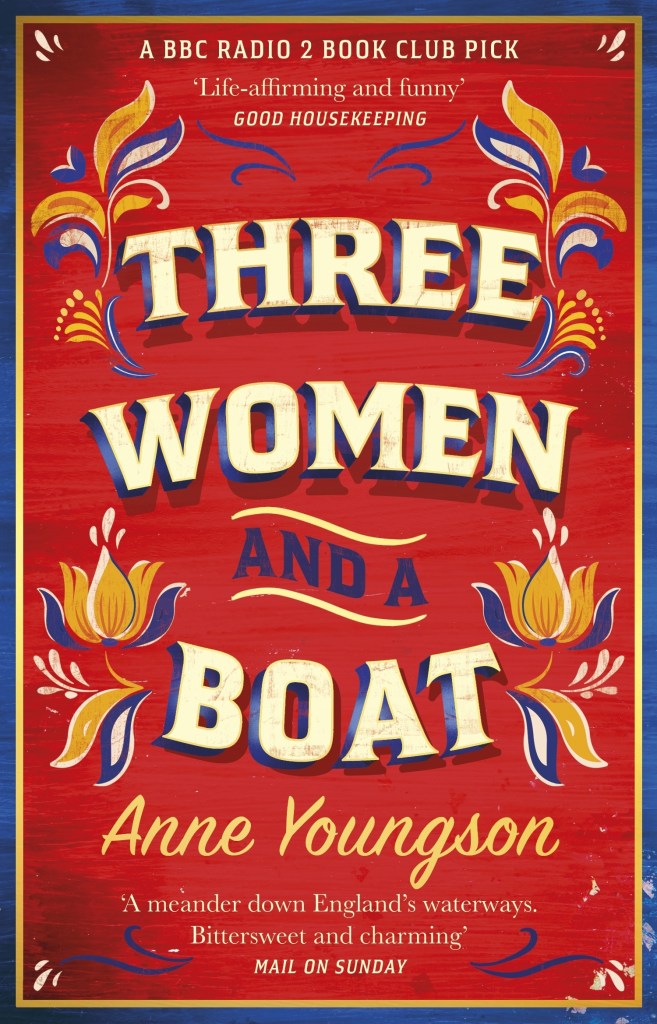
Book Review: Three Women and a Boat by Anne Youngson – a warm-hearted novel about turning points and second chances

Youngson’s first novel, Meet Me at the Museum, was a thoughtful, enlightening and romantic story told in letters between its two main characters. It was a big hit and I’ve been looking forward to this second book, set on the canals of England between London and Chester. Three Women and a Boat (US edition: The Narrowboat Summer) follows Eve, Sally and Anastasia who band together when each is at a turning point in their lives. They are complete strangers to begin with, when Anastasia needs somewhere to stay in London for cancer treatment. Sally and Eve, each independently and suddenly adrift from their normal lives, chip in and offer to help.

Eve has been dumped from her job in engineering. Sally is walking away from her marriage. Neither knows what they want to do next when they meet up on a towpath and rescue a howling dog, trapped in a canal boat. Anastasia returns to her boat to find two strangers have smashed a window to free a dog that didn’t need freeing. Maybe it’s the lure of life on the canals, or perhaps it is Anastasia’s vivid personality, but the two younger women find themselves agreeing to do her a favour.

While Anastasia is in London staying in Eve’s flat, her houseboat, the Number One, needs to be ferried to Chester for repairs. Eve and Sally have to rapidly get up to speed on handling the boat and the tricky business of canal locks as well as get used to living together in a tight space.

A lot of the story is about the women on the boat, and you get heaps of detail about locks and tunnels and how to navigate them, which is interesting. The summery canal-side scenery gets a mention too and you’re soon drifting along with Eve and Sally as if you’re with them on the trip, having a nice break away from it all. It’s a slower pace but there’s lots to do. Then there are all the interesting characters Eve and Sally get to know – people who have made a life on the canals in one way or another.

The story is narrated by Eve and Sally in turn, as they evaluate their lives and think about their options. We get their points of view of other characters, in particular, Arthur a tweedy old friend of Anastasia’s who is also oddly secretive, as well as Billy and Trompette whose boat, the Grimm, is aptly named as Billy is a gifted storyteller. The women warm to Trompette who at only nineteen has a talent for creating wonderful knitted garments – surely she could study design and make something of her life.

You read on, wondering what decisions the main characters will make about what to do next. Eve and Sally change during the course of the book, enough to learn what really matters to them. If you’ve always had a hankering to ditch the treadmill of the nine-to-five job and the mortgage repayments this might well resonate with you. But just to keep the plot simmering Youngson throws in a few twists as well.

This is a very different book to what I was expecting in that it is quite philosophical, thoughtfully written and doesn’t follow too much the usual rules that seem to govern novel plotting. It’s a breath of fresh air in so many ways, and while it’s a fairly light read, like her previous book, it marks Youngson out as an interesting author with an original voice. I particularly loved the characters who seem very real, the kind of people you’d like to meet for a catch-up over coffee. All in all this is such an enjoyable read – a four out of five from me.