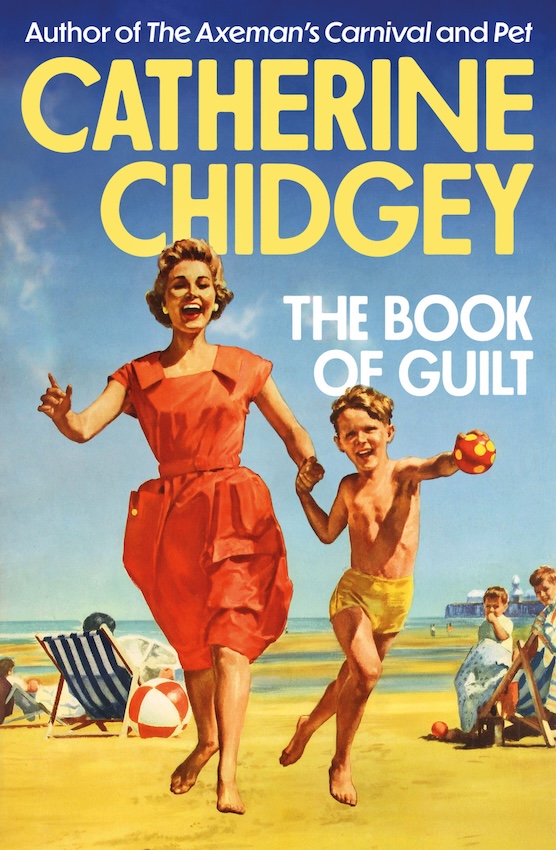
Book Review: The Book of Guilt by Catherine Chidgey – an enthralling and haunting dystopian novel

It can be a bit nerve-wracking reviewing a book that has already had a lot of publicity and kudos. Even as you start to read it you know you are supposed to like it, but what if you don’t? Fortunately, The Book of Guilt soon drew me in with it’s 1979 English setting, although it’s not quite like how anyone would remember it.

Catherine Chidgey has reimagined the world as it might have been if England had signed a treaty with Germany in 1943, ending the war and continuing similar scientific experiments to those the Germans had been working on. We’ve got triplets, Vincent, Lawrence and William – 13 year olds who are the last boys living at Captain Scott house, a kind of children’s home. They follow a strict regime of activities and medication, overseen by their caregivers – Mother Morning, Mother Afternoon and Mother Night.

Along with taking daily medicine, their dreams are recorded in the Book of Dreams, and any misdemeanours noted in The Book of Guilt. Lessons are from The Book of Knowledge – a kind of old-school encyclopaedia. The house is shabby, toys are minimal, but then the boys don’t always feel well enough for a lot of physical activity. But once they have beaten “the Bug”, they are promised they will be sent to Margate, a child’s paradise, where they’ll meet up with their old friends again, and every day enjoy the amusement park, described in loving detail.

Soon our reader’s antennae are twitching, as we know this isn’t normal and the boys part of a grander scheme, pawns in some kind of experiment. There are visits by an avuncular Dr Roach, eagerly awaited, with his little dog Cynthia. The mothers are reluctant to share what’s really going on and shut down any questions with platitudes. And when the boys are at last allowed to visit the village, the locals are wary, hostile even.

The story is told largely from Vincent’s point of view, but interspersed is Nancy’s story, a girl about the same age, whose own family situation is unusual and plagued with secrecy. And then there’s The Minister of Loneliness, who is tasked with overseeing the closing of the boys’ home and others like it, and finding suitable families to take the remaining children. She is clearly uncomfortable about what she sees when she visits the boys at Captain Scott.

This is such an intense read, so haunting I could think of little else. And things get pretty dark, with new revelations and plot developments. At one point I had to take a break, so I read a crime novella about a wife murderer for a bit of light relief. But I did continue and I’m glad I did as it is such a compelling and thought-provoking story.

Chidgey is brilliant at detail and at times this was like a trip down memory lane with artifacts from everyday life circa 1979 appearing – leatherette furniture, the knick-knacks on display, Nancy’s Spirograph. You can feel the world through Vincent and Nancy, just as a young person might, all five senses vividly recounted. And the way children, no matter what circumstances they are living in, will sometimes burst into moments of imagination, or excitable play.

Ideas around power and what should be sanctioned for the greater good, of difference and prejudice and, of course, guilt trickle through the storyline. It all adds up to a top literary achievement and I can see why there’s a lot of talk about the novel. Crafted and intelligent, The Book of Guilt is a five-star read from me.
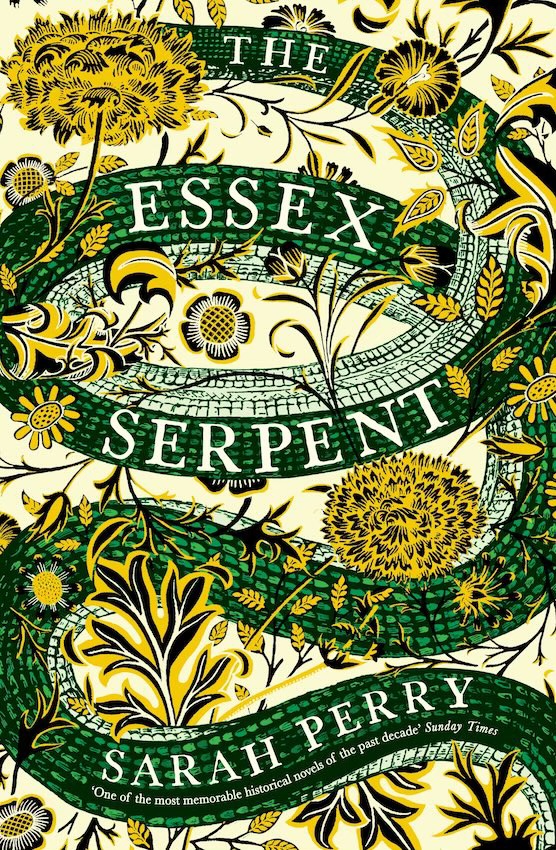
Book Review: The Essex Serpent by Sarah Perry – a vivid historical novel where science, religion and superstition collide

The Essex Serpent was singled out for a raft of awards when it came out in 2016, even winning a couple. Now it’s showing on Apple TV with a brilliant cast including Claire Danes and Tom Hiddleston. I’m not sure why I didn’t pick up the book when it was released, because having read it now, I realise it’s just my kind of book

The story is set in the 1890s, a time of scientific discovery and medical advancement. Cora Seaborne’s bullying husband has recently died, and she finds not so much grieving, but discovering freedom in her new circumstances. Fascinated by science, particularly palaeontology, she is excited to hear reports of an “Essex serpent” and decides to head off to Colchester, accompanied by her companion/servant Martha and young son, Francis. She takes long walks in a man’s coat, releases her hair and becomes increasingly her own person.

Will and Cora clash in many ways, Cora determined that there is a possibility that a beast from the dinosaur era may have survived against the odds; Will’s more practical mind believing there’s a more rational explanation. He sees no reason why religion cannot accommodate modern science, while Cora cannot see how he can think logically and still have faith. The two are drawn to each other, in spite of an odd first meeting over the rescue of a sheep.

Other characters are equally interesting. There’s Cora’s friend, Dr Luke Garrett, who she refers to as the “imp”, the young doctor who attended her late husband, and who is patently in love with her. Luke is desperate to try new kinds of surgery and to make his mark on the medical world, his wealthy friend Spencer, tagging along. Martha has strong socialist views, and in spite of impoverished upbringing, has read Marx, attending lectures on social change and gets involved in housing reform. There are children who get caught up in all the Essex madness, as well as World’s End resident, old Cracknell with his ongoing campaign against moles.

There are further story threads involving Luke’s chance at heart surgery and the life he saves, and Spencer’s opportunity to impress Martha. With so much going on in the novel, the sub-plots highlighting the plight of the poor, and it’s very individualistic characters, the book reminded me a little of a Dickens novel. The writing is well-crafted and evocative, whether we’re in the slums of London, or the salt marshes of Essex. The different story threads pull strongly towards a dramatic finish, and you are desperate to see what happens next. I loved it – the audiobook version read by Juanita McMahon, was superb – and I shall certainly be reading everything else by Sarah Perry. The Essex Serpent is a five-star read from me.

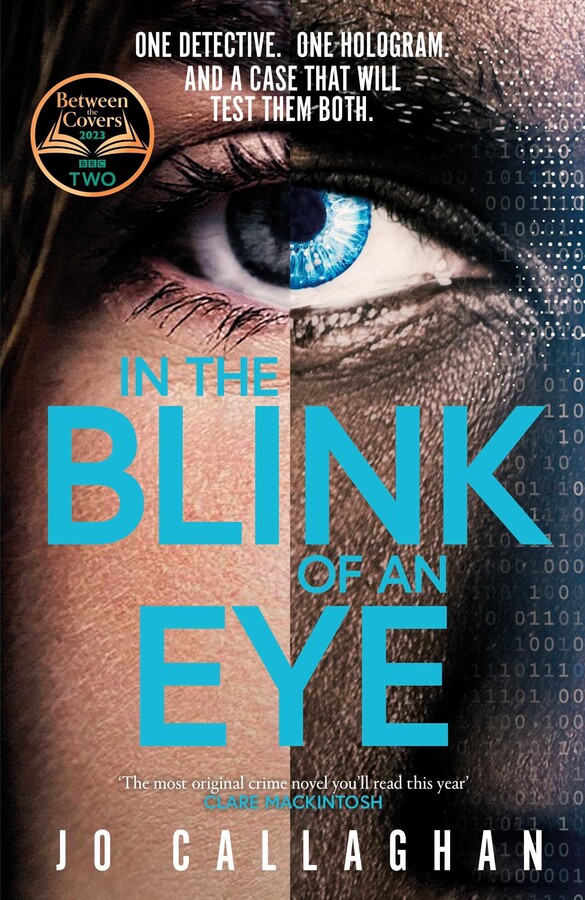
Book Review: In the Blink of an Eye by Jo Callaghan – a police pairing that breaks the mould

I always like to check out the Theakston’s Old Peculier Crime Novel of the Year awards – the shortlists are full of my favourite mystery authors (Elly Griffiths, Ruth Ware, Abir Mukherjee, and that’s just for starters). This year’s winner was Jo Callaghan’s debut novel, In the Blink of an Eye, which breaks new ground in that there’s a new police officer on the team, and it’s AI. The premise of this novel was just too good to ignore.

DCS Kat Frank has been away from the Warwickshire police on bereavement leave, and her husband’s death is still a bit raw. Her son, Cam, who has just completed his A Levels, has been having therapy, his anxiety over losing a second parent who has a dangerous job never far from his thoughts. So Kat has requested a safe option for her return to work, something less on the frontline. Her boss and mentor Chief Constable McLeish has a surprise in store. He’s signed Kat up to run a missing person’s cold case team that also will be trialling AIDEs (Artificially Intelligent Detecting Entities).

Kat is not happy. She’s an intuitive cop who follows her gut. You can’t solve cases with an algorithm, she declares. Meanwhile the scientist who has designed the AIDE, Professor Okonedo, with her own axe to grind, is sceptical of Kat’s skills and of the police in general. Reluctantly Kat agrees to the trial, taking on ambitious DI Rayan Hassan and shrinking violet, yet empathetic, DS Debbie Browne. Okonedo introduces AIDE Lock, a bracelet-type band that you can talk to like Siri, and which can whip up facts, statistics and probabilities in seconds. In holographic form, it’s remarkably like a person.

With hundreds of cold cases to chose from, Lock determines that recently missing young males will be more easily found. But Lock and Kat disagree over which. Kat’s preferred case is Tyrone Walters, a high-achieving young black man from a deprived area. Lock prefers Will Robinson, a young white male not much older from a wealthy home. According to Locke, statistics suggest the Robinson case would be easier to solve because he’s white. Kat is appalled as this racial bias and has a feeling that Tyrone has been a victim of foul play..

Ultimately, Hassan suggests the trial review both cases, and Professor Okonedo assures Kat that Lock can “perform the functions of many officers in just a fraction of the time”. This makes Kat only bristle more, but she reluctantly agrees. If only the team realised that what starts out as a test, a case chosen by statistics versus one chosen by gut feeling, will converge into a single case that is still active.

Picking up her briefcase, Kat paused at the door. She needed to leave her new team with something more motivational than her obvious irritation. ‘Remember, less than one per cent of missing people turn up dead, so we still have a good chance of finding both boys alive.’

‘Just to clarify, that figure represents one per cent of all the missing,’ said Lock’s voice from her wrist. ‘Only four per cent of adults are still missing one week after being reported, which is the category that Tyrone and Will fall within. So, in actual fact, there is a twenty-five percent chance that both boys are already dead.’

This really was an edge of the seat read, as woven into the narrative are scenes from the point of view of someone who has been kidnapped, drugged and immobilised. The clock is ticking and we can only hope that Kat and Lock will sort out their differences enough to solve the crime and save the missing lads. While Kat is learning how to manage Lock and use its obvious skills – downloading data, scanning social media for clues, extrapolating info, etc. – Lock is learning too. And it needs to, particularly with reading body language and developing social skills.

This makes the book really interesting as it takes time before Kat and Lock gel enough to be useful together. For a lot of the time they’re the angry cop and the irritatingly rational cop. Slowly, Kat’s team start to come into their own: Hassan in spite of his confident manner has a softer side and stuff going on at home, while Browne has a big problem to deal with, but fortunately Kat has enough patience to bring her out. Although mostly Kat is on edge, drinks too much and tends to fly off the handle.

It will be interesting to see how Kat and her officers, as well as Lock, evolve over the course of this series – there’s already a second book, Leave No Trace, plus a third to be published in April next year. Quite the feast. Whatever your thoughts on AI, In the Blink of an Eye illuminates it in real-world scenarios. Jo Callaghan has done a lot of research on the subject and how she imagines AI in a policing environment is fascinating. It’s a four-star read from me, and I can’t wait for the TV series. It would be a cracker.

Book Review: Lessons in Chemistry by Bonnie Garmus – an entertaining look at women’s issues in the ‘sixties with an unforgettable protagonist

We’re starting off the new year with an entertaining read that will make you laugh, as well as think, and teach you a bit of chemistry as you go.

There’s something unusual about Elizabeth Zott. She’s a chemist, she’s fiercely intelligent as well beautiful and fearlessly determined. You would think that these would be helpful attributes, that for someone like Elizabeth Zott, the world would be her oyster.

But Bonnie Garmus has set her debut novel in the late 1950s/early 1960s California. This is a period where women found it difficult to break out of the stereotypes that had held them back for centuries – in particular that a woman’s place is in the home; also that academia – particularly lectureships and professorships as well as leading any kind of research – were for men. Elizabeth has escaped her dreadful parents, rescued by reading and study, only to encounter the worst kinds of misogyny at university.

When we first meet Elizabeth, we’re a few years down the track and she’s a TV cook on the afternoon programmes designed for housewives. She’s supposed to follow the script but instead she introduces her audience to chemistry. Because cooking is chemistry after all. Supper at Six is hugely popular, probably because along with the chemistry, viewers also get a good deal of common sense and empowerment.

Sometimes I think that if a man were to spend a day being a woman in America, he wouldn’t make it past noon.

We are also introduced to Elizabeth’s daughter, Madeline, a precocious child who is just as smart and outspoken as her mother. The only other member of the household is Six-thirty, the dog, who not to be left in the shade by his super-smart owners, can understand a huge vocabulary.

The story weaves back to the past to events that bring Elizabeth to the Hastings Research Institute in Commons, California, where she meets her future partner and encounters more of the sexism that prevented her working on a PhD. Calvin Evans’s IQ is off the chart and he’s already been nominated for a Nobel Prize. True chemistry happens between them and Calvin teaches Elizabeth to row. Rowing is the reason Calvin chose a crumby posting at Hastings, that and a grudge.

What I find interesting about rowing is that it’s always done backwards. It’s almost as if the sport itself is trying to teach us not to get ahead of ourselves.

This is a wry comedy of a book, full of quirky characters and the laughs you get from the tense situations Elizabeth creates around herself when just trying to be her own person. Desperation drives her to be a cooking show host, but like the rowing, Elizabeth gets on with it and makes it work. Amid the laughs are the shadows of loss and grief, and a world that is overdue for a darn-good shake up.

Reading Lessons in Chemistry, I couldn’t help humming to myself ‘I am woman, hear me roar’ as Elizabeth adapts when she hits a roadblock and takes no prisoners. Madeline is also entertaining as one of those outspoken kids who ask too many awkward questions. The character of Harriet Sloane, the helpful neighbour happy to babysit and escape her unpleasant husband adds a layer of maternal common sense desperately needed in the household. Six-thirty steals every scene he’s in.

I couldn’t help thinking this novel would work well on the screen and yup, you’ll be able to see it soon if you subscribe to Apple TV+. But as I always say: read the book first. Lessons in Chemistry gets four out of five from me.

Book Review: The Watchmaker of Filigree Street by Natasha Pulley

The blurb of this book says Natasha Pulley’s debut novel is ‘utterly beguiling’ and well, I’m not going to argue. The Watchmaker of Filigree Street is beguiling in spades. But wonderful too. On the surface it’s a kind of whodunit about a real event, the bombing of Scotland Yard in 1884 by Irish nationalists.

Twenty-five-year-old Nathaniel (Thaniel) Steepleton is a telegraphist for the Home Office – his abandoned skill as a pianist has trained him well for the quick interpretation of cables – when reports of planned bombings of official locations around London come through. Back home at his meagre room in Pimlico, Thaniel discovers a strange but beautiful watch among his effects – a watch that doesn’t work until towards the bombing that almost kills him, but saves him just in time.

Grace Carrow has a watch too. She’s in her last term studying physics at Oxford, hoping to discover and measure the existence of ether, the substance Victorian scientists believed to be the vehicle for light. Light travels faster than sound so it was thought that while sound travelled through air, light must travel through a different substance to make it quicker. Grace is out to prove it, but struggling, not only with something that in the end didn’t pan out, but also her destiny as the daughter of a lord to settle down and marry well.

But all Grace wants is a basement somewhere full of bunsen burners and test-tubes. She’s had to cut off her hair because she accidentally set fire to it, which is kind of convenient for when she sneaks into the male-only library dressed as a man. I like Grace.

These two main characters eventually become connected through a third – you guessed it the watchmaker of the title. Thaniel, wanting to find out more about his watch, hunts him out and finds an enigmatic Japanese artisan, Keita Mori. Mori is also of noble birth and we get a picture of his heritage in Japan which Pulley creates beautifully here. There are further Japanese links – a model village nearby in Knightsbridge and Grace’s friend at Oxford, the dandyish Matsumoto.

And then there’s the clockwork. Mori not only makes beautiful watches, he creates flying insects and has an articulated octopus that steals socks. While the police are wondering if his handiwork is behind the bomb-making terrorising London, Gilbert and Sullivan are rehearsing The Mikado, set to debut at the model village. There are layers of music – which incidentally, Thaniel can see in colours – dazzling magical effects, fireworks, clairvoyance and even modern art incorporated into this complex, delightful and (that word again) beguiling story.

It is so easy to become swept away with all the visual images here, the elegant writing and the Victorian and Japanese settings but you need to have your wits about you to keep up with the plot as Pulley also plays with time and memory. But even if I do feel as if I’ve missed a few important details and a reread may be in order, I can’t help feeling that this has been a particularly pleasurable entertainment. The sequel, The Lost Future of Pepperharrow, is already on my ‘to read’ list for 2021. This one gets a four out of five from me.

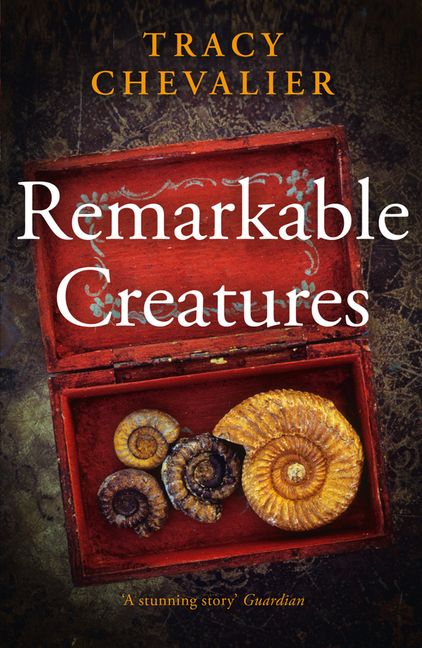
Quick Review: Remarkable Creatures by Tracey Chevalier

y648An author I’ve picked up fairly consistently over the years is Tracey Chevalier, who writes historical novels – you may remember The Girl with a Pearl Earring, which was made into a movie. Her books are usually a fairly light, engaging read, but she has a knack of digging out a very human story from an often overlooked corner of history.

Remarkable Creatures is a novel about two women who were instrumental in the discovery of fossilised remains of dinosaur-era animals at the coastal town of Lyme Regis. We are just after Waterloo, and the Origin of the Species has yet to be written so the Bible’s version of how God made the world holds sway. Continue reading “Quick Review: Remarkable Creatures by Tracey Chevalier”