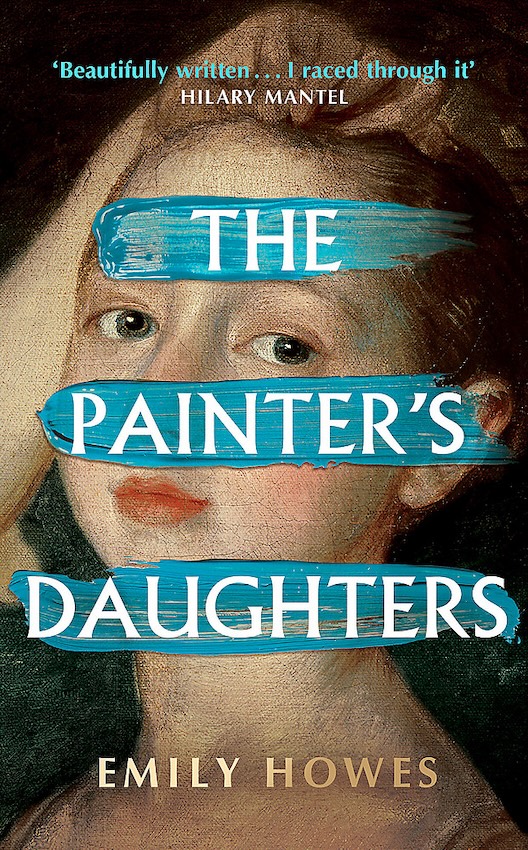
The Painter’s Daughters by Emily Howes – a stunning historical novel exploring the family of Thomas Gainsborough

I knew a little of the work of Thomas Gainsborough before I read this book, his striking portraits, the most famous of which is probably the Blue Boy, which frequently used to appear in tapestry kits. Such a pretty picture. But I remember looking at his portraits, marvelling at the light feathery brushstrokes, the use of colour, and how they seemed to capture the essence of the sitter. Then the way he might put them in a landscape setting rather than a fashionably lavish interior.

So it was interesting to learn that Gainsborough much preferred painting landscapes, was a great lover of the countryside near Ipswich where the book, The Painter’s Daughters begins. He wants his young girls to have a free and healthy country childhood just as he did. But his wife, Margaret, has other ideas. There’s no money in landscapes and the fashionable town of Bath is full of the kind of society that will want their portraits painted, and also where young Molly and Peggy might make a good marriage.

Emily Howes weaves a brilliant fiction around a well-researched collection of facts. Among them that Margaret was the illegitimate daughter of the Duke of Beaufort, although there also exists a document that suggests an even loftier parentage. Margaret knows about this and is desperate for the family to do well. She’s there in the background working on her husband’s accounts, calculating and chivvying.

Thomas is much more a bohemian character, carousing with friends, playing music and up all night. It’s a difficult household, so you can imagine how that might affect the young girls, particularly as early on, Molly appears to be mentally unstable. You would think fresh country air would be better than the sudden town environment in which young Molly and Peggy find themselves. In Bath they are kept inside, dressed in silks, the better to appear in the famous portraits painted by their father. These are his advertisements, as prominent visitors come to call.

The girls grow up, and Molly continues to be Molly, bright and seemingly well one minute, lost in a mental nightmare the next. Young Peggy adores her sister and promises to look after her, as she always has, trying to maintain a veneer of the normal in a polite society full of rules. Much of the narrative is from Peggy’s viewpoint, and she’s a constantly anxious child, watchful of her sister, but also desperate for the attention of her father.

Through the novel, is another story, that of Meg, Margaret’s mother, bullied by a brute of an innkeepr father. Meg slaves away, serving and cleaning, her life mapped out for her. When a German prince and his escort party descend on the inn, one of them dangerously ill from an infection, the men settle in until the invalid is fit to travel again. Meg catches the eye of the handsome heir to the throne.

The two stories, that of the sisters and Meg’s, make a rich contrast that brings 1700s England to life, warts and all. Both show a picture of the kinds of lives women led, with no power of their own, dependent on fathers and husbands for their livelihood. If they cannot make a good marriage, or keep their reputations intact, their futures are uncertain indeed.

This is such a satisfying read – fascinating with its descriptions of art and fashionable society, as well as the muck and mess of 18th century England. The struggle if you’re poor; the struggle to keep up appearances if you’re genteel. The book is full of images that stick in your mind from the feel of silk and lace and satin, to the stench of streets full of horse dung. A totally immersing story and so much my kind of book that it is, unsurprisingly, a five out of five read from me.

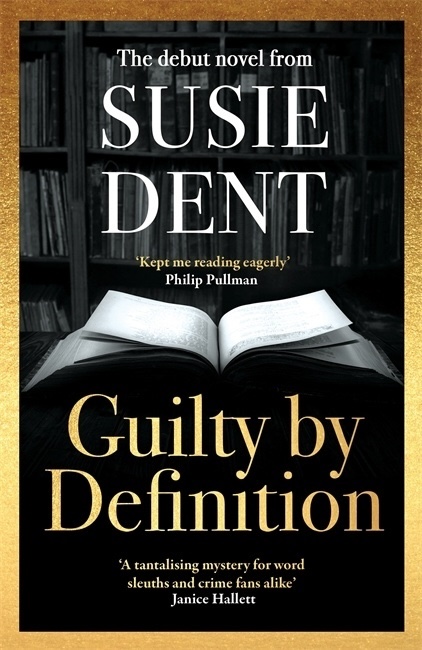
Book Review: Guilty by Definition by Susie Dent – an enthralling mystery for word lovers

How to head up a book’s chapters is a big decision for any fiction author. Do you give them enticing titles or apposite quotes, or just leave them numbered? Susie Dent begins each of the chapters in Guilty by Definition with an interesting word and a dictionary-style description. Some are really old, like “mathom, noun (Old English): a precious thing; a valuable gift”; others more recent, like the verb “broggle (seventeenth century): to poke with a pointed instrument”; and there’s one or two that are quite new, like “zugzwang, (twentieth century): the obligation to make a move, but every move is detrimental”.

The main characters in the novel are lexicographers, editors for the Clarendon English Dictionary, so words are their thing. Not just words and their meanings, but their history, their earliest known usage and how they have changed over time. This alone would have been quite interesting as the characters are all engaging, have secrets and things happening in their personal lives. The team of four are headed by Martha, whose sister Charlie was a PhD student who went missing a decade before. Martha had escaped to Germany for a decade and hasn’t been long home, slotting back into the house she grew up in with her widowed father.

Also working at Clarendon we have Alex, a stylish older woman with a penchant for nice things; Safiya, a lively young woman who shares a flat with others her age; and Simon, who misses family life since his divorce. Their boss is Jonathan, a Shakespearean expert who is television’s go-to commentator for all things to do with the bard. He has good looks and charm in spades, perfect for the media.

They’re all just puddling along, lost in the rarified world of words, when a cryptic letter, penned by someone calling themselves Chorus, has them reaching for their pencils to decipher its clues. The letter starts them off on a quest to investigate Charlie’s disappearance, something Martha feels very sensitive about, as you might expect. Charlie was the golden girl of the family, and with Martha’s mother now dead, her father is still apparently grieving all this time later.

Then there are the postcards. This Chorus seems to be sending them not just to the core group at Clarendon, but other witnesses they visit to ask about Charlie. Seemingly quotations from Shakespeare, some of them verge on “poison pen”. There are more letters, and some wonderful scenes as Martha and co. delve into archives, visit old acquaintances, and uncover some disturbing facts about Charlie. We see Oxford in all its glory – old ruins and scholarly institutions, May Day celebrations, cafés and watering holes, leafy parks ideal for cycling. I was often googling as I read for images so I could imagine the settings all the better.

It all adds up to a wonderful read, erudite and witty, but not without its darker moments, as you’d expect of a good whodunit. Which this is. If you love cryptic crosswords, this will be a delight, but there’s still plenty to enjoy without trying to figure out the clues. I am thrilled to see that Martha will be back next year in another mystery in the series – Death Writ Large, out next March. Guilty by Definition is a four-and-a-half star read from me.
Book Review: The Twins by L V Matthews – a twisty psychological thriller with dark family secrets

This novel is the sort of psychological thriller that has you hooked from the beginning. Yes, it’s about twins, and I know there have been so many stories about twins, you often feel you’ve heard them all before. But that didn’t stop me picking this one up and getting immersed in the story of Margot and Cora.

For twins, the two couldn’t be more different. Margot is quiet and responsible, a dedicated nanny to a well-to-do London family. She has a comfortable life and makes sure everything is as it should be for her young charges. It’s a twenty-four seven kind of gig, but you get the feeling Margot is creating a warm and loving environment because that seems to have been absent in her own childhood.

Cora on the other hand lives in a cramped flat across town with a flatmate, and the two are complete hedonists, living on the edge, while Cora will stop at nothing to get that big break as dancer. She’s confident, a bit crass, breezy and somewhat heartless. Glimpses of her at school, a decade before, reveal she’d been in with the in-crowd, while Margot lingered in the background, friendless and the butt of jokes.

The Twins begins with a mishap during a family holiday on a yacht which sees Margot lose the medication that keeps her anxiety at bay, and slowly memories start to creep back. These are events from her late teens, when something terrible happened involving the death of the twins’ younger sister Annie. Desperate to know more, Margot toys with the idea of seeing a therapist, an idea that Cora vehemently opposes. What is the secret that Cora wants to keep from Margot?

The story flips between the two sisters as we watch Margot attempt to reclaim the past, questioning her grandmother, in a care-home, her own memory now patchy. She trawls the internet to find the one person who might help her – Cora’s high-school boyfriend and Margot’s secret crush. Meanwhile Cora trains for a role in a dance performance that echoes parts of their story.

As more and more shadowy secrets rise to the forefront of Margot’s mind, you can’t help but feel for her and worry that when she finds out the truth it will be worse than not-knowing. She’s a much more sympathetic character than Cora, who seems like the dark to Margot’s light. Besides which, Margot’s grip on her life seems more and more rickety. This really racks up the tension.

Altogether, this is a nicely escapist read that keeps you hooked. However there was one point at which I wanted to throw the book across the room – a twist that I wasn’t expecting, not at all. I wasn’t even sure I wanted to finish the book after that. But I’m glad I did. It all comes together quite well and it makes the book seem rather more psychologically interesting than it might have been.

So if you like a good twisty, suspenseful read, this one’s worth persevering with, even if it is about twins. There is a really nasty character who makes a good villain; and the story plays with the fickleness of memory and the effects of trauma to create an interesting psychological situation. The plot really keeps you on your toes as a reader, so The Twins definitely does the job. A four-star read from me.

Book Review: Western Lane by Chetna Maroo – a beautiful imagining of a family’s grief through a child’s eyes

In some ways, Western Lane follows a well trodden path – a young person going through a difficult time, finding an outlet for their feelings through a sport, and then the promise of success. I’m sure I’ve seen a few movies like this, from the Karate Kid to Rocky. This time it’s squash, but the sport is really just something to give the plot a bit of structure, because overall this is a story about a family dealing with the loss of their mother.

Our narrator is Gopi, who is only eleven when her mother dies. She has two older sisters, Khush and Mona, who demonstrate their grief in different ways, while their Pa is patently struggling. His work is erratic – he’s an electrician and doesn’t always turn up when he says he will. His sister-in-law, the girls’ Aunt Ranjan is worried about them when the family visit their Pa’s brother in Edinburgh. Aunt Ranjan says he should consider giving one of the girls to her and Uncle Pavan to bring up.

Pavan and Ranjan have not been able to have children, are comfortably off, and are fond of the girls. Gopi, being the youngest, seems the likeliest candidate, but Pa can’t bear the thought of it. And imaging losing your mother at such a young age and then being uprooted from your home and family. So on their return to London, Pa and the girls deal with their problems by avoiding them. They hit the squash courts.

Of all the girls, it’s Gopi who has some talent and squash becomes a regular part of her routine. She meets Ged, who’s always at Western Lane because his mother works there. While Gopi plays squash with Ged, her Pa is becoming friendly with Ged’s mother. In the background the local Indian community are watching the family, eager to step in and offer advice, whether it’s appreciated or not. There’s pressure on the girls to do things right, as their mother would have done.

So there are a number of story threads in play, as well as glimpses of Indian culture, the food, the traditions which at times comfort, at others restricts. The reader very much gets a sense of Gopi, wth all that she is going through, what she’s feeling and the red flags. Can she be herself, be allowed to excel at squash as well as being a good daughter? There’s all the worry about her Pa, and her sisters, but she’s just so young. How can she have a normal childhood?

Western Lane is a lovely book, not very long, but nicely judged and the writing is gorgeous. I learnt a lot about squash, the feel of being on the court, the bounce of the speeding ball. It’s done in a way that makes it interesting for even a non-sports-minded person like me. The audiobook was superbly read by Maya Soroya and she really nails Gopi – a child struggling in a world that’s difficult to understand. The novel was shortlisted for the 2023 Booker Prize so I was curious to see why. It’s definitely worth picking up and I’ll be keen look out for more by this author. A four-and-a-half star read from me.


Book Review: Confessions by Catherine Airey – a compelling story of three generations of Irish women, their secrets and their choices

Rather than following Cora’s fresh start in Ireland, the story switches back to describe two sisters growing up and struggling with the sudden loss of their father. Their mother takes to her bed and the sisters, Maire and Roísín, do their best. Maire is a brilliant artist but has mental health issues. Fortunately there’s Michael who adores her and is like a brother to Roísín. We’re also with Maire when she earns a scholarship to New York and her struggles to fit in with a narrative shift told interestingly in the second person.

Almost like a character in itself is the big old mansion outside the village, once a stately home, that has become a refuge for women seeking an alternative lifestyle. Known as The Screamers, it offers a new chance first to Maire, and later the home for Roísín and the returning young Cora. It is where Cora’s daughter, Lyca, digs into the past and finds some long buried secrets.

On the walk home from midnight mass you go inside a phone box. Shutting yourself in reminds you of being inside the confessional booth back home. Your first confession, when you wanted to tell Father Peter about Jesus winking at you from the cross over the altar. Your mother had told you that this was a false image, that you were imaging things. But it didn’t feel fair to count this as a sin when you weren’t the one doing the winking. Instead, said you sometimes wished your sister was dead. This seemed to satisfy the priest, who sent you off to pray the rosary.

In Confessions we have the repeated themes of girls growing up without a father, teen pregnancies, too much freedom or too much restraint. These young women are all smart enough to do well in a world that accepts them for who they are, but it’s going to take more recent generations – Cora, and then Lyca – for that to happen, and a more modern Ireland. But it’s the long buried secrets that keep the reader on their toes to the end. How will they disturb the fragile memories Cora in particular has of her parents?

And the writing is wonderful, finely tuned to each character and allowing them to tell their story, vivid and at times very intense. The setting of New York in particular is an interesting highlight – it comes through as a walker’s city, shown from the ground up, as well as a place of surprising vistas when seen from a high-rise building. The contrast with a small Irish town couldn’t be more stark – the closed-in feel of the early interiors, then Screamers with its warren of rooms.

This is a well put-together story, the threads of the different characters carefully woven in and, at the same time, written from the heart. I was glad to receive this advance reader copy thanks to Netgalley, in return for an honest review. Confessions is due for release late January and a four-and-a-half star read from me.

Book Review: Hello Beautiful by Ann Napolitano – an engaging story about sisters and finding your family

I seemed to miss the Little Women references when I picked up Ann Napolitano’s latest novel, Hello Beautiful. Maybe I was distracted by all the basketball, but I was about three quarters of the way through when the penny dropped and it all made a lot more sense. Until then, I was wondering where it was all going as it just seems to be a nice story about a family, about love and loss, lies and betrayal, all nestling among the intriguingly varied personalities of the Padavano sisters.

None the less, this was an easy book to get lost in. The story bounces between several characters and over several decades as the Padavano girls grow up and make lives for themselves. They are a close Italian American family living in Chicago with their parents, a couple who married out of necessity – with Julia on the way – and struggle with a marriage that is broken. Into all this comes William, himself from a broken family, with parents who have never healed from the loss of his older sister, who have never been able to love him instead.

William’s character is both sad and compelling. He’s been rescued by basketball, and his height gives him a terrific advantage on the court, as well as a scholarship to study in a new town and leave his loveless childhood behind. Julia Padavano discovers him at one of her classes and somehow persuades him into a possible future as a History professor, and as her husband. Her family gives William the warmth and security he’s lacked all his life.

Willam knew all the players except the freshmen, and once or twice after finishing his sandwich he let the guys convince him to take a few shots from the corner. He knew his knee couldn’t take pivoting or even jogging from one spot to the other, so he stood still and drilled one long shot after another while his former teammates hooted with pleasure. When the ball swished through the net, William’s breathing slowed to normal, and he could pretend that he still inhabited a recognisable life.
With the basketball in his hands, he could forget that his father-in-law had dropped dead, his sister-in-law slept on his couch, and every time he saw his wife he was startled.

We also have Sylvie, Julia’s closest sister. Unlike Julia, Sylvie fails to push herself towards college, instead immersing herself in novels and helping out at the library where she kisses random boys among the shelves. Her dream is to find one, intense true love, and until then isn’t interested in dating. At home, her mother spends her life in the garden, growing saleable produce, her father quoting Walt Whitman and drinking too much. There are also the twin sisters: artistic Cecelia and nurturing Emeline.

The future seems settled for Julia and William, when a series of events upset the applecart and cracks appear in the extended family. Then, as so often happens, life goes on around the cracks, characters settle in and hunker down until another earth-shattering event brings the past back into focus and there is potential for a reckoning, and for healing.

I am glad that I didn’t spend a lot of time trying to figure out which sister was Meg or Jo, Beth or Amy, as it wouldn’t have done me any good as things turned out. It doesn’t really matter in the grand scheme of things. But this was a nice read, if a not particularly compelling one. It is a story where emotions run high, either expressed outwardly, or contained and mulled over or contained and ignored.The characters of the sisters and particularly William, are all easy to engage with, and interesting.

There are themes around mental health – how do you get over a childhood that is missing love? And about finding your place in life as a young person, of being accepted for who you are. I found quite a lot to like but the story did lag a little around the middle – the stretched-out timeline doesn’t help. Fortunately it all picks up near the end with the hope of at least one reconciliation and some impetus from the younger generation. I’ll be interested to check out another novel by Ann Napolitano. Hello Beautiful is a solid three-star read from me.

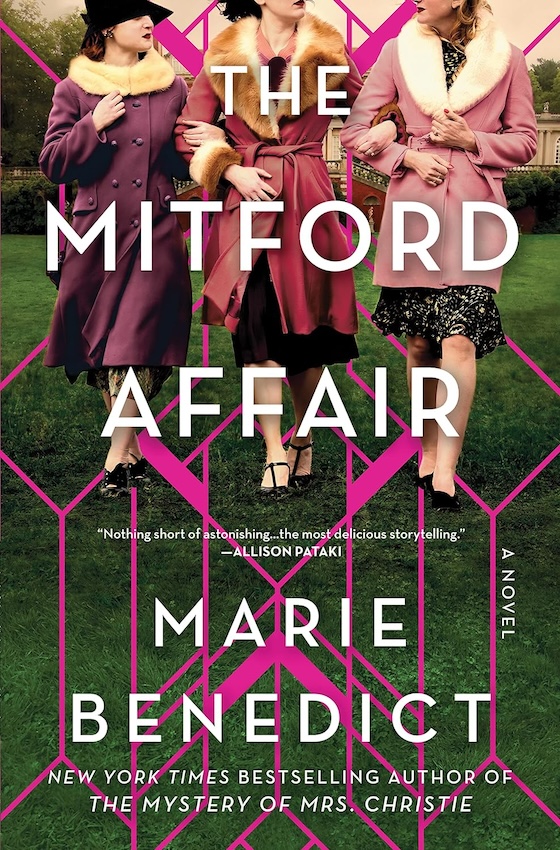
Book Review: The Mitford Affair by Marie Benedict – a novel about an extraordinary set of sisters and the politics that divided them

I’ve been fascinated by the Mitfords ever since I saw a British TV adaptation of Nancy Mitford’s Love in a Cold Climate which aired in the 1980s. Nancy was a witty novelist who moved in literary circles during the 1930s and ’40s, rubbing shoulders with Evelyn Waugh and his ilk. She mined her family and the upper classes for material for her books, which are still very readable today. Nancy had five sisters and one brother, and with eccentric parents, each sibling seemed to be more extraordinary or oddball than the next.

These are the characters that people Marie Benedict’s novel The Mitford Affair, which concentrates on the years 1932 to 1941, with the rise of fascism in Europe and the opening chapters of World War II. Told from the viewpoints of sisters Nancy, Diana and Unity, you couldn’t ask for more varied characters, each with a very distinctive narrative voice. As the years pass, Nancy watches in horror as Diana goes to ever more extremes to promote the politics of her lover Oswald Mosley, and as Unity heads off to Germany to become a kind of Hitler acolyte. As war becomes inevitable, Nancy has to decide if her loyalty lies with family or her country.

As a reader, you feel very much on the side of Nancy, who seems to be the voice of reason among her sisters. She’s also dealing with a lot personally, in particular a problematic marriage and ever more desperate attempts to bear a child. Meanwhile Diana has ditched an adoring, wealthy and titled husband for a man who is already married and the voice of fascism in Britain. She devotes her energies to his cause even when Mosley declares he cannot offer her marriage or any kind of respectability.

Then there’s Unity. Always the least liked in her family – the only daughter to be sent to school so her mother didn’t have to put up with her – you get the feeling that today, Unity would be diagnosed with a mental condition, possibly as bipolar or a spectrum disorder. Much younger than Nancy or Diana, she’s only in her late teens when we meet her, her half of her bedroom festooned with pictures of Hitler and Mussolini, as opposed to Jessica who on her side of the room has etched the hammer and sickle into the window.

After the Olympia Hall rally and the violence of the Blackshirts inflicted at the slightest provocation, undoubtedly on Mosley’s orders, I could no longer even pretend to be in the same political ranks as my sisters. Did we not live in a society where free speech was guaranteed? Could Mosley not bear the slightest critique of BUF and his rule. The strutting, posturing, flag-waving, and shows of bravado I’d chuckled at privately now seem menacing rather than humorous, and I felt an urge to unmask Mosley and his dangerous army as hooligans through my writing. I also began to wonder if I could use my writing as a way to awaken my sisters from this madness.

Unity’s adoration for Hitler is like any ordinary girl’s crush on a matinee idol, but such is her fervour, that she talks her mother into sending her to a finishing school in Munich and staking out a café popular with Hitler himself. She’s a difficult character to be with, but Benedict captures her intensity with sympathy, despite her anti-semitism and support for a cruel totalitarian regime. Hers is the saddest story of the three, and you can’t help feeling that with affection from her family, and some half-decent parenting, Unity could have had a brighter future. But that’s not to be.

This is one of those books that is so much more extraordinary for being based on real events and real people. I found myself often heading to the internet for more background, and it’s all there. The Mitford Affair is an enthralling read, although not an easy one, considering what Diana and Unity were prepared to do for a political cause that would lead to such terrible events in Europe. But I couldn’t help feeling that the writing could have been sharper – there are some rather convoluted sentences, and a few Americanisms slip through now and then. As a study of how political fanaticism can take someone over, though, it does the trick. It’s a three star read from me.

Book Review: Miss Austen by Gill Hornby – the story of the famous writer’s sister

When Jane Austen died, she left thousands of letters sent to family and friends, of which many were destroyed by her sister, Cassandra. This is the Miss Austen of Gill Hornby’s novel. The story begins with the elderly Cassandra visiting the vicarage where her long-dead fiancé grew up, the home of her very dear and also departed friend Eliza.

Jane and Cassandra both wrote to Eliza, and Cassandra is sure there must be a cache of letters somewhere, full of heartfelt disclosures and secrets, as well as (knowing Jane) waspish comments about other family and acquaintances. It is imperative that Cassandra finds these before they are made public. Cassandra was the carer and confidante of Jane in life, and now, twenty years after her sister’s death, she wants to preserve her good name and not allow Jane to be the subject of speculation and gossip.

And so here she is at the vicarage where as a young woman, she farewelled her beloved Tom on a voyage to the Caribbean, a chance for him to win a living from his patron and secure the means for he and Cassandra to marry. Memories come flooding back and the story dips back in time to those early years and the promises she made to Tom before his departure.

Meanwhile Eliza’s daughter Isabella is rattling around in the vicarage with her grim but loyal servant Dinah, her father the vicar having recently died. Isabella has the job of finding somewhere else to live as well as packing up all the chattels and furnishings that have been a part of her life since childhood. But Cassandra is appalled to see that Isabella doesn’t seem to know how to begin, obviously so ground down by years with an autocratic and belittling father she has a complete lack of initiative.

So we have two story threads here: Cassandra’s efforts to encourage Isabella to find a house with her other spinster sisters – for what could be more pleasant than to live with sisters?; and the early years of Cassandra’s own life with her beloved Jane as revealed by the letters she finds.

I listened to Miss Austen as an audiobook read by Juliet Stevenson and if there is a Juliet Stevenson fan club out there, I should probably become a member because her reading is utterly superb. She brings to life the characters so well along with the nuances of tone in the writing, the conversations and voices of Jane and Cassandra, plus all the peripheral characters ,to recreate the Austen sisters’ world.

There are multiple characters – the girls had five brothers, plus friends and new acquaintances, which echo some of the themes and interactions from Jane Austen’s novels. Gill Hornby has done a really good job with this, and while there are many novels out there that pay homage to Jane Austen, mostly through further stories about some of her much-loved characters, this book about Cassandra is one of the better ones I’ve come across.

Of course we can’t expect a raft of happy endings here. Jane Austen didn’t live long, and the Austens struggled to find a permanent home after their father died. Neither Jane nor Cassandra ever married and there seems to have been both grief and a sense of missed opportunities over this. And yet, Hornby sneaks in a rather charming and amusing ending to the story, casting the truculent Dinah in a whole new light. Cassandra herself is wonderful company and as an elderly unmarried woman, a believable and refreshing heroine. Miss Austen is a four out of five read from me.

Book Review: Ariadne by Jennifer Saint – an enthralling read based on Greek mythology

Since Madeline Miller’s hugely successful novel, The Song of Achilles, published in 2011, fiction based on ancient myths, has been popping up, almost spawning a whole new genre. Miller continues to write terrific books like this – I can’t recommend Circe enough – and acclaimed author Pat Barker has veered away from her 20th century war fiction to produce two novels (so far) about the women of Troy. Ariadne is the first novel by Greek myth enthusiast, Jennifer Saint. 

I have long been fascinated by the story of the Minotaur and how Theseus defeated it with the help of King Minos’s daughter, Ariadne. If you recall, the Minotaur was a monster, half bull and half human, with a voracious appetite for human flesh, sequestered in a labyrinth devised by Daedalus, a kind of Leonardo of his day. In the novel, Minos, King of Crete, was becoming unpopular with his people for feeding miscreants to the beast, but happily found another food supply: a tribute from Athens, which Minos had brought to its knees in battle. 

So every year, seven young men and seven young women, teenagers really, would be shipped from Athens then flung into the labyrinth for the Minotaur to hunt down in the dark and well, you can imagine the rest. Theseus, long estranged from his father, the King of Athens, returns to find his city in mourning for the new harvest about to take place and volunteers as one of the selected victims. He’s keen on vanquishing monsters and thinks he can outwit the Minotaur, if only he can find his way in and out of the labyrinth. Ariadne, drawn by his princely bearing and general good looks, offers to help.

Such an exciting story, but that is barely the half of it. Jennifer Saint weaves a yarn around Ariadne and what happens next. How Theseus left her on the island of Naxos, instead of taking her back to Athens as his bride. It is also the story of Phaedra, Ariadne’s thirteen year old sister, similarly smitten with Theseus. While Ariadne is rescued by Dionysus, the god of wine and good times, Phaedra becomes a bargaining chip between the kingdom of Crete and Athens.

The women in this story are rarely able to steer the path of their own lives, caught up in the political aims of the powerful men around them. So even though Ariadne and Phaedra are the grandchildren of the sun god Helios, and as such have remarkable beauty, they are victims of circumstances again and again. Meanwhile the gods, particularly Zeus, and his bitter and jealous wife Hera, toy with the mortals of the story, and even lesser gods like Dionysus.

The gods do not know love, because they cannot imagine an end to anything they enjoy. Their passions do not burn brightly as a mortal’s passions do, because they can have whatever they desire for the rest of eternity. How could they cherish or treasure anything? Nothing to them is more than a passing amusement, and when they have done with it, there will be another.

It all makes for a gripping retelling of the myth, adding character to the main players – the motives and desires, weaknesses and blindness to the truth. In other novels, you often shout at the characters, ‘Oh, no! Don’t do that!’ Or even ‘Look out, behind you!’ But here, it wouldn’t matter how aware the characters were, the gods are always out to get them, pawns in their constant one-upmanship with other gods.

While there is much tragedy to the story, the novel is still very entertaining, creating an imaginary world that is a joy to the senses, whether it is Dionysus’s island with its maenads and feasts, or the opulent world of the palaces in Crete or Athens. We even get a chance to check out Hades.

Ariadne is well worth picking up, a welcome addition to a growing sub-genre of mythical retellings, with four out of five stars from me. Saint’s second book, Elektra is definitely on my must-read list. Another book by Saint, Atalanta, is due for release later this year, while I’ve also got my eye on Ithaca by Claire North. So much to enjoy.