Book Review: The War Pianist by Mandy Robotham – wartime danger across the airwaves

This is one of those wartime novels featuring a heroine who is just an ordinary girl toughing it out against Hitler. She probably never wanted to get involved in the Resistance or working as a spy for SOE, but something has triggered her desire to get involved. There will be a couple of military aircraft from the era on the front cover, discretely in a corner so you know it’s a war story. A ton of books like this have been written lately, and they can be a fun read, but how do you tell which are the good ones?

I’d really enjoyed the audiobook version of The Resistance Girl by Mandy Robotham, which took me to the war in Norway. It had engaging characters, a really nasty malefactor, a bit of romance, plenty of suspenseful dodging of the enemy, and the promise of a happy ending. But I learned a lot about the war in Norway and how it affected people, the heroic ways they fought back. The story didn’t shy away from some of the horrific events of the war but describes them off-stage so nothing’s ever too harrowing for the reader.

And it’s much the same here with The War Pianist. Marnie works at the BBC in London helping to prepare radio scripts for airing. Her parents have decamped to Scotland and apart from cousin Susie who is wondering about leaving London too, her only family is Gilbert, her adored grandfather, still running his tailoring business near Trafalgar Square. But after a bombing raid by the Luftwaffe, Marnie is horrified to discover the shop has been levelled and her grandfather is dead.

Reeling with grief, Marnie goes back to the shop one day in search of a memento of her beloved relative only to find hidden away in a basement cupboard, a radio set for transmitting. Gilbert was a man with a secret, and Marnie worries that he might have been a spy. As she carries the radio away with her she is brought to a halt by an ARP warden who turns out to be someone else keeping a secret. Willem is a Dutch Resistance fighter in London to help shore up support from Britain on the behest of Queen Wilhelmina.

Willem persuades Marnie to take over from Gilbert, sending coded messages to Corrie, Willem’s fellow Resistance fighter in Amsterdam. Marnie knows all about radios from her work at the BBC, and she and her grandfather used to play games in Morse Code when she was young. So Marnie, fired up with rage against Hitler because of the Blitz and her grief, is the perfect recruit to step into Gilbert’s shoes. But she has to be careful, as there are reports of fifth columnists supporting the enemy at large, who are watching and listening. Who can she trust?

When the inevitable sirens stir the BBC’s populace into the basement that evening, something in her – she doesn’t know what – is drawn in the opposite direction, up onto the roof of Broadcasting House. Climbing out into a sky already glowing orange and a wind warmed by fiery destruction, she stands aghast. It’s as if Hitler has taken a match to a box of fireworks and simply sprinkled the contents across London – the red tracer fire of ack-ack guns meeting mandarin sparks from a fresh explosion, tiny pockets of green-blue glow like fireflies amid the rubble as the gas mains are hit below. A rainbow of destruction that’s both vivid and grotesque.

The story weaves Marnie’s story in with Corrie’s in Amsterdam, where things are a lot more desperate under the Nazi Occupation. It’s only 1940 and the resistance is in its early stages while reprisals and food shortages are the order of the day. There are reports of devastation in other cities like Rotterdam and fear is widespread. But Corrie continues with her radio, messages kept as brief as possible to avoid her site of transmission being pinpointed by the enemy.

The story takes Marnie across to Amsterdam where the plot ramps up a lot. Here the evil Nazi officer, Lothar Selig, is keen to make his mark – he also turns up in The Resistance Girl – when one of the Willem’s team disappears. There’s an emotional connection, so this gives the story a bit more punch. Marnie is also torn emotionally, but will do anything to help and her radio skills become crucial. The story builds to a taut ending and it’s a satisfying read, without ever being too grim centre stage.

I confess I didn’t enjoy this quite as much as The Resistance Girl, although it’s still a pacy read and interesting for the most part. The romantic element seemed a bit forced, maybe because the character of Willem is not particularly well developed. I might give Robotham another go, or if I’m in the mood for a good wartime story, I’ll head back to Pam Jenoff or Kate Quinn, who are pretty solid in this genre. The War Pianist gets three out of four stars from me.

Book Review: The White Hare by Jane Johnson – a haunting country house mystery with a touch of magic

We’re back in Cornwall for another novel set in the 1950s and I was in my happy place listening to this as an audiobook. I often hunt out these evocative country house stories.

The White Hare begins with a family of three arriving to take on a run-down country house with the aim of turning it into a guest-house. Somewhere comfortably-off urbanites might sojourn for a change of pace and some gentle pampering. This is Magda’s idea. In her fifties, Magda is an imperious, demanding and determined woman who won’t take no for an answer.

Her daughter, Mila, passively just does what her mother tells her, hoping to build a home for her and young Janey. But although she has strong feelings, she keeps them in check, because she owes her mother her salvation. A chance for a new start, having been duped by a bigamous husband and left with a five-year-old daughter. Remember, it’s the mid 1950s, when a woman’s reputation was everything.

The house is of course a mess, but in the barn they also discover an unwelcome guest. Jack, the interloper, says he hadn’t meant to trespass; he was just exploring the nearby countryside and would soon be on his way. But Janey has warmed to Jack, and when Jack reveals he can fix their car, and is handy with a hammer and nails, he becomes the women’s saviour when they face one crisis after another.

The locals don’t take kindly to strangers. It is said the house is haunted and when Mila mentions seeing a white hare on the road the day they arrived, all sorts of strange legends start to emerge. Then there’s Jack. He and Mila soon warm to each other, but Jack seems to be harbouring secrets. There’s also a creepy vicar, but fortunately for Mila, friendship and support are on hand from a local healer and her artist girlfriend.

The story follows Magda and Mila’s rocky relationship as they struggle to bring the house into a reasonable state of repair ahead of a lavish New Year’s Eve party Magda hopes will entice acceptance from the locals. The folklore of the area won’t leave Mila alone, and there are odd discoveries that hint at a tragedy involving the previous owners of the house.

To make things even more creepy, Janey seems to have discovered a way of communicating with an otherworldly presence through her toy rabbit. The story builds to a dramatic ending where the real and unreal converge and the present reveals, and can finally bury, past wrongs. The characters of Magda, Mila and Janey are interestingly developed – there’s nothing like adversity to bring people together.

I loved the story – the perfect sort of audiobook, narrated brilliantly by Danielle Cohen – intriguing and full of mystery with a bit Cornish history thrown in. Listening to a book like this takes me back to those old fireside tales that begin with, ‘let me tell you a story’. If you like books by Katherine Webb and Kate Morton, you’re sure to enjoy The White Hare, a four star read from me.

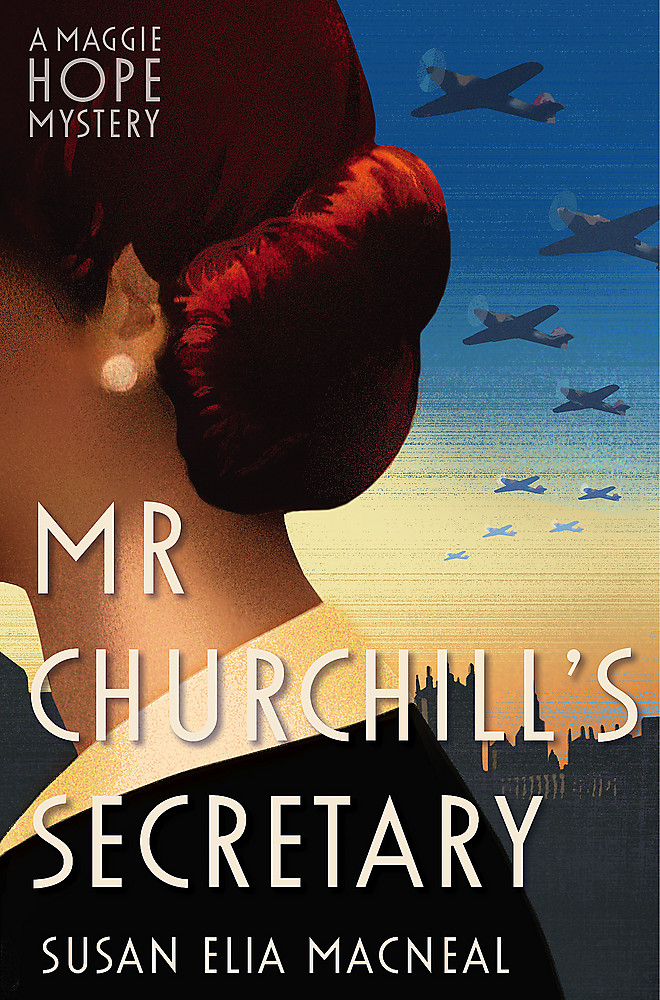
Book Review: Mr Churchill’s Secretary by Susan Elia MacNeal – a light but lively WWII mystery

This novel is the first in a wartime mystery series that features American-raised Maggie Hope, a young woman with a formidable brain. Which is how it should be. I like a brainy female sleuth. You know she’s going to have to figure things out rather than stumble around, picking up clues by accident.

Maggie has moved to London not so long ago. She was supposed to sell her grandmother’s house and then settle back into her studies in mathematics, taking up her place at an American university. She graduated top of her class and academic expectations are high. But along comes a war, World War II, that is, and Maggie wants to do her bit. She loves London and decides to apply for an under secretary position in the prime minister’s office. She doesn’t get it, of course. She’s a girl and they only take men, but when her friend, David suggests she try for a job as the PM’s secretary, she reluctantly gives it a go.

Maggie is desperate to use her maths brain, but at Number 10, she’s thrown by Churchill’s odd habits and cryptic commands, while being urged to keep her head down and do what she’s told by her superiors. Fortunately she has a cheery group of friends to hang out with, including her flatmates: Paige, an old classmate from America’s Deep South and hearty, Irish Chuck plus a pair of scatty twin sisters. David, is always dropping by. His life has always been a little risky as he’s gay when you weren’t really allowed to be so what’s a little war in the general scheme of things? He keeps everyone’s spirits up but his best friend John is moody and somewhat awkward around Maggie.

The story switches to that of Claire who is visiting the Saturday Club, a group of Nazi sympathisers, and Michael, who is letting off bombs around the place for Ireland. While the narrative builds towards a plot agains the PM, Maggie has questions about her parentage. There’s something her guardian, Aunt Emily, is not telling her. When she goes to find her parents’ graves, her mother is there for all to see, but her father’s grave is missing.

Things get more complicated with codes appearing in mysterious places and a visit to Bletchley Park, while pretty much everyone among the cast of characters is in danger from something. Whether it’s the bombs raining down on London, or Nazi sympathisers determined not to have their plans foiled, Maggie’s life has just got a lot more perilous. Things go down to the wire for Maggie, the PM and an iconic building in London, but luckily there’s Maggie’s amazing brain to save the day.

Anyone imagining this series to be ideal for fans of Jacqueline Winspear’s Maisie Dobbs, might want to reconsider. I think they are quite different beasts. The Winspear books reveal a lot about the war, and recent history, often taking a little understood aspect and making it the basis of a story. Her characters are really put through the ringer and there’s a strong emotional charge.

The Maggie Hope books would seem to be a more imaginative bunch of stories and are quite a lot lighter in tone. There’s lots of dancing in nightclubs, romance and general socialising, more about the music of the time, what people were wearing which adds colour and sets the scene. I shall probably continue with the series, but my reasons for picking up a Maggie Hope book will be for a lighter kind of entertainment. Mr Churchill’s Secretary gets three stars from me.

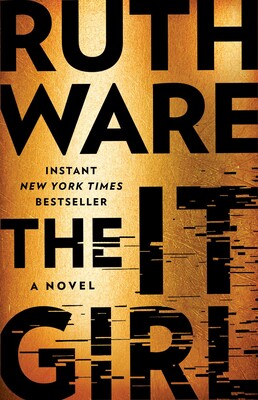
Book Review: The It Girl by Ruth Ware – another suspenseful read from “the queen of just one more chapter”

Ruth Ware does it again with one of those books that ticks all the boxes for building suspense in the kind of thriller sometimes known as domestic noir. We’ve got a potential miscarriage of justice; a beautiful, dead girl and the people who loved and hated her; and the kind of plot that seesaws between ‘before’ and ‘after’, making you gallop through the pages. She caps this off with a vulnerable main character who can’t rest until she gets at the truth.

Nobody could be more vulnerable than Hannah. Ten years ago her best friend and college roommate, April, was strangled to death. Now working in a bookshop, April’s death had been so traumatic, Hannah dropped out of university. But it was Hannah’s testimony that helped convict the creepy college porter, John Neville.

Now Neville has died in prison, adamant to the end that he had nothing to do with April’s death and there’s a bunch of journalists eager to revisit the story. One in particular, Geraint Williams, has been dropping emails into Hannah’s in-box, with the endorsement of another college friend, Ryan.

There were other friends there at the time, all rocked by April’s death but all with reasons to resent her. April, a rich party girl, pulled terrible practical jokes on her friends. During their first week at their Oxford college April introduced Hannah to her old school mates, bringing her into their circle. Among them was Will, newly appointed as April’s boyfriend. Flip forward ten years and Will and Hannah are married, living in Edinburgh and expecting their first child. They have always agreed to ignore requests from the press for more interviews.

A complex cocktail of guilty feelings has Hannah rethinking her testimony and digging into what happened. Being pregnant and Will’s long days at work, plus her reluctance to upset her husband with her doubts see Hannah as a vulnerable woman on her own. This ramps up the tension nicely as Hannah explores several alternative scenarios, and memories of that first year at Oxford come crowding back to haunt her.

Ruth Ware has been described as the “queen of one more chapter” and she’s certainly a smart cookie when it comes to plotting. And while April’s the kind of girl with the world at her feet, several motives for her killing emerge through the book, and with that a bunch of suspects. But there are plenty of alibis too. How the facts eventually emerge will keep you guessing, while Hannah and her unborn child become closer to danger as at the real killer closes in.

The It Girl has been long-listed for the Theakston Old Peculier Crime Novel of the Year – a lovely long list of mystery and suspense fiction that’s well worth checking out, especially if you like British crime fiction. I will be keen to see if The It Girl makes the shortlist, which is announced on 15 June. It’s a four-star read from me.

Book Review: The Marriage Portrait by Maggie O’Farrell – a tense and evocative story from the Italian Renaissance

This novel is inspired by the Robert Browning poem ‘My Last Duchess’ as well as the historical figure of Lucrezia, Duchess of Ferrara, who met an untimely death at the age of sixteen, supposedly murdered by her husband. I hadn’t known anything of the real duchess, but remember reading the poem in English Lit classes at uni and not realising it at the time that the duchess described had died so young.

It’s a shocking story in anybody’s book – Browning’s Dramatic Lyrics or this one, and so I demurred while The Marriage Portrait sat on my bedside table, distracting myself with every other book until, with nothing much else to read I finally picked it up. I shouldn’t have worried, having enjoyed Maggie O’Farrell’s books enormously in the past and it was only a page or two before I was engrossed in the story, as well as in awe at the writing.

Lucrezia is a difficult child, the least favourite it seems in her family, and as she grows she seems a thin little thing, quite unlike her lively, dark-haired older sisters. She’s smart though, sitting in a corner where the children are taught their lessons, but learning much faster the Latin and Greek, the history and geography than her siblings. Her real talent is art, although she could be a master spy the way she sneaks around the palace, listening at doors.

When her older sister Maria suddenly dies before her wedding can take place, Lucrezia is promised to Maria’s fiancé instead, to unite the grand houses of Medici and Ferrara, even though Lucrezia is only thirteen. She’s a spirited child, who likes her freedom, but also cherishes the safety of her home – her life has been a sheltered one. So at the time of her wedding a couple of years later, she is ill prepared to be the docile wife of a powerful ruler.

The gown rustles and slides around her, speaking a glossolalia all of its own, the silk moving against the rougher nap of the underskirts, the bone supports of the bodice straining and squealing against their coverings, the cuffs scuffing and chafing the skin of her wrists, the stiffened collar hooking and nibbling at her nape, the hip supports creaking like the rigging of a ship. It is a symphony, an orchestra of fabrics, and Lucrezia would like to cover her ears, but she cannot.

O’Farrell makes Lucrezia interesting, believable and vividly real, a complex character, as is her new husband Alfonso, who is on the surface so charming and solicitous, but also desperate for the heir that will secure his position. The book begins with Alfonso whisking Lucrezia off to a hunting lodge, away from the prying eyes of his palace, and where Lucrezia feels he is to do away with her. She has seen this other side to him before – the merciless capacity for violence, the lack of forgiveness. Will Lucrezia succumb and give in or will she fight back for her survival?

Sixteenth century Italy is brought to life – a time of a flowering of the arts which are lushly shown here in paintings, architecture and music. The intense richness of the language, vividly present tense, mirrors the gorgeousness of this Renaissance world. Yet this is also a time when well-born young women are just pawns on the chessboard of power to be married off by their fathers. Like Lucrezia they may have little idea of the politics around them or what will be expected of them.

This makes the novel a tense and gripping read as the story bounces between the hunting-lodge present where the moments tick away until Alfonso will act against his duchess, and the back-story that fills in Lucrezia’s life and how she has come to be in this predicament. It all seems so much more vivid because of the way O’Farrell writes – the intensity of Lucrezia’s feelings, the undercurrents that pass between characters, as well as the sensory details – the feel of fabric on skin, Lucrezia’s painterly eye that sees every colour and shade, the shock of seeing mountains for the first time, the descriptions of the music Alfonso gets lost in.

The Marriage Plot is a book that delivers on every level, giving you a glimpse into the past, an edge-of-the-seat story, as well as gorgeous writing. It isn’t surprising it’s been selected for the Women’s Prize for Fiction longest – I’ll be eager to see if it makes the shortlist, announced on 26 April. It will also be interesting to see what O’Farrell comes up with next. This book gets a full five stars from me.

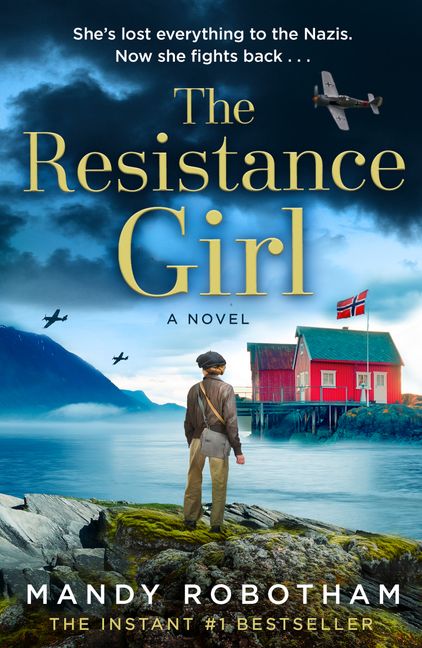
Book Review: The Resistance Girl by Mandy Robotham – a gripping read about a less-documented corner of the war

I’ve read a few novels about World War Two – heart-breaking stories for the most part about those who served, POWs and Concentration Camps, Intelligence Officers sent behind enemy lines and so on. But they’ve mostly been about the main players: France, Britain and Germany. I knew next to nothing about how the war affected Norway and this book was quite an eye-opener.

The resistance girl of the title is Rumi Orlstad. We meet her at a Bergen dockside railing at the war which has taken her fiancé. Magnus was lost at sea during his first voyage with the Shetland bus. I’d come across the bus in other books – the fleet of 30 odd fishing boats that ferried secret service agents and refugees between Sheltand and Norway – since 1940 under German occupation. The bus supported the Norwegian resistance, bringing supplies and instructors as well as assisting with sabotage.

Rumi’s father and step-brother help with the bus, and Rumi, motherless and alone, helps with the fishing business. It’s November, so there’s snow when she’s sent to bring two new British officers to a safe-house, both having parachuted into nearby countryside. She’s cross when she has to cut down Jens Parkes from the tree that’s caught his parachute, but luckily he can ski. Still reeling from her loss, they form an uneasy alliance. At least being half Norwegian, Jens looks the part and can blend in, hiding his radio transmitter among the clothing he collects for refugees – his cover.

While Jens gets on with supporting the cause, Rumi discovers her best friend has been sent to Lebensborn, one of many maternity camps devised by Himmler to produce an ideal Aryan race. It was felt that Norwegians – tall, blond and fair – had all the right attributes and so German officers stationed in Norway were encouraged to engage with young Norwegian women – a few married them and whisked them off to Germany. But many of these girls were just taken advantage off, like Rumi’s friend Anya, their babies planned for childless German couples.

This is where I found the book particularly interesting. Part of the narration is from the point of view of a housekeeper so it’s a bit like a fly-on-the-wall account. The housekeeper worked for the family that owned the house before the Germans requisitioned it – like so many larger properties – and she has no idea about what it’s to be used for. Little by little her fears grow as it all begins to make sense. The dormitories and the cots, the German midwives, the guards, the frightened young women.

How Rumi tries to help her friend forms a large part of the book, as well as her interactions with Jens and his dangerous missions. There are some excellent supporting characters too. The sinister Lothar Sellig – a German officer for the Abwehr – who keeps turning up like a bad penny, on his quest to clamp down on the resistance; Rumi’s neighbour Marjit who is like a mother figure to Rumi and having been a nurse during WWI is almost as determined and fearless as Rumi. She has a surprising connection with Jens.

Mandy Robotham has done plenty of research to bring the city of Bergen to life, its cafés and fishing industry, as well as the domestic settings, the traditional knitting and Norwegian meals. The horrors of what Norway endured under enemy occupation are described too: the fear of living alongside the enemy, the reprisals against insurrection. Himmler’s Lebensborn project seems particularly sinister, giving the novel some heft and the story builds towards a tense and exciting ending.

The Resistance Girl is a terrific story and would appeal to readers who have enjoyed Kate Quinn’s wartime novels. I enjoyed this book as an e-audiobook and the reader – Antonia Beamish – made the characters come alive and handled the Norwegian names like a native. Or so it seemed to me. I’ll be hunting out more by Mandy Robotham – this novel gets a four out of five from me.

Book Review: The Paris Apartment by Lucy Foley – another excellent twisty read in an atmospheric setting

Lucy Foley really knows how to conjure an interesting setting. We’ve had a wedding venue on an island in The Guest List, luxury accomodation cut off by snow in The Hunting Party and here a gated apartment building in a posh part of Paris. I can see how her mind works. She’s seen a setting and wondered who lives or works there, like we all do, and then wondered what if there was a murder.

In The Paris Apartment, Jess is on the run from her job in England. She’s done something she shouldn’t have and hopped on the train for Paris to crash with her brother Ben. The two were separated as children when their mother killed herself. Ben who could charm anybody was quickly adopted and enjoyed the spoils of doting parents and a good education. Jess however, much younger and evidently not so charming, went from foster family to foster family, forever scarred by being the one to find their mother’s dead body. Her education has been minuscule which is why she’s been working in a dodgy bar.

Jess turns up at Ben’s Paris address, an apartment in a surprisingly luxurious building with an internal courtyard garden. The old lady concierge isn’t very welcoming and Ben isn’t home. But Jess is street-wise and manages to get inside anyway, fashioning her cheap hoop earrings into a device to pick the apartment lock. Inside, still no Ben, only a cat with blood on its fur. And it looks as if someone has scrubbed something off the floor using bleach. Jess begins to suspect the worst.

The gated apartment building offers a select bunch of suspects who Jess slowly gets to know. Nobody’s very friendly and nobody seems to know what Ben’s been up to lately. He’s a journalist so we can only suppose he was snooping around too much. The only one who is at all friendly is Nick, Ben’s friend who helped him secure this flat. Ben and Nick were at university together.

There’s also Sophie in the penthouse flat with her little dog and who is much nicer to the dog than people. She’s a high-maintenance middle-aged woman married to Jacques, who is mostly away on business – something to do with wine if the cellar down in the basement is anything to go by. There’s broody, menacing Antoine who frightens Jess when she first arrives. That leaves two young girls who share a flat: sensitive art student Mimi and her party-animal pal, Camille.

The story switches between the characters and backwards into the past to portray a picture of Ben, the charming Englishman interloper, from various points of view. Everyone seems to be afraid of something and they all seem to be hiding something. Just as everyone seems to have pieces missing from the puzzle. It’s going to have to be Jess who sorts it all out but who can she trust? The reader is all too aware that Ben has likely paid a price for asking too many questions. Thank goodness Jess’s got a bit of help from foreign correspondent Theo, who looks like a pirate but seems to be otherwise trustworthy because Jess is in way over her head.

Lucy Foley delivers another clever twisty mystery. How she manages to keep track of who knows what and a backwards and forward timeline suggests a pinboard covered in spreadsheets and graphs. Agatha Christie would have been impressed. Jess is the perfect character for Foley’s amateur sleuth because she is so completely at sea in this sophisticated Parisian setting, is barely educated and thoroughly naive. Instead she relies on gut instinct, driven by love for her brother and a determination for justice. The Paris Apartment comes together nicely to create a light but very satisfying read and gets a four out of five from me.

Book Review: Resurrection Bay by Emma Viskic – introducing an unforgettable new sleuth

After such a run of historical novels, I was more than ready for a good, meaty mystery and what better than some Aussie Noir. I’d been meaning to pick up the first in this series for a while because I’d read good things and the idea of a hearing-impaired private investigator sparked my interest. Calum Zelic has been profoundly deaf since a childhood illness. Now in his thirties, he’s divorced and running a private investigation company. Mostly it’s small stuff, like the case he’s got now: the theft of cigarettes in bulk from a warehouse.

Caleb is interesting because he pretends he can hear just as well as anybody else, picking up what he can from lip reading, and signing with the people who know him better. And although Caleb has a talent for reading people through their body language, it’s just as well his trusty side-kick, tough-talking ex-cop, Frankie, is there to pick up anything he’s missed. The two create some terrific dialogue as they are always sparring with each other.

When his childhood friend, Gary, is murdered in an unspeakably violent way, Caleb is both grieving and flung into danger. Gary, a policeman, has been helping Caleb with his case – maybe it’s more than just cigarettes going in and out of that warehouse. Before his death he sent Caleb a text warning him about a man named Scott. Next thing you know, Frankie has gone missing, Caleb’s running for his life and turns to Kat, his ex-wife for help. The two hide out in Resurrection Bay, Gary and Caleb’s childhood home.

In Resurrection Bay we get snippets of Caleb’s childhood, and meet Anton, Caleb’s dodgy brother, who has done time for drug-related crime. Anton says he’s turned his life around, but can you ever trust an addict? We have some interesting dynamics between the two brothers, while Caleb still carries a torch for Kat. So with the case and all, he’s a bundle of conflicting emotions.

Viskic has created a pacy crime thriller but what kept me turning the pages was the smart dialogue and quirky characters. Caleb is constantly on the receiving end of a pasting, but somehow manages to keep going. He plays a cat and mouse game in several nail-biting scenes, and unable to rely on sounds, uses his remaining senses tuned up to the max. This makes for some very dramatic moments all the while propelling Caleb to a gritty showdown and a few twisty surprises.

My only gripe was that the ending just seemed to be a little too much – the violence and the twists. A little over-egging of the pudding perhaps. Although this is probably not uncommon in this genre and the book has garnered a bunch of awards. Overall, Resurrection Bay is a great start to a new series, and I will be happy to check out the next books because Caleb is such a brilliant creation. I even developed a hankering to learn sign language. This book gets a four out of five from me.

Book Review: The Hunting Dogs by Jorn Lier Horst – a detailed police procedural with a likeable Norwegian detective

When it comes to Scandinavian crime fiction, I’ve often thought if only there were more Wallander novels published by Henning Mankell before his death in 2015. I’ve tried other Scandinavians of course and enjoyed them – Jussi Adler Olsen’s Department Q series is worth a look. But for a more psychological read with an engaging policeman, Norwegian author, Jorn Lier Horst’s William Wisting’s novels seem to capture much of that atmosphere I’ve liked so much with Wallander.

Wisting is a Chief Inspector in his fifties at the start of The Hunting Dogs working out of the Criminal Investigation Dept of Larvik Police. This novel has him revisiting the abduction of a teenage girl who was subsequently murdered seventeen years ago. The killer, recently released Rudolf Haglund, has employed a lawyer to prove his case for wrongful imprisonment, alleging that police tampered with the evidence. As senior investigating officer at the time, Wisting is stood down from duties while an inquiry is underway.

Meanwhile, Line, Wisting’s daughter, is aware that the newspaper she works for is about to splash this story all over the front page in the morning. She is appalled – she knows her dad would never tamper with evidence to secure a conviction and rushes off into a wet, miserable night after a better story to bump the Haglund allegations onto page two. She gets caught up in a murder – a man attacked on the street, while his dog stands guard in the rain, a bit like Greyfriar’s Bobby. Great photo material. But when Line tracks down the owner and calls round to the victim’s house, she’s assaulted too.

What can the two murders have in common? Well, in real life probably nothing, but this being crime fiction, you know they’ll intersect sooner or later. Wisting heads off to his cabin in the woods to dig through old paperwork and calls on favours from a retired crime scene investigator. He studies photos of the police team involved unable to imagine who would have fiddled with those cigarette butts.

His relationship with café owner Suzanne is going south – he’s always up at dawn, and she’s always late home, while the police crime investigators are threatening a prison sentence. So Wisting’s up against it. When another teenage girl goes missing, there are echoes of the original Haglund case, and Wisting is desperate to get back in harness to find her. So much pressure, but what can he do?

If Wisting’s hands are tied, Line is all fired up to do some snooping, particularly when she spots the link between her murder victim and Haglund. She calls in her mates, too – a couple from her newspaper and an old boyfriend who turns up out of the blue. We get a brilliant scene where they show the reader how to follow a suspect. Honestly, it was like a scene from Spooks. Yes, it seems, journalists know all the tricks.

The plot steadily builds to a showdown with plenty of danger and edge of seat action. All the while you are aware that time is ticking for the abducted girl. It’s a great read, but what I really like is the detail of the detective work and how authentic it sounds. This is probably because Horst was once himself a policeman in Larvik, so the procedures around evidence storage and forensics are carefully explained and make interesting reading. We’ve also got some well-considered points around police ethics, loyalty and morality adding depth to the story.

There is plenty to like with The Hunting Dogs; the writing is crisp and the translation (thanks, Anne Bruce) is seamless, never clunky. So you can see why Horst is one of my favourites among the Scandinavians. I’m not alone – he’s won a bunch of awards, including The Petrona, a Scandi-crime fiction award for books translated into English. This one earns a four out of five from me.

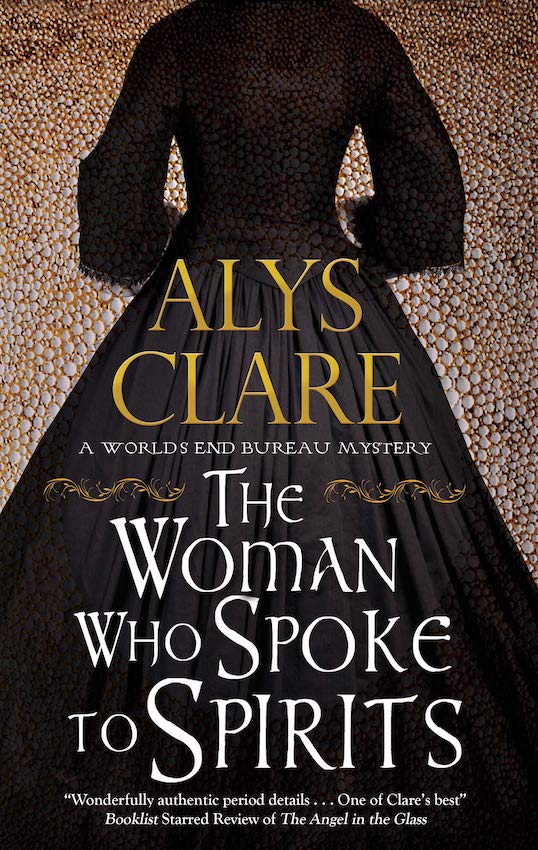
Book Review: The Woman Who Spoke to Spirits by Alys Clare – a new crime-solving partnership hits Victorian London

Alys Clare is known for her medieval mysteries, particularly the Hawkenlye and Aelf Fen books. I hear they’re really good, but these were the times when life was “nasty, brutish and short”, so I’ve always steered clear, maybe unnecessarily. But I was pleased when Clare decided to jump forward a few centuries to set her new series in 1880s London.

Lily Raynor is a private investigator who is beginning to make a name for herself with her ability to get to the bottom of things with tact and discretion. Working from her late grandparents’ apothecary shop, she finds herself too busy to manage all the filing, note-taking and plant watering at her World’s End Bureau, so decides to hire an assistant. Of the six candidates on her shortlist, only the last is in any way promising. Although Felix Wilbraham isn’t quite what she had in mind.

Felix is a from a well to-do background, but falling out with his dear papa, has been living a hand to mouth existence of late. He’s down to his last pennies when he eagerly accepts Lily’s offer of employment. And so marks the beginning of a new crime-fighting partnership. Felix has excellent penmanship and the enthusiasm of a lively puppy. He hasn’t a clue about pot plants but after his month’s trial, becomes indispensable to Lily, not just for filing and making tea, but in the field of inquiry.

The story cracks on with two cases for the bureau. Lily attends a private member’s club to interview Lord Berwick who is worried about his son – a weak young who has become besotted with an ageing actress. But she’s not Lady Berwick material so Lily is asked to investigate her background and to see if she’s merely toying with young Julian and if there’s anything about her that might cool Julian’s ardour. Meanwhile Felix interviews a Mr Stibbins who is worried about his wife. They are a happy couple, and Mrs Stibbins helps out the bereaved through her work as a medium. But lately she has a feeling that her life is in danger.

So two quite different cases. But as the smart reader will remember from the prologue, Mrs Stibbins isn’t the only woman in danger – a young girl has been murdered in the vicinity and soon the bureau is caught up with the matter of women, mainly prostitutes, who have gone missing. This really cranks up the danger, especially when Lily plays a duplicitous game. The story builds to a nail-biting ending to reveal a criminal with a particularly original bent.

This is an intelligently plotted and engaging story with two likeable main characters. Lily has a background in midwifery, but a shadow clouding her past she thinks of as The Incident, has seen her eager to change profession. She has an interesting association with a canal boatman who has a gypsy-like alternative life-style and an other-worldly wisdom.

Felix’s experiences as an older woman’s plaything, along with his knowledge of the seamier theatre world, help him with the Berwick case. So both he and Lily have secrets that they are as yet unwilling to share with each other. This sets the scene for some interesting character development and dynamics that will no doubt affect their working relationship.

This is a very entertaining and relaxing period mystery that never gets too dark, in spite of the grimmer side of Victorian London emerging from time to time. You get a strong sense of the rigidity of a class system that keeps people in their place and that women like Lily are pushing boundaries by determining their own futures. She’s a complex character and I look forward to getting to know her better through the series. (Book number two is The Outcast Girls.) The Woman Who Spoke to Spirits scores a four out of five from me.