Book Review: We Solve Murders by Richard Osman – a very funny crime caper and first of a series

I came somewhat late to The Thursday Murder Club party, only picking the book up when a movie starring Helen Mirren and other big names was in the wind. It was such a fun read, I was keen to get my hands on the first of Richard Osman’s new series:, We Solve Murders. And I’m glad I did.

The story begins with Amy Wheeler, a private security officer – a body guard no less. Her current job is looking after world-famous author Rosie D’Antonio at her home on a remote island off the South Carolina coast. It should be a cinch, lots of relaxing by the pool and better than decent meals served by an ex-Navy Seal turned chef. But someone wants to kill Amy, and before you know it, she’s on the run with Rosie, who has her own plane, which comes in handy.

Next thing, the scene switches to the more hum-drum world of Amy’s father-in-law, Steve – an ex-copper turned private investigator. Living in a quiet English village in the New Forest, where ponies wander the streets as if they own the place, which they kind of do, his cases are no more tricky than missing pets and minor misdemeanours. He has mates at the pub and never misses Quiz Night, but still desperately misses Debbie, his late wife.

Amy and Steve are good pals, Amy on the phone to her father-in-law most days with her encouraging banter. So when she needs help, Steve’s the person she turns to. There follows a very complicated plot, involving money laundering, social media influencers trying to hit the big time, and the growing reality that Amy can’t trust anyone – except Rosie and Steve, that is.

The three make an odd team – Amy thrives on adrenaline and has passed her employer Jeff’s psychopath test with flying colours – Jeff’s criteria when hiring security staff. Rosie is all glamour, seemingly ageless, drinks everyone under the table and has an eye for the men. She’s quite keen on Steve, but he’s still devoted to Debbie and the quiet life. He also hates planes in spite being inveigled into joining an investigation that will take them to Dubai, via St Lucia and Ireland.

While there is a well-plotted mystery to keep you turning the pages and keep you guessing, for me the book was more about the characters and how they bounce off each other. Steve in particular has a stream of consciousness that is very funny, his ex-copper-like observations on a Cictaphone for seemingly ordinary things, his way of summing people up. But Steve, like pretty much everyone here, if full of surprises, even at times surprising himself.

This isn’t probably the book for you if you like to analyse every clue and figure it all out yourself through logic and deduction. But do pick it up if you’d like a lively, fun read to while away a wet weekend. There’s plenty of excitement – shootings, fights, helicopter, jet and jet-boat rides, and killers – plenty of those too. I imagine this would make another terrific movie or TV series – it’s full of visually interesting and unpredictable scenes, interesting characters and great dialogue. I loved it and will be keen for the next in the series. We Solve Murders is a four-star read from me.

Book Review: The Predicament by William Boyd – a return to the complicated world of a reluctant spy

This is the second novel of a planned trilogy which began with Gabriel’s Moon – the story of travel writer Gabriel Dax whose little trips abroad researching locations to write about have become conveniently put to use by MI6. We’re in 1960s Britain, so there’s the Cold War going on, JFK’s the president of America, and as always, there’s a difficult political problem somewhere in the world for MI6 to poke its nose into.

Gabriel has never wanted to be a spy. He’s a successful writer, publishing popular books that earn him a respectable living. When we catch up with him at the start of The Predicament, his MI5 handler, Faith Green, who Gabriel’s a little bit in love with, has got him acting as a double agent, meeting up with a Russian counterpart and accepting bribes in return for information. He’s not happy about this, but the money has helped him buy a country cottage where he can forget about the shadier side of his life and pretend he’s just a writer.

With another couple of chapters in his Rivers book to write, Gabriel is sent off to Guatemala to interview a presidential hopeful in a country plagued by unrest. He’s posing as a writer again, so again it’s convenient for MI6, but nothing quite goes to plan and Gabriel can’t help feeling he’s not being fed enough information. This doesn’t stop him from making acute observations, particularly about potential CIA involvement.

The Guatemala sojourn is interesting in that it describes the way political interests of American businesses and the Mafia hold sway. You also get the benefit of Gabriel’s expertise as a travel writer in the descriptions of the setting. But before long he’s off again, to West Berlin this time, where JFK is about to make his famous “Berliner” speech and an assassination plot has been hinted at. So we really are in the thick of the period, of history being made, with Gabriel a bit-part player.

Through all this, Gabriel is emerging as quite a good spy even if he is reluctant to get his hands dirty. He’s observant, can think on his feet, and thanks to Faith Green and her cohorts at “the Institute”, has learned not to take everything at face value. He’s even getting quite good at self-defence. But Gabriel is also self-aware and constantly examining his feelings, not only about the spy business, but also about himself as a man. When it comes to women, he can’t help feel that he should be looking elsewhere, but Faith Green seems to have him on a string.

Pulling off the second book in a trilogy can be tricky, but William Boyd has made The Predicament work at least as well as Gabriel’s Moon, with plenty of tension, some exciting action scenes, and Boyd’s wonderfully crafted prose to enjoy. There are some amusing more worldly characters who contrast nicely with Gabriel’s sensitive writerly persona – such as Ulsterman Sergeant Major Begg who teaches him self-defence and his old lock-picking mate Tyrone who does the odd “no questions asked” job for Gabriel from time to time.

As, Gabriel gets so much better at being a competent agent, you can only wonder if this will be his lot in life. We’ll have to wait until Book 3 to find out. I have a feeling Boyd will ramp things up even more and bring out some excellent twists. I can’t wait. The Predicament is a four-star read from me.

The Predicament is due for publication on 4 September – I read an advance copy courtesy of Netgalley.

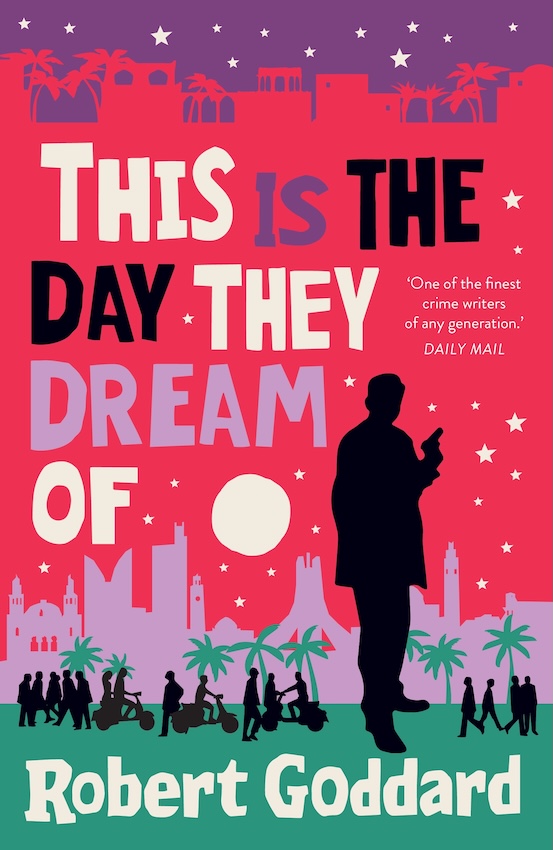
Book Review: This Is the Day They Dream Of by Robert Goddard – Superintendent Taleb returns in this endlessly entertaining thriller

Robert Goddard’s crime novels seem to be going from strength to strength. I’ve been enjoying his Umiko Wada mysteries about an unlikely Tokyo private investigator (The Fine Art of Invisible Detection and The Fine Art of Uncanny Prediction). Goddard seems to be alternating Wada mysteries with his thrillers set in Algeria featuring his jaded policeman, Superintendent Mouloud Taleb.

This Is the Day They Dream Of is the second story to throw Taleb into a much bigger problem than any retirement-age cop should have to deal with by himself. Taleb was widowed and lost his daughter in a terrorist attack during the 1990s, the décennie noir or ‘dark decade’ of instability and violence in Algeria’s history. Since then work and a high cigarette consumption have kept him going. Plus a strong sense of what is right in a system determined to hide the truth and protect the powerful.

The story begins with Taleb being ‘volunteered’ by his boss, Director Bouras, to be part of a panel on a current affairs TV programme. He’s to give a policeman’s point of view of the events of the décennie noir, now that thirty years have passed. He’s been instructed not to say anything controversial, but somehow he lets slip that the assassination of President Boudiaf may have had something to do with the Secret Service, when he’s egged on by a determined freelance journalist.

Just who really killed the President is the least of Taleb’s worries when he’s sent off to France to negotiate the release of a hostage – none other than the son of General Mokrani, the boss of the Secret Service at the time of the assassination. Taleb finds himself in a country villa also hosting hush-hush negotiations between Algerian and French parties, and the Secret Service agents on site to see they aren’t disturbed aren’t happy with Taleb.

Fortunately for Taleb he’s got an ally in the Secret Service, non other than fit, uncompromising, motorbike-riding Agent Souad Hidouchi. The two made an odd-couple pairing in the previous book (This Is the Night They Come for You) which makes this story all the more entertaining. Hidouchi is just as much for finding out the truth as Taleb, but goes about it differently. She gives her own boss, a vain and self-serving career man, cause for concern, often going off the radar and disobeying orders. But for how long will she be able to get away with it?

The story brings to light horrific events in Algerian recent history, the ongoing effects of the colonial past under France, as well as corruption past and present, and a whole new conspiracy that seems weirdly plausible. Goddard is a mastermind at keeping a bunch of story threads going, weaving them together seamlessly, with an assortment of interesting characters in support. The plotting is superb, and I couldn’t put the book down, making the most of a wet weekend to whizz through the chapters.

I do hope we’ll see Taleb and Hidouchi again (and Umiko Wada) for more tautly plotted mystery-thrillers. The Guardian quote on the book cover states that Goddard is “the world’s greatest storyteller” and I really can’t disagree – in this genre at least. This Is the Day They Dream Of is a five-star read from me.

Book Review: The Unquiet Grave by Dervla McTiernan – a pacy new Cormac Reilly crime thriller

I’ll read anything by Dervla McTiernan, so was happy to put my hand up for her new book in the police Sergeant Cormac Reilly series, The Unquiet Grave, when it was offered by Netgalley. This is the fourth mystery featuring Reilly, and I’ve always found him an interesting character – unrelenting yet sensitive, logical but also good at reading people. He always seems to be up against it, whether it’s relationship problems, pressure to close a case early or issues with colleagues. Or all three – which is what we have here.

In previous books, Reilly has struggled to fit in, returning to Galway after years in the force in Dublin. A stickler for doing things by the book, he’s been a whistle blower, which is why, in the new book, he’s being headhunted to run a team investigating police malpractice – not a job to earn him popularity. While he’s mulling this over, he and his sidekick, Constable Peter Fisher, are called to a body discovered in a bog. Fitted out to look like a ritual killing, of the kind discovered in ancient burials, the presence of underwear suggests otherwise.

The body turns out to be that of a polarising head teacher at the local school – Thaddeus Grey, who disappeared two years ago. Found on the outskirts of town near his house, Grey expected high standards of the students, and it turns out, was a bit of a bully. Cormac soon narrows his focus to three students who particularly bore the brunt of Grey’s unpleasantness. But when another body is found in similar circumstances, his bosses and the press are jumping on the idea that it’s a serial killer. Cormac soon has a battle on his hands to bring the actual killer or killers to justice.

Meanwhile, Cormac’s ex-girlfriend, Emma, now married and expecting a child, is desperately worried about her husband Finn who has gone missing in Paris. The French police give her the brush off as he’s not a French citizen and she gets the feeling everyone thinks she’s a hysterical female, whose husband suddenly has cold feet about being a family man. Finn was a cyber security expert in the forces until recently, so Cormac pulls a few strings with an old army mate and gets things going with a police investigation. But nobody’s optimistic.

There’s a further plot thread involving a computer tech. wizard planning a fraud against the lottery company he works for. How all these story threads come together is a masterpiece of crime mystery plotting and keeps the story humming along. What makes it particularly interesting are the moral dilemmas faced by Cormac and Peter as they try to find justice for those caught up in crime, as well as problems in their personal lives.

These issues add layers of complexity that give the story a bit more heft. There’s danger too, with some pacy, edge-of-the-seat moments. Add the relentless Galway weather – it’s either freezing or raining or both, and we’ve got the atmospheric settings I’ve come to expect from McTiernan, who takes us to Paris, London, Dublin as well as some boggy rural corners.

All in all I wasn’t disappointed with The Unquiet Grave and it was great to check in with Cormac Reilly again – I do hope there will be more in the series. I really enjoyed the e-audiobook edition of the novel, published by HarperAudio and read by Aoife McMahon, who captured the personalities of all the characters, which were many and varied. With a publishing date of 30 April, The Unquiet Grave is a four-star read from me.

Book Review: The Last Line by Stephen Ronson – a World War Two thriller with a home-front hero who’ll stop at nothing

I’m not really sure what to make of The Last Line, Stephen Ronson’s first book in a series following wartime hero John Cook. The cover promises that Cook is “the Jack Reacher of 1940s Britain”, and that would certainly seem to be true. But it took me a while to get used to a character like Cook in a WWII Suffolk setting.

After serving in the First World War, Cook had decided he wanted more action, and found it as a Commando in India. Once he got that out of his system, he got busy turning around a struggling family farm and buying up more land. When we meet him, Cook is just quietly minding his farm when a Spitfire crash lands in one of his fields, chased by a Messerschmitt, an interesting scene that reminds us that the war is dangerously close to British soil.

As a farmer, Cook needn’t rejoin his regiment, but you can’t keep a good man down and he plans to get back into the action as soon as possible. But the War Office has other ideas for him, and he’s instead asked to be part of an Auxiliary Unit, a resistance group designed to make things difficult for a German invasion, which after the fall of France now seems imminent. He meets a man named Bunny in a pub who tells him to find some people he can trust to lend helping hand, people who are prepared to give their lives in a ‘last line’ of defence, before the tanks roll their way on up to London.

And so we get to meet a few other determined sorts, among them young Eric, out poaching every night, Cyril with his hidden radio gear, and Lady Margaret who is struggling to save her estate from ruin, but has a stash of munitions ready to go. There’s some instant chemistry between LM and Cook, but before any romance can take place, our dashing hero has some local battles on his hands. The daughter of his accountant has been murdered – she’d been worried about a young evacuee and had been asking awkward questions.

These lead Cook to The Grange, a stately home also struggling to pay the bills, where he spots odd comings and goings involving trucks, a couple of young spivs who aren’t dressed for the country, and a padlocked barn. He puts his Commando knowledge to good use, how to make himself invisible as well as how to get answers out of people who think a sidearm makes them tough. They’re always in for a surprise as Cook will stop at nothing and knows how to kill with his bare hands.

It’s fair to say, however, that the malefactors are truely vile and get what they deserve. But as the death toll rose, I just couldn’t help wondering how Cook could get away with it all. Perhaps Bunny would pull a few strings. In the end I decided to just go with it and enjoy the story as a kind of boy’s own adventure for grown-ups.

The support characters are interesting and offer scope for development in the novels to come. I liked Lady Margaret, she’s not afraid to get her hands dirty, and the young evacuee, Frankie. He’s struggling to fit in, has obviously come from poverty, but Cook takes him on in an endearing way. I hope we get more from Mrs Cook, John’s mother, who seems a salt of the earth type, and has a lot to put up with.

The Last Line is a diverting read, with plenty of pace and a lively style that suits the period and the main character. The second book is already published (The Berlin Agent), and I’m interested enough in Cook & co. to find out what happens next. This one’s a three-star read from me.

Book Review: Gabriel’s Moon by William Boyd – much more than your average spy novel

I’m always keen to read anything by William Boyd – his prose is crafted, his characters complex and there is always an interesting historical setting. And story-wise, you can never tell what’s going to happen next.

With Gabriel’s Moon we are in London, at least some of the time, in the early 1960s, and our complex protagonist this time is Gabriel Dax. He’s a travel writer at that time when travel writing was really popular, and at thirty, is already very successful.

The book opens with a prologue describing the house fire that killed his mother and when, as a six-year-old, Gabriel was lucky to escape with his life. Ever since, Gabriel has struggled to sleep – with nightmares of the fire plus troubling missing elements of his memory. He has sleeping pills, and not surprisingly he drinks a lot. A doctor recommends he see a therapist and these sessions lead him to investigate just what really happened that night.

Gabriel’s recent jaunt abroad has taken him to Léopoldville, and the newly independent Republic of the Congo. He takes an opportunity to interview the new prime minister, Patrice Lumumba, who wants to set the record straight. It seems his life is in danger, and there are names he wants recorded, should he be assassinated. This is way out of Gabriel’s usual sphere as a writer, but he does what he’s asked, making taped recordings of the interview.

But Gabriel’s work hasn’t always been just about travel. His brother Sefton, being something in the Foreign Office, has on occasion asked Gabriel to make deliveries for him to the Continent. When Faith Green, a secretive woman Gabriel has clocked reading his book on the plane home, contacts him with a commission of her own, his first instinct is to refuse. Faith works for MI6 and is something of a femme fatale. But the money’s good, and the trip to Spain tempting. Before you know it, Gabriel’s involved in more and more dangerous work for Faith and in spite of his niggling doubts, seems unable to refuse.

Gabriel’s an interesting character and not always likeable. You want to give him a good shake, tell him not to drink so much and get a grip on his life. There are sadly not many people he gets close enough to call friends. His girlfriend Lorraine hasn’t a clue about what is going on in his head, while he and his brother are somewhat distant having been brought up by different relatives after the death their mother. So there’s no one there to offer a reality check. How he handles the increasingly tricky situations he gets himself into sees a new Gabriel emerge.

Undercurrents of the political situation with the USSR, the Cuban Missile Crisis, as well as social politics of the time round the story out and the period really comes to life. There are glimpses of the ordinary, such as Gabriel’s ongoing battle with a savvy mouse in his flat; the pest-eradication advice from Tyrone, his streetwise locksmith. The book reminded me a little of A Bird in Winter by Louise Doughty – another really intelligent and nuanced spy novel with a main character on their own and battling for survival. This makes both books really engaging and gripping.

Then there are the settings. As well as Congo, there’s Warsaw and Cádiz, rural England and sixties London. If you’re after a satisfying, pacy but intelligent novel, Gabriel’s Moon might just do the trick. It’s a four-star read from me.

Book Review: Zero Days by Ruth Ware – a compulsive thriller from a master of the genre

I always enjoy reading about an interesting new business or career I’ve not come across before – the processes, the clients, the marketing. In Ruth Ware’s latest book Zero Days we’ve got a couple of business penetration security specialists – husband and wife team Gabe Medway and Jacintha (Jack) Cross. Their business, Crossways Security, tests out security both inside and out for their customers. Gabe, an expert hacker does the computer side of things, leaving Jack, pint-sized but super fit, to break in at night, testing alarms, locks and security procedures. They make a great team.

The story begins with Jack entering a client’s premises, from climbing a six foot wall, through to avoiding CCTV cameras, sneaking through doors, disabling alarms and evading the security personnel. Gabe is constantly in her ear, helping her find safe corners and exit points. She has a few close calls but ultimately gets out unscathed, a bit like a character from a Mission Impossible movie.

But heading back to her car, she bumps into the head of security which means a trip to the police station where she tries to contact her client. The minutes tick by, and it’s the small hours before she gets home, only to find that Gabe has been murdered. Shock and anguish delay her call to the police leaving some hours not accounted for when she is later interviewed by the senior investigating officer, DS Malik. Her sister Helena implores her to get a lawyer – spouses are always the first suspect in a murder, they have the means and opportunity; all the police need is to find a motive.

Aside from the grief and shock Jack is experiencing, an email informing her of a life insurance policy to the value of a million pounds adds to her woes. And the way that Malik seems to be homing in on her during a voluntary visit to the station causes alarm bells. Suddenly it seems that the police have chosen their perpetrator, and if they lock up Jack, no one is ever going to find out who the real killer is, the same person who is framing her. With a few more security sidesteps, Jack exits the police station and goes on the run.

Inside the station it was noisy and smelled of cleaning fluid and used coffee cups. As I waited in line to speak to the officer behind the front desk, I couldn’t help scoping the place out as if I were on a job. Two exits – one to the street, unmanned; one to the interior of the station, no lock as far as I could see. There was probably an activation button under the desk. One fixed CCTV camera in the corner with a huge blind spot that covered most of the right-hand wall – not a very good design for a police station. The odd thing was that I had no memory of any of it from before. Shock had wiped half the night’s events from my brain – which felt strange, but no stranger than mechanically assessing the building’s risk profile in a world in which Gabe no longer existed.

The book is set for the most part over seven days, as Jack disguises herself, evades capture, copes with injury and tries to piece together what it was that Gabe was doing that got him killed. She has a bit of help from Helena, a busy mother of two, as well as Cole, Gabe’s best friend who was like a brother to the victim, and like Jack is devastated by the murder. At the heart of it all is some cyber crime that went a little over my head but makes for an interestingly different storyline. There are a lot more Mission Impossible type action scenes as Jack gets closer to the truth.

Zero Days was such a compulsive read, I was thankful for a weekend of cold, rainy weather. I inhaled this book, having to remind myself to eat. The writing is sharp and immediate, the tension non-stop, with first-person narration that makes you imagine yourself in Jack’s shoes. You can’t but wonder what would you would do in similar circumstances; how you would cope. The novel must surely add to Ruth Ware’s reputation as the Queen of Just One More Chapter. Zero Days is a four-and-a-half star read from me.

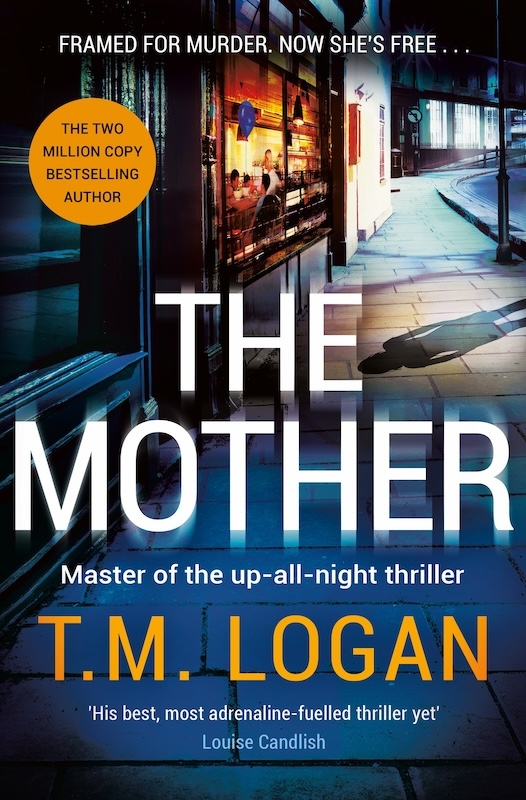
The Mother by T M Logan – a light, escapist thriller and perfect holiday read

Another thriller seemed a good choice for the holiday season – something to while away the minutes between basting the turkey and digging out the good crystal. And this one certainly suited the day. An easy read with short chapters so you can pick up where you left off, and an opening scene that has you hooked from the beginning – a woman, assumedly the ‘mother’ of the title, watching her own funeral.

Yes, I’m sure this has been done before, but it’s always interesting to see a funeral from the late departed’s point of view. But for Heather (yes, another book about a Heather!), hiding behind heavy-framed glasses and dyed hair, she has the pain of seeing her own children for the first time in years and they are visibly distressed.

The story flips back to Heather’s former life, ten years before, when she was a busy mother of young boys, with a career in HR and a husband, Liam, who is a rising MP. They have a pleasant home in Bath, and it would seem a charmed life, if a little hectic. Then, one evening, once the children are in bed, Heather discovers Liam is hiding something from her – he’s unusually evasive and there’s the scent of cologne on his clothes. The two argue. Next morning Heather wakes to find her husband dead.

The story flips forward again and we’re with Heather as she’s released from prison. She’s on parole after serving a nine-year sentence, sharing a room at a hostel with three other women, and with serious conditions surrounding her release. These include keeping away from witnesses from her trial, and from her boys. How is she going to clear her name, let alone be a mother again?

Until Liam’s murder, I had never really appreciated how privileged I was – and what it might be like to lose that privilege overnight. Because from the moment Liam died, all of it – the police, the press, the courts, the system – had turned against me. And from the moment the guilty verdict was read out, I became the enemy, the outsider, the other, to be feared and reviled and never to be trusted again.

Heather is really up against it. Her former middle-class life is in tatters, and she has no one to turn to – her mother now dead and her in-laws refuse to have anything to do with her. Slowly she builds up a support group – Owen Tanner, the journalist who has never given up on her case and fellow hostel inmate, Jodi – a woman from the other side of the tracks. She even manages to convince sister-in-law Amy to help.

The story gathers steam as Heather pieces together facts from her case, helped in part by those Tanner has garnered that reveal something shady within Liam’s constituency office. The appearance of heavies that follow and threaten her would suggest that someone has got something to hide. Heather has to risk breaking the conditions of her parole again and again. Can she discover the truth before she’s sent back to prison?

T M Logan really knows how to plot an enthralling thriller that keeps you turning the pages. The unmasking of the killer near the end packs quite a surprise in a nail-biting finale. The character of Heather is an ‘everywoman’ type you can empathise with. Subordinate characters are interesting too, if a little lightly drawn. My only quibble is how did the police get it all so wrong. Why didn’t Heather’s defence team put up more of a fight? All the evidence seems to be circumstantial. On the other hand, perhaps this happens a lot more than we know. We hope the system is a fair one, but is it really?

The Mother is a pacy, escapist read, well-written and with engaging characters. But after A Bird in Winter it seemed a little ordinary. Oh, well. You can’t have everything. I’ll probably pick up another by this author when I want a book I can easily get lost in. This one’s a three-and-a-half star read from me.

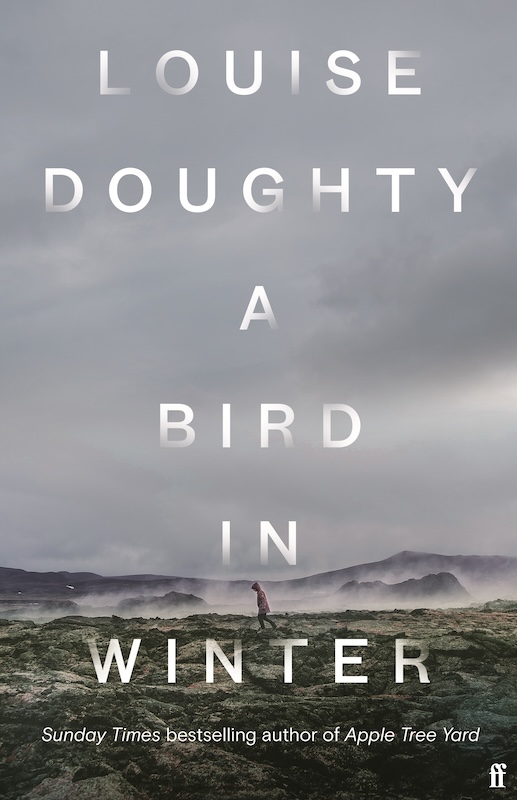
Book Review: A Bird in Winter by Louise Doughty – a pacy thriller that’s more than meets the eye

I’ve heard so many recommendations of Louise Doughty’s novels, among them Apple Tree Yard, which was also televised. So when A Bird in Winter appeared I snapped it up, expecting an intelligent thriller and for the most part I wasn’t disappointed.

The Bird of the title is Heather, nicknamed by her father who was a former intelligence officer in the British Secret Service. Heather makes a roundabout entrance into the service, too, shoulder-tapped and mentored by Richard, her father’s own former protégé. When the story begins Heather is a high-ranking official in the service, working out of an office in Birmingham that has been set up recently to seek out agents who have ‘turned’. A signal at a meeting and Heather abruptly leaves the building and goes on the run.

It’s a compelling beginning. We read with bated breath as Heather collects a stashed bag all set up for such an eventuality. There’s money, a burner phone, a fake passport and a couple disguises – she can be a homeless person one moment, or morph into a middle-aged hiker the next. She hops on and off trains and heads north for Scotland. So far, so James Bond.

Only it isn’t. This isn’t a convoluted espionage thriller, full of action set pieces and a showdown with the baddies at the end complete with guns and random mayhem. Although there is a storm at sea. As Heather waits out the time it will take for her rescue, the story slips into the past – Heather’s spell in the army which is where she meets Flavia. Heather and Flavia become like sisters, sticking up for each other against the misogyny they face daily. Then there’s the special connection Heather has with Flavia’s daughter, and events that lead to them losing contact.

The plot then picks up as Heather tries to piece together the clues to her betrayal, the weakness that was exploited and the treachery that has left her out in the cold. She still has one or two friends who will help her, but she knows she’s on borrowed time. Will she make it out alive?

  He was there that morning to give a PowerPoint presentation about various cases he had been involved with. We had quite a few of these sessions, historical examples of successful missions and, sometimes, the unsuccessful ones, everything that could and had gone wrong. In those talks, we got to learn from the missions the public never hears about – the terrorist attacks that were foiled and how, the demonstrations where invaluable intel was garnered, and why.
  And sometimes, we got to learn about the things that had been missed, the real reasons six or fourteen or thirty-two people had lost their lives when nobody should have died. The men and women who gave those talks had something haunted about them, sometimes apologetically so, sometimes tinged with defiance. Ancient Mariners, all of them.

While there is a lot going on and plenty to keep you turning the pages, A Bird in Winter is a subtler kind of thriller. Doughty takes her time with Heather, showing her as a multifaceted character – a woman who has sacrificed much for her career, and it’s lonely at times. She has all kinds of regrets, particularly around relationships, including Flavia, and also her mother. As a reader you want to like her, and so you become desperate for her to survive, to be able to start a new life, a happier life even.

We get brilliantly evocative settings as Heather adapts to her surroundings, as well as scenes of quiet domesticity, where she tries to be a normal person. But always in the background is the ever present danger. It’s a clever balancing act, and it makes you imagine yourself in Heather’s shoes. There’s also a darkness here, in the cold side of Heather’s make up, which means she can do what it takes, as well as the ever present violence that is for the most part just off stage.

This is such a well written and satisfying novel, definitely a slow-burner, and one that takes its genre into a more literary sphere. I shall be eager to read more by Louise Doughty. A Bird in Winter is a four out of five star read from me.

Book Review: The Shadows of London by Andrew Taylor – a ripping read set during the reign of Charles II

Andrew Taylor has had a lot of practice in the art of mystery-thriller writing. At one point in his long career he gave us the Bergerac series, which was also televised – I fondly remember watching it aeons ago with my parents. There have been numerous more series and standalone novels, and in 2009, Taylor was awarded the Diamond Dagger, the Crime Writers Association’s most prestigious award for a lifetime’s contribution to crime writing in the English language.

But in my view, he was just warming up. His latest series is one of my favourite historical mystery series – the James Marwood and Cat Lovett novels set in the years following the Great Fire of London – hence the series title: Ashes of London. The two main characters are frequently at odds with each other, but somehow their paths always cross, usually when there’s murder involved.

As you might recall, Marwood is a rising young man in the corridors of government and in The Shadows of London we catch up with him as an assistant to Lord Arlington, the King’s most trusted advisor. Cat has meanwhile been busy with her architecture business – there’s so much work to do in a city half destroyed by the Great Fire. Her latest project involves rebuilding an almshouse, but work grinds to a halt when a body is found at the site, the man’s face battered beyond recognition.

The local magistrate, Mr Rush, was previously involved in the project, but had a falling out with Cat’s client, Robert Hadgraft, and puts a hold on any work until the murder is resolved. Cat is desperate to resume work as she needs to keep her workers committed to the building work and somehow pay off her suppliers. She turns reluctantly to Marwood to see if he can persuade Arlington to intercede on her behalf. Before you know it, the two are investigating the murder, and yes, again, the unpleasantly conniving Duke of Buckingham appears on the scene.

Marwood has had run-ins with Buckingham before, in particular with the Duke’s vicious henchman, Durrell, whose distinctive appearance is noted by a witness connected to the recent murder. The story is all set for more regal intrigue and takes you to Newmarket, where the King and his court turn up for the spectacle of horse racing. But before we get there we meet Louise, a maid of honour to the Queen, left behind at Whitehall because of an ailment.

Louise is the other thread to the story – a young impoverished noblewoman, once a maid of honour to the King’s late sister. Charles II has given her a home along with one or two other French ladies-in-waiting following his sister’s death. But Louise is worried that her youthful beauty will be irresistible to the King. The Ashes of London series sheds a light on a number of the King’s characteristics, some of them endearing, but here we see him as something of a sexual predator. And Louise should be worried. On top of everything else she has as secret, a problem she’s turned to the Duke of Buckingham, of all people, to handle.

Louise thought with the cold, merciless clarity of a trapped animal that the ambassador would have made a fine preacher had he not chosen instead to be a pander.
Colbert leant even closer. He skewered her with those uncomfortable eyes. His voice hardened. ‘Kings are not like other men. They are chosen of God, and to serve them is a great blessing. To serve two would be doubly blessed. Do you agree?’
‘I seek to serve God and my king, sir,’ she said in a voice that was barely audible above the noises outside. ‘Always.’
He sat back and gave her a thin smile. ‘Of course. I had expected no less of you.’

Everything builds nicely into a thrilling well-paced story, as Marwood juggles the demands of his work with the murder investigation while his enemies close in. There’s a new love interest, and when all seems lost, help comes from a surprising direction. There’s a ton of period colour and insight into the workings of court so you know Taylor has done his homework. But also there’s the perilous situation for women of the time. Cat struggles to be taken seriously as an architect, but at least she strives to be independent. Other women, no matter what class they belong to, have little choice when it comes to their future, doing anything they can to keep a roof over their heads.

The Shadows of London is number six in the series, and I confess to feeling a lump in my throat as I turned the last page because I simply didn’t want it to end. Although it has a very good ending, and you have a feeling that Marwood and Buckingham will have more scores to settle, so there’s promise for more books. I certainly hope so – I’m sure there’s lots more to say about the era of Charles II, and loads more interesting history to mine. The Shadows of London gets five stars from me.