Book Review: Nesting by Roisín O’Donnell – a heart-stopping novel about a woman trying to leave her marriage and start again

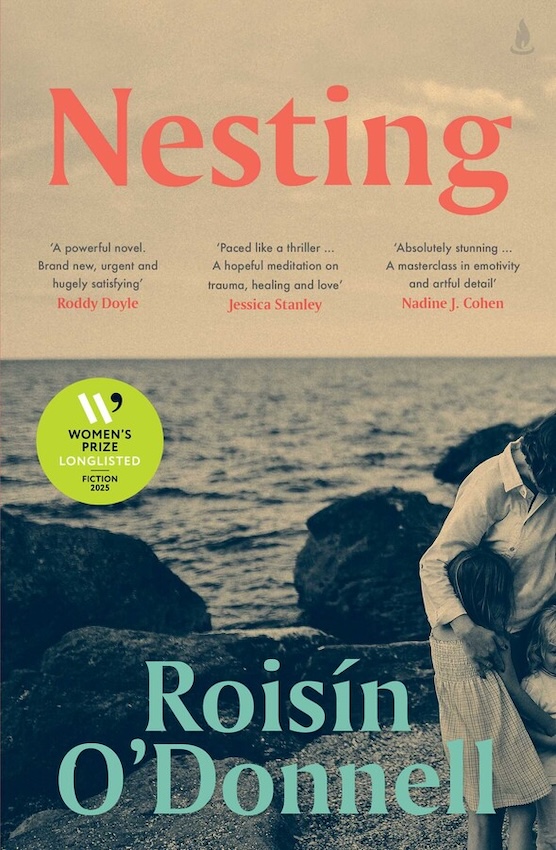
This book reads more like a thriller than a slice-of-life contemporary novel. Nesting is about Ciara Fay who decides to leave her husband. She makes the sudden decision to grab the clothes off the line, bundles her children into her car and takes off, not knowing where she’s going. Her husband Ryan, upstairs in the shower, is completely oblivious.

Ciara has very little money. Ryan managed their finances, only giving her a bit of housekeeping money in cash and expecting her to account for it all. All the same, she has saved enough to tide them over for a few days. But with two girls under five, it’s going to be tough, even before she discovers she is pregnant again. The only reason she is putting herself through this is because she is so scared of her husband.

Ciara does everything right – she keeps Ryan informed about needing a break to keep everything above board. She doesn’t want to lose her girls. Her family – a mother and sister – are both in England and she can’t leave Ireland with her girls without their father’s permission.

When she finds a place in social housing, you get a lot of insight into the soul-destroying situation this can be. The lack of space – one hotel room for a family – and minimal cooking facilities. People hide rice cookers in their rooms, but there’s the threat they could be kicked out if discovered. They mustn’t use the lifts, it’s off-putting for the other guests, so they have to sneak up the back stairs. Even so, there’s a sense of community here and Ciara makes friends.

All the while, there are incessant text messages from Ryan which are like a battering ram, either declarations of love or hostile accusations, but always intense. Ciara is always on edge, her husband’s voice constantly in her head, dominating her thoughts. She doesn’t realise how bad it is until she talks to other people.

The story follows Ciara’s desperation to find a home, to find work, to make a new life for herself and Ryan’s ability to always crank things up another gear through lies and deception. So it isn’t surprising there is that thriller level of suspense. So often did I have my heart in my mouth, wondering if Ciara and the children would ever be safe. And it’s right down to the wire in the last chapters. Such an emotional roller-coaster of a read.

Through it all there’s imagery of birds. There are the young crow chicks Ryan finds in an abandoned nest on a building site and decides the girls can help him nurture. Another ploy. But other images too. It’s a beautifully written and crafted book. I enjoyed the audiobook, read by Louisa Harland. Even so, Nesting is so tense, so vivid, I could only listen to a little at a time. But gosh, what a great story. A five-star read from me.
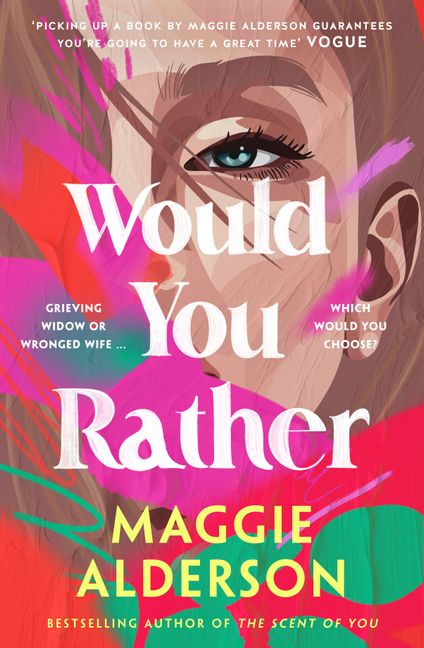
Book Review: Would You Rather by Maggie Alderson – a beach read about a grieving widow with a grievance

I picked up this book for a light holiday read, intrigued about the story of a woman coping with loss and redefining her life in order to move on. In this case, we’ve got Sophie who has two terrible things happen to her in one day. First Matt, her husband of thirty years, tells her he’s not going to move house with her after all, but stay on in London with his mistress. She’ll be off to their new house in Hastings on her own! And then Matt gets hit by a truck while riding his bicycle and killed.

Suddenly Sophie is an angry wronged wife and a grieving widow all at once. Thank goodness she has the support of her friend Rey, who helps her adjust to her new life, and she soon makes friends with her new neighbours: Agata in her nineties and Olive who calls a spade a spade, both of them widows too. Also among the huge cast of characters are Sophie’s sons, Jack who lives in Australia and Beau, the spitting image of his dad and just as big a hit with the ladies. Beau has also inherited his father’s talent as an artist, making his own brand of jewellery and working as a waiter to pay the bills.

Would You Rather follows Sophie’s story as she gets on with life, her work as a food stylist, and the questions she suppresses about the ‘other woman’. We also follow Beau who has overheard something at the funeral which has him digging into his father’s past. When he gets a rude awakening from girls he’s treated badly, he’s also on a learning curve. Then there’s Juliet, the mistress, a successful jewellery designer. She’s mother of little Cassady when we meet her, and is determined to live life according to her own terms.

These stories are all set to intersect in a fairly predictable way, although the characters have so much going on in their lives there’s lots to keep the reader interested. Sophie decides to keep Matt’s devastating decision to herself, which is difficult when his brothers and their wives are still a part of her world. There were five Crommelin brothers, all it seems larger than life and in their own way full of charm.

The story carries the reader through the dilemmas faced by its three main characters with lots of colour thanks to its attractive settings: seaside Hastings and elegant parts of London with its art auctions, jewellery stores and fabulous parties. I must say I got a little sick of all the parties. There’s plenty of wine and descriptions of sumptuous food too as you might expect with several characters who are terrific cooks and another who is a winemaker.

I did feel sorry for Sophie though. How is someone supposed to grieve or turn their life around when having to keep their chin up at parties? While there were plenty of lessons learnt and positive hopes for fresh starts, ultimately I couldn’t help finding these characters, with the descriptions of their lavish homes and lifestyles, all a little bit shallow. So while I am often up for a feel-good, second-chances story, this novel was disappointing. I’m still not sure why the book is called Would You Rather, but it’s a two-and-a-half star read from me.

Book Review: The Radio Hour by Victoria Purman – a feel-good story taking you behind the scenes of a 1950s radio drama

I was instantly charmed by The Radio Hour and soon drawn into the world of its main character, Martha Berry. About to turn 50, Martha’s been working at ABC, the big, state-owned Australian broadcasting corporation, for decades and knows all the ins and outs of radio production.

Shunted from department to department, Martha’s always been there when another secretary has left to get married – there are no married women at ABC. She’s sensible, pragmatic and knowledgeable – everything her new boss isn’t. That’s Quentin Quinn, fresh-faced and twenty-something, on his first ever radio serial, As the Sun Sets.

Radio dramas of this kind were popular entertainment for those at home – often a break in the housewife’s busy day, the stories and characters adored equally. But waiting in the wings is a threat to this happy status quo – television. Quinn is soon out of his depth. He’d much rather be writing an action show with cops and robbers, not a soap following the lives of a butcher, his wife and daughter and the people who step into the shop.

Quinn starts the day late, spends long lunches out drinking and leaves early, while the first airing of As the Sun Sets looms closer and there’s still no script. What’s Martha supposed to do? A fond reader of the classics, Martha knows a thing or two about storylines and characters, to say nothing of the things that women at home worry about. She’s well liked by her mother’s friends and joins their conversations on the verandah when she returns from work. And then there’s April, May and June, the three young secretaries she befriends at ABC. She lends an ear to their worries and they welcome her advice.

Martha’s led a quiet life at home with her widowed mother and has never pushed herself forward for anything. But once’s she’s helped select the cast and booked the recording studio, she can’t let the show down. Before you know it Martha is writing for As the Sun Sets, pretending to an increasingly drunk-on-the-job Quinn that the scripts are all his work – she’s just typing them up.

On the surface The Radio Hour is a light, feel-good read, and it captures so well the 1950s era and values. But the casual misogyny dished out on a daily basis to the female staff, the sexist management structure and the predatory behaviour of some of the men towards the young women in their midst will make your blood boil. How Martha and her female colleagues fight back gives the story something to cheer about, but you know it’s going to be a long haul.

Victoria Purman has obviously done some homework and references real people as background figures, such as, Gwen Meredith, a well-known writer of radio drama and role model for Martha, and the ‘had enough’ character, Joyce Wiggins is inspired by real-life producer Joyce Belfrage. The author even worked at ABC in her early career as a journalist, though quite some time after the events of her novel. This all shines through in a story that brims with authenticity and interesting radio production detail.

I enjoyed The Radio Hour immensely. I loved Martha and her friends and will certainly look out for more by this author – she’s got quite a backlist of historical fiction. I received a complimentary copy of this book. Opinions expressed in this review are completely my own. The Radio Hour is a four-star read from me.

Book Review: Lessons in Chemistry by Bonnie Garmus – an entertaining look at women’s issues in the ‘sixties with an unforgettable protagonist

We’re starting off the new year with an entertaining read that will make you laugh, as well as think, and teach you a bit of chemistry as you go.

There’s something unusual about Elizabeth Zott. She’s a chemist, she’s fiercely intelligent as well beautiful and fearlessly determined. You would think that these would be helpful attributes, that for someone like Elizabeth Zott, the world would be her oyster.

But Bonnie Garmus has set her debut novel in the late 1950s/early 1960s California. This is a period where women found it difficult to break out of the stereotypes that had held them back for centuries – in particular that a woman’s place is in the home; also that academia – particularly lectureships and professorships as well as leading any kind of research – were for men. Elizabeth has escaped her dreadful parents, rescued by reading and study, only to encounter the worst kinds of misogyny at university.

When we first meet Elizabeth, we’re a few years down the track and she’s a TV cook on the afternoon programmes designed for housewives. She’s supposed to follow the script but instead she introduces her audience to chemistry. Because cooking is chemistry after all. Supper at Six is hugely popular, probably because along with the chemistry, viewers also get a good deal of common sense and empowerment.

Sometimes I think that if a man were to spend a day being a woman in America, he wouldn’t make it past noon.

We are also introduced to Elizabeth’s daughter, Madeline, a precocious child who is just as smart and outspoken as her mother. The only other member of the household is Six-thirty, the dog, who not to be left in the shade by his super-smart owners, can understand a huge vocabulary.

The story weaves back to the past to events that bring Elizabeth to the Hastings Research Institute in Commons, California, where she meets her future partner and encounters more of the sexism that prevented her working on a PhD. Calvin Evans’s IQ is off the chart and he’s already been nominated for a Nobel Prize. True chemistry happens between them and Calvin teaches Elizabeth to row. Rowing is the reason Calvin chose a crumby posting at Hastings, that and a grudge.

What I find interesting about rowing is that it’s always done backwards. It’s almost as if the sport itself is trying to teach us not to get ahead of ourselves.

This is a wry comedy of a book, full of quirky characters and the laughs you get from the tense situations Elizabeth creates around herself when just trying to be her own person. Desperation drives her to be a cooking show host, but like the rowing, Elizabeth gets on with it and makes it work. Amid the laughs are the shadows of loss and grief, and a world that is overdue for a darn-good shake up.

Reading Lessons in Chemistry, I couldn’t help humming to myself ‘I am woman, hear me roar’ as Elizabeth adapts when she hits a roadblock and takes no prisoners. Madeline is also entertaining as one of those outspoken kids who ask too many awkward questions. The character of Harriet Sloane, the helpful neighbour happy to babysit and escape her unpleasant husband adds a layer of maternal common sense desperately needed in the household. Six-thirty steals every scene he’s in.

I couldn’t help thinking this novel would work well on the screen and yup, you’ll be able to see it soon if you subscribe to Apple TV+. But as I always say: read the book first. Lessons in Chemistry gets four out of five from me.

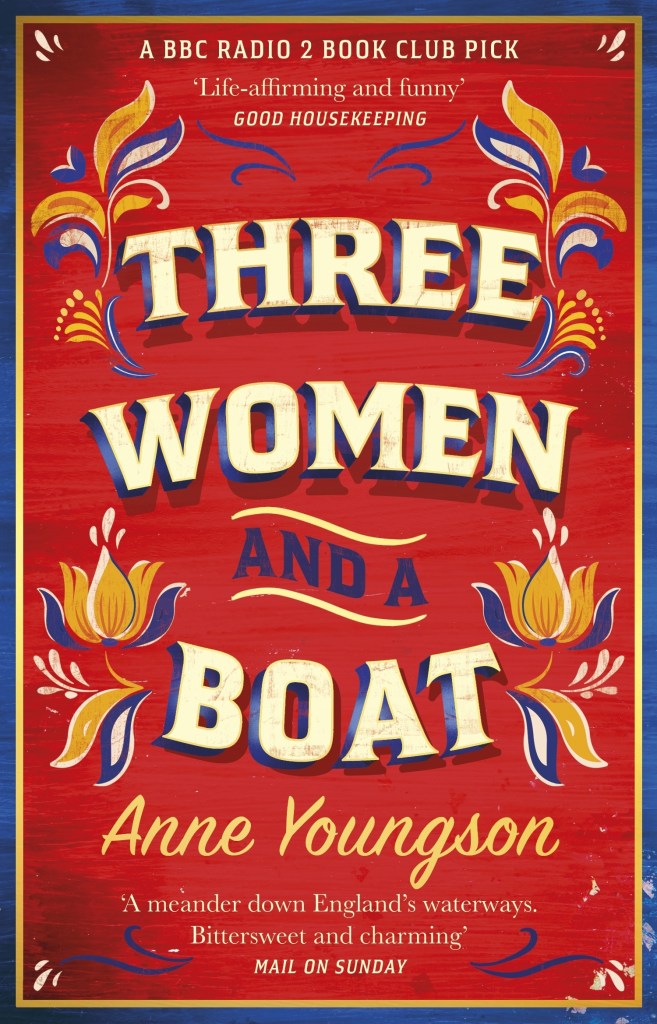
Book Review: Three Women and a Boat by Anne Youngson – a warm-hearted novel about turning points and second chances

Youngson’s first novel, Meet Me at the Museum, was a thoughtful, enlightening and romantic story told in letters between its two main characters. It was a big hit and I’ve been looking forward to this second book, set on the canals of England between London and Chester. Three Women and a Boat (US edition: The Narrowboat Summer) follows Eve, Sally and Anastasia who band together when each is at a turning point in their lives. They are complete strangers to begin with, when Anastasia needs somewhere to stay in London for cancer treatment. Sally and Eve, each independently and suddenly adrift from their normal lives, chip in and offer to help.

Eve has been dumped from her job in engineering. Sally is walking away from her marriage. Neither knows what they want to do next when they meet up on a towpath and rescue a howling dog, trapped in a canal boat. Anastasia returns to her boat to find two strangers have smashed a window to free a dog that didn’t need freeing. Maybe it’s the lure of life on the canals, or perhaps it is Anastasia’s vivid personality, but the two younger women find themselves agreeing to do her a favour.

While Anastasia is in London staying in Eve’s flat, her houseboat, the Number One, needs to be ferried to Chester for repairs. Eve and Sally have to rapidly get up to speed on handling the boat and the tricky business of canal locks as well as get used to living together in a tight space.

A lot of the story is about the women on the boat, and you get heaps of detail about locks and tunnels and how to navigate them, which is interesting. The summery canal-side scenery gets a mention too and you’re soon drifting along with Eve and Sally as if you’re with them on the trip, having a nice break away from it all. It’s a slower pace but there’s lots to do. Then there are all the interesting characters Eve and Sally get to know – people who have made a life on the canals in one way or another.

The story is narrated by Eve and Sally in turn, as they evaluate their lives and think about their options. We get their points of view of other characters, in particular, Arthur a tweedy old friend of Anastasia’s who is also oddly secretive, as well as Billy and Trompette whose boat, the Grimm, is aptly named as Billy is a gifted storyteller. The women warm to Trompette who at only nineteen has a talent for creating wonderful knitted garments – surely she could study design and make something of her life.

You read on, wondering what decisions the main characters will make about what to do next. Eve and Sally change during the course of the book, enough to learn what really matters to them. If you’ve always had a hankering to ditch the treadmill of the nine-to-five job and the mortgage repayments this might well resonate with you. But just to keep the plot simmering Youngson throws in a few twists as well.

This is a very different book to what I was expecting in that it is quite philosophical, thoughtfully written and doesn’t follow too much the usual rules that seem to govern novel plotting. It’s a breath of fresh air in so many ways, and while it’s a fairly light read, like her previous book, it marks Youngson out as an interesting author with an original voice. I particularly loved the characters who seem very real, the kind of people you’d like to meet for a catch-up over coffee. All in all this is such an enjoyable read – a four out of five from me.

Book Review: The Kitchen Front by Jennifer Ryan – a wartime novel about friendship, rivalry and rationing

Jennifer Ryan cements her reputation for World War Two fiction about the women stuck at home with her third novel, The Kitchen Front. Her previous books, The Chilbury Ladies’ Choir and The Spies of Shilling Lane, similarly threw together unlikely allies and mined small-town prejudices, keeping up appearances and the difficulties of maintaining anything like normal life when there’s a war on.

Ryan has a knack for discovering interesting story threads in the archives of wartime social history and memoirs. Here she’s latched on to the concept of cooking competitions that encouraged housewives to make rationed ingredients stretch further and items like whale meat (ugh!) which weren’t rationed somehow palatable. Here we’ve four main characters each vying for a radio slot on The Kitchen Front hosted by fastidious bon-vivant, Ambrose Hart.

Lady Gwendoline Strickland seems a likely candidate as she already hosts wartime cooking demonstrations in Fenley Village Hall. But she doesn’t get all that much cooking practice in, having all the trappings of a manor house kitchen, a cook and kitchenmaid. And a wealthy husband – a not very nice wealthy husband, but still, she’s got a lot of clout.

Then there’s Audrey, Lady G’s sister, who is toughing it out as a war widow, raising three boys and keeping the wolf from the door by baking pies and cakes that sell locally. She barely makes ends meet, and to make matters worse, she’s in debt to her sister for a mortgage on her home, the home she and Gwendoline grew up in. Without the house and grounds, she wouldn’t have the garden and orchards for her ingredients. So Audrey’s under a lot of pressure.

Also in the running is the Stricklands’ cook, Mrs Quince, one of the most famous manor house cooks in the country. But Mrs Quince is getting on and relies heavily on Nell, the kitchenmaid, who’s been learning at the cook’s elbow ever since she left the orphanage at fourteen. The two enter Ambrose’s competition jointly, and Mrs Q encourages shy Nell to speak up and come out of her shell.

The final entrant is London chef, Zelda Dupont. Zelda (not her real name) has always been on struggle street, but has worked her way up to be sous chef at a top London Hotel. When it’s bombed and she finds herself jobless, alone and pregnant, she winds up in Fenley, overseeing the staff canteen at a pie factory. Few know she’s in the family way, although her landlady has twigged and makes her life hell. If her boss finds out, she’ll be out of work too. Winning the competition could save her bacon.

The competition nicely shapes the plot of the novel and Ryan throws in lots of recipes and wartime tips for making those rations go further (Sheep’s Head Roll, anybody?). But really, this is a story about friendship and family, about pulling together, facing up to the truth and making a go of things. It’s a lovely, warm-hearted story, with a couple of villains you love to hate, and a touch of romance. It has that feel-good factor in spades, but there’s enough humour to keep things from getting mawkish. A charming, relaxing read, getting a four out of five from me.

Book Review: The Weekend by Charlotte Wood

This is such a different sort of novel from Wood’s earlier work, The Natural Way of Things, which was a dystopian novel with an underlying tone of menace. I thought it was a stunning read and was happy to hear she had a new book out. The Weekend is a more character driven novel, told with wit and insight, following three women in their seventies who have lost their former glory, are bitter or desperate – is it too late to recover, recharge and reinvent themselves?

The women are old friends who are missing the fourth of their circle, Sylvie, who has recently died. They gather at Sylvie’s beach house just on Christmas to clean it and clear out the junk, ready to sell. First there’s Jude – she’s the bossy one who likes things done properly. She’s worked in a fashionable restaurant, makes a terrific pavlova, and has been the mistress of a wealthy married man for decades. After the house clear-out, she and David will steal a precious few days together. Jude is the first to arrive, but where are the other two? So typical of them to let her down.

We catch up with Wendy, who has car trouble, sweltering as she waits for the breakdown service – we’re in Australia and Christmas is in summer. Adding to her discomfort is her ancient dog, Finn, seventeen, blind, deaf and incontinent – a raft of conditions that make him constantly fretful. If only Wendy would listen to her daughter and have the dog put down. But Finn has been her consolation ever since her husband passed away. It’s hard to imagine Wendy is an academic of some repute who has written books on feminism that have been received with widespread critical acclaim.

Then there’s Adele, an actress who keeps missing the train, facing a bunch of problems including imminent homelessness, and a lack of available stage roles which is galling for someone who dazzled with her Blanche DuBois, Mother Courage, Lady Macbeth – so many brilliant performances. Then there’s the lack of cash – at least she’s well turned out, her figure still good for her age, her stunning breasts still shapely, her recent pedicure money well-spent.

Most often when Adele was exposed, or shamed, she turned for courage to the moment every actor knew: the moment on stage, entirely yours, waiting in the pitch-dark before the lights came up, the most powerful privacy a person could have. The fear drained away and adrenaline replaced it, and you were ready on your mark, in the darkness….In that moment of taut, pure potential, everything, everyone, was yours.

Jude doesn’t expect a lot from Adele, but has made a list none the less and the three crack on, each imagining the past, their petty grievances, their fears and insecurities. They don’t seem to be getting along at all – was it only Sylvie who kept them all connected?

The Weekend is a wonderful story about friendship and the odd ties that bind it, the feelings that threaten to break it, told in brilliant, witty prose. I hadn’t expected to like it as much as I did, but found myself drawn into a story about three women in the autumn years of their lives – a time when there may not be many more chances for new horizons, but still, who knows? There is just enough plot to keep things bubbling along, with some revelations towards the end that bring things to a head.

I loved the way Wood creates physical discomfort that mirrors the discomfort of the characters’ interactions: the rusty inclinator – a lift-like contrivance that clunks its passengers up to the house; a drenching storm; Wendy’s uncomfortable sandals; Adele caught out needing a pee at the beach with no facilities in sight; anything to do with the dog, Finn. And clearing out a house you have all those years of accumulated junk – the flotsam and jetsam that make a life – now decaying and useless.

It all adds up to a brilliant read, which reminded me a little of Jane Gardam, another writer who has created some brilliant older characters (see Old Filth trilogy), or maybe it was the similar wry tone. The Weekend earned Wood a spot on the Stella Prize shortlist and I will be keeping her on my radar, eager to see what she comes up with next. A four and a half out of five read from me.

Book Review: Mum and Dad by Joanna Trollope

Sometimes when you come to a hiatus in your reading, something a little familiar is just what you need to get going again. Mum & Dad is the twenty-first novel by Trollope dealing with everyday life, family and relationships. You might say they follow a well-worn path. Often a couple, their family or friends, are tested by some bolt from the blue, leaving them to dig deep, examine themselves and their relationships with those around them to find a way forward.

In the case of Mum & Dad, the family is the Beachams, an old family going back to the Domesday Book, with a more recent tradition of naming their first born son Gus. Monica Beacham, who loathed her domineering father-in-law refused in a rare act of defiance and so named her first son Sebastian. If only Monica had continued to be more of her own person, as forty-plus years later we find her with her husband in Spain, where Gus has become an award-winning wine-maker and at seventy-tree is a grumpy old man. And at the start of the book, a grumpy old man who has just had a stroke. Think bear with a toothache.

Monica finds herself in a panic – how to manage the winery and deal with Gus, a husband from whom she has become increasingly estranged. At least she has Pilar, her faithful housekeeper and then there’s younger son Jake who seems only too willing to abandon his life in London to rush out to help her. If only her older children were on board with that idea. Parked in English boarding schools when their parents moved to Spain, while younger brother Jake got to stay with Mum and Dad, there is an undercurrent of resentment. It doesn’t help that Sebastian’s wife Anna just doesn’t get along with Monica – Anna is too controlling, Sebastian never taken seriously by his now teenage boys, Marcus and Dermot. Lately Sebastian feels Anna doesn’t much like him anymore. He’s a bit of a sad sack.

Monica also has a niggling guilt over her daughter Katie, who was miserable at her boarding school, and must have felt abandoned by her parents while Monica played the dutiful wife. Katie has since thrown everything into her career – she’s a successful lawyer – but her family of three daughters sometimes comes off second best, while she and partner Nic seem to be growing apart. But how can you be a good mother if you don’t have the experience of being cared for as a child?

As Monica and her three children have been all slowly drifting towards various kinds of discord and disaster, the catalyst of Gus’s stroke shocks them into all into taking stock. Eventually all three will visit their mother, with or without their spouses and children. They’ll have to connect with each other to find out what’s really going on and things may get a lot worse before they begin to get better. It’s a classic Trollope story, but also a very satisfying one. What makes it work for me are the characters. Not only do they have depth and interesting interplay with their families, they each grow and develop through the book. They’re not always all that likeable, but they seem very real.

I whizzed through Mum & Dad, enjoying the enfolding drama and the settings which switch between London and Spain. And as I read, I remembered that the other thing I like about Trollope is that her books are easy to relate to, picking up changing social conventions and idioms. She shows really well how different generations within a family see things and what they can teach other, even the youngest has her say. Trollope’s books only come out every couple of years, but when they do, I know I will find them worth the wait. A four out of five star read from me.

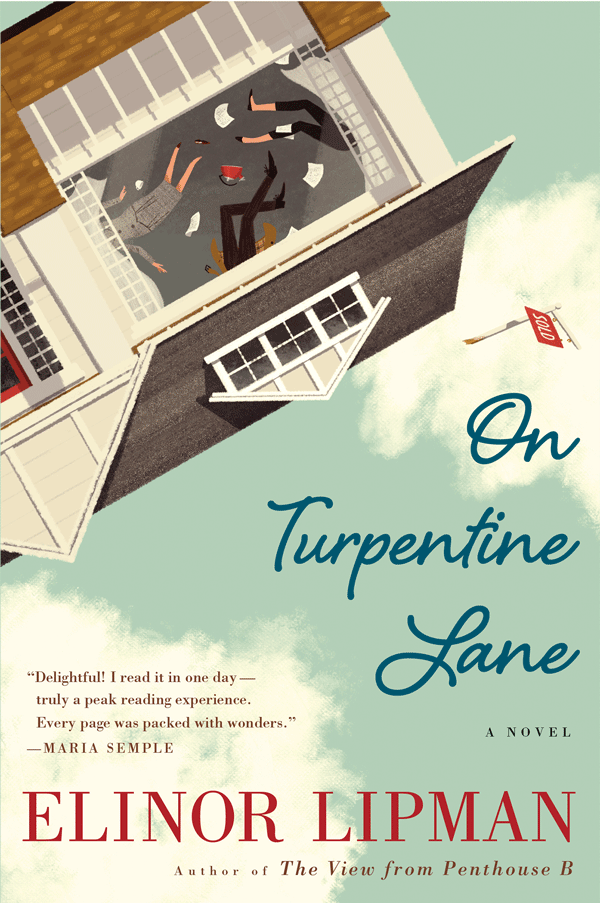
Book Review: On Turpentine Lane by Elinor Lipman

The genre of On Turpentine Lane a little hard to define. In the end I decided it was part chick-lit, part comedy of manners and part mystery – in this case a delicious concoction, particularly when seasoned with Lipman’s sharp and witty writing.

The story is told from the point of view of Faith Frankel, who has returned from the big city to live in her home town and work at her old school, writing thank you notes to sponsors. I didn’t know there were jobs like that, but there are others in her department who are tasked with benefactors of a higher order, including Nick, her office-mate and fellow conspirator.

While Faith’s fiancé is off walking across America to find himself, she buys a cute but run-down cottage on Turpentine Lane, while said fiancé posts pictures on social media of himself with attractive women. Meanwhile, Faith’s parents are having marital problems, her father leaving his job in insurance to reinvent himself as a painter – specialising in Chagall knock-offs personalised for the buyer with images of their children or pets. Then there’s the worry of Faith’s brother, who has never managed to feel confidant dating new women after divorcing his faithless ex.

Mystery arrives in the form of some abandoned junk found in Faith’s attic: an old cradle and pictures of twin babies labelled with their birthdates and the date two weeks later, the time they were ‘taken’. The assumption that she is looking at pictures of two dead babies and stories of how the previous occupant murdered her husbands sets Faith on a quest of discovery. As you can imagine, she doesn’t feel all that comfortable alone in her home anymore, but help comes in the form of amiable Nick, kicked out by his girlfriend for failing to propose and needing a room.

Throw in some office politics and there’s a lot going on for poor beleaguered Faith, and the plot just crackles along. The bonus of the sparky, intelligent writing means there’s a lot to enjoy. Elinor Lipman has written a dozen novels – On Turpentine Lane comes in at number eleven – and I am happy at the thought of checking out the others. If they are half as good as this one they are worth a look. The reading of this audiobook by Mia Barron was suitably bright and had me chuckling as I listened. Four out of five from me.

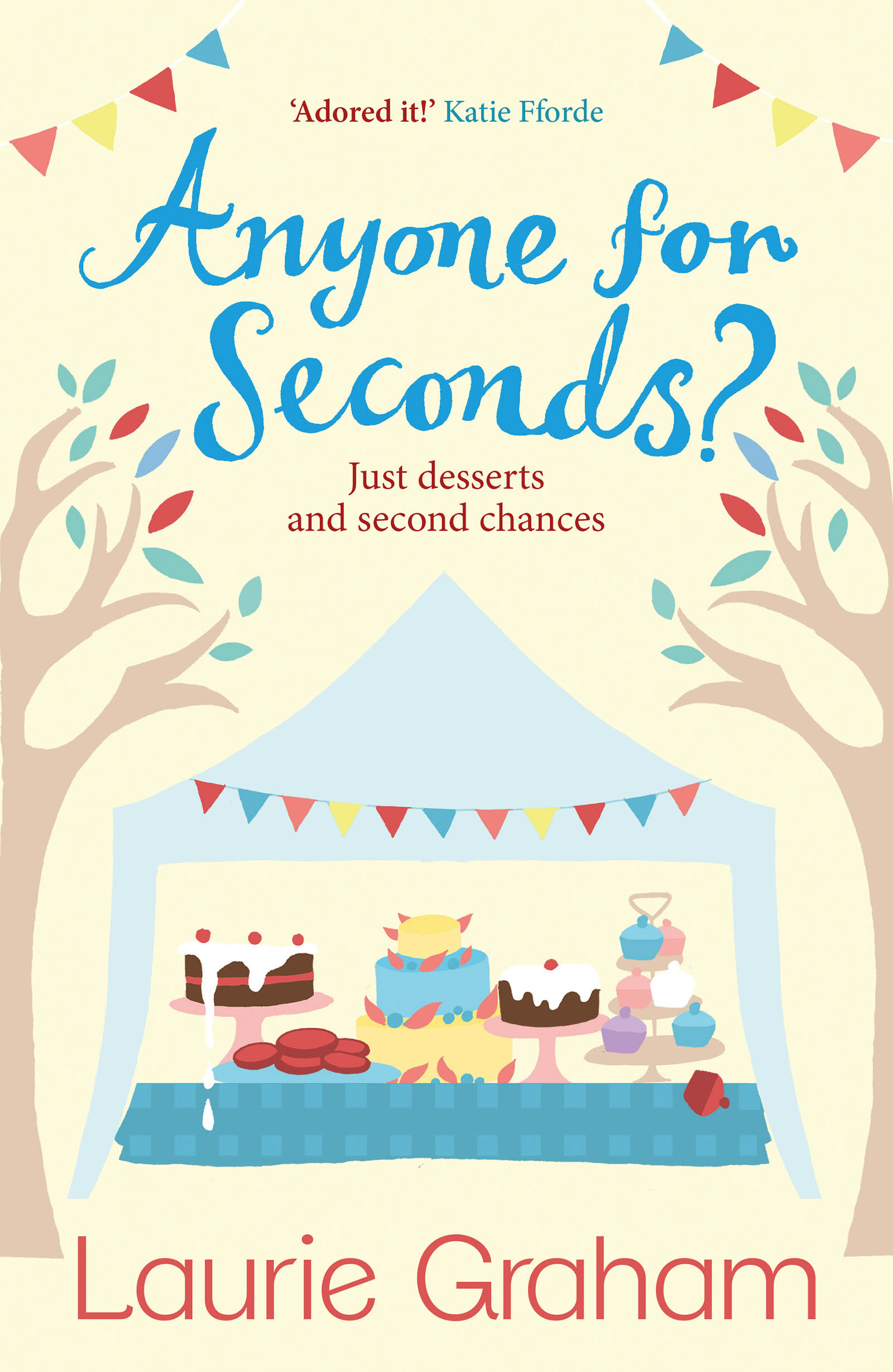
Book Review: Anyone for Seconds?

9781784297985Anyone for Seconds? is a follow-up book to Laurie Graham’s first novel about TV chef, Lizzie Partridge. Perfect Meringues came out twenty years ago, so it’s been a long wait, but worth it as Lizzie is a heap of fun.

As the story begins, Lizzie is feeling like she’s on the scrap-heap. Her former boyfriend Tom, such a nice chap, seems to have made domestic arrangements elsewhere and she’s never resurrected her TV career since that on-air food-fight in Perfect Meringues. Now Global magazine has just axed her What’s Cooking? column. It’s the last straw. In a desperate bid to be missed, Lizzie heads for the train station and on a whim lands up at a hotel in Aberystwyth.

It’s November, so the seaside town doesn’t have a lot of sightseers. There is a furry conference on, though, and before her return a week later, Lizzie hooks up with a racoon with connections to her past. Back in Birmingham, it’s as if she never left: her elderly mother still ignores her, obviously preferring her younger brother Philip; she has to make appointments just to talk to her high-flying lawyer daughter, Ellie; there’s a mouse in the kitchen and the bills are piling up.

Some chance encounters and a few random events shake up Lizzie’s life so that by the end of the book there’s a promise of new beginnings. Along the way, there are plenty of laugh-out-loud moments. Anyone for Seconds? is such a fun read and it reminded me of what I liked so much about Graham’s contemporary fiction. Here’s why you should read it:

  • Lizzie Partridge knows her grub, so there are plenty of interesting food references, if you like that kind of thing. I do.
  • Lizzie is sixty-four. How many heroines do you know who are that age? But she’s terrific in so many ways, which is just as it should be – being sixty-four doesn’t stop her from having a go at romance and taking advantage of new opportunities. Not that this should be surprising. If you read Graham’s Dog Days and Glen Miller Nights you’ll know what I mean.
  • There’s a real feel for the Midlands tone of voice. You can hear the characters speaking without any annoying dropped consonants or quaint expressions. It just seems to happen in your head.
  • Graham is really good at dialogue, which makes the story bounce along. There are numerous phone calls, family dinners, and other verbal to-ings and fro-ings, including a pilot for a TV chat show.
  • Like everything Graham writes, the prose is sparkling, sharp and witty – humour guaranteed.

Four out of five for me; oh, and I wouldn’t pass up a third helping, either.