Book Review: Resurrection Bay by Emma Viskic – introducing an unforgettable new sleuth

After such a run of historical novels, I was more than ready for a good, meaty mystery and what better than some Aussie Noir. I’d been meaning to pick up the first in this series for a while because I’d read good things and the idea of a hearing-impaired private investigator sparked my interest. Calum Zelic has been profoundly deaf since a childhood illness. Now in his thirties, he’s divorced and running a private investigation company. Mostly it’s small stuff, like the case he’s got now: the theft of cigarettes in bulk from a warehouse.

Caleb is interesting because he pretends he can hear just as well as anybody else, picking up what he can from lip reading, and signing with the people who know him better. And although Caleb has a talent for reading people through their body language, it’s just as well his trusty side-kick, tough-talking ex-cop, Frankie, is there to pick up anything he’s missed. The two create some terrific dialogue as they are always sparring with each other.

When his childhood friend, Gary, is murdered in an unspeakably violent way, Caleb is both grieving and flung into danger. Gary, a policeman, has been helping Caleb with his case – maybe it’s more than just cigarettes going in and out of that warehouse. Before his death he sent Caleb a text warning him about a man named Scott. Next thing you know, Frankie has gone missing, Caleb’s running for his life and turns to Kat, his ex-wife for help. The two hide out in Resurrection Bay, Gary and Caleb’s childhood home.

In Resurrection Bay we get snippets of Caleb’s childhood, and meet Anton, Caleb’s dodgy brother, who has done time for drug-related crime. Anton says he’s turned his life around, but can you ever trust an addict? We have some interesting dynamics between the two brothers, while Caleb still carries a torch for Kat. So with the case and all, he’s a bundle of conflicting emotions.

Viskic has created a pacy crime thriller but what kept me turning the pages was the smart dialogue and quirky characters. Caleb is constantly on the receiving end of a pasting, but somehow manages to keep going. He plays a cat and mouse game in several nail-biting scenes, and unable to rely on sounds, uses his remaining senses tuned up to the max. This makes for some very dramatic moments all the while propelling Caleb to a gritty showdown and a few twisty surprises.

My only gripe was that the ending just seemed to be a little too much – the violence and the twists. A little over-egging of the pudding perhaps. Although this is probably not uncommon in this genre and the book has garnered a bunch of awards. Overall, Resurrection Bay is a great start to a new series, and I will be happy to check out the next books because Caleb is such a brilliant creation. I even developed a hankering to learn sign language. This book gets a four out of five from me.

Book Review: The Bell in the Lake by Lars Mytting – an engrossing start to a promising historical trilogy

This is another spell-binding read by the author of The Sixteen Trees of the Somme, a terrific book which I reviewed last year. I felt the urge to pick up The Bell in the Lake when I saw that the sequel has just been released. I often seem to be one book behind. Anyway, I expected great things here and for the most part I was’t disappointed.

The Bell in the Lake follows three main characters and takes place largely in the remote Norwegian village of Butangen. It’s 1880 and the new pastor, Kai Schweigaard, is struggling to come to terms with the desperate poverty of his flock, the traditions and superstitions that hold them back and a church that is no-longer fit for purpose. In winter it is so cold inside that one Sunday an elderly woman dies, her cheek frozen to the wall next to her pew. The opportunity to sell the old stave church to be rebuilt as a historical curiosity in Dresden, and build a new church in Butangen seems a godsend.

Enter German artist and gifted architecture student, Gerhard Schönauer, who is tasked with making detailed drawings of the stave church and overseeing its demolition and transportation across the ice by sleigh. He’s a little out of his depth and the beguiling nature of the church, 700 years old and built in a higgledy-piggledy manner, makes its construction difficult to grasp. At least his host, the pastor, speaks German.

But then there’s the problem of the church bells. Twenty-year-old Astrid Hekne comes from an old farming family fallen on hard times. But centuries ago, her ancestors included two sisters, conjoined twins, who were noted for their beautiful weaving. When they died, their father gave up all the family silver to be poured into the making of two church bells in their honour. The bells have been known to toll warnings of their own accord. Kai has the problem of being secretly in love with Astrid and aware that the sale of the church includes the bells as part of the deal.

Mytting has crafted another well-researched and beautiful novel which captures a time and place that is instantly enthralling. I had never heard of Norwegian stave churches before and the descriptions here, as well as a lost way of life, create a fascinating background. But it’s the characters that really pull you in, and the drama from the dilemmas each faces, their decisions and their consequences. Though certainly the story isn’t the twisty jigsaw puzzle that made Sixteen Trees such a hypnotic read.

In spite of this being the first in a trilogy, which often means there’s some unfinished business to be developed in the next book, The Bell in the Lake has enough emotional power to make it a very satisfying read and leaves you wanting to know what happens next. I’m giving it a four out of five and very much looking forward to the next book, The Reindeer Hunters.

NB: If you have yet to read The Bell in the Lake, please avoid if you can reading the blurb for the sequel – it contains a fairly jaw-dropping spoiler.

Book Review: V for Victory by Lissa Evans – a witty, heartwarming read about the war at home

I seem to have a thing for historical novels at the moment and I’m lucky to be spoilt for choice. This novel loosely follows on from two other books by Lissa Evans: Crooked Heart and Old Baggage, both of which are terrific reads. The main character who features in all three is a boy called Noel who only appears briefly in Old Baggage, but is a young evacuee in Crooked Heart when Vee takes him in.

Vee has had a hard upbringing and knows the value of looking after yourself, with an eye over your shoulder in case someone catches you out. She’s a grifter in the earlier book, and now she has as secret as well as a new name, masquerading as Noel’s aunt, a Margery Overs. It’s the only way she can still be Noel’s guardian, and the two are inseparable.

In V for Victory, Noel and Vee are living in Hampstead, in the house where Noel lived with Mattie, an elderly former suffragette and Noel’s godmother (and also the main character in Old Baggage). Mattie has left a lasting impression on Noel, making him an eager student and likely to quote chunks of literature and even Greek at any moment. It might make him sound a trifle old for his fifteen years but his bright, cheery curiosity soon wins people over.

Such as Winnie, the chief fire warden he meets when out trying to buy a textbook from a recently bombed stationery shop. Winnie’s story is a subplot loosely threaded with the main story and gives a glimpse of the experiences of women left behind by husbands in the forces that they hardly remember.

Winnie’s Emlyn has been in a POW camp since Dunkirk. Now we’re approaching the end of the war, she’s wondering what it will be like to see him again, dreading the mail in case there’s another boring letter outlining imaginary colour schemes for an imaginary house, or garden plans. In the meantime she’s become a confident and able young woman who’s found her feet with her war work, emerging from the shadow cast by her glamorous twin sister.

But the main story focuses on what happens when Vee witnesses an accident involving a US Army truck driver and has to report to the coroner’s court. Vee is terrified of having to lie under oath that she’s Margery Overs. But there’s a happy outcome when she becomes the recipient of treats from the US Army stores and invitations to go out with defendant, Corporal O’Mahoney. You can’t help feeling Vee’s secret will be discovered sooner or later, though.

But most of the fun in this book centres around the odd-bod bunch of boarders Vee has taken in to make ends meet. She selects them carefully so that they can double as tutors for Noel, in place of school. Dr Parry-Jones teaches Noel chemistry, biology and ‘accuracy’ (her steady gaze seemed to see and expect only the truth); Mr Reddish, who once dreamt of a stage career teaches literature and is always on the brink of a recitation; Mr Jepson, a journalist who lost an ear in the previous war, takes care of history and mathematics. Dinner time conversations are always a hoot.

Similarly, there’s plenty of lively banter between Winnie and her fellow wardens in their Post 9 Nissan hut. Evans has such a knack with dialogue, it is easy to imagine these characters and what they sound like. And the wartime drudgery: making meals go further out of rations (fortunately Noel is an inventive cook and they have chickens); the lack of heating; the queuing; the interrupted train services; the end of war fatigue. Not to mention the constant listening for V-2 rockets which fall from the sky with little warning.

It all comes together in a book that captures the time with humour and empathy – a delicate balance to get right – and adds up to a perfect wartime novel. There’s plenty of competition in this genre, but V for Victory stands out for its quirky scenarios and unlikely heroes. I hope Evans has a few more up her sleeve. This one gets a four and a half out of five from me.
Book Review: A Woman Made of Snow by Elisabeth Gifford – a dual-narrative of family secrets and Arctic adventure

Here’s a new novel from an author with a knack for dramatic Scottish settings. A Woman Made of Snow weaves together two stories, the first set just after World War Two. Caro has a history degree from Cambridge and a new baby. She had envisaged a new life with hubby Alasdair in London, both of them with university posts, but little Felicity came too soon. Now she’s stuck near Dundee with an interfering mother-in-law who keeps dropping in with well-meaning advice. Caro feels she has to have things tidy all the time just in case Martha appears.

Rents in town are expensive so the young family have a cottage on the family estate. When a pipe bursts and the cottage is flooded, there’s nothing for it but to move in with Martha who’s rattling around on her own in a picturesque castle. A skeleton uncovered by builders after the flood sends shockwaves, and Caro and Martha can’t help wondering if it isn’t Alasdair’s great-grandmother whose name has been scratched out of all family records. Caro uses her skills as a researcher to uncover the story of the woman and speculates who the skeleton might be.

Meanwhile the story switches back to the late 1880s and we meet Charlotte who is in love with childhood friend, Oliver. Only Oliver is in love with Charlotte’s sister. A night on the tiles to soothe an aching heart leads Oliver to sign up as ship’s surgeon on the Narhwal, a whaling ship setting off for the Arctic. How the two plot threads are connected to the missing great-grandmother and the skeleton in the garden make for a pacy plot unravelling to a dramatic climax.

While this all adds up to an enthralling story, Gifford takes time to develop a number of themes, including the awkwardness that often arises between a devoted mother and her daughter-in-law. There’s some class snobbery – Alasdair’s sister Pippa describes Caro as ‘suburban’ as if that’s one of the worst things imaginable. You really feel for Caro, missing her career, managing a baby in a chilly castle, and not fitting in. Other issues such as colonisation and racism get a look in, revealed gently through the story.

But mostly I raced through the book to find out what happened. There’s tragedy of course, not surprising since there’s a body in the garden, and my heart-strings were well and truly tugged. However I couldn’t help feel that this might have been a more powerful novel if the two malefactors in it – one for each timeframe – weren’t quite so obviously twisted, and the ending a little less all tied up and perfect. It’s just a small complaint, as overall this is a solid, entertaining novel, but I feel a little disappointed. So it’s a three and a half out of five from me.

Book Review: The Visitors by Caroline Scott – The Enchanted April meets Birdsong with a smidgeon of du Maurier

Sometimes you just pick up a book for no particular reason and it’s a very pleasant surprise. The Visitors has a gorgeous cover, so that was probably what attracted me, and luckily it turned out to be quite a find. Don’t judge a book by the cover – how often have we heard that maxim, but the truth is that we often do.

This book is Esme’s story. It’s the early 1920s and Esme’s a war widow and housekeeper to fussy, but kindly, Mrs Pickering in Yorkshire. Mrs P sends Esme off to Cornwall – her doctor’s recommended rest and recovery after Mrs P had a bout of flu. Esme is to make sure the house belonging to her brother is suitable for an extended stay over summer. Gilbert, himself a war veteran, has set up a kind of seaside retreat for himself and several other men from his unit, all in need of healing. They throw themselves into art and gardening and it’s all a bit too Bohemian for Mrs P’s tastes.

Esme doesn’t hit it off with Sebastian, sent to the station to fetch her – he thinks she’s been sent to snoop – but the others soon charm her. There’s Clarrie who makes delicious meals from the garden’s bounty; Hal who doesn’t speak but who puts together miniature ships in bottles; and then there’s Rory, somewhat wild and unkempt looking, in whom Esme discovers a fellow nature lover. Esme herself writes a weekly nature diary for the Huddersfield Courier, so there are plenty of descriptions of birdlife, flowers and the variations of the weather.

Soon we’re swept into a gorgeous setting, and this in itself would be a pleasant place to be as a reader, but there’s the war and its legacy to be dealt with. Esme is still grieving for her husband Alec, killed in 1916, and as he was from Penzance is hoping a visit to his childhood home will fill in a few gaps. She’d hardly got a chance to get to know him before the war began and off he went.

But the war has its secrets and there are a few big surprises that make the story much more than a charming summery read. I found myself tugged emotionally here and there as scenes from the war – Rory also puts pen to paper – are woven through the plot. Meanwhile Esme’s own personal discoveries create a shift in her feelings and open her up to new possibilities. The plight of the women left behind with the loss of so many young men, hovers in the background. It all comes together beautifully, with some great characters in Esme and Rory, but also Mrs P and Gilbert and even Sebastian, all of whom are interesting company.

And yet it’s probably the setting of Cornwall that was most memorable for me, not just the pretty scenery, the weather, the flowers and the sea. There’s the history and folklore as well. Reading The Visitors, it’s hard to imagine who wouldn’t want to up-stakes and move there. It reminded me a little of The Enchanted April by Elizabeth von Arnim with its characters similarly finding an idyllic place to heal. All in all the book was a pleasant surprise and I shall be hunting out more from Caroline Scott. This one’s a four out of five read from me.

More New Books for the Must Read List

A bumper crop of great new books seem to be arriving in bookshops this year. Here’s a few that caught my eye.

A Tidy Ending by Joanna Cannon
Oh, joy! A new book from the author who brought us The Trouble with Goats and Sheep and Three Things About Elsie. ‘There’s something nasty lurking behind the net curtains on Cavendish Lane’. Linda escaped ‘dark events’ of her Welsh childhood, but now life seems a bit tame; married to Terry, fish fingers for tea. Only Terry is often late home, while girls are going missing in the neighbourhood. Should Linda be worried? You can expect Cannon’s trademark dark humour, an original plot plus a twist. I can’t wait. This one’s out in May.

Booth by Karen Joy Fowler
This is the author who brought us We Are All Completely Beside Ourselves which won a Booker Prize nomination and which really tugged at the heartstrings. There is only one person who springs to mind when I hear the name Booth – the John Wilkes Booth who assassinated Abraham Lincoln. Fowler’s new novel explores the backstory – the upbringing that lead Booth to make the decision that was to go down in the history books. ‘Booth is a riveting novel, focused on the very things that bind, and break, a family’ – says the blurb. The paperback came out last week.

One Day I Shall Astonish the World by Nina Stibbe
And now for something completely different. Nina Stibbe is the author of the comic Lizzie Vogel trilogy that kicked off with Man at the Helm. Stibbe’s letters home to her sister when she was a nanny became Love, Nina: Dispatches from Family Life and then a charmingly quirky TV series. The new stand-alone novel promises a funny but life-affirming story about friendship and the paths it takes through the course of a lifetime. This book’s due out next month.

I, Mona Lisa by Natasha Solomons
And yes, there is only one Mona Lisa, and this book is about that Mona Lisa. The blurb says it’s a ‘deliciously vivid, compulsive and illuminating story about the lost and forgotten women throughout history’. The story begins with the painting sitting around in Leonardo’s studio and where it ends up in the centuries that follow. Solomons can be relied on to write a compelling story and does her research. The Gallery of Vanished Husbands is another book that takes a look at the art world and which I can highly recommend. I, Mona Lisa was recently released in paperback.

Chorus by Rebecca Kauffman
I loved the simple, honest storytelling of The Gunners, a story about a group of friends who separately feel the burden of guilt for something that happened to them as children. Chorus is a story about a family, the seven Shaw siblings, and two life-altering events, what divides them and what brings them ultimately back to each other. Kauffman has been compared to Elizabeth Strout and Alice Munro, and I’m sure Chorus will be worth picking up. The hardcover is already out; the e-book due in July.

The Reindeer Hunters by Lars Matting
If you haven’t read The Bell in the Lake yet, it’s time to get a move on as the second book in the trilogy will now be hitting the shelves. The setting sweeps us back to 1903 and a remote Norwegian community, home to solitary Jehans. Separated from his family he lives off what he can catch. When he kills a massive reindeer he meets an enigmatic hunter. There’s a mysterious tapestry woven by conjoined twins and a Pastor seeking redemption as a new age dawns. The blurb says this is ‘a grand and thrilling novel about what it takes to live in and embrace a new era.’ It’s sure to be a powerful and compelling read from a terrific storyteller.

Book Review: Trio by William Boyd

I didn’t know quite what to expect when I stepped into the world of Boyd’s latest novel, Trio. One thing I might have guessed is that its three main characters will be put to the test. Set in Brighton in 1968, the story centres on the making of a film with a ridiculous title. There’s remarkably little glamour as we’re taken behind the scenes – Brighton isn’t exactly Hollywood. The narrative switches between each of three main characters who are connected with the film.

Talbot Kidd, in his sixties, is the reserved, genial film producer who following the recent law reform decriminalising homosexual relations, is wondering about his own sexuality. But everyone keeps coming to him with their problems – film stock is going missing, the leading actress won’t work with the couple of acting hacks hired to play her mother and father and could it be true that his business partner is fleecing him? And then there’s that blasted song he hears everywhere he goes about the park with the cake left out in the rain, the sweet green icing flowing down … you know the one.

The leading actress, lovely Anny Viklund, is an up-and-coming American star with a poor taste in men. Her current boyfriend is a French freedom-fighter philosopher but before that she was married to an anarchist-terrorist and now the FBI want to talk to her. Luckily her co-star Troy offers easy, uncomplicated sex, and she’s got a stash of uppers and downers to keep her on an even keel. But she can’t help wondering why she has no control over her own life.

The third narrator, Elfrida Wing, is married to Talbot’s director, Reggie Tipton, a serial philanderer suddenly requesting everyone to call him Rodrigo. Elfrida is a famous novelist who hasn’t written a book for ten years, and passes her days as an accomplished secret alcoholic. It doesn’t help that the literary world described her as the new Virginia Woolf, an author she feels she has little in common with. When she comes up with the idea of writing a novel about the last day in Virginia Woolf’s life, she’s suddenly on fire again. But can she get on top of her drinking?

…and she soon stood on the high embankment looking down on the slow-moving stream, wondering if this were perhaps the actual point where Virginia had filled her coat pocket with a heavy stone and then waded in. Where had she learned that fact about the stone? She searched her memory. That’s right: Enid Bagnold had told her at a party years ago.

Boyd explores each of these characters’ flaws, foibles and secrets, yet I found each of them oddly likeable. He captures them at a time of crisis in their lives and keeps pouring on the pressure. This makes the story gallop along together with the lengths each of them go to maintain their secrets. Bubbling underneath is a gentle wry humour, particularly with Talbot and Elfrida, a kind of world-weariness English characters sometimes have, as if they are on the outside of themselves looking in.

Of course, Boyd is happy to throw barbs at the self-important figures that people the film and literary worlds. There’s also the frivolity of life in Britain in 1968 while across the channel the student riots were on the go and political change in the air. Name dropping of well-known writers and entertainers adds to the fun. But there are serious issues that each character has to struggle with, making this an amusing but also a very satisfying novel. But with William Boyd I wouldn’t have expected anything less. A four and a half out of five read from me.

Book Review: On Hampstead Heath by Marika Cobbold

Marika Cobbald’s new book On Hampstead Heath is a witty comment on our times, a kind of comedy of errors, with an unlikely heroine at its heart. Thorn Marsh is a news editor, a passionate believer in the role of the news media to uncover the truth and to keep the public well-informed. At forty-four, her career is everything, but when her paper is taken over by a media conglomerate she is shifted from the news desk to the midweek supplement to write The Bright Side. A prickly, curmudgeonly individual, she is the last person to write happy, inspiring stories.

Along with Thorn, there’s a bunch of quirky characters to enjoy. Nancy, Thorn’s mother who never loved but she has her reasons; Mira, Thorn’s new editor, who gives Thorn a good run for her money when it comes to dry one-liners; Lottie, Thorn’s neighbour, a Holocaust survivor and secret dope smoker and who is more like a mother figure than Nancy; Lottie’s niece, Jemima, disapproving and disappointed.

She turned an accusing eye on me. ‘The media have a great deal to answer for in all of this, affording celebrity status to people whose main contribution to society is putting their heads in a tank of maggots. My Year Fives thought Florence Nightingale was a contestant on Love Island.’

‘I only recently found out that a Kardashian isn’t a rifle,’ Lottie said, and finished her gin.

Desperation and alcohol lead Thorn to make up a story using a photo snapped on Hampstead Heath curtesy of her still friendly ex-husband, Nick.  Suddenly the world is sharing and retweeting her story about The Angel of the Heath, a flame haired apparition on the Viaduct Bridge, who had recently turned Thorn’s head rescuing her neighbour’s dog.

Lies pile up on top of lies as Thorn digs a hole from which it seems impossible to extricate herself. She has only herself to blame, and pours out her story to Nick and Lottie. She learns the hard way that getting the best story isn’t the only thing in life.

While there’s a good deal of desperation, Thorn is such a likeably difficult character and a dry, dark humour bubbles through every sentence. Thorn grows from someone who only lived for her job to someone who learns to love not only others but herself. But it’s never treacly or too serious and the ending is superb.

I loved On Hampstead Heath, but then I’ve always really enjoyed Cobbold’s books. But it has been a long stretch between the new book and her last one – ten years in fact. Hopefully we won’t have to wait as long for her next novel. On Hampstead Heath gets a four and a half out of five from me.

Book Review: The Last Romantics by Tara Conklin – sibling relationships under the spotlight

This is one of those books that you think will be about one thing and it turns out to be something completely different. The back-cover description talks about a tragedy one fateful summer, but exactly how that tragedy evolves doesn’t emerge until much later. And then there’s the title. Mmmm. I guess it might be true that we all read a different book when we pick up the same novel, but The Last Romantics is beguiling on several levels.

Not that this is a bad thing. On the contrary, I’m quite keen to be beguiled now and again, and The Last Romantics is also very appealing. The story opens in 2079, when we meet Fiona Skinner for the first time. She’s a very elderly famous poet onstage at a writer’s event before an audience of adoring fans. The young interviewer asks Fiona about the origin of her most famous love poem, a question she’s avoided for years. But it takes her back to the beginning, when she was a young child and the novel slips into the distant past.

We’re back to 1981, and Fiona describes her family following the death of the father. Fiona’s only four, but her brother, Joe, is old enough to be hurt and furious, while their mother is lost, unable to react at all. Two older sisters make up the family, Caroline who is gentle and sensitive, while eldest sister Renee at eleven takes on the responsibility for them all. She’s the one who makes sure that homework is done, clothes are washed and there’s food on the table, while their mother shuts herself away in her room for the best part of three years, a time that becomes known as The Pause.

We follow this family over the decades but mostly it’s about the relationship between Fiona and Joe who was her childhood hero. You can see the effect The Pause has had on all of them on the kinds of people they become, but always it is Joe who is the most fragile, swinging from being the man with it all to being on the brink of disaster. Fiona is one of those characters who is a watcher and observer, cataloguing her sex life with different men in a hugely popular blog. She’s the perfect narrator as she analyses her family interactions and looking back sees where she went wrong.

In a way this is a story of regrets, but families can be tough and eventually forgive and rebuild. The book has that gentle humour that you see with siblings – the elbow digs and eye-rolling. And the early pages capture the family through Fiona’s young eyes, the meaningful moments and human frailty caught in the gaze of an innocent. It is a novel that ebbs and flows as the years progress, a little flagging at times and full of events at others – which makes it more like real life in some ways. There’s sadness in the book but you can see how this inspires the poet that Fiona becomes.

I really enjoyed the book over all. It’s real and yet has an ephemeral quality as Fiona, an at times unreliable narrator, misreads the people who love her. Love is a key theme, in all its forms but family love mostly, and what happens when you put it to the test. If you want a different kind of love story, The Last Romantics is well worth picking up. It’s a four out of five read from me.

New Books for the Must-Read Pile

Here are the books I can’t wait to get my hands on in the coming weeks.

Mother’s Boy by Patrick Gale
One of my favourite authors, Gale is such an empathetic writer who also captures the little details that create such interesting and well-rounded characters. Throw in a decent helping of humour and you’ve got the perfect novel in my book. Here, the mother’s boy of the title is Charles, the son of two people caught up in World War I, a war that ultimately takes his father. The relationship of the boy and mother is a key part of the story. Charles appears to have an exceptionally gifted mind, but that’s not all he has to deal with as another war looms. I loved Gale’s historical novel, A Town Called Winter and this one has already had some glowing reviews..

The Twyford Code by Janice Hallett
I really enjoyed The Appeal, an original and beguiling mystery novel which came out last year. Clearly this is an author with a terrific imagination and the new book looks similarly intriguing. We’ve got mysterious annotations in a children’s book by a disgraced author that could be a secret code. There’s a forty-year-old disappearance and the ex-con who connects the two and who is determined to solve the mystery – only there’s something that he can’t quite remember. What can it all mean? Definitely I’ll have to read on to find out.

The Slowworm’s Song by Andrew Miller
Miller writes such a variety of books including historical novels, contemporary fiction, and a huge variety of settings. They don’t come along all that often, but they’re always worth waiting for. Here we’ve got a recovering alcoholic trying to rebuild his life in Somerset and in particular his relationship with his daughter. He’s an ex-soldier and his story involves atrocities that happened in Northern Ireland and an enquiry that threatens his future with her. Miller’s last book was At Last We Shall Be Entirely Free, which won the Highland Prize, so I will be keen to read this one when it comes out in March.

The Locked Room by Elly Griffiths
It wouldn’t be a reading year without a new Ruth Galloway novel. If you haven’t discovered this series you have treats in store, particularly if you like atmospheric and witty mysteries with a dash of romance. Ruth Galloway is a forensic archaeologist in Norfolk and the new book has her chum, DCI Nelson, looking for a killer when a Covid lockdown hits. I enjoy the characters in this series so much – Ruth’s matter-of-fact intelligence and Nelson’s blunt Yorkshire demeanour are always a delight. Throw in an archaeological setting and some twisty plotting and you have the perfect mystery read.

French Braid by Anne Tyler
Mercy Garrett is determined to eliminate clutter from her life, gradually moving into her studio now that her kids are grown up. But the clutter of family life and all the related memories are hard to ignore, particularly one holiday in 1959 that has generated ongoing repercussions for the Garretts. Sounds like we’re in classic Anne Tyler territory here: the people and random events that create a family history, told with humour and kindness. I’m always in my happy place with Tyler and can’t wait to see this one when it comes out in March.

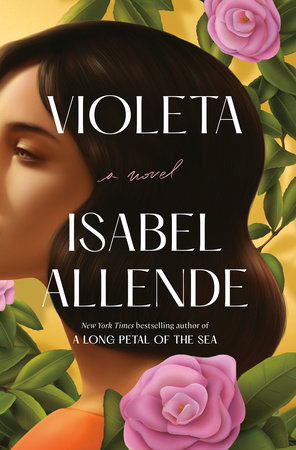
Violeta by Isabel Allende
I so loved Allende’s last book, A Long Petal of the Sea, my first ever Allende, having avoided her for years thinking she only wrote magic realism. Obviously I’ve since had to revise my understanding. Violeta lives through the major events of the twentieth century – kicking off with the Spanish flu, the disastrous effects of the Great Depression, and a world war to name but three. What promises to make the book so appealing is the character of Violeta, who according to the blurb is passionate, determined and blessed with a sense of humour. I’m sure I’m going to love this one.