Book Review: The Night She Disappeared by Lisa Jewell – another stylish psychological thriller from an always-reliable author

I often pick up a Lisa Jewell novel when I want a light, engrossing read. The Night She Disappeared is one of those books where the rich girl from a loveless family makes friends with the much loved poor girl with problems – and disaster ensues.

Tallulah lives in a village with her divorced mother and brother and is doing fine until an unplanned pregnancy has her reconsidering her options. She’s barely out of school so enrols at the nearest polytechnic, a bus ride away and organises her life around her baby. She didn’t plan on living with her boyfriend, Zach, but he is insistent he wants to get back together and she unbends and lets him move in with her at her Mum’s home. Mother, Kim is delighted as she sees in Zach someone who adores her daughter and will be a good father.

But Tallulah meets Scarlett at the bus stop – glamorous, dangerous looking Scarlett, who is at the same college, doing art to Tallulah’s social work course and the two become unlikely friends. Scarlett lives at Dark Place, a large house across the woods that has a dark history, but has had lavish amounts spent on it. As the weeks and months roll by, Tallulah compartmentalises her life between college, home life with her family and Zach, and secret meetings with Scarlett.

The story flips between Tallulah’s story and a year or so later when Sophie moves into the village with her partner Shaun. He’s the new head teacher at Maypole, a private school a mere woodland stroll from Dark Place, where Tallulah and Zach were at a party they night they disappeared. Sophie is an author of cosy mysteries, but here she’s suddenly aware of an unsolved mystery right on her doorstep.

When Sophie finds a sign saying “Dig here” and an arrow, she can’t help herself. What she finds soon draws her into Tallulah’s story, as well as meeting Kim working the bar at the local pub, a woman she wants to help. But in the background there’s her own relationship to consider. Shaun is obviously stressed. He has only chosen the job at Maypole to help fund the expensive schooling his ex-wife has insisted on for their daughters. And he and Sophie have never lived together before. They used to enjoy London so much too. Raking up what happened on the school’s doorstep isn’t going to help Shaun settle in to his new job.

Meanwhile Kim is battling away, trying to manage the baby as well as keeping alive her hope for Tallulah’s return. There are a bunch of minor characters who have a role in what happened and who could be suspects in the case. There’s a nice policeman who listens and does what he can. The story moves to an astonishing and gripping ending and I’d be amazed if you manage to put it all together before it’s all revealed. It might even give you goosebumps.

I am happy to say that The Night She Disappeared did its job; it’s a stylish, engaging, relaxing read. The main characters who tell their story are easy to empathise with, even if they do silly things or fail to stick up for themselves. And the plot is nicely measured out between them to keep you hooked. I’m not sure I enjoyed it as much as others I’ve read by Jewell, but it’s still an easy four out of five stars from me.
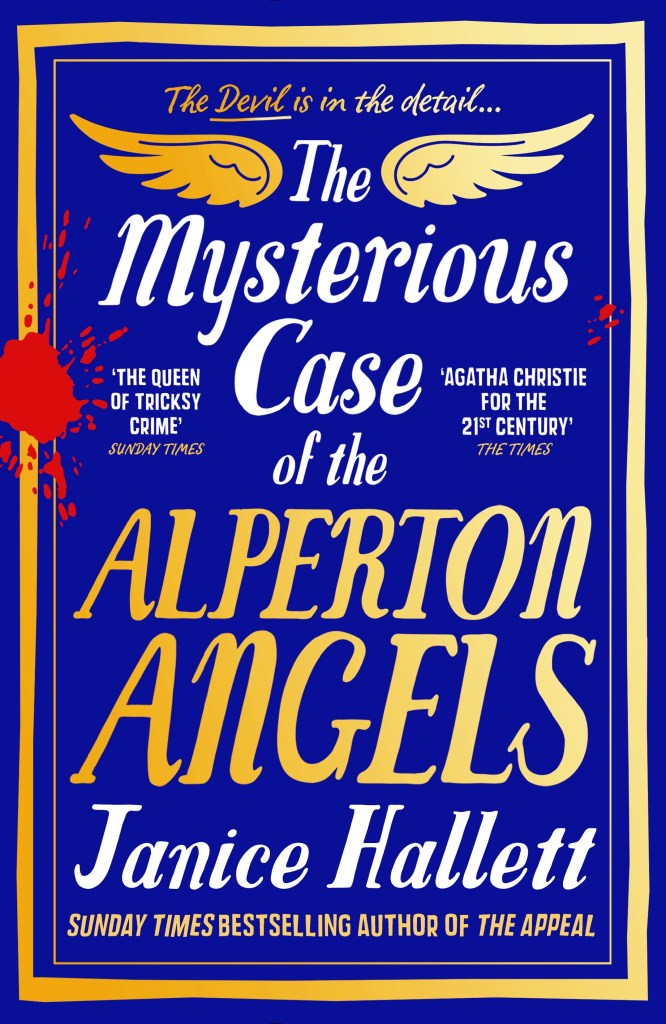
Book Review: The Mysterious Case of the Alperton Angels by Janice Hallett – another twisty mystery that will have you hoodwinked

I’m beginning to know what to expect every time I pick up a novel by Janice Hallett. First of all it will be told in an unusual format – often in emails and texts or transcriptions from recorded conversations. The other thing is that the story will have me totally hoodwinked. Normally, with mystery novels, I have a go at trying to solve the mystery from the clues presented, considering the characters and their motives, their histories. But for this novel, I didn’t bother trying, just went along for the ride.

The story begins with documents from a safe deposit box relating to the publication of a book. We follow Amanda Bailey, a journalist and writer of true-crime books, when she is commissioned to write a book on Alperton Angels. This was a cult lead by the self-titled Gabriel Angelis, now residing in prison for the murder of a waiter. Eighteen years ago, the cult ended in the deaths of several of its members, and the miraculous rescue of a baby, which the cult believed to be the Antichrist.

There is no doubt that Gabriel Angelis is an evil man, and that prison is the best place for him, in spite of his pleas that he did not kill anyone. But what he did do was lure vulnerable teenagers into his orbit, in this case Holly and Jonah, who survived the ritual bloodbath eighteen years ago, Holly saving the baby from sacrifice when the stars were apparently in alignment.

Eighteen years later, where is that baby now? That is going to be the main focus of Amanda’s book along with the whereabouts of Holly and Jonah and what they’ve made of their lives since. But a rival publishing company is also interested in the Angels, and have chosen Oliver Menzies to write another book on the case.

Oliver and Amanda were on the same journalism course twenty odd years ago, a course that Amanda left abruptly without qualifying. And when her publisher suggests that she and Oliver work together to begin with so that they can ensure their books cover different territory, Amanda is not a happy camper.

It’s not easy getting people to talk about what happened, but one thing that does come across is that Amanda is a consummate professional and slowly the facts slot into place. Oliver just bumbles along and the What’sApp banter between them adds plenty of entertainment. This is just as well as a book of emails and texts would soon pall if Hallett didn’t manage to make them lively. So too are the transcriptions typed up by Ellie Cooper for Amanda. Ellie is a kind of sounding board for Amanda’s discoveries and offers lots of good thoughts, plus her asides as she transcribes Amanda’s phone-recorded interviews are a hoot.

But it’s the plot that really has you hooked, packed with twists and turns, and beguiling little details that had the police stumped. What was the deal with that Mini Clubman that ran off the road and disappeared? And those weird newspaper adverts – what did they mean? Hallett really knows how to use red herrings. Towards the end of the book, you suddenly begin to realise what really happened, and start to join the dots and see connections. Suddenly the unbelieveable all begins to make perfect sense.

The Mysterious Case of the Alperton Angels is another diverting read from Hallett but it works best if, as a reader, you enjoy puzzles. We only get to know characters as they reveal themselves in their emails and texts – we don’t even know where they live, or even a lot about what they look like. But perhaps Hallett deliberately impedes the reader’s empathy for them because of how untrustworthy many of them are.

I think Agatha Christie would approve of Hallett’s style. How many times have I read Poirot remind Hastings not to take too much at face value. How you can never be sure that a witness isn’t lying. And it’s the same here. The Mysterious Case of the Alperton Angels is a modern take on the classic detective novel. I can only gaze on and admire its cleverness. But cleverness isn’t everything in a book and I like a bit more from my crime fiction; I like to feel something too. So its a three-and-a-half star read from me.

Book Review: The Murder of Mr Wickham by Claudia Gray – a cosy mystery that brings back the characters of Jane Austen

You may have noticed there’s quite a collection of novels based on one or other of the six completed novels of Jane Austen. I have read a few and enjoyed them greatly. But Claudia Gray takes this genre to a new level with her delightful mystery, The Murder of Mr. Wickham.

Honestly, if anyone in Jane Austen’s ouevre deserved to be bumped off it is surely George Wickham. He’s that rascal that threatened to ruin Lydia Bennett in Pride and Prejudice, as well as spoiling the marriage prospects of her sisters. He’d almost ruined Darcy’s sister as well. In Claudia Gray’s novel, we catch up with Wickham at a house party, not at Pemberley, the seat of the Darcies, but at Donwell Abbey, the home of Mr Knightly and his wife, Emma, from that other Jane Austen novel.

Guests at the house party include Mr Knightly’s old friend Fitzwilliam Darcy, his wife Elizabeth and their son Jonathan, a handsome but socially awkward young man of around twenty. Then there’s cousin Edmund Bertram and his wife Fanny (from Mansfield Park) as well as the Wentworths, Frederick and Anne (from Persuasion) who were renting Emma’s childhood home when a staircase collapsed and urgent repairs required.

Also joining the guest-list are the Brandons, Colonel Brandon that is and his young wife Marianne (from Sense and Sensibility). That just leaves Northanger Abbey, which is represented by seventeen-year-old Juliet Tilney, the daughter of Henry Tilney and Catherine, now a novelist who Emma admires. Emma has taken a shine to Juliet and invited her so that the girl can see new people and a change of scenery. With Jonathan Darcy staying, here’s also a hint of Emma’s propensity to match-make.

So you can see that Claudia Gray has really pushed the boat at to draw on all six novels for inspiration and does a terrific job, throwing Austen’s characters together and seeing what happens.

There’s already a tense atmosphere as Mr Knightly is troubled by the financial losses his younger brother has incurred due to a venture masterminded by none other than George Wickham. The same venture has also caught out Captain Wentworth, losing him a chunk of the money that he won as prizes as a naval officer in the war with Napoleon. It was this money that enabled him to hold his head high against the snobbery of Anne’s family. But without it, he fears he’s let Anne down and they may need to return to sea.

Since Pride and Prejudice George Wickham has had a further twenty plus years to cause misery to the Darcies, and more crimes come out of the woodwork when the bounder turns up at Donwell Abbey to call in some debts. It’s the middle of a stormy night when the murder takes place, the guests all restless and anxious for various reasons.

The only two characters who don’t make the suspects list are young Juliet, who had never met the victim before her visit, and Jonathan Darcy, who spent the night calming his horse in the stables when the storm was at its most severe. They never would have thought of investigating the crime themselves if it hadn’t been for the magistrate of the district, Frank Churchill (remember him from Emma?), who assumes the killer must be among the Donwell staff, or passing “gypsies”. Juliet, in particular, is appalled at the idea of someone going to the gallows unjustly.

The two team up, secretly sharing their findings at midnight in the billiard room, and Jonathan finds it so much easier to talk to Juliet than he might have otherwise, now there’s something practical to talk about. The story has plenty of pace and builds to an unexpected resolution as more and more secrets are revealed. In the crucible of a murder investigation, relationships are tested and new understandings emerge.

I enjoyed The Murder of Mr. Wickham immensely, which has all the wit of an Austen novel, Claudia Gray bringing the characters to life beautifully. The good news is this is the first in what looks like a new series featuring Juliet and Jonathan as unlikely but very appealing sleuths. I’m giving it four and a half stars – the audiobook version is narrated with aplomb by Billie Fulford-Brown – and am keen to see what happens in The Late Mrs Willoughby, which is Book No. 2.

Book Review: The White Hare by Jane Johnson – a haunting country house mystery with a touch of magic

We’re back in Cornwall for another novel set in the 1950s and I was in my happy place listening to this as an audiobook. I often hunt out these evocative country house stories.

The White Hare begins with a family of three arriving to take on a run-down country house with the aim of turning it into a guest-house. Somewhere comfortably-off urbanites might sojourn for a change of pace and some gentle pampering. This is Magda’s idea. In her fifties, Magda is an imperious, demanding and determined woman who won’t take no for an answer.

Her daughter, Mila, passively just does what her mother tells her, hoping to build a home for her and young Janey. But although she has strong feelings, she keeps them in check, because she owes her mother her salvation. A chance for a new start, having been duped by a bigamous husband and left with a five-year-old daughter. Remember, it’s the mid 1950s, when a woman’s reputation was everything.

The house is of course a mess, but in the barn they also discover an unwelcome guest. Jack, the interloper, says he hadn’t meant to trespass; he was just exploring the nearby countryside and would soon be on his way. But Janey has warmed to Jack, and when Jack reveals he can fix their car, and is handy with a hammer and nails, he becomes the women’s saviour when they face one crisis after another.

The locals don’t take kindly to strangers. It is said the house is haunted and when Mila mentions seeing a white hare on the road the day they arrived, all sorts of strange legends start to emerge. Then there’s Jack. He and Mila soon warm to each other, but Jack seems to be harbouring secrets. There’s also a creepy vicar, but fortunately for Mila, friendship and support are on hand from a local healer and her artist girlfriend.

The story follows Magda and Mila’s rocky relationship as they struggle to bring the house into a reasonable state of repair ahead of a lavish New Year’s Eve party Magda hopes will entice acceptance from the locals. The folklore of the area won’t leave Mila alone, and there are odd discoveries that hint at a tragedy involving the previous owners of the house.

To make things even more creepy, Janey seems to have discovered a way of communicating with an otherworldly presence through her toy rabbit. The story builds to a dramatic ending where the real and unreal converge and the present reveals, and can finally bury, past wrongs. The characters of Magda, Mila and Janey are interestingly developed – there’s nothing like adversity to bring people together.

I loved the story – the perfect sort of audiobook, narrated brilliantly by Danielle Cohen – intriguing and full of mystery with a bit Cornish history thrown in. Listening to a book like this takes me back to those old fireside tales that begin with, ‘let me tell you a story’. If you like books by Katherine Webb and Kate Morton, you’re sure to enjoy The White Hare, a four star read from me.

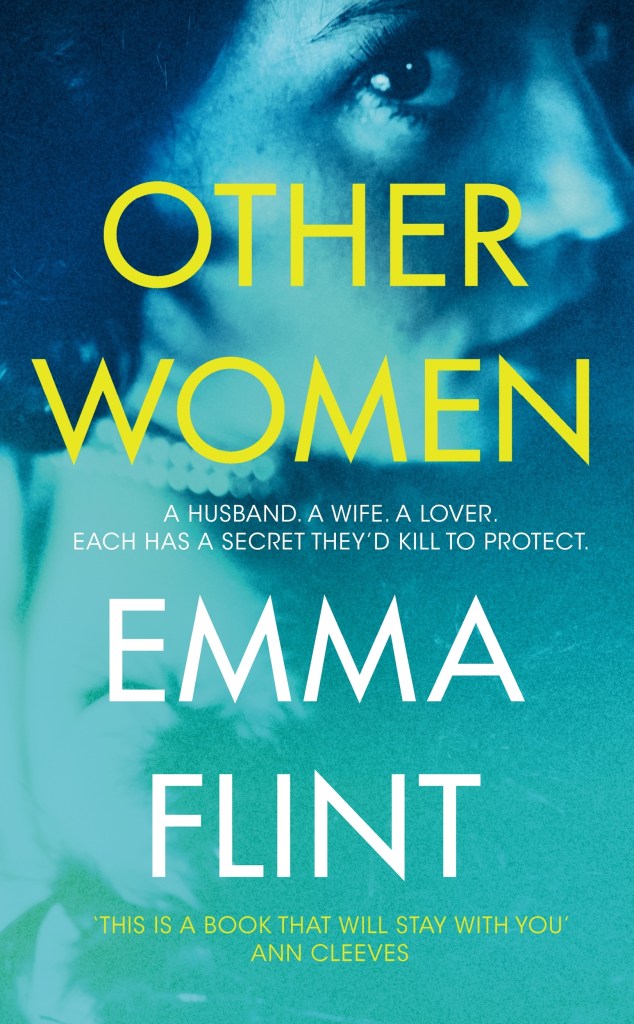
Book Review: Other Women by Emma Flint – a compelling crime story based on true events

I really had no idea what to expect from this novel when I picked it up – the description on the cover – “A husband, a wife, a lover. Each has a secret they’d kill to protect” is more beguiling than informative. Which is a bit of clever marketing probably. But it doesn’t really matter as I was soon caught up in the story which is told from the perspectives of two women.

First we have Bea, who is a working woman in the 1920s, living in a ladies’ club in Bloomsbury. She’s good at her office job and has worked her way up to have some responsibility. At thirty-seven, she feels she’s missed out on marriage and a family, but is happy with her life. She is independent and can afford to treat herself now and then. Her life is sharply compared with that of her somewhat self-satisfied sister Jane, who has married well and is a little sneering of her sister’s London lifestyle.

But at work, everything changes when a new salesman joins the team, the handsome and very charming Tom Ryan. The other girls gossip and flirt with Tom, while Bea keeps her head down and tries to ignore him. But she can’t deny the power of his personality. We follow the affair that develops, how Tom singles out Bea; their shared love of literature and self-improvement. Bea discovers another side to her that she’d mostly ignored, her capacity to love and be loved.

The story interweaves Bea’s story with that of Kate some months later as Kate deals with her husband’s arrest and the court case that follows. She is repeatedly questioned by the police about particular dates and the whereabouts of Tom, while trying to maintain a home for her daughter, and a veneer of respectability. She worries that her landlady will loose patience and they’ll be out on the streets.

I am his wife.
I am only his wife.
This is all I know how to say. To the policemen who come to the house, who take me to the police station, who ask me questions, I say over and over, ‘I don’t understand. I am only his wife.’
And they both look at me – the fat one with the moustache and the thin one with the coarse ginger hair – they look at me as though I am a child they are disappointed in.

Kate is also employed by Morley’s in the office, but at another branch. She needs her work to keep her small family afloat but how to do this with all the police activity, the newspaper interest. Kindly policeman, Inspector Wilde, is a quietly probing interrogator, patient and biding his time.

The court case that develops is based on true events. Emma Flint captures the fascination it engenders in the press and those who crowd onto the the public benches, the prejudices against the victim and the sympathy for the plaintiff. How the case unfolds is a brilliant piece of story-telling, particularly Kate’s role in the revelation of what happened, her feelings as a wife and mother balanced against her need to do the right thing.

Other Women is a haunting novel that brings to life the characters of two women who have been connected by a terrible event. It captures the post-war years and a time when Britain was still recovering from the tragic loss of a so many young men, and what this meant for women in the years following. The writing is exquisite – very atmospheric, evocative and empathetic.

As I began to read the early chapters, I wasn’t sure whether I was going to enjoy Other Women, but Emma Flint makes it all so compelling and believable and I know the novel will haunt me for days and weeks to come. Flint’s a master storyteller and writes with conviction and power. Her earlier book, Little Deaths picked up quite a few nominations for book prizes, and I imagine Other Women might well do the same. It gets four and a half stars from me.

Book Review: Less Than Angels by Barbara Pym – anthropology meets comedy of manners

I seem to have got caught in the 1950s, first with the Charlotte Bingham memoir, and now with this book published in 1955.

Less Than Angels follows a group of people connected to an anthropology faculty at a London university. It opens in a café where Catherine, a freelance writer for women’s magazines, is sitting watching people go by from her seat by the window. Outside two anthropology academics are hurrying to a party at a new research centre that has been donated by a wealthy widow named Mrs Foresight.

At the party we meet Esther Clovis who is one of those ‘excellent women’ who keep everything ticking along, while the more senior men strut and proclaim. These include elderly Professor Mainwaring, once obviously devilishly handsome, who has secured the funding by charming his way into Mrs Forsight’s good books and who gets to choose the recipients of the research grants later in the book.

Esther is not an attractive character, but Pym gives her feelings none the less and makes her interesting. Here she is as the party is about to start, worrying about the students who have gathered in the library to study and how to throw them out nicely. In the end she invites them to stay for the party and we meet them all.

I confess I was a little put off by this lengthy party scene at the beginning of the book. So many characters to keep track of, including two young men in their third year, Digby and Mark, who add a touch of comedy, and new student Deirdre, who has begun to wonder why she decided on anthropology in the first place. Deirdre is a wistful, restless girl with the kind of languid beauty that goes with all that. She lives with her widowed mother and a ‘spinster’ aunt in a leafy suburb. They live next door to failed anthropologist, Alaric Lydgate, who has an alarming collection of African masks which he wears in the privacy of his garden.

It was odd to think that he himself had once been on the threshold of that kind of life and that he had thrown it all away, as it were, to go out to Africa and study the ways of a so-called primitive tribe. For really, when one came to consider it, what could be more primitive than the rigid ceremonial of launching a debutante on the marriage market?

The story really picks up when Tom Mallow returns from his stint in Africa to write his thesis, and to his domestic arrangements with Catherine, who has a bohemian style flat. Catherine obviously loves Tom, who seems surprised by his own easy charm with women, but he’s soon drawn to Deirdre.

So the story has a kind of love triangle in the centre of it, with a myriad of interesting characters and the small politics of a university faculty in the background. When it comes to anthropology, Pym seems to know her stuff – she was at one time the editor of the journal of the International Institute of African Languages and Cultures in London. And perhaps this has inspired her because while the novel’s academics are absorbed in the study of African tribes, their customs, values and intergenerational connections, Pym seems to casting her own anthropological eye over the British middle classes.

Barbara Pym has often been described as a twentieth century Jane Austen and this is particularly so when it comes to her thoughts on being a woman in her time, the sexism and the rocky road of making a place in the world for oneself. Universal themes, but enhanced with Pym’s sparkling wit and gentle send-up of social formalities. Once I’d settled into the book, I found this a brilliant story, both entertaining and thought-provoking – but then, I’ve been a Barbara Pym fan for decades, so I knew I was in safe hands. Less Than Angels is a four-and-a-half star read from me.

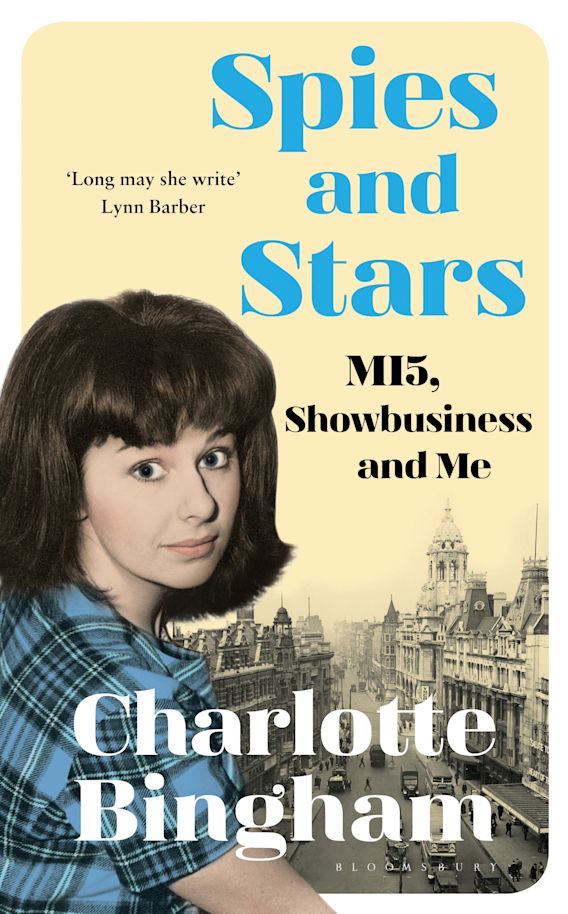
Book Review: Spies and Stars: MI5 Showbusiness and Me by Charlotte Bingham – Round Two in Bingham’s hilarious MI5 reminiscences

This is one of those memoirs that read like a like a novel. It’s the second of Bingham’s recollections of her career in MI5. In the first, MI5 and Me, Bingham was encouraged to join the secretarial staff at MI5 by her father – she’d been just faffing around at home. Her father was quite important in MI5 himself – according to notes at the rear of the book, the inspiration for the character of George Smiley, in the John le Carré novels. Which makes her story seem all the more extraordinary.

Charlotte, or Lottie as everyone calls her, is twenty-something, and her interactions with fellow secretaries, Arabella and Zuzu reminded me a little of the St Trinian’s stories. They’re probably a similar era too – the events in this book take place the 1950s. As well as her work in the War Office, there is her developing relationship with her boyfriend Harry and their writing. Lottie and Harry spend hours after work beavering away in cafés on their film scripts hoping to make it in showbusiness. The characters they meet – the producers and performers – are often oddball and flamboyant, and wonderfully brought to life here.

Harry is a struggling actor so the writing helps keep him busy when he’s ‘resting’. But like Lottie, Mr Bingham sees in Harry someone who can do a job for him. He’s already got a couple of actors on his team – Hal and Melville even live at the family home, Dingle Dell. So Harry finds himself hawking copies of the Communist paper The Daily Worker outside the entrance to the Kensington High St tube station, alongside a ‘blind’ match seller also working for Lottie’s dad.

I went back to Dingley Dell feeling thoughtful only to bump into Hal and Melville both hurrying back into the house carrying copies of the Daily Worker.

‘Really, Lottie darling, the things I do for England,’ Melville said, sighing.

‘I shall read it cover to cover,’ Hal boomed. ‘I think of it as a political Beano. Apparently these asses really believe we are all equal. They wouldn’t if they’d ever toured with Dougie Robinson.’

A lot of Spies and Stars describes how Lottie and Harry come up with scripts, then dealing with agents and producers. Their first, The Happy Communist, is inspired by Harry’s Daily Worker pushing stint. There’s a terrible panic when their agent says there’s someone interested. What will Lottie’s father say? But obviously there’s some writing talent on display, as the two carry on writing more scripts and even sell a few. They soon learn the lesson not to expect their scripts to resemble anything like their originals once they’ve been through the rewriting team.

As I said before the memoir reads like a novel. Bingham is just so good with her characters, who are all vividly drawn, full of the quirks that make them interesting. And well, between show business and MI5, they’re a madcap bunch. And then there’s her use of dialogue, which creates lively scenes. You can tell that she had the talent to go on to write for popular television series like Upstairs Downstairs, which I remember I never missed as a girl.

Charlotte Bingham’s memoirs are fun, light reading, and almost qualify as ‘strange but true’. But maybe 1950s England was like that. And she really knows how to tell a story. I am tempted to try Bingham’s novels – there are dozens of them mostly published in the 1990s up to 2014. Spies and Stars is a four-star read from me, but if you’re tempted to pick this up, you’re probably best to read MI5 and Me first.

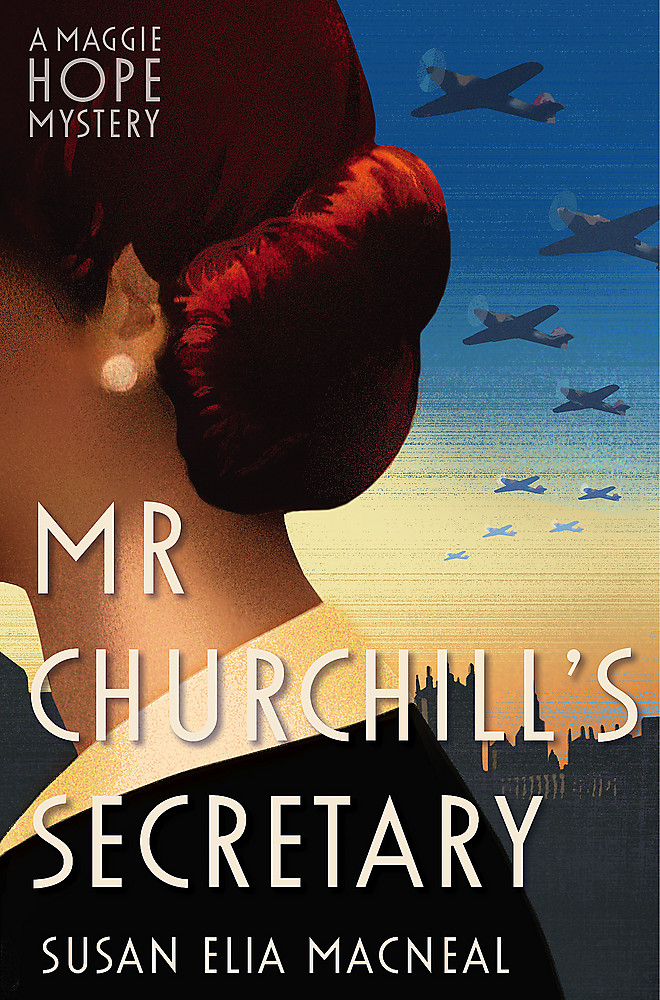
Book Review: Mr Churchill’s Secretary by Susan Elia MacNeal – a light but lively WWII mystery

This novel is the first in a wartime mystery series that features American-raised Maggie Hope, a young woman with a formidable brain. Which is how it should be. I like a brainy female sleuth. You know she’s going to have to figure things out rather than stumble around, picking up clues by accident.

Maggie has moved to London not so long ago. She was supposed to sell her grandmother’s house and then settle back into her studies in mathematics, taking up her place at an American university. She graduated top of her class and academic expectations are high. But along comes a war, World War II, that is, and Maggie wants to do her bit. She loves London and decides to apply for an under secretary position in the prime minister’s office. She doesn’t get it, of course. She’s a girl and they only take men, but when her friend, David suggests she try for a job as the PM’s secretary, she reluctantly gives it a go.

Maggie is desperate to use her maths brain, but at Number 10, she’s thrown by Churchill’s odd habits and cryptic commands, while being urged to keep her head down and do what she’s told by her superiors. Fortunately she has a cheery group of friends to hang out with, including her flatmates: Paige, an old classmate from America’s Deep South and hearty, Irish Chuck plus a pair of scatty twin sisters. David, is always dropping by. His life has always been a little risky as he’s gay when you weren’t really allowed to be so what’s a little war in the general scheme of things? He keeps everyone’s spirits up but his best friend John is moody and somewhat awkward around Maggie.

The story switches to that of Claire who is visiting the Saturday Club, a group of Nazi sympathisers, and Michael, who is letting off bombs around the place for Ireland. While the narrative builds towards a plot agains the PM, Maggie has questions about her parentage. There’s something her guardian, Aunt Emily, is not telling her. When she goes to find her parents’ graves, her mother is there for all to see, but her father’s grave is missing.

Things get more complicated with codes appearing in mysterious places and a visit to Bletchley Park, while pretty much everyone among the cast of characters is in danger from something. Whether it’s the bombs raining down on London, or Nazi sympathisers determined not to have their plans foiled, Maggie’s life has just got a lot more perilous. Things go down to the wire for Maggie, the PM and an iconic building in London, but luckily there’s Maggie’s amazing brain to save the day.

Anyone imagining this series to be ideal for fans of Jacqueline Winspear’s Maisie Dobbs, might want to reconsider. I think they are quite different beasts. The Winspear books reveal a lot about the war, and recent history, often taking a little understood aspect and making it the basis of a story. Her characters are really put through the ringer and there’s a strong emotional charge.

The Maggie Hope books would seem to be a more imaginative bunch of stories and are quite a lot lighter in tone. There’s lots of dancing in nightclubs, romance and general socialising, more about the music of the time, what people were wearing which adds colour and sets the scene. I shall probably continue with the series, but my reasons for picking up a Maggie Hope book will be for a lighter kind of entertainment. Mr Churchill’s Secretary gets three stars from me.

Book Review: Stone Blind by Natalie Haynes – an imaginative recreation of the Greek myth of Medusa

Since Madeline Miller’s Song of Achilles, it seems there’s been a growing number of authors turning to classical mythology for inspiration. And it’s no wonder, because the stories of the Ancient Greeks and others are just so engaging.

A cluster have concentrated on the battle of Troy and Odysseus’s subsequent wanderings, while here we have Natalie Haynes’s narrative around the famously hated Gorgon, Medusa. She deserved to have her head cut off, right, turning all those mortals to stone with a single glance? In slaying her, Perseus was a great hero, wasn’t he?

Maybe not. Stone Blind takes us back to Medusa’s birth and her arrival on a rocky shore to be cared for by her Gorgon sisters, Sthenno and Euryale. These two are tusked creatures with snakes for hair, powerful claws and wings that make them swift in the air after their prey. But Medusa is a mortal baby they need to learn how to care for. She has a human form apart from tiny wings and can’t chew carcasses and crunch bones. The sisters keep sheep to feed the baby milk, and learn to make bread.

The three make a loving family, and Medusa grows into a beautiful girl, who attracts the interest of Poseidon, god of the sea. Meanwhile, in another kingdom, a beautiful princess is kept in a dungeon by her father. It is told that Danae will bear a son who will kill King Acrisius, so the king isn’t taking any chances. But what can he do against Zeus, king of the Olympian gods, who breaks into Danae’s cell as a shower of gold. The offspring of this encounter will be Perseus, and how he survives to fulfil his destiny is an interesting strand to this story.

And in the kingdom of Ethiopia there’s the story of Andromeda, another beautiful princess, but without a brother to take over her father’s kingdom is doomed to marry her uncle to secure the royal line. These poor women are pawns in the hands of powerful men; while around humankind and their struggles are the constant machinations of the gods. They’re either like Poseidon and Zeus, raping pretty girls, or they’re bored youngsters like Athene, causing trouble, or perpetually angry like Zeus’s wife Hera, exacting revenge for every slight.

The snakes were patient at first, because they knew no other life. But they longed for heat and light. The cave bored them and they wouldn’t pretend otherwise. They belonged to Medusa and she belonged to them, and they sighed and seethed until she accepted that she could not hide away from the light they craved.

The likelihood of a happy ending for anyone with beauty or an enviable talent seems slim in this world. The ancient Greeks must have suffered many a natural disaster to have come up with such a collection of angry and self-serving gods seeking retribution in so many convoluted ways. And yet they are devoted to them, building elegant temples and beautiful statues, making sacrifices to ward off disaster.

And is a monster always evil? Is there ever such a thing as a good monster? Because what happens when a good person becomes a monster?

Natalie Haynes brings this interplay between gods and mortals beautifully to life, weaving in all the different strands that interconnect the stories. She makes use of the classical Greek chorus which creates some interesting narrative voices: Panopeia the sea nymphs; Elaia, the olive trees; even Herpeta, Medusa’s snakes. There are a lot of plot strands to keep track of and quick switches between them, so the reader has to keep their wits about them. Fortunately, there’s a list of characters at the beginning which I referred to many a time.

The story is an old one, but in Stone Blind it’s very fresh with some deeper meditations on what makes a hero and what makes a monster. I embarked on the novel wondering how I would feel about the character of Medusa, thinking it would be difficult to follow an anti-hero’s journey to her messy end. But Haynes handles it well, creating empathy, and the story never flags. I’m glad I picked this one up and am keen to read more mythological retellings, and more by Haynes. Stone Blind was long-listed for this year’s Women’s Prize for Fiction and gets four stars from me.

Book Review: Good Riddance by Elinor Lipman – a witty New York comedy full of the unexpected

I’m often drawn to these sorts of New York comedies. I like the smart and snappy dialogue, the invigorating big city atmosphere – the apartments and the quirky characters who are always eating out or talking about eating out. I really enjoyed Elinor Lipman’s On Turpentine Lane, so was keen to snap this one up too. Both novels showcase this author as a writer of very original storylines.

In Good Riddance, the story follows Daphne Maritch, studying to be a chocolatier after a failed marriage and a recent move to a new apartment. It’s not long since her mother died, bequeathing Daphne, among other things, a 1968 Pickering High School yearbook. June Maritch was just a few years older than her students that year and had attended all the class of ’68 reunions, as well as annotating her yearbook with snarky comments about her former pupils.

Daphne doesn’t see any reason to keep the yearbook, and consigns it to the dumpster, where it is discovered by her neighbour, a budding documentary film maker. Geneva Wisenkorn sees all kinds of potential from interviewing the old classmates, showing them the yearbook and speculating about their teacher.

Suddenly Daphne rethinks her hasty ditching of the evidence. She doesn’t want her mother seen in a poor light and doesn’t trust her neighbour not to make her family look ridiculous. Her father was for many years principal at Pickering after all. Throw in a politician with a scandalous secret that also affects Daphne and suddenly she’s feels desperate to shut down the doco and reclaim the yearbook.

There’s a romantic twist to the story in the form of Jeremy, the young actor across the hall, who becomes Daphne’s co-conspirator. And things are complicated by Daphne’s father moving to New York. He plans to see a bit of life in the city he’s always dreamt of. When her dad takes on a dog-walking job, he has a chance to meet all kinds of women.

Lipman throws in loads of fun situations, including Daphne’s tagging along with Geneva to a reunion, a wedding, a funeral and a dramatic situation requiring Daphne to administer first aid. There’s a load of humorous dialogue and the characters butt heads and wind each other up spectacularly. It’s a fun read all round, but I have to say Daphne isn’t for me a particularly appealing character. She can be rather shouty and shrill. Maybe she needs more chocolate.

But on the whole, Good Riddance is an amusing read and Lipman’s writing crackles on the page. I whizzed through the book and will certainly read more by this author. Good Riddance is a three star read from me.