Book Review: The Turn of the Key by Ruth Ware

Psychological thrillers aren’t my favourite genre but I do make time to read anything that comes along by Ruth Ware. She is such a master of atmospheric settings and unreliable narrators. In The Turn of the Key, the story is told in letters from Rowan Caine, a young woman in prison for murdering a child in her care. So potentially, this is about as unreliable as you can get.

Rowan is writing to a top barrister, hoping he will review her case and secure her release. She swears she is innocent. The best way to explain why she’s innocent is to tell him everything as it happened. The story begins with Rowan answering an ad for a live-in nanny for a family in a remote part of Scotland. Sandra and Bill are high-flying architects, their home, Heatherbrae, a modernised Victorian manor with electronics that run everything from the temperature in your shower to the fridge telling you when to buy more milk.

The couple have seen nanny after nanny abandon their four gorgeous girls. Perhaps it’s the remoteness of the house, far from the bright lights. Then again, the children can be a handful (wee Petra is a typical two-year-old, Maddie sullen and scheming, Ellen highly strung and Rhiannon a rebellious teen), but someone as experienced in childcare as Rowan should manage just fine. Is it the controlling and creepy Happy app, that allows Sandra and Bill to tune in to what’s going on at home wherever they are? Or is it something about the house?

The title of the book will soon have you thinking of the Henry James ghost story, The Turn of the Screw, where again we have a nanny killing a child. And there’s definitely something weird and supernatural going on here. Tragedy has struck Heatherbrae before – the ghost of a former owner, the one who planted the walled and locked poison garden, is said to haunt the house. Ware has everything set up for a tense and chilling read.

With the bulk of the story from Rowan’s point of view, we follow her difficulties, first with the children and the spiteful housekeeper – thank goodness she makes a friend in Jack, the hunky handyman – and then with eerie happenings at night. Surely the house can’t really be haunted, can it? Or worse, does it have a mind of its own. It starts to seem a little bit like The Twilight Zone.

Rowan is determined to get to the bottom of things. She’s not a quitter like those other nannies. And like the good-hearted person she is, she develops a fondness for her charges, even stroppy Rhiannon. But there are secrets here as well as creepy happenings and a few terrific twists before we turn the last page.

Ruth Ware has been dubbed ‘the queen of just-one-more-chapter’, and the title is never more fitting than with this novel. I dare you to pick it up and try to put it aside, even if you think you don’t really like psychological thrillers. The Turn of the Key shows Ware at the top of her game. (If you like this one, try The Woman in Cabin 10 which is another doozy.) This one gets a solid four out five from me.


Book Review: Better Luck Next Time by Kate Hilton

Canadian author, Kate Hilton describes her latest novel as a divorce comedy, although there’s a wedding as well, and a treasure trove of family secrets. In the opening pages, Zoe is not looking forward to Christmas, as she is reluctant to reveal that she is getting a divorce. Christmas is tense enough, without dropping that bombshell.

Along with Zoe’s parents, who are hosting the festive meal, plus her brother Zack, we meet Zoe’s uncle and feminist icon Aunt Lydia, and Lydia’s daughters and grandchildren. Zack has won fame and fortune writing a TV sitcom loosely based on the lives of his famous aunt and her family, for which he has never been quite forgiven.

Lydia’s daughter, Beata, is particularly bitter about it, but she has enough to deal with with her teenage son, Oscar, discovering that he wasn’t the product of a sperm-bank after all and has already made contact with his father. Enter, Will, an old pal of Zoe’s from her university days, and also a colleague of Beata’s partner, Eloise. Eloise just happens to be the lawyer handling Zoe’s divorce.

Meanwhile, still on Christmas day, things are obviously not going well in Zoe’s cousin Mariana’s marriage to shiftless but charming Devlin. Things reach a crunch when Mariana snatches up Devlin’s phone and smashes it to bits in the kitchen.

Hilton gets her book off to a flying start, with so much going on with in the lives of Zoe, Mariana and Beata. They’re all great characters – engaging and interesting – while the impossibly high bar set by Aunt Lydia for the younger women in her family hovers in the background. No wonder they keep secrets from each other – secrets, which are due to all come out sooner or later.

The book reminded me a little of Emma Hope’s Expectation, in that we have the same well-meaning pressure from an older generation of feminist women on their daughters whose lives haven’t quite turned out as they’d planned. In Better Luck Next Time, we are reminded how hard it can be for women to ‘do it all’ – manage children, careers, marriage and be true to themselves. Mariana is a journalist who has had to sacrifice writing the important political stories she’s so good at so she can support her family. She ends up writing publicity for a ‘wellness’ company, an industry Hilton sends up beautifully.

There are plenty of amusing scenes, including a feminist rally that turns nasty and a bridal shower which makes you wonder why anyone would ever get married. The book gallops towards another, somewhat, happier Christmas, an ending where its characters have learned a lot about life, love and themselves. This is a funny yet thoughtful novel, with characters you really warm to and plenty of digs at the fads and obsessions of modern life. Just what you want in a comedy for our times. A four star read from me.

Book Review: Redhead by the Side of the Road by Anne Tyler

One of the things I’ve always liked about Anne Tyler is her knack for unlikely characters. There’s never going to be a stereotypical character in a Tyler novel – they’re often a bit quirky, but oddly ordinary as well. Certainly they’re not the kind of people you meet a lot in fiction. Take Micah Mortimer for instance, the main character in Redhead by the Side of the Road.

You have to wonder what goes through the mind of a man like Micah Mortimer. He lives alone; he keeps to himself; his routine is etched in stone.

Micah’s one of those quiet, fanatically tidy, routine driven men of a certain age, whose life could go on the same way for decades. He looks after his apartment building for a reduction in rent (sending out emails about the importance of flattening milk cartons before they go in the recycling), while running his Tech Hermit business, solving people’s home computer problems.

Not only is Micah pernickerty about his cleaning routine (kitchen floors every Monday), he likes to think of himself as a model driver, sticking to the rules, taking care when parking, while an imagined Driving God smiles benignly. All the same his inclination to do the right thing also extends towards people, like his neighbours, but sometimes he misses important signals.

Two things happen that upset his routine. The teenage son of a former girlfriend turns up on his doorstep, wondering if Micah might be his father. Brink Adams (Wouldn’t you know he’d have a name like “Brink”, surmises Micah – something about the blazer and the haircut) ends up staying the night, upsetting the order of Micah’s day, leaving him to wonder why Brink isn’t at college and how to get in touch with his mother.

And when his girlfriend, Cass, phones him with her own problem, fearing eviction because of her cat, Micah doesn’t offer much consolation and Cass dumps him. Suddenly his head is filled with what might have been, not only with Cass, but with Lorna, Brink’s mother, all those years ago.

This is a quiet little story – just nudging 180 pages – and as such seems perhaps less substantial than novels like A Spool of Blue Thread, or Searching for Caleb, with their look at families through the generations and the interactions of characters over time, their secrets and motivations. And yet, Tyler really nails the character of Micah and creates a beautiful little drama about him. It really is the perfect little book and sometimes a small story is just right. An easy four out of five from me.

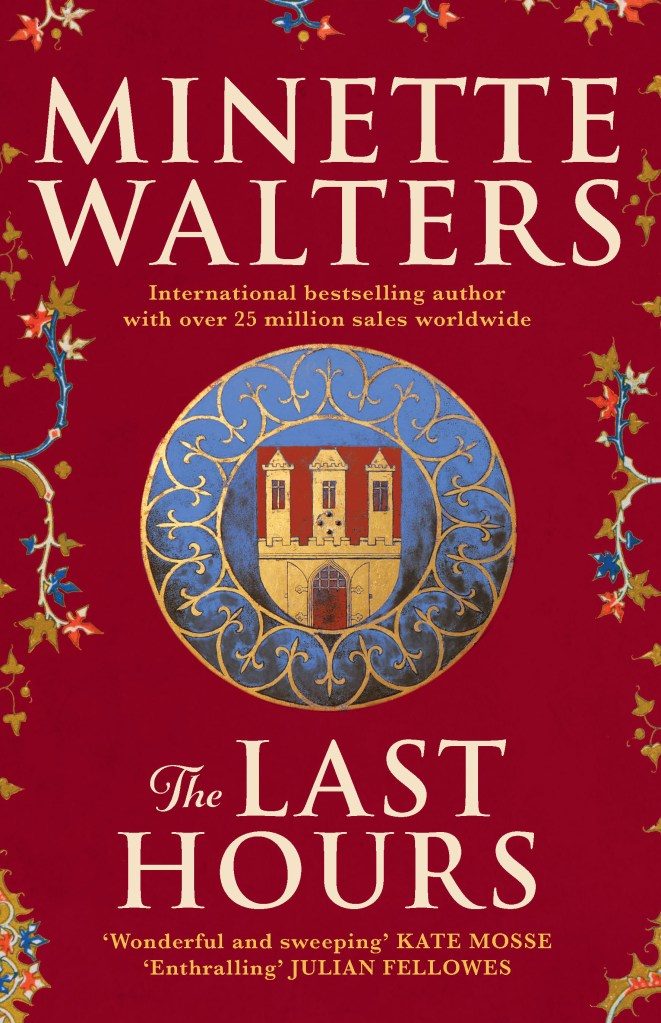
Book Review: The Last Hours by Minette Walters

I probably wouldn’t have picked up a novel set around the Bubonic Plague of 1348 if I hadn’t embarked on a reading challenge. You had to read a book about a pandemic and dodging dystopian themes I plumped for this historical novel – its tagline: For most, the Black Death is the end. For a brave few, it heralds a new beginning.

Venturing into The Last Hours, I found myself thoroughly swept away into Middle Ages Dorseteshire. Of course I remember all those creepy, atmospheric crime novels of Walters I’d enjoyed years ago so knew she could spin a yarn.

Here we’ve got a dysfunctional family – at its head, lord of the manor, Sir Richard Develish. Bawdy, cruel and lacking any subtlety of thought, he believes he keeps his serfs productive by the threat of violence. But it’s his clever wife, Lady Anne, who works with the serfs to ensure productivity is high for the area, all the while keeping her husband’s potential to harm in check. It helps that she can read and he can’t.

Unfortunately, their daughter, Lady Eleanor, takes after her father in stupidity and general nastiness. At fourteen she has beauty and a small dowry. The plan is to marry her off to a local lord’s son in the hope that the union will win Sir Richard preferment, but the lad is said to be sickly. The story begins with Sir Richard setting out to visit his future son-in-law to see for himself. He is accompanied by his steward Gyles Startout and a small team of armed men to guard the dowry but when they arrive, it is soon obvious that people are falling sick.

Gyles, who acts as eyes and ears for his master and mistress, quickly spots there are good reasons to leave hastily, and the party take flight. But by the time they reach home, everyone is ill or left to die, except Gyles. Bringing news of her husband’s death, Gyles nurses the remaining soldiers and stays on the far side of the Develish moat, quarantining himself. Meanwhile Lady Anne decides to bring in all the serfs from their village to keep them safe. It’s effectively a lock-down.

Lady Anne is pretty smart, and maybe just a little before her time. She learnt to keep the sick separate from the healthy when she was growing up at a convent so keeping the world at bay and shoring up the moat are sensible moves. As well as good practices in hygiene, Lady Anne has taught many of the serfs to read, including tall, dark and handsome Thaddeus Thurkell. Growing up a serf and a bastard, young Thaddeus was maltreated by his adopted father, but fortunately rescued by Lady Anne. Now he’s her right-hand-man. As well as Gyles, it’s Thaddeus Lady Anne turns to for advice about protecting her people, and what to do when supplies run low.

The Last Hours is a rip-roaring read, full of danger and acts of valour, intrigue and secrets. You also get a good picture of social conditions of the time. The role of women as chattels of their landowning husbands. The place of serfs, often at the mercy of harsh laws and crueller masters and their priests who reinforce the status quo. Memories of the Norman conquest of barely three hundred years before still fester with those of French descent having the upper hand and often reviled for it. But times are a-changing and maybe all that is needed is a plague to sort out the sheep from the goats, the survivors from the doomed and to auger a new way of doing things.

I suppose I’ll find out in the sequel, The Turn of Midnight, now on my to-read list. The Last Hours is a tale of endurance and human ingenuity with characters you want to cheer for and all the suspense you need to keep you whipping through its 550-odd pages. A surprisingly quick read and an easy four out of five from me.

Book Review: A Theatre for Dreamers by Polly Samson

Escaping to a Greek Island where you can live cheaply for a year just so you can focus on your art, bask in the sun, swim and enjoy the delights of love, food and wine – what an idyll. Hydra in 1960 was just such an island, captured here in A Theatre for Dreamers by Polly Samson. Australian writers Charmian Clift and George Johnston are established on Hydra and help out newly arrived artists eager to take a break from the rat-race to finish their novels, paint or create poetry.

It is where eighteen-year-old Erika holes up, still grieving the death of her mother and escaping a volatile father, London rain and the typing pool. With her is her boyfriend, emerging poet Jimmy, and brother Bobby and his girlfriend. There’s a connection with Charmian through Erika’s mother, and an expectation they can find a cheap house.

Madly in love, Erika doesn’t mind doing the donkey work – making sure they have clean water, meals and fetching ice to keep their food fresh. Charmian takes pity on her and encourages her to write – she sees in Erika a daughter figure, but also the watchfulness of a budding writer.

And there’s plenty to see – in particular the twenty-five-year-old Leonard Cohen, fresh off the boat with his guitar, eager to finish his first novel. But he’s distracted by Scandinavian beauty, Marianne Ihlen who is caught in a disastrous marriage with Axel Jansen, himself an enfant terrible of the literary world in Norway.

As well as a hub for expats coming and going, Charmian and George’s house becomes a second home to Erika. But the pair have financial problems, drink too much and argue a lot, George has poor health and issues with jealousy. Ah, the lives of the bohemians. Shaking off conformity and the rules of the nine-to-five working life, this enclave of creatives explore many new freedoms, break each other’s hearts and live like characters from bacchanalian scenes on a Grecian urn.

Samson has done a mound of research to bring these artists to life, helped no doubt by the records made not only in their writing, but in the pictures of Time-Life photographer, James Burke. The novel is in many ways a social history, highlighting the emergence of the counter-culture era that would turn into the swinging sixties, but also the feminism that waits in the wings.

And boy is it needed as several key female characters are left holding the baby, wiping the weary brows of their men, playing muse and ignoring their own careers. There is a lot in the book to think about as you read about the endless parties, the infidelities and drunken escapades. In the background the conservative local Greek population must have been pleased with the extra business garnered at the time the sponge industry was drying up, while shaking their heads at the various improprieties.

There are a lot of names – you might want to keep the Internet handy. I struggled to keep up with the different personalities that swept through. But I felt a strong sense of being there; Samson describes the island using all five senses and this alone makes the book really quite wonderful. A four out of five read from me.

Book Review: Truly Madly Guilty by Liane Moriarty

Truly Madly Guilty is a novel about ordinary people. They’ve all got their quirks and kinks of temperament, their baggage – some more than others. Simmering with problems, insecurities and resentments, the characters are all set for some kind of train wreck; the setting: an ordinary suburban barbecue.

Moriarty creates a powder keg of volatile ingredients a bit like a chemistry experiment gone wrong. Three families who probably shouldn’t really be friends come together to socialise: There’s Sam and Clementine and their two little girls, Holly and Ruby. Clementine is a cellist, anxious about an upcoming audition; Sam is stressed about the way their finances depend on a his new job in advertising where he feels out of his depth. It’s all causing a toll on their marriage.

Erika is socially awkward and, like her husband Oliver, works in accounting. They are a fit, childless couple and to many seem a bit boring. But both have had terrible childhoods which has helped them connect with each other, if not with other people. Erika was foisted on Clementine as a child, and the two have been friends ever since, although sometimes Clementine wishes Erika was less friendly with her mother and wasn’t always in touch.

Erika and Oliver invite their friends for afternoon tea to put forward a proposal, carefully planned before the two families head next door to a barbecue hosted by wealthy and gregarious Vid and his glamorous younger wife, Tiffany. Vid has recently discovered classical music and becomes a bit fixated on Clementine; Tiffany has something of a shady past. The two little girls are entertained by Tiff and Vid’s ten-year-old daughter Dakota, but sometime later on, with much alcohol having flowed and one or two secrets revealed, something terrible happens.

Moriarty has a knack for feeding out just enough information to get the reader interested, switching timeframes from some weeks after the event, during a period of persistent rain, and the day of the barbecue. We don’t discover exactly what happened until halfway through the book, and not entirely until near the end. The story is told from several perspectives, filling in all the details and building up characters you can feel empathy for. They are so ordinary and yet so unique, after all.

Can the three couples come back from what happened? Rebuild their lives? Learn from their mistakes? There’s also an interesting commentary on class and wealth running in the background, the snobbery associated with money or with talent.

Truly Madly Guilty is a very smart novel with some very poignant moments and a few surprises. I hadn’t ever read a book by Liane Moriarty before, and this will certainly not be the last, striking for me a happy balance between entertainment and something to think about. Four out of five from me.

Book Review: The Coroner’s Lunch by Colin Cotterill

I’ve been meaning to try this series for ages, and here we are, fifteen books later, the series having quite gotten away from me. The Coroner’s Lunch is the first in the Siri Paiboum mysteries featuring an elderly Laotian coroner a year or two after Laos was taken over by the Communist Pathet Lao Party.

Following a career spent devoted to the party, Dr Siri may have felt it was time to enjoy retirement, but with many of the educated classes having decamped for Thailand, the medical profession is thin on the ground. Before you know it, he’s been hustled into the role of Chief Coroner. It’s obviously not a glamorous position – the morgue is rudimentary at best. Fortunately he’s got help: Dtui a fan-mag obsessed nurse with career aspirations and Geung the Downs Syndrome morgue attendant who never forgets the details that matter.

When Dr Siri receives his first murder case, there’s a lot of pressure to sign it off as an accident. A party official’s wife has died of poisoning at a banquet but there are no clues and pretty soon, no body either. More cases suddenly pile up including three dead Vietnamese soldiers who bear the marks of having been tortured before being dumped in a Laotian lake. Dr Siri’s going to have to tread a careful path with both if he wants to avoid ending up dead himself.

It’s a little difficult to say what mystery sub-genre the series is. There’s a touch of the cosy mystery here with a coroner learning things as he goes along, a bit like an amateur sleuth. And you’ve got the exotic setting and period time-frame. But there’s a wit and intelligence to the story in the way Cotterill captures not just Laos but what living in a new Communist regime might be like, and how it might clash with the old ways. This is rounded out with some great characters and lively dialogue.

Siri, in particular, is a terrific character with a dry sense of humour plus the wisdom of his years. Having trained at medical school in Paris he became a fan of Simenon’s Maigret novels, though all too soon he was able to figure out the crime well before the Sûreté. So, for such a logical thinker, why is he visited in his dreams by the newly dead – often with important messages to pass on? There is more than a touch of the supernatural creeping into the book, but all is explained in an entertaining way that ties in with some old Laotian belief systems.

I particularly enjoyed the audiobook reading by Gareth Armstrong who makes Dr Siri come alive and numerous cast of characters he interacts with. Not knowing anything much about Laos didn’t spoil my enjoyment, and I look forward to the next books in the series – I have after all got a lot of catching up to do. A four star read from me.

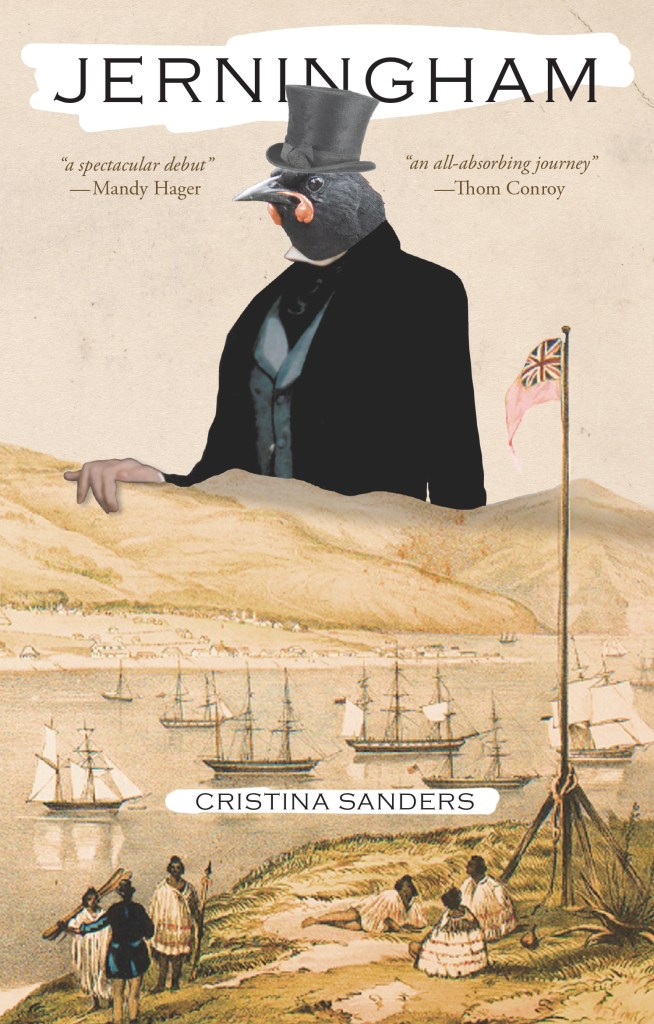
Book Review: Jerningham by Cristina Sanders

Cristina Sanders has done an immense amount of research to recreate the first years of colonial settlement in Wellington with her debut novel, Jerningham. Starting off in 1839, the story follows newly arrived Arthur Lugg, an imaginary character, through whose eyes we meet a bunch of the key players in the colony, particularly Colonial William Wakefield and his loose cannon of a nephew, Jerningham Wakefield. They’re the down-under representatives of the New Zealand Company, which sold land that wasn’t exactly theirs to sell. So it’s up to the colonel and his nephew to make it happen.

There are a number of story threads here which help to build a picture of what it was like for the early settlers arriving in a promising new colony, expecting a plot of land on which to start their new life. We all know the story: how Maori were given items ranging from nails to guns to blankets for land – but was the land to be shared or bought outright? And then the ships came, bringing wave upon wave of hopeful new settlers ready to roll up their sleeves and rebuild England’s green and pleasant land.

The story follows the difficult relationship between the Wakefields and Governor Hobson who was pushing through the Treaty of Waitangi, to events building up to the Wairau Affray several years later. Arthur Lugg, first working for Colonel Wakefield as a procurement officer, is a witness to it all as well as a friend and minder to Jerningham who it seems can charm Lugg into anything.

There are some wonderfully evocative scenes as the two travel to Wanganui (as it was spelt then); the river, the bush and the friendly local Maori are all described in detail. Jerningham has his own mini empire, trading with whalers and Maori alike. There’s lots of wine, women and song wherever Jerningham (still barely 20) holes up.

I enjoyed meeting Charles Heaphy – I’ve always loved his stylised watercolours of the country he explored – who becomes a particular friend of Lugg’s. Meanwhile Arthur has his own personal trials, disappointment in love, losing his thumb and almost his life, a struggle with his own personal demons. Somewhat naïve, he fails to see how much he is manipulated by Jerningham.

And behind the scenes the machinations of the New Zealand Company, the governor and the treaty – much of it on morally and legally shaky ground. We get our fair share of earthquakes too.

At the heart of the story is Jerningham, the charmer; a young man of immense talent, if only he could use it wisely. He’s a wild boy but also has the knack for seeing the country as it is, falling into easy friendships with Maori, even daring to sit down to korero (talk) with the powerful chief Te Rauparaha.

Cristina Sanders tells it with plenty of factual detail and colour – what it’s like living in a raupo whare, the basic food (lots of pork and potatoes), a storm at sea, encountering Maori and their way of life for the first time. The workings of the men with power, the greed and the determination. It all makes for a fascinating read for anyone interested in the early years of New Zealand, colonisation or issues of empire. It reminds me why I love historical fiction so much – you can learn a lot about a period and place all wrapped up in a darn good story. It’s an impressive debut and well recommended – a four star read from me.

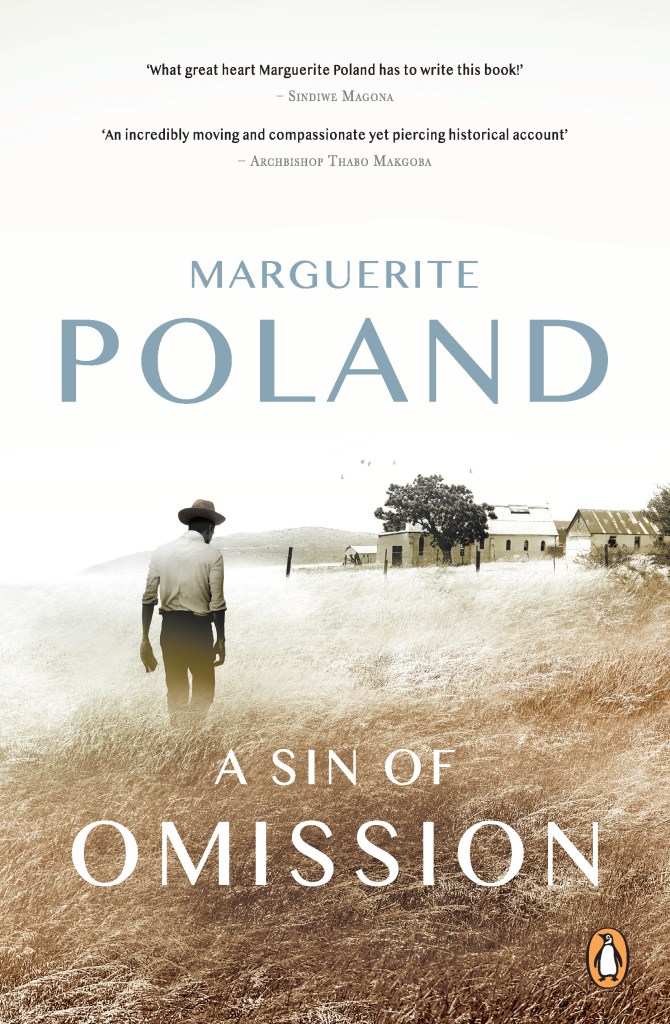
Book Review: A Sin of Omission by Marguerite Poland

Is there a word – possibly in German, although I’m not ruling out other languages – for the exquisite misery to be experienced from reading a very sad story? The feeling seems to occur when you have a strong empathy for the character/s, so that their heartbreak becomes your heartbreak. You take comfort that it isn’t you or someone close to you that is suffering, but still you wallow.

One such exquisitely sad book is Marguerite Poland’s 2020 Walter Scott Award nominee, A Sin of Omission. Set during the late 1800s in the Eastern Cape area of South Africa, it follows the life of a young Anglican deacon, Rev. Stephen (Malusie) Mzamane. Rescued as a child on the brink of starvation when his Ngqika people are driven from their land, he is looked after by English missionaries. Given an English name, he becomes a good student, chosen for further schooling in Grahamstown, and eventually sent to Missionary College at Canterbury in England.

Here Stephen is again rescued, this time by fellow student, Albert Newnham, who helps him navigate the tricky waters of living in English society. Stephen teaches Albert Xhosa in exchange for Latin and Greek and the two become the best of friends. Stephen is entertained to tea and made to feel special, but on his return to Grahamstown he is reminded of the racial inequality between the governing white colonists and the indigenous population, even among supposed Christians. So while Stephen can speak like an Englishman, and has a fine intellect and a powerful Christian faith, his colour prevents him the usual privileges accorded to newly-trained missionaries.

Stephen is sent to an outpost at some distance with a tiny parish, a meagre stipend no support. The locals are poor, the church and his cottage are made of mud brick. As yet to qualify as a vicar, he craves the books and teaching he might have had if he’d gone to Grahamstown as hoped, and where Albert eventually arrives with his wife and baby. Their friendship is also put on hold by the demands Albert faces from his fussy young wife.

In the background, political instability creates further tension, rebels are mustering and divisions among the different tribes highlighted. Stephen’s brother Mzamo (he has refused the Christian name of Saul that was given him by the missionaries), a rebellious and charismatic man, gets into trouble more than once and so does Stephen by association. Poland creates some brilliant minor characters too – the understanding, no-nonsense and larger than life Rev. Turvey particularly stands out.

It all comes together to create a well-researched and brilliantly told story about this particular corner of colonial history from various points of view. But most particularly it is the story of a young man of great principal and courage who is not allowed to be true to his family, or his tribal heritage, yet neither is he allowed any kind of standing in the English missionary culture that has adopted him. It is a tragedy in the tradition of Shakespeare and according to the author’s note at the back, a story based on the life of a real person.

A Sin of Omission had me in thrall for about a week I was still thinking about it days later (and I imagine it will still be lurking in my thoughts months later). I cannot recommend it highly enough and will be looking out more books by this author. A rare five out of five from me.

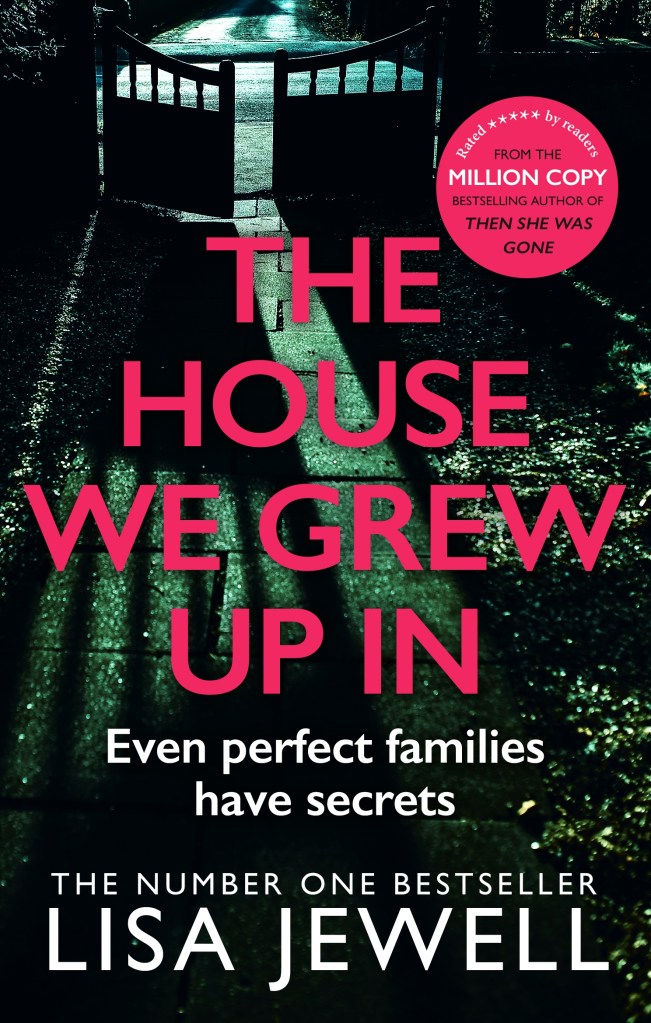
Book Review: The House We Grew Up In by Lisa Jewell

The Bird family seem to have everything: a yellow brick house in the Cotswolds with a big, rambling garden – the perfect family home. Their mother, Lorelei is a happy, hippie, stay-at-home mother who does lots of fun things with her kids. She holds yearly Easter Egg hunts and keeps all her children’s art to hang on the kitchen walls – all of it, forever! There’s Dad/Colin, an amiable, shambling academic, and four kids: confident Megan, beautiful Beth, Rory, who’s everyone’s mate. And then there’s Rhys.

Rhys was Rory’s twin, a sickly baby who has grown into a quiet, brooding child who nobody likes. When tragedy strikes, cracks appear in the cement that had once held the Bird family together, and each of them struggle in various ways. In particular, Lorelei, with her habit for keeping anything she felt sentimental about, now a chronic hoarder.

The book opens with Meg and her teenage daughter, Molly, having returned to the old Bird family home, to clear it out of all the teetering piles of junk Lorelei has collected over the years and to prepare for her mother’s funeral. Slowly the rest of the family drifts home to help.

The House We Grew Up In follows various characters as it fills in the gaps between then and now. Often we are with Meg who is compulsively tidy, some of the time we’re with Beth who can’t seem to get her life together enough to leave home. Then occasionally we’re with Rory who has a habit of throwing in his lot with the wrong people. And then there are Lorelei’s emails to a man she’s met online

With all different different points of view and shifts in time, the novel can take a bit of concentration to keep track of it all. I was nipping back and forth a bit, checking dates, calculating ages. Was it worth the effort? Definitely yes. Jewell is a brilliant writer when it comes to families that seem happy on the outside and what could go wrong with them and why. She gets you to care for her characters, even when they mess up, and these guys do big time.

And then there’s the guilt. Everyone has something to feel guilty about and with that comes the secrecy. How do members of a family come to terms with the wrongs of the past to rebuild those relationships that were once so special? The House We Grew Up In takes you through all of this and makes you realise that even the seemingly nicest, ordinary people can do very destructive things without meaning to. Another engrossing read from Jewell and a three and a half out of five from me.