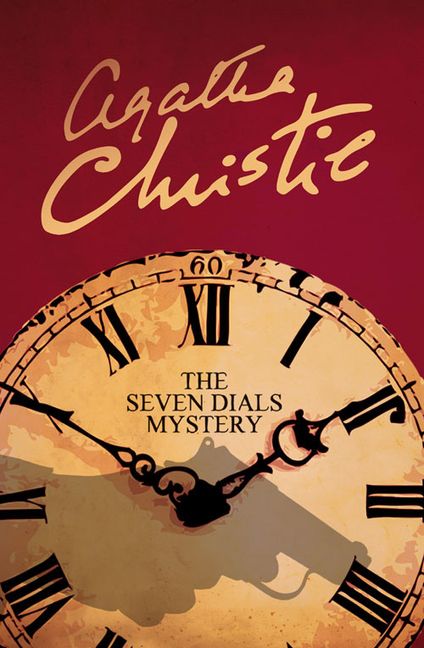
Book Review: The Seven Dials Mystery by Agatha Christie – a Golden Age thriller soon to be adapted by Netflix

I was intrigued to learn that Netflix had picked up The Seven Dials Mystery for the small screen and not remembering a lot about it, hunted it out among my collection of dusty old Agatha Christie paperbacks. First published in the 1920s, the opening scenes make it sound a little like a P G Wodehouse novel.

We’re in an English country mansion known as Chimneys which has been rented out for the summer by a wealthy industrialist, Sir Oswald Coote, and his wife Lady Coote. For some reason there are a bunch of young people staying that don’t seem to be anything to do with the Cootes, a typical Wodehouse type of house party.

When Gerry Wade becomes increasingly tardy about coming down for breakfast, much to Lady Coote’s growing discomfort, Jimmy Thesiger and his friends decide to teach him a lesson. They go into town to buy a collection of alarm clocks. The plan is to sneak them into his room to rouse him the next morning at the ungodly hour of 6:30. Only even that doesn’t seem to work, particularly when it is discovered that Gerry, far from sleeping through the cacophony of eight alarm clocks going off, is dead.

Chimneys is the home of Lord Caterham and his daughter Lady Eileen (Bundle) Brent. Bundle is also the heroine of a previous book, The Secret of Chimneys, and is always on the go in her Hispano-Suiza. Being a fearless young woman with time on her hands, she is easily bored. Before long Jimmy teams up with Bundle to solve the crime. Unlike his friends who have jobs in London, Jimmy’s a man of leisure; his valet Stevens has the same aplomb and consideration for Jimmy’s every comfort you might expect of Jeeves.

Bundle made a grimace.
“Why need people die in my room?” she asked with some indignation.
“That’s just what I’ve been saying,” said Lord Caterham, in triumph. “Inconsiderate. Everybody’s damned inconsiderate nowadays.”
“Not that I mind,” said Bundle valiantly. “Why should I?”
“I should,” said her father. “I should mind very much. I should dream things, you know – spectral hands and clanking chains.”
“Well,” said Bundle. “Great Aunt Louisa died in your bed. I wonder you don’t see her spook hovering over you.”
“I do sometimes,” said Lord Caterham, shuddering. “Especially after lobster.”
“Well, thank heaven I’m not superstitious,” declared Bundle.

Bundle’s and Jimmy’s friend Bill Eversleigh works in the Foreign Office, as did the victim, Gerry Wade. A second victim directs the investigation to Seven Dials, once a seedy part of London, now the name of a nefarious night-club and headquarters of a sinister sounding gang. With a second murder victim it is easy to assume it’s all something to do with a spy network of sorts, and the pace cranks up as our amateur sleuths team up with Gerry Wade’s step-sister, who’s a lot sharper than she looks, and follow clue after clue.

But Agatha Christie is a master of surprises, and there will be more than one shock for the reader before the end of the book. Of course, the killer is unmasked, in typical Christie style, and in spite of references to hangman’s nooses, there’s also a touch of romance in the air.

The Seven Dials Mystery really immerses the reader in a very different era of crime fiction and for some a book like this will seem terribly old fashioned. But with the huge array of cosy mysteries on the market, many set in similar periods, you can see why the Queen of Crime’s books are still big sellers. They are a lovely kind of escapism and the dialogue is full of fun, lending itself well to screen adaptations. And then there’s the settings, the costumes, that car! I shall look forward to the Netflix adaptation – in the right hands the story should come to life beautifully. This book scores three and a half stars from me.

Book Review: You Are Here by David Nicholls – a witty, feel-good read about hiking and the human heart

I’d seen a bit of David Nicholls on the small screen – the movie of One Day and the TV adaptation of Us – but You Are Here is the first time I’ve actually read a David Nicholls novel. And having just turned the last page, I realise now what I’ve been missing. Because, You Are Here is simply wonderful. The writing, the humour, the characters and the emotions. They’re all there in a perfect package – all that you could want in a book.

The story’s narration alternates between two people: Marnie, a long time single and thirty-eight, who works as a freelance editor from her rented flat in London; and Michael, a recently-separated geography teacher from York. Both are a bit sad and lonely. Marnie has been bruised by her marriage to overbearing, unfaithful Neil, and now that her friends all seem to be married, mostly with kids, she’s dropped out of the loop, doesn’t see anyone, often stays in her flat for days on end. Michael has not recovered from his wife leaving him or from an assault which left him with bouts of PTSD and feeling a coward.

So it’s up to mutual friend Cleo to fix them both up with someone, if only she can drag Marnie north for a hike – a chunk of the Coast to Coast Walk, which Michael, a committed walker, is keen to complete, preferably alone for as much as possible. Michael does a lot of walking as he hates going home. Cleo brings along her thirteen-year-old son as well as gorgeous Conrad, a pharmacist also from London, she’s hoping to set Marnie up with. A pity Tessa couldn’t make it – she loves doing triathlons so would suit Michael well with his love of the outdoors.

But he must not teach. He would be travelling with adults who had no need or desire to learn about drumlins and moraines. The train ticked and hummed, then began to crawl, rattling past sooty Victorian buildings, warehouses, and the new light industry at the edge of town, the sky widening like a cinema screen, opening on to farm and woodland. Seated diagonally across the aisle, the woman with the poorly fitted rucksack was typing noisily but without a table, so that the laptop kept slipping down her new trousers towards her new boots. What was so important that it should take precedence over the view? She was certainly making a big show of it, tutting and blowing up her fringe. It was a nice face, amused and amusing, with a city haircut (was it a ‘bob’? He wanted to call it a ‘bob’) and more make-up than you’d expect on a walker, sometimes rolling her eyes or clapping her hand to her flushed cheek at the words on the screen. He noticed that she was perspiring slightly. Noticed, too, that he’d stopped looking at the view.

But things don’t go as planned for Cleo, and it’s just as well, when soon the weather conspires to leave just Michael and Marnie on the walk, Conrad with no wet weather gear, and Cleo’s son missing his friends. Michael might have hoped Marnie would pike out too, but she’s invested so much in outdoor gear for the trip, and has packed three nice dresses and 12 pairs of knickers, so it seems absurd not to tag along for another day at least.

The two make an awkward couple at first, struggling through the rain and having hiked a number of New Zealand’s ‘great walks’ for the most part in the rain, I really felt for them. But it’s the grit that makes the pearl, and if they can get along enough, who knows what might happen. As a reader, you soon realise the two are better suited than Michael would be with Tessa or Marnie would be with Conrad – Michael is what Cleo describes as wry, and seems to get Marnie’s sense of humour, the jokes no one else seems to notice.

This is a delightful read – I steamed through it – the writing is just so polished but not in a way that makes you think it’s polished. The dialogue is lively and funny – you can tell this will make another lovely movie. But underneath, Nicholls is aware that he’s dealing with two people who have stuff to deal with. He shows a fine understanding of the workings of the human heart and while there is a lot that has you laughing out loud, there are also moments that make you sigh or clutch your chest.

As I said before, this is a perfect book, with two engaging characters you are happy to spend time with, even on a hill walk in the rain. There is a lot of scenery, which is described as much as it needs to be but not so much that it intrudes. I enjoyed the B&Bs and hotels with their themed rooms – one naming its rooms for freshwater fish (Michael finds himself in Chubb). So you get the experience of the walk without having to put on hiking boots. All in all David Nicholls doesn’t put a hiking booted-foot wrong. You Are Here is a five-star read from me.

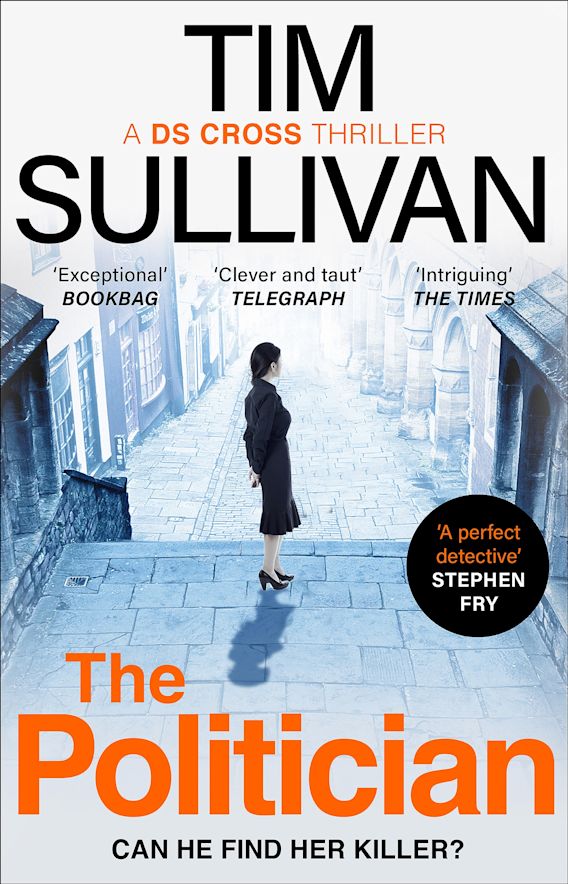
Book Review: The Politician by Tim Sullivan – a quirky detective and a pacy, intricately-plotted crime story

Tim Sullivan is an accomplished screenwriter and director who has turned his talents to a crime fiction series featuring an autistic detective. DS George Cross works for the Serious Crime Unit in Bristol, his sometimes difficult manner with his colleagues tolerated because of his impressive case clearing rate. Paired with DS Josie Ottey, a single mother of teenagers and a more empathetic officer, the two make a balanced team, Ottey often schooling Cross in better ways to manage people, whether colleagues – like eager young Alice MacKenzie and their blustering senior officer DCI Carson – or the recently bereaved.

In The Politician we’ve got a murder that looks like a home invasion gone wrong. Peggy Frampton was a former mayor, now a kind of online agony aunt, who has been found murdered in her own home, her bedroom ransacked. Her husband, a well-known local barrister was in London at the time, but the investigation soon throws up cracks in their marriage.

Cross immediately discovers clues that throw doubt on the likelihood of a panicked burglar having committed the crime and delves into Peggy’s ongoing dispute with a property developer and his plans for a heritage building. And what about all that angry invective hurled at her online regarding her often blunt advice? It seems that although she had a lot of popular support as mayor, she has also made a lot of enemies. But it will take forever to sift through all the online messages, and in spite of a large team pulled in to work the case, it takes Cross and Ottey a while to make any headway.

‘DS Cross,’ he announced customarily, holding up his warrant card for all to see as he marched into the mortuary the next morning.
‘Clare Hawkins, pathologist,’ came the reply, scalpel held high as a further mark of identification, should there be any doubt.
‘I know who you are,’ he retorted, surprised.
‘Likewise.’
‘Likewise, what?’
‘I know who you are.’
‘I’m required to identify myself.’
‘Every time you come here? Says who?’
This had him stumped. The truth was he wasn’t sure who required it in these circumstances, or even if it were required at all. It had just become part of his routine. So he changed the subject as quickly and in as businesslike a manner as possible.
‘Have you ascertained a cause of death?’

While we are served a nicely-paced plot, reading The Politician is also about the journey as every interview, team briefing and exploration of new evidence throws Cross in a new situation to be himself. This is always entertaining as he rubs people up the wrong way, or responds to sayings, metaphors and euphemisms as if they are factual statements. Sullivan puts his screenwriting skills to good effect with some excellent and often hilarious dialogue.

But the storyline is also richly layered, with a subplot describing Cross’s relationship with his parents – his elderly father with his new passion for model railways, and the mother who left when Cross was a young child. She has recently reappeared in his life, but the mystery of her leaving is another puzzle for Cross to put together. For either mystery, it will be Cross’s ability to analyse facts objectively and without bias that will lead him to the truth.

Sullivan has come up with a brilliant character in George Cross who is both quirky and fascinating. How his mind works, how he pieces facts together and uses all the help available to him, from spreadsheets – a lot of his previous career was in Fraud – to people with specialist knowledge, show him to be a brilliant detective. His endless patience in the interview room always seems to pay off too.

The Politician is my second DS Cross audiobook – The Patient is also an excellent read; both narrated by Finlay Robertson who does a stunning job of bringing Cross, Ottey and co. to life. I have enjoyed them so much that this is now a ‘must-read’ series for me. I am fortunate that so far there are another four books, with more in the offing. The Politician is a four-and-a-half star read from me.

Book Review: The Good Liars by Anita Frank – a haunting novel where old sins cast long shadows

It is interesting how claustrophobic a large country house can seem in a nicely gothic suspense novel like this. In spite of extensive grounds and views that take in woods and a river, the country house at the heart of Anita Frank’s latest novel, The Good Liars, is taut with post-war misery, its inhabitants hemmed in by events of the past.

We catch up with the Stilwell family in 1920. There’s Maurice Stilwell, who is mentally damaged by his time in the trenches. He lives at the atmospherically named Darkacre Hall with his beautiful and somewhat petulant wife, Ida, and his younger brother Leonard. There’s also Maurice’s great friend, Victor, manly and debonair, who was once in love with Ida, but with Maurice’s family money, was always going to be the losing suitor.

Unlike Maurice, Leonard is sound of mind, but a physical wreck, and this is why Sarah is taken on as his nurse, a great relief to Ida, as it has been nigh on impossible to find staff willing to stay at Darkacre Hall. It is soon clear that Ida has earned the hatred of the locals because of her actions in the early stages of the war, handing out white feathers to young men who needn’t have signed up, either because of their age or occupation. Many felt compelled to enlist and some lost their lives.

It’s a chilly, gloomy house, that Sarah has come to but being a good sort, she soon mucks in, not only helping Leonard but taking on a lot of the housekeeping. You can’t help wondering if she’s too good to be true, but she’s kindly and observant which helps the story along.

Sarah is beginning to find the dark wood that dominates the Hall horribly oppressive. The incessant panelling and ancient furniture greedily absorb all glimmers of light. Everything around her appears drab and morose. Even the silverware on the table – the candlesticks, the cruet set, the cutlery – is tarnished, and though the electric lights of the low-hanging brass candelabra above them are lit, two of the bulbs have blown, meaning that, beyond the immediate table, the features of the room are concealed in dense shadow, in which anyone – or anything – might lurk without fear of detection. She finds it a most unsettling thought.

Into this setting comes a police inspector who is looking into a cold case – the disappearance of a teenage boy in the summer of 1914. There’s been a letter apparently, and new information to suggest the boy was in the Darkacre Hall grounds when he went missing. A Sergeant Verity is sent to ask further questions, and this throws the household into a spin. Maurice becomes agitated, and Leonard even more miserable.

The reader is soon aware that there are secrets everyone is hiding, events from before and during the war that have never been accounted for. While everyone else quivers and frets, Victor, the man of action, makes a bold decision. Meanwhile Sarah has a sense that there is a ghostly presence at the Hall, which adds to the atmosphere. Can the aptly named Verity get to the bottom of things?

Anita Frank builds tension expertly, switching the point of view between characters who huddle in corners, or take drastic steps. As well as a major weather event that keeps everyone even more housebound, there are one or two surprises you probably won’t see coming. And while you get caught up in the story, desperate to know how it plays out, you’re treated to some excellent writing too.

While this may not be the cheeriest novel – the dark events of a terrible war haunt every moment for the characters, in more ways than one – it is all put together really well. I will be happy to look out for more by Anita Frank – The Good Liars is a four-star read from me.

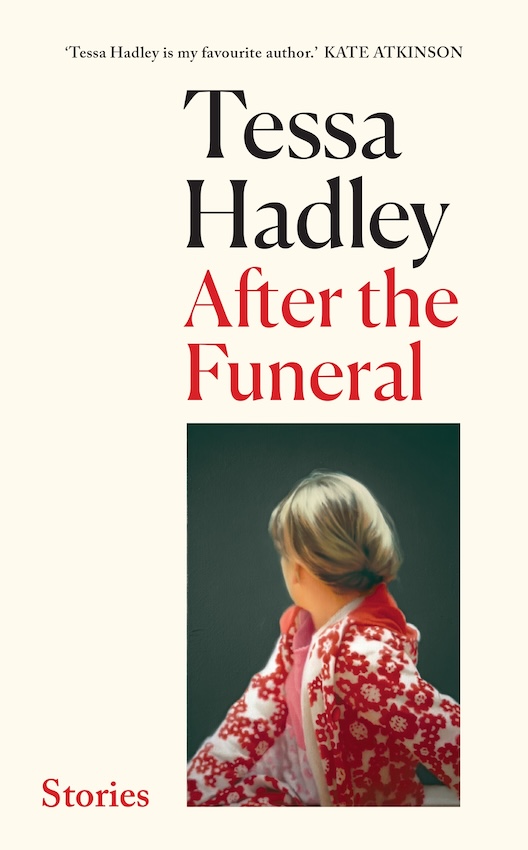
Book Review: After the Funeral – a short story collection that’s as compelling as any novel

I rarely seem to pick up short story collections these days. There are always so many brilliant new novels coming out all the time, and you get used to the way the plot teasingly unfolds with the longer form, the unrolling of scenes and the character development. But sometimes a short story is just such a wonderful thing. A small, complete entertainment. It can say a lot too.

And that’s what you get with Tessa Hadley’s latest collection, After the Funeral. These twelve stories are for the most part family stories, delving into the reactions and emotions when something happens that upsets the applecart in relationships, between siblings, between parents and daughters and with couples. The subtle undercurrents of the class system are also there. Things are suitable or not suitable, or plainly ludicrous in a particular milieu.

Several stories have children dealing with parents acting alarmingly. The title story has two daughters whose world changes after the sudden death of their father, leaving their beautiful mother, who is something of an airhead, to provide for her family. It’s the 1970s and women didn’t necessarily equip themselves with career prospects back then. A family connection soon sets her up with a job in the office of a dentist. Of course the dentist falls in love with her. In “Cecilia Awakened”, Hadley perfectly captures that feeling you have when you discover as Ceclia does at fifteen, what an embarrassment family holidays, and in particular, parents, can be.

Many of the stories have their roots in the last decades of the twentieth century, while others dip back into the past from the present day. In “The Bunty Club”, three sisters return to the family home when their mother is dying in hospital. They are such different characters, and in a few deft paragraphs, Hadley vividly describes their characters as older women, bookish Pippa, capable Gillian and glamorous Serena – what drives them apart and what can bring them together again.

— Bathroom’s empty! Gillian said. — You should get in before Serena embarks on any aromatherapy. I wish she’d wash the bath out when she’s finished.
— She’s up already, Pippa said. — Look! Worshipping in the garden.
Gillian came to stand beside her. They were spying, and meant to say something dry and funny about their sister, taking advantage of watching her unseen: dancing in the long grass, flitting like a sprite in her black cotton tiered skirt and satiny top – which she’d most likely got from a charity shop, because she was solemn about waste and recycling.

“Funny Little Snake” is set in hippy era London, and is a heart-breaking story of middle-class neglect of a young child, and the woman who attempts to rescue her. In fact there isn’t a lot of good parenting on offer in the collection – distant or missing fathers, mothers wrapt up in their own lives, families recreating themselves after loss or divorce. Tessa Hadley’s writing is too crisp and sharp for the stories to seem downbeat; interesting developments make them crackle with energy.

I’d already enjoyed an earlier novel, The Past, by Tessa Hadley, which was another brilliant look at a family and shares some of the themes on display here so I was expecting to enjoy this collection. I read these stories one after another, but a collection like this could happily sit on the bedside table, ready to be dipped into again and again. But they are so moreish, I dare you not to keep reading until they’re all finished. After the Funeral gets four and a half stars from me.

Book Review: Zero Days by Ruth Ware – a compulsive thriller from a master of the genre

I always enjoy reading about an interesting new business or career I’ve not come across before – the processes, the clients, the marketing. In Ruth Ware’s latest book Zero Days we’ve got a couple of business penetration security specialists – husband and wife team Gabe Medway and Jacintha (Jack) Cross. Their business, Crossways Security, tests out security both inside and out for their customers. Gabe, an expert hacker does the computer side of things, leaving Jack, pint-sized but super fit, to break in at night, testing alarms, locks and security procedures. They make a great team.

The story begins with Jack entering a client’s premises, from climbing a six foot wall, through to avoiding CCTV cameras, sneaking through doors, disabling alarms and evading the security personnel. Gabe is constantly in her ear, helping her find safe corners and exit points. She has a few close calls but ultimately gets out unscathed, a bit like a character from a Mission Impossible movie.

But heading back to her car, she bumps into the head of security which means a trip to the police station where she tries to contact her client. The minutes tick by, and it’s the small hours before she gets home, only to find that Gabe has been murdered. Shock and anguish delay her call to the police leaving some hours not accounted for when she is later interviewed by the senior investigating officer, DS Malik. Her sister Helena implores her to get a lawyer – spouses are always the first suspect in a murder, they have the means and opportunity; all the police need is to find a motive.

Aside from the grief and shock Jack is experiencing, an email informing her of a life insurance policy to the value of a million pounds adds to her woes. And the way that Malik seems to be homing in on her during a voluntary visit to the station causes alarm bells. Suddenly it seems that the police have chosen their perpetrator, and if they lock up Jack, no one is ever going to find out who the real killer is, the same person who is framing her. With a few more security sidesteps, Jack exits the police station and goes on the run.

Inside the station it was noisy and smelled of cleaning fluid and used coffee cups. As I waited in line to speak to the officer behind the front desk, I couldn’t help scoping the place out as if I were on a job. Two exits – one to the street, unmanned; one to the interior of the station, no lock as far as I could see. There was probably an activation button under the desk. One fixed CCTV camera in the corner with a huge blind spot that covered most of the right-hand wall – not a very good design for a police station. The odd thing was that I had no memory of any of it from before. Shock had wiped half the night’s events from my brain – which felt strange, but no stranger than mechanically assessing the building’s risk profile in a world in which Gabe no longer existed.

The book is set for the most part over seven days, as Jack disguises herself, evades capture, copes with injury and tries to piece together what it was that Gabe was doing that got him killed. She has a bit of help from Helena, a busy mother of two, as well as Cole, Gabe’s best friend who was like a brother to the victim, and like Jack is devastated by the murder. At the heart of it all is some cyber crime that went a little over my head but makes for an interestingly different storyline. There are a lot more Mission Impossible type action scenes as Jack gets closer to the truth.

Zero Days was such a compulsive read, I was thankful for a weekend of cold, rainy weather. I inhaled this book, having to remind myself to eat. The writing is sharp and immediate, the tension non-stop, with first-person narration that makes you imagine yourself in Jack’s shoes. You can’t but wonder what would you would do in similar circumstances; how you would cope. The novel must surely add to Ruth Ware’s reputation as the Queen of Just One More Chapter. Zero Days is a four-and-a-half star read from me.

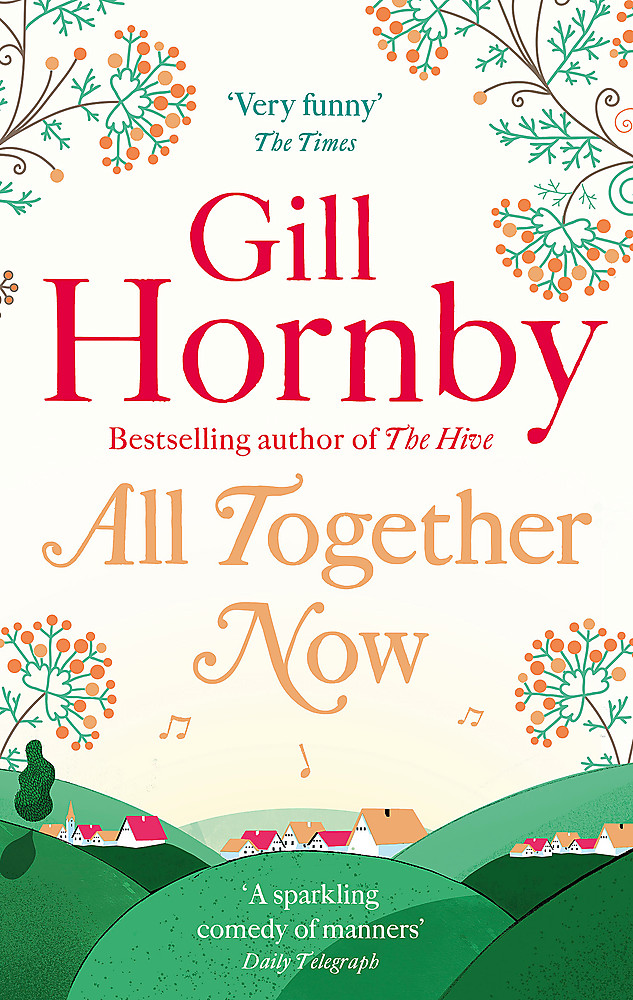
Book Review: All Together Now by Gill Hornby – a heart-warming read full of quirky characters, humour and song

Sometimes all you really want is a nice, “feel-good” novel – something to chase away the darker clouds of a difficult day. The best of them will have characters you’ll warm to, a plot with a few surprises and an emotional pull – tears or laughter, either way, I’m not fussy.

I haven’t been in a choir since school, but still remember the whoosh you get when a lot of people get together and harmonise in song. Gill Hornby brings her joy for choral singing into her story about a struggling choir in a dead-end town. All Together Now follows the lives of three main characters: socially-awkward Bennett, once a choir boy and now, recently single again, he’s at a loose end; librarian Annie who does all the donkey work for the choir as a way of dealing with her “empty nest”; and Tracey, who is too cool for choirs, but can really belt out a number in the privacy of her home. Tracey also has a burning secret.

The story starts off with a car accident that leaves the Bridgeford Community Choir rudderless, its choirmaster hospitalised and in a coma. There’s a county choral championship up for grabs, and a town in dire need of invigorating – but can a medley from The Sound of Music or The Carpenters be the answer?

Tracey spots the choir performing outside the station one day and it makes her cringe. She’s one of life’s soloists. When her layabout son of twenty-two goes out to work one evening, she suddenly feels liberated. She dusts off her old music collection and begins to sing. A knock on the door and there’s someone she recognises; it’s Lewis from the choir, surprisingly also a neighbour, who rather than demanding Tracey turn it down a bit, implores her to join their choir.

Tracey became aware that, rather than the raspy, throaty one that she used when she was singling along with Billy, she was using her chest voice for once, and she could feel the calming, anti-depressant effect it had on her stressed-out body. But it wasn’t until she was back in the living room, tucked up with her glass and the bottle on the sofa, that she realised exactly what it was she was singing. Christ almighty. Those bloody belters had wormed into her ear, through to her brain, down to her lungs. They had regressed her. She was regressing. For the first time in nearly thirty years, she was spending the night in alone pretending to be Karen bloody Carpenter. How sad was that?

The story follows the lives of Annie, Tracey and Bennett in parallel to the struggling choir that might just save them all. Tracey finds she’s not such a soloist after all, in the choir or in life; Bennett steps up to help save the town, and proves to his kids that he’s almost kinda cool; Annie takes a hard look at her marriage and makes a surprising discovery. And the choir gets a bit better. It’s an uplifting tale, but it’s also full of laughs and dry wit, particularly in the way the characters bounce off each other, disagree but also sing together. There are some amusing and some discordant minor characters that give the plot a bit of tension.

The story is peppered with music – the lines of songs nicely mixed in the scenes describing the choir in rehearsal so you have a sense of how it all sounds. Most of the songs are pretty familiar, but in case you don’t know them there’s a handy play-list of at the back and even a Spotify link so you can hear them as well.

All Together Now really hits the spot for a big-hearted, cheering sort of read, more character driven than a gripping page-turner, the prose bright and witty. I’ll probably not be rushing off to join a choir anytime soon, but will happily curl up on the sofa with another book by Gill Hornby. This one’s a four-star read from me.

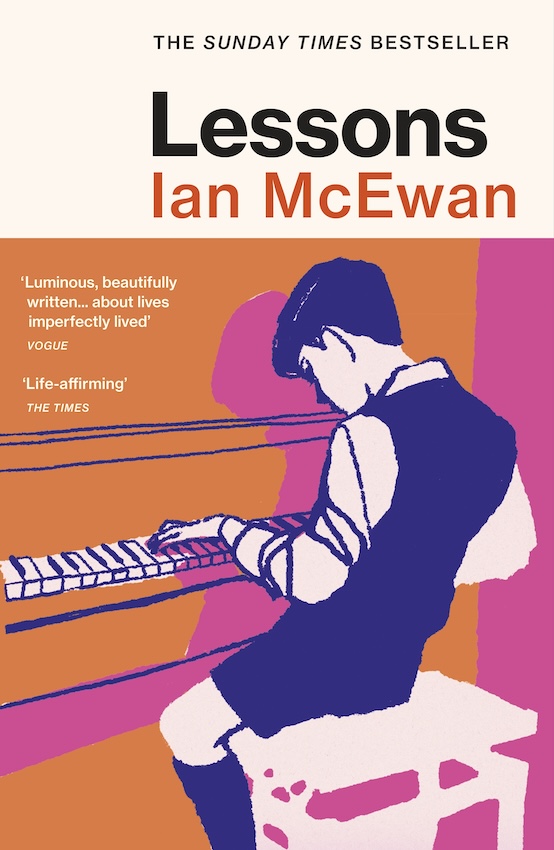
Book Review: Lessons by Ian McEwan – an epic read in more ways than one

Ian McEwan is usually a reliable author, one I’ve turned to before anticipating a satisfying and intelligent read. And that’s pretty much what you get with Lessons. The story follows Roland Baines from his childhood and delivery to an unusual boarding school – we’re in the late 1950s – through his schooling and into adulthood, and on to the present day. Critical to his story are the lessons he has at school with a predatory and obsessive piano teacher.

Rolande’s experiences, the grooming and sexual predation by Miriam Cornell, have an ongoing effect on his life. At first the story weaves these scenes from school with a police enquiry into the disappearance of Rolande’s wife Alissa in the 1980s. She has left a note and sent postcards from Europe, so there’s no obvious reason to suspect foul play, but DI Browne wants to be sure. Roland has been left holding the baby, literally, seven-month-old Lawrence.

The story meanders through the years bringing the past up to the time of Alissa’s vanishing and beyond and along with Roland’s story we have key moments of recent history. There’s the Cuba Missile Crisis, which is what sends Roland into a spin, cycling towards danger and Miss Cornell. There’s the fall of the Berlin Wall, another key factor in Roland’s life, the rise of New Labour and much more. Roland is a political animal and there are groups of friends around the dinner table, and lively discussions.

Throughout, Roland considers the effects of broader events in history on his path through life. It is obvious that Roland had potential to have a solid career in something, possibly even as a concert pianist. But failing at school and then bringing up a child on his own have led to a working life that is a cobbling together of hotel piano playing, occasional journalism, and tennis coaching. He’s also a terrific dad. He has relationships with other women but most of them don’t stick. Has he been ruined emotionally by Miss Cornell?

Against his chest he felt the baby’s heartbeat, just under twice the rate of his own. Their pulses fell in and out of phase, but one day they would be always out. They would never be this close. He would know him less well, then even less. Others would know Lawrence better than he did, where he was, what he was doing and saying, growing closer to this friend, then this lover. Crying sometimes, alone. From his father, occasional visits, a sincere hug, catch up on work, family, some politics, then goodbye. Until then, he knew everything about him, where he was in every minute, in every place. He was the baby’s bed and his god. The long letting go could be the essence of parenthood and from here was impossible to conceive.

And yet all in all, Roland’s has been a good life. A life rich in people, experiences and love. He hasn’t been a big achiever; he’s had to be a parent, rather like the lives of many women. So there’s a feminist message here too – not only through Roland, but in the stories of Alissa, her mother and Roland’s mother too.

Roland’s a likeable protagonist, which is just as well as we are with him throughout all the things in life that trouble everyday people. What secrets have his parents kept all these years? How will a new government affect things? Or even, are we on the brink of another world war? The tiny things as well as the broader issues. It’s a novel full of wisdom, and the gaining of it, and I suppose these are also the lessons of the title.

For quite a way through I thought nobody, and certainly not Roland, was learning any lessons. He really does seem to bumble along, reacting to things, rather than making decisive steps in any direction. But he mostly gets there in the end and there are some memorable scenes. McEwan creates these beautifully. The scenes with Miss Cornell are somewhat creepy, but affecting.

While not especially long, it’s a monumental work, and I admire Lessons hugely, but somehow it felt at times rather a slog. I think this is down to the lengthy timescale of the book and also the way it lingers on life’s more difficult moments, of life slipping away, of our mortality. You can relate to this for sure, but you long for lightness and hope. In the end I was glad to have read Lessons, but certainly glad to finish it too. So it’s a four-star read from me.

Book Review: The Lie of the Land by Amanda Craig – a cracking novel of rural England, the plight of the middle classes, with a mystery thrown in

Sometimes when you pick up a novel, you just instantly know you are in good hands. I felt like this about The Lie of the Land with its interesting premise – a couple desperate to divorce but can’t because they have no money. So they rent out their London house and find cheaper digs (together!) in the country with their children.

Stories where people ditch the city for the countryside for whatever reason have been around since the novel has, quite probably, or at least since Green Acres appeared on TV in the sixties. But there’s always fresh material to mine, particularly when you’ve got such complex characters as Quentin and Lottie Bredin. Quentin is older than Lottie and his career as a journalist has taken a dive – he’s rude and arrogant and has upset too many people. To make matters worse, Lottie has discovered he’s had several affairs, and all the while she’s been left to manage the home and her children.

Lottie was once an up-and-coming architect, and keeps her home like something out of House and Garden. Perhaps that is what makes her so difficult for Quentin to live with: her fastidiousness, her sharp tongue, plus her ongoing tiredness since the birth of their daughters – Rosie (6) and Stella (8). An opportunity to rent a farmhouse near Quentin’s parents in Devon ridiculously cheaply has them reluctantly leaving London and all its temptations behind.

The novel has a load of interesting plots woven together, with several main narrators. We’re with Lottie, angry and grieving over the way Quentin has treated her, while she tries to balance the books and economise. If they can stick it out for a year, they can clear their debts and sell the London house. This will pay for their divorce and leave enough capital to set up house separately.

Her daily walk includes a visit to the village shop, a Portakabin crouched in the church car park. The design makes her wince, but just to talk to another adult who doesn’t hate her is a relief.
 ’Home-made?’ she asks, pointing to pasties, keeping warm in front of the counter.
 ’Oh, yes. We don’t hold with Humbles.’
 ’It’s good that Shipcott still has a shop.’
 ’It doesn’t make a profit,’ the woman says, shyly. ‘We volunteer, though we all worry about being held up at gunpoint.’
 ’Do you really?’
 ’You’d be surprised. There’s crime here, my lovely, just like everywhere else. But how else are pensioners without cars going to get their food and money each week?’
 She has never known people like this, with their terrible teeth and terrible clothes and kindness. That’s what astonishes her most: the kindness.

We’ve also got Quentin, who can’t believe the nosedive his career has taken, but is still trying to keep in the swim while being a decent father. There’s Xan, Lottie’s eighteen-year-old son, desolate at missing out on a place at Cambridge and at the idea of his London life coming to a halt. Showing us the rural point of view, there’s Sally, a district health nurse with her own quiet grief.

While this seems to be mostly a novel of a marriage, there’s also a grim mystery with the hideous death of the previous tenant at Long Farm, an unsolved crime no one has told the Bredins about. You know you will find out the who and why of the crime by the end of the book, but in the meantime there’s so much character development, as rural life weaves its charm and throws up new challenges for the family.

We get plenty of insight into rural issues, particularly the struggles for farmers to make a living off the land in a competitive market-driven economy. The Polish immigrants that fill in doing unpleasant and exploitative work the locals avoid is evocatively depicted in scenes at Humbles Pie Factory where Xan picks up a casual job. Also the loss of a way of life, the closing of schools as people move away.

Then we’ve got a look at intergenerational relationships, particularly between Quentin and his dying father – the guilt, the disagreements and old scores. And about parenthood, both good and bad, as well as the redemptive power of music and literature. Quite a lot to think about then.

The writing sparkles with wit and vivid descriptions, and is polished and nuanced. You don’t have to like the characters, certainly not all the time – Craigs shows them warts and all – but you can’t complain they’re not interesting. Each finds themselves caught up in difficult dilemmas that give the story plenty of go. Meanwhile all the plates Craig keeps spinning are carefully balanced and then caught at the end for a cracking finish. I loved every minute of it and, although it’s not saying a lot – this being only February – The Lie of the Land is quite my favourite book of the year. A five star read from me.

Book Review: The Keeper of Stories by Sally Page – a big-hearted novel about letting go

I’d forgotten why this book was on my list – probably a glowing review somewhere (thank-you, if that was you), but was soon ensconced in the story. I quickly discovered a novel packed with quirky characters and gentle humour – two key ingredients for a pleasant, feel-good read.

The Keeper of Stories takes us to the English university city of Cambridge, where Janice cleans people’s houses and discreetly collects people’s stories. This isn’t for any inclination towards blackmail; it’s just a kind of hobby. Many of these stories come from clients: the famous opera singer who has come from humble beginnings, charming but frail Carrie-Louise, and recently widowed Fiona and her boy Adam who are still grieving. Everyone knows Janice is the best cleaner in Cambridge, but not everything’s plain sailing.

For a start there’s her husband Mike, who is a serial job-quitter, never keeping the same employment for more than a month or two. To make things worse he always leaves on a sour note. He belittles Janice for her humble work even though it’s her earnings that keep a roof over their head, and his insistence on sending their son Simon to boarding school has caused a rift between mother and son.

When two of her more difficult clients, Mrs YeahYeahYeah and her husband Mr NoNoNotNow ask her to clean for the husband’s autocratic mother, Mrs P, it might just be the straw that breaks the camel’s back for Janice. Yet she forms an unlikely alliance over stories with Mrs P. Catching the bus – Mike nearly always has the couple’s car – her attention is caught by one of the drivers who reminds her of a geography teacher.

“How many stories do you think that there are in the world? Seven? Eight? I can’t remember how many. I read in a magazine somewhere that there are only a certain number of stories ever told.”
  Mrs B sits quietly, watching her.
  Janice sighs. “You and I both know what’s coming, don’t we? It’s a predictable story. It has been played out in hovels and palaces around the world since the beginning of time. There are no new stories, Mrs. B.”
  “But this is your story, Janice, and I believe you need to tell it.”
  “Do I? Will it make any difference? I can’t change the ending.”
  “That’s where I think you’re wrong.”

Mrs P’s has determinedly unsettling ways, trading stories, including that of the scandalous Becky, a courtesan from Paris and her rise in society, in her attempts to hear Janice’s story. For we soon realise that Janice’s collecting of stories is her way of avoiding her own, a story that she feels is too dreadful to tell. Through all this, Mrs P also has a battle on her hands to stay in her university flat, while her son wants to throw her out. Janice is soon doing her bit to help.

There’s plenty of humour and whimsy in Janice’s interactions with her clients while the story builds in drama as it seems likely for Janice that change is in the air. This will not be without pain, but Janice has her friends to help her through, as well as Decius, the sweary dog that Janice walks for Mrs YeahYeahYeah, and who patently thinks Janice should be his owner.

We’re in classic ‘second chances’ territory here, and it all comes together nicely for a big-hearted read. The writing is witty enough to avoid being sentimental – often a danger with this type of book. Keen readers will enjoy the references to literature, while the characters are varied are and interesting. Look out for Page’s new novel, The Book of Beginnings, which will be out later this year. The Keeper of Stories is a four star read from me.