Book Review: Back When We Were Grown-Ups by Anne Tyler – revisiting an old favourite

While there are so many terrific new books out there to tempt and distract, I like to come back to old favourites now and then. A favourite author for me is Anne Tyler. Back When We Were Grown-Ups was first published in 2001 but has a kind of timeless quality which I find very appealing. It follows Rebecca who wonders how life would have been different if she hadn’t been swept off her feet by Joe Davitch all those years ago; if she’d finished college and gone on to marry her childhood sweetheart instead.

At barely twenty, Rebecca had met Joe at a party venue his family ran called the Open Arms, a large terrace house with high ceilings in a slightly rundown part of Baltimore. An odd coincidence makes her laugh, and Joe is drawn towards her apparently cheerful nature. But all the while, Rebecca had always seen herself as a fairly serious girl, intent on finishing her history degree.

Not only does she marry Joe instead, but she also takes on his three daughters, has one of her own and, when Joe dies in a car crash six years into their marriage, she runs the Open Arms as well. This doesn’t even include the elderly folk she looks after, first Joe’s mother, then Poppy, his uncle. The Open Arms needs constant repairs, and as the decades pass, there are grandchildren to babysit too.

She’s fifty-three when we meet her at the start of the book, organising a family barbecue and trying to make everyone happy. Which isn’t always easy – the Davitches are a prickly, discontented bunch at times, particularly the girls, who are prone to squabbling or disapproving of their sisters’ choices. Circumstances trigger Rebecca into wondering what happened to the boy she dumped for Joe, and she decides to look him up.

This really is a novel of characters – the four daughters all with their own set of problems are constantly in and out of the Open Arms, also the Davitch home which Rebecca still shares with Poppy, now approaching his 100th birthday. We’ve got the girls’ partners and offspring, as well as Zeb, Rebecca’s goofy brother-in-law, a hospital doctor who’s never married.

They’re all interesting and entertaining, but I particularly loved Poppy with his memories and enjoyment of food, his discourse on what it’s like to be so old and so on. And Peter, who at eleven is a new arrival into the family via his father’s marriage to one of the girls. He sticks out for being pale compared to the dark haired Davitches as well as shy and nerdy. Tyler captures beautifully the bickering dialogue of sisters, the way conversations waft in and out between characters, between topics as people pounce on ideas or lose the thread of what they were saying, with all the humour that results.

The story takes its time as Rebecca rethinks her life and tries to reconnect with her old flame, now a divorced physics professor, and ponders her choices. Was Joe ever in love with her, or was she just useful when he needed help? Some readers may find the pace a little slow as the scenes, often party scenes, pile one on top of the other. A baby is born, there’s a wedding and Poppy has his birthday bash, meals are served and tradespeople called in.

But without being an out and out comedy, I found myself chuckling my way through them all. I once came across a comment Tyler made about the fiction of Barbara Pym in which she stated: “she reminds us of the heartbreaking silliness of everyday life”. The same could be said of this novel, the way Tyler captures all the muddles, missteps and misconceptions. I loved it, finding it well-worth a reread, both relaxing and hugely entertaining – a four star read from me.

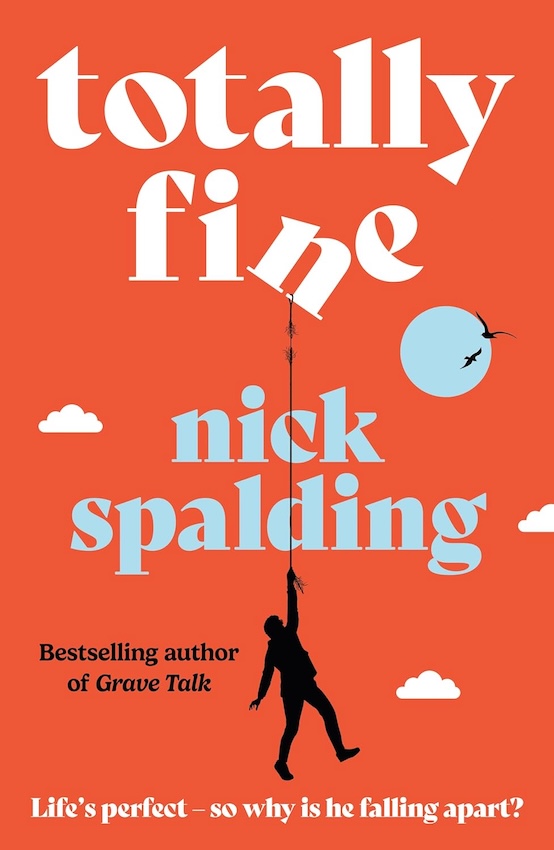
Book Review: Totally Fine by Nick Spalding – an entertaining comedy of manners with a touch of philosophy amid the humour

The main character in Nick Spalding’s new novel is Charlie King, who could be a really annoying person if he was in your life, if he wasn’t so well meaning. Obviously his girlfriend Annie sees this in him, as do his long-time buddies, Leo and Jack, but really, life with a Charlie King around would be exhausting.

Charlie makes his living planning events, all kinds of parties and marketing do’s for the middle classes. And he’s really good at it. The story begins with the birthday party he’s planned at a bowling alley for Annie’s young nephew, with a Jurassic Park theme, actors in costumes and fake dinosaurs, the works. A panic attack hits Charlie, triggered by an annoying song by the Black Eyed Peas – the same song that was on the radio when he had that car accident a while ago – something he’d never told Annie about. In fact he’s rather blotted it from his mind.

Doing his best to put the incident at the birthday party behind him, He gets back to work. But something isn’t right and he makes a big mistake at a gender-reveal party, which sees his business suddenly going south. Charlie decides the time out this offers is the perfect opportunity to confront his issues. But when he realises that his best mates Leo and Jack are also suffering from anxiety, Charlie decides they can all fix their problems together. Because that’s what Charlie does – fixes things up and makes everything perfect. If he can do that with events, he can do that with personal problems, right?

The story follows Charlie’s harrying his friends into different therapeutic options, from magic mushrooms, to navel-gazing in the wilderness. This creates plenty of amusing and visually interesting scenes. Throughout everything, he ignores Annie’s advice to consult a doctor, or his friend’s growing resentment. He seems unable to see what’s under his nose or understand his own problem. Why is he so afraid to see a doctor?

Totally Fine is an entertaining look at some of society’s ills – the pressure to perform, the endless distractions demanding our attention, the need to seem strong to the ones we love when inside we need help. Nothing really new but maybe ramped up here for the digital age. This is shown through one man’s problems, and as a professional tasked with providing his clients with the perfect social media opportunities, Charlie is the perfect protagonist for this. Perfectly imperfect, that is.

It’s a light, fun read, if you don’t mind a bit of schoolboy humour from time to time. It’s touch and go whether everything will turn out “totally fine” for Charlie and his friends, but you can bet there will be lessons learned. I read this after some darker novels, and it was a relaxing read that was just right. Nick Spalding is the author of around 20 books, mostly humorous fiction about modern life with his new book, Totally Fine, just released this week. I read it courtesy of Netgalley, and it’s a three-star read from me.

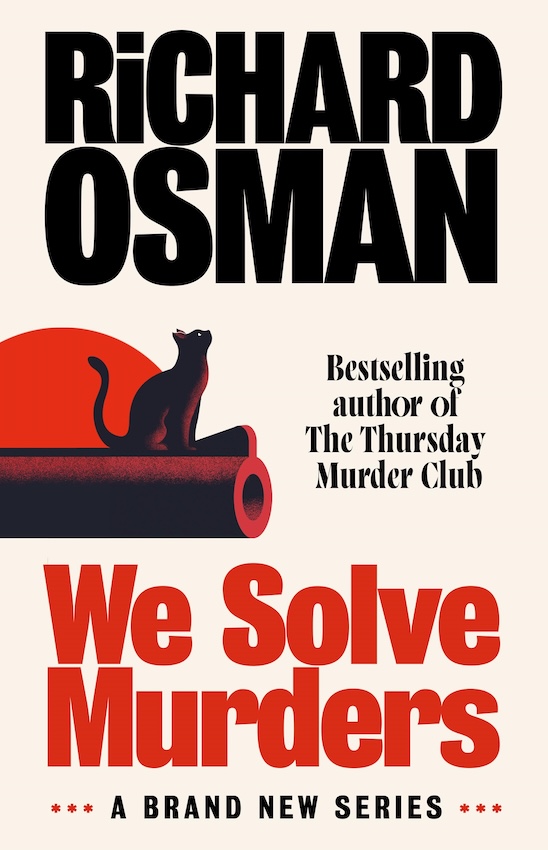
Book Review: We Solve Murders by Richard Osman – a very funny crime caper and first of a series

I came somewhat late to The Thursday Murder Club party, only picking the book up when a movie starring Helen Mirren and other big names was in the wind. It was such a fun read, I was keen to get my hands on the first of Richard Osman’s new series:, We Solve Murders. And I’m glad I did.

The story begins with Amy Wheeler, a private security officer – a body guard no less. Her current job is looking after world-famous author Rosie D’Antonio at her home on a remote island off the South Carolina coast. It should be a cinch, lots of relaxing by the pool and better than decent meals served by an ex-Navy Seal turned chef. But someone wants to kill Amy, and before you know it, she’s on the run with Rosie, who has her own plane, which comes in handy.

Next thing, the scene switches to the more hum-drum world of Amy’s father-in-law, Steve – an ex-copper turned private investigator. Living in a quiet English village in the New Forest, where ponies wander the streets as if they own the place, which they kind of do, his cases are no more tricky than missing pets and minor misdemeanours. He has mates at the pub and never misses Quiz Night, but still desperately misses Debbie, his late wife.

Amy and Steve are good pals, Amy on the phone to her father-in-law most days with her encouraging banter. So when she needs help, Steve’s the person she turns to. There follows a very complicated plot, involving money laundering, social media influencers trying to hit the big time, and the growing reality that Amy can’t trust anyone – except Rosie and Steve, that is.

The three make an odd team – Amy thrives on adrenaline and has passed her employer Jeff’s psychopath test with flying colours – Jeff’s criteria when hiring security staff. Rosie is all glamour, seemingly ageless, drinks everyone under the table and has an eye for the men. She’s quite keen on Steve, but he’s still devoted to Debbie and the quiet life. He also hates planes in spite being inveigled into joining an investigation that will take them to Dubai, via St Lucia and Ireland.

While there is a well-plotted mystery to keep you turning the pages and keep you guessing, for me the book was more about the characters and how they bounce off each other. Steve in particular has a stream of consciousness that is very funny, his ex-copper-like observations on a Cictaphone for seemingly ordinary things, his way of summing people up. But Steve, like pretty much everyone here, if full of surprises, even at times surprising himself.

This isn’t probably the book for you if you like to analyse every clue and figure it all out yourself through logic and deduction. But do pick it up if you’d like a lively, fun read to while away a wet weekend. There’s plenty of excitement – shootings, fights, helicopter, jet and jet-boat rides, and killers – plenty of those too. I imagine this would make another terrific movie or TV series – it’s full of visually interesting and unpredictable scenes, interesting characters and great dialogue. I loved it and will be keen for the next in the series. We Solve Murders is a four-star read from me.

Book Review: Murder Before Evensong by Rev. Richard Coles – an ecclesiastical cosy that takes you back to the ’80s

The cosy mystery genre is as varied as any, and some are definitely better than others. I am always on the lookout for the feel of Agatha Christie’s Miss Marple stories when I pick one up, so this one with its classic English village setting seemed promising. Murder Before Evensong introduces us to the parish of Champton, a village with a lord of the manor, Lord Bernard de Floures of Champton House, and a rectory, the home of our sleuth, Rev. Daniel Clement.

When Daniel suggests the installation of toilets at St Mary’s during a church service, he couldn’t possibly have imagined the fallout. A posse of flower ladies are appalled that the space required will mean the loss of the back pews. Daniel is reluctant to back down, but soon has his hands full with other matters. There’s the arrival of his actor brother Theo doing background research for a new role as a TV vicar in a ‘gentle comedy’. He wants to follow Daniel around to get a sense of what he does.

Then there’s the annual open day at Champton House, with the whole village mucking in, managing the door, running guided tours, serving tea. But the day ends in tragedy, with Daniel discovering Bernard’s cousin Anthony Bowness, who’d been archiving the family’s papers, dead in a back pew of St Mary’s. Anthony, a troubled man, often came here to pray, which is where Daniel’s naughty dachshunds come upon the body, stabbed in the neck by a pair of secateurs. What secrets had Anthony uncovered? And who knew how to kill so effectively, picking the exact spot for the carotid artery?

There are more murders before the last page, and multiple suspects. Nathan, the de Floures odd-job man, has a shady past, and the grandfather he lives with an even shadier one. And no one knows what to make of Bernard’s younger son, Alex, with his wild enthusiasms for art installations and his unsuitable friends. Other characters seem to be hiding secrets, and the village’s role in the war can’t be discounted either.

The story is well plotted, adding enough interest to keep the reader guessing and turning the pages. But the steady humour of the writing and the interplay between a host of quirky village characters lift this cosy above the average. Author, the Reverend Richard Coles, obviously knows well the life of an Anglican priest, and as a former member of the band the Communards, seems keen to evoke the 1980s here – Cagney and Lacey on the telly, Wham on the radio. But in a village like this, you feel it could be any time, that things don’t change a lot.

Daniel is a thoughtful, always considerate rector, at times struggling with the demands of those around him – not just his parishioners. His perceptive but interfering mother Audrey has to be constantly held in check, as do the two dachsunds, Cosmo and Hilda. The tiny general store and post-office is often the scene of gossipy councils of war between the anti-toilet brigade which contrasts nicely with scenes at the old-fashioned rectory and the palatial Champton House.

The writing is terrific too. Coles blends in Biblical and other ecclesiastical references to add authenticity without overburdening the story, which is generally lively and full of wit. I chuckled my way through, not particularly caring whodunit, as I was enjoying the journey so much. I’ll definitely be keen to continue with this series – the fourth is out later this year, so there’s a few to catch up with. Murder Before Evensong is a four-star read from me.

Book Review: Mr Campion’s Christmas by Mike Ripley – a fun, seasonal read with both thrills and period charm

Mike Ripley is the author of the Fitzroy Maclean Angel crime series featuring an enigmatic bandleader as its sleuth. Then about ten years ago he picked up where Margery Allingham left off and has written another twelve novels in her Albert Campion series. I feel as if I’m rather late to the party having never read any of the Campion books, which Allingham began way back in 1929, a kind of spoof, supposedly, of Dorothy Sayers’ Lord Peter Wimsey novels.

Having just read Mr Campion’s Christmas I feel I have a bit of catching up to do. The story begins with a bus journey from London, leaving the Victoria Coach Station a couple of days after Christmas. It’s 1962, a year that went down in history not only for the Cuban Missile Crisis, but also a severe season of blizzards that particularly rocked East Anglia. The coach is heading for Walsingham, a Norfolk village famous for its shrines and as such a destination for pilgrims.

Walsingham is also near an RAF airbase, so there are three genial American airman on board, as well as a small collection of odd characters: Hereward Henderson, a history buff and general bore, Miss Pounder, a reserved middle-aged woman, Reverend Breck who is planning to retire in Walsingham, and Fred De Vries, a Dutch art dealer who guards his luggage with his life. It’s a nerve-wracking journey for Graham Fisk, the driver, as snow turns to blizzard, so he’s only too happy to hand over the driving to one of the airmen. But even Oscar can’t keep the bus straight in such horrific conditions and the coach collides with one of the gate posts of a country house named Carterers.

Yes, it’s the home of Albert Campion, his wife Lady Amanda and their son Rupert, just home from his first term at a University in America. The three are hunkering down as the snow falls, along with Campion’s side-kick Magersfontein Lugg, a large man with a few rough edges. The hot meals keep coming thanks to Mrs Thursby, the housekeeper, and the family have also rescued Lloyd Thursby, Mrs Thursby’s deaf father-in-law who has a passion for watching westerns on the TV.

Suddenly the Campions are playing hosts to the stranded coach party and sleeping arrangements have to be sorted. But what starts out as Yule-tide hospitality turns into a hostage situation plus a murder, and it’s a return to the old days for Campion and Lugg who must save the day. It’s a classic kind of thriller, made entertaining and fresh by the quirky characters of the household as well as those from the coach. Most of this group seem to be harbouring a secret, just to make things complicated.

Of course the telephone loses connection so there’s no chance of rescue, and the Campions must rescue themselves, although help comes from an unexpected quarter. Lady Amanda is a modern woman, with a career in the aeronautical industry, and also gets to show her mettle. Just as all seems lost, Campion devises an oddball plan that is very entertaining as well as reasonably nail-biting. Campion hides his skill at handling tricky situations behind a facade of batty eccentricity, that’s a little P G Wodehouse, while his brain is in overdrive looking for windows of opportunity. There are codewords and his number one weapon, the size and heft of Lugg, is eventually deployed.

Bubbling through it all is a steady stream of wit, humorous incidents and smart writing that makes this update of an old favourite nicely readable for a modern audience. But you’re still happily in 1962 and the classic crime writing of this era – the perfect light, diverting escapade for Christmas. Mr Campion’s Christmas is a four-star read from me.

Book Review: The Bookshop Detectives: Dead Girl Gone by Gareth Ward and Louise Ward – a humorous take on the bookshop mystery, packed with local colour

I went to an author talk recently at which authors Gareth and Louise Ward described how they came to write a book together set in the New Zealand village of Havelock North where they live and where they own a bookshop. The Bookshop Detectives: Dead Girl Gone is a delightful cosy mystery and part of the humour for me, anyway – and this is a very funny book – comes from the way the main characters, Garth and Eloise Sherlock, owners of Sherlock Tomes, are seemingly versions of the authors and their world.

In real life, Gareth and Louise were also, once upon a time, coppers back in the UK, or Blighty as they call it. And they do have a large dog with a sensitive personality who is often at the shop – I’ve been there a few times, so I know. The world of these booksellers just seems made for a cosy mystery series, doesn’t it? At the talk I was amused to learn that the dog, Stevie, was a more prominent character in the first drafts, until the editor cut out large chunks with “too much Stevie” scrawled in the margin. So for lovers of mysteries where pets save the day and solve the murder, this doesn’t quite happen, although I am happy to say, Stevie does play a pivotal role in things.

The story revolves around a cold case, the disappearance of schoolgirl, Tracey Jervis, decades before. A bright student with a talent for poetry, Tracey left home, heading for the circus, and was never seen again. There were rumours of her being caught in a clinch with a teacher, but the work she did helping a politician with his campaign seems to have thrown up more questions. As well as being politically ambitious, Franklin White is a property developer, with an arrogance that makes him easy to loathe. And then there’s Tracey’s controlling father; and what about the ex-boyfriend?

Meryl is an artist, as she’s told us often, although I’ve never seen any of her work in Havelock North’s galleries or that other purveyor of fine art, the local coffee shop. She barges past me pulling a granny trolley, which she is far too young to be using. ‘What other calendars have you got?’ she asks, seeming indifferent to the fact that I haven’t set up for the day, or even yet switched the lights on.
Despite having been ordered from the reps in February, the main drop of calendars hasn’t arrived yet. They get later each year and the shipping issues we’ve had thanks to Covid have only made matters worse. ‘They’re in a box up at the counter,’ I tell Meryl. ‘We’ve just had a couple of the smaller suppliers so far.’ I grab two piles of magazines banded with plastic strips from outside the door and hurry after her.
‘What about “Nice Jewish Guys”?’
When we first opened the shop, and didn’t know what we were doing, we got an eclectic mix of calendars of which perhaps the most bizarre was ‘Nice Jewish Guys’. We put a photo of Eloise swooning over it up on Facebook as a bit of a giggle and sold all four copies the same day. Ever since it has been a firm seller every year, though the calendar rep told us we’re the only retailer in New Zealand that stocks it.

Garth and Eloise had never heard of Tracey Jarvis until a mysterious package is delivered to the shop with a copy of a book inside – See You in September, by real-life local author, Charity Norman. The book has been annotated with a message – a call to action to reinvestigate Tracey’s disappearance, and on the package is a reference to Eloise’s old police badge number, which was hardly something anyone local would know. The couple can’t help wondering if there’s a link to a nasty criminal Eloise had helped put away years ago and who casts a lingering shadow.

Other story threads are woven in, the most notable being the decision of one of the world’s best-selling authors to launch her latest book at Sherlock Tomes, a colossal and mind-boggling event that has to be kept under wraps. Then there’s the flower pilferer that is pinching flowers from the shop’s window box as well as the menace provided by some thuggish gang members who try to put a stop to the Tracey Jarvis investigation.

Everything comes together neatly, the plot building to a simmering conclusion full of surprises and fair dose of action. But while the book lives up to it’s ‘cosy mystery’ label, it’s also a view into the enchanting world of bookshops and the people who visit, its quirky and loveable staff, and the curious characters who inhabit the village. Dead Girl Gone is the first in a series, with a second book already in the pipeline to look out for. Can’t wait! This one’s a four-star read from me.

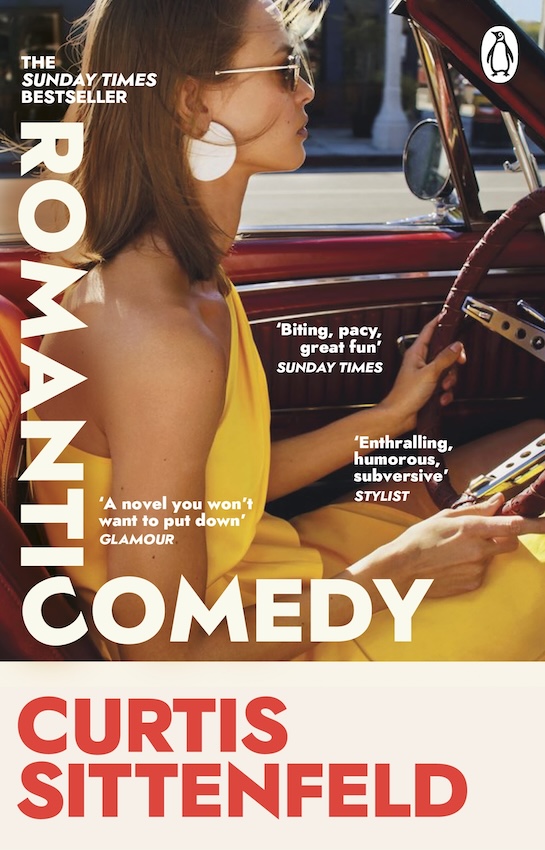
Book Review: Romantic Comedy by Curtis Sittenfeld – a warm and witty novel that explores the affairs of the heart

I loved Eligible, Curtis Sittenfeld’s modern interpretation of Pride and Prejudice, written for The Austen Project and published in 2016. It was smart, funny and romantic, and a very clever update. So I was expecting a similar vibe with Romantic Comedy, a novel about a sketch writer for a late night TV show and an unexpected romance.

Sally Milz has been writing comedy sketches for The Night Owls for almost ten years and has seen a lot of talent come and go. When fellow writer Danny starts dating Annabel, a beautiful actress who is also super talented and bright, Sally is peeved. Why is it that fairly ordinary guys like Danny can date and even plan a future with women who are way out of their league, when it never happens the other way around? There have been several Danny/Annabel type matches at the studio alone but you never see an ordinary-looking woman, or even a mildly pretty one, catching the eye of handsome star in his prime.

The arrival of Noah Brewster, a hugely successful and drop-dead gorgeous music star, as a guest host on the show gives Sally the perfect opportunity for a sketch to highlight this anomaly. The Danny Horst Rule would star Noah as the gorgeous guy who tries to date an average girl. Sally gets more of her skits voted in for the show that week, and so gets to spend more time with Noah at rehearsals. She finds him surprisingly nice, and what’s more, he apparently likes her. He’s easy to talk to and seems to seek her out.

The story follows their interactions and Sally’s growing attraction to Noah, a relationship that she discounts, because there’s no way a guy like that would ever think of her romantically, is there? We meet other people on The Night Owls, particularly fellow actors like Viv and Henrietta, who are Sally’s friends and sounding boards, whose advice is sometimes helpful, and often hilarious. Viv herself has met an eye doctor she’s attracted to so there’s advice going both ways. And we get a bit of Sally’s backstory – a failed marriage, the colleague who broke her heart.

Working on The Night Owls, Sally works excruciatingly long days, and nights, taking naps in her office, but then she’s a perfectionist and gives her work her all. She has decided never again to date a colleague, and has no time for more than an occasional night spent with someone she doesn’t care about. When Noah upsets the applecart of her carefully managed feelings, she doesn’t know what to do.

I heard someone say my name, but at first I was so deeply asleep that I incorporated the voice into my dream. I thought it was Bernard, the janitor, coming to empty my trash can, and, seamlessly, I mumbled, “You can leave the molluscs.” I felt a hand lightly pat my shoulder, and the person said, “Sally, I’m really sorry to bother you” – not a commonly uttered phrase at TNO – and I pulled the T-shrit off my eyes and the earplugs from my ears, sat straight up, and said, “What do you want?”
Hunched over the couch at such an angle that my sitting up had brought our faces within a few inches of each other was Noah Brewster.

This was a fun read for the most part. I found the look behind the scenes of a television show fascinating and Sittenfeld peoples it with plenty of interesting characters and scenarios. Danny’s and Annabel’s relationship has its ups and downs and so there’s plenty going on. There are ups and downs for Sally and Noah too, and a lot of the story has the reader wondering: will they or won’t they? There’s Covid and the lock-downs, long-distance communication and a lot of soul searching. So while this is in many ways a romantic comedy, it’s also at times a serious look at love and life.

Curtis Sittenfeld has written a smart, thoughtful and very romantic novel which has moments of laugh-out-loud humour. My only quibble is that Sally can be difficult company at times, with a tendency to shoot herself in the foot to make a point. Sometimes I wanted to give her a good telling off. So while I didn’t enjoy Romantic Comedy quite as much as Eligible, it’s still entertaining and clever – and a three-and-a-half-star read from me.

Book Review: Back Trouble by Clare Chambers – an oldie but a goodie from a favourite author

If you enjoyed Clare Chambers’s last book, Small Pleasures, as much as I did, you’ll be pleased to know her new book, Shy Creatures, is out soon. I’ve always loved this author’s particular way with empathy and humour, so when I found an earlier book by Chambers at a second-hand bookshop, I was delighted, in spite of having read it years before.

Back Trouble, first published in 1994, is about Philip, who is about to turn forty, and his life for the most part seems to have gone to custard. We first catch up with him at an awkward family New Year’s celebration. His insurance broker brother Raymond is over from Canada with a new batch of photos of his children, recounting their successes (the football and the gymnastics), while Philip has never felt less like celebrating. With the failure of his publishing company he is in debt up to his eyeballs and the love of his life having gone home to New Zealand, life couldn’t get any worse, could it?

A cold chip from an overflowing municipal bin sends Philip head over tail and the ensuing back injury leaves him bedridden. There’s nothing to do but to fish out the notebook and pens from under his bed and begin to write the story of his childhood – a New Year’s challenge flung out by Raymond, to be completed in three months – just a thousand words a day – no probs. We are reminded that this is the 1990s and the Internet is in its infancy, although probably a more modern-day Philip wouldn’t be diverted by technology as he’d be out of data anyway – he’s that strapped for cash.

The kitchen was the first room to be tackled. One of the men from the building site had given Dad and industrial-sized drum of bottle green paint from the batch which his brother, who worked for the Council, had been using to paint the park railings. Cost was Dad’s only criterion in selecting materials. This meant garish rolls of wallpaper from the bargain bucket outside the DIY shop, the top six inches of every roll faded by the sun, and brushes which moulted into the paint. He had an idiosyncratic way of decorating. Being both nervous and impatient he didn’t believe in preparing surfaces, always fearing that something terrible might be lurking beneath a layer of bubbly paper or flaking paint. So instead of stripping paintwork, or even washing it, he would set straight to work, brushing gloss over old gloss, dust, mould and even, in one instance, a dead spider which lay preserved like a Pompeian relic in its shell of green paint.

Philip is such a self-deprecating narrator – he has no illusions about where he’s at as he approaches forty – and his story is warmly humorous as it rattles along to a nicely surprising ending. There are some poignant moments too, particularly in Philip’s childhood, with adults not behaving as they ought to and the weight of knowledge that falls on a young boy growing up. It is easy to blame Philip’s careless yet penny-pinching father, but other adults also turn out to be unreliable or even predatory.

Odd allusions to Great Expectations add an interesting twist. There are a raft of curious characters, quirky, helpful or otherwise, which may be another nod to Dickens, particularly the scene at Philip’s grandmother’s house – the blind matriarch and hoarder of useless furniture, including four unplayable pianos, terrifying in her fierceness; the black-toothed Auntie Florrie smoking her woodbines; Punnet the obese black labrador. It’s like stepping back in time.

For a small book, Clare Chambers packs quite a lot in and it’s hugely entertaining. I know she can always be relied upon for an original and big-hearted read so I am so looking forward to Shy Creatures, released on Amazon at the end of the month. Back Trouble is a four-star read from me.

Book Review: Goyhood by Reuven Fenton – a hilarious road-trip story full of unexpected detours

People often expect twins to be alike – even the non-identical ones. But you couldn’t find two brothers more different than David and Marty Belkin, the main characters in Reuven Fenton’s debut novel Goyhood. We meet them during a heatwave in small-town Georgia when they’re twelve, the day that young Marty, soon to become Mayer, has an epiphany.

The boys are doing it tough, living with a mother who frequently absents herself and drinks too much. So it’s not surprising that when Marty is offered a chance to study at an Orthodox Jewish school, or yeshiva, in New York, he jumps at it.

Switch forward thirty odd years and Mayer is still a student of holy scripture, that’s all he has to do, thanks to the generosity of his father-in-law. His marriage to Sarah is not a happy one, weighed down by difficulties in conceiving a child. Things are all set to change again for Mayer when he gets the news that his mother has died. He will have to sit shiva for her and he’ll see his twin brother again for the first time in decades.

David has had a completely different life to Mayer, having to learn the lessons of life the hard way. There have been a lot of drugs and career misfires, but now he’s made his fortune in the e-cigarette market and turns up to collect Mayer at the airport looking the essence of prosperity. The two hardly recognise each other. A letter written shortly before their mother’s death reveals the bombshell that the boys aren’t technically Jewish which throws Mayer into a spin. With the help of their old rabbi, Yossi, he’ll have the chance to remedy that situation, in a week’s time.

But David’s still a wild boy at heart and persuades his twin to travel to New York with him for the appointment for his ‘conversion’ in a muscle car he nicknames Daisy. They take their mother’s ashes with them, the plan being to scatter them somewhere she would enjoy, and along the way collect an unappealing dog, but not Mayer’s luggage, which has not arrived with him at the airport. David has plans that Mayer should enjoy his week of ‘goyhood’ and live a little, while Mayer is like a rabbit caught in the headlights.

“And due to an unprecedented turn of events, we find ourselves facing an entire week with empty schedules.”
“You’re talking about a vacation,” Mayer said.
“A rehabilitation period to wrap our heads around the existential vortex we’ve fallen into.”
“A vacation.”
“A pilgrimage.”
“I don’t need a vacation. I don’t want to wrap my head around this. If it were up to me, I’d spend the week in a medically induced coma.”
“Listen, Ese, if there’s one thing I’ve learned, it’s when the going gets tough, the tough get in the car and drive.”

The story builds in tension as Mayer is pulled in different directions – his sense that he must live according to religious principals constantly under fire. As Mayer struggles to rein his brother in, Sarah is continually on the phone about his luggage and her sudden plans to join him at his mother’s house. She would be appalled by what Marty has been up to with David and all this adds brilliantly to the story’s humour.

Meanwhile there is plenty of temptation on offer to a man who has never been tried before, particularly when the two hit New Orleans and David offers a ride to Charlayne, an attractive acquaintance of his who is about to walk the Appalachian Trail. David is the sort who lives for the moment and acts on impulse, so the road trip takes some unexpected turns.

Fenton piles on one madcap scene after another, putting our characters through their paces, and even allowing the dog, Popeye, a moment of glory. Intermingled with all this is some deep soul-searching – by the end of the book, the reader has an inkling that change is in the air for Mayer, and possibly for David as well.

It all adds up to an entertaining, feel-good read enhanced by lively dialogue as the characters bounce off each other. The writing is polished and witty and the story never lags for a moment. I enjoyed it immensely and will be keen to read more by this author. Due for release on 28 May, Goyhood is a four-star read from me..

Book Review: All Together Now by Gill Hornby – a heart-warming read full of quirky characters, humour and song

Sometimes all you really want is a nice, “feel-good” novel – something to chase away the darker clouds of a difficult day. The best of them will have characters you’ll warm to, a plot with a few surprises and an emotional pull – tears or laughter, either way, I’m not fussy.

I haven’t been in a choir since school, but still remember the whoosh you get when a lot of people get together and harmonise in song. Gill Hornby brings her joy for choral singing into her story about a struggling choir in a dead-end town. All Together Now follows the lives of three main characters: socially-awkward Bennett, once a choir boy and now, recently single again, he’s at a loose end; librarian Annie who does all the donkey work for the choir as a way of dealing with her “empty nest”; and Tracey, who is too cool for choirs, but can really belt out a number in the privacy of her home. Tracey also has a burning secret.

The story starts off with a car accident that leaves the Bridgeford Community Choir rudderless, its choirmaster hospitalised and in a coma. There’s a county choral championship up for grabs, and a town in dire need of invigorating – but can a medley from The Sound of Music or The Carpenters be the answer?

Tracey spots the choir performing outside the station one day and it makes her cringe. She’s one of life’s soloists. When her layabout son of twenty-two goes out to work one evening, she suddenly feels liberated. She dusts off her old music collection and begins to sing. A knock on the door and there’s someone she recognises; it’s Lewis from the choir, surprisingly also a neighbour, who rather than demanding Tracey turn it down a bit, implores her to join their choir.

Tracey became aware that, rather than the raspy, throaty one that she used when she was singling along with Billy, she was using her chest voice for once, and she could feel the calming, anti-depressant effect it had on her stressed-out body. But it wasn’t until she was back in the living room, tucked up with her glass and the bottle on the sofa, that she realised exactly what it was she was singing. Christ almighty. Those bloody belters had wormed into her ear, through to her brain, down to her lungs. They had regressed her. She was regressing. For the first time in nearly thirty years, she was spending the night in alone pretending to be Karen bloody Carpenter. How sad was that?

The story follows the lives of Annie, Tracey and Bennett in parallel to the struggling choir that might just save them all. Tracey finds she’s not such a soloist after all, in the choir or in life; Bennett steps up to help save the town, and proves to his kids that he’s almost kinda cool; Annie takes a hard look at her marriage and makes a surprising discovery. And the choir gets a bit better. It’s an uplifting tale, but it’s also full of laughs and dry wit, particularly in the way the characters bounce off each other, disagree but also sing together. There are some amusing and some discordant minor characters that give the plot a bit of tension.

The story is peppered with music – the lines of songs nicely mixed in the scenes describing the choir in rehearsal so you have a sense of how it all sounds. Most of the songs are pretty familiar, but in case you don’t know them there’s a handy play-list of at the back and even a Spotify link so you can hear them as well.

All Together Now really hits the spot for a big-hearted, cheering sort of read, more character driven than a gripping page-turner, the prose bright and witty. I’ll probably not be rushing off to join a choir anytime soon, but will happily curl up on the sofa with another book by Gill Hornby. This one’s a four-star read from me.