Book Review: The Names by Florence Knapp – a ‘sliding doors’ novel describing one character across three possible lives

I like a book that takes you on a different kind of journey, so that you don’t quite know what to expect next. You’re not always looking out for plot points, twists or turning points. The Names is the story of a baby boy, born to Cora and Gordon and the question of his name. His father insists he must be called Gordon, like him and his father before him, both doctors and both domineering men. But Cora would prefer Julian, an altogether gentler sounding name, while the baby’s older sister, Maia, thinks he should be Bear.

We get three different stories – one for Bear, another for Julian and the last for Gordon, showing the man he becomes, a new chapter for every seven years. But it’s also the story of Cora and the abuse she suffers at the hands of her husband. Each story offers a different set of outcomes, and the different effects this has on each of our core characters, Cora, Maia and Bear/Julian/Gordon.

It’s an interesting concept which keeps you hooked on the story, wondering what is going to happen next. I found I was enjoying one version of B/J/G more than another for one chapter, but this would be different in the next. To start with Bear wasn’t really all that interesting – he’s so confident, like his name, likeable and successful. But Florence Knapp makes sure there are interesting things that happen so that life isn’t always plain sailing.

Julian is damaged by what happens to him, and struggles to open up. He worries he’ll be like his father, that he has that same ability to hurt, and avoids relationships. Gordon is also damaged by his childhood and growing up, and learns things the hard way. He was difficult to read about to start with, but in the end I felt he was the most interesting of the three. You feel for all of them in different ways. Alongside the young man is his relationship with his sister, who is also going through some soul searching. What is it like to grow up with a parent who is capable of such violence? To what extent do you also inherit that gene?

But it was Cora who really has your sympathy. In one story, the author captures the manipulation, control and violence the elder Gordon inflicts on her, which makes for grim reading. The way it goes on through the years and how her husband shuts down her chances to live her own life, to be her own person. The hopelessness and acquiescence. I found I desperately wanted to stay with Cora’s story to see if she will make it out alive.

In the background there are other characters coming into the picture, as each starts to build their own life, and grows their family. There are some interesting descriptions of the work they do, particularly the work of silversmithing and archaeology. The Names would make great fodder for book groups and I will be interested to see what Florence Knapp writes next – a more traditionally plotted story, or something different again. The Names is an engaging debut and a four-star read from me.
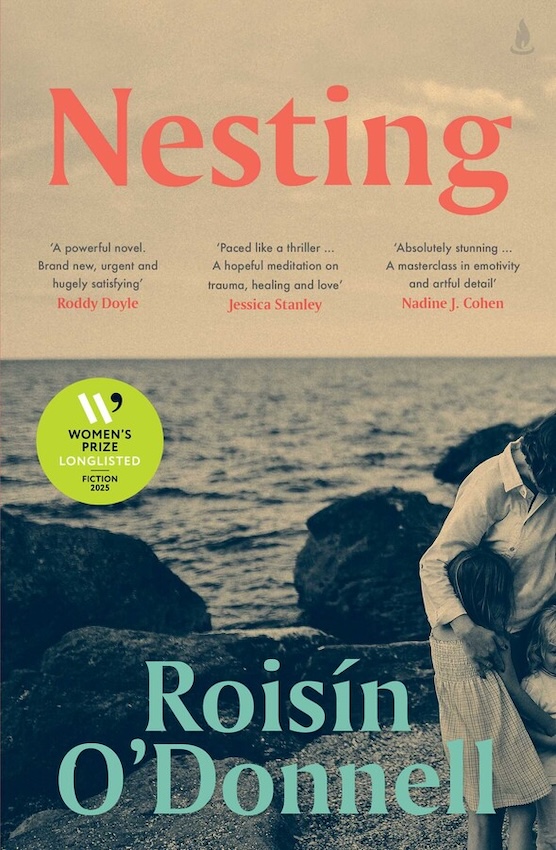
Book Review: Nesting by Roisín O’Donnell – a heart-stopping novel about a woman trying to leave her marriage and start again

This book reads more like a thriller than a slice-of-life contemporary novel. Nesting is about Ciara Fay who decides to leave her husband. She makes the sudden decision to grab the clothes off the line, bundles her children into her car and takes off, not knowing where she’s going. Her husband Ryan, upstairs in the shower, is completely oblivious.

Ciara has very little money. Ryan managed their finances, only giving her a bit of housekeeping money in cash and expecting her to account for it all. All the same, she has saved enough to tide them over for a few days. But with two girls under five, it’s going to be tough, even before she discovers she is pregnant again. The only reason she is putting herself through this is because she is so scared of her husband.

Ciara does everything right – she keeps Ryan informed about needing a break to keep everything above board. She doesn’t want to lose her girls. Her family – a mother and sister – are both in England and she can’t leave Ireland with her girls without their father’s permission.

When she finds a place in social housing, you get a lot of insight into the soul-destroying situation this can be. The lack of space – one hotel room for a family – and minimal cooking facilities. People hide rice cookers in their rooms, but there’s the threat they could be kicked out if discovered. They mustn’t use the lifts, it’s off-putting for the other guests, so they have to sneak up the back stairs. Even so, there’s a sense of community here and Ciara makes friends.

All the while, there are incessant text messages from Ryan which are like a battering ram, either declarations of love or hostile accusations, but always intense. Ciara is always on edge, her husband’s voice constantly in her head, dominating her thoughts. She doesn’t realise how bad it is until she talks to other people.

The story follows Ciara’s desperation to find a home, to find work, to make a new life for herself and Ryan’s ability to always crank things up another gear through lies and deception. So it isn’t surprising there is that thriller level of suspense. So often did I have my heart in my mouth, wondering if Ciara and the children would ever be safe. And it’s right down to the wire in the last chapters. Such an emotional roller-coaster of a read.

Through it all there’s imagery of birds. There are the young crow chicks Ryan finds in an abandoned nest on a building site and decides the girls can help him nurture. Another ploy. But other images too. It’s a beautifully written and crafted book. I enjoyed the audiobook, read by Louisa Harland. Even so, Nesting is so tense, so vivid, I could only listen to a little at a time. But gosh, what a great story. A five-star read from me.

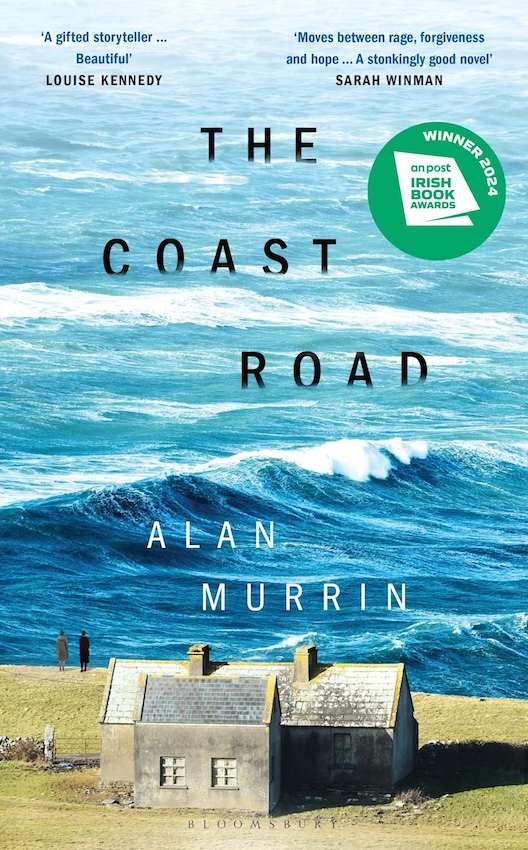
Book Review: The Coast Road by Alan Murrin – a novel about marriage and the price of non-conformity set in small town Ireland

I was impressed by this debut novel, which reminded me of fiction by other Irish authors I’ve enjoyed in the past, such as Anne Enright and Claire Keegan.

The Coast Road is set in a small coastal town in Donegal in the 1990s, a year or two before divorce became legal in Ireland. The story describes the awful predicaments people, and particularly women, could find themselves in while stuck in loveless marriages. It does this through three main characters.

Colette Crowley has escaped her loveless marriage to Shaun determined to live her life on her own terms. She’s a published poet but has done the unthinkable in running off to Dublin to live with a married man. Finding no joy in that relationship, she has come back to be closer to her younger children. But Shaun won’t let her see her kids, and it’s easy to drown her sorrows in booze.

When Colette rents a holiday cottage we meet Dolores Mullen, who is pregnant with her fourth child and all too aware that her husband sleeps with other women. She knows it could be dangerous to rent the cottage up the path from her home to Collette, but with another baby on the way, the Mullens need the money.

And then there’s Izzy, who is married to James Keaveney, a politician and a bully. Not allowed to work, Izzy fills her home with expensive china ornaments and does evening classes. The only brightness in her day are the chats she has with their priest, Father Brian. She knows Collette because her youngest son is friends with the youngest Crowley boy, but gets more friendly with her when she signs up for Collette’s creative writing class.

The three women are all deeply unhappy, and certainly unfulfilled while local opinion, the establishment and gossip all work against any idea of their standing up for themselves. In the background the political machine plays out, as a change in the divorce law is debated. But how this might help these women is yet to be seen, as Colette becomes more unstable, Izzy more angry and Dolores more anxious. The story slowly builds up to a breaking point that has you biting your nails.

As a male author Alan Murrin has done a great job at making these female characters believable, capturing not just their lives, but their voices and inner thoughts in a realistic way. And also their situation in a small town, where men have the power and nobody helps out if there is any sense of non-conformity. The writing is real, at times humorous, particularly through Izzy’s lens, the bigger situations balanced nicely with the minutiae of everyday life. It all adds up to an amazing story and reminded me a little of Claire Keegan’s Small Things Like These with characters needing to find courage to do the right thing against the tide of opinion.

Alan Murrin has won a couple of awards for this debut novel and I’ll be keen to see what he writes next. I enjoyed this as an audiobook and it was a superb read, narrated by Jessica Regan, who does a terrific job with all the characters. The Coast Road is another wee Irish gem and highly recommended – a five-star read from me.

Book Review: The Bee Sting by Paul Murray – a riveting novel about a family in strife

This is a superbly clever book that seemed to me particularly clever in that its cleverness isn’t at first all that obvious. One thing obvious about The Bee Sting is that it is very long. I don’t often go for long books. They have to have instant readability for me to want to persevere, because of the reading time involved. But once I embarked on this story of a family going through a tough time in small-town Ireland, I just couldn’t stop, because the writing is just so lively, character-driven and, at times, funny.

The story moves between the four points of view of Cass and PJ, teenage children of Dickie and Imelda. Dickie has taken on the family business built up by his father, a car dealership that has, until the recent economic downturn, been a reliable money maker. So much so that the family are among the most well-to-do around town. But now times are tough and Dickie doesn’t know how to fix it. Instead he’s spending his days in the woods with his weird mate Victor, building a bunker in case of an apocalypse.

Dickie was always the smarter son, but less successful with people than his famous footy-playing brother Frank. Everyone remembers Frank, not just for his flair on the sports field, but because of his charm and good-looks. His sudden death a couple of decades before in a car accident only made him seem more of a hero. At the time he was all set to marry Imelda. Dickie with his lack of social finesse and looks that were nothing to write home about seemed like a consolation prize.

Over the course of the book, we discover how Imelda came to marry Dickie instead, as well as both their back stories, Imelda’s coming from a family of ne’er do wells, a violent father with criminal tendencies. Imelda is astonishingly beautiful, which is how she caught Frank’s eye. Marrying Dickie so young and having children soon after, she’s never had a job, but is a brilliant shopper. As money troubles start to bite, she’s in a permanent fury, cross with Dickie and selling off anything she can online to keep at least some money coming in.

Meanwhile Cass has reached that age when everything – her family and life in a town where everyone knows everyone’s business – has become utterly impossible. With her best friend Elaine, she’s plotting to leave as soon as she can. Trinity College in Dublin beckons, but can she keep her studies up enough to pass her A levels when Elaine hauls her off to all kinds of pubs and clubs while they should be studying?

PJ is also having a tough time. His parents aren’t there for him, Cass is eternally cross with him and he’s not socially adept either, parroting facts he’s discovered supplied by his active and curious brain. With the failing of his father’s business, all the town knows about it so school can be hard. He loses himself in violent computer games, leading him to an online friendship. But is that new friend as genuine as he pretends to be?

I hadn’t expected to care for these four characters as much as I did. But Paul Murray takes you right inside their heads, revealing their secrets. In the background we’ve got a support cast of interesting support characters, among them dodgy opportunist Big Mike, Imelda’s great aunt Rose who can see the future, and Ryszard, the handsome charmer and baddie of the story.

While the novel carries you along entertainingly enough, there is a clever plotting that takes the book to the next level. There are very long chapters that build things up, and then very short ones that ramp up the tension. There’s clever stuff with the prose too, the personalities of the main characters reflected in the style. Imelda’s point of view, for instance, is written without punctuation, perhaps an echo of her fierce and furious way of thinking and speaking. There are no quotation marks for speech either, but somehow you soon get used to it and wonder, why do we ever have them in the first place?

Then there’s the ending. I wasn’t going to mention that as I’m still thinking about it, but WOW. Enough said. I’m certainly glad to have read The Bee Sting, even if it was very long, and yes, I’ll look out for more books by Paul Murray, for the writing alone. The Bee Sting is five star read from me.

Book Review: Confessions by Catherine Airey – a compelling story of three generations of Irish women, their secrets and their choices

Rather than following Cora’s fresh start in Ireland, the story switches back to describe two sisters growing up and struggling with the sudden loss of their father. Their mother takes to her bed and the sisters, Maire and Roísín, do their best. Maire is a brilliant artist but has mental health issues. Fortunately there’s Michael who adores her and is like a brother to Roísín. We’re also with Maire when she earns a scholarship to New York and her struggles to fit in with a narrative shift told interestingly in the second person.

Almost like a character in itself is the big old mansion outside the village, once a stately home, that has become a refuge for women seeking an alternative lifestyle. Known as The Screamers, it offers a new chance first to Maire, and later the home for Roísín and the returning young Cora. It is where Cora’s daughter, Lyca, digs into the past and finds some long buried secrets.

On the walk home from midnight mass you go inside a phone box. Shutting yourself in reminds you of being inside the confessional booth back home. Your first confession, when you wanted to tell Father Peter about Jesus winking at you from the cross over the altar. Your mother had told you that this was a false image, that you were imaging things. But it didn’t feel fair to count this as a sin when you weren’t the one doing the winking. Instead, said you sometimes wished your sister was dead. This seemed to satisfy the priest, who sent you off to pray the rosary.

In Confessions we have the repeated themes of girls growing up without a father, teen pregnancies, too much freedom or too much restraint. These young women are all smart enough to do well in a world that accepts them for who they are, but it’s going to take more recent generations – Cora, and then Lyca – for that to happen, and a more modern Ireland. But it’s the long buried secrets that keep the reader on their toes to the end. How will they disturb the fragile memories Cora in particular has of her parents?

And the writing is wonderful, finely tuned to each character and allowing them to tell their story, vivid and at times very intense. The setting of New York in particular is an interesting highlight – it comes through as a walker’s city, shown from the ground up, as well as a place of surprising vistas when seen from a high-rise building. The contrast with a small Irish town couldn’t be more stark – the closed-in feel of the early interiors, then Screamers with its warren of rooms.

This is a well put-together story, the threads of the different characters carefully woven in and, at the same time, written from the heart. I was glad to receive this advance reader copy thanks to Netgalley, in return for an honest review. Confessions is due for release late January and a four-and-a-half star read from me.

Book Review: Small Things Like These by Claire Keegan – a moving Christmas story, perfectly told

Expectations were high when I picked up Small Things Like These. After all it is a very small book – a novella really – and still it made last year’s Booker shortlist. I expected a small piece of perfection, and in many ways it is.

Set during the weeks before Christmas in a small Irish town, we are with Bill Furlong, a coal merchant as he makes his deliveries and plans his holiday with his family – a wife and five daughters. It’s a cold winter, and Bill draws our attention to the poverty of those around him who can’t afford their coal bill. He sees a boy gathering sticks by the roadside and gives him the change from his pockets, even though he has little enough to spare. You would think this is the 1950s, or earlier, but it is 1985.

Up on the hill, the convent looms over the town, and it is here that the better-off send their laundry, the nuns running a well-respected business. While delivering coal there Bill stumbles upon something he shouldn’t have seen, which as the father of daughters, leaves him troubled and absent-minded with his family. As the days pass Bill must decide if he will turn a blind eye to what goes on at the convent, as surely everyone else does, or step in and do a good deed.

People could be good, Furlong reminded himself, as he drove back to town; it was a matter of learning how to manage and balance the give-and-take in a way that let you get on with others as well as your own. But as soon as the thought came to him, he knew the thought itself was privileged and wondered why he hadn’t given the sweets and other things he’d been gifted at some of the houses to the less well-off he had met in others. Always, Christmas brought out the best and the worst in people.

This is the perfect Christmas story, quietly telling and moving about an ordinary man’s battle to do the right thing without thinking about the consequences. Bill himself is an interesting character, having been raised in the home of a wealthy woman, where his mother was housekeeper. He never knew who his father was and was bullied about it at school. He has had to work hard from the ground up to become the owner of his own coal business. But its viability relies on a fair bit of forelock tugging and respect towards the powerful, particularly the church.

Small Things Like These is an engaging story from the start and manages to convey a lot within its pages. There is nothing to spare, no mucking about with subplots or extra scenes added for colour. It is no longer or shorter than it has to be and doesn’t try to be particularly artistic or modern. It reminded me a little of those old stories by writers like O’Henry that let the story do the talking and pack a big emotional punch.

Some background information about the Irish convent laundries makes for sobering reading at the back of the book, but really Keegan has said it all with her story. A masterclass in storytelling and a five out of five from me.

Book Review: The Winter Guest by W C Ryan – a ghostly murder-thriller amid the Irish troubles

The Winter Guest is my second W C Ryan novel, both books featuring ghosts, or at least characters who are able to see them. This isn’t a genre that normally grabs my interest, but Ryan makes the ghosts not too ghoulish, sometimes helpful and doesn’t let them take over the plot.

Tom Harkin is an intelligence officer for the IRA. It’s 1921 and Tom has been asked down to the funeral of former fiancée, Maud Prendeville, who’s been killed in a rebel ambush outside her home. Maud lived at Kilcolgan House, the run-down home of Lord Kilcolgan, her father. The family had not fared well during the WWI, losing Arthur, Maud’s brother. So there’s that.

And then Maud got caught up in the Easter Rising of 1916, siding with the rebels, which is unusual considering her family background, i.e., Anglo-Irish landed gentry and Anglican. After a narrow escape, she’s supposedly lead a quiet life, having sometime before broken off her engagement with Tom who she’d met at university. Gosh, she’s an interesting victim – it’s almost a shame we didn’t get to meet her properly, before the killer got her.

Maud had been at a card party at her uncle’s, Sir John Prendeville, and had unexpectedly decided not to stay the night – it’s dangerous to be out after dark, as violence erupts in so many ways. Not just the rebels, either. She gets a lift with District Inspector James Teevan, who is also dropping home Maud’s guest, family friend, Harry Cartwright. All three are discovered shot dead, but the IRA rebels swear they left Maud concussed, but still alive.

The elderly couple living at the gatehouse heard a shot go off a few minutes after the original shoot-out. So Tom’s been asked to put his intelligence officer hat on while he’s staying with the Prendevilles for the funeral to find out who murdered Maud. His cover as usual is that he’s an insurance assessor, evaluating a future claim on Maud’s estate.

This is a mystery where it doesn’t matter quite so much whodunit, as whose side they’re on and what secrets they’re hiding. As you read you have to get your head around the politics of the time. Since the Rising the British Army have come down hard on rebel activity, bolstering the local police force (The Royal Irish Constabulary, or RIC) with the Black and Tans recruited from ex-British solders, as well as Auxiliaries, a counter-insurgency unit. In charge of the local Auxies is Major Abercrombie, a shoot first, ask questions later sort of guy. Abercrombie was meant to have been in the car when it was ambushed.

And then there are the ghosts. Tom Harkin, still suffering from PTSD from his time in the war, feels a presence helping him avoid soldiers during curfew. He sees ghosts of men he knows are dead. It’s a shock to meet Sean Driscoll from his old regiment. He thought Driscoll had been killed in the same mortar attack that had wiped out many of his fellow soldiers. But somehow Driscoll survived and now he works for the Prendevilles. There’s a Prendeville ghost too, who Maud’s brother spots just before the ambush, seen only when a Prendeville is going to die.

The Winter Guest is more than an atmospheric country-house mystery – although there’s a ton of atmosphere in Kilcolgan House, with its failing masonry and lingering dead. It’s also a terrific snapshot of a time in history and the pressures of martial law, which seems to bring out the worst in many, and the best in a few. On top of that, Ryan rollicks up the tension as Tom Harkin slowly puts together what happened and why, leading to a nail-biting showdown at the end.

Tom unravels layers and motives, going back in time, plus a bunch of secrets that keep the reader guessing. I wouldn’t mind another mystery for Tom Harkin to solve – he’s an interesting and appealing character. But then I really liked Kate Cartwright from A House of Ghosts too. The author has written some historical fiction as William Ryan, but as W C Ryan, ghosts seem to be the connecting theme, rather than a regular sleuth. It’s an original idea and in Ryan’s skilled hands works really well. I’ll definitely be back for more. The Winter Guest is a four star read from me.

Book Review: The Famished Heart by Nicola White – an unusual crime story set in 1980s Dublin

I picked up The Famished Heart, initially thinking it would be a bit like Dervla McTiernan’s brilliant crime series featuring Cormac Reilly. They both have lead police officers who don’t fit in with their colleagues and a boss who probably doesn’t like them either. You get a good deal of police station politics in both. But this book is more of a slow-burner that reminded me of some of Ruth Rendell’s Wexford novels (now there’s a blast from the past!) with its focus on a small community and psychological drama.

We’ve got three main narrative points of view. Father Timoney is the unlucky priest called to visit two middle-aged sisters in his parish who haven’t been seen in weeks. What he finds would shock even the most seasoned of clerics: the Macnamara sisters have apparently starved to death, possibly willingly for religious reasons. Timoney has his own problems too. He’s only been in his parish a few months, has a dwindling congregation, an unheated church that is an architectural monstrosity, and a spiteful housekeeper. Throw in back pain and a lack of confidence and he’s really struggling.

Frances Macnamara is the sister that got away. She’s a glamorous actress who, now in her forties, is finding it hard to get well-paid roles, leaving her strapped for cash. She’s in New York when she receives the news of her sisters’ deaths. Flying home she teams up with a niece who was supposed to look in on her aunts, but there’d been a falling out with the older sister and she’s living in a grungy flat. So there’s nowhere for Frances to stay but in the house where it all happened. They soon get the keys because the police don’t think the deaths suspicious.

Well, Detective Inspector Vincent Swan thinks they’re suspicious; someone’s wiped any fingerprints from the door handles and made a crude arrangement of some ornamental animals. But Swan’s being stood down while there’s an investigation into police brutality. He’s not a violent man, unlike the two officers also under investigation, the kind of officers he really doesn’t get along with. Just as well Detective Garda Gina Considine is on the job. She’s the only female officer on the team and suffers sexism on a daily basis – this is Dublin in the ’80s, after all. But she’s smart and a good pairing for sensitive and thoughtful Swan.

Just when you think this story is all about religious mania – and to some extent it is – another death leads our two detectives in another direction and the plot really heats up. You finish the book thinking this is a satisfying mystery, but you’ve also come to know the characters really well. White writes about relationships superbly – throwing people together and seeing how they spark off each other and then come to new realisations. This makes you want to check in with Vincent Swan another time, so it’s good news that this is the start of a series. The second book is an earlier novel and book number three is out next year. A Famished Heart scores a four out of five from me.

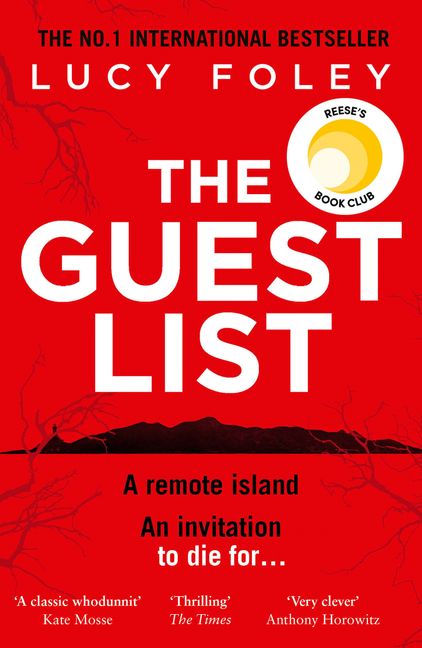
Book Review: The Guest List by Lucy Foley

This book has been a Reese’s Book Club pick and voted a winner in its genre on GoodReads for books published in 2020. So naturally I was keen to see what all the fuss was about. The Guest List is a book you want to pick up for a number of reasons. It’s set on an island – this one’s a wild sort of place off the coast of Ireland with an old graveyard, ruins and a folly. For some reason Aoife and Freddie have thrown all their money into turning it into a high-end wedding venue.

Think about it. Guests are ferried out by boat. Special guests – the wedding party, groomsmen and bridesmaids mostly arrive the night before. The Folley offers several luxurious bedroom suites. There’s plenty of champagne and Freddie’s an amazing chef; the views are spectacular and the ruined chapel so romantic – if you like that Byronic sort of thing.

Then there’s the Agatha Christie feel about the story. It’s hard not to see a reference to the Queen of Crime’s And Then There Were None. As we all know, when you’re on an island, all you need’s bit of bad weather and you could be stuck there. Add something like a murder and things will get tense.

But this story’s a bit different. First of all there’s no sleuth. Not only is there no sleuth, but even though there’s blood and a hysterical waitress screaming, we don’t find out until the end who the victim is. It’s like all the work has to be done by the reader. Which keeps you really engaged as the story flips between ‘Now’, i.e., the hours following the discovery of the blood, and what happened before the wedding.

The story also flips between narrators. We’ve got the bride, Jules, who while being a smart owner of an online magazine, wealthy in her own right, and about to marry hunky TV reality star Will, is really uptight. She’s got baggage and a temper. There’s Olivia, her sister and bridesmaid, much younger and fragile. She’s got a secret and it’s eating away at her. Can Hannah prise it out of her? Hannah, the Plus-One, is the wife of Charlie who is Jules’s best friend.

Hannah feels insignificant in Jules’s presence, a stay-at-home mother of two who can’t afford designer labels. Plus she can’t help wondering if her husband and Jules have ever been lovers. Add the fact that something happened on the stag do that Charlie won’t talk about and she’s dealing with a lot of stuff. We’ve got wild-boy Johnno, the best man and supposedly Will’s best friend. There’s some kind of hold they have on each other from their time at their Dotheboys Hall type boarding school. So, yes, there are a heap of secrets. We soon get the feeling Aoife has secrets too.

The reader gathers whatever clues are to hand, then as the plot twists and turns appear, you rethink, cross that motive off the list and try again. It gets you racing towards the end, and while I did manage to guess ‘whodunit’ as part of a possible scenario, there were still enough surprises to keep me happy. I can certainly see why this book has been so popular. Is it worth all the fuss? Mmm – perhaps not for me. It’s not a book I would read twice, as its main interest lies in the trick of its construction. It’s a good trick but the characters aren’t particularly good company – far too anguished and self-absorbed. The lack of a sleuth meant I wasn’t as drawn in as I might have been. I’m giving this one a solid three out of five.

Review: A Keeper by Graham Norton

a keeperI’ve had numerous recommendations to read A Keeper, the much talked about second novel by Graham Norton. And the premise of the story is interesting enough to make you want to pick it up too. Elizabeth is a divorced academic living in her New York apartment with a teenage son when her mother dies suddenly in Ireland. Elizabeth must fly back to where she grew up, not very happily, to sort out her mother’s estate.

In the old family house that is now hers, Elizabeth finds a bundle of love letters written by the father she never knew. A surprise inheritance sends her to a remote farmhouse by a ruined castle – was this where Elizabeth was born? The story switches between Elizabeth’s search for clues and her mother Patricia’s story. Continue reading “Review: A Keeper by Graham Norton”