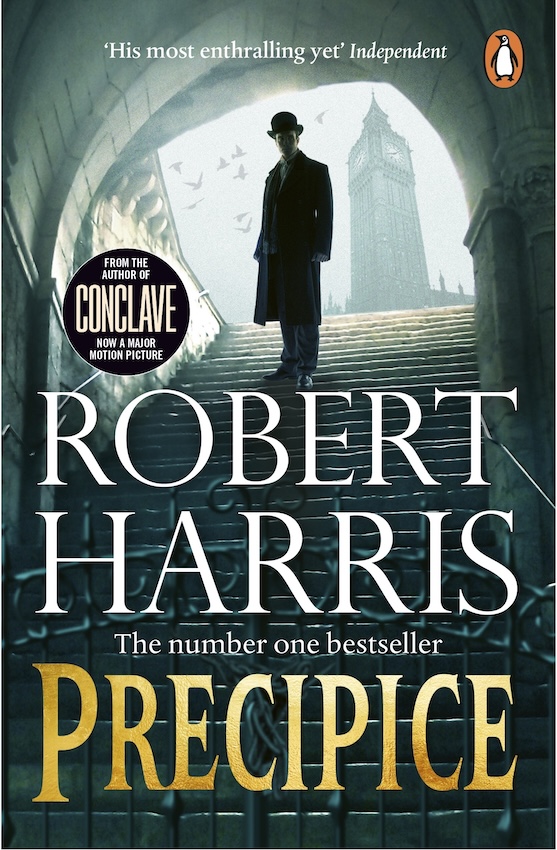
Book Review: Precipice by Robert Harris – history unfolds in a fascinating drama involving love and war

I’d not read a Robert Harris novel before, but was curious about the events Precipice describes – the indiscretion of a prime minister writing endless letters to his much younger mistress, revealing state secrets. The potential for said letters to get into the wrong hands as Britain tips into World War One.

In the author’s notes at the beginning and at the end of the book, you learn that all of the above events are quite well documented, historians have devoted entire books to the subject, and that the letters written by the prime minister as they appear in the book are authentic. My interest even more piqued, I happily plunged in.

The story begins describing the life of the Hon. Venetia Stanley, a member of a somewhat fast set known as the Coterie who live in London, enjoying the excess afforded to them by money and privilege, and amusing themselves in various daring ways. It’s the summer of 1914, and Venetia is expected to attend a boat party on the Thames, an invitation the PM, H.H Asquith begs her to cancel in favour of meeting him. He needs help with the Irish question, as he tells her in his letters. The boating trip ends in disaster, just as well Venetia cried off at the last minute, and we meet policeman, Paul Deemer.

Deemer, an invented character, is a nice contrast to the elevated world of the PM and Venetia. He’s just an ordinary sergeant at the Met, has a young brother rescued from various scrapes by a promising career in the army, while Paul having recently broken off an engagement, is not sure about his future. His parents are dead, and he’s a quiet, lonely sort, ideal for a hush-hush project with Special Branch.

Asquith writes to Venetia several times a day (postal deliveries numbered twelve a day in London at the time), the two meet at various social occasions, and go for a Friday “drive” together, where the PM shares with Venetia the burdens of his role, the decisions he is tussling with and often revealing copies of telegrams and other top secret documents. Venetia is intelligent, offers a sounding board and emotional encouragement. He’s like a politician who has made it to the top job, only to discover it’s a lot harder than he’d anticipated.

In the background, as war is declared we meet lots of the key players, such as Lord Kitchener, Winston Churchill and and Lloyd George. I’ve never read such a clear account of how WWI began, nor how agonising it was for the British government to make the final decision to declare war on Germany. As the months pass, the huge confidence of those like Churchill is put to the test as troop losses start to take their toll on morale.

This is all quite fascinating, while Paul spends his days doing things he’s not comfortable about in his new role. Harris has done an amazing job in weaving in the letters with events they describe as they unfold. But anyone wanting a riveting spy novel might be disappointed. This is much more a story about three characters and their emotional journey as the world turns to chaos. And it’s well done, carrying with it a depth of research that makes everything that happens seem very real. I’ll certainly read another Robert Harris; Precipice is a four-star read from me.
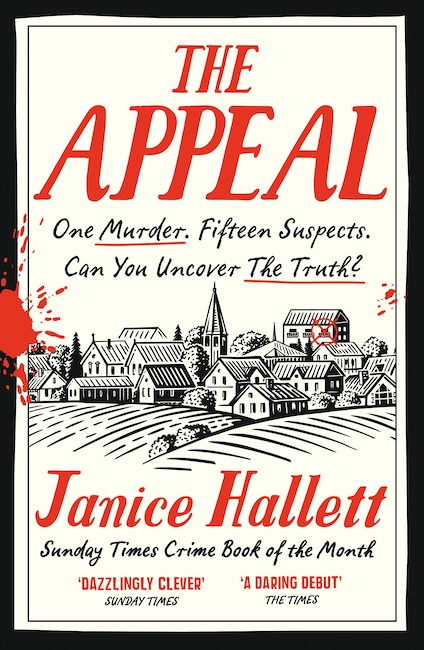
Book Review: The Appeal by Janice Hallett – page-turner told in emails and texts

The epistolary novel has become a popular trend mirroring the many options we have for communicating these days. But I’m not sure I’ve come across one that’s a murder mystery before. The Appeal deals with a murder that has been tried in court, a perpetrator found guilty, the case supposedly done and dusted. Fearing a miscarriage of justice, Roderick Tanner, QC, calls upon two articled clerks, Charlotte and Femi, to plough through the evidence to try and establish what really happened.

The story is told via this correspondence between suspects, a chronological collection of mostly emails between witnesses as well as texts between the legal team. Throw in a few police interviews and newspaper articles and you’ve got an interesting mix.

We don’t know who was killed until late in the story, but Hallett builds a picture of a small community with, at its heart, an alpha family – Martin and Grace Hayward who own the Grange and manage the Fairway Players, an amateur theatre group. They have all the status that goes with their stately home. Grace Hayward is a former actress who steals every scene when on stage and Martin directs.

Among the players, Issy Beck writes a lot of emails, cheery little notes of support particularly to her new colleague at the hospital, Samantha and her husband Kel Greenwood. The Greenwoods are recently back in England after years working with aid agencies in Africa and there are hints they left under a cloud. But Issy, lonely, mousy and lacking any kind of standing with her colleagues or community, is determined to be Sam’s friend, encouraging her and Kel to audition for the new play.

But barely have the Greenwoods joined the Fairway Players and the troupe started learning their lines than Martin Hayward drops the bombshell that their grand-daughter Poppy has a rare form of brain cancer. The emails track the huge support the players and other locals show the Haywards, and suddenly the story is more about the massive fundraising that takes place to pay for ground-breaking treatment from the United States. A lot of money is involved and potential complications of trust and misuse are thrown into the mix.

Janice Hallett does a terrific job of evoking the personalities and motives of her characters through what they write to each other. The confusion and questions Femi and Charlotte reveal in their text messages to each other mirror what you feel as a reader, but slowly it all begins to make sense, answering the five main questions Tanner asks of his clerks. Police interview transcripts and reports, oddly enough, don’t shed a lot of light as people are obviously lying or haven’t a clue, which makes the book seem more realistic somehow.

I wasn’t sure I would have picked up a mystery written in this format if I hadn’t read glowing reviews of The Appeal. Through Hallett’s skill, instead of hampering the reader, the emails, texts and sundry correspondence cohere to create a gripping page-turner and I whipped through the novel, eager to see if the things I’d noticed were as important as I thought they might be. I came away thinking the book was really very clever and very well done. A four out of five read from me.

Review: A Keeper by Graham Norton

a keeperI’ve had numerous recommendations to read A Keeper, the much talked about second novel by Graham Norton. And the premise of the story is interesting enough to make you want to pick it up too. Elizabeth is a divorced academic living in her New York apartment with a teenage son when her mother dies suddenly in Ireland. Elizabeth must fly back to where she grew up, not very happily, to sort out her mother’s estate.

In the old family house that is now hers, Elizabeth finds a bundle of love letters written by the father she never knew. A surprise inheritance sends her to a remote farmhouse by a ruined castle – was this where Elizabeth was born? The story switches between Elizabeth’s search for clues and her mother Patricia’s story. Continue reading “Review: A Keeper by Graham Norton”

Quick Review: Meet Me at the Museum by Anne Youngson

museumA novel based on letters can be instantly engaging, especially when the writers start out as strangers and through writing, become friends. One of my favourites is The Guernsey Literary and Potato Peel Pie Society by Anne Shaffer, which is one of the most heart-warming books ever. And then there is 84 Charring Cross Road by Helene Hanff, which isn’t a novel, but the actual correspondence between the author and the staff at a second-hand bookshop. You wouldn’t think that could be interesting, but thanks to the wonderful personality of the author, has become a classic, especially for book lovers.

Now we have Meet Me at the Museum, a novel in letters which begins when farmer’s wife, Tina Hopgood, writes to the museum housing The Tollund Man, in Denmark. She writes to the author of a book she discovered as a child and regrets in the fifty years since that she has never been able to make the pilgrimage to the museum to see The Tollund Man or meet the author, Professor Glob. Continue reading “Quick Review: Meet Me at the Museum by Anne Youngson”