Book Review: The British Booksellers by Kristy Cambron – a story from World War Two with its roots in the previous war

The devastation of Coventry by enemy aircraft during World War II is often described as the Forgotten Blitz. Coventry was targeted because of its munitions factories, but thousands of homes were also destroyed, hundreds of civilians killed and the Cathedral left in ruins..

Kristy Cambron uses this as a background for her novel The British Booksellers, but the story gets going before all that, even before World War I, when we meet two young people: fifteen-year-old Amos Darby the son of a tenant farmer, and twelve-year-old Charlotte Terrington, an earl’s daughter. They have played together for years, and are obviously soulmates, sharing a love of books, Charlotte also being keen on playing the cello, something she’s not allowed to do – it’s unladylike. So far, so Downton Abbey.

As they get older, their friendship deepens, but Charlotte is promised to local gentry, one Will Holt, who’s something of a lad, but determined to have his fair lady. With a war waiting in the wings, the First World War, that is, everything is accelerated and with miscommunications and nobody getting quite the life they had planned, a kind of bitterness settles on Amos’s and Charlotte’s relationship. Jump a couple of decades on, and here we have Charlotte and daughter Eden at their Coventry bookshop, still living at Holt Manor, while across the road Amos lives above his own bookshop, Waverley Novels. They have been not only business rivals but apparently feuding bookshop owners all this time.

But with another war on the go, things are set to be shaken up in more ways than one. The arrival of Jacob Cole, an American solicitor with claims on Eden’s inheritance adds another plot thread and there are suddenly land girls from London to settle in. But Holt Manor’s struggling to pay the bills, so they need all the help they can get. And then there’s the Bltiz.

Kristy Cambron writes a great story about love and war, and there’s a lot here to keep you turning the pages. The characters are complex, appealing and developed well. The scenes of war, of bombing and our characters thrown into the maelstrom of it all are exciting. I enjoyed the scenes with Amos more than all the girls mucking in together and comparing notes about clothes and how to cope without regular access to stockings. Personally, I’d be digging out the less glamorous Lisle stockings, as that manor house, the rain and mud sounded miserably cold.

This is a nice enough novel, but a picky reader might find the prose a little American sounding, the descriptions a little lengthy and over-egged. But the story is terrific and worth picking up for a diverting read that has you eager to find out what happens. The British Booksellers is a three-star read from me.

Book Review: 33 Place Brugman by Alice Austin – an engrossing read set in WWII Brussells

Some stories are so much about the setting that it is like a main character. This is the case for 33 Place Brugman, an apartment building in Brussels whose residents are adjusting to life during World War II. As we know, German forces invaded Belgium in 1940 and began an occupation that would last another four years. In this novel, we are treated to a glimpse of normal life before that, and how that changed with the Occupation. The fear and the pressure to conform, to dob people in or risk your life, or else to take courage and resist – to say nothing of food shortages and loss of work.

On the fourth floor of Number 33 are two families: Francois Sauvin, an architect and his daughter Charlotte, and their neighbours the Raphaëls. Leo Raphaël is an art dealer who lives with his wife Sophia, and their children, Esther and Julian. Losing his wife in childbirth, has left Francois to raise his daughter alone, but he’s been lucky to have support from the Raphaëls, particularly Sophia, who has her nanny help out with Charlotte’s care so that Francois can work and sleep.

The children all grow up together, and the two families dine together regularly. So when the Raphaëls disappear one night, without word to anybody, it’s a bolt from the blue. They are a Jewish family, and with stories about Nazi atrocities and the likelihood of another war, the Raphaëls have been lucky to get out when they could.

The Raphaëls leave in the middle of the night, and they leave everything behind.
The sofas and chairs and beds and lamps and heavy carpets and the dining table. The films we made are in a box together with the projector, a set of oil paints, and a blank canvas. On it is a note that reads, For Charlotte. I gasp, the air coming in tight and sharp. I might have thought I was dreaming, but for that note. When I see it, I know the Raphaëls are truly gone.
In their wake, rumours swirl through the building. The Raphaëls haven’t left everything. They took their silver. And the paintings? The paintings simply disappear.

The novel follows the first years of the war and how it affects both the Raphaëls and those that remain at Number 33 – not just Francois and Charlotte, but also Masha, the Russian emigré who lives in the attic, making a living as a seamstress. There’s an elderly widowed Colonel with his dog Zipper, and nosy and unlikeable Miss Hobert – both live below the Sauvins. Next floor down are the DeBaerres whose son Dirk is an old school friend of Julian’s. Each has a part to play in the story as each has to examine their conscience and decide what is the right thing to do.

And this is what the story is so good at. It throws unheard of challenges at its characters, who are complex enough for their decisions to be difficult ones. To keep in the good books of your oppressor, to look out for your neighbour, or to fight back? How to feed your family and to keep them safe.

The novel is also a love story. Firstly, there’s Charlotte, who meets Philippe at art school, where she’s talented and able to see the world in a different way, being quite colourblind. But then there’s Julian, who has always loved Charlotte, which worries his mother. The story also brings in the work of the French Resistance in Paris, through the nefarious Harry, a friend of the Colonel, as well as the war in the air, with Julian signing up for the RAF. This gives the novel plenty of strands, and adds some excitement to balance out the quietly tense periods of the plot, as pressure slowly builds.

For me, 33 Place Brugman was an engaging novel and I was soon swept up in the lives of Charlotte, Julian and their families. It’s quite nail-biting at times, when the reader knows more about the danger around the corner than the characters. The story is also threaded with philosophy, particularly that of Wittgenstein, who is discussed quite a lot – but not knowing a lot about him, I found these references somewhat beguiling. The writing is beautiful though; the characters come to life on the page, as do the settings.

I would have loved to learn what happens to the characters by the end of the war, as the story finishes even before D-Day. An epilogue, maybe? But overall I really enjoyed this original view of the war, and its splendidly evoked setting – so it’s four-stars from me. 33 Place Brugman is to be published on 11 March, 2025 . This advance copy was provided by Netgalley in return for an honest review.

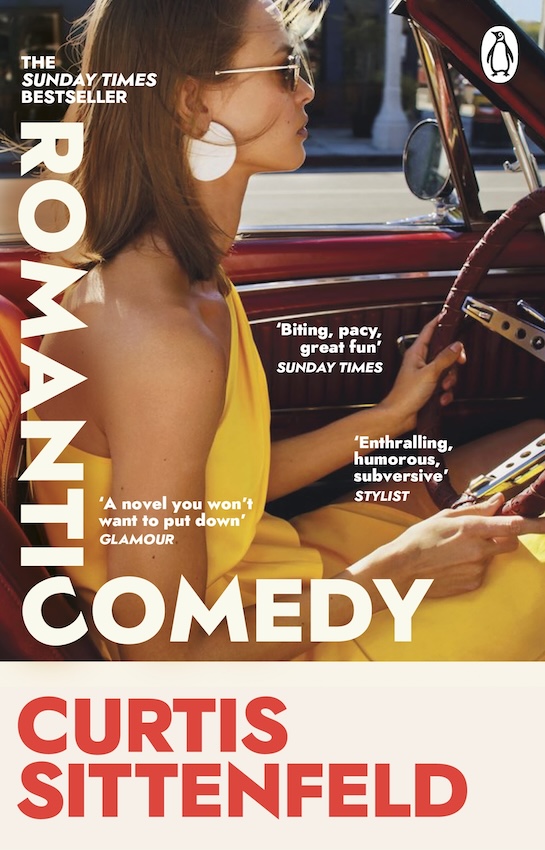
Book Review: Romantic Comedy by Curtis Sittenfeld – a warm and witty novel that explores the affairs of the heart

I loved Eligible, Curtis Sittenfeld’s modern interpretation of Pride and Prejudice, written for The Austen Project and published in 2016. It was smart, funny and romantic, and a very clever update. So I was expecting a similar vibe with Romantic Comedy, a novel about a sketch writer for a late night TV show and an unexpected romance.

Sally Milz has been writing comedy sketches for The Night Owls for almost ten years and has seen a lot of talent come and go. When fellow writer Danny starts dating Annabel, a beautiful actress who is also super talented and bright, Sally is peeved. Why is it that fairly ordinary guys like Danny can date and even plan a future with women who are way out of their league, when it never happens the other way around? There have been several Danny/Annabel type matches at the studio alone but you never see an ordinary-looking woman, or even a mildly pretty one, catching the eye of handsome star in his prime.

The arrival of Noah Brewster, a hugely successful and drop-dead gorgeous music star, as a guest host on the show gives Sally the perfect opportunity for a sketch to highlight this anomaly. The Danny Horst Rule would star Noah as the gorgeous guy who tries to date an average girl. Sally gets more of her skits voted in for the show that week, and so gets to spend more time with Noah at rehearsals. She finds him surprisingly nice, and what’s more, he apparently likes her. He’s easy to talk to and seems to seek her out.

The story follows their interactions and Sally’s growing attraction to Noah, a relationship that she discounts, because there’s no way a guy like that would ever think of her romantically, is there? We meet other people on The Night Owls, particularly fellow actors like Viv and Henrietta, who are Sally’s friends and sounding boards, whose advice is sometimes helpful, and often hilarious. Viv herself has met an eye doctor she’s attracted to so there’s advice going both ways. And we get a bit of Sally’s backstory – a failed marriage, the colleague who broke her heart.

Working on The Night Owls, Sally works excruciatingly long days, and nights, taking naps in her office, but then she’s a perfectionist and gives her work her all. She has decided never again to date a colleague, and has no time for more than an occasional night spent with someone she doesn’t care about. When Noah upsets the applecart of her carefully managed feelings, she doesn’t know what to do.

I heard someone say my name, but at first I was so deeply asleep that I incorporated the voice into my dream. I thought it was Bernard, the janitor, coming to empty my trash can, and, seamlessly, I mumbled, “You can leave the molluscs.” I felt a hand lightly pat my shoulder, and the person said, “Sally, I’m really sorry to bother you” – not a commonly uttered phrase at TNO – and I pulled the T-shrit off my eyes and the earplugs from my ears, sat straight up, and said, “What do you want?”
Hunched over the couch at such an angle that my sitting up had brought our faces within a few inches of each other was Noah Brewster.

This was a fun read for the most part. I found the look behind the scenes of a television show fascinating and Sittenfeld peoples it with plenty of interesting characters and scenarios. Danny’s and Annabel’s relationship has its ups and downs and so there’s plenty going on. There are ups and downs for Sally and Noah too, and a lot of the story has the reader wondering: will they or won’t they? There’s Covid and the lock-downs, long-distance communication and a lot of soul searching. So while this is in many ways a romantic comedy, it’s also at times a serious look at love and life.

Curtis Sittenfeld has written a smart, thoughtful and very romantic novel which has moments of laugh-out-loud humour. My only quibble is that Sally can be difficult company at times, with a tendency to shoot herself in the foot to make a point. Sometimes I wanted to give her a good telling off. So while I didn’t enjoy Romantic Comedy quite as much as Eligible, it’s still entertaining and clever – and a three-and-a-half-star read from me.

Book Review: The Hazelbourne Ladies Motorcycle and Flying Club by Helen Simonson – a fun historical read set in post WWI England

I’d really enjoyed both of Helen Simonson’s earlier books, Major Pettigrew’s Last Stand and The Summer Before the War, so was looking forward to her new book. And it’s a treat. Peppered with a cast of interesting characters, the story follows Constance Haverhill, who has recently lost her mother to the Spanish Flu. She has been taken pity on – and by that we mean made use of – by her mother’s old school friend, Lady Mercer. Constance is to accompany Lady Mercer’s mother to the seaside for an extended stay as a lady’s companion.

As you can guess, it’s just after World War I and Britain is both reeling from the devastation of losing so many soldiers, as well as celebrating peace. Women who have had to step up and take jobs formerly held by men are returning to traditionally female work, struggling to make ends meet on widows pensions, or depending on relatives.

Constance had made herself useful in the Mercer household managing the farm accounts – she’s a farmer’s daughter, after all – and has also trained as a bookkeeper. But with nowhere to go except her brother’s farm, her unpaid accounting work for the Mercers no longer required, Constance sees her short visit to Hazelbourne as a chance to evaluate her options. Fortunately, the elderly lady, Mrs Fog, is kindly and appreciative, allowing Constance plenty of time off to see the sights.

At the Meredith Hotel Constance is unable to have a table on her own as an unaccompanied young woman, as is Poppy Wirrall, who has just blown in on her motorcycle and is unsuitably attired. The two girls bond over a loaned skirt and before you know it, Constance is swept up into Poppy’s world. Poppy is a fan of motorcycles – she was a courier at the front – and has collaborated with some other women friends to set up a motorcycle and sidecar taxi service. One of the crew, Iris, is a keen motorcycle racer, but it’s hard breaking into a field dominated by men.

“I say, is there any chance you would help me?” said the girl, jumping up and extending a slightly oil-stained hand. “I’m Poppy Wirrall. I’ve been out all day on the motorcycle and damn it all if I didn’t leave my bag behind at home. My mother is still out visiting and the powers that be here have decided that after four years of war and pestilence they should still have the vapours over a woman having tea in trousers.”

Pippa’s family have decamped to the hotel while Mrs Wirrall is spending the family fortunes lavishly renovating their stately home. Brother Harris is an amputee, bitter at being treated like an invalid and desperate to fly bi-planes again. Several characters face difficulties in being seen for who they are, not just what they are. So Harris is expected to be an invalid, and his sister to marry, rather than run around on motorcycles. There’s also hotel waiter Klaus, a naturalised Englishman, but no one can see past his German origins. Class rears its ugly head as Constance knows only too well.

There is an element of Pride and Prejudice in the way Constance and Harris interact in the early parts of the book. Harris is haughty to protect himself from ridicule, and is bitter at seeing so many of his fellow pilots killed in the war. Constance, ever the poor cousin, bridles at his rudeness. But Harris at least is not a snob like the Mercers, and knows the value of people who have a good heart.

Everything comes together in a plot that simmers with exciting events – motorcycle races and aerobatic displays, dances and weddings, romances and disasters. Not everyone gets a happy ever after, but there’s hope and fresh starts aplenty as characters face challenges and rise to the occasion. The Hazelbourne Ladies Motorcycle and Flying Club is a charming story, nicely recreating the post WWI period in an English seaside setting – a light, fun read with moments that make you want to cry or cheer. A four-star read from me.

Book Review: You Are Here by David Nicholls – a witty, feel-good read about hiking and the human heart

I’d seen a bit of David Nicholls on the small screen – the movie of One Day and the TV adaptation of Us – but You Are Here is the first time I’ve actually read a David Nicholls novel. And having just turned the last page, I realise now what I’ve been missing. Because, You Are Here is simply wonderful. The writing, the humour, the characters and the emotions. They’re all there in a perfect package – all that you could want in a book.

The story’s narration alternates between two people: Marnie, a long time single and thirty-eight, who works as a freelance editor from her rented flat in London; and Michael, a recently-separated geography teacher from York. Both are a bit sad and lonely. Marnie has been bruised by her marriage to overbearing, unfaithful Neil, and now that her friends all seem to be married, mostly with kids, she’s dropped out of the loop, doesn’t see anyone, often stays in her flat for days on end. Michael has not recovered from his wife leaving him or from an assault which left him with bouts of PTSD and feeling a coward.

So it’s up to mutual friend Cleo to fix them both up with someone, if only she can drag Marnie north for a hike – a chunk of the Coast to Coast Walk, which Michael, a committed walker, is keen to complete, preferably alone for as much as possible. Michael does a lot of walking as he hates going home. Cleo brings along her thirteen-year-old son as well as gorgeous Conrad, a pharmacist also from London, she’s hoping to set Marnie up with. A pity Tessa couldn’t make it – she loves doing triathlons so would suit Michael well with his love of the outdoors.

But he must not teach. He would be travelling with adults who had no need or desire to learn about drumlins and moraines. The train ticked and hummed, then began to crawl, rattling past sooty Victorian buildings, warehouses, and the new light industry at the edge of town, the sky widening like a cinema screen, opening on to farm and woodland. Seated diagonally across the aisle, the woman with the poorly fitted rucksack was typing noisily but without a table, so that the laptop kept slipping down her new trousers towards her new boots. What was so important that it should take precedence over the view? She was certainly making a big show of it, tutting and blowing up her fringe. It was a nice face, amused and amusing, with a city haircut (was it a ‘bob’? He wanted to call it a ‘bob’) and more make-up than you’d expect on a walker, sometimes rolling her eyes or clapping her hand to her flushed cheek at the words on the screen. He noticed that she was perspiring slightly. Noticed, too, that he’d stopped looking at the view.

But things don’t go as planned for Cleo, and it’s just as well, when soon the weather conspires to leave just Michael and Marnie on the walk, Conrad with no wet weather gear, and Cleo’s son missing his friends. Michael might have hoped Marnie would pike out too, but she’s invested so much in outdoor gear for the trip, and has packed three nice dresses and 12 pairs of knickers, so it seems absurd not to tag along for another day at least.

The two make an awkward couple at first, struggling through the rain and having hiked a number of New Zealand’s ‘great walks’ for the most part in the rain, I really felt for them. But it’s the grit that makes the pearl, and if they can get along enough, who knows what might happen. As a reader, you soon realise the two are better suited than Michael would be with Tessa or Marnie would be with Conrad – Michael is what Cleo describes as wry, and seems to get Marnie’s sense of humour, the jokes no one else seems to notice.

This is a delightful read – I steamed through it – the writing is just so polished but not in a way that makes you think it’s polished. The dialogue is lively and funny – you can tell this will make another lovely movie. But underneath, Nicholls is aware that he’s dealing with two people who have stuff to deal with. He shows a fine understanding of the workings of the human heart and while there is a lot that has you laughing out loud, there are also moments that make you sigh or clutch your chest.

As I said before, this is a perfect book, with two engaging characters you are happy to spend time with, even on a hill walk in the rain. There is a lot of scenery, which is described as much as it needs to be but not so much that it intrudes. I enjoyed the B&Bs and hotels with their themed rooms – one naming its rooms for freshwater fish (Michael finds himself in Chubb). So you get the experience of the walk without having to put on hiking boots. All in all David Nicholls doesn’t put a hiking booted-foot wrong. You Are Here is a five-star read from me.

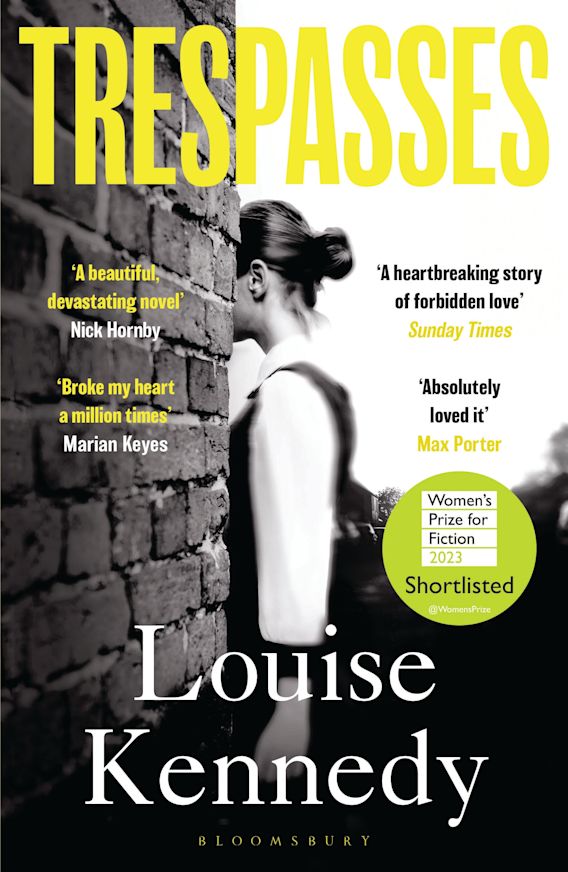
Book Review: Trespasses by Louise Kennedy – a novel about love and war, and crossing the line

I had previously picked Trespasses up a couple of times but moved onto something else. I knew I wanted to read it, but I kept thinking it could never be as good as Milkman by Anna Burns, which is similarly set in Northern Ireland. Then I downloaded it as an audiobook and am so glad I persevered.

Trespasses is set in a town on the outskirts of Belfast in 1975, so we’re well into the time of the Troubles, with sectarian violence a common phenomenon. Cushla is a young school teacher at a Catholic school who moonlights at her family’s pub. It is here that she meets Michael Agnew, an older, married man, also a barrister as well as being a Protestant. So many red flags.

The two begin an affair and Michael introduces Cushla to some of his friends who are learning to speak “Irish” and Cushla being fairly fluent agrees to help teach them. All the while she is self-conscious among these people – that she stands out for her youth, for being a Catholic. But Cushla keeps Michael a secret from her family, her alcoholic mother, her brother who runs the pub. It would only infuriate Eamonn and bring disrepute on them all. She would most certainly lose her teaching position.

Cushla is the story’s narrator, and her voice has that resigned self-awareness of her predicament, not just the affair, but of the difficulties of being hopeful in a country torn apart by violence. Where at any moment, British security forces might descend on a social gathering looking for Republican insurgents, or stop cars at a roadblock and cause their owners varying kinds of inconvenience. To say nothing of car bombs and random shootings and other acts of violence.

Another thread to the story is Cushla’s world as a teacher and her looking out for young Davy McGeown, one of her pupils. His home life is a constant struggle, with a parent from each side, an out of work father and neighbours who make their life hell. Through it all, Davy is bright and cheery and Cushla is drawn to help the McGeowns, in spite of the disapproval of others.

Before lessons they did The News. Cushla hated doing The News, but the headmaster insisted. He said it encouraged the children to be aware of the world around them. Cushla thought they already knew too much about the world around them. Davy stood up, always the first to volunteer. His red jumper was dark with damp at the shoulders and neckline.
There was as bomb in Belfast, he said.
He says that every day, said Jonathan, who sat beside him.
Well, today he’s right. Thank you Davy, said Cushla.
Jonathan got to his feet. It wasn’t in Belfast, he said. A booby-trap bomb that was intended for a British Army foot patrol exploded prematurely, killing two boys near the border. They died instantly.
Booby trap. Incendiary device. Gelignite. Nitroglycerine. Petrol bomb. Rubber bullets. Saracen. Internment. The Special Powers Act. Vanguard. The vocabulary of a seven-year-old child now.

The two story threads will eventually become entangled and the reader has a sense of impending doom. Well, there’s always impending doom in any novel set during the Troubles, isn’t there? It’s a bit like Chekov’s gun. And Cushla seems to take such a lot of risks. You can’t help but admire her for her determination to do what’s right by people. Michael too, with his sympathies for young men pulled in by the security forces on flimsy evidence, his attempts to help them. They are both crossing the line and some sort of reckoning seems inevitable.

This is an engrossing read with vivid and memorable characters. The banter between Cushla and her alcoholic and sentimental mother, her brother who’s trying to save the pub, the old codgers who never miss a session there, the kids at the school. The dialogue is terrific, and really comes alive as narrated by Brid Brennan who reads Davy particularly well. I’m glad I rediscovered Trespasses – the book was shortlisted for a bunch of awards, including The Women’s Prize for Fiction, and it’s easy to see why. It’s a four-star read from me..

Book Review: Thirst for Salt by Madelaine Lucas – a story of melancholy and nostalgia told through the senses

I confess I had a couple of goes at this novel, which I’d heard such good things about. And it’s not as if it gets off to a slow start. I was soon swept up into the narrator’s story – a woman in her late thirties reminiscing about a relationship from over ten years before, and the man, Jude, whom she’s never quite forgotten.

I imagined some kind of reconciliation, a meeting of some kind. What would they say to each other? How would they feel about each other now? Would such a meeting rekindle old feelings? Would there be new revelations about what really happened?

But that’s not what happens. Thirst For Salt is a journey back to a year in the life of the narrator – do we ever learn her name? – viewed from the point of view of her older self. It’s a journey filled with nostalgia, melancholy and yearning.

Our narrator meets Jude at the beach where she and her mother have rented a cottage for a summer holiday. He’s an older man of 42, compared with the young woman’s 24. She swims a lot on her own and this attracts Jude’s concern – all kinds of creatures lurk in the water, he tells her, and there are no lifeguards at this beach. Sharkbait, he calls her.

The cool shock of the blue. Movement, water, salt, light, heat. I began every day that way, my first week at Sailors Beach. Rising up with the waves and kicking down into the depths, into those sudden cold patches where the sun didn’t reach. Patterns of light on the surface, shadows passing above, water darkening. The fear, sometimes, of something brushing past my leg – a tangle of kelp or a lone gull landing beside me. Rocks seemed to quiver on the silty bed below, and once, I caught sight of a silver ray.


Parallel to their story, is the narrator’s relationship with her mother, who was just 24 when her daughter was born, a relationship that’s almost sisterly. Her mother has always lived a Bohemian kind of life, her long separated father, an itinerant, so learning how a long-term relationship works isn’t easy. By contrast, Jude seems a more solid, settled kind of guy. He’s a man of steady habits, with his own routines. He’s even living in the old family beach house built by his father.

The novel is an intimate portrayal of a relationship that reminded me a little of Sally Rooney’s Normal People. It is also a story that evolves through all the senses – the feeling of the sea on skin, the sights and sounds of the beach, of nature, both summer and winter. There’s taste and scent as well, in the old things Jude has in his house, the meals they prepare together. And the writing is just gorgeous.

As I said, I put this book aside after the first third or so, a little frustrated at the lack of obvious plot. But I still wanted to know how it ended and found myself picking it up again as an audiobook, which in this case was read by the author. It seemed to work and Madelaine Lucas gives a nuanced and engaging performance, capturing perfectly the feelings of loss and sadness that haunt the pages. I’m glad I persevered; Thirst for Salt is a four star read from me.

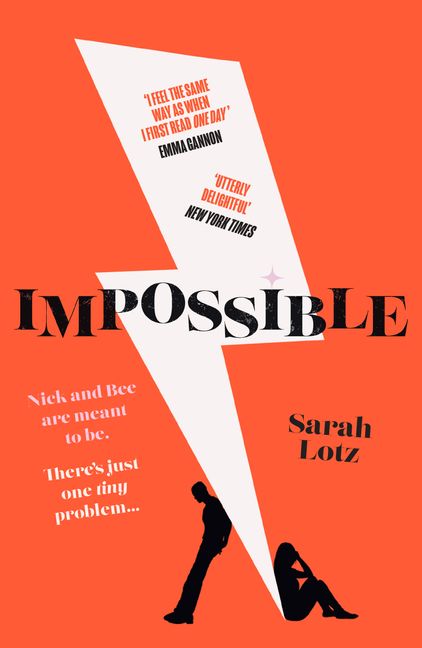
Book Review: Impossible by Sarah Lotz – an original and quirky fantasy-romance

I have to confess I nearly didn’t finish Sarah Lotz’s recent novel, Impossible (also marketed as The Impossible Us). The novel is largely email correspondence between two characters who meet accidentally when Nick sends a grumpy message to a customer who owes him money, and it somehow ends up in Bee’s (Rebecca’s) inbox. Bee’s dinner with a Tinder date isn’t going well and she distracts herself with flippant email banter with Nick.

The story of their romance is told largely in emails because, for mysterious reasons, the two seem doomed never to meet in person. At first they are separated by a train ride – Nick’s in Leeds; Bee in London. When they do decide to meet they discover they belong in alternate realities – how many versions of the world there are, they have no idea. But in Nick’s dimension the world has made huge inroads to solve climate change as well as some obvious political differences; Bee’s dimension is the world as we know it.

Being stranded in different versions of the world makes no sense to either of them, but Nick comes across an organisation called the Berenstains who have had dealings with this anomaly. Berenstains member Geoffrey provides some light relief, tasked with keeping an eye on Nick, and staking him out like someone from a comedy-spy movie. There are rules about the situation, in particular, no meddling with the versions of people you know from a reality that’s different from your own.

Nick and Bee are all set to break this rule, Bee hunting out the Nick in her reality, who happens to be a famous author. This is galling for the original Nick, who is a literary hack, ghost writing for authors with limited talent. Meanwhile Nick seeks out the version of Bee in his reality, a Becca with a child, the wife of a powerful businessman, which is equally perplexing. She has given up her fashion design career for a family, quite unlike Bee, who has a wedding dress make-over business. Bee worries that Becca is unfulfilled and could be in a controlling relationship.

The story lurches from one complication to another as Nick and Bee set out to overcome their cross-dimensional problem to find happiness. There are plenty of humorous scenes and weird and wonderful characters – Tweedy, the elderly County type, showing Nick how to use a gun; Magda and Jonas, Bee’s elderly neighbours who epitomise lifelong devotion as a couple; Erika, Nick’s no-nonsense Nordic landlady – among others.

And even if it did at first remind me of the movies You’ve Got Mail crossed with The Lake House, the story is still original and cleverly put together. And yet in the middle it seemed to drag for me. I think it was all those emails. I’ve read epistolary novels before and enjoyed them. But here there’s a lot of bad language, which I find tiresome, and the banter which Bee and Nick find so amusing wasn’t particularly amusing for me. I began not to care particularly whether Bee and Nick found happiness as I didn’t like them very much – it’s probably a generational thing. Two thirds through I was so desperate for some elegantly crafted writing I took a breather with some Jane Austen before going back in.

But I did go back in, because it is impossible not to want to know what happens in the end. And Sarah Lotz ties it all up well. She’s a seasoned screenwriter who obviously knows about plotting and this is her seventh novel. I can imagine Impossible would adapt well to the screen. Would I recommend it? Yes, probably, but with some reservations. It gets a fairly generous 3 stars from me.