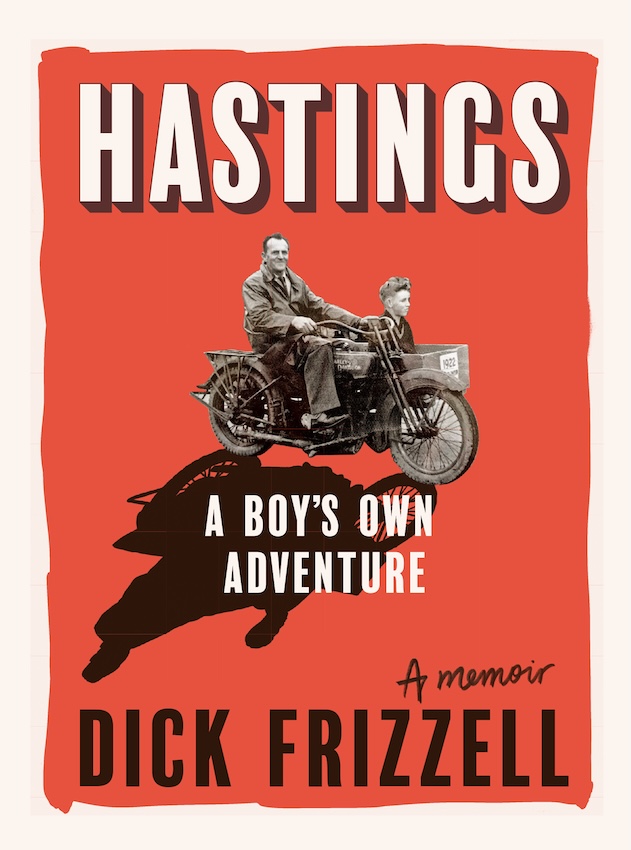
Book Review: Hastings: a boy’s own adventure by Dick Frizzell – an entertaining memoir of growing up in 1950s provincial New Zealand

Gosh life in the 1950s could be dangerous. Kids jumping on bikes and disappearing for the day, nobody really knowing where they were, mowing the lawns with bare feet, impromptu caving adventures under a mountain known as The Peak. Somehow the author managed to survive childhood to write this entertaining memoir about growing up in his home town of Hastings – that’s Hastings, Hawke’s Bay, New Zealand – not the one in England or any of the other Hastings around the world.

Dick Frizzell is one of New Zealand’s most instantly recognisable artists – his paintings, that is. When you read this book, you’ll discover that not only did he win an art prize at his high school, but an English prize as well. As a writer, he has a chatty style, the kind that you can imagine him using to tell a funny anecdote over a beer. It’s also very descriptive, with many original and quirky turns of phrase that help you imagine what things look like. The visual artist coming out in his prose.

Although I missed the 1950s entirely, my quite a bit older siblings would tell similar tales from their childhood and a similar picture of New Zealand would emerge. This book begins with Dick’s early years, and the arrival of a whole bunch of sisters, his parents’ concern that he needed a brother and the sudden arrival (and departure) of Ray. The book is full of characters, beginning with his parents – his engineering father’s ability to build and fix, and to get through large amounts of beer during a rabbit hunting excursion. Or his mother’s love of entertaining, her cottage art and determinedly sunny nature.

These characters – neighbours and kids from school, elderly aunts and teachers – emerge in the stories, which are often wild and whacky tales, capturing the young Richard as an innocent at large. The decision of Dick and his mates to test the saying ‘like shooting fish in a barrel’, which of course meant ‘borrowing’ a gun and fish; the unusual ‘mates’ he makes in hospital on a men’s ward following a burst appendix; joining a theatre troupe performing South Pacific as a call boy and painting on tattoos.

Such a busy time, and all through it a nostalgic look at how we lived. New products at the corner shop, like the arrival of the first popsicles (marketed as TT2s), driving his mother’s 1936 Austin Sherborne, saving up to buy Beano, Phantom and Uncle Scrooge comics, teenagers with motorcycles at the milk bar. Through it all lots of drawing and art, the future painter starting to develop. It all seems so innocent now.

Did the outside world impinge at all on any of it? As a kid, I remember being very aware that my older brother could get drafted into the Vietnam War, that there was a nuclear arms race, pollution and not enough food for countries in Africa, George Harrison singing about Bangladesh. I remember getting really worried before I even got to high school. It was a different time, I guess.

Hastings: a boy’s own adventure is a fun read though. I chuckled my was through the thirty stories, some of them quite hair-raising. A trip down memory lane, or your parents’ memory lane. It’s the kind of book you can pick up and put down as each story is a separate vignette, which makes a nice bedside read, or gift, I should think. The first in a series of planned memoirs, Hastings: a boy’s own adventure is a four-star read from me,

Book Review: Raising Hare by Chloe Dalton – the best-selling memoir about the unexpected bond between the writer and a wild animal

I don’t often read non-fiction, preferring to immerse myself in the art of the story, the development of characters, atmosphere and mood. But Raising Hare has been such a popular hit, I was intrigued.

It begins during lockdown, when the author leaves her busy life in the city for a rural retreat, an old converted barn surrounded by farmland and woods. It’s wintertime when, out on a walk, she comes across a baby leveret sitting in the road – potential fodder for hawks or foxes, or in danger of being crushed between vehicle wheels. Chloe knows a thing or two about wildlife – her mother has a way with animals – and so realises she should leave it alone, that if she picks it up to put it somewhere safer, it’s mother will smell Chloe on the leveret and abandon it.

But returning from her walk, hours later, the leveret is still there, so against her better judgement, Chloe takes it in. The events that follow are fascinating as she learns how to care for the animal, accommodating it into her busy life as the lockdown ends and normal life is expected to take place again. You learn a lot about hares – how endangered they are in England, but also considered a pest by farmers and so aren’t protected by law with a dedicated hunting season. They’re also not typically thought to be easy to befriend, so Chloe’s experiences are enthralling.

Although Chloe doesn’t try to domesticate or keep the hare once it is ready to take care of itself, it still visits, barging in through its specially made door, making itself at home, quite some time later. It’s interesting to read about the effect on Chloe of having an animal, particularly a wild animal, in her life. How she changes from living for her work, which often takes her on special assignments overseas, with the thrill of new environments and political landscapes. How the hare makes her rethink what she wants from life, her growing fondness for the animal, and how it makes her so much more aware of the nature around her, not just animals, but also vegetation and seasons.

I came away from the book wishing the very best for the survival of the hare Chloe Dalton takes in, but also really feeling for the author. Her awakened awareness regarding how we treat the natural environment and her wanting to be a spokesperson for change, particularly in the way it’s always open season for hare shooting, but also how we farm and take so much from the landscape at the cost of lives we cannot see. But you can’t help but feel that with ever diminishing habitats, hares are up against it. Brilliantly written, Raising Hare was such an engaging read, with a ton of emotional heft, I know it will stay with me for a long time. So it’s a five-star read from me.

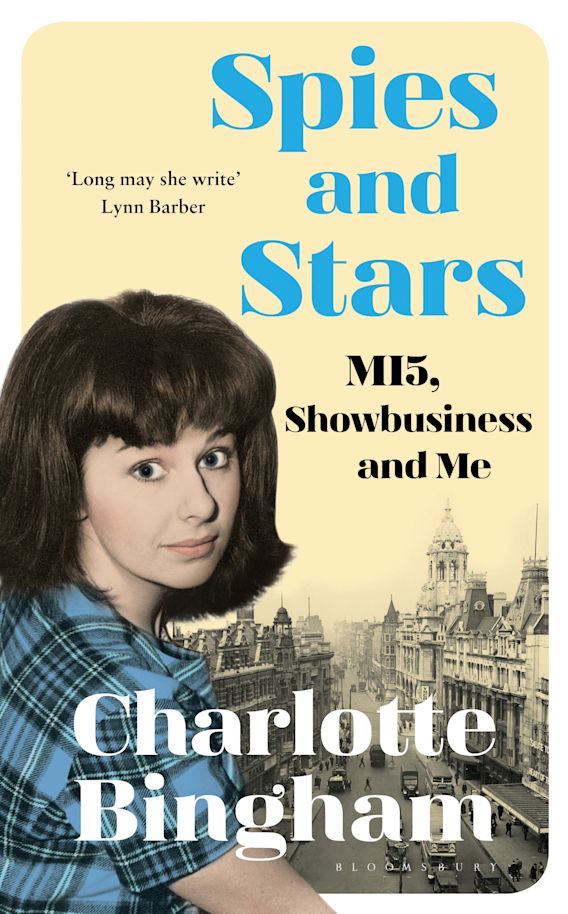
Book Review: Spies and Stars: MI5 Showbusiness and Me by Charlotte Bingham – Round Two in Bingham’s hilarious MI5 reminiscences

This is one of those memoirs that read like a like a novel. It’s the second of Bingham’s recollections of her career in MI5. In the first, MI5 and Me, Bingham was encouraged to join the secretarial staff at MI5 by her father – she’d been just faffing around at home. Her father was quite important in MI5 himself – according to notes at the rear of the book, the inspiration for the character of George Smiley, in the John le Carré novels. Which makes her story seem all the more extraordinary.

Charlotte, or Lottie as everyone calls her, is twenty-something, and her interactions with fellow secretaries, Arabella and Zuzu reminded me a little of the St Trinian’s stories. They’re probably a similar era too – the events in this book take place the 1950s. As well as her work in the War Office, there is her developing relationship with her boyfriend Harry and their writing. Lottie and Harry spend hours after work beavering away in cafés on their film scripts hoping to make it in showbusiness. The characters they meet – the producers and performers – are often oddball and flamboyant, and wonderfully brought to life here.

Harry is a struggling actor so the writing helps keep him busy when he’s ‘resting’. But like Lottie, Mr Bingham sees in Harry someone who can do a job for him. He’s already got a couple of actors on his team – Hal and Melville even live at the family home, Dingle Dell. So Harry finds himself hawking copies of the Communist paper The Daily Worker outside the entrance to the Kensington High St tube station, alongside a ‘blind’ match seller also working for Lottie’s dad.

I went back to Dingley Dell feeling thoughtful only to bump into Hal and Melville both hurrying back into the house carrying copies of the Daily Worker.

‘Really, Lottie darling, the things I do for England,’ Melville said, sighing.

‘I shall read it cover to cover,’ Hal boomed. ‘I think of it as a political Beano. Apparently these asses really believe we are all equal. They wouldn’t if they’d ever toured with Dougie Robinson.’

A lot of Spies and Stars describes how Lottie and Harry come up with scripts, then dealing with agents and producers. Their first, The Happy Communist, is inspired by Harry’s Daily Worker pushing stint. There’s a terrible panic when their agent says there’s someone interested. What will Lottie’s father say? But obviously there’s some writing talent on display, as the two carry on writing more scripts and even sell a few. They soon learn the lesson not to expect their scripts to resemble anything like their originals once they’ve been through the rewriting team.

As I said before the memoir reads like a novel. Bingham is just so good with her characters, who are all vividly drawn, full of the quirks that make them interesting. And well, between show business and MI5, they’re a madcap bunch. And then there’s her use of dialogue, which creates lively scenes. You can tell that she had the talent to go on to write for popular television series like Upstairs Downstairs, which I remember I never missed as a girl.

Charlotte Bingham’s memoirs are fun, light reading, and almost qualify as ‘strange but true’. But maybe 1950s England was like that. And she really knows how to tell a story. I am tempted to try Bingham’s novels – there are dozens of them mostly published in the 1990s up to 2014. Spies and Stars is a four-star read from me, but if you’re tempted to pick this up, you’re probably best to read MI5 and Me first.

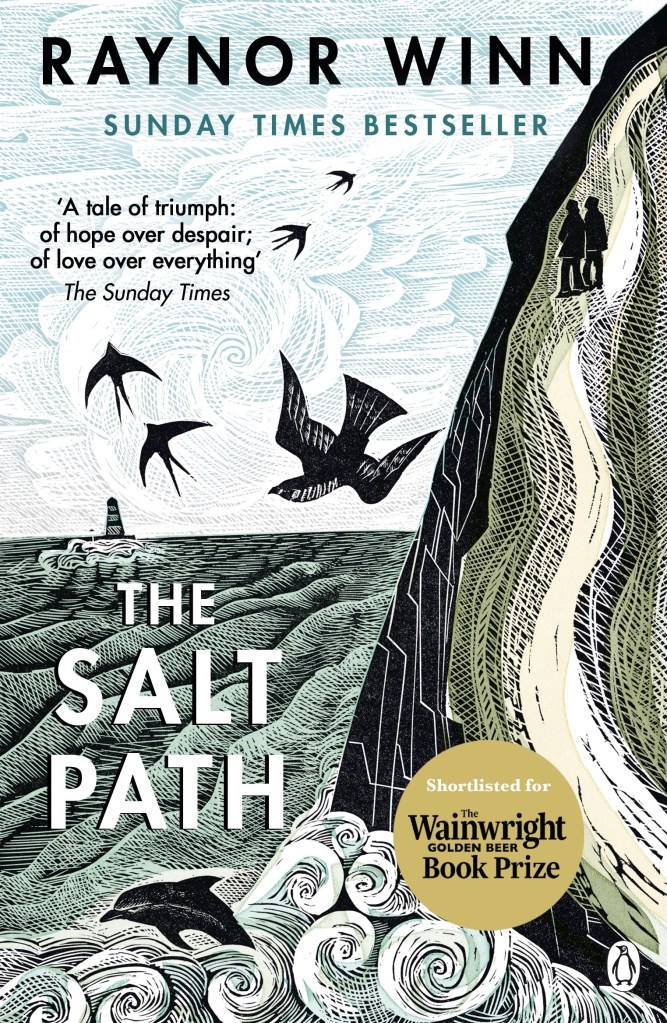
Book Review: The Salt Path by Raynor Winn – an inspiring memoir about the healing power of nature

I don’t read a lot of non-fiction but every so often a book comes along that just captures my interest. I’d had this one on my reading list for some time, but what gave me the kick-start I needed was that one of the challenges in our library’s Turn Up the Heat reading programme asks you to read a biography or memoir.

The Salt Path is the story of a couple in middle age who are at a period in their lives when everything has just turned to custard. They’ve lost their home of twenty years which as a farm and accommodation business was also their income. Around the same time Moth, the author’s husband, is diagnosed with a debilitating terminal illness.

With few options and nowhere to live, other than the kind of emergency housing that could be utterly soul destroying, the pair buy a tent on E-bay, load up a couple of backpacks (rucksacks if you’re British) and set off on the Salt Path. This is a six hundred and thirty miles coastal walk around the south west corner of England from Minehead to Pool. You can’t be homeless if you’re hiking, can you?

But from the outset, Moth and Raynor are doing it tough. They have only a few hundred pounds to their name, and by the time they are walking the path, rely on a small dribble of cash turning up in their bank account from welfare. This barely pays for their food, often noodles and chocolate, or tuna and rice when they feel flush. They scrounge hot water at cafés for tea. You would think that the strain of the walk and lack of good nutrition might make Moth sicker, but it doesn’t. In fact he gets fitter and becomes almost pain-free.

In the pink half-light of dawn, the holes were everywhere. Fresh droppings piled up under the flysheet of the tent and as I undid the zip tens of rabbits hopped only feet away. I could have just reached out and taken one to put straight in the pot. Instead we made tea. Moth found a hairy wine gum in his pocket, so we cut that in half.

Raynor Winn chronicles the people they meet: the other walkers, often with much better equipment, but usually friendly; the people who turn up their noses at their unwashed shabbiness; and the other homeless people, not usually walking but eking out an existence in the towns. It’s quite an insightful look at the homeless problem in UK – how easy it is to drop out of the system, the difficulty of finding affordable accommodation, especially in rural communities where holiday lets drive up the rent astronomically.

The other thing Winn does really well is describe the wild environment of the coastal path. Not just the wildlife she encounters, the plants and the sea, but what it’s like to be amongst it all. Her writing is amazing. You’d think she’d been writing all her life but this would seem to be her first book. Winn’s story is heartfelt, immediate and real. Not surprisingly, The Salt Path was short-listed for the Costa Biography Award and a Wainwright Prize.

“It’s touched you, it’s written all over you: you’ve felt the hand of nature. It won’t ever leave you now; you’re salted…”

But more than that, The Salt Path is also the story of a marriage, of a couple’s devotion to each other and their determination to find a way forward. I found it both an emotional read and an inspiring one. Maybe it’s time to dust off the backpack and the hiking boots once more to remind myself why walking in the wilderness, for all the sore feet, the ache of the pack on your shoulders and the slogs uphill on uneven terrain can be so uplifting. Or maybe I’ll just read Winn’s sequel, The Wild Silence. The Salt Path gets a four and a half out of five from me.

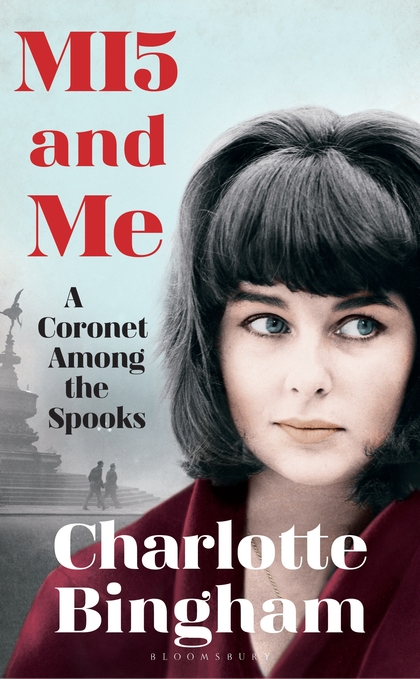
Quick Review: MI5 and Me – a memoir by Charlotte Bingham

9781408888148If it was in any way possible to cross a novel by John Le Carré with one by Nancy Mitford, it might turn out a bit like this. MI5 and Me is an account of the author’s time working in the typing pool in the British secret service during the 1950s.

Bingham’s father (also the inspiration for Le Carré’s Smiley) was a distant man who didn’t talk about his work at home. When his daughter shows no talent for making anything of her life, he finds her a job at MI5 where he holds a senior position. At the time, the bureau is mostly concerned with communism, spying on what seem to be perfectly harmless people, breaking into their homes and planting bugs in their telephones. As well as creating endless paperwork – hence the typing pool. Continue reading “Quick Review: MI5 and Me – a memoir by Charlotte Bingham”