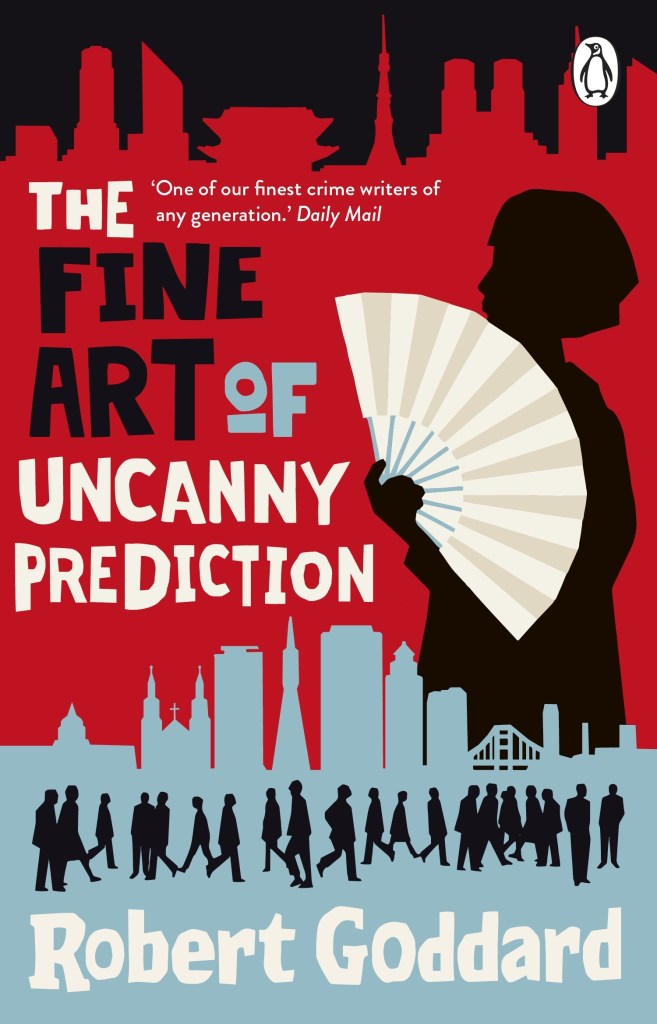
Book Review: The Fine Art of Uncanny Prediction by Robert Goddard – the invisibly detecting Wada returns for a new puzzle in her home country

Like Andrew Taylor (see previous post), Robert Goddard is a recipient of the CWA Diamond Dagger Award for his long career in putting out superbly plotted crime fiction. Mostly he’s a writer of stand-alone novels, but his latest book takes us back to Japan where we first met Umiko Wada in The Fine Art of Invisible Detection and a case that brought her to England and a convoluted mystery that helped her cut her teeth as a detective.

In The Fine Art of Uncanny Prediction, Wada has taken over the investigative business set up by her late boss, Kazuto Kodaka. Wada is a middle-aged woman who was widowed young. She’s outwardly unremarkable and, like many fictional private investigators, her work is her life. With a brother in New York, it’s left to Wada to check in on her mother, which is problematic in more ways than one.

The story gets going with a new case, an elderly man who has lost contact with his son. Fumito Nagata is worried his son, Manjiro may be depressed, even suicidal, following the collapse of his business, but Fumito is unable to contact him. Mr Nagata wants Wada to find him and report back. The younger Nagata is also the nephew of Teruki Jinno, head of a prosperous construction business that has been in the family for decades, a business that did well out of rebuilding Tokyo after the war.

Wada’s investigation will take us back to those dark days after Tokyo was firebombed, into a labyrinthine plot full of strands but all focused on power and money. She’s also being pestered by her brother to see to what’s going on with their mother – she’s taken on a lodger, an ex-Sumo wrestler who has fallen from grace. Wada’s brother is appalled.

‘I have you down as a solitary person. Is that right?’
‘It is not wrong.’
He frowned at her. ‘Do you ever let your guard down, Wada?’
‘Occasionally.’
‘Am I likely to see it happen?’
‘Unlikely, I would say.’
Then he grinned. ‘See, that’s what I like about you. You’re just so damn honest.’

The story also slips back in time to the mid 1990s and a case being investigated by Kodaka, again involving the Jinno construction company. Kodaka is asked to determine the recipient of large sums of money, paid into a bank account by the late founder of the company for over fifty years. The case will also have Kodaka asking questions around the Kobe Sensitive, the mysterious woman who phoned in a prediction about the Kobe earthquake – a prediction that was ignored but proved to be tragically accurate.

The plot flips between the two time periods, and the cases of the two detectives that will, of course, show how they connect towards the end. There’s a lot going on and a raft of characters to remember – I made frequent use of the character list at the start of the book. But I persevered, because Goddard is such a brilliant storyteller, there’s a thread of humour running through it all and Wada is such an interesting character – one of those ordinary people flung into extraordinary circumstances and somehow coping surprisingly well.

Yes, there’s plenty of danger, and Wada can’t ever be sure who to trust. There’s her connection to Kodaka, a more typical fictional detective who drinks too much, but knows his stuff, and has a will to stand up for the underdog. I enjoyed how the story includes how the two met, and how Wada became involved in the tricky business of detecting, much to her mother’s disappointment.

The setting of Tokyo seems very real – we get the trains, the distinctive suburbs and Tokyo’s hinterland. There’s a visit to San Francisco too – both settings come to life on the page. Underneath what turns out to be a ripping good yarn, full of twists, are thoughts on the devastation and ongoing effects of war, and those who prosper from it. The possibility of predicting earthquakes – both scientifically and through a kind of ‘gift’ is a fairly original concept for a detective novel and adds a good deal of interest.

There are still plenty of surprises as it as it all comes together towards the end, and as a reader I felt I was in the hands of a seasoned professional, an author that makes it all work so cleverly, creating a supremely satisfying read. Not that I was surprised. He’s done it so often before. The Fine Art of Uncanny Prediction is a four and a half star read from me.

Book Review: The Last House Guest by Megan Miranda – a twisty tale, nicely turned, with a determined young protagonist

These psychological thrillers – or domestic noir, as they’re sometimes called – can become quite addictive. Megan Miranda’s novel The Last House Guest is a nicely-turned mystery full of suspense and that often used device of scenes from before woven in with those after. What starts out as a story of a young woman investigating the death of her best friend soon turns into a complex tale of family secrets, power and money.

Avery works for the Loman family who rent out summer cottages in the coastal town of Littleport, Maine. Every summer, the town is bursting at the seams with wealthy summer visitors, Avery doing the donkey work of managing these short-term tenancies, the Loman parents with other fish to fry back in Connecticut. At the end of the season, the younger Lomans – Sadie and Parker – organise a Plus-One party at one of the houses, until one year the party ends in disaster.

Nobody saw Sadie Loman at the last party, but somehow she has ended up lifeless in her party clothes at the bottom of a cliff. Avery doesn’t believe for a moment that Sadie killed herself, and Avery should know, they’d been best friends for years. The story flips back to fill in Avery’s story – the loss of her parents in a car crash, her wild teen years, and her rescue by the Lomans. And then there’s her friendship with Sadie and how it faltered not long before the party.

It was hard to simultaneously grieve and reconstruct your own alibi. It was tempting to accuse someone else just to give yourself some space. It would have been so easy. But none of us had done it, and I thought that was a testament to Sadie herself. Than none of us could imagine wanting her dead.

Odd things start to happen – electricity gong out, a break-in at one of the cottages. Another renter complaining that someone had lit some candles in their cottage while they were out. When Avery finds Sadie’s phone, shortly before a special remembrance ceremony for Sadie, Avery starts to piece together the events leading up to her death.

There’s a lot for Avery to worry about. If there’s a killer out there, she is surely in danger and she has no one she can trust. And her falling out with Sadie just before her death means she can’t go to the police without implicating herself. And the police are still sniffing around, Detective Ben Collins always hovering hoping to catch a word.

The story builds to a thrilling ending as more secrets are revealed, more is revealed from witnesses, more lies uncovered. There is enough of a twist at the end to keep the reader guessing, and tempers boil over in a final showdown with the killer. The before and after plotting is a little beguiling at times, but it works in that it reminds you what it’s like to be remembering things in bits or piecing together events as you find out more information.

I found the beginning of the book reminded me a little of Wuthering Heights, which I know seems a little crazy. Avery reminded me of Heathcliffe, a young person given a new chance, a cuckoo in the nest of the wealthy family. Her memories of Sadie veer into being obsessive, she also has a wildness about her, a temper that has got her into trouble in her youth. But then she’s had a rough time of it, losing her family so young. Her situation placing her not quite part of the wealthy Loman clan, but not well-regarded by the townsfolk makes her a maverick character and as such she’s alone and vulnerable. But as a reader, you can never quite know how much you can trust her version of events.

I’ll be happy to pick up another Megan Miranda novel when I feel like another dose of suspense – she does it well. The writing is smart, the characterisation interesting and the story never lets up. The Last House Guest is a four star read from me.

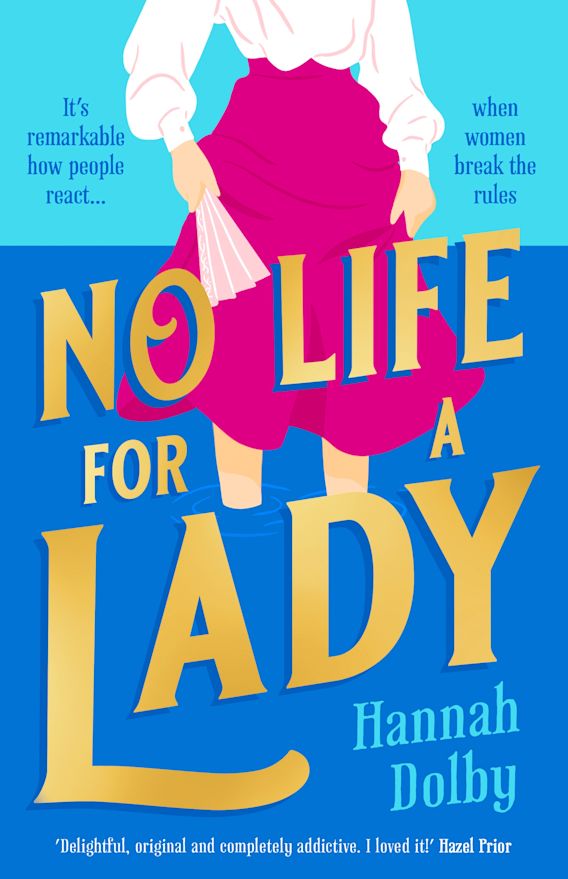
Book Review: No Life for a Lady by Hannah Dolby – a light and humorous adventure

This novel was a breath of fresh air, a lively read that was a welcome pick-me-up without challenging the brain cells too much. Part rom-com, part mystery with a little comedy of manners thrown in, No Life for a Lady follows Violet Hamilton who lives with her father in the English seaside town of Hastings.

We’re in the final years of the 19th century, and at 28, Violet should be happily married off by now, according to her respectable banker dad. But Violet is determined never to marry, her parents own marriage having been somewhat less than blissful. So much so that a decade ago, Violet’s beautiful mother Lily disappeared. She’d just popped out to visit friends one evening and never returned.

Lily’s disappearance might have been an accidental drowning as she was last seen on the pier. Had she fallen into the sea and been washed away? That certainly seems to be a possible theory and the one Mr Hamilton propounds to Violet, all the better for her to put her mother behind her and move on with her life. But Violet feels she would know if her mother had died, and thinks she could be out there somewhere, maybe even needing help.

When Violet decides to hire a detective, she sets in motion a chain of unforeseen events that spell disaster on one hand, but also push Violet to becoming a sleuth herself. Frank Knight is the only detective in town and eagerly takes on her case. But Violet is unimpressed with his lack of professionalism, and his assumptions about Lily seem set to defame her rather than save her.

The disappointments of the decade had been compounded by the realisation it was almost impossible for a lady to take up a respectable profession. I had been set on the idea, but now my attic was filled with the skeletons of half-finished hats, faded botanical specimens and, most tragic of all, dusty portraits of a few worthy occupants of the town. This last career had ended abruptly when I persuaded the wife of the town mayor to pose for a portrait. I had faithfully included all three of her chins, upon which she told me she had only sat for me out of sympathy, forbade me to continue as an artist and left, chins wobbling in fury.

Violet finds an old newspaper which leads her to Benjamin Blackthorn, a reluctant detective who has given up the trade in favour of selling furniture in the old, slightly seedy part of town. While he is the opposite of Knight in every way, Benjamin refuses to take on her case, but Violet wears him down enough to allow her to help with one or two cases that require a woman’s touch. Violet is more enthusiastic than subtle at the outset, which leads to some hilarious confrontations.

Dolby’s manuscript for the book was the runner-up in the Comedy Women in Print awards, and there are plenty of fun scenes, the writing’s witty, but there’s plenty to think about too. There are issues around the constraints placed on women in the era, of class and the lack of choice when it comes to making a living: marriage, servitude or prostitution seem to be the main options for women. Add to that the resigned tedium of being stuck in an unhappy marriage; the ignominy of divorce.

Packed with an assortment of quaint and humorous characters, the story builds to a dramatic conclusion involving surprising revelations and a fair amount of danger. For a young lady of her time, Violet has to step outside the norm of proper behaviour but finds allies in surprising places. The ending leaves us with possibilities for a sequel, perhaps more cases for Violet to solve. I shall certainly be keen to read more of Violet’s adventures. No Life for a Lady gets four out of five stars from me.

Book Review: The Missing Years by Lexie Elliott – a superbly atmospheric psychological thriller

I was drawn to this novel by by the setting. Not only the rural Scottish village but the creepy old house, a large manse that dates back centuries and a history including blood-thirsty reprisals during the Jacobite rebellion. It’s bound to be haunted, and yes the opening sentence of Chapter One is ‘The Manse is watching me.’

The narrator of the story is Aisla Calder who has taken a break from her high-powered job based in London as a television news producer, following the death of her mother. She’s been left an old house in her mother’s will, but she is unable to sell it because the Manse is co-owned by Martin Calder, her father, who walked out on his family when Aisla was a child. He hasn’t been seen since and nobody knows if he is dead or alive. Also missing is the packet of diamonds he was carrying for the company he worked for. It’s all very suspicious.

Each chapter begins with an imaginary account of where he might have got to, while Aisla sets in motion the legal proceedings to prove that he’s dead. After living in the Manse a short time, she’s somewhat reluctant to stay. Thank goodness her sister Carrie has agreed to come to keep her company while she sorts things out. Carrie is a bright young actress in a play a commuter train’s ride away in Edinburgh, but there is a strain between them. Carrie can’t quite forgive Aisla for not being around as she grew up, not coming to see her on stage.

It’s bad enough having to deal with all the family stuff, the loss of a mother who was a terrific artist, but not at all loving, of an unsupportive relationship with a top TV news reporter, and having to negotiate the tricky waters of living with her sister. But there’s creepy stuff happening at the Manse too. Her neighbour, friendly Jamie drops in unannounced to explain about his weird sister, Fiona, who has a fascination with the place. It’s best she has her locks changed.

I want to feel that I am me, created from pure air, my genes unsullied by ancestry. I want to feel that my thoughts and reactions and decisions are mine and mine alone. But being here, in Scotland, in the Manse of all places, has me feeling the weight of my DNA, of the history and memories and behavioural patterns it carries. Of the impact it has had, or might yet have, on what I think of as me.

Aisla finds in the attic some old photos from before Aisla was born showing Jamie’s parents and her own – obviously friends. But what are those aerial maps all about? And then there are hostile locals to deal with – openly abusive old Morag – and nasty things left on the doorstep. The house doesn’t seem to like Aisla much either – the heating turns itself off, the smoke alarm goes in the middle of the night and the bathroom door keeps banging. Aisla was sure she’d closed the window.

An intelligent woman in her thirties, Aisla should be able to deal with a lot of this stuff rationally. But she’s always so tired and the emotional events of recent weeks have taken a toll. This all adds to the tension as things get more and more worrisome. She’s made friends with other locals, the handsome Ben who’s a bit of a player among them, and talks to Jamie’s father who was the policeman who investigated Martin Calder’s disappearance. If only Carrie hadn’t become so chummy with weird Fiona. It’s as if there’s no one she can really trust and as a reader you can’t help wondering which if them is plotting against Aisla. Elliott instills a nice undercurrent of menace.

It all builds to a dramatic, nail-biting showdown with the malefactor, the house creating an eerie backdrop, to say nothing of the Scottish weather. The Missing Years is a satisfying story, a brilliant psychological thriller, a breezy, engaging read that’s also nicely written. It’s sure to please fans of Ruth Ware and Clare Mackintosh. I’m keen to read more by Lexie Elliott – it’s hard to resist a title like How to Kill Your Best Friend. This novel gets four out of five stars from me.

Book Review: The Night She Disappeared by Lisa Jewell – another stylish psychological thriller from an always-reliable author

I often pick up a Lisa Jewell novel when I want a light, engrossing read. The Night She Disappeared is one of those books where the rich girl from a loveless family makes friends with the much loved poor girl with problems – and disaster ensues.

Tallulah lives in a village with her divorced mother and brother and is doing fine until an unplanned pregnancy has her reconsidering her options. She’s barely out of school so enrols at the nearest polytechnic, a bus ride away and organises her life around her baby. She didn’t plan on living with her boyfriend, Zach, but he is insistent he wants to get back together and she unbends and lets him move in with her at her Mum’s home. Mother, Kim is delighted as she sees in Zach someone who adores her daughter and will be a good father.

But Tallulah meets Scarlett at the bus stop – glamorous, dangerous looking Scarlett, who is at the same college, doing art to Tallulah’s social work course and the two become unlikely friends. Scarlett lives at Dark Place, a large house across the woods that has a dark history, but has had lavish amounts spent on it. As the weeks and months roll by, Tallulah compartmentalises her life between college, home life with her family and Zach, and secret meetings with Scarlett.

The story flips between Tallulah’s story and a year or so later when Sophie moves into the village with her partner Shaun. He’s the new head teacher at Maypole, a private school a mere woodland stroll from Dark Place, where Tallulah and Zach were at a party they night they disappeared. Sophie is an author of cosy mysteries, but here she’s suddenly aware of an unsolved mystery right on her doorstep.

When Sophie finds a sign saying “Dig here” and an arrow, she can’t help herself. What she finds soon draws her into Tallulah’s story, as well as meeting Kim working the bar at the local pub, a woman she wants to help. But in the background there’s her own relationship to consider. Shaun is obviously stressed. He has only chosen the job at Maypole to help fund the expensive schooling his ex-wife has insisted on for their daughters. And he and Sophie have never lived together before. They used to enjoy London so much too. Raking up what happened on the school’s doorstep isn’t going to help Shaun settle in to his new job.

Meanwhile Kim is battling away, trying to manage the baby as well as keeping alive her hope for Tallulah’s return. There are a bunch of minor characters who have a role in what happened and who could be suspects in the case. There’s a nice policeman who listens and does what he can. The story moves to an astonishing and gripping ending and I’d be amazed if you manage to put it all together before it’s all revealed. It might even give you goosebumps.

I am happy to say that The Night She Disappeared did its job; it’s a stylish, engaging, relaxing read. The main characters who tell their story are easy to empathise with, even if they do silly things or fail to stick up for themselves. And the plot is nicely measured out between them to keep you hooked. I’m not sure I enjoyed it as much as others I’ve read by Jewell, but it’s still an easy four out of five stars from me.

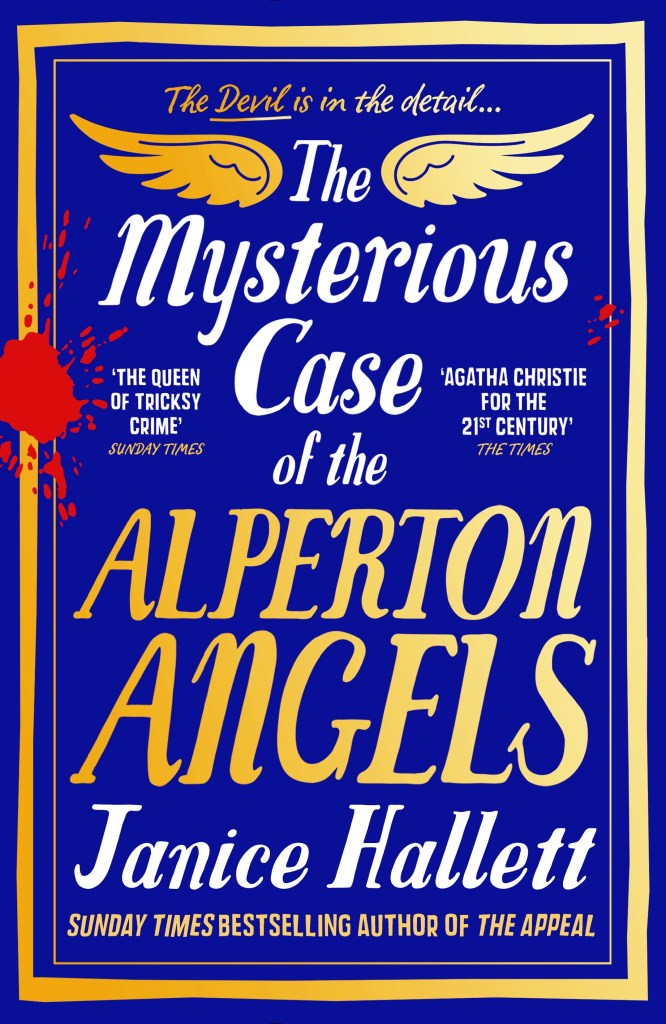
Book Review: The Mysterious Case of the Alperton Angels by Janice Hallett – another twisty mystery that will have you hoodwinked

I’m beginning to know what to expect every time I pick up a novel by Janice Hallett. First of all it will be told in an unusual format – often in emails and texts or transcriptions from recorded conversations. The other thing is that the story will have me totally hoodwinked. Normally, with mystery novels, I have a go at trying to solve the mystery from the clues presented, considering the characters and their motives, their histories. But for this novel, I didn’t bother trying, just went along for the ride.

The story begins with documents from a safe deposit box relating to the publication of a book. We follow Amanda Bailey, a journalist and writer of true-crime books, when she is commissioned to write a book on Alperton Angels. This was a cult lead by the self-titled Gabriel Angelis, now residing in prison for the murder of a waiter. Eighteen years ago, the cult ended in the deaths of several of its members, and the miraculous rescue of a baby, which the cult believed to be the Antichrist.

There is no doubt that Gabriel Angelis is an evil man, and that prison is the best place for him, in spite of his pleas that he did not kill anyone. But what he did do was lure vulnerable teenagers into his orbit, in this case Holly and Jonah, who survived the ritual bloodbath eighteen years ago, Holly saving the baby from sacrifice when the stars were apparently in alignment.

Eighteen years later, where is that baby now? That is going to be the main focus of Amanda’s book along with the whereabouts of Holly and Jonah and what they’ve made of their lives since. But a rival publishing company is also interested in the Angels, and have chosen Oliver Menzies to write another book on the case.

Oliver and Amanda were on the same journalism course twenty odd years ago, a course that Amanda left abruptly without qualifying. And when her publisher suggests that she and Oliver work together to begin with so that they can ensure their books cover different territory, Amanda is not a happy camper.

It’s not easy getting people to talk about what happened, but one thing that does come across is that Amanda is a consummate professional and slowly the facts slot into place. Oliver just bumbles along and the What’sApp banter between them adds plenty of entertainment. This is just as well as a book of emails and texts would soon pall if Hallett didn’t manage to make them lively. So too are the transcriptions typed up by Ellie Cooper for Amanda. Ellie is a kind of sounding board for Amanda’s discoveries and offers lots of good thoughts, plus her asides as she transcribes Amanda’s phone-recorded interviews are a hoot.

But it’s the plot that really has you hooked, packed with twists and turns, and beguiling little details that had the police stumped. What was the deal with that Mini Clubman that ran off the road and disappeared? And those weird newspaper adverts – what did they mean? Hallett really knows how to use red herrings. Towards the end of the book, you suddenly begin to realise what really happened, and start to join the dots and see connections. Suddenly the unbelieveable all begins to make perfect sense.

The Mysterious Case of the Alperton Angels is another diverting read from Hallett but it works best if, as a reader, you enjoy puzzles. We only get to know characters as they reveal themselves in their emails and texts – we don’t even know where they live, or even a lot about what they look like. But perhaps Hallett deliberately impedes the reader’s empathy for them because of how untrustworthy many of them are.

I think Agatha Christie would approve of Hallett’s style. How many times have I read Poirot remind Hastings not to take too much at face value. How you can never be sure that a witness isn’t lying. And it’s the same here. The Mysterious Case of the Alperton Angels is a modern take on the classic detective novel. I can only gaze on and admire its cleverness. But cleverness isn’t everything in a book and I like a bit more from my crime fiction; I like to feel something too. So its a three-and-a-half star read from me.

Book Review: The White Hare by Jane Johnson – a haunting country house mystery with a touch of magic

We’re back in Cornwall for another novel set in the 1950s and I was in my happy place listening to this as an audiobook. I often hunt out these evocative country house stories.

The White Hare begins with a family of three arriving to take on a run-down country house with the aim of turning it into a guest-house. Somewhere comfortably-off urbanites might sojourn for a change of pace and some gentle pampering. This is Magda’s idea. In her fifties, Magda is an imperious, demanding and determined woman who won’t take no for an answer.

Her daughter, Mila, passively just does what her mother tells her, hoping to build a home for her and young Janey. But although she has strong feelings, she keeps them in check, because she owes her mother her salvation. A chance for a new start, having been duped by a bigamous husband and left with a five-year-old daughter. Remember, it’s the mid 1950s, when a woman’s reputation was everything.

The house is of course a mess, but in the barn they also discover an unwelcome guest. Jack, the interloper, says he hadn’t meant to trespass; he was just exploring the nearby countryside and would soon be on his way. But Janey has warmed to Jack, and when Jack reveals he can fix their car, and is handy with a hammer and nails, he becomes the women’s saviour when they face one crisis after another.

The locals don’t take kindly to strangers. It is said the house is haunted and when Mila mentions seeing a white hare on the road the day they arrived, all sorts of strange legends start to emerge. Then there’s Jack. He and Mila soon warm to each other, but Jack seems to be harbouring secrets. There’s also a creepy vicar, but fortunately for Mila, friendship and support are on hand from a local healer and her artist girlfriend.

The story follows Magda and Mila’s rocky relationship as they struggle to bring the house into a reasonable state of repair ahead of a lavish New Year’s Eve party Magda hopes will entice acceptance from the locals. The folklore of the area won’t leave Mila alone, and there are odd discoveries that hint at a tragedy involving the previous owners of the house.

To make things even more creepy, Janey seems to have discovered a way of communicating with an otherworldly presence through her toy rabbit. The story builds to a dramatic ending where the real and unreal converge and the present reveals, and can finally bury, past wrongs. The characters of Magda, Mila and Janey are interestingly developed – there’s nothing like adversity to bring people together.

I loved the story – the perfect sort of audiobook, narrated brilliantly by Danielle Cohen – intriguing and full of mystery with a bit Cornish history thrown in. Listening to a book like this takes me back to those old fireside tales that begin with, ‘let me tell you a story’. If you like books by Katherine Webb and Kate Morton, you’re sure to enjoy The White Hare, a four star read from me.

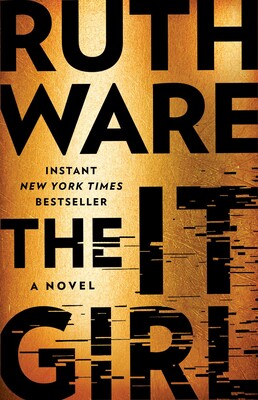
Book Review: The It Girl by Ruth Ware – another suspenseful read from “the queen of just one more chapter”

Ruth Ware does it again with one of those books that ticks all the boxes for building suspense in the kind of thriller sometimes known as domestic noir. We’ve got a potential miscarriage of justice; a beautiful, dead girl and the people who loved and hated her; and the kind of plot that seesaws between ‘before’ and ‘after’, making you gallop through the pages. She caps this off with a vulnerable main character who can’t rest until she gets at the truth.

Nobody could be more vulnerable than Hannah. Ten years ago her best friend and college roommate, April, was strangled to death. Now working in a bookshop, April’s death had been so traumatic, Hannah dropped out of university. But it was Hannah’s testimony that helped convict the creepy college porter, John Neville.

Now Neville has died in prison, adamant to the end that he had nothing to do with April’s death and there’s a bunch of journalists eager to revisit the story. One in particular, Geraint Williams, has been dropping emails into Hannah’s in-box, with the endorsement of another college friend, Ryan.

There were other friends there at the time, all rocked by April’s death but all with reasons to resent her. April, a rich party girl, pulled terrible practical jokes on her friends. During their first week at their Oxford college April introduced Hannah to her old school mates, bringing her into their circle. Among them was Will, newly appointed as April’s boyfriend. Flip forward ten years and Will and Hannah are married, living in Edinburgh and expecting their first child. They have always agreed to ignore requests from the press for more interviews.

A complex cocktail of guilty feelings has Hannah rethinking her testimony and digging into what happened. Being pregnant and Will’s long days at work, plus her reluctance to upset her husband with her doubts see Hannah as a vulnerable woman on her own. This ramps up the tension nicely as Hannah explores several alternative scenarios, and memories of that first year at Oxford come crowding back to haunt her.

Ruth Ware has been described as the “queen of one more chapter” and she’s certainly a smart cookie when it comes to plotting. And while April’s the kind of girl with the world at her feet, several motives for her killing emerge through the book, and with that a bunch of suspects. But there are plenty of alibis too. How the facts eventually emerge will keep you guessing, while Hannah and her unborn child become closer to danger as at the real killer closes in.

The It Girl has been long-listed for the Theakston Old Peculier Crime Novel of the Year – a lovely long list of mystery and suspense fiction that’s well worth checking out, especially if you like British crime fiction. I will be keen to see if The It Girl makes the shortlist, which is announced on 15 June. It’s a four-star read from me.

Book Review: Exiles by Jane Harper – Aaron Falk is back in an atmospheric new mystery

I’ve read all of Jane Harper’s novels. It was possibly her first book, The Dry, that triggered a popular interest in Aussie Noir, giving Scandi Noir a run for its money. For me, it was Jane Harper that got me reading Australian mysteries and I imagine it was the same for many readers. There’s just something special about novels set in the outback.

Since The Dry we’ve had a second Aaron Falk novel – Force of Nature is soon to hit the big screen – and now, a long-awaited third. Exiles sees the Melbourne detective visiting friends in rural wine country for a christening. It’s a bitter-sweet time for Greg Raco’s family. While Aaron is going to be godfather to Raco’s baby boy, nobody can forget what happened at the same time a year ago. The Marralee Valley Annual Food and Wine Festival was on and it was here that Kim Gillespie disappeared, leaving her baby Zoe asleep in her pram.

Kim’s older daughter from her long-term relationship with Charlie Raco, Greg Raco’s winemaker brother, is desperate for answers. Now seventeen, she’s running a campaign, aided by Charlie and her good friend Joel, handing out flyers and canvassing potential eyewitnesses. Aaron, with all his detective smarts, somehow gets roped in.

And there’s another cold case – the hit-and-run death of Joel’s father at the Reservoir, a spot adjacent to the festival grounds, and it’s the Reservoir where Kim’s shoe was found. Is this a coincidence or are the two cases linked? Aaron has the added complication of meeting up with Gemma again, Joel’s mother – someone he’d met through Raco, and who he can’t quite forget.

Even in the gloom Falk could see it stretching out, vast and open in its centre, then twisting and curving to fill the turns and gullies that formed the banks. It was big. Bigger than he remembered. The opposite bank was just visible across the swathe of water, but he couldn’t see the westernmost edge, or the dam that lay somewhere to the east. The festival grounds felt far behind them, but Falk could hear a distant low thrum of music and crowd noise undercutting the stillness.

Emotions are high in this story with two teenagers having lost parents and not having any answers. Aaron’s a bit of a softy and is sympathetic. The story also hearkens back to the events from the school days of Kim and the Racos. Like the current batch of kids from the local high school, the opening night of the wine and food festival was when there was a big party in the woods near the Reservoir, something local cop, Sergeant Dwyer would love to shut down.

There’s a lot going on in each of the characters’ lives, and we slowly get a picture of a community, of complicated loyalties among old friends, old grudges and a fair bit more besides. We haven’t got a dry, scarily hot landscape. But the stunning countryside surrounding the grim spectre of the Reservoir and all its secrets makes for another atmospheric setting.

Add some superb writing, and a twist in the story I didn’t see coming and I’m happy to say that Jane Harper has done it again. Exiles is another cracking read and is satisfying on several levels. I’ve also got a feeling we might see Aaron Falk again – I hope so; he’s a complex and interesting detective. Exiles gets four and a half out of five from me.

Book Review: The Last Party by Clare Mackintosh – a new promising new detective series in a moody North Wales setting

I saw Clare Mackintosh’s name connected with fellow suspense/mystery author Lisa Jewell, and being a fan of Jewell, decided she should be worth a shot. Like Jewell, Mackintosh has written a bunch of twisty mysteries, but The Last Party is the first in a series featuring Welsh detective Ffion Morgan. I like being in at the start of a promising crime series, and was soon glad I’d picked this up.

The mystery starts with the discovery of a dead body by swimmers braving a New Year’s dip. We’re in the remote village of Cwm Coed on the shore of a lake which borders England. Across the water is a luxury resort called The Shore, built by a couple of investors as holiday homes for the wealthy. These incomers don’t support the village shops, they zip around the lake on jet skies and are just generally obnoxious. So it isn’t surprising that the corpse turns out to be one of the investors, a Rhys Lloyd.

With a name like that you’d assume the victim’s Welsh. And he is – a local made good in the sense he’s become a successful star of stage and screen, and knows how to turn on the charm. His mother still owns the hardware store in the village, and it was his father’s land that he and his partner Jonny Charlton have turned into The Shore. Their New Year’s Eve party was supposed to bring everybody together and appease the villagers, but it all ends in murder. The story soon throws up a fair few suspects – it turns out Rhys is struggling to pay off creditors and his charm hides a darker persona.

DC Ffion Morgan is on the spot – she’s local, still living with her mother and sister in Cwm Coed, but for all that she’s something of a lone ranger. She drives an old Triumph at tearaway speeds over the winding rural roads and has a burning secret. She’s also shocked to discover that her one-night stand from the night before is the English cop assigned to assist on the case.

DC Leo Bradey is an intelligent and promising police officer from Cheshire, with a whole lot of baggage. His ex-wife is going out of her way to exclude Leo from being a parent to their young son, whom he adores, and his boss makes him the butt of all his tasteless jokes. Working with Ffion doesn’t get off to a great start either, but they slowly form a team. They soon discover that hardly anybody doesn’t have a motive for killing Rhys Lloyd.

The Last Party is a much better than average murder mystery. Clare Mackintosh is a former police officer herself so the story has a ring of authenticity. However, there’s a lot more than police work here. Family dynamics, old scores and the effects of burying damaging secrets all add to a character-driven, atmospheric read, the evocative setting adding a ton of interest.

As well as the dangers of the lake, there’s snow to contend with and the story builds to a life-and-death climax that has you on the edge of your seat. This is helped by a plot that switches back and forwards in time and between characters, mostly Leo and Ffion but also the key players and suspects. I was fair racing through the chapters to see what happened next. And then there are the twists.

For a diverting crime read, The Last Party doesn’t put a foot wrong and introduces a fabulous pair of detectives I’ll be happy to meet again. I’ll happily give it four stars. A Game of Lies, the next Ffion Morgan mystery, is due to be released later this year.