Book Review: The Bookshop Detectives: Dead Girl Gone by Gareth Ward and Louise Ward – a humorous take on the bookshop mystery, packed with local colour

I went to an author talk recently at which authors Gareth and Louise Ward described how they came to write a book together set in the New Zealand village of Havelock North where they live and where they own a bookshop. The Bookshop Detectives: Dead Girl Gone is a delightful cosy mystery and part of the humour for me, anyway – and this is a very funny book – comes from the way the main characters, Garth and Eloise Sherlock, owners of Sherlock Tomes, are seemingly versions of the authors and their world.

In real life, Gareth and Louise were also, once upon a time, coppers back in the UK, or Blighty as they call it. And they do have a large dog with a sensitive personality who is often at the shop – I’ve been there a few times, so I know. The world of these booksellers just seems made for a cosy mystery series, doesn’t it? At the talk I was amused to learn that the dog, Stevie, was a more prominent character in the first drafts, until the editor cut out large chunks with “too much Stevie” scrawled in the margin. So for lovers of mysteries where pets save the day and solve the murder, this doesn’t quite happen, although I am happy to say, Stevie does play a pivotal role in things.

The story revolves around a cold case, the disappearance of schoolgirl, Tracey Jervis, decades before. A bright student with a talent for poetry, Tracey left home, heading for the circus, and was never seen again. There were rumours of her being caught in a clinch with a teacher, but the work she did helping a politician with his campaign seems to have thrown up more questions. As well as being politically ambitious, Franklin White is a property developer, with an arrogance that makes him easy to loathe. And then there’s Tracey’s controlling father; and what about the ex-boyfriend?

Meryl is an artist, as she’s told us often, although I’ve never seen any of her work in Havelock North’s galleries or that other purveyor of fine art, the local coffee shop. She barges past me pulling a granny trolley, which she is far too young to be using. ‘What other calendars have you got?’ she asks, seeming indifferent to the fact that I haven’t set up for the day, or even yet switched the lights on.
Despite having been ordered from the reps in February, the main drop of calendars hasn’t arrived yet. They get later each year and the shipping issues we’ve had thanks to Covid have only made matters worse. ‘They’re in a box up at the counter,’ I tell Meryl. ‘We’ve just had a couple of the smaller suppliers so far.’ I grab two piles of magazines banded with plastic strips from outside the door and hurry after her.
‘What about “Nice Jewish Guys”?’
When we first opened the shop, and didn’t know what we were doing, we got an eclectic mix of calendars of which perhaps the most bizarre was ‘Nice Jewish Guys’. We put a photo of Eloise swooning over it up on Facebook as a bit of a giggle and sold all four copies the same day. Ever since it has been a firm seller every year, though the calendar rep told us we’re the only retailer in New Zealand that stocks it.

Garth and Eloise had never heard of Tracey Jarvis until a mysterious package is delivered to the shop with a copy of a book inside – See You in September, by real-life local author, Charity Norman. The book has been annotated with a message – a call to action to reinvestigate Tracey’s disappearance, and on the package is a reference to Eloise’s old police badge number, which was hardly something anyone local would know. The couple can’t help wondering if there’s a link to a nasty criminal Eloise had helped put away years ago and who casts a lingering shadow.

Other story threads are woven in, the most notable being the decision of one of the world’s best-selling authors to launch her latest book at Sherlock Tomes, a colossal and mind-boggling event that has to be kept under wraps. Then there’s the flower pilferer that is pinching flowers from the shop’s window box as well as the menace provided by some thuggish gang members who try to put a stop to the Tracey Jarvis investigation.

Everything comes together neatly, the plot building to a simmering conclusion full of surprises and fair dose of action. But while the book lives up to it’s ‘cosy mystery’ label, it’s also a view into the enchanting world of bookshops and the people who visit, its quirky and loveable staff, and the curious characters who inhabit the village. Dead Girl Gone is the first in a series, with a second book already in the pipeline to look out for. Can’t wait! This one’s a four-star read from me.

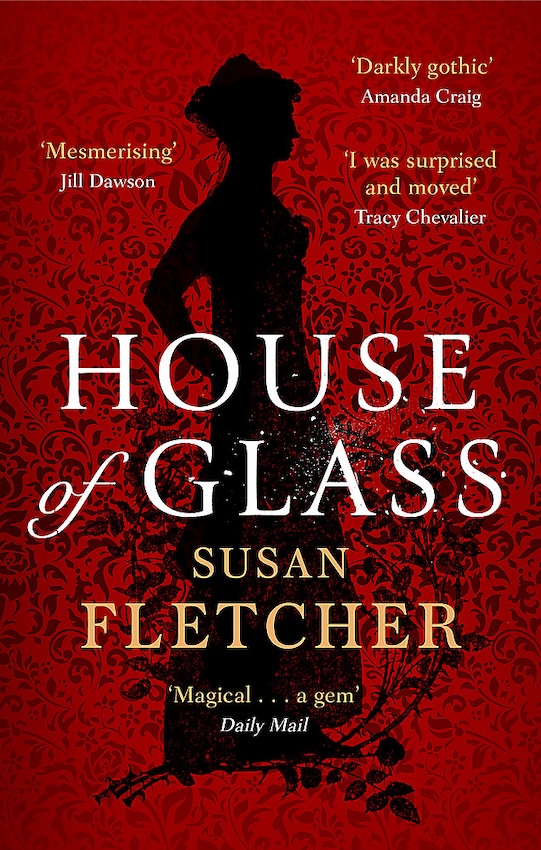
Book Review: The Night in Question by Susan Fletcher – a wheelchair-bound octogenarian on the trail of a killer

Novels set in assisted living facilities are becoming quite a trend. I love the way authors such as Joanna Nell and Richard Osman create active and determined elderly protagonists, giving them a new lease of life when everyone else seems to think they ought to be taking things easy.

And you can say that about The Night in Question, which is partly a murder mystery, but a lot more besides. I was soon happily engrossed in an engaging story, but also impressed by the beautifully crafted writing. Of course I should have known I was in safe hands when I saw a recommendation on the cover from Clare Chambers.

The Night in Question is told from the point of view of Florrie Butterfield, eighty-seven and because of a mishap with some mulled wine, has to get around in a wheelchair. She has a comfy flat in Babbington Hall, a former stately home now with various levels of care for the elderly. A cheery, friendly sort, her plump form swathed in pastels, Florrie doesn’t look all that sharp, but appearances can be deceptive. For when two events take place – the first resulting in a death, the second written off as an attempted suicide – Florrie is convinced that someone else is to blame.

Teaming up with Stanhope Jones, another resident she’s got to know chatting about Shakespeare near the compost heap, Florrie is determined to get to the bottom of it. The story will unmask events that are long past, a tragedy that can’t be forgotten or it seems forgiven. But in doing so, Florrie’s own personal tragedy begins to surface, an event that has dogged her since she was seventeen.

As Florrie and Stanhope hunt down clues, research online and interview the Babbington Hall staff and residents, we slowly learn Florrie’s past. Delving into an old cheese box full of mementoes, she remembers the people she has loved. These include her parents, Bobs her brother, best friend Pinky, who was as tall as Florrie was round, and the six men who each almost captured her heart.

Florrie opens her eyes. It feels a small, quiet thought; she merely notes it, at first – there it is – as if a bird has landed inside her, preens a little, settles and closes its wings. But she continues to stare in the darkness.
Can this be true? Is it possible? And she thinks, Yes – for no other reason than it feels easy and right. It feels to fit, just so – like a good shoe. And she remembers Sergeant Butterfield at the kitchen table, saying, ‘A good policeman will listen to this, Florrie’ – tapping his chest with his middle finger. This.
Pushed. She was pushed.

Bobs was the one who probably had the most influence on how Florrie would lead her life, returning from a tank regiment in World War II, badly burned. Always yearning to see the world, Bobs implores Florrie to travel for both of them and do everything they had planned as youngsters. So while Pinky married and had a family, Florrie answered adverts in the paper for jobs in France, then Africa. With each there’s a certain someone she remembers fondly. There’s more travel and more mementoes, new relationships – but no one she dares trust with the truth of her past.

We’ll have to wait until the present day crimes are solved before we find out what it was that happened to Florrie as a girl, the tragedy only Pinky and her great-aunt every knew about. In the meantime, Stanhope does the physical things Florrie can’t – the illicit searches and foraging in the recycling skip – while Florrie chats to people. The two become closer, and the reader can’t but wonder if one day Florrie will tell Stanhope her story.

The Night in Question is a brilliant read, well paced and peppered with terrific characters. Stanhope is charming, a quiet former Latin teacher with a gentle wit. There’s Magda, young and tattooed with a heartbreak of her own, and Reverend Joe with his massive beard, ACDC T-shirts and a tendency to let out the odd swear word during church services. There’s an interesting cast among the other residents, nosy ones and gossipy ones, people Florrie tries to avoid in the dining hall, and others she feels sorry for. It all adds to a rich and entertaining story.

In finishing the novel, I can’t help feeling I’ve discovered a wonderful new author. Susan Fletcher has written seven previous books so I’ll look forward to hunting through her backlist. Her first novel, Eve Green, won the Whitbread First Novel award, and there have been other award nominations. This one’s definitely a nicely fresh take on the rest-home murder mystery and I can’t wait to see what she does next. The Night in Question is a four-and-a-half star read from me.

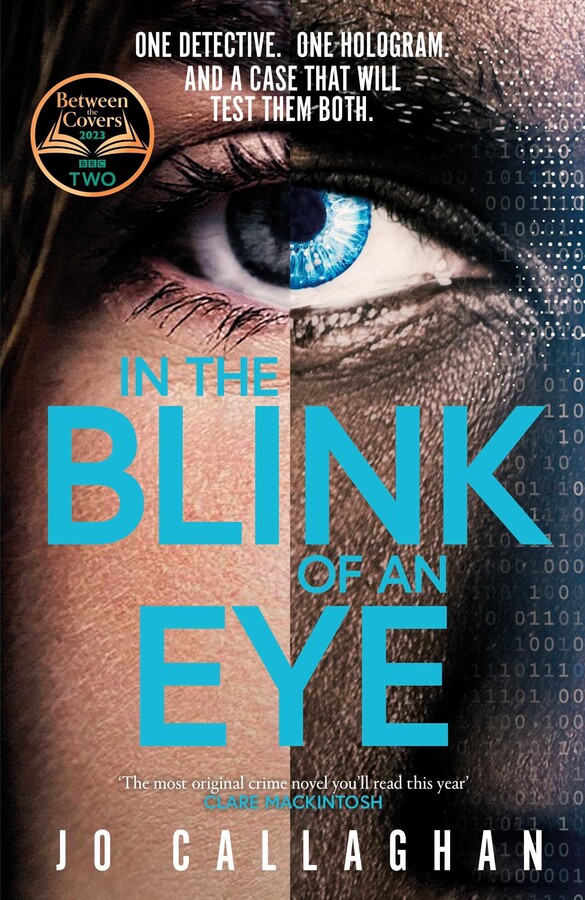
Book Review: In the Blink of an Eye by Jo Callaghan – a police pairing that breaks the mould

I always like to check out the Theakston’s Old Peculier Crime Novel of the Year awards – the shortlists are full of my favourite mystery authors (Elly Griffiths, Ruth Ware, Abir Mukherjee, and that’s just for starters). This year’s winner was Jo Callaghan’s debut novel, In the Blink of an Eye, which breaks new ground in that there’s a new police officer on the team, and it’s AI. The premise of this novel was just too good to ignore.

DCS Kat Frank has been away from the Warwickshire police on bereavement leave, and her husband’s death is still a bit raw. Her son, Cam, who has just completed his A Levels, has been having therapy, his anxiety over losing a second parent who has a dangerous job never far from his thoughts. So Kat has requested a safe option for her return to work, something less on the frontline. Her boss and mentor Chief Constable McLeish has a surprise in store. He’s signed Kat up to run a missing person’s cold case team that also will be trialling AIDEs (Artificially Intelligent Detecting Entities).

Kat is not happy. She’s an intuitive cop who follows her gut. You can’t solve cases with an algorithm, she declares. Meanwhile the scientist who has designed the AIDE, Professor Okonedo, with her own axe to grind, is sceptical of Kat’s skills and of the police in general. Reluctantly Kat agrees to the trial, taking on ambitious DI Rayan Hassan and shrinking violet, yet empathetic, DS Debbie Browne. Okonedo introduces AIDE Lock, a bracelet-type band that you can talk to like Siri, and which can whip up facts, statistics and probabilities in seconds. In holographic form, it’s remarkably like a person.

With hundreds of cold cases to chose from, Lock determines that recently missing young males will be more easily found. But Lock and Kat disagree over which. Kat’s preferred case is Tyrone Walters, a high-achieving young black man from a deprived area. Lock prefers Will Robinson, a young white male not much older from a wealthy home. According to Locke, statistics suggest the Robinson case would be easier to solve because he’s white. Kat is appalled as this racial bias and has a feeling that Tyrone has been a victim of foul play..

Ultimately, Hassan suggests the trial review both cases, and Professor Okonedo assures Kat that Lock can “perform the functions of many officers in just a fraction of the time”. This makes Kat only bristle more, but she reluctantly agrees. If only the team realised that what starts out as a test, a case chosen by statistics versus one chosen by gut feeling, will converge into a single case that is still active.

Picking up her briefcase, Kat paused at the door. She needed to leave her new team with something more motivational than her obvious irritation. ‘Remember, less than one per cent of missing people turn up dead, so we still have a good chance of finding both boys alive.’

‘Just to clarify, that figure represents one per cent of all the missing,’ said Lock’s voice from her wrist. ‘Only four per cent of adults are still missing one week after being reported, which is the category that Tyrone and Will fall within. So, in actual fact, there is a twenty-five percent chance that both boys are already dead.’

This really was an edge of the seat read, as woven into the narrative are scenes from the point of view of someone who has been kidnapped, drugged and immobilised. The clock is ticking and we can only hope that Kat and Lock will sort out their differences enough to solve the crime and save the missing lads. While Kat is learning how to manage Lock and use its obvious skills – downloading data, scanning social media for clues, extrapolating info, etc. – Lock is learning too. And it needs to, particularly with reading body language and developing social skills.

This makes the book really interesting as it takes time before Kat and Lock gel enough to be useful together. For a lot of the time they’re the angry cop and the irritatingly rational cop. Slowly, Kat’s team start to come into their own: Hassan in spite of his confident manner has a softer side and stuff going on at home, while Browne has a big problem to deal with, but fortunately Kat has enough patience to bring her out. Although mostly Kat is on edge, drinks too much and tends to fly off the handle.

It will be interesting to see how Kat and her officers, as well as Lock, evolve over the course of this series – there’s already a second book, Leave No Trace, plus a third to be published in April next year. Quite the feast. Whatever your thoughts on AI, In the Blink of an Eye illuminates it in real-world scenarios. Jo Callaghan has done a lot of research on the subject and how she imagines AI in a policing environment is fascinating. It’s a four-star read from me, and I can’t wait for the TV series. It would be a cracker.

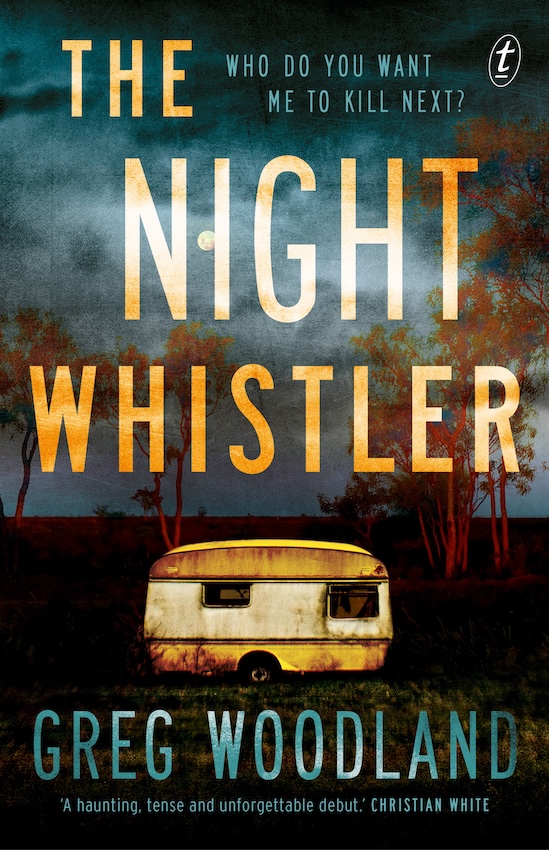
Book Review: The Night Whistler by Greg Woodland – a new cop in a small town that’s simmering with secrets

Readers of these posts will know that Aussie Noir is one of my favourite sub-genres. Having recently read Greg Woodland’s debut crime novel, I am pleased to have discovered what looks like a promising new series. The Night Whistler has all that readers have come to enjoy about Aussie Noir: an evocative, rural Australian setting; small town secrets; and a cop that’s up against it. Set in the 1960s, the story evocatively conjures up the era – the music, the social order plus the edgy restlessness of a long, hot summer.

Mick Goodenough (pronounced like “no-good” backwards, as opposed to “good enough”) has been sent to Moorabool, a smug little town that’s something of a culture shock. A former Sydney detective, he’s been busted down to the rank of Probationary Constable after a case went horribly wrong. Falling foul of his superiors and with a drinking problem that has cost him his marriage, Mick has hit rock bottom but, fortunately, it seems, you can’t keep a good cop down.

The narrative alternates between Mick’s story and that of twelve-year-old Hal, similarly a new kid in town, along with little brother Evan. The two boys are investigating a creek near their house when they come across the body of a mutilated dog. The boys are understandably upset, but go on to give the animal something of a burial, little knowing that the dog is one of a string of such killings that the police won’t take seriously. That is until Mick Goodenough recognises the traits of a perpetrator that will likely take a more serious turn. When the dead dog turns out to be Mick’s, it only spurs him on.

While there’s a killer just getting up steam, Mick is having to deal with arrogant Sergeant Bradley who is wary of Mick’s city cop ways, and lords it over his team. This includes a fellow Probationary Constable who sucks up to Bradley and world-weary Senior Constable Bligh, who becomes an unexpected ally. Meanwhile Mick is desperate to see his teenage daughter again, if only his ex-wife will agree to send her down on the train.

Hal’s father is the bright new spark at Prime Foods, which is why the family have moved to Moorabool. He’s got a fancy new car and wandering eyes. At the Prime Foods Christmas Picnic, we see a microcosm of the town, the braying and overbearing Mayor Dianne Curio, and her bombastic husband, as well as the racism carelessly handed out to Jenna, a young Aboriginal woman who is friendly to Hal and his mother.

Finding the dead dog sets Hal on a mission to uncover the killer – he’s been reading Sherlock Holmes. He gets a hand from young Allie, an Aboriginal girl who teases him relentlessly but shows him how to fish for yabbies in the creek. The two make a great pairing, but obviously they are soon going to be out of their depth. Worse still, Hal’s mother begins getting nuisance calls from someone whistling “Are you lonesome tonight” and making threats. Sergeant Bradley ignores her call for help, even when Mick suggests this isn’t just a snowdropper.

Greg Woodland quickly creates a simmering sense of menace as the story builds towards a gripping ending. But there’s also plenty of banter between Hal and his brother and with Ally, between the kids and their parents and other adults that adds some humour and light relief. Then there’s all the pressure on Mick: the pressure not to probe too much in a town where it pays not to ask too many questions.

For a debut novel, The Night Whistler is expertly constructed, the characters well drawn and interesting, while bringing the setting, both time and place, to life. But we shouldn’t be surprised. Greg Woodward is an experienced screenwriter with a bunch of award-winning films under his belt. The second book featuring Hal and Mick, The Carnival Is Over, is already on my ever-growing list of must-reads. The Night Whistler, excellently narrated by Nic English in audiobook format, is a four-star read from me.

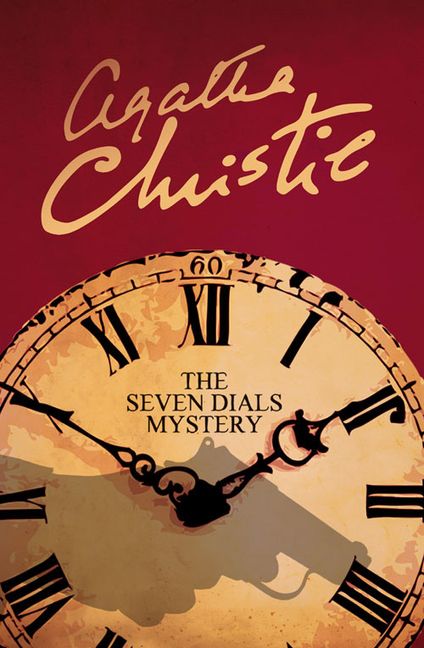
Book Review: The Seven Dials Mystery by Agatha Christie – a Golden Age thriller soon to be adapted by Netflix

I was intrigued to learn that Netflix had picked up The Seven Dials Mystery for the small screen and not remembering a lot about it, hunted it out among my collection of dusty old Agatha Christie paperbacks. First published in the 1920s, the opening scenes make it sound a little like a P G Wodehouse novel.

We’re in an English country mansion known as Chimneys which has been rented out for the summer by a wealthy industrialist, Sir Oswald Coote, and his wife Lady Coote. For some reason there are a bunch of young people staying that don’t seem to be anything to do with the Cootes, a typical Wodehouse type of house party.

When Gerry Wade becomes increasingly tardy about coming down for breakfast, much to Lady Coote’s growing discomfort, Jimmy Thesiger and his friends decide to teach him a lesson. They go into town to buy a collection of alarm clocks. The plan is to sneak them into his room to rouse him the next morning at the ungodly hour of 6:30. Only even that doesn’t seem to work, particularly when it is discovered that Gerry, far from sleeping through the cacophony of eight alarm clocks going off, is dead.

Chimneys is the home of Lord Caterham and his daughter Lady Eileen (Bundle) Brent. Bundle is also the heroine of a previous book, The Secret of Chimneys, and is always on the go in her Hispano-Suiza. Being a fearless young woman with time on her hands, she is easily bored. Before long Jimmy teams up with Bundle to solve the crime. Unlike his friends who have jobs in London, Jimmy’s a man of leisure; his valet Stevens has the same aplomb and consideration for Jimmy’s every comfort you might expect of Jeeves.

Bundle made a grimace.
“Why need people die in my room?” she asked with some indignation.
“That’s just what I’ve been saying,” said Lord Caterham, in triumph. “Inconsiderate. Everybody’s damned inconsiderate nowadays.”
“Not that I mind,” said Bundle valiantly. “Why should I?”
“I should,” said her father. “I should mind very much. I should dream things, you know – spectral hands and clanking chains.”
“Well,” said Bundle. “Great Aunt Louisa died in your bed. I wonder you don’t see her spook hovering over you.”
“I do sometimes,” said Lord Caterham, shuddering. “Especially after lobster.”
“Well, thank heaven I’m not superstitious,” declared Bundle.

Bundle’s and Jimmy’s friend Bill Eversleigh works in the Foreign Office, as did the victim, Gerry Wade. A second victim directs the investigation to Seven Dials, once a seedy part of London, now the name of a nefarious night-club and headquarters of a sinister sounding gang. With a second murder victim it is easy to assume it’s all something to do with a spy network of sorts, and the pace cranks up as our amateur sleuths team up with Gerry Wade’s step-sister, who’s a lot sharper than she looks, and follow clue after clue.

But Agatha Christie is a master of surprises, and there will be more than one shock for the reader before the end of the book. Of course, the killer is unmasked, in typical Christie style, and in spite of references to hangman’s nooses, there’s also a touch of romance in the air.

The Seven Dials Mystery really immerses the reader in a very different era of crime fiction and for some a book like this will seem terribly old fashioned. But with the huge array of cosy mysteries on the market, many set in similar periods, you can see why the Queen of Crime’s books are still big sellers. They are a lovely kind of escapism and the dialogue is full of fun, lending itself well to screen adaptations. And then there’s the settings, the costumes, that car! I shall look forward to the Netflix adaptation – in the right hands the story should come to life beautifully. This book scores three and a half stars from me.

Book Review: Body of Lies by Sarah Bailey – a riveting crime novel packed with surprises

I’d given up hope of another Detective Gemma Woodstock novel so was ecstatic to see this one come out earlier this year. If we’re talking Aussie Noir detectives, I might have to put Woodstock ahead of Jane Harper’s Aaron Falk (The Dry; Forces of Nature; Exiles), Woodstock scoring points for instinct, putting two and two together, feistiness and courage. If only she could get her life together.

But in Body of Lies, it seems Woodstock is at last doing well on the home-front. She has recently returned to her hometown of Smithson – she’d escaped it after the first book, lived dangerously for a time in Melbourne, but with a new relationship going well, she has come back to her old job. Gemma wants to be a good mother to her son, and has a new baby, but with the help of Mac, the man best pal Candy says is a saint, it all looks fairly promising.

Gemma’s still on maternity leave – Scarlett is just nine-months old – when she becomes caught up in a crime. Her dad’s had a health scare, so Gemma is at the hospital when the lights go out and a body is stolen from the morgue. But even before that, we’d had a white-knuckle scene with a car being chased off the road – the somewhat inebriated witness says it’s murder and so do the forensics. A murder and a stolen body before page 20!

Gemma is like a bloodhound, her detective nose is twitching and she wants in on the case. Jonesy, her old boss, is keen to have her help, as they’re short-staffed. But she’ll have to answer to DS Everett who finds Gemma pushy and inclined to do her own thing. Gemma finds Everett lacking in imagination and reluctant to share information. They’re going to have to work as a team but for a chunk of the book that seems unlikely to happen.

I’m halfway through Monday’s points when I smell Everett, a woody cologne that doesn’t fit with the musty aroma of the office. He stands in the doorway in an expensive suit, and not for the first time I wonder what led him to leave Melbourne and take a role in Smithson. It’s rare that a senior detective relocates to a small town mid-career. Smithson has become more of a drawcard in recent years, but in my experience, city cops only give up their plum metro roles when a problematic personality is being off-loaded or – like in my situation – when someone wants a fresh start due to personal reasons.

The body stolen from the morgue has yet to be identified, and that is surprisingly difficult in a town where everybody knows everybody. Before long the plot is complicated by the discovery of a newborn baby in a park by the lake, and then there’s another murder. Are the crimes all connected? Meanwhile Gemma is making a hash of juggling work and home life. Mac is busy on his own cases, and Gemma can’t help feeling there’s something he’s not telling her.

I always enjoy Gemma Woodstock as she’s such a determined police officer, as well as a thorn in the side to those in authority. She takes a lot of risks and stirs up a lot more trouble for herself, so you know that she’s going to put herself in harm’s way at least a couple of times before the end of the book. And so it is here, the plot racing away with some revelations you would never guess at and a thrilling, action-packed ending. Her relationships with new colleagues take some surprising and interesting turns too, making for a well-rounded and satisfying storyline.

This will probably be the final book in the series, which is perhaps a shame, although it would be nice for Gemma if life settled down a little for once. I’ve enjoyed her way of thinking, her banter with Candy the journalist and the avuncular Jonesy. But I’m sure Sarah Bailey has more exciting stories up her sleeve; perhaps she has a new detective waiting in the wings. Body of Lies is a four-star read from me.

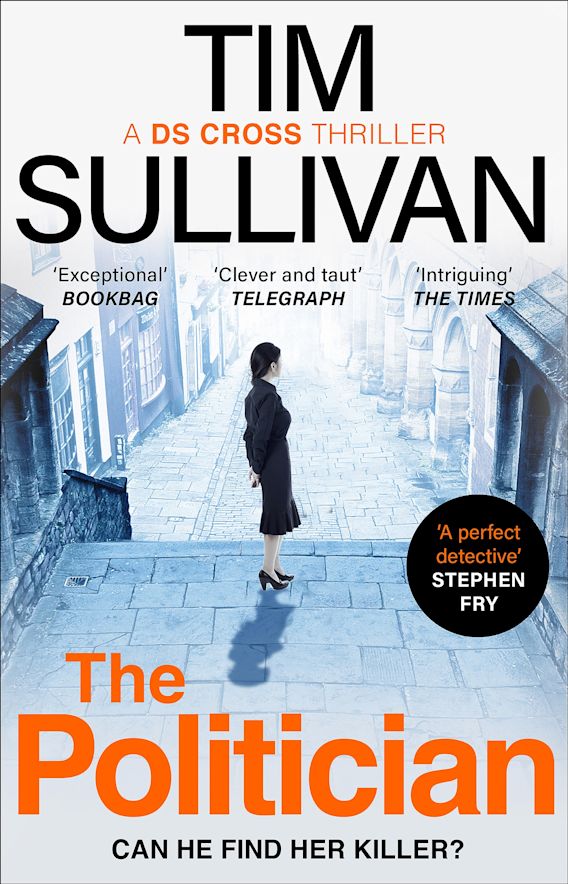
Book Review: The Politician by Tim Sullivan – a quirky detective and a pacy, intricately-plotted crime story

Tim Sullivan is an accomplished screenwriter and director who has turned his talents to a crime fiction series featuring an autistic detective. DS George Cross works for the Serious Crime Unit in Bristol, his sometimes difficult manner with his colleagues tolerated because of his impressive case clearing rate. Paired with DS Josie Ottey, a single mother of teenagers and a more empathetic officer, the two make a balanced team, Ottey often schooling Cross in better ways to manage people, whether colleagues – like eager young Alice MacKenzie and their blustering senior officer DCI Carson – or the recently bereaved.

In The Politician we’ve got a murder that looks like a home invasion gone wrong. Peggy Frampton was a former mayor, now a kind of online agony aunt, who has been found murdered in her own home, her bedroom ransacked. Her husband, a well-known local barrister was in London at the time, but the investigation soon throws up cracks in their marriage.

Cross immediately discovers clues that throw doubt on the likelihood of a panicked burglar having committed the crime and delves into Peggy’s ongoing dispute with a property developer and his plans for a heritage building. And what about all that angry invective hurled at her online regarding her often blunt advice? It seems that although she had a lot of popular support as mayor, she has also made a lot of enemies. But it will take forever to sift through all the online messages, and in spite of a large team pulled in to work the case, it takes Cross and Ottey a while to make any headway.

‘DS Cross,’ he announced customarily, holding up his warrant card for all to see as he marched into the mortuary the next morning.
‘Clare Hawkins, pathologist,’ came the reply, scalpel held high as a further mark of identification, should there be any doubt.
‘I know who you are,’ he retorted, surprised.
‘Likewise.’
‘Likewise, what?’
‘I know who you are.’
‘I’m required to identify myself.’
‘Every time you come here? Says who?’
This had him stumped. The truth was he wasn’t sure who required it in these circumstances, or even if it were required at all. It had just become part of his routine. So he changed the subject as quickly and in as businesslike a manner as possible.
‘Have you ascertained a cause of death?’

While we are served a nicely-paced plot, reading The Politician is also about the journey as every interview, team briefing and exploration of new evidence throws Cross in a new situation to be himself. This is always entertaining as he rubs people up the wrong way, or responds to sayings, metaphors and euphemisms as if they are factual statements. Sullivan puts his screenwriting skills to good effect with some excellent and often hilarious dialogue.

But the storyline is also richly layered, with a subplot describing Cross’s relationship with his parents – his elderly father with his new passion for model railways, and the mother who left when Cross was a young child. She has recently reappeared in his life, but the mystery of her leaving is another puzzle for Cross to put together. For either mystery, it will be Cross’s ability to analyse facts objectively and without bias that will lead him to the truth.

Sullivan has come up with a brilliant character in George Cross who is both quirky and fascinating. How his mind works, how he pieces facts together and uses all the help available to him, from spreadsheets – a lot of his previous career was in Fraud – to people with specialist knowledge, show him to be a brilliant detective. His endless patience in the interview room always seems to pay off too.

The Politician is my second DS Cross audiobook – The Patient is also an excellent read; both narrated by Finlay Robertson who does a stunning job of bringing Cross, Ottey and co. to life. I have enjoyed them so much that this is now a ‘must-read’ series for me. I am fortunate that so far there are another four books, with more in the offing. The Politician is a four-and-a-half star read from me.

Book Review: The Good Liars by Anita Frank – a haunting novel where old sins cast long shadows

It is interesting how claustrophobic a large country house can seem in a nicely gothic suspense novel like this. In spite of extensive grounds and views that take in woods and a river, the country house at the heart of Anita Frank’s latest novel, The Good Liars, is taut with post-war misery, its inhabitants hemmed in by events of the past.

We catch up with the Stilwell family in 1920. There’s Maurice Stilwell, who is mentally damaged by his time in the trenches. He lives at the atmospherically named Darkacre Hall with his beautiful and somewhat petulant wife, Ida, and his younger brother Leonard. There’s also Maurice’s great friend, Victor, manly and debonair, who was once in love with Ida, but with Maurice’s family money, was always going to be the losing suitor.

Unlike Maurice, Leonard is sound of mind, but a physical wreck, and this is why Sarah is taken on as his nurse, a great relief to Ida, as it has been nigh on impossible to find staff willing to stay at Darkacre Hall. It is soon clear that Ida has earned the hatred of the locals because of her actions in the early stages of the war, handing out white feathers to young men who needn’t have signed up, either because of their age or occupation. Many felt compelled to enlist and some lost their lives.

It’s a chilly, gloomy house, that Sarah has come to but being a good sort, she soon mucks in, not only helping Leonard but taking on a lot of the housekeeping. You can’t help wondering if she’s too good to be true, but she’s kindly and observant which helps the story along.

Sarah is beginning to find the dark wood that dominates the Hall horribly oppressive. The incessant panelling and ancient furniture greedily absorb all glimmers of light. Everything around her appears drab and morose. Even the silverware on the table – the candlesticks, the cruet set, the cutlery – is tarnished, and though the electric lights of the low-hanging brass candelabra above them are lit, two of the bulbs have blown, meaning that, beyond the immediate table, the features of the room are concealed in dense shadow, in which anyone – or anything – might lurk without fear of detection. She finds it a most unsettling thought.

Into this setting comes a police inspector who is looking into a cold case – the disappearance of a teenage boy in the summer of 1914. There’s been a letter apparently, and new information to suggest the boy was in the Darkacre Hall grounds when he went missing. A Sergeant Verity is sent to ask further questions, and this throws the household into a spin. Maurice becomes agitated, and Leonard even more miserable.

The reader is soon aware that there are secrets everyone is hiding, events from before and during the war that have never been accounted for. While everyone else quivers and frets, Victor, the man of action, makes a bold decision. Meanwhile Sarah has a sense that there is a ghostly presence at the Hall, which adds to the atmosphere. Can the aptly named Verity get to the bottom of things?

Anita Frank builds tension expertly, switching the point of view between characters who huddle in corners, or take drastic steps. As well as a major weather event that keeps everyone even more housebound, there are one or two surprises you probably won’t see coming. And while you get caught up in the story, desperate to know how it plays out, you’re treated to some excellent writing too.

While this may not be the cheeriest novel – the dark events of a terrible war haunt every moment for the characters, in more ways than one – it is all put together really well. I will be happy to look out for more by Anita Frank – The Good Liars is a four-star read from me.

Book Review: Cutters End by Margaret Hickey – a gripping new Aussie Noir series with a troubled cop

It’s hard not to pick up a book with a cover showing a dry Aussie outback setting. Those small towns in the rural backwaters of Australia just seem to seethe with all kinds of tension. Broken hearts and lost dreams, the struggle with a harsh environment wearing people down, young people abandoning home for the cities. You can’t help wondering if the author will be the next Jane Harper (author of The Dry).

With Cutters End, we’re in opal mining country, an industry on its last legs, the kind of place you pass through on the Stuart Highway heading north to Alice Springs. It’s also the place where a local hero and father met an unexplained death, discovered trapped beneath his vehicle and apparently burned to death. Back in 1990 this was explained as an accident at the inquest, but Suzanne Miller, a TV host with a flagging career, says it’s time for a reinvestigation. Michael Denby saved her and her mother from floodwaters when she was a small child and he deserves better.

DS Mark Ariti, similarly with a flagging career, is on leave when his superior officer discovers that he knew one of the witnesses at the time – one Ingrid Mathers who Mark dated at high school. Mark’s bumped up to Acting Inspector and sent to re-interview Ingrid and to see if he can jog her memory about the days around New Year 1990 when she was hitchhiking with her friend Joanne. But Ingrid’s not very forthcoming, although the reader has the inkling that she’s got a secret or two.

Mark catches up with Joanne, now living the high life in Sydney, similarly reticent. Why don’t the two women talk to each other any more? More clues pull Mark back to Cutters End, and the Mendamo Roadhouse, once owned by creepy Gerald, where Ingrid hitched a ride with somebody called Ron or Don. He bounces ideas off his new sidekick, DC Jagdeep Kaur, and picks up gossip at the three rather disappointing pubs in Cutters End.

Finally, Cutters End. The Stuart Highway a blade cutting through the centre of town, railway line alongside it like a rival sibling. Two main streets, a petrol station, the town hall, council offices, a supermarket, dingy motel, a primary school and, in the back streets, houses with sad facades and secret interiors.
The opal mining boom was bust, had been for decades, and although the welcome sign read ‘Cutters End, a town on the move!’ Mark doubted it. This town, like many across the country, had the look of a dying dog waiting to be shot. But still, he knew too well that dogs don’t die easy – those pleading eyes, that sense of loyalty and long history. The faded pride of what they once were.

When the woman at the service station where you get the best coffee in town tells Mark to find out about the two missing girls, the story goes in an interesting new direction. More than a couple of young women seem to have disappeared from the area, all of them hitching a ride and chancing their luck with whoever picks them up. Did they just move on and then take off overseas without letting anyone know? Build a better life? Or is there a more sinister explanation?

The story is peppered with interesting local characters: John Baber, the kindly ex-school teacher turned van driver who local businesses rely on for deliveries; mentally damaged Foobie who takes inappropriate pictures of people and becomes a source of useful information; Sergeant Darryl Wickman, the town’s long-serving police officer who has a way with the townspeople and a wise-cracking relationship with Jagdeep.

But it’s the undercurrent of evil so typical in these stories that has you on edge. The ugly circumstances of Denby’s death, the casual misogyny and disregard for vulnerable young women, the tight-lipped attitudes of the locals. Mark is struggling to make headway in all directions, either with his case or in his marriage, and like so many cops in these sorts of novels, never seems able to say the right thing.

There are evocative reminders of the time, not only the terrible haircuts and ugly sweaters, but also the real-life backpacker murders in New South Wales and the serial killer Ivan Milat. These crimes happened around the same time that our fictional Denby was killed. They conjure up all kinds of thoughts and feelings around how we protect our young people from predatory behaviour, about violence against women and whether anything much has changed for the better.

Cutters End is the first in a series about troubled cop, Mark Ariti. It’s a terrific read if you enjoy authors like Jane Harper, Garry Disher, Chris Hammer and Sarah Bailey, and a welcome addition to the genre. There are a couple more to look forward to (Stone Town and Broken Bay) with The Creeper out later this year. Can’t wait. Cutters End is a four star read from me.

Book Review: Zero Days by Ruth Ware – a compulsive thriller from a master of the genre

I always enjoy reading about an interesting new business or career I’ve not come across before – the processes, the clients, the marketing. In Ruth Ware’s latest book Zero Days we’ve got a couple of business penetration security specialists – husband and wife team Gabe Medway and Jacintha (Jack) Cross. Their business, Crossways Security, tests out security both inside and out for their customers. Gabe, an expert hacker does the computer side of things, leaving Jack, pint-sized but super fit, to break in at night, testing alarms, locks and security procedures. They make a great team.

The story begins with Jack entering a client’s premises, from climbing a six foot wall, through to avoiding CCTV cameras, sneaking through doors, disabling alarms and evading the security personnel. Gabe is constantly in her ear, helping her find safe corners and exit points. She has a few close calls but ultimately gets out unscathed, a bit like a character from a Mission Impossible movie.

But heading back to her car, she bumps into the head of security which means a trip to the police station where she tries to contact her client. The minutes tick by, and it’s the small hours before she gets home, only to find that Gabe has been murdered. Shock and anguish delay her call to the police leaving some hours not accounted for when she is later interviewed by the senior investigating officer, DS Malik. Her sister Helena implores her to get a lawyer – spouses are always the first suspect in a murder, they have the means and opportunity; all the police need is to find a motive.

Aside from the grief and shock Jack is experiencing, an email informing her of a life insurance policy to the value of a million pounds adds to her woes. And the way that Malik seems to be homing in on her during a voluntary visit to the station causes alarm bells. Suddenly it seems that the police have chosen their perpetrator, and if they lock up Jack, no one is ever going to find out who the real killer is, the same person who is framing her. With a few more security sidesteps, Jack exits the police station and goes on the run.

Inside the station it was noisy and smelled of cleaning fluid and used coffee cups. As I waited in line to speak to the officer behind the front desk, I couldn’t help scoping the place out as if I were on a job. Two exits – one to the street, unmanned; one to the interior of the station, no lock as far as I could see. There was probably an activation button under the desk. One fixed CCTV camera in the corner with a huge blind spot that covered most of the right-hand wall – not a very good design for a police station. The odd thing was that I had no memory of any of it from before. Shock had wiped half the night’s events from my brain – which felt strange, but no stranger than mechanically assessing the building’s risk profile in a world in which Gabe no longer existed.

The book is set for the most part over seven days, as Jack disguises herself, evades capture, copes with injury and tries to piece together what it was that Gabe was doing that got him killed. She has a bit of help from Helena, a busy mother of two, as well as Cole, Gabe’s best friend who was like a brother to the victim, and like Jack is devastated by the murder. At the heart of it all is some cyber crime that went a little over my head but makes for an interestingly different storyline. There are a lot more Mission Impossible type action scenes as Jack gets closer to the truth.

Zero Days was such a compulsive read, I was thankful for a weekend of cold, rainy weather. I inhaled this book, having to remind myself to eat. The writing is sharp and immediate, the tension non-stop, with first-person narration that makes you imagine yourself in Jack’s shoes. You can’t but wonder what would you would do in similar circumstances; how you would cope. The novel must surely add to Ruth Ware’s reputation as the Queen of Just One More Chapter. Zero Days is a four-and-a-half star read from me.