Book Review: The Inheritance of Solomon Farthing by Mary Paulson-Ellis

This is a very smart, quirky novel spanning two time periods, from the recent past and flipping back to tell a story from the final days of the First World War. Godfrey Farthing is a captain of a small group of men who stumble upon an abandoned farmhouse with cabbages stored in the larder, chickens in the yard. As November 1918 dawns, rumour has it that an armistice will soon be signed – all Godfrey has to do is keep his men safe until then. Godfrey grieves all the young boys who have died when he sent them over the top, especially young Beach – surely there can’t be any point in more fighting.

If only his raw, straight out of training second-in-command, Lieutenant Svenson, wasn’t so eager to get some action before it’s too late. He’s two things Godfrey wished he wasn’t: a keen gambler and a man who loves his Webley revolver. The men, sequestered in the barn, pass the time with trivial games of chance, betting with odd trifles: a spool of thread, a sixpence, a wishbone, a piece of ribbon. Against Godfrey’s orders, Svenson insists on joining the men, but his manner is teasing, creating edginess and discord. When a young soldier (they are mostly still in their teens) arrives with the orders Godfrey dreads, personality clashes and secrecy threaten to destabilise Godfrey’s plans with tragic results.

Woven in with this story is that of Godfrey’s grandson, Solomon Farthing, who, in Edinburgh decades later, is trying to work his way out of a run of bad luck. He owes a local criminal boss a load of money he doesn’t have, and to make matters worse he’s been caught breaking into a house for an oddly innocent reason. A police officer who owes Solomon a favour gets him off, but there’s a catch. He must track down the family of one recently departed elderly gent, Thomas Methven who has no obvious next of kin. Thomas had 50,000 pounds in used notes sewn into his burial suit, a tidy sum with the kind of commission that might see Solomon through his tight patch.

Solomon is an heir hunter, and with four days to come up with an answer, the story takes him on a roller-coaster through the past, connecting dots and in particular the odd objects left behind, some of which have their origins in his grandfather’s pawn shop – another trip down memory lane. It’s a problematic case in many ways, and Solomon will have to face down rival heir hunters and his own demons, charging about the country-side in his aunt’s borrowed mini, acquiring a dog and the help of a miscreant boy along the way.

Solomon’s character reminds me a bit of someone from a Restoration comedy – he is such an unlikely hero. But somehow he makes connections that others don’t and it all harks back to those days just before the Armistice, on an abandoned farm in France. The fragments come together that explain the fifty thousand pounds, but also the story of Solomon himself – his parentage, his life with his grandfather at the Edinburgh pawn shop, his love and loss. The war story that is the basis of all that follows is a tense counterpoint to the more madcap story of Solomon’s search, because we all know that many soldiers died in those final days of the war and there are sure to be losses. But who?

The Inheritance of Solomon Farthing takes some interesting turns and produces an unexpected ending and resolution. It is such an original story with a cast of memorable and odd-ball characters – that Restoration comedy thing again, maybe. The writing is crisp with a smartly sardonic undertone that makes it a pleasure to read. Overall it might read like two distinctly different stories woven into one and not everyone will agree that this works successfully. However, I found that the Solomon story made for pleasantly light relief from the war story, with its sense of impending tragedy. I enjoyed the book a lot and will definitely read more by Mary Paulson-Ellis. A four out of five read from me.
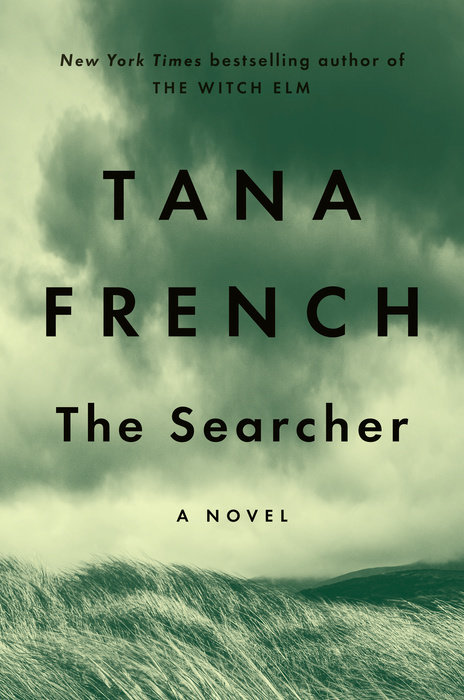
Book Review: The Searcher by Tana French

I loved Tana French’s last book, The Wych Elm – a twisty, psychological mystery with loads of secrets, a troubled, unreliable main character and a beguilingly chatty narrative voice. So naturally, I was keen to see what she would come up with next. I expected something similar with The Searcher, but really this is quite a different sort of novel altogether.

For while we back in Ireland, this is rural Ireland, not an Irish city, and we have a very different way of doing things, a slower pace that suits the story as well. And our narrator, Cal Hooper, is a retired cop from Chicago, so the narrative voice is quite different too. He’s not a high flying ex-detective either, more a veteran of the beat, well aware of the sorts of crimes committed by the young and the desperate. Which comes in handy when he meets thirteen-year-old Trey.

Cal is two-years single, and for some reason thinks what he wants is a small holding in the middle of nowhere, the local village boasting a shop and a pub and not much else. His house needs everything done to it, and he is slowly putting in the hours with the paint and sandpaper when his cop’s sixth-sense tells him someone is watching him. So what does he do? He puts soil under his windows so he can check for footprints. Eventually he meets the ‘spy’ – a scrawny teenager with a problem, if only Cal can get the truth out of him.

Eventually Trey spills the beans – his older brother is missing. Trey comes from a family shunned by the villagers because of a bad-news father, now in Dublin, and a bunch of kids known for truancy and minor misdemeanours, a mother that’s not really coping. Nobody gives them a hand, which says something about the locals. Cal tells Trey how the police go about investigating missing persons and reluctantly puts together a plan. This includes talking to witnesses, the friends and associates that might know something to create a picture of what Brendan was up to before he disappeared.

The Searcher is a slow-burner that may lose the less-persistent reader. We have to meet the locals: Mart the chatty neighbour who gives Cal stick about women and invites him to the pub; Noreen, shopkeeper and town gossip; Lena, the potential love-interest. There’s Donie MacGrath, the town low-life who thinks he’s way smarter than he is and Mart’s odd-ball friends. Random sheep are savaged and down at the pub there is talk of wild cats and UFOs. It’s hard for Cal to get anybody’s story straight, there is just so much blarney.

But the pace picks up and pretty soon Cal finds there are secrets someone is determined to keep hidden to the point that things take a more violent turn. This does a lot to add suspense, but so does the atmosphere which is created out of the setting with its wild and lonely scenery, the natural distrust of the villagers for any disruption to their way of life. The author also creates a picture of a place with no future, its youth leaving in droves, or finding other outlets for their desperation.

Tana French does a brilliant job to bring this all together in a dramatic and sensitive way, making this a very intelligent sort of crime novel. Cal is a great character, being such a fish out of water and surprisingly trusting for an ex-Chicago cop. He has plenty to learn about people and his place in village life. The story builds to an ending that keeps you with bated breath, and a resolution that for me was deeply satisfying. And while The Searcher is quite a different reading experience from The Wych Elm, the two are both crafted, character-driven novels exploring the dark side of human nature. This one’s easily a four out of five star read from me.

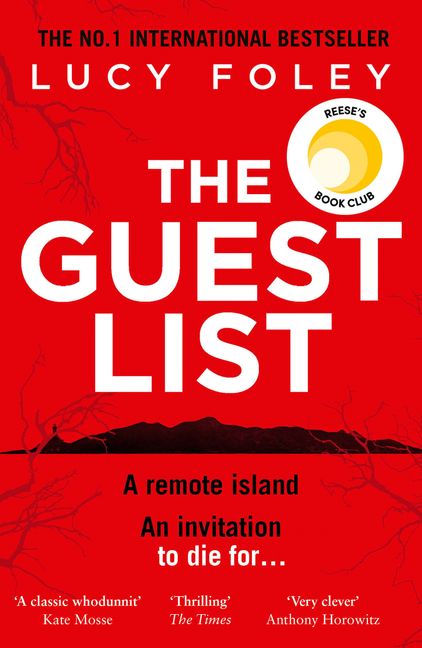
Book Review: The Guest List by Lucy Foley

This book has been a Reese’s Book Club pick and voted a winner in its genre on GoodReads for books published in 2020. So naturally I was keen to see what all the fuss was about. The Guest List is a book you want to pick up for a number of reasons. It’s set on an island – this one’s a wild sort of place off the coast of Ireland with an old graveyard, ruins and a folly. For some reason Aoife and Freddie have thrown all their money into turning it into a high-end wedding venue.

Think about it. Guests are ferried out by boat. Special guests – the wedding party, groomsmen and bridesmaids mostly arrive the night before. The Folley offers several luxurious bedroom suites. There’s plenty of champagne and Freddie’s an amazing chef; the views are spectacular and the ruined chapel so romantic – if you like that Byronic sort of thing.

Then there’s the Agatha Christie feel about the story. It’s hard not to see a reference to the Queen of Crime’s And Then There Were None. As we all know, when you’re on an island, all you need’s bit of bad weather and you could be stuck there. Add something like a murder and things will get tense.

But this story’s a bit different. First of all there’s no sleuth. Not only is there no sleuth, but even though there’s blood and a hysterical waitress screaming, we don’t find out until the end who the victim is. It’s like all the work has to be done by the reader. Which keeps you really engaged as the story flips between ‘Now’, i.e., the hours following the discovery of the blood, and what happened before the wedding.

The story also flips between narrators. We’ve got the bride, Jules, who while being a smart owner of an online magazine, wealthy in her own right, and about to marry hunky TV reality star Will, is really uptight. She’s got baggage and a temper. There’s Olivia, her sister and bridesmaid, much younger and fragile. She’s got a secret and it’s eating away at her. Can Hannah prise it out of her? Hannah, the Plus-One, is the wife of Charlie who is Jules’s best friend.

Hannah feels insignificant in Jules’s presence, a stay-at-home mother of two who can’t afford designer labels. Plus she can’t help wondering if her husband and Jules have ever been lovers. Add the fact that something happened on the stag do that Charlie won’t talk about and she’s dealing with a lot of stuff. We’ve got wild-boy Johnno, the best man and supposedly Will’s best friend. There’s some kind of hold they have on each other from their time at their Dotheboys Hall type boarding school. So, yes, there are a heap of secrets. We soon get the feeling Aoife has secrets too.

The reader gathers whatever clues are to hand, then as the plot twists and turns appear, you rethink, cross that motive off the list and try again. It gets you racing towards the end, and while I did manage to guess ‘whodunit’ as part of a possible scenario, there were still enough surprises to keep me happy. I can certainly see why this book has been so popular. Is it worth all the fuss? Mmm – perhaps not for me. It’s not a book I would read twice, as its main interest lies in the trick of its construction. It’s a good trick but the characters aren’t particularly good company – far too anguished and self-absorbed. The lack of a sleuth meant I wasn’t as drawn in as I might have been. I’m giving this one a solid three out of five.

Book Review: The Postscript Murders by Elly Griffiths

You can tell best-selling author Elly Griffiths has had a ton of fun setting her new Harbinder Kaur mystery around the world of publishing. You can’t help wonder how much of her own experience she’s slipped into the narrative.

The Postscript Murders begins with the death of ninety-year-old Peggy Smith, discovered in her flat by Natalka her Ukrainian caregiver. Because of Peggy’s age, the doc writes it off as natural causes, but Natalka, ever suspicious, believes it’s murder and says so to DS Kaur. Harbinder agrees to look into it, impressed by Natalka’s accent which makes her sound like a spy.

And it’s kind of suspicious how Peggy’s son, Nigel, has her cremated so quickly, her flat boxed up and ready to sell. Just as well Natalka has kept a key. She teams up with Benedict, a former monk who now runs the Coffee Shack on the beach front, and the two sneak into Peggy’s flat where they discover numerous books with Peggy credited in the dedications. She helped the authors with their murder plotting, it seems. A masked gunman who surprises them and then steals a book has them knocking on the door of Peggy’s neighbour Edwin to phone the police.

While DS Kaur is playing catch-up, the unlikely crime-solving trio of Natalka, Benedict and Edwin follow a trail of clues all the way to a literary festival in Aberdeen, tracking down all the crime writers who used Peggy’s services. A new murder keeps Harbinder busy as well as threats close to home so it becomes difficult to rein in Team Natalka. Bubbling away under the surface are subplots including Natalka’s bitcoin shenanigans which have her watching over her shoulder for heavies involved in organised crime, and Harbinder’s ongoing inability to tell her parents that she’s gay. At thirty-five she’s still living at home enjoying Mum’s cooking while her parents hope for a good match for their daughter.

This is a very character-driven story, with much humour coming from the interconnection of the bunch of misfits making up an unlikely cast. Harbinder is an engaging sleuth with her smart policework and ironic mutterings. A glimpse of the publishing industry, the marketing gimmicks, fandom and the sometimes awkwardness of literary festivals creates an interesting backdrop. I chuckled all the way through, not guessing the ending, but not minding if I did as this was such a fun read. Four out of five stars from me.

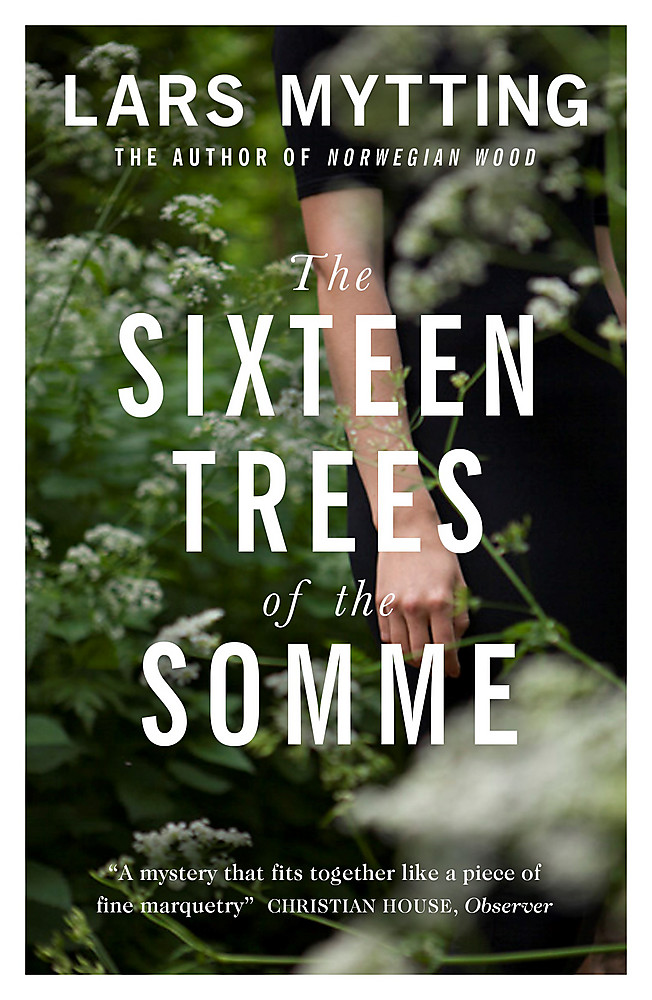
Book Review: The Sixteen Trees of the Somme by Lars Mytting

I may be wrong, but The Sixteen Trees of the Somme could be the first Scandinavian book I have read that wasn’t a crime novel. Not that there aren’t some terrible events here: war, genocide, theft, a disputed legacy, blotted reputations and simmering feuds. Why throw in the police as well? There’s also a fairly mind-boggling mystery at the heart of the story.

Edvard has grown up on a remote potato farm in Norway under the care of his grandfather, Sverre. His parents died with he was three in mysterious circumstances while on holiday. The family of three were on a road trip to visit the birthplace of Edvard’s French grandmother, a farm adjacent to the battlefield of the Somme. Young Edvard went missing for several days before being left at a doctor’s surgery. Nobody knows who cared for him before Sverre arrived to take him home.

When his grandfather dies, a beautifully crafted coffin has been kept for him at the undertakers, which can only have been built by Sverre’s brother, Einar, a master cabinet maker. Edvard may have left it at that, buried his grandfather, and carried on with the farm. There’s Hanne, a high-school sweetheart back home from veterinary college, to hang out with. But the past nags at him and before long, Edvard is following a trail of clues to a tiny island off the Shetland coast called Haaf Gruney, in search of the uncle he hardly knew.

The Shetland Islands have a long Norwegian history, before becoming part of Scotland, and it is curious just how many place names and turns of phrase have a Norwegian ring to them. Edvard arrives off the car ferry from one remote spot on the atlas to an even remoter one with very little life experience. Soon he meets the much more savvy Gwen, a young woman the same age as Edvard, with a strong connection to her late grandfather, a wealthy timber merchant who owned Haaf Gruney. The two have a connected history it seems.

The story takes you through a maze of twists and turns as Edvard pieces together his uncle’s life. There’s his war – we’re up to World War II now, where Einar was involved in the French Resistance, and the importance of some trees that once grew in the Somme, and its link with Gwen’s grandfather’s experiences in the previous war. Then there’s the question of Einar’s feud with Sverre, attributed to the fact that Sverre fought for the Germans – or was there more to it than that? And then there’s Einar’s reverence for wood – you learn a lot about the craft of making fine things, the timber that makes it special.

Mytting builds the story beautifully, pulling you in as Edvard and Gwen make the discoveries that lead back to the terrible day when Edvard’s parents died. But this is so much more than an extremely satisfying mystery. Edvard has a lot of growing up to to do and some big decisions to make. The legacies of both Einar and Sverre pull him in two directions, as does his attraction to two women. And this a young man who until leaving Norway had never eaten anything remotely as exotic as an Indian meal served in restaurant on a Shetland island.

The revelations of the story will really tug at your heart as well – the events of two world wars have hammered both Gwen’s and Edvard’s families. It’s no wonder they form an attachment. As the past drags them into some terrible discoveries, you wonder how they will recover. It makes you ponder the way that people’s heritage is linked to who they are and how they build a future from that. How much can be forgotten? It all adds up to a powerful story, one that will haunt you well after finishing the book.

I’m happy to see there’s a new Lars Mytting book just out – The Bell in the Lake – the first in a trilogy no less and which promises more of the themes Mytting is drawn to. One for my To Read list for sure. This one scores a four and a half out five from me.

Book Review: The Long Call by Ann Cleeves

Many readers were disappointed when award-winning crime writer, Ann Cleeves decided to call it a day with her Shetland series. I guess there are only so many crime scenarios you can imagine for a tiny place like the Shetland Islands. But if there’s a silver lining here, it has to be her new series set in North Devon, featuring local police inspector, Matthew Venn.

The Long Call is the first Two Rivers novel and I happily devoured it. The story begins when Matthew attends his father’s funeral having recently returned to the area of his boyhood with his husband, Jonathan. It’s a Brethren funeral and he keeps himself at a distance, not daring to approach his mother, having disgraced himself as a teenager by declaring himself an atheist, dropping out of university and later breaking his parents’ hearts by marrying a man. But his new case, the murder of a troubled loner, Simon Walden, will take him uncomfortably close to the people from his family’s church.

The story of Simon Walden will take some uncovering – the man had shed his life of family, friends and belongings. Plagued by guilt over an accidental death, he had become an alcoholic before being rescued by a church group run by Caroline Preece, the daughter of one of the movers and shakers behind the community centre known as the Woodyard. Caroline took him in as a lodger, helped with counselling and found him some voluntary work.

Surprisingly, Walden made a connection with a woman with Downs Syndrome who also attended a drop-in group at the Woodyard. So much seems to centre on the Woodyard, which is managed by Matthew’s husband, Jonathan. Should Matthew declare a conflict of interest and hand the case over to DCI Oldham? But his boss has his eye on retirement and will only step in if Matthew messes up – so no pressure then.

When another woman with Downs Syndrome goes missing, the first Matthew learns of it is a phone call from his mother – phone calls from his mother are unheard of. The victim is the daughter of a good friend, another member of the Brethren who remembers Matthew and his disgrace. Fortunately he has a smart team to work with. Jen, his DS is from Birmingham, a no-nonsense sort with a failed marriage and two teenagers at home. She’s good at building relationships with witnesses and getting them to spill the beans. DC Ross is young and restless, but eager to prove himself, and there are plenty of opportunities here.

Looking ahead, I know we will come to love Matthew Venn and his sidekicks – Cleeves is so good at character development, highlighting the pressures put on police officers and connecting them to the crime story. This book pivots on the relationships of parents and their children, not just Matthew and his mother, but our other players too. What is it like to bring up a child with severe learning difficulties? What would we do to keep them safe? How far would we go to make our children happy?

So while Cleeves gets plenty of points for character development in her fiction, I am always impressed by the way she can pick apart relationships, the secrets that imbue them and the passions – positive and negative – that they generate. The Long Call has this in spades. Easily a four star read from me.

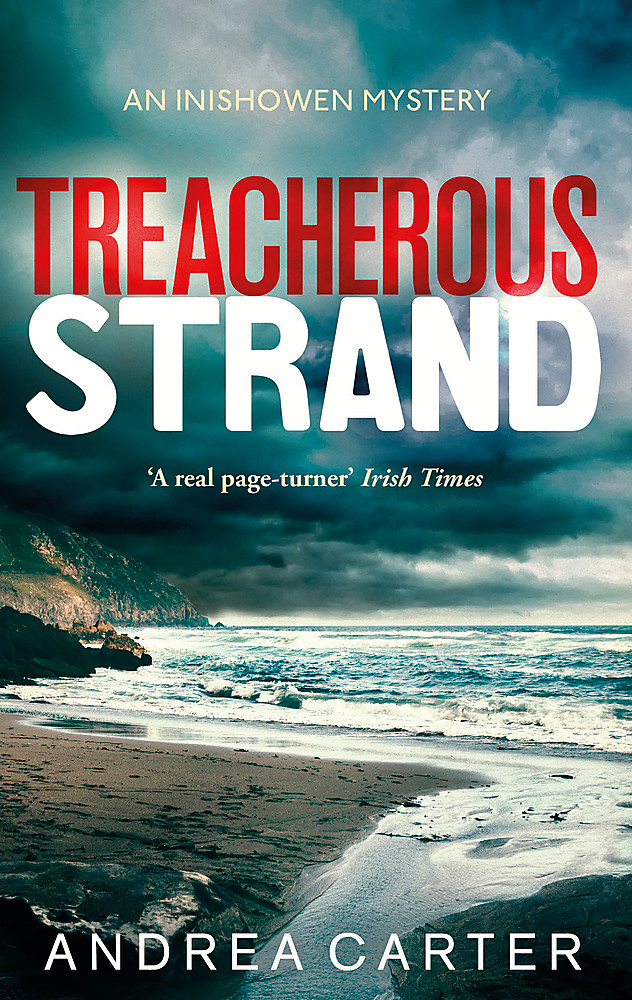
Book Review: Treacherous Strand by Andrea Carter

An atmospheric setting does wonders for any mystery series. In Treacherous Strand, we’re way up in the Irish county of Donegal, and the Inishowen Peninsula. Small-town solicitor, Ben (Benedicta) O’Keefe is badly hung-over when she learns a client and friend, Marguerite Etienne, is dead. Her body washed up near the shoreline, clothes neatly folded on the beach, suggests suicide but Ben isn’t convinced.

On the night before she died, Marguerite had called in to see Ben about making a will, revealing plans to leave her few possessions to a daughter of 23 she had not seen since the girl’s infancy. It was the end of the day, and Ben’s secretary had left work, so there was no one to witness the document. Ben promised to draw up the will ready for Marguerite to sign over the coming days, but never saw Marguerite alive again.

Ben is a troubled woman, plagued with guilt for not being able to save her sister and now she’s got this to reckon with. No wonder she sits up late at night getting through the red wine. She also has a problematic relationship with Sergeant Molloy, who’s in charge of the case – there was some kind of romantic spark that didn’t quite happen in the first book, Death at Whitewater Church, which still haunts Ben in this book. (I really must learn to read these crime series in order.)

Talking to witnesses reveals that Marguerite had a difficult past, escaping a religious sect, the Damascans, but unable to take her daughter with her. Marguerite’s neighbour, an overtly charming Scottish artist, Simon Howard, immediately takes a shine to Ben when he calls in to her office to reveal that he’d agreed to be executor of Marguerite’s estate. Meanwhile Simon’s troubled son, David warns Ben off. His dad’s a terrible womaniser, he says, and surely that puts Simon at number one on the suspects list.


Further suspects soon pile up, including a town councillor, and Marguerite’s therapist, both of whom seem to have fallen in love with the victim. Throw in some lively characters: Phyllis, the owner of the bookshop where Marguerite worked and Ben’s bestie, Maeve the vet, plus a bunch of quirky locals, and you get plenty of small town colour. Another thing I really liked about the book is that Ben is a proper solicitor. She has to fit her amateur sleuthing in around real work and the author, having been a lawyer herself, makes this seem very real.

The story cranks up the tension nicely – Ben gets the sense that someone is warning her off and opens herself to some dangerous situations. Sergeant Molloy is not best pleased. Over all it’s a decent enough crime novel, although I must confess to getting confused from time to time with the many characters and having to skip back to check who was who. So this one’s probably more of a three than a four from me.

Book Review: Five Little Pigs by Agatha Christie

I’d picked up and put down this one a few times before, not sure it would hold my interest. Contemporary crime fiction is written in a more pacy style than this old Poirot novel, first published in 1942. But I put my reservations aside and once I got going I was soon absorbed.

Five Little Pigs begins with a new client calling on Poirot, a well-turned-out young woman asking him to review the case of her mother murdering her father, sixteen years before. Carla Lemarchant has only recently learned about the deaths of her parents – she’d been brought up in Canada by relatives and had a happy upbringing. Only now she wants to get married, but before she can plan her wedding, she needs to know what really happened. And then there’s the troubling letter from her dying mother, declaring her innocence.

The novel is divided into three parts as the great detective slowly pieces together the events of that fateful summer. In the first part he interviews the lawyers for the defence and prosecution as well as a policeman to find out why it was so easy to find Caroline Crayle guilty of the murder of her husband, the celebrated artist, Amyas Crale. Everyone agreed she’d put poison into his glass of beer while he was painting a beautiful young woman at their country home. In court, Caroline had just sat there, doing nothing to fight back, immobile but looking lovely just the same.

Along with Elsa Greer, the artist’s model, four others were present when Amyas died – all possible suspects – making the five little pigs of the title. Somehow Poirot can’t quite get the nursery rhyme out of his head. One by one, he visits the five and asks them to write a description of events leading up to and including the murder.

The first (little piggie who went to market) is Amyas’s great friend, the investor Philip Blake; the second (little piggie who stayed home) is Philip’s brother Meredith who had a bit of crush on Caroline, and immersed himself in amateur pharmacology. Elsa is the third little piggie who had roast beef – well, a succession of wealthy husbands, while the little piggie who had none is governess Cecelia Williams who adored Caroline while seeing to the education of Caroline’s precocious young sister, Angela Warren. Angela, now a respected archaeologist, is the little piggie who cried wee, wee, wee all the way home.

The second part of the novel is made up of the written narratives of each ‘piggie’ and the same threads run through each of them: the theft of some coniine from Meredith’s laboratory; the overheard arguments, the simmering jealousies. Of course, we don’t know who might be lying or making unsubstantiated assumptions. The third part is the coming together of all the witnesses so that Poirot can explain all and unmask the killer.

So unlike a modern murder mystery, there is no second murder, or ramping up of tension through imminent danger. And while Christie linked nursery rhymes from time to time to her plots (One, Two Buckle My Shoe; Hickory Dickory Dock; And Then There Were None), perhaps we are too sophisticated to be amused by such a contrivance today.

And yet, this such a good story. The characters are interesting – all of them have emotional ups and downs to do with the lovely, long suffering Caroline or enfant-terrible Amyas, the couple vividly brought to life even though they are both long dead. And then there’s the beautiful mansion with its battlements and coastal setting, the languorous summer weather, the simmering tension of people behaving badly.

The story slowly builds and the reader is swept in to make connections and deductions, pick up the red herrings, and examine motives – Christie’s novels work very much with the reader playing detective alongside her sleuth. And the finale is so well done, the vivid reconstruction of Amyas’s death revealed with Poirot’s wonderful delight in the dramatic. I loved it. It just goes to show that a book doesn’t have to have the expected plot-points to work and this one works just fine. It’s not quite a classic but still a four out of five read from me.

Book Review: The Turn of the Key by Ruth Ware

Psychological thrillers aren’t my favourite genre but I do make time to read anything that comes along by Ruth Ware. She is such a master of atmospheric settings and unreliable narrators. In The Turn of the Key, the story is told in letters from Rowan Caine, a young woman in prison for murdering a child in her care. So potentially, this is about as unreliable as you can get.

Rowan is writing to a top barrister, hoping he will review her case and secure her release. She swears she is innocent. The best way to explain why she’s innocent is to tell him everything as it happened. The story begins with Rowan answering an ad for a live-in nanny for a family in a remote part of Scotland. Sandra and Bill are high-flying architects, their home, Heatherbrae, a modernised Victorian manor with electronics that run everything from the temperature in your shower to the fridge telling you when to buy more milk.

The couple have seen nanny after nanny abandon their four gorgeous girls. Perhaps it’s the remoteness of the house, far from the bright lights. Then again, the children can be a handful (wee Petra is a typical two-year-old, Maddie sullen and scheming, Ellen highly strung and Rhiannon a rebellious teen), but someone as experienced in childcare as Rowan should manage just fine. Is it the controlling and creepy Happy app, that allows Sandra and Bill to tune in to what’s going on at home wherever they are? Or is it something about the house?

The title of the book will soon have you thinking of the Henry James ghost story, The Turn of the Screw, where again we have a nanny killing a child. And there’s definitely something weird and supernatural going on here. Tragedy has struck Heatherbrae before – the ghost of a former owner, the one who planted the walled and locked poison garden, is said to haunt the house. Ware has everything set up for a tense and chilling read.

With the bulk of the story from Rowan’s point of view, we follow her difficulties, first with the children and the spiteful housekeeper – thank goodness she makes a friend in Jack, the hunky handyman – and then with eerie happenings at night. Surely the house can’t really be haunted, can it? Or worse, does it have a mind of its own. It starts to seem a little bit like The Twilight Zone.

Rowan is determined to get to the bottom of things. She’s not a quitter like those other nannies. And like the good-hearted person she is, she develops a fondness for her charges, even stroppy Rhiannon. But there are secrets here as well as creepy happenings and a few terrific twists before we turn the last page.

Ruth Ware has been dubbed ‘the queen of just-one-more-chapter’, and the title is never more fitting than with this novel. I dare you to pick it up and try to put it aside, even if you think you don’t really like psychological thrillers. The Turn of the Key shows Ware at the top of her game. (If you like this one, try The Woman in Cabin 10 which is another doozy.) This one gets a solid four out five from me.

Book Review: Death in a Desert Land by Andrew Wilson

Andrew Wilson is obviously a big fan of Agatha Christie – something he and I have in common – so much so that he has written a series of mystery novels with the Queen of Crime starring as his amateur sleuth. Wilson isn’t the first novelist to find Christie so fascinating that he has fictionalised an aspect of her life. Her famous disappearance in 1926 when her marriage failed has inspired films and fiction (The Woman on the Orient Express by Lyndsay Jayne Ashford; On the Blue Train by Kristel Thornel are two novels worth checking out).

And Wilson isn’t the first novelist to make his detective a famous author. Nicola Upson has chosen Josephine Tey for her sleuth in a series of nine excellent mysteries; Oscar Wilde uses his great wit to solve crime in a series by Gyles Brandreth and more than one author has chosen Sir Arthur Conan Doyle to foil criminals (who better?), the latest I’ve come across: Bradley Harper, pairing the great writer with a Derringer-toting Margaret Harkness in a series kicking off with A Knife in the Fog.

So Andrew Wilson’s series should come as no surprise. How did I feel picking up this book? Were there a few twinges of reluctance? A sense of dabbling with a holy of holies? Yes, definitely. But one day I found myself holding a copy of Death in a Desert Land, the third book in the series, and I just couldn’t help myself.

… I felt a little more secure knowing that in my handbag was a syringe filled with a fast-acting drug that could put a man to sleep in minutes.

In this story, Agatha is divorced and independent, taking a break from novel-writing to help out Davison, her pal from the Foreign Office, to investigate the death of Gertrude Bell. The famous archaeologist, another real person, supposedly died of a drug overdose, but two letters have recently come to light expressing her fears for her life. Agatha is to stay with Katherine and Leonard Woolley who are running a dig at Ur, site of the famous Death Pit and full of wonderful artefacts. Bell had worked with the Woolleys, sorting out which exhibits were to stay in Iraq and which could be shipped to the British Museum.

The storyline has echoes of Christie’s novel, Murder in Mesopotamia, and Wilson wonderfully conjures up the setting – sunsets across the sand-dunes, desert storms, the chanting chain-gang of Iraqi workers. I’ve always loved Christie’s Middle Eastern novels (Death on the Nile, Appointment with Death, They Came to Baghdad) so was soon enjoying myself. When there’s a murder – the spoilt daughter of the wealthy American sponsoring the site bludgeoned to death – Agatha has to forget about Gertrude Bell as the finger is pointed at Katherine, a volatile character at the best of times.

An archaeological dig in the middle of nowhere offers the perfect ‘locked-room’ mystery in that we have a small group of characters in situ, each with their own secrets and motives. The plot puts Agatha through her paces, risking a face-off with a potential killer, wielding her syringe (why couldn’t Davison have set her up with a neat little pistol at the outset?) often at night. The finale around the table with all the suspects and witnesses as Agatha presents an account of events and eventually unmasks the killer will remind you of more than a few Christie novels.

Death in a Desert Land is altogether very entertaining, with enough humour not to take itself too seriously and is a welcome addition to the Christie canon for anyone who has read all the original books and craves more. It is very much in the spirit of Christie, and the smart, deductive and charming character of Agatha, with her knowledge of poisons, a perfect reluctant heroine.

Make sure you read the notes at the end of the book where Wilson outlines The Facts but only when you’ve finished the novel as there could be spoilers. It adds some interesting details and shows us that Wilson has done his homework. Wilson has written a number of biographies, including one of Patricia Highsmith, so we know we’re in good hands. I can’t wait to read the rest of the series; this book gets four-and-a-half out of five from me.