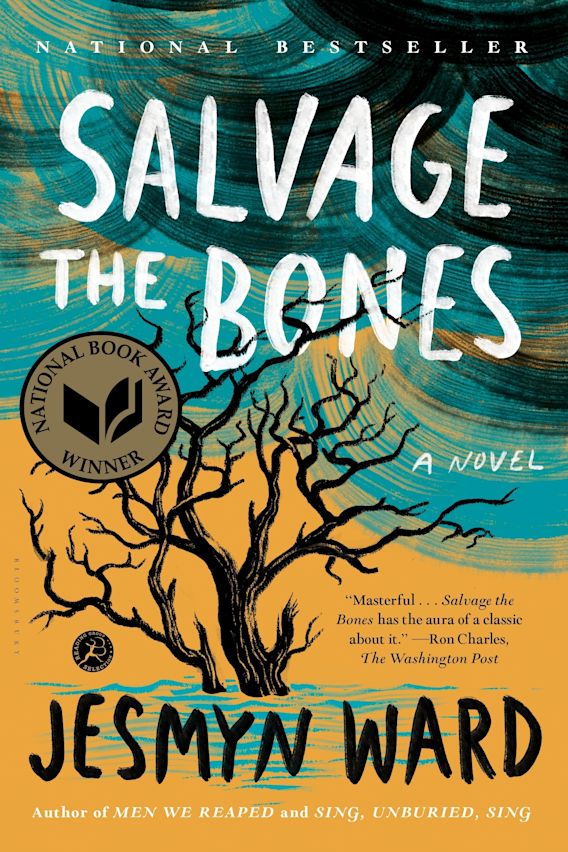
Book Review: Salvage the Bones by Jesmyn Ward – a struggling family, a desperate girl and a hurricane

It’s so easy to go for a book that’s a nice relaxing read and totally forget the wider world. But this time I took up Salvage the Bones with the idea that this might be a fairly gritty read and, well, yes it was. But it is just so instantly immersing and the storytelling so engaging that once I’d picked it up, I really didn’t have much say in the matter.

The story follows a poor African-American family living in Mississippi in the days leading up to Hurricane Katrina. This family has such a lot to deal with. Told from the point of view of fifteen-year-old Esch, we’re soon in her world – a house on the outskirts of town which she shares with older brothers Skeetah and Randall, a much younger brother, Junior, and their alcohol-dependent father.

Daddy is very hurricane-aware and weather warnings impel him to get his house in order – the bottled water and extra supplies, gathering the timber to board up the windows, but his children have other things on their minds. Randall has hopes of going to basketball camp – he’s got potential, and if he can perform well at an upcoming game, he can earn some sponsorship. Skeetah is more entrepreneurial; his pit bull is due to give birth to puppies and China being such a good fighter, he thinks he can sell the pups for a good price.

Junior has been cared for since day one by his older siblings and is a bit of a loose cannon, though very much loved. And that’s the thing. There is such a lot of love in this family between the siblings, but without a lot of parental guidance things pretty soon go haywire. And no one is more desperate than Esch – in love with one of her brother’s friends who is blatantly using her, and pregnant. But Esch is also a reader, dipping into a book of mythology from school, especially drawn to the story of Jason and empathising with the ill-used princess Medea.

After Mama died, Daddy said, What are you crying for? Stop crying. Crying ain’t going to change anything. We never stopped crying. We just did it quieter. We hid it. I learned how to cry so that almost no tears leaked out of my eyes, so that I swallowed the hot salty water of them and felt them running down my throat. This was the only thing that we could do. I swallow and squint through the tears, and I run.

The plot is really compelling as the siblings resort to all kinds of escapades to help fulfil their ambitions, or to just get by. It’s a very different world, there’s danger and lawlessness, and the story doesn’t shy away from the violence inherent in these kids’ lives, and of their acceptance of it as a kind of normal. But there’s also camaraderie and loyalty, a tight-knit community that sticks together. Plenty to keep a story going as it is, but on top of everything else, there’s a hurricane coming.

The story builds up to a dramatic climax – the weather event we are expecting makes its presence felt and it’s truly life and death. Earlier in the year, in my neck of the woods, we also experienced a cyclone (that’s what we call hurricanes here), and as I was reading this was well aware of the kinds of situations that people can find themselves in if they don’t get out in time, or if things get a lot worse than predicted.

I raced through this book, particularly the final chapters, engrossed in Esch’s world, but also dazzled by the writing. Jesmyn Ward won a National Book Award for this novel, a prize she’s won again for Sing, Unburied, Sing, and she’s brilliant, confronting, but also immensely readable. I’ll be putting Ward on my must-read list and give this book five stars out of five.

Book Review: Old God’s Time by Sebastian Barry – a deceptively gentle novel that will tear at your heart

For a novel on the Booker long-list, this is a very easy book to slip into. The story is set in the mid 1990s and is told from the point of view of Tom Kettle, a recently retired Dublin policeman. As a character he suffers more from aloneness than loneliness, as Tom’s family of ghosts are ever present, in his thoughts and more.

Tom lives simply, recently taking a flat that’s an annex to a castle, also divided into flats, by the sea. It sounds idyllic, and indeed his first visitors comment on it. It’s a February evening when two policeman from his old station knock on his door. They bring with them documents about an old case that Tom had handled, in fact had put his heart and soul into, only for the commissioner to call an end to taking it further.

Tom can’t bare to look inside the folder, but instead insists his visitors, Detectives Wilson and O’Casey stay to eat with him. All he can offer is rarebit made from cheese singles, and hauls out his daughter’s air-bed and blankets. It is too dreadful a night to send them out to catch the bus back to the town. It’s a fairly light scene with pockets of humour, O’Casey’s digestion not best pleased by the rarebit and Tom can only imagine how uncomfortable his visitors must be bedding down in his living room

But underneath is a storm of feeling that will gnaw at Tom and slowly his story and that of his late wife June and their children will emerge. And what a sad tale it is. Tom and June were both brought up in church run orphanages where predatory priests made use of small children. And it is just such a case that Tom has to relive for his old colleagues. He can never reveal how personal the case it is and so it festers.

There’s literally a Chekov’s gun in the story too. Tom was a sniper in Malaya before his stint in the police, which gives you a hint at what he’s capable of. So while the story seems to have a gentle flow about it, and a very Irish narrative style which is descriptive, lyrical and ambling, there’s a spring-loaded tension and a kind of inevitability here as the story draws to its conclusion.

And all soundlessly, with an almost comic fall, the poor creature would go down, hardly bothering the earth, Tom’s aim so good they called him Beady-Eye as a happy nickname. Beady-Eye Kettle. A talent that rescued him in his own country, the mercy of being allowed into the police. Oh yes. Killing rebels gave him his Irish life, away from the shame and shambles of his childhood.

What I particularly liked about the book was the character of Tom, who seems just so ordinary, with his little routines. His trips to the shops, his buying an ice cream cone, his carting home a bag of sausages and potatoes. But simmering beneath, we can’t help wonder, as Tom does, about the state of his mind, haunted as he is by the past and those he’s lost. It’s difficult to tell what is real at times as we are so much inside Tom’s head.

For such a tragic story, and there really is no other word for it, Old God’s Time is immensely readable, the writing is exquisite and then there’s that sympathy you have for Tom. As a character, Tom is so well understood by the author, his narrative voice seems so true. The pacing is perfect – as I said at the beginning, you are so easily drawn into the story, and Barry doesn’t put a foot wrong. Though it’s not the sort of book you should read if you need cheering up. But I can see why it’s on the Booker long-list, so it’s an easy five out of five stars from me.

New Books I Can’t Wait to Read – a promising mix of lit. fic., mysteries and short stories

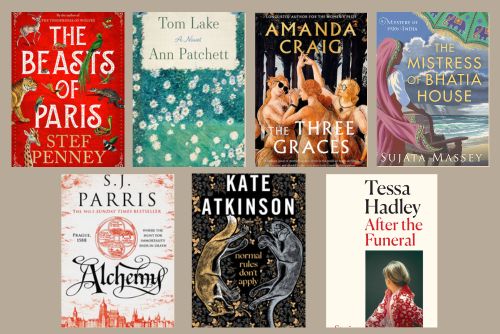
The Beasts of Paris by Stef Penney
It’s been a while since Under a Pole Star, which was shortlisted for a Costa Book Award in 2017, so it’s good to see a new book at last from Penney, who is always on my must-read list. The new book (the paperback’s out on 11 July) is set in Paris 1870 and follows three characters with problematic backgrounds who converge there. “Each keeps company with the restless beasts of Paris’ Menagerie, where they meet, fight their demons, lose their hearts, and rebel in a city under siege.” (Blurb) Sounds like there’s plenty to keep the plot simmering.

Tom Lake by Ann Patchett
A new book by Patchett is always cause for celebration. Out at the beginning of August, here we’ve got three daughters who beg their mother to tell the story of the famous actor she once fell in love with. With Patchett we often get some really interesting family dynamics and it looks like this might be the case here. Most of all I love her characters and her writing. “Tom Lake is a meditation on youthful love, married love, and the lives parents lead before their children are born. Both hopeful and elegiac, it explores what it means to be happy even when the world is falling apart.” (Blurb)

The Three Graces by Amanda Craig
The three graces in the title are not youthful Botticelli beauties, but elderly Marta, Ruth and Diana, retirees living in Tuscany. The story opens with the shooting of a refugee, and includes plans for a wedding and a music recital, a problematic younger generation and a couple living with dementia. “Brilliant, enthralling, funny and generous, this is an exploration of the indomitable human heart.” (Blurb) I’ve been meaning to read Amanda Craig for a while now, and this one looks too good to resist. And a Tuscany setting adds icing to the cake.

The Mistress of Bhatia House by Sujata Massey
Turning to mysteries, I love the Perveen Mistry series by Sujata Massey. There’s India under the Raj for a start and the bustling setting of 1920s Bombay. Here Perveen is the only practising female lawyer, as well as dealing with the issues of living in a colonised nation, sexism and a complicated class structure. She has also recently embarked on a taboo relationship. Throw in a murder or two and there’s lots to keep you turning the pages. In The Mistress of Bhatia House we’ve a story that begins with an accident at the opening of a new women’s hospital, but you know things are going to be a lot more complicated than that.

Alchemy by S J Parris
The Giordano Bruno crime novels by S J Parris has been on my recommended list for some years. If you remember, Bruno is a Renaissance era monk, and a staunch believer in freedom of thought, who has escaped the Roman Inquisition and turns up in England. He becomes a great friend of Sir Philip Sydney and helps out the Elizabethan spymaster, Sir Francis Walsingham, with a bunch of tricky situations that threaten the realm. The new book takes Bruno to Prague to contact another of Walsingham’s spies, John Dee, but there’s a murder and Dee disappears. There’s sure to be a ton of intrigue, and more than likely, a few action sequences – Bruno really knows how to use a knife. Magic.

Three Short Story Collections
Even if you don’t usually read short stories, it’s hard not to be a little excited by these. Some authors can make a laundry list sound interesting, so we’re not going to be slumming it with a collection from Kate Atkinson, whose writing just crackles on the page. Normal Rules Don’t Apply is a series of interconnected stories due out next month.

The stories in Tessa Haddley’s about-to-be-released collection, After the Funeral show how small events can have huge consequences. I have been meaning to read more Hadley since being greatly impressed by her novel The Past, so I’m definitely tempted to give these a go.

I’m sure we’re all desperately waiting for the next novel by Amor Towles, following the huge success of A Gentleman in Moscow and The Lincoln Highway. Until that appears, there’s a collection of his stories, Table for Two, in the pipeline – even if we do have to wait until next year. Oh, well.

Book Review: Exiles by Jane Harper – Aaron Falk is back in an atmospheric new mystery

I’ve read all of Jane Harper’s novels. It was possibly her first book, The Dry, that triggered a popular interest in Aussie Noir, giving Scandi Noir a run for its money. For me, it was Jane Harper that got me reading Australian mysteries and I imagine it was the same for many readers. There’s just something special about novels set in the outback.

Since The Dry we’ve had a second Aaron Falk novel – Force of Nature is soon to hit the big screen – and now, a long-awaited third. Exiles sees the Melbourne detective visiting friends in rural wine country for a christening. It’s a bitter-sweet time for Greg Raco’s family. While Aaron is going to be godfather to Raco’s baby boy, nobody can forget what happened at the same time a year ago. The Marralee Valley Annual Food and Wine Festival was on and it was here that Kim Gillespie disappeared, leaving her baby Zoe asleep in her pram.

Kim’s older daughter from her long-term relationship with Charlie Raco, Greg Raco’s winemaker brother, is desperate for answers. Now seventeen, she’s running a campaign, aided by Charlie and her good friend Joel, handing out flyers and canvassing potential eyewitnesses. Aaron, with all his detective smarts, somehow gets roped in.

And there’s another cold case – the hit-and-run death of Joel’s father at the Reservoir, a spot adjacent to the festival grounds, and it’s the Reservoir where Kim’s shoe was found. Is this a coincidence or are the two cases linked? Aaron has the added complication of meeting up with Gemma again, Joel’s mother – someone he’d met through Raco, and who he can’t quite forget.

Even in the gloom Falk could see it stretching out, vast and open in its centre, then twisting and curving to fill the turns and gullies that formed the banks. It was big. Bigger than he remembered. The opposite bank was just visible across the swathe of water, but he couldn’t see the westernmost edge, or the dam that lay somewhere to the east. The festival grounds felt far behind them, but Falk could hear a distant low thrum of music and crowd noise undercutting the stillness.

Emotions are high in this story with two teenagers having lost parents and not having any answers. Aaron’s a bit of a softy and is sympathetic. The story also hearkens back to the events from the school days of Kim and the Racos. Like the current batch of kids from the local high school, the opening night of the wine and food festival was when there was a big party in the woods near the Reservoir, something local cop, Sergeant Dwyer would love to shut down.

There’s a lot going on in each of the characters’ lives, and we slowly get a picture of a community, of complicated loyalties among old friends, old grudges and a fair bit more besides. We haven’t got a dry, scarily hot landscape. But the stunning countryside surrounding the grim spectre of the Reservoir and all its secrets makes for another atmospheric setting.

Add some superb writing, and a twist in the story I didn’t see coming and I’m happy to say that Jane Harper has done it again. Exiles is another cracking read and is satisfying on several levels. I’ve also got a feeling we might see Aaron Falk again – I hope so; he’s a complex and interesting detective. Exiles gets four and a half out of five from me.

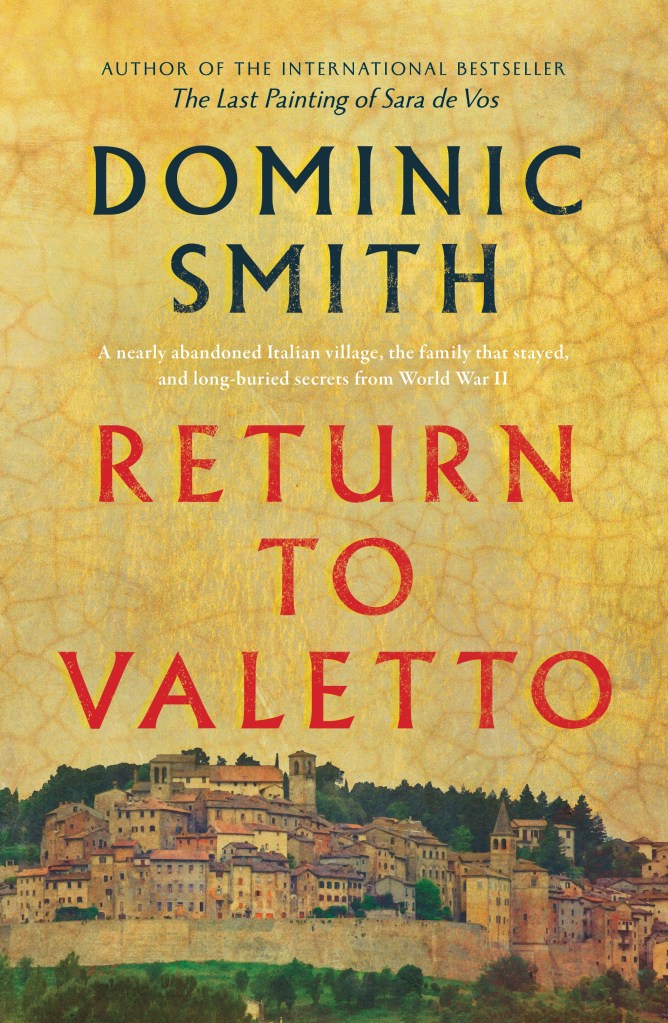
Book Review: Return to Valetto by Dominic Smith – back to Italy with a gorgeous evocation of place and atmosphere

Well, yes I know this book is about a lot more than its setting. There’s a man’s lingering grief for his late wife. A family of elderly women and a secret they never got to grips with from World War II. There’s some parent-child dynamics and a potential love affair. And all of it comes together in a captivating story that maybe takes a little while to get going, but once you get in, has you nicely hooked.

But when I look back on this book in months and maybe even years to come, I know it will be the setting that I’ll think about first. Valetto is Dominic Smith’s invented town in Umbria, which sits on a pedestal of volcanic rock. Much of the old town has fallen down into surrounding valleys, a 1971 earthquake urging many of its inhabitants to relocate. It has become a kind turreted and terracotta island, connected to the surrounding landscape by a footbridge.

Hugh is an American historian who specialises in the study of abandoned towns – there’s hundreds of them dotted around Italy and what better place to begin than Valetto, the childhood home of his mother and where even today his grandmother and three aunts still live. The Serafino women, all widows, are a big chunk of the population which has dwindled to just 10. In a few weeks it is to be his grandmother’s 100th birthday and a party has been planned.

A spanner in the works is the woman who has taken possession of Hugh’s cottage on the Serafino property, supposedly given to her mother for services rendered when Hugh’s grandfather, Aldo, was a resistance fighter during the war. Elissa Tomassi is adamant that the cottage is legally hers, just as Hugh’s aunts are convinced she’s a squatter with no legal tenure. Hugh is sure there can be a way to keep everyone happy and is caught in the middle. But he has to get to the bottom of what happened during the war and discovers not one but two family mysteries to solve.

The past will take Hugh back to Elissa’s home town in the north of Italy to find out what Aldo did in the closing years of the war. He’ll also discover a link between his mother and the Elissa’s that is a trickier memory to unlock and will reveal a crime that has been swept under the carpet. The story builds to a powerful and moving conclusion that has you glued to the final chapters as past deeds are dealt with.

What could be done with the wreckage of the past? As a historian I’d always believed that studying the past could reveal hidden meanings and patterns, that motifs lurked in the underbrush, but now I saw the neap tide of history washing up flotsam on an empty beach.

I enjoyed Return to Valetto enormously, not only for the setting which seems to be a big part of every scene. The late autumn mist across the valley that comes and goes and adds even more mystery. The large old villa that is the Serafino home with its cavernous rooms and crumbling frescoes. There’s the old family restaurant established by his grandmother, where you can see abandoned place settings and dusty menus from a night in 1971. (Oh, did I forget to mention this books is also a hymn to Italian regional cuisine?)

And the characters are a joy. The three aunts, each with their own peculiar ways and at times difficult interactions with each other. I have a particular fondness for books about aunts, going back to P G Wodehouse’s Bertie Wooster stories, and here Iris, Rose and Violet are brilliant. The grandmother with her iron determination to host an unforgettable birthday celebration with an ever-growing guest list and a despairing cook. Both Hugh and Elissa have daughters that make an appearance, so it’s an inter-generational tale as well.

I can’t help feeling Dominic Smith had a wonderful time researching and writing this book as his love for history, particularly social history, as well as all things Italian shines through. This is the second novel by this author I have read and recall that Bright and Distant Shores was one of my top reads for the year it came out. I’ve heard lots of good things about The Last Painting of Sarah de Vos as well. Return to Valetto gets the full five stars from me.

By the way, the fictional town of Valetto is inspired by Civita di Bagnoregio in Lazio – in case you want to visit, either in person or via the Internet.

Book Review: The Marriage Portrait by Maggie O’Farrell – a tense and evocative story from the Italian Renaissance

This novel is inspired by the Robert Browning poem ‘My Last Duchess’ as well as the historical figure of Lucrezia, Duchess of Ferrara, who met an untimely death at the age of sixteen, supposedly murdered by her husband. I hadn’t known anything of the real duchess, but remember reading the poem in English Lit classes at uni and not realising it at the time that the duchess described had died so young.

It’s a shocking story in anybody’s book – Browning’s Dramatic Lyrics or this one, and so I demurred while The Marriage Portrait sat on my bedside table, distracting myself with every other book until, with nothing much else to read I finally picked it up. I shouldn’t have worried, having enjoyed Maggie O’Farrell’s books enormously in the past and it was only a page or two before I was engrossed in the story, as well as in awe at the writing.

Lucrezia is a difficult child, the least favourite it seems in her family, and as she grows she seems a thin little thing, quite unlike her lively, dark-haired older sisters. She’s smart though, sitting in a corner where the children are taught their lessons, but learning much faster the Latin and Greek, the history and geography than her siblings. Her real talent is art, although she could be a master spy the way she sneaks around the palace, listening at doors.

When her older sister Maria suddenly dies before her wedding can take place, Lucrezia is promised to Maria’s fiancé instead, to unite the grand houses of Medici and Ferrara, even though Lucrezia is only thirteen. She’s a spirited child, who likes her freedom, but also cherishes the safety of her home – her life has been a sheltered one. So at the time of her wedding a couple of years later, she is ill prepared to be the docile wife of a powerful ruler.

The gown rustles and slides around her, speaking a glossolalia all of its own, the silk moving against the rougher nap of the underskirts, the bone supports of the bodice straining and squealing against their coverings, the cuffs scuffing and chafing the skin of her wrists, the stiffened collar hooking and nibbling at her nape, the hip supports creaking like the rigging of a ship. It is a symphony, an orchestra of fabrics, and Lucrezia would like to cover her ears, but she cannot.

O’Farrell makes Lucrezia interesting, believable and vividly real, a complex character, as is her new husband Alfonso, who is on the surface so charming and solicitous, but also desperate for the heir that will secure his position. The book begins with Alfonso whisking Lucrezia off to a hunting lodge, away from the prying eyes of his palace, and where Lucrezia feels he is to do away with her. She has seen this other side to him before – the merciless capacity for violence, the lack of forgiveness. Will Lucrezia succumb and give in or will she fight back for her survival?

Sixteenth century Italy is brought to life – a time of a flowering of the arts which are lushly shown here in paintings, architecture and music. The intense richness of the language, vividly present tense, mirrors the gorgeousness of this Renaissance world. Yet this is also a time when well-born young women are just pawns on the chessboard of power to be married off by their fathers. Like Lucrezia they may have little idea of the politics around them or what will be expected of them.

This makes the novel a tense and gripping read as the story bounces between the hunting-lodge present where the moments tick away until Alfonso will act against his duchess, and the back-story that fills in Lucrezia’s life and how she has come to be in this predicament. It all seems so much more vivid because of the way O’Farrell writes – the intensity of Lucrezia’s feelings, the undercurrents that pass between characters, as well as the sensory details – the feel of fabric on skin, Lucrezia’s painterly eye that sees every colour and shade, the shock of seeing mountains for the first time, the descriptions of the music Alfonso gets lost in.

The Marriage Plot is a book that delivers on every level, giving you a glimpse into the past, an edge-of-the-seat story, as well as gorgeous writing. It isn’t surprising it’s been selected for the Women’s Prize for Fiction longest – I’ll be eager to see if it makes the shortlist, announced on 26 April. It will also be interesting to see what O’Farrell comes up with next. This book gets a full five stars from me.

Reading the Classics: Olivia Manning’s The Balkan Trilogy Part 1 – The Great Fortune

This round of the Classics Club Spin sent me off to Romania, 1939, for the first of six books that are based on Manning’s own experiences, and which are combined together as her Fortunes of War series. I have only read the first book: The Great Fortune , which is a decent, meaty read for a number of reasons.

The story begins with a train journey. Newley weds, Guy and Harriet Pringle are on their way to Bucharest in Romania. Guy teaches English at a Bucharest university as part of a cultural programme sponsored by the British government. He’s met Harriet during the summer vacation and married her before bringing her to the Balkans just as Germany invades Poland.

So when the Pringles arrive at their hotel, Harriet is confronted not only by persistent beggars, many of them deformed from birth to help their earning potential, but also an influx of Polish refugees. Harriet and Guy are temporarily staying here until they can find a flat, because Guy has always tended to couch surf among his wide and varied set of acquaintances. He’s a popular young man who thrives on interacting with others, talking literature and politics into the small hours.

Guy’s also a devotee of Marxism which he sees as a potential solution in a country where the peasants are struggling under a powerful elite. Romania has a strong economy with plentiful resources, among them a highly productive agricultural sector. But with a war starting up, much of this produce is exported and the ensuing hike in the cost of living puts a terrible strain on the poorest. Meanwhile the Pringles hob-nob with assorted academics and civil servants at various plush restaurants.

As Harriet passed between the tables with Clarence, there was a little murmur of comment: first that she should make this public appearance with someone other than her husband, then the common complaint that English teachers – they were all regarded as ‘teachers’ – could afford to come to a restaurant of this class. In Rumania a teacher was one of the lowest-paid members of the lower-middle class, earning perhaps four thousand lei a month. Here was proof that the English teachers were not teachers at all but, as everyone suspected, spies.

We get another view of Bucharest society through the eyes of Prince Yakimov, also newly arrived, who has fallen on hard times. It isn’t clear quite how he comes to be in Bucharest, except that he needs to make his remittance last a bit longer and the city seems cheap. He hasn’t a clue how to earn a living. Yakimov is technically British, his father having escaped Russia at the time of revolution, but now drifts from hotel to hotel living on credit. His finely tailored clothes, his name and good manners soon have him invited to parties given by the aristocracy, in the hope they can fleece him at cards.

But mostly this is Harriet’s story. The poor girl has to get used to sharing Guy, not only with his many friends, but also with Sophie, who’d hoped to marry Guy herself, and therefore acquire a British passport. Other characters include gloomy Clarence, Guy’s colleague, who soon takes an interest in Harriet, and Guy’s boss, Inchcape, who has been put in charge of British propaganda for the Balkans. The story bubbles along full of lively conversations on the political situation, the locals as well as relationships and anything else – often very lifelike and stimulating dialogue.

Olivia Manning has masterfully recreated a time and place in a way that seems very vivid – she was similarly married to a British academic at a Bucharest university, and this shows in her descriptions of the people of the city, its buildings and parks, its cafés and restaurants. You really feel you are there with Harriet and you suffer with her all the anxiety of fitting in and waiting for Guy to come home. All the while, events are taking a turn for the worse with the outbreak of war. She worries she will never be able to return to England, that Hitler will invade Britain, that Hitler will invade Romania.

Running through the book is a wonderful cast of characters, and a smattering of dry humour. Harriet is one of those quiet observers who doesn’t suffer fools gladly, but is often stuck with odd company and not much to do. Scenes with Yakimov offer a mix of hilarity and desperation. The story is set over four parts but comes together nicely towards a strong conclusion, with Guy deciding to produce a Shakespeare play. This brings out the best and worst in the members of the cast, all taken from his friends and colleagues.

I really enjoyed The Great Fortune, although it wasn’t a book to rush through, requiring lots of concentration to keep up with who was who. But I still hope to read more in the series, including Manning’s follow-up books that make up The Levant Trilogy which describes the Pringles’ life in Egypt as the war rages on. Manning also wrote a number of stand-alone novels that could also be well worth checking out – she’s a terrific writer. The Good Fortune gets four stars from me.

Recent Releases – Seven Promising New Books to Look Out For

New authors as well as some old favourites make the list of newly released books I’m eager to get my hands on.

Willowman by Inga Simpson takes you to the world of cricket and the art of the batmaker. I don’t read a lot of books about sport – in fact I’m not sure I can name a single one – but this one caught my eye. We’ve got a gifted young batter, Todd Harrow, and the special bat made for him by traditional batmaker, Alan Reader. The story seems to be about more than just cricket, though, with some interesting personal journeys, and there’s loads of high praise from the critics, the Sydney Morning Herald scoring it a six.

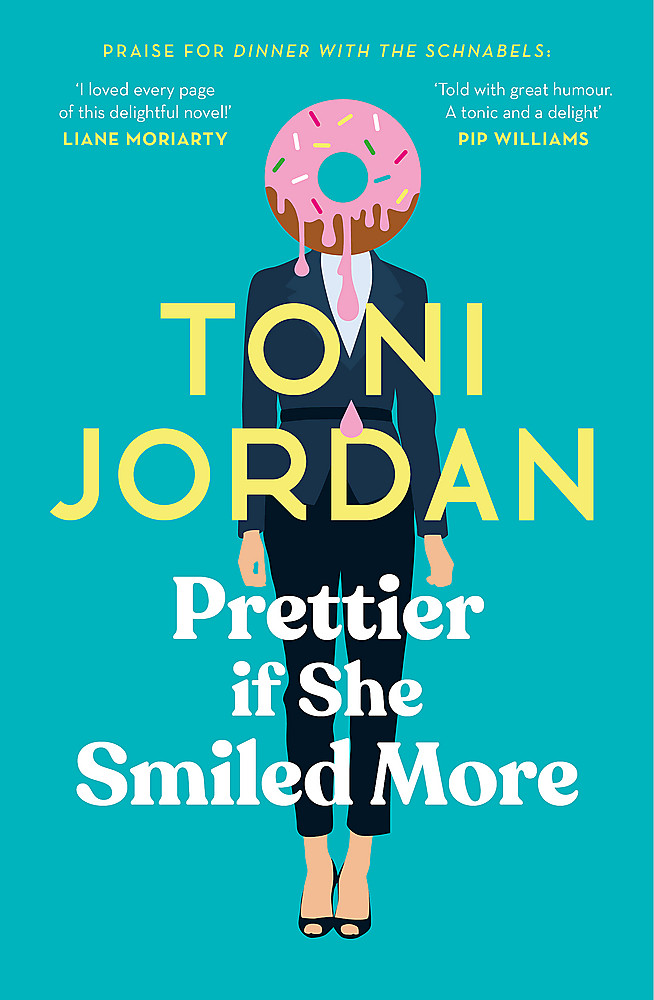
Prettier if She Smiled More is the new book by Toni Jordan. I loved her last book, Dinner with the Schnabels, and made a note to myself to read Jordan’s backlist. But here she is with a new book before I got started. This is another Australian novel, and follows the fortunes of Kylie, who thinks she has the perfect life, until she has to move home to care for her mother following an accident. Returning to her childhood home gives her pause for thought. I love a book that makes you laugh and cry, and this one’s sure to fit the bill.

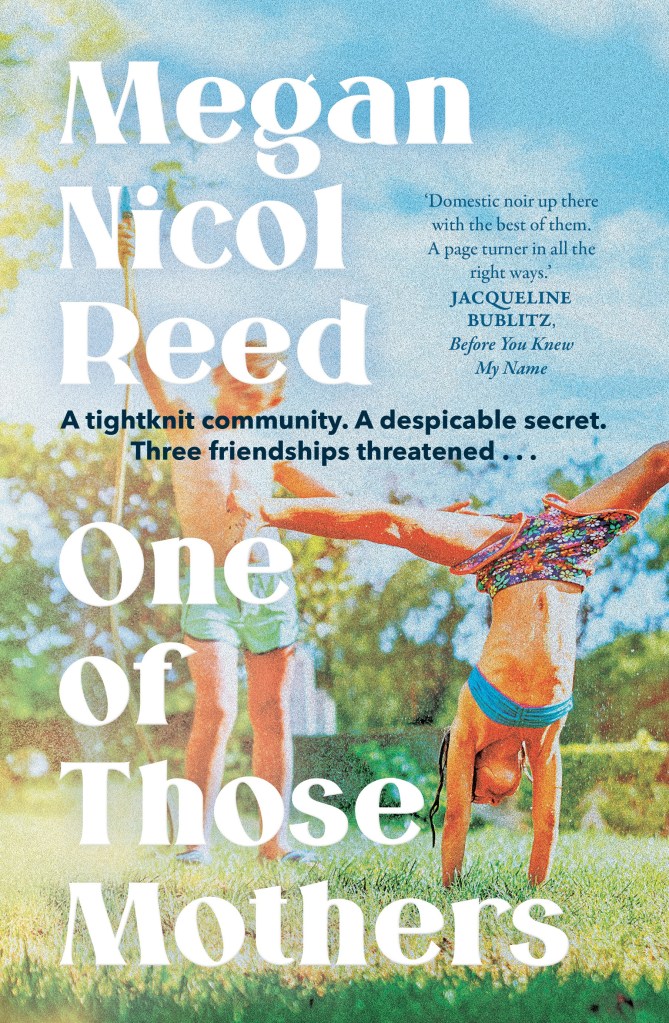
One of Those Mothers by Megan Nicol Reed brings me a little closer to home with a novel set in my old Auckland stamping ground. It’s a look at middle class angst and the effects of a terrible secret on a small group of families in the same neighbourhood. The author has used this fodder in her popular newspaper columns over the years, so I can see she’s become a bit of an expert on parental anxiety, guilt and how friendships are impacted by rumour and unease. The book’s already harnessing some great reviews so it’s definitely one for the list.

I am drawn by the premise of The Wakes by Dianne Yarwood, and possibly also the cover. It’s about relationships with two of its main characters recently breaking up with their partners. When Louisa persuades her new neighbour Clare to join her funeral catering business, they meet Chris who is an emergency doctor attending the funerals of both patients and friends. There’s pathos but also humour, as well as reflections on the things that really matter in life. The Wakes is a debut novel from another Australian author and has sparked a lot of interest. I am fairly sure I will love this.

The War Pianist by Mandy Robotham
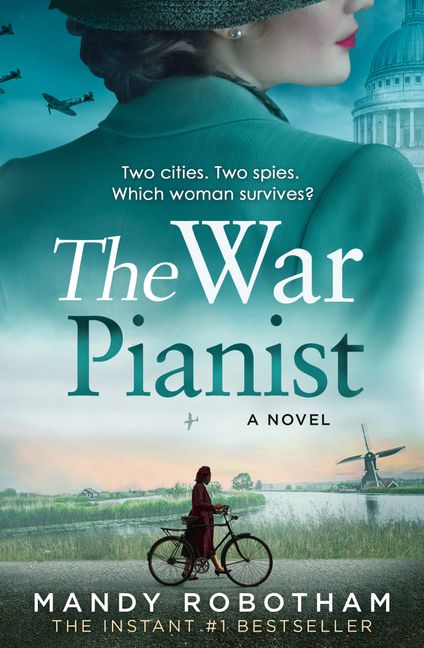
Moving to the Northern Hemisphere, I spotted Mandy Robotham has a new wartime novel out. I thoroughly enjoyed The Resistance Girl, which I listened to as an audiobook. It had just the right blend of action, tension and light relief and taught me a lot about World War II in Norway. With The War Pianist one main character is Marnie Fern, who gets involved in resistance work when her grandfather is killed in the London blitz. He was helping the Dutch resistance as a war pianist, which was a kind of code for radio operator. Things get tense as the Nazis close in on Marnie and her fellow ‘pianist’ in Amsterdam, Corrie Bakker, on the other end of the wire. This one’s sure to be a page-turner.

The Shadows of London by Andrew Taylor
Time to catch up with one of my favourite mystery series, with the release of the latest of the Fires of London novels by acclaimed historical fiction author, Andrew Taylor. We’ve another rollicking read featuring James Marlow, a civil servant who has become a kind of ‘useful pair of hands’ for the court of Charles II. He always seems to find himself struggling between factions at court and finding unpalatable truths about the murders he investigates. Never far away is Cat Hakesby, the architect who in this book is on the spot when a body is found in one of the almshouses she is restoring. I love the glimpses of the King Taylor slips in, the thrills and tension, as well as James’s relationship problems with spiky Cat, a woman ahead of her time.

The Last Remains by Elly Griffiths
This is book number 15 in Griffiths’s series featuring DI Harry Nelson and forensic archaeologist Dr Ruth Galloway. I love the characters who almost feel like friends, and in this book their pal Cathbad, a Druid and former tutor at Ruth’s university, is implicated in a murder when bones are unearthed by builders renovating a café. Cathbad disappears – is he on the run or is he in danger? Neolithic flint mines add a touch of archaeological interest and the ongoing issues around Nelson and Ruth’s relationship are sure to keep the plot bubbling along.

Book Review: Mother’s Boy by Patrick Gale – an imagined life of Cornwall’s favourite poet

I’ve read a ton of novels by Patrick Gale – I love his writing for its warmth, perception and the characters. They’re always shown with all their flaws, and yet they make for oddly likeable company. Gale reveals what makes them them interesting and ordinary at the same time.

Like Charles Causley, Cornwall’s favourite poet – the subject of the latest Gale book, Mother’s Boy. The story takes us back to the early part of the twentieth century, and the courtship of Causley’s parents, both of them working in service: Laura as a maid in a small household and Charlie who drives a pony and trap for a local doctor. They marry while World War I is getting up steam and see little of each other for years. Charles is born in 1917, his father shipped home eventually, but with TB.

The story clips along through the years, with chapters about Charles’s early life as a boy in Launceston while his father is still alive, school life and his knack for language, a talent for the piano and his discovery of poetry. There are two unlikely friendships, the butcher’s boy who once bullied him and Ginger, the annoying boy who followed him around and listened outside as Charles practised on the piano. His mother’s thrill to find Charles a safe job at a desk; Charles’s disappointment that he won’t be continuing his education.

Then another war, and Charles’s acceptance into the navy as a coder. There are several chapters that progress the war, and Charles’s romantic connection with two men. Each chapter shows a new discovery or aspect of the war through key events or changes to Charles’s life, the novel finishing a few years after the war.

Parallel to Charles’s story is Laura’s, working away at her little laundry business, her days ruled by the weather and the rigid timetable required to get it all done. Her love for Charles is a constant. Fortunately for Laura, the ache of missing Charles while he is away at war is tempered by the evacuees she takes on, the Americans setting up bases around the town and later the prisoners of war who inhabit one base once the soldiers have headed across to France.. So we get an interesting glimpse of the war at home.

And while she suffered, Charles was either out at his play-reading group or rehearsing with his dance band or drinking beer with friends, or else he was shut in his room, stabbing away at his typewriter or listening intently to the radio, as often not to some programme about the international situation and politics, which made her head spin if she tried to follow it, and telling her to knit more quietly.

The two main characters are so nicely drawn, so empathetic, that you feel you know them well. Charles is refined and educated, a lover of good theatre and literature, his working class mother often bemused by the things he says. The story ambles along through the years with sudden events that make you really feel for mother and son; some happy moments but also the tragedies that you’d expect because of the war.

You get a strong sense of what it was like to be born different, both artistic as well as gay in a time and place when such things were problematic; and yet Charles manages to be true to himself in a way that works for him. But at what cost? The story pulls you along, each chapter adding something new on both an intimate scale as well as within the wider world. I thought I’d close the book and think, yes that was an interesting read and very true to its subject matter. And then wham! The final scene, in its quiet living room setting, quite blew me away. There was a lump in my throat. There were tears.

Patrick Gale’s novels often have a way of creeping up behind you, leaving you a little stunned, but in a nice way. His author’s notes reveal that Causely was often asked why he hadn’t written a full memoir, not just the few autobiographical fragments that remained after his death in 2003. Causley’s reply was that it was all there in the poems. The poem Angel Hill, quoted in full at the end of the book, could be a case in point and ties in beautifully with Gale’s novel, particularly that final scene.

Mother’s Boy is a stand-out novel by an accomplished writer whose work never disappoints. If you like this book, it is worth checking out the author’s notes on his website wihich add detail and some interesting photos. You can tell that Charles Causley has become close to his heart, and Laura too. I love books where you feel the author has poured his heart into a story. I feel this is the case here and why it gets a five out of five from me.

Book Review: Wildflowers by Peggy Frew: a haunting, witty and compassionate story about sisters

You can be forgiven for wondering what you’ve got yourself into a few pages in with Wildflowers. The narrator, Nina, is clearly not coping and while she’s brilliant at bringing you into the story, the vivd way her world is brought to the page through all the senses, she seems bent on self-destruction. You can’t help asking yourself, how will she make it through the next three hundred odd pages. Peggy Frew has created a brilliant character study of someone at the end of her rope.

In the past month, Nina has boxed up all her clothes, her curtains, her cooking utensils and anything useful, apart from the frypan and spatula she uses to fry her evening egg, eaten out of the pan. She gets her outfit for the day not from her wardrobe but from bags of donated clothing outside a charity shop, raided under cover of darkness. Nothing fits properly and yet she manages to hold down her admin job at the hospital, the staff cafeteria providing left-overs nicked from newly vacated tables

Her Dunlop Volleys flapped a bit. They were better with the Explorers; Archie McNamara’s socks were too thin. Under the tracksuit pants the seam of the satin shorty things seemed intent on bisecting her, and the lace on the too-tight bra was irritating the skin near her armpits.

What has brought Nina to this? The book flips back to the past to describe the events of Nina’s life and in particular her relationships with her sisters, Meg and Amber. Elder sister Meg was always the sensible one, chastising her laid-back parents over how they allow little sister Amber to run wild. Amber is dazzling, gloriously pretty but also with a charisma that is perfect for the stage and she’s soon a child actor in a film. What happens here eventually drives Amber to drug addiction.

Nina is the smart one, but she’s also a ditherer, uncertain what to do with her life. While Meg chooses her study path and makes a go of it, Nina finds student life daunting, blazing through her studies but strangled by shyness. She doesn’t know how to be.

The tremulous romanticism by which she’d been so strongly affected upon first leaving her family – which she’d always felt, but which in the lonesome splendour of her cobwebbed room and with the aid of her poetry classes had crystalised from a homely, unexplained presence into something not unlike a calling – this had not receded. It was melancholy, that’s exactly what it was: a sadness that was exquisite. She was kind of addicted to it. And she found that she couldn’t – simply could not – reveal this aspect of herself to anyone.

She drifts through unsatisfying relationships with men, a habit that continues well into her adult years. While she’s smart, Nina’s not so good at life so it’s not surprising she leaves the Amber problem to her mother and to Meg – until, that is, after years of Amber problems, Meg enlists Nina’s help in a last ditch attempt to cure their little sister.

The novel is threaded through with humour – I love the description of Nina pretending to listen to Meg’s hectoring voice on the phone while cleaning the grout on the bathroom tiles with baking soda, only to discover she’s out of white vinegar and furtively googling whether or not balsamic would work instead. Not everyone enjoys this odd mix of despair with wit – Meg Mason’s utterly splendid Sorrow and Bliss seemed to polarise readers – but for me it it works a treat.

Throw in some lovely, evocative writing – whether describing the rainforest retreat where the girls try to cure Amber, student flats or city scapes, Frew brings Nina’s world to life. This makes her story seem very real and adds to the huge compassion we feel for her as readers. I love this sort of book, and can happily add Peggy Frew’s name to a list I’m gathering of Australian authors, which include Charlotte Wood and Toni Jordan, as well as New Zealand born Meg Mason, who I’m keen to read again. Wildflowers gets a full five stars from me.