Recent Releases – Seven Promising New Books to Look Out For

New authors as well as some old favourites make the list of newly released books I’m eager to get my hands on.

Willowman by Inga Simpson takes you to the world of cricket and the art of the batmaker. I don’t read a lot of books about sport – in fact I’m not sure I can name a single one – but this one caught my eye. We’ve got a gifted young batter, Todd Harrow, and the special bat made for him by traditional batmaker, Alan Reader. The story seems to be about more than just cricket, though, with some interesting personal journeys, and there’s loads of high praise from the critics, the Sydney Morning Herald scoring it a six.

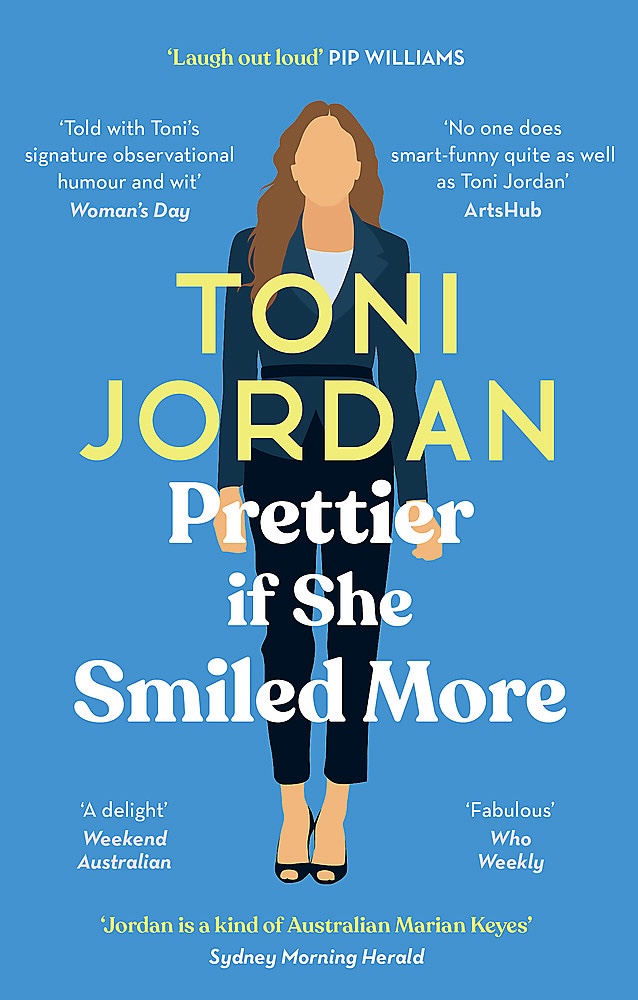
Prettier if She Smiled More is the new book by Toni Jordan. I loved her last book, Dinner with the Schnabels, and made a note to myself to read Jordan’s backlist. But here she is with a new book before I got started. This is another Australian novel, and follows the fortunes of Kylie, who thinks she has the perfect life, until she has to move home to care for her mother following an accident. Returning to her childhood home gives her pause for thought. I love a book that makes you laugh and cry, and this one’s sure to fit the bill.

One of Those Mothers by Megan Nicol Reed brings me a little closer to home with a novel set in my old Auckland stamping ground. It’s a look at middle class angst and the effects of a terrible secret on a small group of families in the same neighbourhood. The author has used this fodder in her popular newspaper columns over the years, so I can see she’s become a bit of an expert on parental anxiety, guilt and how friendships are impacted by rumour and unease. The book’s already harnessing some great reviews so it’s definitely one for the list.

I am drawn by the premise of The Wakes by Dianne Yarwood, and possibly also the cover. It’s about relationships with two of its main characters recently breaking up with their partners. When Louisa persuades her new neighbour Clare to join her funeral catering business, they meet Chris who is an emergency doctor attending the funerals of both patients and friends. There’s pathos but also humour, as well as reflections on the things that really matter in life. The Wakes is a debut novel from another Australian author and has sparked a lot of interest. I am fairly sure I will love this.

The War Pianist by Mandy Robotham
Moving to the Northern Hemisphere, I spotted Mandy Robotham has a new wartime novel out. I thoroughly enjoyed The Resistance Girl, which I listened to as an audiobook. It had just the right blend of action, tension and light relief and taught me a lot about World War II in Norway. With The War Pianist one main character is Marnie Fern, who gets involved in resistance work when her grandfather is killed in the London blitz. He was helping the Dutch resistance as a war pianist, which was a kind of code for radio operator. Things get tense as the Nazis close in on Marnie and her fellow ‘pianist’ in Amsterdam, Corrie Bakker, on the other end of the wire. This one’s sure to be a page-turner.

The Shadows of London by Andrew Taylor
Time to catch up with one of my favourite mystery series, with the release of the latest of the Fires of London novels by acclaimed historical fiction author, Andrew Taylor. We’ve another rollicking read featuring James Marlow, a civil servant who has become a kind of ‘useful pair of hands’ for the court of Charles II. He always seems to find himself struggling between factions at court and finding unpalatable truths about the murders he investigates. Never far away is Cat Hakesby, the architect who in this book is on the spot when a body is found in one of the almshouses she is restoring. I love the glimpses of the King Taylor slips in, the thrills and tension, as well as James’s relationship problems with spiky Cat, a woman ahead of her time.

The Last Remains by Elly Griffiths
This is book number 15 in Griffiths’s series featuring DI Harry Nelson and forensic archaeologist Dr Ruth Galloway. I love the characters who almost feel like friends, and in this book their pal Cathbad, a Druid and former tutor at Ruth’s university, is implicated in a murder when bones are unearthed by builders renovating a café. Cathbad disappears – is he on the run or is he in danger? Neolithic flint mines add a touch of archaeological interest and the ongoing issues around Nelson and Ruth’s relationship are sure to keep the plot bubbling along.

Book Review: Mother’s Boy by Patrick Gale – an imagined life of Cornwall’s favourite poet

I’ve read a ton of novels by Patrick Gale – I love his writing for its warmth, perception and the characters. They’re always shown with all their flaws, and yet they make for oddly likeable company. Gale reveals what makes them them interesting and ordinary at the same time.

Like Charles Causley, Cornwall’s favourite poet – the subject of the latest Gale book, Mother’s Boy. The story takes us back to the early part of the twentieth century, and the courtship of Causley’s parents, both of them working in service: Laura as a maid in a small household and Charlie who drives a pony and trap for a local doctor. They marry while World War I is getting up steam and see little of each other for years. Charles is born in 1917, his father shipped home eventually, but with TB.

The story clips along through the years, with chapters about Charles’s early life as a boy in Launceston while his father is still alive, school life and his knack for language, a talent for the piano and his discovery of poetry. There are two unlikely friendships, the butcher’s boy who once bullied him and Ginger, the annoying boy who followed him around and listened outside as Charles practised on the piano. His mother’s thrill to find Charles a safe job at a desk; Charles’s disappointment that he won’t be continuing his education.

Then another war, and Charles’s acceptance into the navy as a coder. There are several chapters that progress the war, and Charles’s romantic connection with two men. Each chapter shows a new discovery or aspect of the war through key events or changes to Charles’s life, the novel finishing a few years after the war.

Parallel to Charles’s story is Laura’s, working away at her little laundry business, her days ruled by the weather and the rigid timetable required to get it all done. Her love for Charles is a constant. Fortunately for Laura, the ache of missing Charles while he is away at war is tempered by the evacuees she takes on, the Americans setting up bases around the town and later the prisoners of war who inhabit one base once the soldiers have headed across to France.. So we get an interesting glimpse of the war at home.

And while she suffered, Charles was either out at his play-reading group or rehearsing with his dance band or drinking beer with friends, or else he was shut in his room, stabbing away at his typewriter or listening intently to the radio, as often not to some programme about the international situation and politics, which made her head spin if she tried to follow it, and telling her to knit more quietly.

The two main characters are so nicely drawn, so empathetic, that you feel you know them well. Charles is refined and educated, a lover of good theatre and literature, his working class mother often bemused by the things he says. The story ambles along through the years with sudden events that make you really feel for mother and son; some happy moments but also the tragedies that you’d expect because of the war.

You get a strong sense of what it was like to be born different, both artistic as well as gay in a time and place when such things were problematic; and yet Charles manages to be true to himself in a way that works for him. But at what cost? The story pulls you along, each chapter adding something new on both an intimate scale as well as within the wider world. I thought I’d close the book and think, yes that was an interesting read and very true to its subject matter. And then wham! The final scene, in its quiet living room setting, quite blew me away. There was a lump in my throat. There were tears.

Patrick Gale’s novels often have a way of creeping up behind you, leaving you a little stunned, but in a nice way. His author’s notes reveal that Causely was often asked why he hadn’t written a full memoir, not just the few autobiographical fragments that remained after his death in 2003. Causley’s reply was that it was all there in the poems. The poem Angel Hill, quoted in full at the end of the book, could be a case in point and ties in beautifully with Gale’s novel, particularly that final scene.

Mother’s Boy is a stand-out novel by an accomplished writer whose work never disappoints. If you like this book, it is worth checking out the author’s notes on his website wihich add detail and some interesting photos. You can tell that Charles Causley has become close to his heart, and Laura too. I love books where you feel the author has poured his heart into a story. I feel this is the case here and why it gets a five out of five from me.

Book Review: Wildflowers by Peggy Frew: a haunting, witty and compassionate story about sisters

You can be forgiven for wondering what you’ve got yourself into a few pages in with Wildflowers. The narrator, Nina, is clearly not coping and while she’s brilliant at bringing you into the story, the vivd way her world is brought to the page through all the senses, she seems bent on self-destruction. You can’t help asking yourself, how will she make it through the next three hundred odd pages. Peggy Frew has created a brilliant character study of someone at the end of her rope.

In the past month, Nina has boxed up all her clothes, her curtains, her cooking utensils and anything useful, apart from the frypan and spatula she uses to fry her evening egg, eaten out of the pan. She gets her outfit for the day not from her wardrobe but from bags of donated clothing outside a charity shop, raided under cover of darkness. Nothing fits properly and yet she manages to hold down her admin job at the hospital, the staff cafeteria providing left-overs nicked from newly vacated tables

Her Dunlop Volleys flapped a bit. They were better with the Explorers; Archie McNamara’s socks were too thin. Under the tracksuit pants the seam of the satin shorty things seemed intent on bisecting her, and the lace on the too-tight bra was irritating the skin near her armpits.

What has brought Nina to this? The book flips back to the past to describe the events of Nina’s life and in particular her relationships with her sisters, Meg and Amber. Elder sister Meg was always the sensible one, chastising her laid-back parents over how they allow little sister Amber to run wild. Amber is dazzling, gloriously pretty but also with a charisma that is perfect for the stage and she’s soon a child actor in a film. What happens here eventually drives Amber to drug addiction.

Nina is the smart one, but she’s also a ditherer, uncertain what to do with her life. While Meg chooses her study path and makes a go of it, Nina finds student life daunting, blazing through her studies but strangled by shyness. She doesn’t know how to be.

The tremulous romanticism by which she’d been so strongly affected upon first leaving her family – which she’d always felt, but which in the lonesome splendour of her cobwebbed room and with the aid of her poetry classes had crystalised from a homely, unexplained presence into something not unlike a calling – this had not receded. It was melancholy, that’s exactly what it was: a sadness that was exquisite. She was kind of addicted to it. And she found that she couldn’t – simply could not – reveal this aspect of herself to anyone.

She drifts through unsatisfying relationships with men, a habit that continues well into her adult years. While she’s smart, Nina’s not so good at life so it’s not surprising she leaves the Amber problem to her mother and to Meg – until, that is, after years of Amber problems, Meg enlists Nina’s help in a last ditch attempt to cure their little sister.

The novel is threaded through with humour – I love the description of Nina pretending to listen to Meg’s hectoring voice on the phone while cleaning the grout on the bathroom tiles with baking soda, only to discover she’s out of white vinegar and furtively googling whether or not balsamic would work instead. Not everyone enjoys this odd mix of despair with wit – Meg Mason’s utterly splendid Sorrow and Bliss seemed to polarise readers – but for me it it works a treat.

Throw in some lovely, evocative writing – whether describing the rainforest retreat where the girls try to cure Amber, student flats or city scapes, Frew brings Nina’s world to life. This makes her story seem very real and adds to the huge compassion we feel for her as readers. I love this sort of book, and can happily add Peggy Frew’s name to a list I’m gathering of Australian authors, which include Charlotte Wood and Toni Jordan, as well as New Zealand born Meg Mason, who I’m keen to read again. Wildflowers gets a full five stars from me.

Book Review: A Gentleman in Moscow by Amor Towles – a glimpse of Soviet Russia through the eyes of a wonderful character

This is one of those books that is so entertaining, charming and moving that you know when you’ve reached the last page it’s going to take some time to recover. I was so immersed in A Gentleman in Moscow, it completely took over my life. I almost wanted to go back to page one and read it again.

The story chronicles the period the Former Person, Count Alexander Rostov, spends in house arrest at the Hotel Metropol in Moscow. From his sentencing in 1922 he is to be housed in a small attic room – quite a change from his normal luxurious suite on the second floor – and as “an unrepentant aristocrat”, should he ever leave the hotel, he is to be shot on sight.

Having learned from his godfather, that a man must master his circumstances to avoid letting them master him, the Count sets about making a new life for himself. His good manners, charm and gift for storytelling stand him in good stead. So does his infinite knowledge of how things are done. Fortunately the Metropol is the perfect setting. Both the hotel and the Count present echoes of the past, as the changing regime of Soviet Russia builds itself around them.

Decades pass as the Count makes friends among the guests, including Anna, a glamorous actress, a little girl called Nina and the staff of the hotel – Marina, the seamstress from whom he learns how to sew on a button, Emile the chef who can do anything with his knife and Andrey, a former circus juggler turned maitre d’. 

“I’ll tell you what is convenient,” he said after a moment. “To sleep until noon and have someone bring you breakfast on a tray. To cancel an appointment at the very last minute. To keep a carriage waiting at the door of one party, so that on a moment’s notice it can whisk you away to another. To sidestep marriage in your youth and put off having children altogether. These are the greatest of conveniences, Anushka – and at one time I had them all. But in the end, it has been the inconveniences that have mattered to me the most.”

This is a book of small incidents, anecdotes and the marvellously good company that the Count offers the reader. Cultured and well-read, it’s a feast – mirrored by the delicious sounding meals that Emile produces in his kitchen. But the story builds to a brilliant finish, and you have the sense that all the small stories and incidents reconnect with other parts of the book, that it’s all important. In the background, people vanish without a trace, or have their lives changed for ever by the politics of Stalin. Both the Count and the Metropol must adapt, rethink and regroup to survive.

This is such a wonderful book – I wanted to rush through it to see what happened but at the same time lingering over each scene, savouring every morsel. I could put it on my list of best reads for 2022, but it’s certain to be on my best books for the decade as well. And it doesn’t surprise me that there’s talk of a screen adaptation, due to star Ewan MacGregor. I’ll be keen to see the splendour of the Metropol in vivid technicolour. The book gets easy five out of five from me. 

Book Review: All Among the Barley by Melissa Harrison – a compelling historical novel set in rural England

I’ve heard so much to recommend this novel and the setting of 1930s Suffolk also was appealing. It’s the story of Edith Mather who is fourteen during the summer of 1934 and everything’s gearing up towards harvest time. Her parents are tenant farmers with the help of John, who survived the battlefields of WWI, and Doble, their old farm hand. Edith’s brother Frank helps too and at seventeen is courting a local girl, his future mapped out for him. Older sister Mary is already married and has a baby, so Edith’s future seems set to follow in a similar direction. Alf Rose on a neighbouring farm already has his eye on Edie.

Then Connie FitzAllen arrives on the scene, visiting farms to research the old rural ways, with plans to write a book – her articles appearing in journals as Sketches from English Rural Life. Her fear is that farming traditions might be lost as mechanisation becomes widespread, farmers’ wives buy bread from the bakery instead of making their own and the conveniences of canned goods change the way people prepare meals. Connie takes a shine to Edith, who shows her round the village, and helps the visitor any way she can. To be fair, Connie lends a hand with the harvest, but what is her secret agenda?

Sketches from English Rural Life –

There is surely no better repast than country dishes, innocent of the fashions of the modern age. They may not be refined, but here there is good, wholesome food such as may be found on every English farm where butter is churned by hand, cheese is made, and bread is daily baked.

The story is told through Edith’s eyes and she’s an engaging narrator. She’s intelligent – her old teacher would have liked to see her study further, giving her exercise books to encourage her to write. But Edith’s needed on the farm. There’s all that laundry every Monday, and the chickens to care for as well as all the work to help bring in the harvest. It seems everyone has Edith’s time organised for her, including the incomer, Connie. No wonder she’s getting into a bit of a state.

But then all the characters are interestingly complex. Edith’s father seems to be under pressure – making the farm pay isn’t easy. There’s the depression after all, and he’s one of those typical men of his time who bottles up his feelings, resulting in sudden rages. Edith’s mother suffered as a girl as her mother was considered a bit of a witch. Connie is also complex, with her intense fondness for both Edith and her mother, her ability to charm even the stolid menfolk with her talk of politics and new ideas, though not at the expense of rural traditions, of course.

And then there’s the countryside. Harrison describes it in lush detail that makes you feel you are there, not just the flora and fauna as she sees it, but how it changes with the seasons, or even as day turns to night. She has a very distinctive voice and it doesn’t surprise me that her website describes her both a “novelist and nature writer”.

Our barley was well along now, flaxen from a distance and with the beards tipping over almost as we watched. The wheat, too, was ripening: the stalks were still-blue-green, but the tops of the ears were fading to a greenish-yellow, a tint that would become richer and spread down the ears as they fattened to finally gild the stalks and leaves. Then the sound of the cornfields would alter: dry, they would susurrate, whispering to Father and John that it was nearly time. The glory of the farm then, just before harvest: acres of gold like bullion, strewn with the sapphires of cornflowers and the garnets of corn poppies and watched over from on high by larks.

But in this idyllic setting there are darker dramas afoot, a hint that one war has past leaving its scars on people, while we are aware of another just around the corner. The characters meanwhile have their own more immediate issues creating so much strain that things seem set to boil over. This causes enough tension to sweep the reader along towards an ending you might not quite be prepared for. It’s a great historical read – a combination of characters you can feel for, great writing and a brilliant recreation of time and place. I can see why All Among the Barley has been so well reviewed. I can’t think of anything I didn’t like about so it’s another five star read from me.

Book Review: The Reindeer Hunters by Lars Mytting – the second book in an gripping historical trilogy

It can be tricky reviewing the middle book in a trilogy without giving away key events from the previous book. I read the first book earlier in the year and was captivated by the story of a small town in remote Norway, the ill-fated love-triangle, and the legend of the conjoined twin sisters and the church bells made in their honour.

So when The Reindeer Hunters came out, I was eager to pick up where the story left off. I will do my best not to throw out any spoilers, but if you want to read a spell-binding historical series, ignore this post just in case and get cracking with The Bell in the Lake. (Also, as I might have mentioned before, DO NOT read the publisher’s blurb for The Reindeer Hunters if you haven’t yet read The Bell in the Lake as it contains a jaw-dropping spoiler!)

In The Reindeer Hunters, the story has moved on a couple of decades to 1903 and Pastor Kai Schweigaard has become well attuned to the ways of his parish. He has quite a few regrets over events of the previous book but is a kindly man and wise. He formerly struggled to deal with local superstitions, but of late has been obsessed with finding the Hekne weave. This is a tapestry created by the twin Hekne sisters in the early 1600s, hidden away because of its unpopular Doomsday theme and said to foretell the fate of the last village pastor. It is one thing he can do for the woman he loved and lost, particularly as he has fallen out with her son.

Jehans Hekne lives on a small holding, working the land of his tyrant of an uncle to whom he has promised a reindeer. To do this he must set out on forays in the wilderness with his 1848 chamber charger rifle. He lives a simple life but dreams of a better one, or at least a better gun, when he meets another hunter, Victor Harrison, a well-healed Englishman. The two lay claim to having shot the same reindeer, but good-humouredly strike up a bargain: Victor gets his trophy and Jehans the means to get a new gun. A connection sparks between the two men who are oddly similar in spite of the differences of class and nationality.

The story weaves between the three characters with the legend of the bell in the lake hovering in the background. As the story goes, the bell can only be raised from its watery home by two Hekne brothers with no siblings born between them. But how can such myths still survive at a time when change is coming to this forgotten valley? There’s talk of rail opening up the country, and Jehans, who owes his education to the pastor, can’t help thinking about the possibilities of electricity. Victor is mesmerised by flight.

The Reindeer Hunters is another brilliant read. I thought it might be one of those middle-of-a-trilogy books that languishes from the need to fill in a chunk of plot between the promising beginning of the first book before things crank up to a heart-pounding finale in the third. But if anything, I like this book better than the first. It seems to strike a good balance between big events and the development of its characters.

As the story rolled on towards the end, I couldn’t put it down, quite desperate to know how things would turn out for Kai, Jehans and Victor. If things are going to crank up from here in the last book, I’m definitely going to need a cup of tea and lie down afterwards. If you love historical fiction, this trilogy really is a must-read. The Reindeer Hunters gets a rare five stars from me.

Book Review: The Salt Path by Raynor Winn – an inspiring memoir about the healing power of nature

I don’t read a lot of non-fiction but every so often a book comes along that just captures my interest. I’d had this one on my reading list for some time, but what gave me the kick-start I needed was that one of the challenges in our library’s Turn Up the Heat reading programme asks you to read a biography or memoir.

The Salt Path is the story of a couple in middle age who are at a period in their lives when everything has just turned to custard. They’ve lost their home of twenty years which as a farm and accommodation business was also their income. Around the same time Moth, the author’s husband, is diagnosed with a debilitating terminal illness.

With few options and nowhere to live, other than the kind of emergency housing that could be utterly soul destroying, the pair buy a tent on E-bay, load up a couple of backpacks (rucksacks if you’re British) and set off on the Salt Path. This is a six hundred and thirty miles coastal walk around the south west corner of England from Minehead to Pool. You can’t be homeless if you’re hiking, can you?

But from the outset, Moth and Raynor are doing it tough. They have only a few hundred pounds to their name, and by the time they are walking the path, rely on a small dribble of cash turning up in their bank account from welfare. This barely pays for their food, often noodles and chocolate, or tuna and rice when they feel flush. They scrounge hot water at cafés for tea. You would think that the strain of the walk and lack of good nutrition might make Moth sicker, but it doesn’t. In fact he gets fitter and becomes almost pain-free.

In the pink half-light of dawn, the holes were everywhere. Fresh droppings piled up under the flysheet of the tent and as I undid the zip tens of rabbits hopped only feet away. I could have just reached out and taken one to put straight in the pot. Instead we made tea. Moth found a hairy wine gum in his pocket, so we cut that in half.

Raynor Winn chronicles the people they meet: the other walkers, often with much better equipment, but usually friendly; the people who turn up their noses at their unwashed shabbiness; and the other homeless people, not usually walking but eking out an existence in the towns. It’s quite an insightful look at the homeless problem in UK – how easy it is to drop out of the system, the difficulty of finding affordable accommodation, especially in rural communities where holiday lets drive up the rent astronomically.

The other thing Winn does really well is describe the wild environment of the coastal path. Not just the wildlife she encounters, the plants and the sea, but what it’s like to be amongst it all. Her writing is amazing. You’d think she’d been writing all her life but this would seem to be her first book. Winn’s story is heartfelt, immediate and real. Not surprisingly, The Salt Path was short-listed for the Costa Biography Award and a Wainwright Prize.

“It’s touched you, it’s written all over you: you’ve felt the hand of nature. It won’t ever leave you now; you’re salted…”

But more than that, The Salt Path is also the story of a marriage, of a couple’s devotion to each other and their determination to find a way forward. I found it both an emotional read and an inspiring one. Maybe it’s time to dust off the backpack and the hiking boots once more to remind myself why walking in the wilderness, for all the sore feet, the ache of the pack on your shoulders and the slogs uphill on uneven terrain can be so uplifting. Or maybe I’ll just read Winn’s sequel, The Wild Silence. The Salt Path gets a four and a half out of five from me.

Book Review: The Narrow Land by Christine Dwyer Hickey – an atmospheric historical drama and the perfect ‘quiet’ read

I recently came upon a post on Twitter asking readers to name their favourite ‘quiet’ books.. Among the recommendations were lots of my favourites and quite a few more I’d not heard of. Marilynne Robinson’s Gilead was there, and Barbara Pym, as well as Anne Tyler and Elizabeth von Arnim’s Enchanted April. And I thought, yes these are the authors that I read again and again. Now I can add The Narrow Land to the list – a book about the small dramas of people thrown together on Cape Cod during the summer of 1950.

Among the cast of characters is Ed Hopper. He’s the much-loved American painter who produced similarly quiet pictures of people and cars and architecture, the most famous of which is probably Nighthawks, showing late-night customers at a city diner. Ed and his wife Jo live in New York with a holiday house at Cape Cod. They make an odd couple, he’s very tall, quiet, solemn even, while she’s short, emotional and talkative. When we meet them they are in their sixties. Ed has the artist’s version of writer’s block; Jo anxiously quizzing him about possible subject matter, while regretting the sacrifice of her own artistic ambitions to further Ed’s career.

We also meet Michael, the ten-year-old German orphan adopted by a kindly New York couple after their own son’s death. He is sent for two weeks’ holiday with the Kaplans, a well-to-do family who support the charity that has rescued orphans like Michael. Mrs Kaplan is a Lady Bountiful type of character who is renting a large house on the cape with her daughter, Katherine, who is ill, and her glamorous daughter-in-law, the widow of Mrs K’s only son. As well as enjoying the benefits of a holiday by the sea, Michael will be company for Mrs K’s grandson, Richie.

Michael has plenty of demons – memories of the horrors of his war, the loss of his nationality, his language, but also the fear that his new parents won’t want him back – they are moving house and expecting another child. Then there’s fitting in with the tony Kaplans, knowing what to say and do. Richie, soon to be despatched to a new boarding school is chatty and excessively well-mannered, but also suffering the loss of his father.

When Jo tries to shoo the Kaplan’s from the beach in front of the Hoppers’ house, what begins as a seemingly awful social gaffe becomes the catalyst that throws the two households together. Everyone’s intrigued to meet Ed, who cringes at the thought of social engagements. But it’s the two lost and lonely boys who seem to connect with the artist and his wife. While Jo tries to make up with the Kaplans for her earlier bad manners, Ed roams around looking at buildings, their windows and doorways, sketching, walking and thinking. There’s a woman too whose image he can’t quite shake and feels he’s seen her somewhere around here before.

The Narrow Land is a slow burn of a read, with chapters named after some of the planets in Holst’s famous suite, a record loved by both Ed and Katherine. Stars are aligning, perhaps. Little by little, we get to know the characters and they are all written with immense sympathy though each have their faults. Against this, the wider story of the middle twentieth century and an America rebuilding after the war, while a new war in Korea is on the horizon. The characters are also battling it out – Ed and Jo bicker and walk out on each other, Michael and Richie don’t get along either. Only Katherine can soothe the troubled waters it seems, but she’s got her own battle on her hands.

In the background you have the Cape Cod summer, the wind riffling through the long grass, the boats on the water, the long, languid evenings. Did I mention this is also the perfect winter read? I particularly enjoyed the insight you get into Ed Hopper’s paintings, his artist’s eye, his struggles to find the right subject matter. Visual images, music and lingering scents of cigarettes and cologne add to the immediacy of the book, often seen through Michael’s point of view, the perfect impressionable young narrator.

The Narrow Land is an accomplished and spell-binding drama, easily a five out of five from me. It’s also the 2020 recipient of the Walter Scott Prize for historical fiction, and as such qualifies for one of the challenges in our library’s Turn Up the Heat winter reading programme: Read a Prize Winning Book. Put this ‘quiet’ novel on your to-read list.

Six New Fiction Picks – put these on the wish-list

I love a trawl through Fantastic Fiction to see what’s new and what’s coming soon. It’s also a good place to check in on favourite authors to see what they’re up to or find out when the next book in a series is set to hit the shops. Here’s a few of the promising new books I discovered on a recent visit, all either just published or coming soon.

This Is the Night They Come for You by Robert Goddard
Goddard has made a name for writing ripping reads over the last decade or three, but hasn’t rested on his laurels, churning out the same old thing. He has diversified into historical thrillers – I heartily recommend the James Maxted trilogy set around the time of the 1919 Treaty of Versailles – while his last book, The Fine Art of Invisible Detection was brilliantly twisty and inventive with a quirky sleuth on the job. The new book is set in Algiers with a troubled policeman working with a secret service agent to uncover a crime hidden in the dark events of Algieria’s struggle for independence. I know I’ll get a brilliant page-turner with some well researched historical background. Can’t wait.

Villager by Tom Cox
Another writer who has diversified hugely is Tom Cox, who tends to find a new genre from time to time and make it his own. You may remember his books about his cats: The Good, the Bad and the Furry, Talk to the Tail and Close Encounters of the Furred Kind. Sure, they are books about cats, but they are also a lot about the owner and well, anything Cox writes is hilarious. Recently he has branched into writing about the English countryside, particularly the folklore and half-forgotten corners, a kind of modern day Thomas Hardy, but with more jokes. The latest book, his first novel, probably won’t be like anything you’ve read before, but features a folk musician from the sixties, teenagers finding a body on a golf course, as well as property developers threatening to despoil the landscape. Well worth a try.

The Perfect Golden Circle by Benjamin Myers
Here’s another author who makes a natural landscape come to life magically in his writing. I reviewed The Offing a year or so ago and loved the story of an unlikely friendship in post-war Yorkshire, the atmospheric setting and gorgeous writing. So Myers’ new book definitely makes this list. The Perfect Golden Circle is about a couple of guys who under the cover of darkness make crop circles in the hot summer of 1989. We’ve another unlikely friendship burgeoning as their handiwork unexpectedly acquires a cult-like following. Some similar themes look set to appear, including the futility of war and the fragility of the English countryside which also has the power to heal.

Amy and Lan by Sadie Jones
Jones’s first book The Outcast won a bunch of book prize nominations, and her second book Small Wars, a story about the family of a British officer on Cyprus in the 1950s, is a moving story I sometimes still think about. She writes intense, character driven dramas and the new book will be well worth picking up I’m sure. Another book set in a rural landscape, Amy and Lan is about two children, dear friends, whose families join another family to try their hand at farming and the ‘good life’. It should be a bucolic dream, with chickens and goats and lots of fresh air, but something is set to shatter the children’s innocence. This one’s out in July.

Twelve Months and a Day by Louisa Young
The blurb says this is Truly Madly Deeply for our times, so yes it’s a story about love cut short by death. We’ve got two couples: Rasmus and Jay; Roisin and Nico, until Rasmus and Roisin are widowed, missing their other halves and trying to get by. But Jay and Nico are somehow still there, powerless to help the newly bereaved. This is quite a different sort of story, playful and contemporary, from Young’s war-themed trio (My Dear I Wanted to Tell You, The Hero’s Welcome and Devotion), which delves into the ongoing effects of World War I on a group of characters, the soldiers and the women left at home to wait. I heartily recommend the earlier books, but Twelve Months and a Day looks a great read too, and it’s newly released, which is even better.

The Half Life of Valery K by Natasha Pulley
Pulley is an inventive, original writer and definitely somebody to watch. The Watchmaker of Filigree Street combined mystery with love in Victorian London with a little magical clockwork. I enjoyed the characters as much as the twisty storyline. Her latest book is set in 1963, when a nuclear scientist is taken from merely surviving in a Siberian prison to serve out his sentence in City 40. He’s to study the effects of nuclear radiation on wildlife, and will one day be a free man if the radiation doesn’t get to him first. Based on real events, the blurb touts this as a sweeping adventure, the ebook out later this month, the paperback in July. Definitely one for my list.

More New Books for the Must Read List

A bumper crop of great new books seem to be arriving in bookshops this year. Here’s a few that caught my eye.

A Tidy Ending by Joanna Cannon
Oh, joy! A new book from the author who brought us The Trouble with Goats and Sheep and Three Things About Elsie. ‘There’s something nasty lurking behind the net curtains on Cavendish Lane’. Linda escaped ‘dark events’ of her Welsh childhood, but now life seems a bit tame; married to Terry, fish fingers for tea. Only Terry is often late home, while girls are going missing in the neighbourhood. Should Linda be worried? You can expect Cannon’s trademark dark humour, an original plot plus a twist. I can’t wait. This one’s out in May.

Booth by Karen Joy Fowler
This is the author who brought us We Are All Completely Beside Ourselves which won a Booker Prize nomination and which really tugged at the heartstrings. There is only one person who springs to mind when I hear the name Booth – the John Wilkes Booth who assassinated Abraham Lincoln. Fowler’s new novel explores the backstory – the upbringing that lead Booth to make the decision that was to go down in the history books. ‘Booth is a riveting novel, focused on the very things that bind, and break, a family’ – says the blurb. The paperback came out last week.

One Day I Shall Astonish the World by Nina Stibbe
And now for something completely different. Nina Stibbe is the author of the comic Lizzie Vogel trilogy that kicked off with Man at the Helm. Stibbe’s letters home to her sister when she was a nanny became Love, Nina: Dispatches from Family Life and then a charmingly quirky TV series. The new stand-alone novel promises a funny but life-affirming story about friendship and the paths it takes through the course of a lifetime. This book’s due out next month.

I, Mona Lisa by Natasha Solomons
And yes, there is only one Mona Lisa, and this book is about that Mona Lisa. The blurb says it’s a ‘deliciously vivid, compulsive and illuminating story about the lost and forgotten women throughout history’. The story begins with the painting sitting around in Leonardo’s studio and where it ends up in the centuries that follow. Solomons can be relied on to write a compelling story and does her research. The Gallery of Vanished Husbands is another book that takes a look at the art world and which I can highly recommend. I, Mona Lisa was recently released in paperback.

Chorus by Rebecca Kauffman
I loved the simple, honest storytelling of The Gunners, a story about a group of friends who separately feel the burden of guilt for something that happened to them as children. Chorus is a story about a family, the seven Shaw siblings, and two life-altering events, what divides them and what brings them ultimately back to each other. Kauffman has been compared to Elizabeth Strout and Alice Munro, and I’m sure Chorus will be worth picking up. The hardcover is already out; the e-book due in July.

The Reindeer Hunters by Lars Matting
If you haven’t read The Bell in the Lake yet, it’s time to get a move on as the second book in the trilogy will now be hitting the shelves. The setting sweeps us back to 1903 and a remote Norwegian community, home to solitary Jehans. Separated from his family he lives off what he can catch. When he kills a massive reindeer he meets an enigmatic hunter. There’s a mysterious tapestry woven by conjoined twins and a Pastor seeking redemption as a new age dawns. The blurb says this is ‘a grand and thrilling novel about what it takes to live in and embrace a new era.’ It’s sure to be a powerful and compelling read from a terrific storyteller.