Book Review: Take Nothing With You by Patrick Gale

I thought this novel was going to be about a man facing down cancer, but it’s actually a coming of age story, bracketed by what might be a very treatable cancer diagnosis and a new relationship. And music. I love novels that take you on a journey of your own. With Take Nothing With You, I found myself visiting YouTube to discover or rediscover the beautiful cello pieces described in the book.

Eustace lives with his parents in an elegant inherited house in Weston-Super-Mare. His parents run it as a rest home, which makes for Eustace, their only child, an unusual childhood. While he must be quiet and not disturb the guests, he is also left a lot to his own devices. It’s a family living in a kind of genteel poverty; they never go away on holiday because they live at a seaside resort – what could be nicer?

As he grows up, a cello concert is a revelation and brings Carla, his new music teacher into his family’s world. Carla is warm and intuitive, passionate and generous. She spots a talent in Eustace and fosters it, as well as striking up a fond friendship with Eustace’s apparently friendless mother. You get a lot of music detail as Eustace learns about fingering and the complexities of playing solo or with a group. If you like classical music this is really interesting and Gale has the insight of an accomplished musician. As Eustace develops musically, he also becomes aware of his sexuality and this forms another thread in the story.

Eustace is a sensitive character who always seems to be just missing out. At the start of the book he has just fallen in love, while receiving a cancer diagnosis. His education is full of missteps as well. The reader wants him to reach out and grab life with both hands. In the background, his parents’ restrictive lifestyle, strains upon their marriage, his mother’s moment of recklessness all affect the story in interesting and dramatic ways.

Patrick Gale writes with warmth and wit creating a brilliant story arc that captures the man that is Eustace, as well as the boy. The subordinate characters are just as interesting, each empathetic in their own way. And the settings: the Somerset seafront town, the music school in Scotland, plus the 1970s, are evocatively created here too. I don’t know why it has taken me so long to read this, but it was a complete joy because Gale is such a beautiful writer. And I am delighted to see that he has a new novel out early next year. This one scores a four and a half out of five from me.

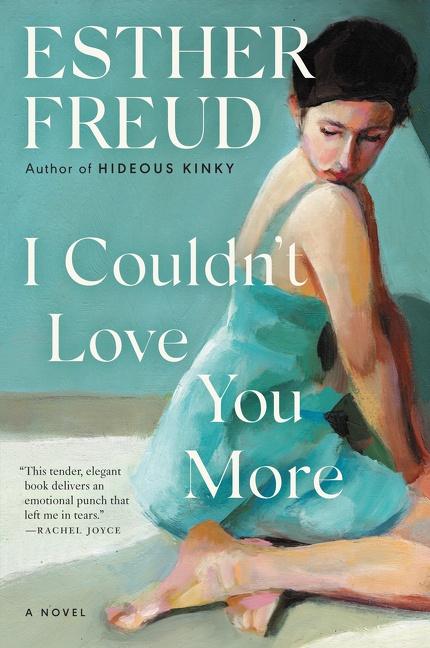
Book Review: I Couldn’t Love You More by Esther Freud – three women and the secret that divides them

Esther Freud’s new novel looks at the impact of a secret adoption on three generations of women. When Kate tries to find her birth mother, she’s not really at a good place emotionally to deal with what she might find. Her relationship with Matt is going through some difficulties and she has her daughter, Freya, to consider. Freya seems to be oddly obsessed with death for one so young. And then there’s the idea in the back of her head – why did her mother give her away? And it’s too difficult to discuss all this with her adoptive mother, who could so easily feel betrayed.

If you could give me … I try out the phrases as I help prepare the lunch, but my mother is explaining the best way to make gravy and I don’t interrupt. Afterwards she takes Freya to say goodbye to the bees. She has three hives, white clapboard, a surprising hobby for someone so concerned with peril.”

The story flips through the years to tell the story of Kate’s mother, Rosaleen, beautiful and headstrong, who escapes Ireland at eighteen for London. Her much older lover, an up and coming sculptor, has found her a job at a London newspaper where she works in the mail department, although that’s not what she tells them back home. Her family believe Rosaleen is a journalist, and her name will appear in bylines in the Express any day.

Meanwhile back in Ireland, Rosaleen’s mother Aoife (pronounced Eefa), can’t help missing her eldest daughter. Her story takes us through her marriage to Cashel, whose strict notions of propriety echo that of many Irish households in the mid 1900s. A girl who becomes pregnant is no better than she should be and must be hidden away in shame, her baby taken to a respectable family. We see the other side of this, the convents who ran laundries on the back of the free labour young pregnant girls offer in return for board and secrecy.

This is a story that has been told before, but Freud makes it fresh through her empathy for her characters. We’re taken back to the sixties, and a slice of the artistic Demi-monde, through the eyes of a young girl who for a budding reporter, doesn’t ask nearly enough questions. We’re also back in rural Ireland, with farming and rain and the endless round of chores. And then there’s Freya’s world, herself an artist, working as an art therapist, when maybe she needs a bit of therapy herself.

It’s always a joy to read Esther Freud and this novel didn’t disappoint. It took me a while to settle into the style though. I know we read a lot of books with multiple narrative viewpoints and these were clear enough through chapter headings. But the time switches confused me a little to begin with. Perhaps the disjointed time frame mirrors Kate’s state of mind – she doesn’t know where she is with Matt, her job, and the past keeps intruding on her thoughts.

If you want to read a book that takes you right into the hearts of its characters, revealing their pain – there’s a lot of it here – and their struggles to make a future, I Couldn’t Love You More is a terrific read. It’s also a powerful reminder of historic injustices against women and that the feminist movement has come a long way. The scenes in the convent that takes in Rosaleen are horrific. It’s a moving story told simply and elegantly and after a break since Mr Mac and Me (seven years!), worth the wait. Let’s hope there’s another book around the corner as Freud’s one of my favourites. A four out of five read from me.

Book Review: The Offing by Benjamin Myers – an unlikely friendship in post-war England

This is one of those small novels that deals with some big things and ties them together in a beautiful package – the perfect little book really. The Offing is told from the point of view of sixteen-year-old Robert Appleyard starting off in the summer of 1946. The world has been turned on its head by war and people are still struggling to get back to normal life. Robert, a Yorkshire coal minder’s son, is destined for the pit, but before his exam results arrive, he decides to pack a sleeping bag and some spare socks and explore the land beyond his home town. He picks up odd jobs here and there, and turns up one day on Dulcie Piper’s doorstep.

Dulcie lives near the sea, surrounded by fields, with a vegetable garden, a larder full of delicatessen items she’s cadged in various ways, and more than a few overflowing bookshelves. She’s an eccentric, getting on a bit, with only Butler, her German shepherd for company. When Robert appears, hot, thirsty and in need of a meal, she invites him to tea and he stays on for his first experience of lobster. And so begins a rich and rewarding friendship.

Any reader would imagine that Dulcie has life well sorted – she’s pretty self-sufficient, grows and forages the ingredients for wonderful meals, has her books and memories. But as Robert stays on and helps around the place – fixing up the garden that is threatened by weeds, and later rebuilding a dilapidated summer-house – he slowly teases from Dulcie her story. And it’s one of tragedy. Dulcie on her part introduces Robert to literature, finding the poetry that will light up Robert’s world and help him consider a life beyond the pit.

‘They made us read Shakespeare.’
‘The sonnets?’
‘Romeo and Juliet, I think it was.’
Dulcie screwed up her face. ‘That’s not poetry,’ she said. ‘That’s archaic drama, written to be performed on theatre stages, not read aloud in stuffy classrooms. Presented incorrectly and out of context it will put you off for life, but a good poem shucks the oyster shell of one’s mind to reveal the pearl within. It gives words to those feelings whose definitions are forever beyond the reach of verbal articulations.’

Dulcie’s conversations with Robert encourage him to think and be more expressive, while revealing all kinds of interesting anecdotes – the time she met D H Lawrence; memories of visiting Germany with her lover before the war. This is balanced by Robert’s experiences of the natural world, his encounters with deer and badgers as well as his thoughts about Dulcie. Nature is rendered vividly as summer wanes into autumn with all the colour and drama you could ask for, set against the shadow of an all-too-recent war.

I can imagine that this novel would make a lovely little film, and maybe that’s because of the way Benjamin Myers builds memorable settings and interesting characters. It’s a gentle read, taking its time to draw you in, but the writing is exquisite. You’ll want to pick up a poem or go for a walk in the countryside after this. Maybe eat something fresh out of the garden. It reminded me of those classics that evoke the English countryside as a foil against which human behaviour plays out – Thomas Hardy, L P Hartely and Laurie Lee, and probably D H Lawrence, spring to mind. As I said before it’s the perfect little book, with a perfect little score of five out of five from me.

Book Review: The Lamplighters by Emma Stonex

I’ve read a few books where lighthouses appear in the story, often in a metaphorical sense as an evocation of hope or constancy, or even desire. These ideas also appear in Emma Stonex’s novel The Lamplighters, but here the story follows the lives of lighthouse keepers and their families and the very real lighthouse which is the men’s home for a large part of their working year. Inspired by real events, the book takes us into the world of three lighthouse keepers in 1972, and what happens when their lighthouse is found abandoned, the keepers missing, but the door locked and bolted from inside.

You have to be certain kind of person to be in the lighthouse service. Principal Keeper, Arthur Black, likes the quiet and solitude of his eight-week stints on the remote lighthouse known as the Maiden. The service gives the men a cottage on the nearby Cornish coast, but he doesn’t seem to miss his wife, Helen, who waits for his return. He’s considered a good man, able and sound and obviously kindly, but have all his years in lighthouses taken their toll?

Postcards never finished; postcards never sent. I tear them up and drop them into the sea so I can watch them float away. In another life, a lucky one, I see the pieces washing onto shore. She’ll find them, gather them to her, put them back together. It will all make sense.

Assistant Keeper, Bill Walker, is from a family of lighthouse keepers and was never given the choice to be anything else. You can tell he’s had enough but then he’s almost at the end of his eight-week stint, so naturally he’s looking forward to his time on shore. At home with three young children, his wife Jenny finds the eight weeks the hardest, and fills her days filling the cake tins, and drinking.

The third keeper is the young Supernumerary Assistant Keeper, Vincent Bourne. He’s had a tough life, in and out of foster homes, and then in and out of prison. But when he meets Michelle, he determines to turn his life around and have the proper family he’d missed out on. The Service offers him a chance and when he’s made Assistant Keeper, he’ll get a cottage too. So while it might be easy to blame the mysterious disappearances on bad-lot Vinnie, he seems the least likely to lose it and do something rash.

The story flips to 1992, when an adventure-thriller writer revisits the events of twenty years before, planning to write a book and solve the puzzle. Told through the viewpoints of the three women left with no answers, but a financial to keep quiet, secrets start to emerge. The tension escalates, as the story switches back to the days leading up to the tragedy, as well as describing the sensitive relationships of the women on land. The ending is taut and you rush through the pages to find out what happened, in a small way comforted in the resolution for those left behind.

This is a masterful novel, written in elegant and at times poetic prose – maybe it’s hard to avoid if you are writing about the sea and the weighty themes we traditionally associate with lighthouses. The novel makes these themes all the more real but in new ways. It’s a psychological novel too, getting inside the heads of the men and their women, picking out their motives and triggers, their passions and resentments.

Emma Stonex has done her research well and the books she lists as inspiration are books that look well worth a read. I can’t help thinking that lighthouse keepers are forgotten heroes and want to know more. I’m going to stick my neck out and give The Lamplighters a rare five out five.

Man Booker Prize Musings

The Man Booker Prize is one of the highlights of the serious reader’s year. So when the long list comes out, as it did a couple of weeks ago, people begin to speculate. (Click here for the 2021 list.) I wish I was enough of a serious reader to read more of them and, in a mood to see what I may have missed, trawled through a list of previous winners. It was heartening to find I’d read quite a few so I’ve listed a few of my personal highlights.

Favourite Man Booker winners:
A tricky one this as they are so varied, but the most memorable for me are as follows:


The English Patient by Michael Ondaatje (1992)
This one’s special because it has an interesting historical background, loaded with atmospheric physical settings (Italy and the Egyptian desert), four complex and interesting main characters, a tragic love affair and gorgeous writing. You can tell Ondaatje is a fairly decent poet, the way he paints images with words.

Possession by A S Byatt (1990)
This dual time-frame novel about academic rivalry is subtitled ‘a romance’, but it is also a brilliant mystery. Two young academics – one English and one American, follow a paper trail to discover a little known romantic entanglement between two Victorian poets (loosely based on Christina Rossetti and possibly Tennyson or Browning). Terrific plotting makes this intelligent read hard to put down.

The Gathering by Anne Enright (2007)
This novel follows the Hegarty family as it comes together for a funeral in Ireland for one of its sons, Liam, who has taken his own life. Its narrator, Veronica, is also rather damaged and speculates about things that happened in the past to cause the death. An intelligent novel which looks at the human psyche and family interaction told in Enright’s unmistakably dry tone that is such a pleasure to read.

Wolf Hall by Hilary Mantel (2009)
One of the longer books on the list at 688 pages, yet for me it just whizzed by, bringing the court of Henry VIII to life and in particular, his man for getting stuff done, Thomas Cromwell. Mantel has a style you either love or hate, which is very vivid, present tense and right in Cromwell’s head.

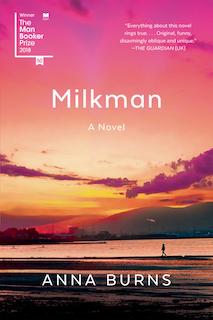
Milkman by Anna Burns (2018)
I reviewed this book last January and still think about it – click Milkman for the post.

More Man Booker Mentions:
In 1986, Margaret Atwood’s shortlisted title, The Handmaid’s Tale, lost out to Kingsley Amis’s novel, The Old Devils.

I have read four of the shortlisted titles the year Iris Murdoch won the prize for The Sea, The Sea in 1978. My best effort yet, but remember I’ve had over forty years to get there. Including the winner, the other titles are: God on the Rocks by Jane Gardam; Jake’s Thing by Kingsley Amis and The Bookshop by Penelope Fitzgerald.

The longest Man Booker Prize winner I’ve read is The Luminaries by Eleanor Catton, which won in 2013, and which took a bit of an effort, I must admit. I read the first half quickly and began to tire towards the end, but enjoyed it over all.

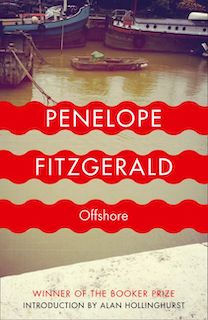
The shortest Man Booker Prize winner I have read is Offshore by Penelope Fitzgerald (at 140 pages) which won in 1979. Although without a word count, it is difficult to be sure as 2011’s winner, The Sense of an Ending by Julian Barnes is only 10 pages longer. If you factor in typography and layout, Barnes might pip Fitzgerald to the post for making every word count.

If you have any personal Man Booker favourites or interesting asides, do drop in with a comment.

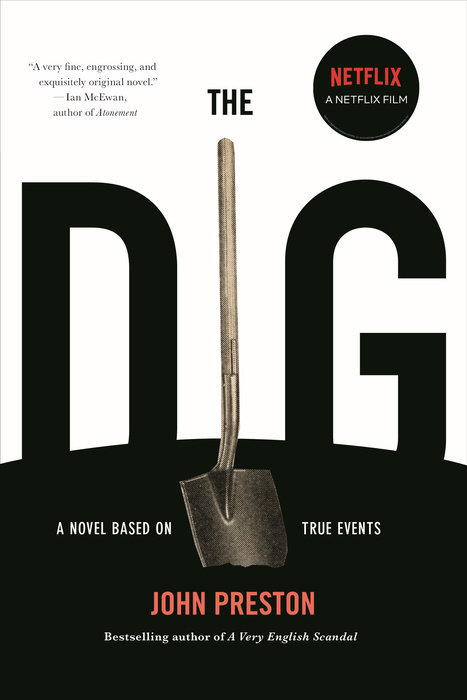
Book Review: The Dig by John Preston

This could be the greatest story you’ve never heard of – well, it was for me until the Neflix movie version came out earlier this year. It had a terrific cast including Carey Mulligan and Ralph Fiennes playing Mrs Pretty, owner of Sutton Hoo, and the man (Basil Brown) she hires to investigate the ancient burial mounds on her Suffolk property. The film had much going for it, including costuming that had me longing for the comfort of classic tailoring.

When I came across the book by John Preston – first published in 2007 – I was happy to revisit the story which is just so interesting. Not only did Sutton Hoo offer up a hoard of fantastic Anglo Saxon treasures: a stunning metal helmet, bowls, amulets and jewellery – a quick trip to google will show you – but it was also encased in a ninety foot ship. Of course the ship’s timber had long since rotted to nothing, so how Basil, and the archaeologists who followed, sensitively excavate the site to reveal it is a wonder.

When Basil discovers a coin the site is soon shown to date from around the seventh century AD – so not a Viking hoard, as first thought, but Anglo Saxon. Suddenly people’s opinions of the what were termed the Dark Ages were challenged. The departure of the Romans from Britain didn’t seem to herald a time of barbarism, barren of any artistic sophistication after all, if the stunning artefacts were anything to go by.

And while the reimagining of all this is enthralling enough, the characters are engaging too. We follow several viewpoints, beginning with Edith Pretty, a frail widow in her late fifties who wants to excavate the mounds before her health fails or there’s a German invasion – this is the summer of 1939. She has a young son, who’s at a loose end having lost his governess, so he chums up with Basil. We’re also in the mind of Basil who’s not an academic, but knows his soil. When the British Museum gets involved, he and Mrs Pretty are sidelined.

This creates plenty of tension and intellectual snobbery which brings in some terrific scenes and personality clashes. Also on the dig is newly married Peggy Piggott (apparently a relative of the author’s) who is helping her university professor husband. Already cracks are appearing in their marriage, and things get complicated when Edith’s young cousin, Rory, turns up on his bike with his photographic equipment.

While the film gives you the visuals to imagine the excavation site, the book adds lots of interesting detail – although the author has taken a few factual liberties, as he explains, ‘for dramatic effect’. I would recommend both for anyone who loves history and archaeology, or a cracking good story. Incidentally, John Preston is also the author of A Very English Scandal – another book on my wish list. The Dig gets a comfortable four out five from me.

Book Review: Anxious People by Fredrik Backman

I’d heard so many good things about Anxious People that it’s been on my Must Read list for a while. And yet a book about an attempted bank heist which turns into a hostage drama isn’t my usual cup of tea. But this is no crazy Bruce Willis and thugs with sub-machine guns story. It’s about ordinary people, strangers who get caught up in an interesting situation and kind of get to know each other.

As the title would suggest, they’ve got problems. The bank robber, following a broken marriage is also suddenly unemployed. No income means no means to pay the rent and that means no home for the kids. The bank won’t lend the robber money either. The story is also about Jack and Jim – the two police officers called to the scene of a hostage situation at an apartment hosting an open home. It’s New Year’s Eve, not an ideal time for an open home, but the door’s open, so that’s where the bank robber escapes to. We learn Jack’s story – how he mightn’t have joined the police, alongside his father, Jim (a bumbling but kindly officer), if he hadn’t witnessed a suicide on a bridge.

The suicide’s story is similar to the bank robber’s. How the banks lost the victim’s savings and assets, which left him with nothing and a family to support. Jack tries to stop him, and fails. The next day visiting the bridge he stops a young girl from jumping too. The girl is later revealed as a character in the story, unbeknownst to Jack, as is the bank manager who couldn’t help the first victim. Jack’s experience as a fifteen year old drives him to want to help people, though these days he mostly just seems to help his father.

Meanwhile the story of how the bank robber escaped and the backstories of the hostages are explored as the book progresses. There is plenty of humour and philosophical meanderings. Thoughts on what makes a happy marriage, a happy life are mulled over by the bank robber and the hostages as they all start getting to know each other. There’s a ton of quotable moments – if you want a snapshot just check out those listed on GoodReads.

“They say that a person’s personality is the sum of their experiences. But that isn’t true, at least not entirely, because if our past was all that defined us, we’d never be able to put up with ourselves. We need to be allowed to convince ourselves that we’re more than the mistakes we made yesterday. That we are all of our next choices, too, all of our tomorrows.” 

The hostage drama turns into quite a nice little get-together over pizza. Fortunately for all concerned there’s a massive traffic jam on the highway out of Stockholm and the designated police negotiator takes a long time to arrive. So everything’s left to Jack and Jim, and the hostages themselves, to work out a solution.

Anxious People is a quirky, feel-good read with plenty of twists, secrets revealed and interesting connections. The story jumps between character to character, dips back in time and allows the hostages to tell their stories and come up with answers. I haven’t read Backman’s previous books (A Man Called Ove, My Grandmother Asks Me to Tell You She’s Sorry are two titles that spring to mind), but now I’m keen to read more. This one’s a four out of five read from me.

More New Books on the Horizon

There’s been quite a bumper harvest of terrific books recently – perhaps they were delayed because of lockdowns and now we’re catching up. Anyway, here are some new titles by authors I’ve enjoyed immensely in the past and so naturally I’ve added them to my Must Read List. It’s a pretty varied list, but that’s books for you.

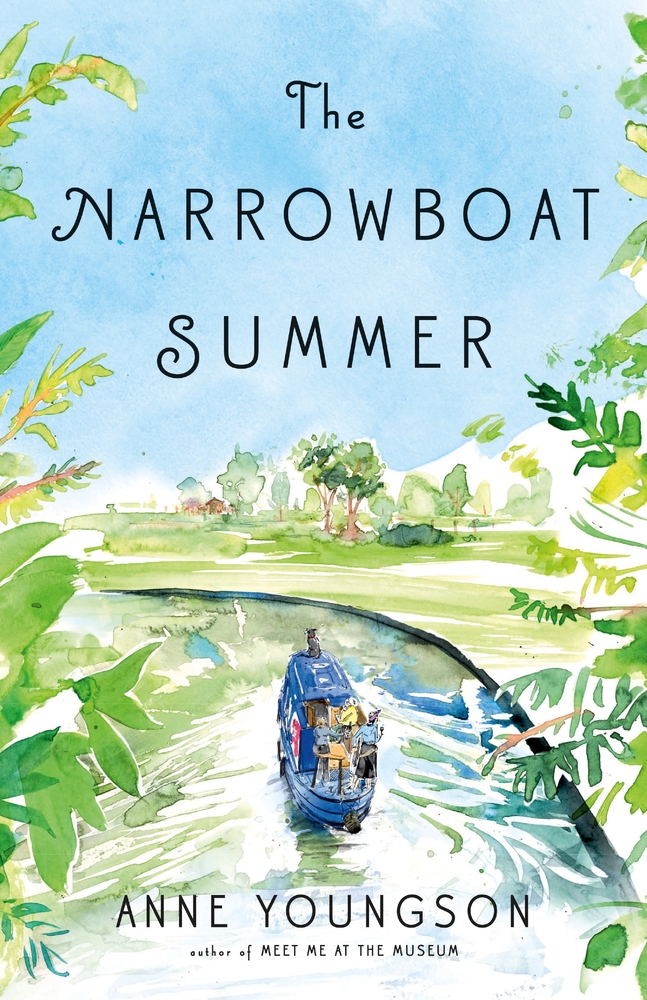
First up is The Narrowboat Summer by Anne Youngson. You might remember this author’s debut, the feel-good novel told in letters, Meet Me at the Museum (click on the link for my review). With a title like this, The Narrowboat Summer sounds instantly appealing, echoing Jerome K Jerome’s Three Men in a Boat, with it’s a story of three women and a dog on a canal boat. Eve’s escaping her career of thirty years to become a free spirit; Sally is taking a break from an indifferent husband and the two are rescuing Anastasia, who needs a life-saving operation. I don’t know what the dog’s problem is. It’s a novel of second chances and the power of friendship. Another feel-good read promised.

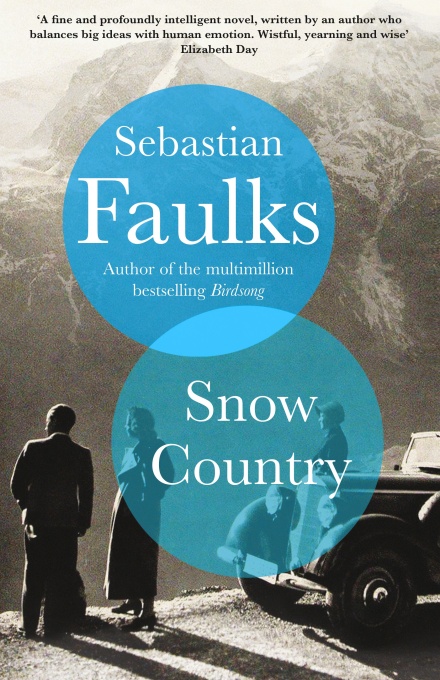
In Snow Country Sebastian Faulks returns to themes relating to the First World War and its aftermath – good news for all of us who fondly recall Birdsong – with a novel set in a sanatorium surrounded by snow and on the banks of a silvery lake. Journalist Anton Heideck is commissioned to write a story about the mysterious Schoss Seeblick where Lena had escaped Vienna to take a menial job. ‘A landmark novel of exquisite yearnings, dreams of youth and the sanctity of hope‘ promises the blurb. The setting and the rumblings of another war will be sure to add to the atmosphere. Snow Country is out in September.

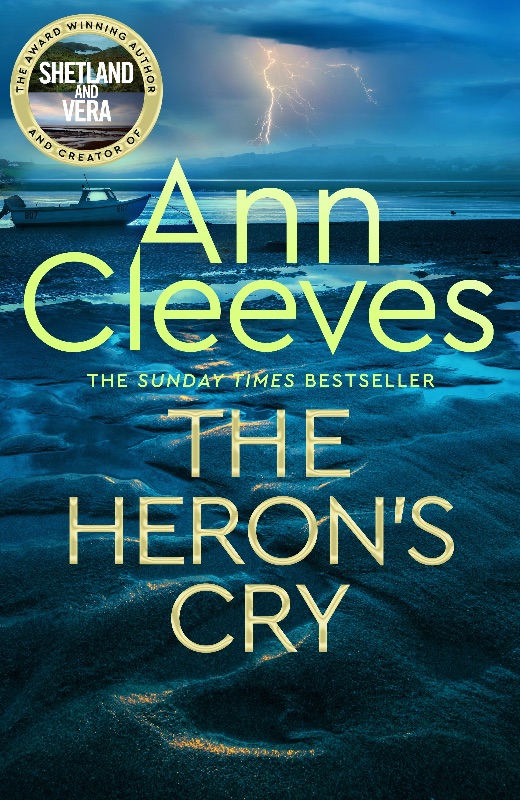
The Heron’s Cry by Anne Cleeves is the second in the author’s Two Rivers series set in North Devon. Detective Matthew Venn is called to investigate a very staged looking murder – a woman stabbed with a shard from one of her glassblower daughter’s vases. Another similar murder and complications involving Matthew’s partner, Jonathan – well, it’s a small town after all – and you can tell it’s going to be another page turner. I can’t wait to get my hands on this book. I loved The Long Call (catch up with my review here), but as Cleeves has her Vera Stanhope series on the go as well, it’s been a long wait. Cleeves writes engaging character-driven crime novels with plenty of twists and secret motives. Throw in some interesting detectives and colourful English settings and what more could you want?

Mrs England by Stacey Halls is the latest from the author who brought us the historical novel about witch hunts, The Familiars. In her third book, this time with an Edwardian timeframe, Ruby takes a job caring for the children of a well-to-do Yorkshire family when strange things start to happen. What begins as a fresh start for our protagonist soon looks like history repeating itself and Ruby finds herself ostracised and alone. Big houses and chilling settings, women battling the powerlessness of their station in life – these seem to be recurring themes for Halls who could be following in the footsteps of Susan Hill, Daphne du Maurier and Wilkie Collins. ‘Simmering with slow-burning menace,’ says the blurb for the new book.

Trio by William Boyd is a novel some pundits are picking for the Man Booker Longlist and it nearly slipped under my radar. Definitely time to put it on the list then. Set during the turbulent year of 1968 – a time of student protests, the assassinations of Martin Luther King and Bobbie Kennedy, the Vietnam War – it follows characters caught up in a movie being shot in Brighton. Efrida is struggling with writer’s block and drinking too much; glamorous Anni can’t figure out why the CIA should have her on their watch list; while Talbot has a secret. It looks like classic William Boyd territory – the lives of everyday people made extraordinary by circumstances and the politics of the day. Might have to bump this one to the top of the pile.

Book Review: Still Life by Sarah Winman

Sarah Winman’s new book begins in 1944 Italy, as English troops are engaged in the push back agains the Germans. We’ve got a meeting between two unlikely friends: Evelyn Skinner a sixty-something art historian sojourning in Tuscany with fellow lesbian Margaret; and a young soldier, Ulysses Temper. Temps, as his mates call him, chances upon Evelyn and introduces her to his erudite Captain Darnley and the three discover a painting which has a big effect on the young soldier.

Oh, drop the Miss, for God’s sake, said Evelyn, sitting down next to him. My name’s Evelyn. And yours?

Ulysses.

Ulysses! How wonderful! And is there a Penelope waiting for your return?

Nah. Just a Peggy. And I doubt she’s waiting, and he turned the ignition and the jeep pulled away.

Temps is from London’s East End, the son of a globe-maker, a fitting occupation for a man named Ulysses. He paints delicate versions of the Earth on carefully prepared spheres, but his experiences in Florence will stay with him long after his return. A chance interception of an attempted suicide will bring him back here, but not before we’ve been introduced to his fellow Eastenders who make up a kind of family, and the 1940s spin into the 1950s.

Winman creates some wonderful characters here, all of them centred on the Stoat and Parrot – the pub owned by Col, a cantankerous publican with permanent dyspepsia. Col runs through girlfriends in alphabetical order, blaming the Shakespeare-spouting parrot for the desertion of his wife. But he’s got a disabled daughter to raise, a naive innocent. Fortunately Peggy’s on hand, taking the girl under her wing along with old-timer Cress who talks to a tree and keeps an eye out for everyone.

Peggy is Ulysses’s wife – a hasty marriage brought on by the start of war, but his time away has Peggy form an attachment to American soldier, Eddie, and left her with a daughter, Alys. When Eddie fails to return, Peggy belts out her blues in song at the Stoat and Parrot, accompanied by Pete, when he’s not in a show. The reader gets enough of the gritty post-war London with it’s slow rebuild and pea-soup fogs to want better for this odd family of characters. It comes in the form of a legacy which has Ulysses, Cress and young Alys (who Ulysses loves like his own daughter) move to Florence accompanied by Claude, the parrot.

From here, the story weaves through the decades, and Ulysses makes new friends and learns to love the Italian lifestyle. He chucks out his demob suit for a sharp Italian look and Cress learns to cook pasta. Our friends from the Stoat and Parrot will drift here for visits and longer stays, watching the big world events play out – the moon landings, student demonstrations, assassinations of Martin Luther King and JFK – as the world recreates itself after the recent wars.

Still Life is a feast for the senses. The food alone in this book is worth reading it for – I pulled out an Italian cookbook destined for a second-hand fair, determined to revisit some of these classic dishes. As well as the food and wine we have sweltering summers, scented gardens, wonderful art (and poetry), the music of the day, romantic attachments of all kinds, shown with sensitivity and warmth.

I loved the characters, but particularly Ulysses, who unlike his namesake, is sensitive, charming and caring, quietly missing Peggy who he can’t seem to forget. Still Life is a lively book full of lifelike people who learn to live and love again in a wonderful new place (there’s also a quirky lack of punctuation when it comes to dialogue, which took a bit of getting used to). It’s also a hymn to Florence, and if you’ve been there before, Still Life will bring it all back for you. A book that charms on many levels, it’s a four out of five read from me.

Book Review: The Van Apfel Girls Are Gone by Felicity McLean

Felicity McLean’s debut novel novel has been described as The Virgin Suicides meets Picnic at Hanging Rock. Set in small town Australia, the book is told in two time frames, and begins when Tikka Molloy returns home to reconnect with her sister Laura who isn’t well. She can’t stop thinking, had they did the right thing twenty years ago when their friends, the three Van Apfel sisters vanished. She looks back on that sweltering summer when she was eleven and the events that led up to their disappearance.

Tikka is a great child narrator – she reminds me a little bit of Scout from To Kill a Mockingbird, if we’re thinking of book comparisons here. She’s smart and imaginative and comes from a loving family. At the corner of their street live the Van Apfels and Tikka and Laura spend a lot of time there as the family has a pool. The Van Apfels attend a fundamentalist church – their dad, though outwardly genial, is particularly strict and this causes tension with his wayward thirteen-year-old daughter Cordelia.

There’s a lot of Tikka trying to make sense of her world and understand what’s going on with the grown-ups, and the tension that seems to lurk at the Van Apfels. There’s a new teacher, Mr Avery, who has a mysterious past that may have included a stint in prison – as rumour has it. So along with the simmering heat there is plenty of simmering tension as the school plans its big, Showstopper concert at an outdoor amphitheatre, for which Tikka has written her own skit and where events build to a climax.

In true Aussie Noir style, the landscape plays a big part in this novel. The mangroves around a brackish estuary create a sinister backdrop (Tikka complains of an unpleasant smell); the empty landscape beyond; the heat bouncing off the tarmac. It all adds to the mood and tension of the book. And there is a hint of the unreliable narrator about Tikka. How accurate are her memories from childhood? Even now as an adult she still can’t help looking for Cordelia (Cordie) at railway stations, at busy intersections, her blonde head just disappearing around corners, failing to stop when called. The Van Apfel girls may have disappeared that summer, but a part of Tikka seems to have been lost as well.

The Van Apfel Girls Are Gone is an impressive debut, a character driven mystery that is also quite the page-turner. There is plenty of humour with the way McLean re-imagines childhood, the rivalry between sisters and between classmates, the rumours and the secrets, the superiority of the older kids. This balances out the sadness of what happens and the feeling of lost innocence which runs through the story. Not a long book, McLean’s novel is well worth picking up, and heralds a promising new author to look out for. A four out of five read from me.