 I am so glad I read Miller’s latest as an ebook because such is the dramatic tension he maintains throughout, that if it had been a regular book, I would have been flipping to the end to see what happened.
Now We Shall Be Entirely Free follows John Lacroix, a young English cavalry officer, sent home to recover from terrible events during the retreat from Portugal – we’re talking about the Peninsula Campaign in the Napoleonic Wars. He’s barely alive, but under the care of his housekeeper, recovers his health enough to plan a visit to Scotland in search of old folk songs, taking his violin, but also his pistol. He shouldn’t really be doing that – he’s supposed to report back to his regiment. The war is still going and they need all the men they can get.
Another cavalry officer comes looking for him to tell him this but gives him a bit of extended leave. Meanwhile, in Spain, there are reports of a horrific atrocity against a village – rape, pillage, murder, etc. during the retreat. Desperate men do desperate things but someone has to pay to appease the locals. Somehow Captain John Lacroix becomes their man. They send brutish Corporal Calley to deal to him and the infinitely more refined Spanish officer Medina to make sure he does. Continue reading “Now We Shall Be Entirely Free by Andrew Miller”

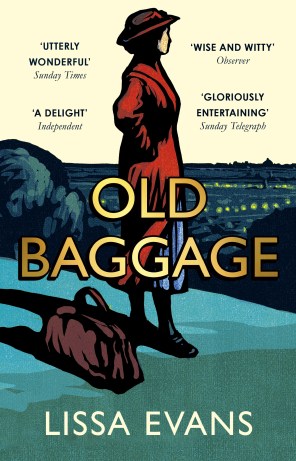 You may remember Crooked Heart, Evans’s novel set during World War II about a middle-aged grifter on hard times and Noel, her young evacuee. The story provides an original view of wartime life, smart and witty with some brilliant characters. Among them is Mattie, Noel’s godmother who makes a brief but memorable appearance at the start of the book. So memorable in fact, that Evans has devoted a new book to her:
  Many readers will remember Helen Simonson’s popular debut novel Major Pettigrew’s Last Stand. It’s a contemporary story about a man recently widowed who rescues a golf-course from developers and has a second chance at love.
  Half of London is watching as St Paul’s burns during the opening scene of
 Rebecca Kauffman’s second novel reminds me a little of Elizabeth Strout’s fiction (Olive Kitteridge, My Name Is Lucy Barton …). Perhaps it’s because
  Gosh, how do you begin to try and describe a book like this one?


 I reviewed
  Judith McKinnon