Book Review: Cutters End by Margaret Hickey – a gripping new Aussie Noir series with a troubled cop

It’s hard not to pick up a book with a cover showing a dry Aussie outback setting. Those small towns in the rural backwaters of Australia just seem to seethe with all kinds of tension. Broken hearts and lost dreams, the struggle with a harsh environment wearing people down, young people abandoning home for the cities. You can’t help wondering if the author will be the next Jane Harper (author of The Dry).

With Cutters End, we’re in opal mining country, an industry on its last legs, the kind of place you pass through on the Stuart Highway heading north to Alice Springs. It’s also the place where a local hero and father met an unexplained death, discovered trapped beneath his vehicle and apparently burned to death. Back in 1990 this was explained as an accident at the inquest, but Suzanne Miller, a TV host with a flagging career, says it’s time for a reinvestigation. Michael Denby saved her and her mother from floodwaters when she was a small child and he deserves better.

DS Mark Ariti, similarly with a flagging career, is on leave when his superior officer discovers that he knew one of the witnesses at the time – one Ingrid Mathers who Mark dated at high school. Mark’s bumped up to Acting Inspector and sent to re-interview Ingrid and to see if he can jog her memory about the days around New Year 1990 when she was hitchhiking with her friend Joanne. But Ingrid’s not very forthcoming, although the reader has the inkling that she’s got a secret or two.

Mark catches up with Joanne, now living the high life in Sydney, similarly reticent. Why don’t the two women talk to each other any more? More clues pull Mark back to Cutters End, and the Mendamo Roadhouse, once owned by creepy Gerald, where Ingrid hitched a ride with somebody called Ron or Don. He bounces ideas off his new sidekick, DC Jagdeep Kaur, and picks up gossip at the three rather disappointing pubs in Cutters End.

Finally, Cutters End. The Stuart Highway a blade cutting through the centre of town, railway line alongside it like a rival sibling. Two main streets, a petrol station, the town hall, council offices, a supermarket, dingy motel, a primary school and, in the back streets, houses with sad facades and secret interiors.
The opal mining boom was bust, had been for decades, and although the welcome sign read ‘Cutters End, a town on the move!’ Mark doubted it. This town, like many across the country, had the look of a dying dog waiting to be shot. But still, he knew too well that dogs don’t die easy – those pleading eyes, that sense of loyalty and long history. The faded pride of what they once were.

When the woman at the service station where you get the best coffee in town tells Mark to find out about the two missing girls, the story goes in an interesting new direction. More than a couple of young women seem to have disappeared from the area, all of them hitching a ride and chancing their luck with whoever picks them up. Did they just move on and then take off overseas without letting anyone know? Build a better life? Or is there a more sinister explanation?

The story is peppered with interesting local characters: John Baber, the kindly ex-school teacher turned van driver who local businesses rely on for deliveries; mentally damaged Foobie who takes inappropriate pictures of people and becomes a source of useful information; Sergeant Darryl Wickman, the town’s long-serving police officer who has a way with the townspeople and a wise-cracking relationship with Jagdeep.

But it’s the undercurrent of evil so typical in these stories that has you on edge. The ugly circumstances of Denby’s death, the casual misogyny and disregard for vulnerable young women, the tight-lipped attitudes of the locals. Mark is struggling to make headway in all directions, either with his case or in his marriage, and like so many cops in these sorts of novels, never seems able to say the right thing.

There are evocative reminders of the time, not only the terrible haircuts and ugly sweaters, but also the real-life backpacker murders in New South Wales and the serial killer Ivan Milat. These crimes happened around the same time that our fictional Denby was killed. They conjure up all kinds of thoughts and feelings around how we protect our young people from predatory behaviour, about violence against women and whether anything much has changed for the better.

Cutters End is the first in a series about troubled cop, Mark Ariti. It’s a terrific read if you enjoy authors like Jane Harper, Garry Disher, Chris Hammer and Sarah Bailey, and a welcome addition to the genre. There are a couple more to look forward to (Stone Town and Broken Bay) with The Creeper out later this year. Can’t wait. Cutters End is a four star read from me.

Book Review: Zero Days by Ruth Ware – a compulsive thriller from a master of the genre

I always enjoy reading about an interesting new business or career I’ve not come across before – the processes, the clients, the marketing. In Ruth Ware’s latest book Zero Days we’ve got a couple of business penetration security specialists – husband and wife team Gabe Medway and Jacintha (Jack) Cross. Their business, Crossways Security, tests out security both inside and out for their customers. Gabe, an expert hacker does the computer side of things, leaving Jack, pint-sized but super fit, to break in at night, testing alarms, locks and security procedures. They make a great team.

The story begins with Jack entering a client’s premises, from climbing a six foot wall, through to avoiding CCTV cameras, sneaking through doors, disabling alarms and evading the security personnel. Gabe is constantly in her ear, helping her find safe corners and exit points. She has a few close calls but ultimately gets out unscathed, a bit like a character from a Mission Impossible movie.

But heading back to her car, she bumps into the head of security which means a trip to the police station where she tries to contact her client. The minutes tick by, and it’s the small hours before she gets home, only to find that Gabe has been murdered. Shock and anguish delay her call to the police leaving some hours not accounted for when she is later interviewed by the senior investigating officer, DS Malik. Her sister Helena implores her to get a lawyer – spouses are always the first suspect in a murder, they have the means and opportunity; all the police need is to find a motive.

Aside from the grief and shock Jack is experiencing, an email informing her of a life insurance policy to the value of a million pounds adds to her woes. And the way that Malik seems to be homing in on her during a voluntary visit to the station causes alarm bells. Suddenly it seems that the police have chosen their perpetrator, and if they lock up Jack, no one is ever going to find out who the real killer is, the same person who is framing her. With a few more security sidesteps, Jack exits the police station and goes on the run.

Inside the station it was noisy and smelled of cleaning fluid and used coffee cups. As I waited in line to speak to the officer behind the front desk, I couldn’t help scoping the place out as if I were on a job. Two exits – one to the street, unmanned; one to the interior of the station, no lock as far as I could see. There was probably an activation button under the desk. One fixed CCTV camera in the corner with a huge blind spot that covered most of the right-hand wall – not a very good design for a police station. The odd thing was that I had no memory of any of it from before. Shock had wiped half the night’s events from my brain – which felt strange, but no stranger than mechanically assessing the building’s risk profile in a world in which Gabe no longer existed.

The book is set for the most part over seven days, as Jack disguises herself, evades capture, copes with injury and tries to piece together what it was that Gabe was doing that got him killed. She has a bit of help from Helena, a busy mother of two, as well as Cole, Gabe’s best friend who was like a brother to the victim, and like Jack is devastated by the murder. At the heart of it all is some cyber crime that went a little over my head but makes for an interestingly different storyline. There are a lot more Mission Impossible type action scenes as Jack gets closer to the truth.

Zero Days was such a compulsive read, I was thankful for a weekend of cold, rainy weather. I inhaled this book, having to remind myself to eat. The writing is sharp and immediate, the tension non-stop, with first-person narration that makes you imagine yourself in Jack’s shoes. You can’t but wonder what would you would do in similar circumstances; how you would cope. The novel must surely add to Ruth Ware’s reputation as the Queen of Just One More Chapter. Zero Days is a four-and-a-half star read from me.

Book Review: The Murder Rule by Dervla McTiernan – a pacy legal thriller with a few dramatic twists

Dervla McTiernan is the author of the Cormac Reilly series of crime novels set in Galway, Ireland. After three books McTiernan quickly earned a place on my must-read list. So imagine my surprise to find book number four, The Murder Rule, is a departure from the series and is set in Maine and Virginia.

We’re with Hannah, a law student near to graduation, who finds a place as an intern on The Innocence Project, a legal team that take on dodgy convictions, including death-row cases. As you can imagine, the work is intense, emotions running high.

“No one is innocent in this story” says the tagline on the cover, so I was expecting possibly an unreliable narrator. And yes, pretty much from the get-go, we learn Hannah will do whatever it takes to get what she wants. She shows this in how she persuades the Innocence Project director, Robert Parekh to take her on, and the hours she is willing to spend, long into the night to prove her worth.

What Hannah really wants is to be part of the small team focussed on the Michael Dandridge case. After eleven years in prison, his case has come up for retrial due to questionable evidence. Even so, he could still end up with the death penalty. Dandridge had been sent down for the rape and murder of a young mother, something he’s always denied – his confession, he says, beaten out of him by the sheriff. Hannah’s phone conversations with her fragile mother, Laura, reveals a hidden agenda.

 ”I’m sorry,” Hanna said, as sincerely as she could manage.
 ”You should be,” he said, still with a trace of amusement. “But here’s the thing.” He gestured broadly around the room. “Here at the Project, we are not the police and we’re not the FBI. We have a very limited budget to pay investigators. I need students who are imaginative, inventive, and willing to be creative when it comes to pursuing our cases. Working here does not mean sitting behind a desk drafting motions – our staff attorneys take care of that. We need students to do the hard grind of investigating facts and tracking down new evidence. If you could be as dogged with that as you were with trying to get a place here, maybe you could be of use to me.”
 Hannah could feel the flush rising in her cheeks. She made herself hold his gaze. This was not the time to play the shy girl.

Interspersed with Hannah’s narrative are entries from Laura’s diary describing her summer spent in Maine working for a cleaning company to save money for college. At one secluded summer house she meets Tom, the son of wealthy parents, and the two click. If only that creepy Mike wasn’t around. After seeing what he has hidden in his room, he makes her nervous.

The story builds towards the Dandridge trial, as Hannah does what she can to fulfil her promise to her mother, impressing her team with her commitment and ingenuity. However, fellow Dandridge interns Sean and Camila, are smart cookies too and soon ask questions. So there’s plenty of tension and no one Hannah can trust. Meanwhile her fragile mother is struggling with Hannah being away, so there are tearful phone conversations between them.

There’s a tense last act with plenty of danger and near misses as new facts come to light with some shocking twists. The scene’s all set for a dramatic courthouse finale which may seem a little unlikely in the real world, but is entertaining nevertheless. It all comes together in a pacy novel that’s perfect escapist reading. I kind of miss the Galway setting of the previous books though.

McTiernan is a brilliant storyteller and I’ll be on the look out for her next book, What Happened to Nina?, which is set in Vermont and due out soon. The Murder Rule is a four-star read from me.

Book Review: The Lie of the Land by Amanda Craig – a cracking novel of rural England, the plight of the middle classes, with a mystery thrown in

Sometimes when you pick up a novel, you just instantly know you are in good hands. I felt like this about The Lie of the Land with its interesting premise – a couple desperate to divorce but can’t because they have no money. So they rent out their London house and find cheaper digs (together!) in the country with their children.

Stories where people ditch the city for the countryside for whatever reason have been around since the novel has, quite probably, or at least since Green Acres appeared on TV in the sixties. But there’s always fresh material to mine, particularly when you’ve got such complex characters as Quentin and Lottie Bredin. Quentin is older than Lottie and his career as a journalist has taken a dive – he’s rude and arrogant and has upset too many people. To make matters worse, Lottie has discovered he’s had several affairs, and all the while she’s been left to manage the home and her children.

Lottie was once an up-and-coming architect, and keeps her home like something out of House and Garden. Perhaps that is what makes her so difficult for Quentin to live with: her fastidiousness, her sharp tongue, plus her ongoing tiredness since the birth of their daughters – Rosie (6) and Stella (8). An opportunity to rent a farmhouse near Quentin’s parents in Devon ridiculously cheaply has them reluctantly leaving London and all its temptations behind.

The novel has a load of interesting plots woven together, with several main narrators. We’re with Lottie, angry and grieving over the way Quentin has treated her, while she tries to balance the books and economise. If they can stick it out for a year, they can clear their debts and sell the London house. This will pay for their divorce and leave enough capital to set up house separately.

Her daily walk includes a visit to the village shop, a Portakabin crouched in the church car park. The design makes her wince, but just to talk to another adult who doesn’t hate her is a relief.
 ’Home-made?’ she asks, pointing to pasties, keeping warm in front of the counter.
 ’Oh, yes. We don’t hold with Humbles.’
 ’It’s good that Shipcott still has a shop.’
 ’It doesn’t make a profit,’ the woman says, shyly. ‘We volunteer, though we all worry about being held up at gunpoint.’
 ’Do you really?’
 ’You’d be surprised. There’s crime here, my lovely, just like everywhere else. But how else are pensioners without cars going to get their food and money each week?’
 She has never known people like this, with their terrible teeth and terrible clothes and kindness. That’s what astonishes her most: the kindness.

We’ve also got Quentin, who can’t believe the nosedive his career has taken, but is still trying to keep in the swim while being a decent father. There’s Xan, Lottie’s eighteen-year-old son, desolate at missing out on a place at Cambridge and at the idea of his London life coming to a halt. Showing us the rural point of view, there’s Sally, a district health nurse with her own quiet grief.

While this seems to be mostly a novel of a marriage, there’s also a grim mystery with the hideous death of the previous tenant at Long Farm, an unsolved crime no one has told the Bredins about. You know you will find out the who and why of the crime by the end of the book, but in the meantime there’s so much character development, as rural life weaves its charm and throws up new challenges for the family.

We get plenty of insight into rural issues, particularly the struggles for farmers to make a living off the land in a competitive market-driven economy. The Polish immigrants that fill in doing unpleasant and exploitative work the locals avoid is evocatively depicted in scenes at Humbles Pie Factory where Xan picks up a casual job. Also the loss of a way of life, the closing of schools as people move away.

Then we’ve got a look at intergenerational relationships, particularly between Quentin and his dying father – the guilt, the disagreements and old scores. And about parenthood, both good and bad, as well as the redemptive power of music and literature. Quite a lot to think about then.

The writing sparkles with wit and vivid descriptions, and is polished and nuanced. You don’t have to like the characters, certainly not all the time – Craigs shows them warts and all – but you can’t complain they’re not interesting. Each finds themselves caught up in difficult dilemmas that give the story plenty of go. Meanwhile all the plates Craig keeps spinning are carefully balanced and then caught at the end for a cracking finish. I loved every minute of it and, although it’s not saying a lot – this being only February – The Lie of the Land is quite my favourite book of the year. A five star read from me.

Book Review: This Wild, Wild Country by Inga Vespa – old sins cast long shadows in hippy-era New Mexico

In her latest book, Inga Vespa pairs another couple of outsiders to investigate a murder, while digging around among social issues of the twentieth century. In her debut, The Long, Long Afternoon, we had a stirring of civil rights, and the murder investigated by a disgraced cop and the African American maid who’s a key witness. It’s 1959 and so there’s misogyny as well, particularly in this strait-laced California suburb.

Moving on a decade This Wild, Wild Country takes us to Boldville, New Mexico, a town out of the Wild West with it’s faded shop fronts, a blink and you’ve missed it sort of place, that keeps going because of local mining interests. Once upon a time it had it’s share of gold-rush opportunists, but now it’s where Glitter – real-name Lauren Weiland – wants to set up a counterculture commune.

Glitter lives with her boyfriend Ziggy on a hippy-decorated bus which she’s parked by the cabin her mother used to rent out behind the family hotel, a little out of town. With a few friends they hope the commune will catch on and expand. The little group are mostly college drop-outs, flower children who are anti-war and full of new ideas and ideals that put them outside of society. The town folk are wary of them, particularly when Dutch and a couple of his motor cycle gang move in. The gang has a constant supply of drugs and bring an air of menace. If only Ziggy wasn’t quite so keen to keep them onside.

After a particularly wild night, Glitter wakes up to find her cousin, Mike, dead from a skull fracture. Sheriff Nickel writes the death off as an accident while under the influence, but Glitter knew Mike wasn’t the kind of guy to take the kind of hard drugs found in his pocket. Not surprisingly no one will take her seriously.

While all this is going on, Joanna Riley is on the run. She has left her bully of a husband, sporting bruises she attempts to conceal. With only two hundred dollars and not much gas in the car, she escapes Albuquerque and winds up in Boldville, where she finds Stovers Hotel, the hostelry belonging to Glitter’s mother. A former police officer, and married to another, Joanna’s cop senses are on alert when she hears about the mysterious death, witnessing the family’s grief, and begins to ask questions.

The road is a ribbon wrapping a gift never given. A million stars twinkle overhead. Dust fills her lungs and cleans away the taste of blood. The Datsun’s headlights pick out cactus ghosts and the spiky crowns of agave plants. Somewhere she’s read that the Native Americans use agave sap as a balm. But she cannot bring herself to stop and try some on her arm.
 The needle’s hitting eighty. She will never get far enough. He’ll find her. If she drives to Canada, he’ll come after her. And the tank is already running low.

The story also flips back to the 1930s, where Cordelia Stover is desperate: a hotel that’s losing money, a Depression that has lost her even more, and a young daughter to raise on her own. When she comes across a secret, she heads off for the hills on a borrowed mule, hoping for a windfall.

This Wild, Wild Country is a brilliant mystery that builds to an action-packed sequence of events towards the end, where, eventually, all is revealed. Inga Vespa ticks all the boxes for a great crime novel, particularly with two young heroines on a quest to uncover the truth, while the whole town seems to be against them – even the law. The book is also peopled with interesting minor characters: the menacing sheriff; the posturing mayor; Lonan, Cordelia’s Native American side-kick. It’s easy to imagine this novel as a movie, which could be down the evocative setting.

But there’s a lot more going on here. There’s all the issues raised by the counterculture movement and its ideals of freedom, love and peace, but the misogyny that pervades the establishment is here too – women taken advantage of quite horrifically. There’s racism in the way business interests are at odds with those of the local Native Americans as well as issues around power and the corruption that brings. So quite a lot going on, but not at the expense of character development or a gripping storyline. So it’s a four-and-a-half star read from me.

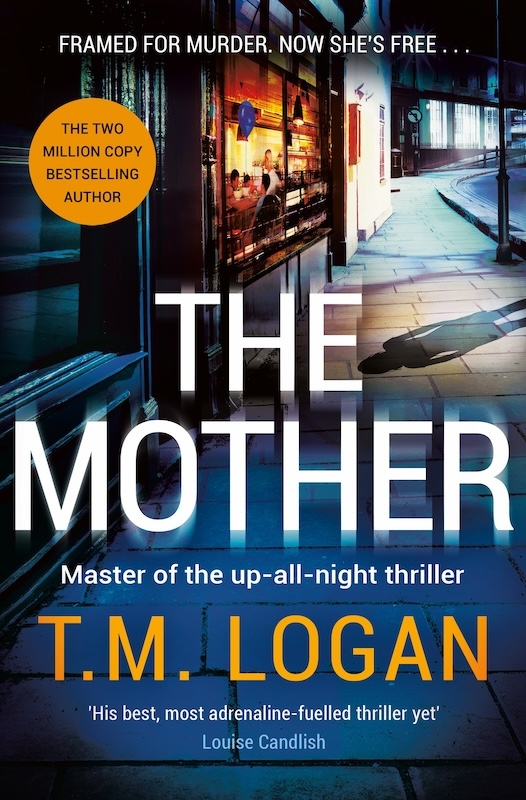
The Mother by T M Logan – a light, escapist thriller and perfect holiday read

Another thriller seemed a good choice for the holiday season – something to while away the minutes between basting the turkey and digging out the good crystal. And this one certainly suited the day. An easy read with short chapters so you can pick up where you left off, and an opening scene that has you hooked from the beginning – a woman, assumedly the ‘mother’ of the title, watching her own funeral.

Yes, I’m sure this has been done before, but it’s always interesting to see a funeral from the late departed’s point of view. But for Heather (yes, another book about a Heather!), hiding behind heavy-framed glasses and dyed hair, she has the pain of seeing her own children for the first time in years and they are visibly distressed.

The story flips back to Heather’s former life, ten years before, when she was a busy mother of young boys, with a career in HR and a husband, Liam, who is a rising MP. They have a pleasant home in Bath, and it would seem a charmed life, if a little hectic. Then, one evening, once the children are in bed, Heather discovers Liam is hiding something from her – he’s unusually evasive and there’s the scent of cologne on his clothes. The two argue. Next morning Heather wakes to find her husband dead.

The story flips forward again and we’re with Heather as she’s released from prison. She’s on parole after serving a nine-year sentence, sharing a room at a hostel with three other women, and with serious conditions surrounding her release. These include keeping away from witnesses from her trial, and from her boys. How is she going to clear her name, let alone be a mother again?

Until Liam’s murder, I had never really appreciated how privileged I was – and what it might be like to lose that privilege overnight. Because from the moment Liam died, all of it – the police, the press, the courts, the system – had turned against me. And from the moment the guilty verdict was read out, I became the enemy, the outsider, the other, to be feared and reviled and never to be trusted again.

Heather is really up against it. Her former middle-class life is in tatters, and she has no one to turn to – her mother now dead and her in-laws refuse to have anything to do with her. Slowly she builds up a support group – Owen Tanner, the journalist who has never given up on her case and fellow hostel inmate, Jodi – a woman from the other side of the tracks. She even manages to convince sister-in-law Amy to help.

The story gathers steam as Heather pieces together facts from her case, helped in part by those Tanner has garnered that reveal something shady within Liam’s constituency office. The appearance of heavies that follow and threaten her would suggest that someone has got something to hide. Heather has to risk breaking the conditions of her parole again and again. Can she discover the truth before she’s sent back to prison?

T M Logan really knows how to plot an enthralling thriller that keeps you turning the pages. The unmasking of the killer near the end packs quite a surprise in a nail-biting finale. The character of Heather is an ‘everywoman’ type you can empathise with. Subordinate characters are interesting too, if a little lightly drawn. My only quibble is how did the police get it all so wrong. Why didn’t Heather’s defence team put up more of a fight? All the evidence seems to be circumstantial. On the other hand, perhaps this happens a lot more than we know. We hope the system is a fair one, but is it really?

The Mother is a pacy, escapist read, well-written and with engaging characters. But after A Bird in Winter it seemed a little ordinary. Oh, well. You can’t have everything. I’ll probably pick up another by this author when I want a book I can easily get lost in. This one’s a three-and-a-half star read from me.

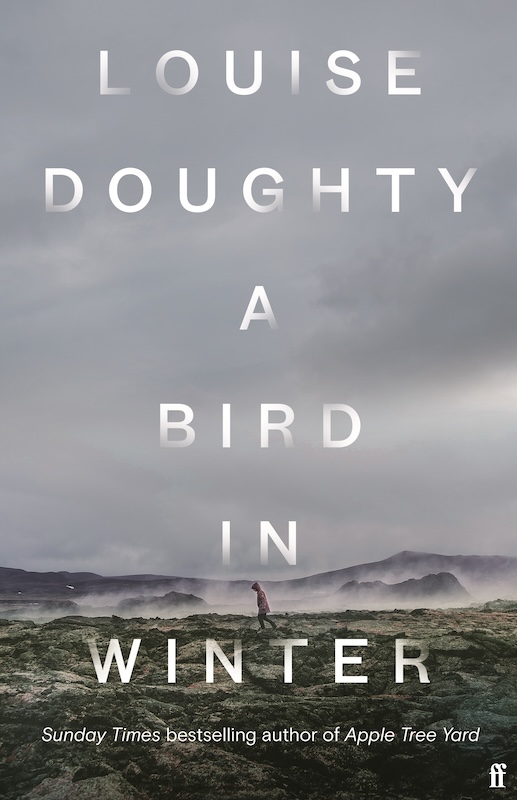
Book Review: A Bird in Winter by Louise Doughty – a pacy thriller that’s more than meets the eye

I’ve heard so many recommendations of Louise Doughty’s novels, among them Apple Tree Yard, which was also televised. So when A Bird in Winter appeared I snapped it up, expecting an intelligent thriller and for the most part I wasn’t disappointed.

The Bird of the title is Heather, nicknamed by her father who was a former intelligence officer in the British Secret Service. Heather makes a roundabout entrance into the service, too, shoulder-tapped and mentored by Richard, her father’s own former protégé. When the story begins Heather is a high-ranking official in the service, working out of an office in Birmingham that has been set up recently to seek out agents who have ‘turned’. A signal at a meeting and Heather abruptly leaves the building and goes on the run.

It’s a compelling beginning. We read with bated breath as Heather collects a stashed bag all set up for such an eventuality. There’s money, a burner phone, a fake passport and a couple disguises – she can be a homeless person one moment, or morph into a middle-aged hiker the next. She hops on and off trains and heads north for Scotland. So far, so James Bond.

Only it isn’t. This isn’t a convoluted espionage thriller, full of action set pieces and a showdown with the baddies at the end complete with guns and random mayhem. Although there is a storm at sea. As Heather waits out the time it will take for her rescue, the story slips into the past – Heather’s spell in the army which is where she meets Flavia. Heather and Flavia become like sisters, sticking up for each other against the misogyny they face daily. Then there’s the special connection Heather has with Flavia’s daughter, and events that lead to them losing contact.

The plot then picks up as Heather tries to piece together the clues to her betrayal, the weakness that was exploited and the treachery that has left her out in the cold. She still has one or two friends who will help her, but she knows she’s on borrowed time. Will she make it out alive?

  He was there that morning to give a PowerPoint presentation about various cases he had been involved with. We had quite a few of these sessions, historical examples of successful missions and, sometimes, the unsuccessful ones, everything that could and had gone wrong. In those talks, we got to learn from the missions the public never hears about – the terrorist attacks that were foiled and how, the demonstrations where invaluable intel was garnered, and why.
  And sometimes, we got to learn about the things that had been missed, the real reasons six or fourteen or thirty-two people had lost their lives when nobody should have died. The men and women who gave those talks had something haunted about them, sometimes apologetically so, sometimes tinged with defiance. Ancient Mariners, all of them.

While there is a lot going on and plenty to keep you turning the pages, A Bird in Winter is a subtler kind of thriller. Doughty takes her time with Heather, showing her as a multifaceted character – a woman who has sacrificed much for her career, and it’s lonely at times. She has all kinds of regrets, particularly around relationships, including Flavia, and also her mother. As a reader you want to like her, and so you become desperate for her to survive, to be able to start a new life, a happier life even.

We get brilliantly evocative settings as Heather adapts to her surroundings, as well as scenes of quiet domesticity, where she tries to be a normal person. But always in the background is the ever present danger. It’s a clever balancing act, and it makes you imagine yourself in Heather’s shoes. There’s also a darkness here, in the cold side of Heather’s make up, which means she can do what it takes, as well as the ever present violence that is for the most part just off stage.

This is such a well written and satisfying novel, definitely a slow-burner, and one that takes its genre into a more literary sphere. I shall be eager to read more by Louise Doughty. A Bird in Winter is a four out of five star read from me.

Book Review: The Patient by Jane Shemilt – a creepily suspenseful novel with two picturesque settings

I felt sorry for Rachel from the first page of Jane Shemilt’s latest novel. Rachel’s a respected GP, and lives in the picturesque town of Salisbury with her teacher husband. But things are distant between them – a spark has died and life’s a bit dreary. And then there’s the daughter – Lizzie, who scarcely talks to Rachel, harbouring a grudge about the lack of quality time Rachel was able to give Lizzie growing up.

But that’s not the problem. The problem is Rachel has stepped over the line with a patient and now her world’s in chaos. She wasn’t even supposed to be working when a suicidal patient turned up at the medical centre. Rachel recently lost a patient to suicide, so gives Luc plenty of time, listening as he pours out his heart. When Rachel discovers Luc is a new neighbour, having renovated the old house she remembers belonging to a childhood friend, she also meets his glamorous American wife, Ophelia, and her charming brother and Ophelia’s little boy. The perfect family – or are they?

Luc has a everything, it seems, but he and Rachel are drawn to each other but, as we all know, doctors aren’t supposed to embark on relationships with their patients – especially vulnerable ones with a mental illness. We meet Rachel as she’s recollecting everything that happened in the months preceding – her lawyer has told her to write it all down while she’s in custody. As a reader we realise that Luc has gone off the rails, that a terrible crime has been committed and somehow Rachel’s involved.

The plot see-saws in time, back and forth, filling in the gaps – Rachel’s fear she’s being followed, her tricky relationship with a woman at work, an obsessive patient, her escape to a conference in France and her affair with Luc. It seems nobody’s on her side – apart from her dear neighbour Victoria, but she’s away on photo shoots a lot or off caring for a dying mother.

As the narrator, Rachel is the perfect character for a story like this. She’s intelligent, obviously, but very trusting, so the plot delivers plenty of surprises as facts rise to the surface. As a reader you are in the position of constantly yelling, look out behind you! And why is she so vague about whether or not she locked up her house? She really needs to be more careful. But she also seems to know her stuff as a doctor – you can tell Jane Shemilt’s own work as a GP inspired her story.

The setting is gorgeous. As well as Salisbury it takes you to the South of France, and the countryside around Arles, where Van Gogh painted his sunflowers. Luc’s mental illness is a kind of echo of Van Gogh’s. But inside of a prison cell is not so nice, particularly when you’re on the cusp of losing everything.

The Patient is a well put-together, nicely written addition to psychological thriller genre. There are plenty of surprises and the before and after timeframe maintains suspense nicely. I enjoyed the novel as an audiobook, read by Hilary McLean, who gave the character of Rachel just the right tone. It’s very easy to binge on psychological thrillers like these, they can be so compelling, particularly the good ones. The Patient is a four star read from me.

Book Review: The Last House Guest by Megan Miranda – a twisty tale, nicely turned, with a determined young protagonist

These psychological thrillers – or domestic noir, as they’re sometimes called – can become quite addictive. Megan Miranda’s novel The Last House Guest is a nicely-turned mystery full of suspense and that often used device of scenes from before woven in with those after. What starts out as a story of a young woman investigating the death of her best friend soon turns into a complex tale of family secrets, power and money.

Avery works for the Loman family who rent out summer cottages in the coastal town of Littleport, Maine. Every summer, the town is bursting at the seams with wealthy summer visitors, Avery doing the donkey work of managing these short-term tenancies, the Loman parents with other fish to fry back in Connecticut. At the end of the season, the younger Lomans – Sadie and Parker – organise a Plus-One party at one of the houses, until one year the party ends in disaster.

Nobody saw Sadie Loman at the last party, but somehow she has ended up lifeless in her party clothes at the bottom of a cliff. Avery doesn’t believe for a moment that Sadie killed herself, and Avery should know, they’d been best friends for years. The story flips back to fill in Avery’s story – the loss of her parents in a car crash, her wild teen years, and her rescue by the Lomans. And then there’s her friendship with Sadie and how it faltered not long before the party.

It was hard to simultaneously grieve and reconstruct your own alibi. It was tempting to accuse someone else just to give yourself some space. It would have been so easy. But none of us had done it, and I thought that was a testament to Sadie herself. Than none of us could imagine wanting her dead.

Odd things start to happen – electricity gong out, a break-in at one of the cottages. Another renter complaining that someone had lit some candles in their cottage while they were out. When Avery finds Sadie’s phone, shortly before a special remembrance ceremony for Sadie, Avery starts to piece together the events leading up to her death.

There’s a lot for Avery to worry about. If there’s a killer out there, she is surely in danger and she has no one she can trust. And her falling out with Sadie just before her death means she can’t go to the police without implicating herself. And the police are still sniffing around, Detective Ben Collins always hovering hoping to catch a word.

The story builds to a thrilling ending as more secrets are revealed, more is revealed from witnesses, more lies uncovered. There is enough of a twist at the end to keep the reader guessing, and tempers boil over in a final showdown with the killer. The before and after plotting is a little beguiling at times, but it works in that it reminds you what it’s like to be remembering things in bits or piecing together events as you find out more information.

I found the beginning of the book reminded me a little of Wuthering Heights, which I know seems a little crazy. Avery reminded me of Heathcliffe, a young person given a new chance, a cuckoo in the nest of the wealthy family. Her memories of Sadie veer into being obsessive, she also has a wildness about her, a temper that has got her into trouble in her youth. But then she’s had a rough time of it, losing her family so young. Her situation placing her not quite part of the wealthy Loman clan, but not well-regarded by the townsfolk makes her a maverick character and as such she’s alone and vulnerable. But as a reader, you can never quite know how much you can trust her version of events.

I’ll be happy to pick up another Megan Miranda novel when I feel like another dose of suspense – she does it well. The writing is smart, the characterisation interesting and the story never lets up. The Last House Guest is a four star read from me.

Book Review: The Missing Years by Lexie Elliott – a superbly atmospheric psychological thriller

I was drawn to this novel by by the setting. Not only the rural Scottish village but the creepy old house, a large manse that dates back centuries and a history including blood-thirsty reprisals during the Jacobite rebellion. It’s bound to be haunted, and yes the opening sentence of Chapter One is ‘The Manse is watching me.’

The narrator of the story is Aisla Calder who has taken a break from her high-powered job based in London as a television news producer, following the death of her mother. She’s been left an old house in her mother’s will, but she is unable to sell it because the Manse is co-owned by Martin Calder, her father, who walked out on his family when Aisla was a child. He hasn’t been seen since and nobody knows if he is dead or alive. Also missing is the packet of diamonds he was carrying for the company he worked for. It’s all very suspicious.

Each chapter begins with an imaginary account of where he might have got to, while Aisla sets in motion the legal proceedings to prove that he’s dead. After living in the Manse a short time, she’s somewhat reluctant to stay. Thank goodness her sister Carrie has agreed to come to keep her company while she sorts things out. Carrie is a bright young actress in a play a commuter train’s ride away in Edinburgh, but there is a strain between them. Carrie can’t quite forgive Aisla for not being around as she grew up, not coming to see her on stage.

It’s bad enough having to deal with all the family stuff, the loss of a mother who was a terrific artist, but not at all loving, of an unsupportive relationship with a top TV news reporter, and having to negotiate the tricky waters of living with her sister. But there’s creepy stuff happening at the Manse too. Her neighbour, friendly Jamie drops in unannounced to explain about his weird sister, Fiona, who has a fascination with the place. It’s best she has her locks changed.

I want to feel that I am me, created from pure air, my genes unsullied by ancestry. I want to feel that my thoughts and reactions and decisions are mine and mine alone. But being here, in Scotland, in the Manse of all places, has me feeling the weight of my DNA, of the history and memories and behavioural patterns it carries. Of the impact it has had, or might yet have, on what I think of as me.

Aisla finds in the attic some old photos from before Aisla was born showing Jamie’s parents and her own – obviously friends. But what are those aerial maps all about? And then there are hostile locals to deal with – openly abusive old Morag – and nasty things left on the doorstep. The house doesn’t seem to like Aisla much either – the heating turns itself off, the smoke alarm goes in the middle of the night and the bathroom door keeps banging. Aisla was sure she’d closed the window.

An intelligent woman in her thirties, Aisla should be able to deal with a lot of this stuff rationally. But she’s always so tired and the emotional events of recent weeks have taken a toll. This all adds to the tension as things get more and more worrisome. She’s made friends with other locals, the handsome Ben who’s a bit of a player among them, and talks to Jamie’s father who was the policeman who investigated Martin Calder’s disappearance. If only Carrie hadn’t become so chummy with weird Fiona. It’s as if there’s no one she can really trust and as a reader you can’t help wondering which if them is plotting against Aisla. Elliott instills a nice undercurrent of menace.

It all builds to a dramatic, nail-biting showdown with the malefactor, the house creating an eerie backdrop, to say nothing of the Scottish weather. The Missing Years is a satisfying story, a brilliant psychological thriller, a breezy, engaging read that’s also nicely written. It’s sure to please fans of Ruth Ware and Clare Mackintosh. I’m keen to read more by Lexie Elliott – it’s hard to resist a title like How to Kill Your Best Friend. This novel gets four out of five stars from me.