Book Review: The Winter Guest by W C Ryan – a ghostly murder-thriller amid the Irish troubles

The Winter Guest is my second W C Ryan novel, both books featuring ghosts, or at least characters who are able to see them. This isn’t a genre that normally grabs my interest, but Ryan makes the ghosts not too ghoulish, sometimes helpful and doesn’t let them take over the plot.

Tom Harkin is an intelligence officer for the IRA. It’s 1921 and Tom has been asked down to the funeral of former fiancée, Maud Prendeville, who’s been killed in a rebel ambush outside her home. Maud lived at Kilcolgan House, the run-down home of Lord Kilcolgan, her father. The family had not fared well during the WWI, losing Arthur, Maud’s brother. So there’s that.

And then Maud got caught up in the Easter Rising of 1916, siding with the rebels, which is unusual considering her family background, i.e., Anglo-Irish landed gentry and Anglican. After a narrow escape, she’s supposedly lead a quiet life, having sometime before broken off her engagement with Tom who she’d met at university. Gosh, she’s an interesting victim – it’s almost a shame we didn’t get to meet her properly, before the killer got her.

Maud had been at a card party at her uncle’s, Sir John Prendeville, and had unexpectedly decided not to stay the night – it’s dangerous to be out after dark, as violence erupts in so many ways. Not just the rebels, either. She gets a lift with District Inspector James Teevan, who is also dropping home Maud’s guest, family friend, Harry Cartwright. All three are discovered shot dead, but the IRA rebels swear they left Maud concussed, but still alive.

The elderly couple living at the gatehouse heard a shot go off a few minutes after the original shoot-out. So Tom’s been asked to put his intelligence officer hat on while he’s staying with the Prendevilles for the funeral to find out who murdered Maud. His cover as usual is that he’s an insurance assessor, evaluating a future claim on Maud’s estate.

This is a mystery where it doesn’t matter quite so much whodunit, as whose side they’re on and what secrets they’re hiding. As you read you have to get your head around the politics of the time. Since the Rising the British Army have come down hard on rebel activity, bolstering the local police force (The Royal Irish Constabulary, or RIC) with the Black and Tans recruited from ex-British solders, as well as Auxiliaries, a counter-insurgency unit. In charge of the local Auxies is Major Abercrombie, a shoot first, ask questions later sort of guy. Abercrombie was meant to have been in the car when it was ambushed.

And then there are the ghosts. Tom Harkin, still suffering from PTSD from his time in the war, feels a presence helping him avoid soldiers during curfew. He sees ghosts of men he knows are dead. It’s a shock to meet Sean Driscoll from his old regiment. He thought Driscoll had been killed in the same mortar attack that had wiped out many of his fellow soldiers. But somehow Driscoll survived and now he works for the Prendevilles. There’s a Prendeville ghost too, who Maud’s brother spots just before the ambush, seen only when a Prendeville is going to die.

The Winter Guest is more than an atmospheric country-house mystery – although there’s a ton of atmosphere in Kilcolgan House, with its failing masonry and lingering dead. It’s also a terrific snapshot of a time in history and the pressures of martial law, which seems to bring out the worst in many, and the best in a few. On top of that, Ryan rollicks up the tension as Tom Harkin slowly puts together what happened and why, leading to a nail-biting showdown at the end.

Tom unravels layers and motives, going back in time, plus a bunch of secrets that keep the reader guessing. I wouldn’t mind another mystery for Tom Harkin to solve – he’s an interesting and appealing character. But then I really liked Kate Cartwright from A House of Ghosts too. The author has written some historical fiction as William Ryan, but as W C Ryan, ghosts seem to be the connecting theme, rather than a regular sleuth. It’s an original idea and in Ryan’s skilled hands works really well. I’ll definitely be back for more. The Winter Guest is a four star read from me.
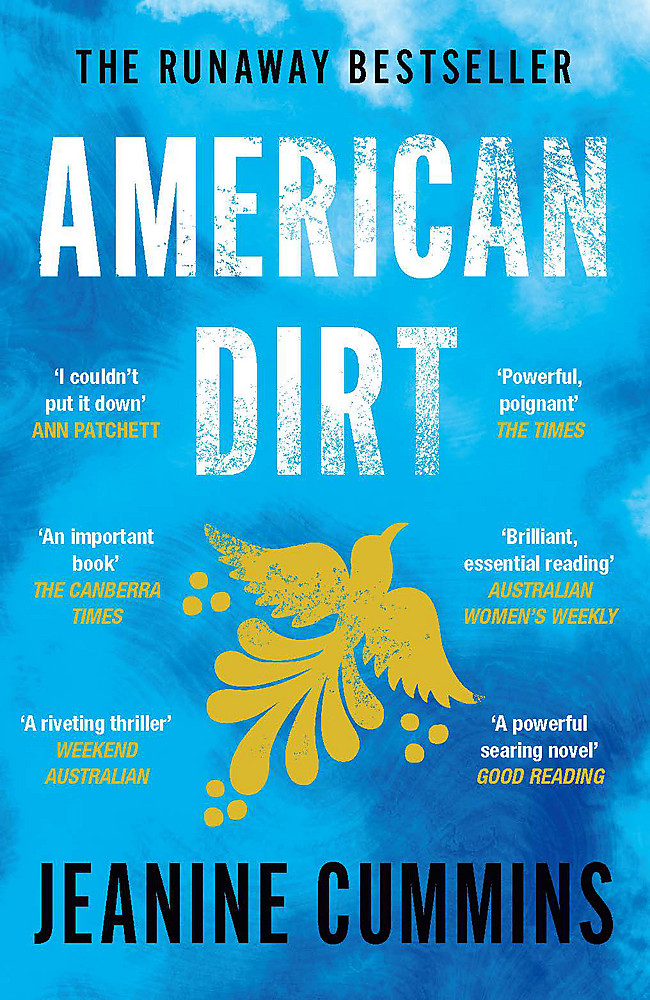
Book Review: American Dirt by Jeanine Cummins – a gritty, believable survival tale you can’t put down

This book came highly recommended, the back cover promising an unputdownable page-turner and in a sense it is. But it is also much more. Picking it up I was instantly caught up in the world of Lydia and her young son Luca, as they hide from drug cartel hitmen who have gatecrashed a barbecue celebration and murdered all her family. That’s sixteen people, including Lydia’s husband, Sebastián. The two hide out in the shower, holding their breath, and as a reader I was holding my breath too.

I held my breath through a lot of this book, actually. The story starts out in Acapulco, where Lydia lives with Sebastián, a journalist who writes exposés on the Mexican drug cartels who hold sway over the country. A fairly new cartel, Los Jardineros, has become dominant in Acapulco, once a peaceful tourist trap, but now its economy is in doubt as visitors stay away. Lydia befriends Javier, a regular visitor to her bookshop who shares her taste in books. Lydia suspects Javier is a little in love with her.

Sebastián writes an article about the cartel, in particular its sophisticated drug lord, a piece that isn’t particularly defamatory, but leaves no doubt about his identity. Even so the family feel no reason to go into hiding, even when Lydia realises who the drug lord really is. This back story is fed throughout the book, little by little, but the main thrust of the plot follows Lydia and Luca’s escape. They have so many near misses, as they first find a way out of Acapulco, then to Mexico City, and on further north in a bid to reach the United States. For the reader, it’s a nail-biting ride.

In another country, you would imagine the police would protect the fugitives, but so many police officers are in the pocket of the cartels, it is impossible to know who to trust. The same thing goes for the people who work at airports, immigration officers and bureaucrats, almost anyone it seems could be on the payroll of Los Jardineros. So using banks and cellphones is out, along with public transport. There is nothing for it but to join the stream of migrants who pass through Mexico from countries further south, like the young girls, Soledad and Rebeca who come from Honduras, and who show Lydia how to ride La Bestia, the cargo trains that head north.

She and Luca are actual migrants. That is what they are. And that simple fact, among all the other severe new realities of her life, knocks the breath clean out of her lungs. All her life she’s pitied those poor people. She’s donated money. She’s wondered with the sort of detached fascination of the comfortable elite how dire the conditions of their lives must be wherever they come from, that this is the better option. That these people would leave their homes, their cultures, their families, even their languages, and venture into tremendous peril, risking their very lives, all for the chance to get to the dream of some faraway country that doesn’t even want them.

Soledad and Rebeca have a harrowing story too, like many of the migrants that ride on top of trains. They must have, to risk their lives like this. It is insanely dangerous and the casualties horrific. And here is Lydia so desperate she is riding La Bestia with her eight-year-old son. At any moment they may be captured and sent back to where they came from. Many of them are, or never heard from again. Then there’s the border crossing to consider, and a trek across the desert. And all the while Lydia cannot be sure she’s not being watched, her movements tracked.

The characters of Lydia and Luca are well rounded and interesting. You get glimpses of Lydia in her shop, educated and well-read, of her life with Sebastián. Luca is a geography nut and uses his knowledge of countries and cities to brilliant effect. Lydia is desperate to protect his innocence and fears he will be scarred for life by these experiences – how can he not be?

It’s a gripping story, made all the more so by the possibility that something like this could really happen. It may be fiction, but it reads true and the migrant experience seems to be well-researched. Sometimes the novel form works well because it puts you in the shoes of someone who may not be so very different from you, who is driven to extreme actions by impossible circumstances. American Dirt is well worth picking up, but it may keep you up at night, so be warned. It will certainly give you a lot to think about. It’s a four and a half star read from me.

Classics Club Spin: Agnes Grey by Anne Brontë – a quieter Brontë novel but still a gripping read

Anne Brontë is probably the lesser read of the three Brontë sisters, with Charlotte Brontë’s Jane Eyre and Emily Brontë’s Wuthering Heights constantly turning up on our screens, reimagined for new generations of viewers. The characters of Mr Rochester and Heathcliffe, in many ways more anti-heroes than heroes, are impossible to forget, to say nothing of the dramatic reversals of fortune that make the stories so enthralling, the stirring settings, the passion.

We have a more restrained story here with Agnes Grey, the eponymous character based on Anne Brontë’s own experiences as a governess. Agnes is only nineteen when her father, a country parson, loses a small fortune to speculation. Thanks to her mother’s careful management, there is no pressure for the family to do anything other than hunker down and budget carefully to get them through. But Agnes is a plucky young thing and sees this as an opportunity to help her family out and see something of life. She decides to be a governess and sets off for Wellwood and the Bloomfield family.

Her first placement is a rude awakening. The Bloomfield parents are disengaged and unloving, the four children running their nurse ragged. Little Tom Bloomfield is arrogant and cruel, particularly to any wild animals he comes across. Agnes is supposed to teach Tom and his sisters Mary Ann and Fanny, but is ignored by her charges. She’s not allowed to punish them either. She soon realises that she earns no respect from above stairs, nor any support from the the staff below. It’s a lonely life, but she’s determined to give it her best. To her chagrin, Agnes is dismissed after two terms for incompetence.

Her second post is not a lot better. Horton Lodge is the home of the Murrays, who have two teenage daughters, Rosalie and Matilda and their younger brothers John and Charles, all terribly indulged, the youngest boy too lazy to learn anything. Matilda who has learnt to swear from her father, does anything to escape the schoolroom for the stables. Things become easier when the boys are sent off to school, their parents realising Agnes is unable to teach them. It doesn’t matter so much for the girls, it seems, so long as they develop good manners that will stand them well in society.

I sometimes felt degraded by the life I led, and ashamed of submitting to so many indignities; and sometimes, I thought myself a precious fool for caring so much about them, and feared I must be sadly wanting in Christian humility, or that charity which sufferereth long and is kind…

Poor Agnes. She’s intelligent, but so young to have to deal with the conniving of her arrogant charges. While in Agnes we see the plight of an impoverished gentlewoman and the lack of options for earning a living, well-to-do young ladies don’t seem to fare much better. Rosalie at eighteen is soon to be married off and her mother has her sights set on a local baronet, without consideration for her daughter’s happiness. Rosalie responds by flirting like mad with all the eligible males in the area, including the curate Agnes has fallen for. It shows Rosalie up as capricious and spiteful, but you can’t entirely blame her.

Anne Brontë’s The Tenant of Wildfell Hall is considered the stronger of the two novels she produced during her short life. I read somewhere it was the first really feminist novel, dealing with a woman who escapes her drunken, abusive husband – it caused quite a furore at the time. But this novel about a young woman’s struggles to make a life for herself is still interesting. I found it an engaging read and quite zoomed through the pages to see if things would improve for Agnes.

I am endlessly fascinated by the Brontë’s, and was happy to pick this up when it turned out to be the book selected for my Classics Club Spin challenge. (I had to read number 2 on my list). Head over to The Classics Club if you want to take up the spin challenge too.

Book Review: The Headmaster’s Wife by Thomas Christopher Greene – a riveting story, artfully crafted

I’d heard a few recommendations of this 2014 novel set in a New England school. You get to the middle and suddenly you can’t put it down, people told me. And yes, in a way, that was true.

The Headmaster’s Wife is the story of a marriage in trouble, set in the enclave of a small private prep school, a claustrophobic world where privacy and personal freedom can be in short supply. Tradition holds sway at Lancaster, an exclusive boarding school for wealthy students aiming for Ivy League universities. A few scholarships bring in students from poorer backgrounds, such as Betsy Pappas, a brilliant student from a small town north of Lancaster, the product of hippy parents, and Russell Hurley, a plumber’s son who is there because he’s so good at sport.

Not so, Arthur Winthrop. He’s the son of a Lancaster headmaster, and the grandson of a Lancaster headmaster, and carrying on in the same family tradition (a good literature degree from Yale and a teaching career), is now the headmaster of the title. We catch up with Arthur at the start of the book when he’s lost his way. Walking through Central Park in the snow, he has some sort of mental breakdown, removes his clothes, before finding himself in police custody and requested to explain his behaviour.

The story flips back to his obsession with a student, Betsy Pappas, who is not only attractive, but really gets Russian literature. Meanwhile his wife plays a lot of tennis, or spends time in their son’s room, missing Ethan who has disappointed his father by joining the army instead of going to Yale. The succession of Winthrops as Lancaster headmasters will likely end with Arthur.

And she thinks perhaps that is what love is: letting someone else see that part of you that shatters like glass… They will grow old together, broken together, and as long as they both don’t completely shatter at the same time, they might find a way to pick each other off the ground.

While the Headmaster’s Wife is about the Winthrops and their marriage, there’s also a mystery/suspense element that keeps you hooked. Communication problems, suppressed feelings as well as power and its abuse hover in the background. I was also reminded of that often quoted line from Philip Larkin’s poem, “This Be the Verse”. You know the one.

To say more would spoil one or two surprises that give the book the impetus that keeps you reading. The story structure is original, and you can’t help but admire the clever storytelling, the fine writing, but the book will tug at your heartstrings too. I was glad of the recommendation to pick this up, as it’s a quiet, unassuming looking book that would have otherwise escaped my radar. The Headmaster’s Wife scores a four out of five from me.

Book Review: Black Rabbit Hall by Eve Chase – secrets and lies in an evocative Cornish setting

I love these novels set in old English country houses, specially when family secrets, heartbreak and mystery are added to the mix. Old houses can add a Gothic quality, as it is with Black Rabbit Hall, although that’s not the house’s real name. Pencraw’s a dilapidated mansion on the Cornish coast, subject to storms and heady summer heat and it’s the home to the Alton family when they’re not in London.

The young Altons are a blessed with loving parents – beautiful Nancy who hails from New York, and Hugo who is struggling to maintain the old house, with its leaky roof and unreliable floorboards. The couple are devoted to each other, and adore their kids: little Kitty, nature-loving Barney, fifteen-year-old Toby and his twin sister Amber who narrates most of the story. Their world comes crumbling down when Nancy dies suddenly in a riding accident, and the children become more wild and unkempt.

Amber does her best to fill in as a mother figure to the two younger children while Toby acts more weirdly than ever. He has a fixation with what to do if civilisation comes to an end – it’s 1968 and the Cold War and the nuclear arms race are all go. He’s a survivalist but not in a good way and argues constantly with his father. It doesn’t come as a surprise when Hugo invites an old flame to visit but it’s a shock when she arrives with her seventeen-year-old son, Lucien. Caroline is the opposite of their warm, spontaneous mother, but she’s got money and might just save Black Rabbit Hall.

The story flips between Amber’s narration and Lorna’s some thirty odd years later. Lorna and her fiancé Jon are looking for a wedding venue, and Amber has a distant memory of visiting Black Rabbit Hall as a child with her mother. There is an emotional pull here for Lorna as her mother has recently died, lacing the memory with nostalgia. Finding the house almost defeats them, but it’s also a shock when they get there and it seems the Hall is not quite ready for hosting weddings, despite what the website says.

Jon and Amber look set to fall out over the Hall, Amber still excited about finding the perfect setting for the wedding, Jon more realistic having noticed the general state of disrepair. Then there is the lack of staff, the house inhabited by the frail and elderly Mrs Alton and Dill, her flustered general factotum. Amber is talked into visiting for a weekend to help make up her mind – no pressure! What she experiences when she’s at the Hall is more about disturbing distant memories and uncovering family secrets that giving the place a trial run. What is it about Black Rabbit Hall that seems to prod deep into her consciousness?

The story slowly comes together as we go back through the years to fill in the gaps as the Alton children have to deal with family upheaval while still grieving for Nancy. Lorna also teases out hints from the past which make her doubt her future with Jon. In each narrative there is a gathering storm and sense of impending doom, which has you galloping through the book to find out what happens. It all comes to a startling and intense ending but there is resolution as well.

For me the book had hints of Daphne du Maurier, not only with the Cornish setting, but with the cruel, Mrs Danvers-like malefactor and the Gothic qualities of the house. Chase also does a great job with the family dynamics, particularly the way she writes about siblings and the intense connections between the twins, the pressure on the older sister to keep things together and the difficulty for her to be her own person.

Black Rabbit Hall is the perfect read if you like old country house mysteries and evocative settings. The characters are easy to empathise with, honestly they break your heart, and there is an interesting dichotomy between long summer days where nothing seems to happen and events hurtling characters into rash behaviour. This is my second Eve Chase novel – I’d previously enjoyed The Wilding Sisters – and it didn’t disappoint. I’ll be heading back for more. Black Rabbit Hall (which incidentally won the Saint Maur en Poche prize for best foreign fiction) gets a four out of five from me.

Reading the Classics: My Hope-to-Read List from Classical Literature

The good folk over at The Classics Club are doing a great job of encouraging readers to seek out those books we might call ‘classical literature’ and give them a go. There are plenty of Books to Read Before You Die compilations out there but with all that wonderful new stuff being published all the time, it’s easy to forget about the ones we collect at church fairs with good intentions of crossing them off the list.

The good ones never really go away and publishers such as Penguin with their orange series, Virago’s Modern Classics (Hachette) and Persephone Books bring out lovely new editions that can be addictively collectible – to say nothing of public libraries. The Classics Club offers a chance to keep them on your radar with online discussion and sharing part of the deal. But first you have to make a list.

I confess my list is roughly thrown together and in no particular order. I have included a mix of books that are obvious classics and quite a few from early to mid 20th century women authors – a particular interest of mine. There are some I’ve read before and want to read again to see if I still like them. Tweaking and adding to the list is also a possibility. This is what I’ve come up with so far:

  1. Sanditon by Jane Austen 
  2. Agnes Grey by Anne Bronte 
  3. North and South by Elizabeth Gaskell 
  4. Elizabeth and Her German Garden by Elizabeth Von Arnim 
  5. Kim by Rudyard Kipling 
  6. The Return of the Soldier by Rebecca West 
  7. My Antonia by Willa Cather 
  8. The Happy Foreigner by Enid Bagnold 
  9. Open the Door by Catherine Carswell 
  10. Pomfrett Towers by Angela Thirkell 
  11. Diary of a Provincial Lady by E M Delafield 
  12. Frost in May by Antonia White 
  13. Company Parade by Storm Jameson
  14. Full House by M J Farrell (Molly Keane)
  15. The Weather in the Streets by Rosamond Lehmann
  16. Silas Marner by George Eliot
  17. Brideshead Revisited by Evelyn Waugh
  18. The End of the Affair by Graham Greene
  19. Cider with Rosie by Laurie Lee
  20. The Group by Mary McCarthy 
  21. A Question of Upbringing by Anthony Powell
  22. Friends and Relations by Elizabeth Bowen
  23. The Sweet Dove Died by Barbara Pym
  24. Victoria Cottage by D E Stevenson
  25. The Corner that Held Them by Sylvia Townsend Warner
  26. The Wings of a Dove by Henry James
  27. Of Human Bondage by W Somerset Maugham
  28. The Beat of the Heart by Elizabeth Bowen
  29. Cold Comfort Farm by Stella Gibbons
  30. Miss Pettigrew Lives for a Day by Winnifred Watson
  31. Justine by Alexander Durrell
  32. Chéri by Colette
  33. Harriet Hume by Rebecca West
  34. The Bell by Iris Murdoch
  35. Three Men in a Boat by Jerome K Jerome
  36. Round the Bend by Neville Shute
  37. The Women’s Room by Marilyn French
  38. The Grass Is Singing by Doris Lessing
  39. The Midwich Cuckoos by John Wyndham
  40. Song of Solomon by Toni Morrison
  41. We Have Always Lived in a Castle by Shirley Jackson
  42. The Scarlet Letter by Nathaniel Hawthorne
  43. Sons and Lovers by D H Lawrence
  44. The Sun Also Rises by Ernest Hemingway
  45. True Grit by Charles Portis
  46. Rob Roy by Sir Walter Scott
  47. Lorna Done by R D Blackmore
  48. Watership Down by Richard Adams
  49. The Sound and the Fury by William Faulkner
  50. Memoirs of a Fox Hunting Man by Sigfried Sassoon
  51. Tender Is the Night by F Scott Fitzgerald
  52. Their Eyes Were Watching God by Zora Neale Hurston
  53. The House on the Strand by Daphne du Maurier
  54. Harriet Said by Beryl Bainbridge
  55. Nightingale Wood by Stella Gibbons
  56. A Christmas Carol by Charles Dickens
  57. King Solomon’s Mines by H Rider Haggard
  58. To the Lighthouse by Virginia Woolf
  59. A Town Like Alice by Nevil Shute
  60. Green Dolphin Country by Elizabeth Goudge
  61. Revolutionary Road by Richard Yates
  62. Cranford by Elizabeth Gaskell
  63. The Foundling by Charlotte Brontë
  64. The Warden by Anthony Trollope
  65. Squadron Airborne by Elliston Trevor
  66. A Game of Hide and Seek by Elizabeth Taylor
  67. The Land of Spices by Kate O’Brien
  68. Green Hands by Barbara Whitton
  69. Lotte in Weimar by Thomas Mann
  70. Stoner by John Williams
  71. Under the Net by Iris Murdoch
  72. ‘The Forsythe Saga by John Galsworthy
  73. A Buyer’s Market by Anthony Powell
  74. The Acceptance World by Anthony Powell
  75. At Lady Molly’s by Anthony Powell
  76. Casanova’s Chinese Restaurant by Anthony Powell
  77. The Kindly Ones by Anthony Powell
  78. The Valley of Bones by Anthony Powell
  79. The Soldier’s Art by Anthony Powell
  80. The Military Philosophers by Anthony Powell
  81. Books Do Furnish a Room by Anthony Powell
  82. Temporary Kings by Anthony Powell
  83. Hearing Sweet Harmonies by Anthony Powell
  84. The Doves of Venus by Olivia Manning
  85. South Riding by Winifred Hotly
  86. One Pair of Hands by Monica Dickens
  87. Perfume by Patrick Suskind
  88. A Year in Provence by Peter Mayle
  89. Out of Africa by Karen Blixen
  90. How I live Now by Meg Rosoff
  91. Love in a Cold Climate by Nancy Mitford
  92. Goodbye to All That by Robert Graves
  93. Music in the Hills by D E Stevenson
  94. Susan Settles Down by Molly Clavering
  95. Quartet in Autumn by Barbara Pym
  96. All Passion Spent by Vita Sackville West
  97. O Pioneer! By Willa Cather
  98. The Rainy Moon and Other Stories by Colette
  99. Mandoa, Mandoa! by Winifred Hotly
  100. The Age of Innocence by Edith Wharton
  101. The Old Curiosity Shop by Charles Dickens
  102. Our Mutual Friend by Charles Dickens
  103. A Passage to India by E M Forster
  104. Howard’s End by E M Forster
  105. A Room with a View by E M Forster
  106. Jamaica Inn by Daphne du Maurier
  107. The Harp in the South by Ruth Park
  108. Station Life in New Zealand by Lady Barker
  109. Persuasion by Jane Austen
  110. Emma by Jane Austen
  111. To Kill a Mockingbird by Harper Lee
  112. Frankenstein by Mary Shelley
  113. Memoirs of a Geisha by Arthur Golden
  114. The Old Man and the Sea by Ernest Hemingway
  115. One Hundred Years of Solitude by Gabriel García Márquez
  116. Siddhartha by Herman Hesse
  117. The Unbearable Lightness of Being by Milan Kundera
  118. Around the World in Eighty Days by Jules Verne
  119. Midnight’s Children by Salman Rushdie
  120. The Tenant of Wildfell Hall by Anne Brontë
  121. Wuthering Heights by Emily Brontë
  122. The Waves by Virginia Woolf
  123. The Return of the Native by Thomas Hardy
  124. Miss Buncle’s Book by D E Stevenson
  125. The Makings of a Marchioness by Frances Hodgson Burnett
  126. Someone at a Distance by Dorothy Whipple
  127. Cheerful Weather for a Wedding by Julia Strachey
  128. Saplings by Noel Streatfield
  129. At Mrs Lippincote’s by Elizabeth Taylor
  130. The River by Rumer Goden
  131. Kingfisher’s Catch Fire by Rumer Goden
  132. George Beneath a Paper Moon by Nina Bawden
  133. Crewe Train by Rose Macaulay
  134. A Woman of My Age by Nina Bawden
  135. Suite Française by Irène Némirovsky
  136. Thank You, Jeeves by P G Wodehouse
  137. Bonjour Tristesse by Françoise Sagan
  138. The Nine Taylors by Dorothy L Sayers
  139. Everything that Rises Must Converge by Flannery O’Connor
  140. Wide Sargasso Sea by Jean Rhys
  141. The Prime of Miss Jean Brodie by Muriel Spark
  142. The Girls of Slender Means by Muriel Spark
  143. The Garden Party and other stories  by Katherine Mansfield
  144. Nor the Years Condemn by Robin Hyde
  145. The Godwits Fly by Robin Hyde
  146. Kidnapped by Robert Louis Stephenson
  147. The Golden Notebook by Doris Lessing
  148. The Shrimp and the Anemone by L P Hartley
  149. The Sixth Heaven by L P Hartley
  150. Eustace and Hilda by L P Hartley

Reading the Classics Part 2 -Another Classics Club Spin Challenge

Here’s my list for another round of the Classics Club Spin Challenge, the top twenty classic novels I’d be happy to read. The Classics Club choose a number, and I’ll read the corresponding title.

My list is inspired by a number of things. There are the books I’ve always meant to read (Sanditon, Kim, My Antonia and something by Graham Greene). There are books I read long ago and want to know if I still like them as much as I did then (The Happy Foreigner, Open the Door, Frost in May, Cider With Rosie and The Group). Then there are books that have been knocking around on my bookcases gathering dust. These include books in the Virago Modern Classics collection that I picked up at a waterfront stall way back when and forgot to read (Company Parade, Full House, The Weather in the Streets). I’ve always particularly loved books from the inter-war years from a woman’s perspective and the Virago books of this era include some absolute gems. Hopefully, one or two will appear in the spins to come.

If the challenge proves half as much fun as narrowing down my selection, I’ll be quite happy. Here’s my list:

  1. Sanditon by Jane Austen, 1817
  2. Silas Marner by George Eliot, 1851
  3. North and South by Elizabeth Gaskell, 1854
  4. A Tale of Two Cities by Charles Dickens, 1859
  5. Elizabeth and Her German Garden by Elizabeth Von Arnim, 1898
  6. Kim by Rudyard Kipling, 1901
  7. The Return of the Soldier by Rebecca West, 1918
  8. My Antonia by Willa Cather, 1918
  9. The Happy Foreigner by Enid Bagnold, 1920
  10. Open the Door by Catherine Carswell, 1920
  11. Diary of a Provincial Lady by E M Delafield, 1930
  12. Frost in May by Antonia White, 1933
  13. Company Parade by Storm Jameson, 1934
  14. Full House by M J Farrell (Molly Keane), 1935
  15. The Weather in the Streets by Rosamond Lehmann, 1936
  16. Pomfrett Towers by Angela Thirkell, 1938
  17. Brideshead Revisited by Evelyn Waugh, 1945
  18. The End of the Affair by Graham Greene, 1951
  19. Cider with Rosie by Laurie Lee, 1959
  20. The Group by Mary McCarthy, 1963

Book Review: A Tidy Ending by Joanna Cannon – a beguiling psychological dramedy

You never quite know what you’re getting yourself into when you pick up a Joanna Cannon novel. Each is unique, but there’s a few common themes. The Trouble with Goats and Sheep has two young girls concerned with the disappearance of a neighbour and what unravels in their cul-de-sac during a simmering 1970s summer. Three Things About Elsie is set in a retirement village with its elderly protagonist trying to keep a grip on reality while haunted by a secret from the past. A vein of dark humour runs through both books and it is the same here with A Tidy Ending.

Linda just wants to be like other women she sees in the catalogues delivered to her new house, addressed to Rebecca Finch. Rebecca used to live in the house Linda and Terry have just moved to – just around the corner from their old house. In her early forties, Linda’s either wearing the same old housecoat she’s had for decades, or clothing from the charity shop where she works part-time. According to her mother, she’s just too ‘big boned’ to aspire to anything more glamorous. But surely there’s more to life than pushing the hoover around and fish-fingers for tea.

Although she’s married to Terry, it’s a lonely kind of marriage and Linda doesn’t have any friends. She tries to suggest going for a coffee with Ingrid down the road, but Ingrid just never quite has the time. You can’t help wondering if it’s because of something that happened to Linda when she was a child and the terrible events around the death of her father. Meanwhile, a young woman has been strangled nearby. There’s nothing like a murder to get the neighbours talking and Linda and her mother are soon swept up in speculation. Even Terry, normally sat in front of the telly watching sport, takes an interest.

The story follows the extraordinary lengths Linda goes to make friends with Rebecca Finch. Meanwhile another girl is murdered amid talk of a serial killer lurking in the neighbourhood. We learn more about Linda’s childhood in Wales and what happened to her father. Threaded through the narrative are chapters that seem to be set in a ward for the mentally ill. There are a lot of loose ends to tie up before any hint of the story’s ‘tidy ending’.

There’s a tinge of humour running through Linda’s narrative and even though she’s not the easiest character to like, you can’t help feeling some empathy for her. Will she manage to sort out her life and get what she wants or is she doomed to be misunderstood, disliked or even stuck in ongoing mental care? The characters around her – the fussy, demanding mother; the nosy, busy-body neighbour Malcolm – are beautifully observed, but it takes a lot of concentration to keep up with what’s going on in the story. So even though Linda is such an awkward character, you can’t help wanting to know what happens to her and you race towards a stunning and unpredictable ending.

I love the way Joanna Cannon combines sharp psychological observation with clever plotting and she’s done it here again. I’m not quite sure what genre this – is it a ‘domestic’ thriller? A dark comedy? Or something unique of Cannon’s own devising. Whatever it is, she’s a breath of fresh air – original and hugely entertaining. A Tidy Ending scores a four out of five from me.

Book Review: All Among the Barley by Melissa Harrison – a compelling historical novel set in rural England

I’ve heard so much to recommend this novel and the setting of 1930s Suffolk also was appealing. It’s the story of Edith Mather who is fourteen during the summer of 1934 and everything’s gearing up towards harvest time. Her parents are tenant farmers with the help of John, who survived the battlefields of WWI, and Doble, their old farm hand. Edith’s brother Frank helps too and at seventeen is courting a local girl, his future mapped out for him. Older sister Mary is already married and has a baby, so Edith’s future seems set to follow in a similar direction. Alf Rose on a neighbouring farm already has his eye on Edie.

Then Connie FitzAllen arrives on the scene, visiting farms to research the old rural ways, with plans to write a book – her articles appearing in journals as Sketches from English Rural Life. Her fear is that farming traditions might be lost as mechanisation becomes widespread, farmers’ wives buy bread from the bakery instead of making their own and the conveniences of canned goods change the way people prepare meals. Connie takes a shine to Edith, who shows her round the village, and helps the visitor any way she can. To be fair, Connie lends a hand with the harvest, but what is her secret agenda?

Sketches from English Rural Life –

There is surely no better repast than country dishes, innocent of the fashions of the modern age. They may not be refined, but here there is good, wholesome food such as may be found on every English farm where butter is churned by hand, cheese is made, and bread is daily baked.

The story is told through Edith’s eyes and she’s an engaging narrator. She’s intelligent – her old teacher would have liked to see her study further, giving her exercise books to encourage her to write. But Edith’s needed on the farm. There’s all that laundry every Monday, and the chickens to care for as well as all the work to help bring in the harvest. It seems everyone has Edith’s time organised for her, including the incomer, Connie. No wonder she’s getting into a bit of a state.

But then all the characters are interestingly complex. Edith’s father seems to be under pressure – making the farm pay isn’t easy. There’s the depression after all, and he’s one of those typical men of his time who bottles up his feelings, resulting in sudden rages. Edith’s mother suffered as a girl as her mother was considered a bit of a witch. Connie is also complex, with her intense fondness for both Edith and her mother, her ability to charm even the stolid menfolk with her talk of politics and new ideas, though not at the expense of rural traditions, of course.

And then there’s the countryside. Harrison describes it in lush detail that makes you feel you are there, not just the flora and fauna as she sees it, but how it changes with the seasons, or even as day turns to night. She has a very distinctive voice and it doesn’t surprise me that her website describes her both a “novelist and nature writer”.

Our barley was well along now, flaxen from a distance and with the beards tipping over almost as we watched. The wheat, too, was ripening: the stalks were still-blue-green, but the tops of the ears were fading to a greenish-yellow, a tint that would become richer and spread down the ears as they fattened to finally gild the stalks and leaves. Then the sound of the cornfields would alter: dry, they would susurrate, whispering to Father and John that it was nearly time. The glory of the farm then, just before harvest: acres of gold like bullion, strewn with the sapphires of cornflowers and the garnets of corn poppies and watched over from on high by larks.

But in this idyllic setting there are darker dramas afoot, a hint that one war has past leaving its scars on people, while we are aware of another just around the corner. The characters meanwhile have their own more immediate issues creating so much strain that things seem set to boil over. This causes enough tension to sweep the reader along towards an ending you might not quite be prepared for. It’s a great historical read – a combination of characters you can feel for, great writing and a brilliant recreation of time and place. I can see why All Among the Barley has been so well reviewed. I can’t think of anything I didn’t like about so it’s another five star read from me.

Book Review: The Reindeer Hunters by Lars Mytting – the second book in an gripping historical trilogy

It can be tricky reviewing the middle book in a trilogy without giving away key events from the previous book. I read the first book earlier in the year and was captivated by the story of a small town in remote Norway, the ill-fated love-triangle, and the legend of the conjoined twin sisters and the church bells made in their honour.

So when The Reindeer Hunters came out, I was eager to pick up where the story left off. I will do my best not to throw out any spoilers, but if you want to read a spell-binding historical series, ignore this post just in case and get cracking with The Bell in the Lake. (Also, as I might have mentioned before, DO NOT read the publisher’s blurb for The Reindeer Hunters if you haven’t yet read The Bell in the Lake as it contains a jaw-dropping spoiler!)

In The Reindeer Hunters, the story has moved on a couple of decades to 1903 and Pastor Kai Schweigaard has become well attuned to the ways of his parish. He has quite a few regrets over events of the previous book but is a kindly man and wise. He formerly struggled to deal with local superstitions, but of late has been obsessed with finding the Hekne weave. This is a tapestry created by the twin Hekne sisters in the early 1600s, hidden away because of its unpopular Doomsday theme and said to foretell the fate of the last village pastor. It is one thing he can do for the woman he loved and lost, particularly as he has fallen out with her son.

Jehans Hekne lives on a small holding, working the land of his tyrant of an uncle to whom he has promised a reindeer. To do this he must set out on forays in the wilderness with his 1848 chamber charger rifle. He lives a simple life but dreams of a better one, or at least a better gun, when he meets another hunter, Victor Harrison, a well-healed Englishman. The two lay claim to having shot the same reindeer, but good-humouredly strike up a bargain: Victor gets his trophy and Jehans the means to get a new gun. A connection sparks between the two men who are oddly similar in spite of the differences of class and nationality.

The story weaves between the three characters with the legend of the bell in the lake hovering in the background. As the story goes, the bell can only be raised from its watery home by two Hekne brothers with no siblings born between them. But how can such myths still survive at a time when change is coming to this forgotten valley? There’s talk of rail opening up the country, and Jehans, who owes his education to the pastor, can’t help thinking about the possibilities of electricity. Victor is mesmerised by flight.

The Reindeer Hunters is another brilliant read. I thought it might be one of those middle-of-a-trilogy books that languishes from the need to fill in a chunk of plot between the promising beginning of the first book before things crank up to a heart-pounding finale in the third. But if anything, I like this book better than the first. It seems to strike a good balance between big events and the development of its characters.

As the story rolled on towards the end, I couldn’t put it down, quite desperate to know how things would turn out for Kai, Jehans and Victor. If things are going to crank up from here in the last book, I’m definitely going to need a cup of tea and lie down afterwards. If you love historical fiction, this trilogy really is a must-read. The Reindeer Hunters gets a rare five stars from me.