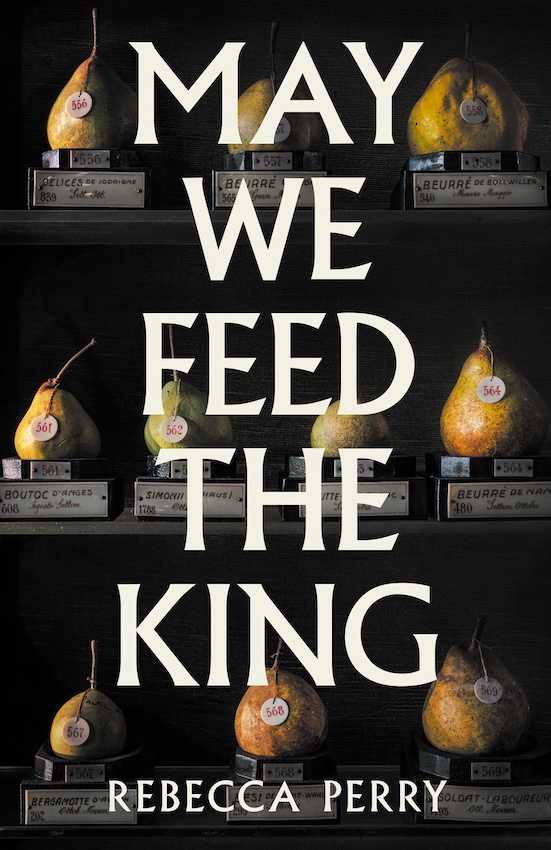
I don’t often get around to reading the entire Booker shortlist but I do like to read at least one or two before the winner is announced. This year there are several that have caught my eye, and this one looked particularly interesting. May We Feed the King is set in a palace over two time frames. Beginning with an unnamed museum curator, we follow her work bringing to life the home and world of a largely forgotten king. She takes her time dressing the rooms, which she aims to look as if someone from the period has just walked out.
We’re in the Medieval era and the work is to commemorate the 750-year anniversary of the palace. There’s a lot of research involved and the curator is devoted to getting everything just right. She has recently suffered a personal loss, and she’s a withdrawn sort of person, which at times makes the people paying her nervous. Only the archivist seems to inspire any softening of her reserve.
In this way she is not completely dissimilar to the King, the reluctant monarch, unprepared and suddenly on the throne following the death of a brother. Both his brothers seem to have taken to leadership with gusto, the eldest having a reputation for bravery and a willingness to go to war, the middle brother learning the ropes and following his advisors’ suggestions. But our new King would rather stroll through the garden, avoiding calls from his advisors to act.
We follow the King’s story which is told in snippets, often asides of what a courtier saw, what an attendant heard. Facts and the truth are hard to pinpoint, while rumour and gossip run amok. And you can hardly blame people, when the King is so reluctant to put himself forward, to make a declaration or even to present an opinion. Just one attendant seems to have earned his trust, a young man who was there when his brother died.
When the King’s shock has settled, he finds that his other feelings come into focus.
Loneliness, like a terrible cave.
His companions from before he was King, select though they were, now bow to him, and won’t turn their backs to leave a room. When he is able to receive their company in his chambers, they are stiff and uncomfortable, despite his assurances.
There are men who seek to attach themselves to power, and there are those who do not. For some, a King is the cure, and for others, he is the disease.
We feel for this king, suddenly having to do a job he has no aptitude or ambition for, as well as the curator trying to find the truth of his time. Was it really like this? How can we be sure that this or that happened as it has been portrayed? These are the thoughts that the author seems to be playing with. It’s a different kind of story that might make you rethink what you imagine when you visit a museum or heritage site or even think about history.
May We Feed the King is beautifully written in a straight-forward, elegant style that suggests thought has been given every word as well as the way the text is arranged. Dialogue is mostly revealed as reported speech. Paragraphs are separated by spaces. So it’s easy to rattle through the book quite quickly, but I felt I could easily read it again and find more to enjoy and more to think about, and with such lovely language, why not? A five-star read from me.


Great review Judith, yes I loved it too… it is beautiful.
LikeLiked by 1 person