Book Review: The Murder of Mr Wickham by Claudia Gray – a cosy mystery that brings back the characters of Jane Austen

You may have noticed there’s quite a collection of novels based on one or other of the six completed novels of Jane Austen. I have read a few and enjoyed them greatly. But Claudia Gray takes this genre to a new level with her delightful mystery, The Murder of Mr. Wickham.

Honestly, if anyone in Jane Austen’s ouevre deserved to be bumped off it is surely George Wickham. He’s that rascal that threatened to ruin Lydia Bennett in Pride and Prejudice, as well as spoiling the marriage prospects of her sisters. He’d almost ruined Darcy’s sister as well. In Claudia Gray’s novel, we catch up with Wickham at a house party, not at Pemberley, the seat of the Darcies, but at Donwell Abbey, the home of Mr Knightly and his wife, Emma, from that other Jane Austen novel.

Guests at the house party include Mr Knightly’s old friend Fitzwilliam Darcy, his wife Elizabeth and their son Jonathan, a handsome but socially awkward young man of around twenty. Then there’s cousin Edmund Bertram and his wife Fanny (from Mansfield Park) as well as the Wentworths, Frederick and Anne (from Persuasion) who were renting Emma’s childhood home when a staircase collapsed and urgent repairs required.

Also joining the guest-list are the Brandons, Colonel Brandon that is and his young wife Marianne (from Sense and Sensibility). That just leaves Northanger Abbey, which is represented by seventeen-year-old Juliet Tilney, the daughter of Henry Tilney and Catherine, now a novelist who Emma admires. Emma has taken a shine to Juliet and invited her so that the girl can see new people and a change of scenery. With Jonathan Darcy staying, here’s also a hint of Emma’s propensity to match-make.

So you can see that Claudia Gray has really pushed the boat at to draw on all six novels for inspiration and does a terrific job, throwing Austen’s characters together and seeing what happens.

There’s already a tense atmosphere as Mr Knightly is troubled by the financial losses his younger brother has incurred due to a venture masterminded by none other than George Wickham. The same venture has also caught out Captain Wentworth, losing him a chunk of the money that he won as prizes as a naval officer in the war with Napoleon. It was this money that enabled him to hold his head high against the snobbery of Anne’s family. But without it, he fears he’s let Anne down and they may need to return to sea.

Since Pride and Prejudice George Wickham has had a further twenty plus years to cause misery to the Darcies, and more crimes come out of the woodwork when the bounder turns up at Donwell Abbey to call in some debts. It’s the middle of a stormy night when the murder takes place, the guests all restless and anxious for various reasons.

The only two characters who don’t make the suspects list are young Juliet, who had never met the victim before her visit, and Jonathan Darcy, who spent the night calming his horse in the stables when the storm was at its most severe. They never would have thought of investigating the crime themselves if it hadn’t been for the magistrate of the district, Frank Churchill (remember him from Emma?), who assumes the killer must be among the Donwell staff, or passing “gypsies”. Juliet, in particular, is appalled at the idea of someone going to the gallows unjustly.

The two team up, secretly sharing their findings at midnight in the billiard room, and Jonathan finds it so much easier to talk to Juliet than he might have otherwise, now there’s something practical to talk about. The story has plenty of pace and builds to an unexpected resolution as more and more secrets are revealed. In the crucible of a murder investigation, relationships are tested and new understandings emerge.

I enjoyed The Murder of Mr. Wickham immensely, which has all the wit of an Austen novel, Claudia Gray bringing the characters to life beautifully. The good news is this is the first in what looks like a new series featuring Juliet and Jonathan as unlikely but very appealing sleuths. I’m giving it four and a half stars – the audiobook version is narrated with aplomb by Billie Fulford-Brown – and am keen to see what happens in The Late Mrs Willoughby, which is Book No. 2.

Book Review: The White Hare by Jane Johnson – a haunting country house mystery with a touch of magic

We’re back in Cornwall for another novel set in the 1950s and I was in my happy place listening to this as an audiobook. I often hunt out these evocative country house stories.

The White Hare begins with a family of three arriving to take on a run-down country house with the aim of turning it into a guest-house. Somewhere comfortably-off urbanites might sojourn for a change of pace and some gentle pampering. This is Magda’s idea. In her fifties, Magda is an imperious, demanding and determined woman who won’t take no for an answer.

Her daughter, Mila, passively just does what her mother tells her, hoping to build a home for her and young Janey. But although she has strong feelings, she keeps them in check, because she owes her mother her salvation. A chance for a new start, having been duped by a bigamous husband and left with a five-year-old daughter. Remember, it’s the mid 1950s, when a woman’s reputation was everything.

The house is of course a mess, but in the barn they also discover an unwelcome guest. Jack, the interloper, says he hadn’t meant to trespass; he was just exploring the nearby countryside and would soon be on his way. But Janey has warmed to Jack, and when Jack reveals he can fix their car, and is handy with a hammer and nails, he becomes the women’s saviour when they face one crisis after another.

The locals don’t take kindly to strangers. It is said the house is haunted and when Mila mentions seeing a white hare on the road the day they arrived, all sorts of strange legends start to emerge. Then there’s Jack. He and Mila soon warm to each other, but Jack seems to be harbouring secrets. There’s also a creepy vicar, but fortunately for Mila, friendship and support are on hand from a local healer and her artist girlfriend.

The story follows Magda and Mila’s rocky relationship as they struggle to bring the house into a reasonable state of repair ahead of a lavish New Year’s Eve party Magda hopes will entice acceptance from the locals. The folklore of the area won’t leave Mila alone, and there are odd discoveries that hint at a tragedy involving the previous owners of the house.

To make things even more creepy, Janey seems to have discovered a way of communicating with an otherworldly presence through her toy rabbit. The story builds to a dramatic ending where the real and unreal converge and the present reveals, and can finally bury, past wrongs. The characters of Magda, Mila and Janey are interestingly developed – there’s nothing like adversity to bring people together.

I loved the story – the perfect sort of audiobook, narrated brilliantly by Danielle Cohen – intriguing and full of mystery with a bit Cornish history thrown in. Listening to a book like this takes me back to those old fireside tales that begin with, ‘let me tell you a story’. If you like books by Katherine Webb and Kate Morton, you’re sure to enjoy The White Hare, a four star read from me.

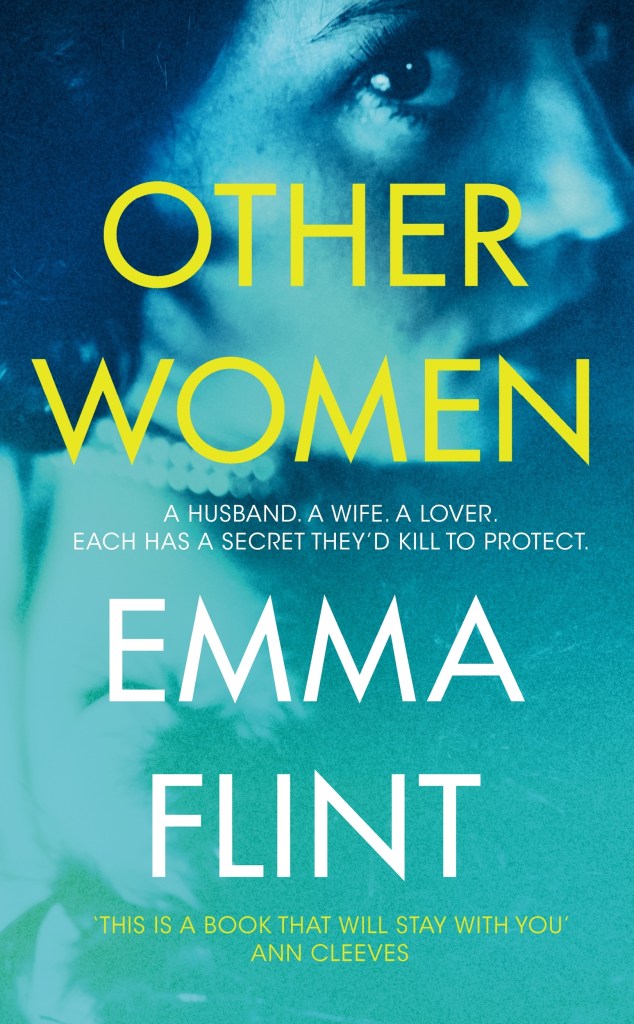
Book Review: Other Women by Emma Flint – a compelling crime story based on true events

I really had no idea what to expect from this novel when I picked it up – the description on the cover – “A husband, a wife, a lover. Each has a secret they’d kill to protect” is more beguiling than informative. Which is a bit of clever marketing probably. But it doesn’t really matter as I was soon caught up in the story which is told from the perspectives of two women.

First we have Bea, who is a working woman in the 1920s, living in a ladies’ club in Bloomsbury. She’s good at her office job and has worked her way up to have some responsibility. At thirty-seven, she feels she’s missed out on marriage and a family, but is happy with her life. She is independent and can afford to treat herself now and then. Her life is sharply compared with that of her somewhat self-satisfied sister Jane, who has married well and is a little sneering of her sister’s London lifestyle.

But at work, everything changes when a new salesman joins the team, the handsome and very charming Tom Ryan. The other girls gossip and flirt with Tom, while Bea keeps her head down and tries to ignore him. But she can’t deny the power of his personality. We follow the affair that develops, how Tom singles out Bea; their shared love of literature and self-improvement. Bea discovers another side to her that she’d mostly ignored, her capacity to love and be loved.

The story interweaves Bea’s story with that of Kate some months later as Kate deals with her husband’s arrest and the court case that follows. She is repeatedly questioned by the police about particular dates and the whereabouts of Tom, while trying to maintain a home for her daughter, and a veneer of respectability. She worries that her landlady will loose patience and they’ll be out on the streets.

I am his wife.
I am only his wife.
This is all I know how to say. To the policemen who come to the house, who take me to the police station, who ask me questions, I say over and over, ‘I don’t understand. I am only his wife.’
And they both look at me – the fat one with the moustache and the thin one with the coarse ginger hair – they look at me as though I am a child they are disappointed in.

Kate is also employed by Morley’s in the office, but at another branch. She needs her work to keep her small family afloat but how to do this with all the police activity, the newspaper interest. Kindly policeman, Inspector Wilde, is a quietly probing interrogator, patient and biding his time.

The court case that develops is based on true events. Emma Flint captures the fascination it engenders in the press and those who crowd onto the the public benches, the prejudices against the victim and the sympathy for the plaintiff. How the case unfolds is a brilliant piece of story-telling, particularly Kate’s role in the revelation of what happened, her feelings as a wife and mother balanced against her need to do the right thing.

Other Women is a haunting novel that brings to life the characters of two women who have been connected by a terrible event. It captures the post-war years and a time when Britain was still recovering from the tragic loss of a so many young men, and what this meant for women in the years following. The writing is exquisite – very atmospheric, evocative and empathetic.

As I began to read the early chapters, I wasn’t sure whether I was going to enjoy Other Women, but Emma Flint makes it all so compelling and believable and I know the novel will haunt me for days and weeks to come. Flint’s a master storyteller and writes with conviction and power. Her earlier book, Little Deaths picked up quite a few nominations for book prizes, and I imagine Other Women might well do the same. It gets four and a half stars from me.

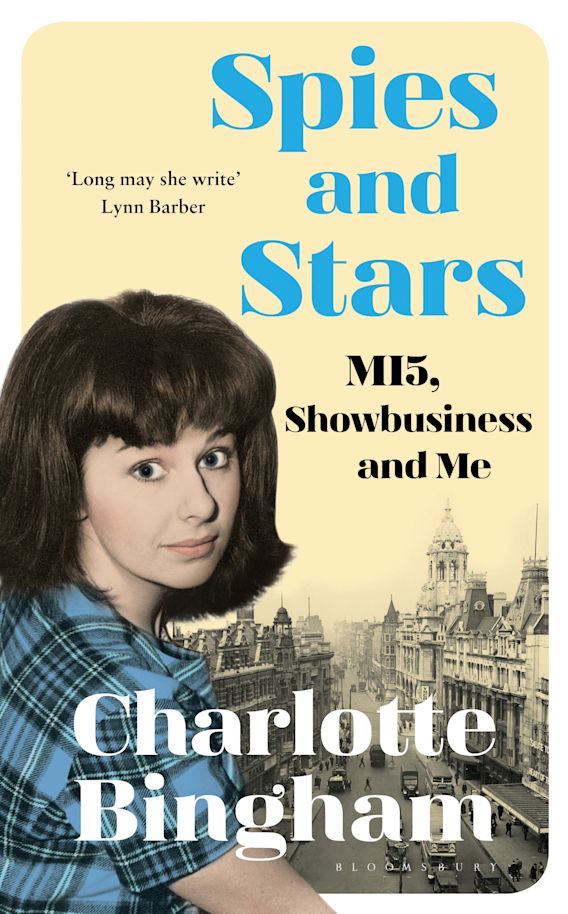
Book Review: Spies and Stars: MI5 Showbusiness and Me by Charlotte Bingham – Round Two in Bingham’s hilarious MI5 reminiscences

This is one of those memoirs that read like a like a novel. It’s the second of Bingham’s recollections of her career in MI5. In the first, MI5 and Me, Bingham was encouraged to join the secretarial staff at MI5 by her father – she’d been just faffing around at home. Her father was quite important in MI5 himself – according to notes at the rear of the book, the inspiration for the character of George Smiley, in the John le Carré novels. Which makes her story seem all the more extraordinary.

Charlotte, or Lottie as everyone calls her, is twenty-something, and her interactions with fellow secretaries, Arabella and Zuzu reminded me a little of the St Trinian’s stories. They’re probably a similar era too – the events in this book take place the 1950s. As well as her work in the War Office, there is her developing relationship with her boyfriend Harry and their writing. Lottie and Harry spend hours after work beavering away in cafés on their film scripts hoping to make it in showbusiness. The characters they meet – the producers and performers – are often oddball and flamboyant, and wonderfully brought to life here.

Harry is a struggling actor so the writing helps keep him busy when he’s ‘resting’. But like Lottie, Mr Bingham sees in Harry someone who can do a job for him. He’s already got a couple of actors on his team – Hal and Melville even live at the family home, Dingle Dell. So Harry finds himself hawking copies of the Communist paper The Daily Worker outside the entrance to the Kensington High St tube station, alongside a ‘blind’ match seller also working for Lottie’s dad.

I went back to Dingley Dell feeling thoughtful only to bump into Hal and Melville both hurrying back into the house carrying copies of the Daily Worker.

‘Really, Lottie darling, the things I do for England,’ Melville said, sighing.

‘I shall read it cover to cover,’ Hal boomed. ‘I think of it as a political Beano. Apparently these asses really believe we are all equal. They wouldn’t if they’d ever toured with Dougie Robinson.’

A lot of Spies and Stars describes how Lottie and Harry come up with scripts, then dealing with agents and producers. Their first, The Happy Communist, is inspired by Harry’s Daily Worker pushing stint. There’s a terrible panic when their agent says there’s someone interested. What will Lottie’s father say? But obviously there’s some writing talent on display, as the two carry on writing more scripts and even sell a few. They soon learn the lesson not to expect their scripts to resemble anything like their originals once they’ve been through the rewriting team.

As I said before the memoir reads like a novel. Bingham is just so good with her characters, who are all vividly drawn, full of the quirks that make them interesting. And well, between show business and MI5, they’re a madcap bunch. And then there’s her use of dialogue, which creates lively scenes. You can tell that she had the talent to go on to write for popular television series like Upstairs Downstairs, which I remember I never missed as a girl.

Charlotte Bingham’s memoirs are fun, light reading, and almost qualify as ‘strange but true’. But maybe 1950s England was like that. And she really knows how to tell a story. I am tempted to try Bingham’s novels – there are dozens of them mostly published in the 1990s up to 2014. Spies and Stars is a four-star read from me, but if you’re tempted to pick this up, you’re probably best to read MI5 and Me first.

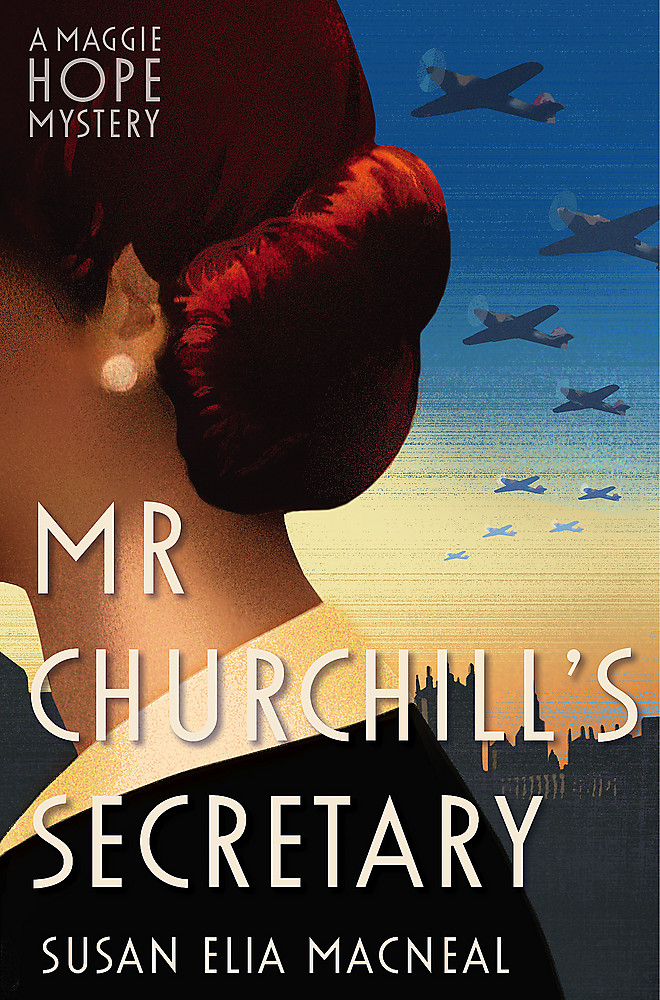
Book Review: Mr Churchill’s Secretary by Susan Elia MacNeal – a light but lively WWII mystery

This novel is the first in a wartime mystery series that features American-raised Maggie Hope, a young woman with a formidable brain. Which is how it should be. I like a brainy female sleuth. You know she’s going to have to figure things out rather than stumble around, picking up clues by accident.

Maggie has moved to London not so long ago. She was supposed to sell her grandmother’s house and then settle back into her studies in mathematics, taking up her place at an American university. She graduated top of her class and academic expectations are high. But along comes a war, World War II, that is, and Maggie wants to do her bit. She loves London and decides to apply for an under secretary position in the prime minister’s office. She doesn’t get it, of course. She’s a girl and they only take men, but when her friend, David suggests she try for a job as the PM’s secretary, she reluctantly gives it a go.

Maggie is desperate to use her maths brain, but at Number 10, she’s thrown by Churchill’s odd habits and cryptic commands, while being urged to keep her head down and do what she’s told by her superiors. Fortunately she has a cheery group of friends to hang out with, including her flatmates: Paige, an old classmate from America’s Deep South and hearty, Irish Chuck plus a pair of scatty twin sisters. David, is always dropping by. His life has always been a little risky as he’s gay when you weren’t really allowed to be so what’s a little war in the general scheme of things? He keeps everyone’s spirits up but his best friend John is moody and somewhat awkward around Maggie.

The story switches to that of Claire who is visiting the Saturday Club, a group of Nazi sympathisers, and Michael, who is letting off bombs around the place for Ireland. While the narrative builds towards a plot agains the PM, Maggie has questions about her parentage. There’s something her guardian, Aunt Emily, is not telling her. When she goes to find her parents’ graves, her mother is there for all to see, but her father’s grave is missing.

Things get more complicated with codes appearing in mysterious places and a visit to Bletchley Park, while pretty much everyone among the cast of characters is in danger from something. Whether it’s the bombs raining down on London, or Nazi sympathisers determined not to have their plans foiled, Maggie’s life has just got a lot more perilous. Things go down to the wire for Maggie, the PM and an iconic building in London, but luckily there’s Maggie’s amazing brain to save the day.

Anyone imagining this series to be ideal for fans of Jacqueline Winspear’s Maisie Dobbs, might want to reconsider. I think they are quite different beasts. The Winspear books reveal a lot about the war, and recent history, often taking a little understood aspect and making it the basis of a story. Her characters are really put through the ringer and there’s a strong emotional charge.

The Maggie Hope books would seem to be a more imaginative bunch of stories and are quite a lot lighter in tone. There’s lots of dancing in nightclubs, romance and general socialising, more about the music of the time, what people were wearing which adds colour and sets the scene. I shall probably continue with the series, but my reasons for picking up a Maggie Hope book will be for a lighter kind of entertainment. Mr Churchill’s Secretary gets three stars from me.

Book Review: The Whalebone Theatre by Joanna Quinn – an English country house, a quirky heroine and a looming war

There’s something about novels set in English manor houses – the setting is almost a character in itself. In Joanna Quinn’s debut novel we have Chilcombe, the home of the Seagraves, a house that has seen better days, but still mired in the old traditions of class. Jasper Seagrave is so desperate to pass on his estate to a son, that he marries young Rosalind, who in the period following World War I has little choice in suitors. Jasper is in his forties, short and stout, with a wild young daughter, Cristabel.

We meet Cristabel, age four, scruffy and dirty, and brandishing a stick as the carriage pulls up with her new step-mother. She’s a fierce little girl who grows into a fierce young woman, as her family shifts and changes around her, bringing a new sister – Flossie, known, at first, as the Veg; and eventually a longed-for male heir, the much adored Digby. By now Chilcombe is home to an Uncle Willoughby and the scene of endless parties.

War hero Willoughby brings a string of hangers on, some of them surprisingly useful and all of them interesting characters. But it’s the three children, particularly Cristabel who are the stars of the story. Left to their own devices, the children run wild, with little parental input. Digby is the only one who goes to school, the girls partially educated by a series of French governesses. The family get introduced to a bohemian set who appear on the beach one summer – the loud and charismatic Russian painter, Taras, with his wife and two lithe models, plus a family of wild, dark-haired children.

Taras and his family have a lasting effect on the younger Seagraves. While this is largely Cristabel’s story – her desperate attempts to be her own person in a world full of constraints, I enjoyed Digby’s story and particularly Flossie’s. While the other two sign up to do their bit against Hitler, Flossie is more passive, but eventually finds out what she’s good at and what she wants from life. You really have to feel sorry for young girls with no chance at a decent education.

‘Has it occurred to you that Cristabel might be less of a galumpher if she visited London more often?’ said Perry. ‘Has she ever been there? Has she ever been anywhere? Astonishingly, it won’t be that long before she’ll be a debutante. She needs to learn how to behave. Nobody minds a spirited girl from the shires. A practical sort. But they will mind if she won’t use a fork.’

‘Surely she uses a fork.’

Willoughby laughed. ‘I’m afraid not, my dear. She’s taken to eating off her hunting knife. Like a pirate. I rather enjoy it.’

This is a kind of coming of age novel, with its three characters discovering what it is to be themselves in a world set to change. Life after the war will bare little resemblance for how it was before – particularly in the grand country houses.

Joanna Quinn describes a changing society, an England devastated by the first war, the fast set drowning its sorrows in champagne, while a younger generation is ready to break the rules and find their own paths in life. The war welcomes the skills of the three siblings, but how will any of them find fulfilment when the war is over?

I adored The Whalebone Theatre. The writing is fresh, the characters are wonderful and the plot has plenty of surprises and turns. And Quinn does her settings really well – the house on the Dorset coast; Paris under German occupation. There’s a lot to enjoy and I look forward to what Quinn comes up with next. This book gets four stars out of five from me.

Book Review: The It Girl by Ruth Ware – another suspenseful read from “the queen of just one more chapter”

Ruth Ware does it again with one of those books that ticks all the boxes for building suspense in the kind of thriller sometimes known as domestic noir. We’ve got a potential miscarriage of justice; a beautiful, dead girl and the people who loved and hated her; and the kind of plot that seesaws between ‘before’ and ‘after’, making you gallop through the pages. She caps this off with a vulnerable main character who can’t rest until she gets at the truth.

Nobody could be more vulnerable than Hannah. Ten years ago her best friend and college roommate, April, was strangled to death. Now working in a bookshop, April’s death had been so traumatic, Hannah dropped out of university. But it was Hannah’s testimony that helped convict the creepy college porter, John Neville.

Now Neville has died in prison, adamant to the end that he had nothing to do with April’s death and there’s a bunch of journalists eager to revisit the story. One in particular, Geraint Williams, has been dropping emails into Hannah’s in-box, with the endorsement of another college friend, Ryan.

There were other friends there at the time, all rocked by April’s death but all with reasons to resent her. April, a rich party girl, pulled terrible practical jokes on her friends. During their first week at their Oxford college April introduced Hannah to her old school mates, bringing her into their circle. Among them was Will, newly appointed as April’s boyfriend. Flip forward ten years and Will and Hannah are married, living in Edinburgh and expecting their first child. They have always agreed to ignore requests from the press for more interviews.

A complex cocktail of guilty feelings has Hannah rethinking her testimony and digging into what happened. Being pregnant and Will’s long days at work, plus her reluctance to upset her husband with her doubts see Hannah as a vulnerable woman on her own. This ramps up the tension nicely as Hannah explores several alternative scenarios, and memories of that first year at Oxford come crowding back to haunt her.

Ruth Ware has been described as the “queen of one more chapter” and she’s certainly a smart cookie when it comes to plotting. And while April’s the kind of girl with the world at her feet, several motives for her killing emerge through the book, and with that a bunch of suspects. But there are plenty of alibis too. How the facts eventually emerge will keep you guessing, while Hannah and her unborn child become closer to danger as at the real killer closes in.

The It Girl has been long-listed for the Theakston Old Peculier Crime Novel of the Year – a lovely long list of mystery and suspense fiction that’s well worth checking out, especially if you like British crime fiction. I will be keen to see if The It Girl makes the shortlist, which is announced on 15 June. It’s a four-star read from me.

Book Review: The Last Party by Clare Mackintosh – a new promising new detective series in a moody North Wales setting

I saw Clare Mackintosh’s name connected with fellow suspense/mystery author Lisa Jewell, and being a fan of Jewell, decided she should be worth a shot. Like Jewell, Mackintosh has written a bunch of twisty mysteries, but The Last Party is the first in a series featuring Welsh detective Ffion Morgan. I like being in at the start of a promising crime series, and was soon glad I’d picked this up.

The mystery starts with the discovery of a dead body by swimmers braving a New Year’s dip. We’re in the remote village of Cwm Coed on the shore of a lake which borders England. Across the water is a luxury resort called The Shore, built by a couple of investors as holiday homes for the wealthy. These incomers don’t support the village shops, they zip around the lake on jet skies and are just generally obnoxious. So it isn’t surprising that the corpse turns out to be one of the investors, a Rhys Lloyd.

With a name like that you’d assume the victim’s Welsh. And he is – a local made good in the sense he’s become a successful star of stage and screen, and knows how to turn on the charm. His mother still owns the hardware store in the village, and it was his father’s land that he and his partner Jonny Charlton have turned into The Shore. Their New Year’s Eve party was supposed to bring everybody together and appease the villagers, but it all ends in murder. The story soon throws up a fair few suspects – it turns out Rhys is struggling to pay off creditors and his charm hides a darker persona.

DC Ffion Morgan is on the spot – she’s local, still living with her mother and sister in Cwm Coed, but for all that she’s something of a lone ranger. She drives an old Triumph at tearaway speeds over the winding rural roads and has a burning secret. She’s also shocked to discover that her one-night stand from the night before is the English cop assigned to assist on the case.

DC Leo Bradey is an intelligent and promising police officer from Cheshire, with a whole lot of baggage. His ex-wife is going out of her way to exclude Leo from being a parent to their young son, whom he adores, and his boss makes him the butt of all his tasteless jokes. Working with Ffion doesn’t get off to a great start either, but they slowly form a team. They soon discover that hardly anybody doesn’t have a motive for killing Rhys Lloyd.

The Last Party is a much better than average murder mystery. Clare Mackintosh is a former police officer herself so the story has a ring of authenticity. However, there’s a lot more than police work here. Family dynamics, old scores and the effects of burying damaging secrets all add to a character-driven, atmospheric read, the evocative setting adding a ton of interest.

As well as the dangers of the lake, there’s snow to contend with and the story builds to a life-and-death climax that has you on the edge of your seat. This is helped by a plot that switches back and forwards in time and between characters, mostly Leo and Ffion but also the key players and suspects. I was fair racing through the chapters to see what happened next. And then there are the twists.

For a diverting crime read, The Last Party doesn’t put a foot wrong and introduces a fabulous pair of detectives I’ll be happy to meet again. I’ll happily give it four stars. A Game of Lies, the next Ffion Morgan mystery, is due to be released later this year.

Book Review: Impossible by Sarah Lotz – an original and quirky fantasy-romance

I have to confess I nearly didn’t finish Sarah Lotz’s recent novel, Impossible (also marketed as The Impossible Us). The novel is largely email correspondence between two characters who meet accidentally when Nick sends a grumpy message to a customer who owes him money, and it somehow ends up in Bee’s (Rebecca’s) inbox. Bee’s dinner with a Tinder date isn’t going well and she distracts herself with flippant email banter with Nick.

The story of their romance is told largely in emails because, for mysterious reasons, the two seem doomed never to meet in person. At first they are separated by a train ride – Nick’s in Leeds; Bee in London. When they do decide to meet they discover they belong in alternate realities – how many versions of the world there are, they have no idea. But in Nick’s dimension the world has made huge inroads to solve climate change as well as some obvious political differences; Bee’s dimension is the world as we know it.

Being stranded in different versions of the world makes no sense to either of them, but Nick comes across an organisation called the Berenstains who have had dealings with this anomaly. Berenstains member Geoffrey provides some light relief, tasked with keeping an eye on Nick, and staking him out like someone from a comedy-spy movie. There are rules about the situation, in particular, no meddling with the versions of people you know from a reality that’s different from your own.

Nick and Bee are all set to break this rule, Bee hunting out the Nick in her reality, who happens to be a famous author. This is galling for the original Nick, who is a literary hack, ghost writing for authors with limited talent. Meanwhile Nick seeks out the version of Bee in his reality, a Becca with a child, the wife of a powerful businessman, which is equally perplexing. She has given up her fashion design career for a family, quite unlike Bee, who has a wedding dress make-over business. Bee worries that Becca is unfulfilled and could be in a controlling relationship.

The story lurches from one complication to another as Nick and Bee set out to overcome their cross-dimensional problem to find happiness. There are plenty of humorous scenes and weird and wonderful characters – Tweedy, the elderly County type, showing Nick how to use a gun; Magda and Jonas, Bee’s elderly neighbours who epitomise lifelong devotion as a couple; Erika, Nick’s no-nonsense Nordic landlady – among others.

And even if it did at first remind me of the movies You’ve Got Mail crossed with The Lake House, the story is still original and cleverly put together. And yet in the middle it seemed to drag for me. I think it was all those emails. I’ve read epistolary novels before and enjoyed them. But here there’s a lot of bad language, which I find tiresome, and the banter which Bee and Nick find so amusing wasn’t particularly amusing for me. I began not to care particularly whether Bee and Nick found happiness as I didn’t like them very much – it’s probably a generational thing. Two thirds through I was so desperate for some elegantly crafted writing I took a breather with some Jane Austen before going back in.

But I did go back in, because it is impossible not to want to know what happens in the end. And Sarah Lotz ties it all up well. She’s a seasoned screenwriter who obviously knows about plotting and this is her seventh novel. I can imagine Impossible would adapt well to the screen. Would I recommend it? Yes, probably, but with some reservations. It gets a fairly generous 3 stars from me.

Book Review: Miss Austen by Gill Hornby – the story of the famous writer’s sister

When Jane Austen died, she left thousands of letters sent to family and friends, of which many were destroyed by her sister, Cassandra. This is the Miss Austen of Gill Hornby’s novel. The story begins with the elderly Cassandra visiting the vicarage where her long-dead fiancé grew up, the home of her very dear and also departed friend Eliza.

Jane and Cassandra both wrote to Eliza, and Cassandra is sure there must be a cache of letters somewhere, full of heartfelt disclosures and secrets, as well as (knowing Jane) waspish comments about other family and acquaintances. It is imperative that Cassandra finds these before they are made public. Cassandra was the carer and confidante of Jane in life, and now, twenty years after her sister’s death, she wants to preserve her good name and not allow Jane to be the subject of speculation and gossip.

And so here she is at the vicarage where as a young woman, she farewelled her beloved Tom on a voyage to the Caribbean, a chance for him to win a living from his patron and secure the means for he and Cassandra to marry. Memories come flooding back and the story dips back in time to those early years and the promises she made to Tom before his departure.

Meanwhile Eliza’s daughter Isabella is rattling around in the vicarage with her grim but loyal servant Dinah, her father the vicar having recently died. Isabella has the job of finding somewhere else to live as well as packing up all the chattels and furnishings that have been a part of her life since childhood. But Cassandra is appalled to see that Isabella doesn’t seem to know how to begin, obviously so ground down by years with an autocratic and belittling father she has a complete lack of initiative.

So we have two story threads here: Cassandra’s efforts to encourage Isabella to find a house with her other spinster sisters – for what could be more pleasant than to live with sisters?; and the early years of Cassandra’s own life with her beloved Jane as revealed by the letters she finds.

I listened to Miss Austen as an audiobook read by Juliet Stevenson and if there is a Juliet Stevenson fan club out there, I should probably become a member because her reading is utterly superb. She brings to life the characters so well along with the nuances of tone in the writing, the conversations and voices of Jane and Cassandra, plus all the peripheral characters ,to recreate the Austen sisters’ world.

There are multiple characters – the girls had five brothers, plus friends and new acquaintances, which echo some of the themes and interactions from Jane Austen’s novels. Gill Hornby has done a really good job with this, and while there are many novels out there that pay homage to Jane Austen, mostly through further stories about some of her much-loved characters, this book about Cassandra is one of the better ones I’ve come across.

Of course we can’t expect a raft of happy endings here. Jane Austen didn’t live long, and the Austens struggled to find a permanent home after their father died. Neither Jane nor Cassandra ever married and there seems to have been both grief and a sense of missed opportunities over this. And yet, Hornby sneaks in a rather charming and amusing ending to the story, casting the truculent Dinah in a whole new light. Cassandra herself is wonderful company and as an elderly unmarried woman, a believable and refreshing heroine. Miss Austen is a four out of five read from me.