Book Review: The Appeal by Janice Hallett – page-turner told in emails and texts

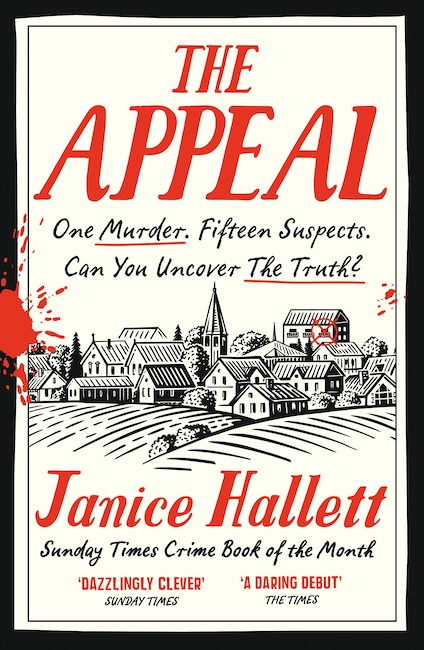
The epistolary novel has become a popular trend mirroring the many options we have for communicating these days. But I’m not sure I’ve come across one that’s a murder mystery before. The Appeal deals with a murder that has been tried in court, a perpetrator found guilty, the case supposedly done and dusted. Fearing a miscarriage of justice, Roderick Tanner, QC, calls upon two articled clerks, Charlotte and Femi, to plough through the evidence to try and establish what really happened.

The story is told via this correspondence between suspects, a chronological collection of mostly emails between witnesses as well as texts between the legal team. Throw in a few police interviews and newspaper articles and you’ve got an interesting mix.

We don’t know who was killed until late in the story, but Hallett builds a picture of a small community with, at its heart, an alpha family – Martin and Grace Hayward who own the Grange and manage the Fairway Players, an amateur theatre group. They have all the status that goes with their stately home. Grace Hayward is a former actress who steals every scene when on stage and Martin directs.

Among the players, Issy Beck writes a lot of emails, cheery little notes of support particularly to her new colleague at the hospital, Samantha and her husband Kel Greenwood. The Greenwoods are recently back in England after years working with aid agencies in Africa and there are hints they left under a cloud. But Issy, lonely, mousy and lacking any kind of standing with her colleagues or community, is determined to be Sam’s friend, encouraging her and Kel to audition for the new play.

But barely have the Greenwoods joined the Fairway Players and the troupe started learning their lines than Martin Hayward drops the bombshell that their grand-daughter Poppy has a rare form of brain cancer. The emails track the huge support the players and other locals show the Haywards, and suddenly the story is more about the massive fundraising that takes place to pay for ground-breaking treatment from the United States. A lot of money is involved and potential complications of trust and misuse are thrown into the mix.

Janice Hallett does a terrific job of evoking the personalities and motives of her characters through what they write to each other. The confusion and questions Femi and Charlotte reveal in their text messages to each other mirror what you feel as a reader, but slowly it all begins to make sense, answering the five main questions Tanner asks of his clerks. Police interview transcripts and reports, oddly enough, don’t shed a lot of light as people are obviously lying or haven’t a clue, which makes the book seem more realistic somehow.

I wasn’t sure I would have picked up a mystery written in this format if I hadn’t read glowing reviews of The Appeal. Through Hallett’s skill, instead of hampering the reader, the emails, texts and sundry correspondence cohere to create a gripping page-turner and I whipped through the novel, eager to see if the things I’d noticed were as important as I thought they might be. I came away thinking the book was really very clever and very well done. A four out of five read from me.

Book Review: Black Out by John Lawton – noirish wartime thriller

I couldn’t remember why I’d put Black Out on my Must Read list. It must have been recommended in glowing tones somewhere as it doesn’t have the look of the kind of book I normally read. But when I eventually picked it up, I was soon hooked. And that’s in spite of it beginning with a grisly discovery – a severed arm on a bomb site.

We’re in London, 1944, and the Blitz has turned whole blocks into rubble. You’d think it would be easy to pass off a killing as death by explosion and get away with it. Fortunately, Sergeant Troy of Scotland Yard knows murder when he sees it. Soon he’s connected it to another death and a disappearance, men who have recently turned up in Britain from Germany. Why would anyone bring them across in the middle of a war just to kill them in this cloak and dagger way?

The plot will involve the American secret service (Office of Strategic Services – which will soon be the CIA) as well as an underground group of Communist sympathisers. There is not one femme fatale , but two, one of them rather short and the other rather tall.

Sergeant Freddie Troy is himself an interesting character. The son of Russian emigré parents, his father made his fortune in newspapers. So Troy went to Harrow, but eschewed university for the police. At twenty-eight, he has decided to stick with the police rather than enlisting in one of the services. Why should he fight for a country that interned his older brother and his uncle? But London in the Blitz is no picnic. Here’s Troy getting a bit of a lecture from older brother, Rod.

‘…The war was, as you put it, good to me. I rather think I enjoyed it. But you didn’t did you?’ You got shot – “
‘Twice.”
‘Stabbed.’
‘Four times.’
‘Bombed.’
‘Twice again.’
‘Beaten up.’
‘More times than I can count. Look, Rod, what’s the point you’re tying to make? You’re not telling me all this tosh just to let me know I missed a trick by not volunteering.’

While I tired a little of the women in Troy’s life, the tall and the short, and even Troy is a cold fish at times, I did enjoy other characters immensely. The pathologist, Kolankievicz, is a wonderful creation with his wild ear hair and colourful language; you don’t want to mess with Superintendent Onions who is bluntly North of England and bull-headed, and then there’s Troy’s side-kick, DC Wildeve who has a gift for intuition and general smarts. Troy and Wildeve are known at the Yard as ‘the tearaway toffs’. Even the scruffy kids who find the arm in scene one are each interesting in their own way, while there’s an eccentric Russian uncle who holds forth on Speaker’s Corner.

Troy’s kind of interesting too, trying to manage all the people in his life and failing miserably. He’s a loner at heart and often his own worst enemy. The story bounces along with a good mix of action, police deduction and Troy getting things wrong, with short, sharp chapters that make for an easy read. But most of all, I enjoyed the smart writing. The dialogue is crisp and a bombed-out London evocatively described.

Black Out is the first book in the series and with the war coming to a close and a peace that will be challenging once the Iron Curtain comes down, there is plenty of potential character development for Troy in the books that follow – although the books seem to jump around a bit chronologically. There’s lots to enjoy here and I shall certainly check in with Troy again. Black Out gets a three and a half out of five from me.

Book Review: The Royal Secret by Andrew Taylor

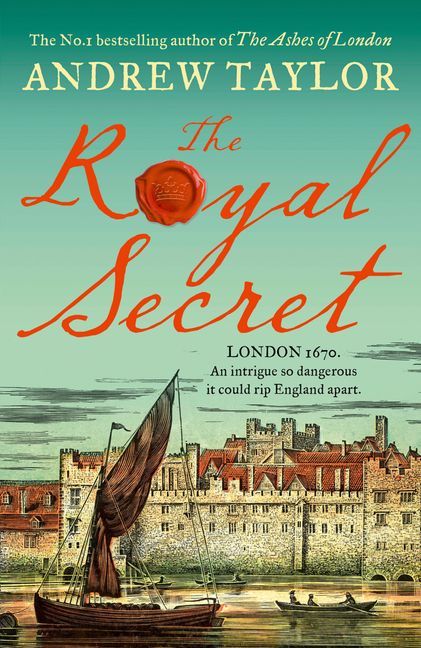
The Marwood and Lovett series is such a joy for anyone who loves a good mystery, with a historical setting that takes you there. Taylor’s series brings alive the nitty gritty of everyday life plus the machinations of the powerful at court. Set during the reign of Charles II, The Royal Secret has government agent James Marwood investigate the death of a former colleague, a Mr Abbott. He comes across the man in his cups and full of regret on his way from a gambling house.

When Abbott dies suddenly, it is hard not the think about the opening scene of the novel, where Abbott’s stepdaughter and a young maid plot his death by witchcraft. But the twenty-first century reader knows that the man’s death will be a lot more complicated than that. Another incident sees Marwood getting in Cat Lovett’s bad books when he takes her to the theatre and ogles the leading actress. The two have been friends and associates through several hair-raising adventures and now meet regularly for outings. Dating? I think not.

Cat has inherited her husband’s architecture business and at the theatre, meets her client, Mr Fanshaw, along with a Dutchman, Mr Van Riebeeck, a family connection of Fanshaw’s. Cat is charmed by Van Riebeeck, while Marwood takes an instant dislike to the man. The scene also introduces us to the world of the Dutch in England at the time and the political difficulties posed by rivalry between the Netherlands and France. This rivalry will come closer to home when Cat earns a commission to design a poultry-house for the King’s sister who lives at the French court. So many threads of historical interest.

The plot ramps up with plenty of action – James Marwood seems to attract trouble, as his suspicions around Van Riebeeck grow along with jealousy over Cat’s growing friendship with the man. There’s the usual tension of Cat and Marlow’s see-sawing relationship and Marwood is often in trouble with his own servants, which adds a degree of lightness.

While we get to see kings and their courts close up, their finery and excesses, Taylor doesn’t stint when it comes to describing the grubbiness of ordinary life in the 1600s. Characters puke, piss and evacuate their bowels in fairly graphic ways, not surprisingly when there are growing suspicions of poisonings. He throws in some other quirky details, such as the interest in collecting by the wealthy. Fanshaw, an avid collector, adds a disconsolate and elderly lion to his household, caged in the garden to impress visitors.

It’s a brilliant read, well-researched, pacy and as for the characters, I can’t get enough of Cat and Marwood – they are so lively and interesting. Sometimes you want to bang their heads together. But in a world where it is important to find favour in the right places, not just to succeed but to survive, they are refreshingly themselves and more inquisitive than is good for them. I can’t wait for the next book in the series. This one’s a four and a half out of five from me.

Mystery Series Catch-Up, Round 2

Here’s a snapshot of my crime fiction reading from recent months – old series I’ve been following for years plus one or two newbies. They are all so completely different from one another, it makes you realise how varied the mystery genre is.

The Night Hawks by Elly Griffiths
Norfolk seems to be such a boon for Griffiths with its atmospheric tidal zones, archaeological sites and old ghost stories. We had the lantern men last time (apparitions that led you to your swampy doom) and this time we’ve got the Black Shuck (a huge black dog who foretells your death). Meanwhile academic Ruth Galloway and DI Harry Nelson deal with more crime – this time the body of a young man found on the beach by the Night Hawks – a group who go on midnight forays with metal detectors. When the detectorists happen on some ancient bones and weaponry, Ruth’s not best pleased – they could interfere with a Bronze Age burial site. But soon there are connections with the dead man and of course one or two more murders keeps the story on the go. This was such an easy but engrossing read. Griffiths writes so well for this genre, and at number 13 in the series, still manages to come up with terrific storylines and interesting character development for her two sleuths.

A Divided Loyalty by Charles Todd
This is the twenty-second in the series, which is surprising in that we’re still only in 1922. But since his return from the war, Inspector Ian Rutledge has had no end of perplexing murders to solve, often, as with this one, where the outcome will cause displeasure to his boss. Never one to opt for the most obvious solution, Ian always has to dig deep and this causes ructions. All the time, he hears the voice in his head of Hamish McLeod, the subordinate officer he’d sent to the firing squad during the war. In this book, a woman found murdered under one of the Avery standing stones draws a blank from one of Scotland Yards best DCIs. Sent to reinvestigate, Ian discovers she was foreign, possibly French, and had connections to someone he has respect for – hence the title. It’s another brilliant read in this well-researched series that brings post-WWI Britain to life.

The Last Protector by Andrew Taylor
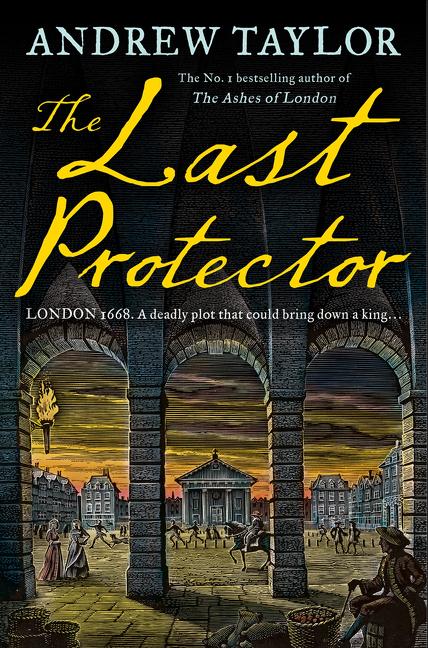
This is such a terrific series, combining intelligent mystery plotting, thrills and danger with historical detail. One of the best things about it, though, is the pair of sleuths: young government agent James Marwood and would-be architect Cat Lovett. When Richard Cromwell, son of the late Lord Protector, slips into England from exile, James is tasked with finding out his motives. His appearance could trigger a movement to defeat the monarchy of Charles II and more civil war. Meanwhile Cat is drawn into the circle of the Cromwells, having known the family as a child. As usual, both sleuths play a dangerous game of their own, caught up in intrigue, sometimes working together, but keeping secrets too. There’s an emotional bond between them, but with James’s work for the Crown and Cat’s marriage to her elderly husband, any deepening of their relationship seems remote – for now.

A Brazen Curiosity by Lynn Messina
I picked up this bargain ebook – the first novel in the series, which features Regency heroine Beatrice Hyde-Clare, with a nod to Jane Austen. Beatrice, at twenty-six, is considered past her prime and an old maid when she accompanies an aunt and cousins to a country house party. One night she wanders down to the library in search of a good book, where she comes upon the eminently eligible Duke of Kesgrave, as well as a dead body. The local magistrate deems the death a suicide, but both the Duke and Bea know better. The two form an awkward team to hunt down the real murderer, which in a grand house full of grand guests, can only make them unpopular, well Bea anyway. His loftiness, the Duke, is above all that. The story is a light, fun read, with plenty of Austenish banter and lively characters. Plenty more books in the series, too.

Dead on Dartmoor by Stephanie Austin
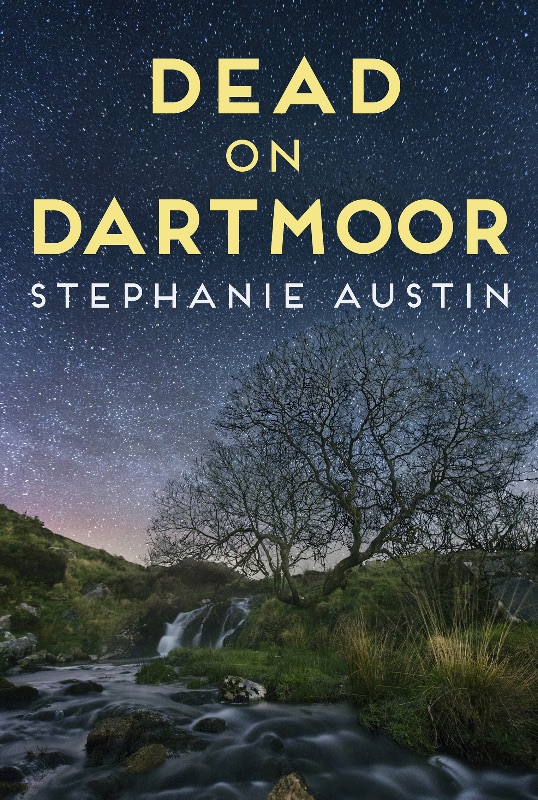
When I picked up this, the second in the series, I didn’t expect it to be so action packed. It begins when Domestic Goddess Juno Browne’s van catches fire, almost roasting a wee dog. If you remember, Juno does odd cleaning jobs and dog walking for people, as well as running an inherited antique/junk shop. Fortunately, James Westerhall, owner of Moorworthy Chase, arrives to the rescue, and is so magnanimous as to invite Juno and chums to run a stall at his upcoming garden fete. But when one of them goes for a walk and ends up dead, Juno begins to wonder if there is something going on at the Chase that’s worth killing for. Another madcap adventure that builds to a thrilling conclusion, with Juno having to do a lot of skullduggery along the way. Great fun.

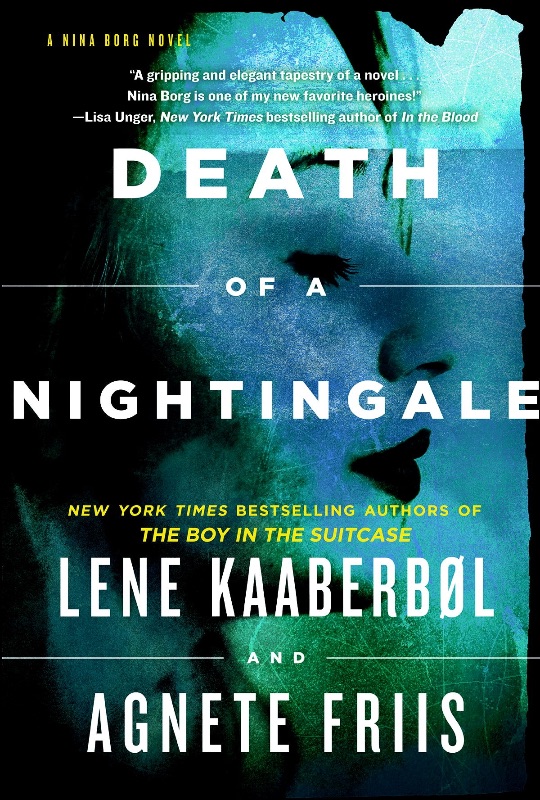
Book Review: Death of a Nightingale by Lane Kaaberbol and Agnete Friis

This novel is the third in the Nina Borg series which began with The Boy in the Suitcase. It’s also the only one I have read. Oh, no, nags the little voice in my head – you should read them all in order! Stilling the little voice, I was soon engrossed in this engaging example of Danish noir.

Nina Borg is a nurse who has worked in some dangerous places in her role with the Red Cross. Now she’s working at a Copenhagen refugee camp, where she feels driven to save those who have fled some horrific situations in their countries of birth. Her tendency to disregard her own personal safety has meant that now she’s cut off from her husband and children and living in a dreary flat. There’s a large digital clock on the wall which triggers thoughts about what her children might be doing at any time in the day.

Nina is one of those characters you want to shout at. She’s always going it alone. ‘Call the police!’ you want to scream. ‘Get some help.’ You can see how her commitment to wanting to help people drives her. But being a maverick sleuth can be lonely. Sometimes she brings home a Swedish doctor colleague for the night, who’s also a bit lonely, but this only makes her seem even more solitary. Already, she’s an interesting main character before we even get to the story.

Flip to Natasha – a runaway from Ukraine, wanted by police at home in connection with the death of her husband, and now in Copenhagen for the death of her fiancé who is a bit of a thug with an eye for her young daughter. It’s not surprising Natasha lashed out. But somehow now he’s dead. Natasha is desperate and being on the run in a Danish winter notches up the tension. Nina is concerned because Natasha’s daughter, Rina, is very sick and isn’t doing well away from her mother. Will Natasha risk everything to see her daughter? The authorities are alert to her possible return, but somebody else is too – somebody who might wish her dead.

There’s a police officer on the case who teams up with Nina when Rina’s safety is compromised. The story also switches back to 1930’s USSR where two young girls live in a village, battling hunger and the difficulty of being a good Soviet citizen. The book captures the period following the great famine when families struggled to feed their children, and hoarding food was an offence that would see you off to the gulags, or worse.

So Death of a Nightingale has plenty of threads in a complex storyline, peopled with a large cast of characters and some interesting twists. How the grim backstory has left its mark on Natasha and her countrymen keeps the reader guessing, and isn’t made clear until the end. But before we get remotely close to that revelation, there’s plenty of action and dicing with death.

I’m glad I picked this one up, even if it is number three in a series of four. The characters are vividly drawn and the story keeps you on your toes. The scenes in Soviet Russia make for sobering reading and remind you how terrible state-led indoctrination can be with repercussions that last a lifetime. I did find the final scenes a little rushed and the complications around the point where the past catches up to the present could have been clearer. Yes, I shall probably check in with Nina Borg again, but I’m not in any hurry. A three-and-a-half out four read from me.

Book Review: The Van Apfel Girls Are Gone by Felicity McLean

Felicity McLean’s debut novel novel has been described as The Virgin Suicides meets Picnic at Hanging Rock. Set in small town Australia, the book is told in two time frames, and begins when Tikka Molloy returns home to reconnect with her sister Laura who isn’t well. She can’t stop thinking, had they did the right thing twenty years ago when their friends, the three Van Apfel sisters vanished. She looks back on that sweltering summer when she was eleven and the events that led up to their disappearance.

Tikka is a great child narrator – she reminds me a little bit of Scout from To Kill a Mockingbird, if we’re thinking of book comparisons here. She’s smart and imaginative and comes from a loving family. At the corner of their street live the Van Apfels and Tikka and Laura spend a lot of time there as the family has a pool. The Van Apfels attend a fundamentalist church – their dad, though outwardly genial, is particularly strict and this causes tension with his wayward thirteen-year-old daughter Cordelia.

There’s a lot of Tikka trying to make sense of her world and understand what’s going on with the grown-ups, and the tension that seems to lurk at the Van Apfels. There’s a new teacher, Mr Avery, who has a mysterious past that may have included a stint in prison – as rumour has it. So along with the simmering heat there is plenty of simmering tension as the school plans its big, Showstopper concert at an outdoor amphitheatre, for which Tikka has written her own skit and where events build to a climax.

In true Aussie Noir style, the landscape plays a big part in this novel. The mangroves around a brackish estuary create a sinister backdrop (Tikka complains of an unpleasant smell); the empty landscape beyond; the heat bouncing off the tarmac. It all adds to the mood and tension of the book. And there is a hint of the unreliable narrator about Tikka. How accurate are her memories from childhood? Even now as an adult she still can’t help looking for Cordelia (Cordie) at railway stations, at busy intersections, her blonde head just disappearing around corners, failing to stop when called. The Van Apfel girls may have disappeared that summer, but a part of Tikka seems to have been lost as well.

The Van Apfel Girls Are Gone is an impressive debut, a character driven mystery that is also quite the page-turner. There is plenty of humour with the way McLean re-imagines childhood, the rivalry between sisters and between classmates, the rumours and the secrets, the superiority of the older kids. This balances out the sadness of what happens and the feeling of lost innocence which runs through the story. Not a long book, McLean’s novel is well worth picking up, and heralds a promising new author to look out for. A four out of five read from me.

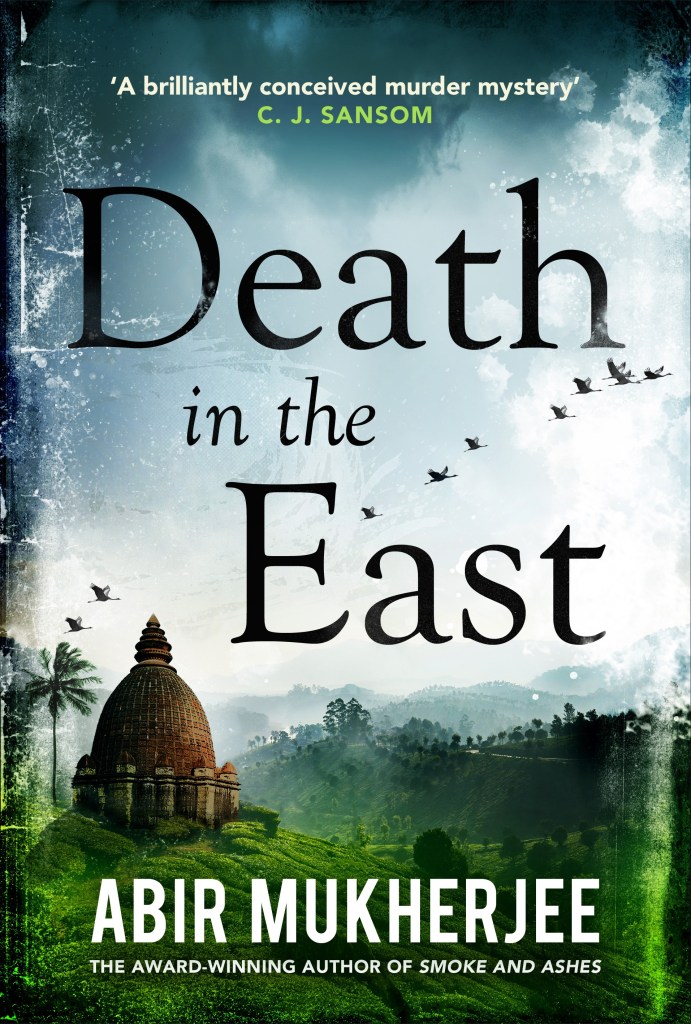
Book Review: Death in the East by Abir Mukherjee

The Wyndham and Banerjee series is quite possibly my favourite series of thriller/mysteries. It has all the key ingredients of brilliant crime fiction. To begin with there’s an engaging if troubled main character. Captain Sam Wyndam has survived WWI, but lost his wife to the Spanish flu not long afterwards. Self-medicating on opium to keep his various demons at bay, he rolls on up in Calcutta to take his place in the Imperial police force in the early 1920s. Calcutta offers both a change of scene and an available supply of his drug of choice.

Then there’s the side-kick. Surendranath Banerjee is Sam’s 2IC in rank, but often proves his usefulness in seeing through situations Sam is blind to, particularly when an attractive woman is involved. He’s a conundrum being an Indian officer in the British system, from a family of lawyers who don’t understand his career choice. The two have a strong friendship that isn’t without it’s moments of friction.

Apart from these two terrific characters the next best thing about the series is the setting. I love historical fiction set in India and here we’ve got an interesting political period with the rise of Gandhi and increasing pressure on British rule. Throw in some very smart writing, moments of edge-of-your-seat danger and some twisty plotting and the series is nigh perfect.

In Death in the East, Sam is on his way to the remote ashram in the hills where he is hoping to finally fix his opium habit, when he catches of glimpse of a man from his past. A total nasty in fact. A man who is the Moriarty to his Sherlock Holmes. The story flips back to the early years of Sam’s policing in the East End of London, Sam just a bobby in uniform, and again there’s a lady involved.

Bessie is a smart, streetwise woman married to a thug. She’s the main breadwinner, collecting rents for a local businessman who’s none too straight. When she’s found dying in her flat with her head bashed in, Sam is one of the first on the scene. Obviously, the husband is in the frame, but he has an alibi. So perhaps Bessie picked up a secret or two as well as the rent money she collected. The press and the powers that be are keen to ascribe the killing to one of the Jewish people who also had rooms in her house. The crime is also complicated by the fact that Sam once had feelings for Bessie.

Slowly the scene on the train at the start of the book and the back story from 1905 converge, but not before another death occurs at the ashram. The settings for the two are dramatically different – the chill of an East End November, over crowding and dark alleys contrasting with the leafy hillsides of Assam where strange things can happen, such as starlings falling en masse out of the sky.

Meanwhile Sam, coming out of his opium dependency, is fragile to say the least. Another beautiful woman, Mrs Carter, wife of an empire builder, inveigles her way into his thoughts. She’s not just a wealthy man’s consort though, with her war work in the WAAC and now she’s rebuilding an old Bugatti that has been left to rot in a storage shed. All this makes her more than averagely interesting. Just as well Surendranath turns up in the last chunk of the book to help sort out the crime and keep Sam on track.

Death in the East is another terrific read in a series I can’t get enough of. My only quibble is I did sort of miss the snappy dialogue between Sam and his sidekick for much of the book. This was compensated to a degree by an interesting case going back to Sam’s early days on the beat and which helps round him out as a character. As usual there’s plenty of food for thought about injustice and the way people use power to assert their own ends. A four and a half star read from me.

Book Review: The Postscript Murders by Elly Griffiths

You can tell best-selling author Elly Griffiths has had a ton of fun setting her new Harbinder Kaur mystery around the world of publishing. You can’t help wonder how much of her own experience she’s slipped into the narrative.

The Postscript Murders begins with the death of ninety-year-old Peggy Smith, discovered in her flat by Natalka her Ukrainian caregiver. Because of Peggy’s age, the doc writes it off as natural causes, but Natalka, ever suspicious, believes it’s murder and says so to DS Kaur. Harbinder agrees to look into it, impressed by Natalka’s accent which makes her sound like a spy.

And it’s kind of suspicious how Peggy’s son, Nigel, has her cremated so quickly, her flat boxed up and ready to sell. Just as well Natalka has kept a key. She teams up with Benedict, a former monk who now runs the Coffee Shack on the beach front, and the two sneak into Peggy’s flat where they discover numerous books with Peggy credited in the dedications. She helped the authors with their murder plotting, it seems. A masked gunman who surprises them and then steals a book has them knocking on the door of Peggy’s neighbour Edwin to phone the police.

While DS Kaur is playing catch-up, the unlikely crime-solving trio of Natalka, Benedict and Edwin follow a trail of clues all the way to a literary festival in Aberdeen, tracking down all the crime writers who used Peggy’s services. A new murder keeps Harbinder busy as well as threats close to home so it becomes difficult to rein in Team Natalka. Bubbling away under the surface are subplots including Natalka’s bitcoin shenanigans which have her watching over her shoulder for heavies involved in organised crime, and Harbinder’s ongoing inability to tell her parents that she’s gay. At thirty-five she’s still living at home enjoying Mum’s cooking while her parents hope for a good match for their daughter.

This is a very character-driven story, with much humour coming from the interconnection of the bunch of misfits making up an unlikely cast. Harbinder is an engaging sleuth with her smart policework and ironic mutterings. A glimpse of the publishing industry, the marketing gimmicks, fandom and the sometimes awkwardness of literary festivals creates an interesting backdrop. I chuckled all the way through, not guessing the ending, but not minding if I did as this was such a fun read. Four out of five stars from me.

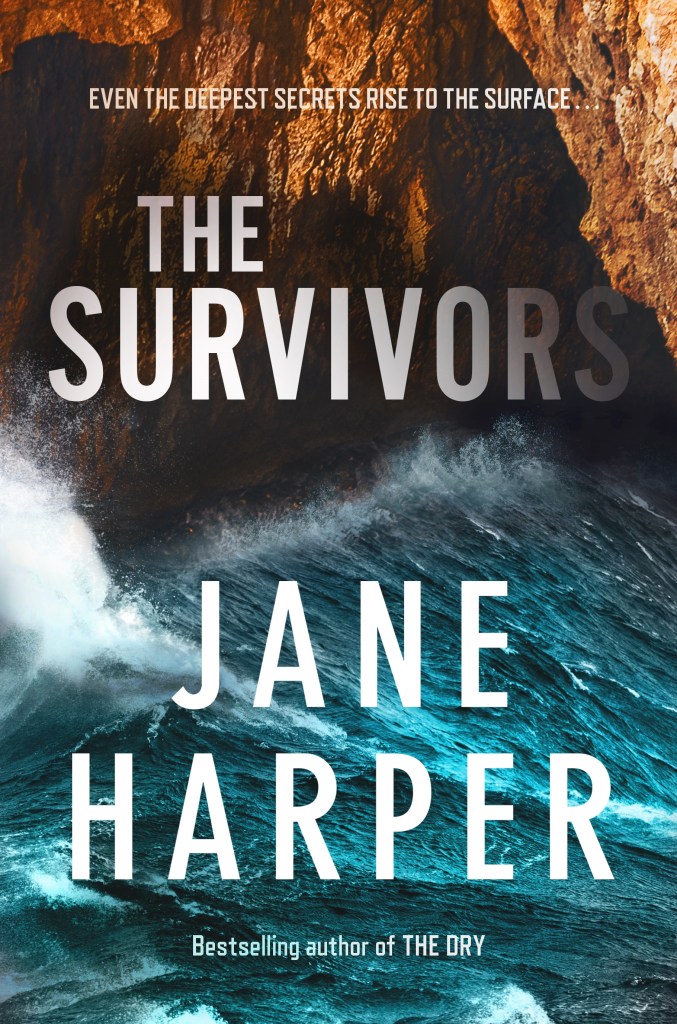
Book Review: The Survivors by Jane Harper

It’s hard not to be disappointed that the new Jane Harper isn’t set in the outback like The Dry and The Lost Man. She uses the relentless heat and harsh environment of that setting in a way that adds suspense and atmosphere by the bucketload. The Survivors sweeps us off to Tasmania and a coast that has seen scores of shipwrecks with tides that can catch out the unwary. A different environment, but still there’s that sense of danger.

Though for most of the inhabitants of Evelyn Bay it’s just the place they call home and where many make enough of an income from the tourists that visit every summer. It’s the place where Kieran grew up, but he’s made a new life in Sydney with Mia, who knew Kieran at school. The couple have returned with a baby in tow to their childhood home to help Kieran’s parents pack up and move to a nearby town. Kieran’s dad has dementia. The family are still haunted by a tragic event that took the life of Kieran’s brother, Finn, and almost Kieran too, for which he feels survivor’s guilt and more.

But this was a dozen or so years ago, and Kieran has a family, a new life, plenty to be getting on with. Another death, a murder no less, threatens to drag the earlier tragedy back into everyone’s thoughts. For at the same time that Finn and his friend had been attempting to rescue Kieran, Gabby, a fourteen year old girl and Mia’s best friend, disappeared, her backpack washed up days later. When Bronte, a young waitress, is found murdered on the beach, questions arise about why the death of Gabby wasn’t investigated properly all those years ago.

Harper really understands how to work small-town prejudices, the tendency to make connections where there are none, to leap to conclusions. The emotions run high in this book, particularly around Kieran and his family, but also on the appearance of Bronte’s parents. You can’t help but feel a parent’s anguish of losing a child. Then there’s all the guilt Kieran feels for the events that led to the earlier tragedy, particularly as he remembers the laddish behaviour, the sexism and one-upmanship he and his mates indulged in. One can’t help hoping he’s a better man now.

The Survivors is another brilliant read by Jane Harper – it doesn’t really matter where she sets her books, because it’s the characters and the way we connect with them that really drives the plot. And living in a country with treacherous coastlines everywhere you look, it was easy for me to visualise the setting and imagine the danger. And yet…. I just love the buzz of reading about the outback and I’m kind of hoping to return there with the next Jane Harper. Still, this one scores and easy four out of five from me.

Book Review: The Long Call by Ann Cleeves

Many readers were disappointed when award-winning crime writer, Ann Cleeves decided to call it a day with her Shetland series. I guess there are only so many crime scenarios you can imagine for a tiny place like the Shetland Islands. But if there’s a silver lining here, it has to be her new series set in North Devon, featuring local police inspector, Matthew Venn.

The Long Call is the first Two Rivers novel and I happily devoured it. The story begins when Matthew attends his father’s funeral having recently returned to the area of his boyhood with his husband, Jonathan. It’s a Brethren funeral and he keeps himself at a distance, not daring to approach his mother, having disgraced himself as a teenager by declaring himself an atheist, dropping out of university and later breaking his parents’ hearts by marrying a man. But his new case, the murder of a troubled loner, Simon Walden, will take him uncomfortably close to the people from his family’s church.

The story of Simon Walden will take some uncovering – the man had shed his life of family, friends and belongings. Plagued by guilt over an accidental death, he had become an alcoholic before being rescued by a church group run by Caroline Preece, the daughter of one of the movers and shakers behind the community centre known as the Woodyard. Caroline took him in as a lodger, helped with counselling and found him some voluntary work.

Surprisingly, Walden made a connection with a woman with Downs Syndrome who also attended a drop-in group at the Woodyard. So much seems to centre on the Woodyard, which is managed by Matthew’s husband, Jonathan. Should Matthew declare a conflict of interest and hand the case over to DCI Oldham? But his boss has his eye on retirement and will only step in if Matthew messes up – so no pressure then.

When another woman with Downs Syndrome goes missing, the first Matthew learns of it is a phone call from his mother – phone calls from his mother are unheard of. The victim is the daughter of a good friend, another member of the Brethren who remembers Matthew and his disgrace. Fortunately he has a smart team to work with. Jen, his DS is from Birmingham, a no-nonsense sort with a failed marriage and two teenagers at home. She’s good at building relationships with witnesses and getting them to spill the beans. DC Ross is young and restless, but eager to prove himself, and there are plenty of opportunities here.

Looking ahead, I know we will come to love Matthew Venn and his sidekicks – Cleeves is so good at character development, highlighting the pressures put on police officers and connecting them to the crime story. This book pivots on the relationships of parents and their children, not just Matthew and his mother, but our other players too. What is it like to bring up a child with severe learning difficulties? What would we do to keep them safe? How far would we go to make our children happy?

So while Cleeves gets plenty of points for character development in her fiction, I am always impressed by the way she can pick apart relationships, the secrets that imbue them and the passions – positive and negative – that they generate. The Long Call has this in spades. Easily a four star read from me.