Jackson Brodie – the plot thickens

As I continue to read Kate Atkinson’s popular series, I ponder if any of the books can be as good as the first one – Case Histories.

One Good Turn is next, a hundred pages longer than Case Histories, with a shift in setting from Cambridge to Edinburgh. Jackson is here for the arts festival. Girlfriend Julia (yes, that Julia) is in a play, otherwise Jackson would be somewhere else – anywhere else probably, arts festivals not really being his thing. He witnesses an extreme case of road rage, and on a visit to an island, finds the body of a young woman, whom he can’t quite save from the tide. He reports his findings to the police but they think he imagined it all. Jackson seems to be constantly getting into trouble one way or another. We also meet Edinburgh detective Louise Monroe, who is really more Jackson’s type than Julia.

The story switches to follow Martin Canning, an unassuming period-mystery writer, another witness to the road rage incident. Here, in a rare moment of bravery, Martin intervenes against a madman with a baseball bat. He becomes caught up in the lives of victim and attacker in ways he never expected.

And then there’s Gloria, whose dodgy businessman husband has had a major coronary while in bed with a Russian prostitute. Young Russian women feature in all the story threads, one way or another, and the eventual connection between these threads is appropriately symbolised by the recurring image of Russian dolls.

One Good Turn is another terrific read, with a clever and complex storyline. As always Atkinson deserves a medal for characterisation and snappy dialogue, while the plot is pacy enough, once you get used to the constantly shifting narrative points of view. As you might expect, there are plenty of twists with a stunning surprise saved for the last page. Not quite as enjoyable as the knock-out Case Histories but still a respectable four out of five from me.

Old Favourite: Case Histories by Kate Atkinson

We never thought there’d be a new Jackson Brodie novel. After four brilliant mysteries (and a superb television adaptation starring Jason Isaacs), we thought Atkinson had called it a day, returning to the historical literary fiction she’s so good at. Then nine years since the last Brodie was published, out came Big Sky and the crowds all cheered.

I haven’t got my hands on the new book yet, wanting to do things properly and reread the previous four. I’ve had them there on the bookcase waiting for a special occasion. So I picked up Case Histories thinking, I know what happens so will I still enjoy it?

The story gets off to a fairly gentle, atmospheric start, with the setting of Cambridge during a summer heatwave, following a family of young girls, the elder three doting on the youngest and sweetest, little Olivia. Then the unthinkable happens – little Olivia goes missing.

Thirty years later, Olivia’s sisters, Amelia and Julia, make a discovery that prompts them to hire a private detective. Enter Jackson Brodie – ex-army and-ex police and with a ton of baggage regarding his ex-wife, his eight-year-old daughter, to say nothing of the tragedy of his childhood.

Two more cases hit Jackson’s books at the same time: a grieving man haunted by the murder of his daughter ten years before; a woman who has lost touch with the niece she promised to look out for when her sister was arrested for killing her husband.

The cases shake Jackson out of the stupor that has beset him as he spends long days surveilling an air hostess on behalf of her jealous husband and being at the beck and call of a crazy cat-lady who neglects to pay him. Through the book, someone seems intent on killing Jackson, so the story is livened up by several fights.

Not that it needs enlivening as the story sparkles with humour and terrific characters. They are all notable for various reasons: Mr Wyre’s devotion to his dead daughter mirrors the powerful bond and fear Jackson feels over his own daughter, Marlee, who at eight is pert and has a habit of blurting things out at the wrong time. Julia and Amelia are eccentric opposites – Julia’s outrageous flirting adding to the humour of the book, contrasting with the awkward spinsterishness of her sister. Binky, the crazy cat lady, is a treat for her old colonial airs, and has an odd connection with the sisters and the secrets surrounding them.

I loved this book a second time around. Having finished it, I could pick it up and start it all over again – it was that good. Being character driven rather than plot driven, Case Histories is nevertheless a complete page-turner. The prose is all you could wish for too – smart, witty and honed to perfection.

And then there’s Jackson. He’s an archetypal sleuth – troubled, with a messy past; he’s clever but gets into scrapes through his dogged determination to keep digging. And he’s got that Yorkshire no-nonsense manner that makes relationships with women difficult as he struggles to articulate his feelings (while women readers find him totally gorgeous). It’s no wonder Atkinson brought him back for more outings and even after nine years, the new book’s popularity would suggest he’s a welcome return. Case Histories is a rare five star read from me.

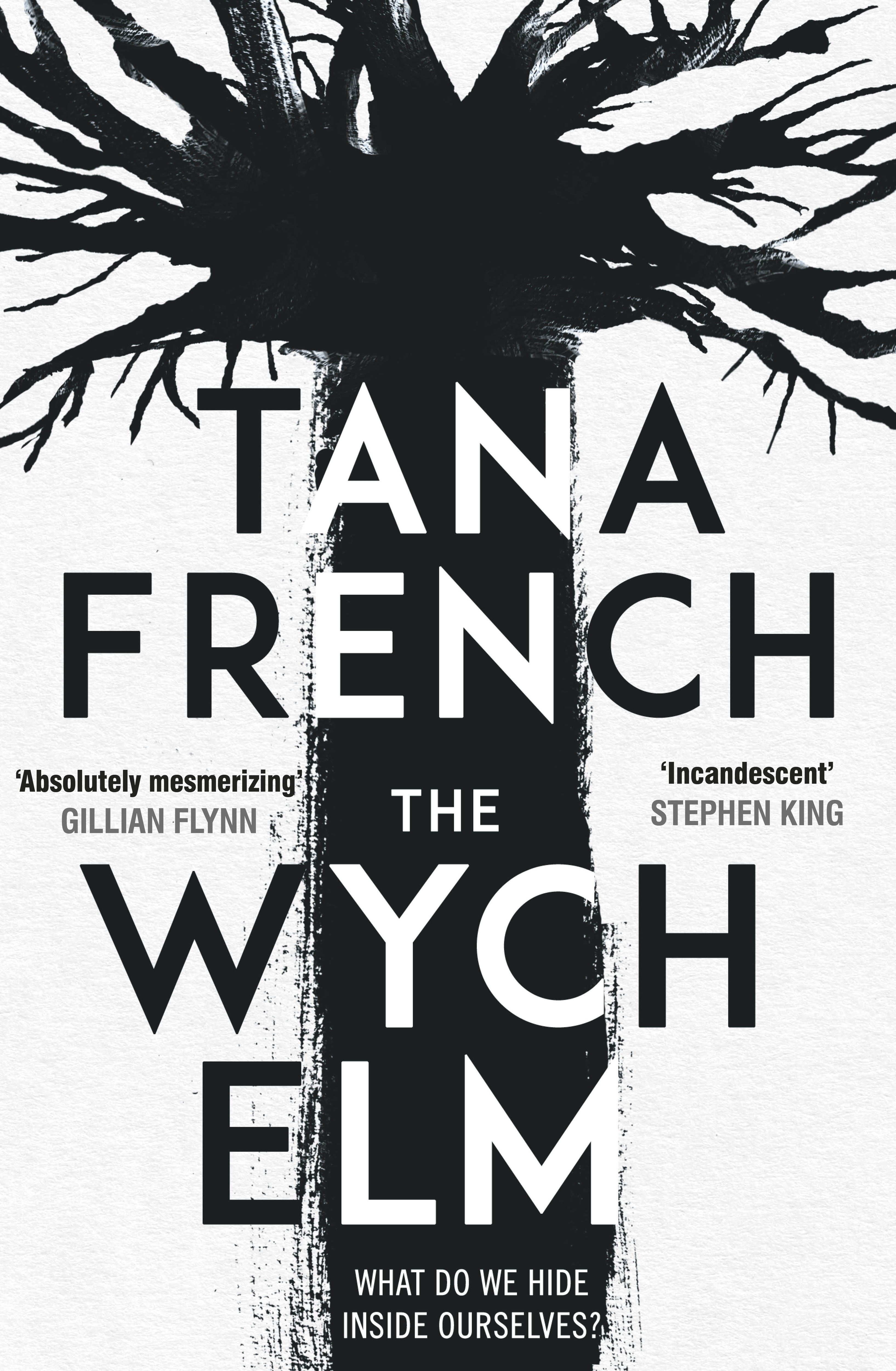
Book Review: The Wych Elm by Tana French

elmA few pages into this book, you know you are in the hands of an Irish author. It’s got that chatty, let’s sit down and tell you a story manner that you often get with Irish authors. The first-person narration also helps, but most of all it’s that rambly, discursive but hugely entertaining style of writing that draws you in and won’t let go, even when the book is five hundred pages long, and could have been around 350. Maybe.

The Wych Elm is a stand-alone crime novel, by the author of the Dublin Murder Squad series. We are in the mind of Toby, a young man in his late twenties, who is telling us how lucky he is. He’s got some family money behind him, plenty of friends, Melissa, his gorgeous girlfriend, and a terrific job doing PR for an art gallery. He’s charming and good-looking and all set for success. Continue reading “Book Review: The Wych Elm by Tana French”

Cosy or Not-So-Cosy? That Is the Mystery

The cosy mystery novel has become one of the most popular trends in online publishing, probably pipped only by assorted romance genres. But what makes a murder mystery cosy? I’ve read a few over the years and have come up with a list of common features:

  • An amateur sleuth, often with no technical skills usually associated with solving crime other than a tendency to be nosy. A sharp mind also helps. The classic amateur sleuth in my book is Agatha Christie’s Miss Marple, who has seen the worst of what humanity is capable of through observing life in St Mary Mead. Today many cosy mysteries are set around handcrafts or food preparation. The amateur sleuth, Hannah Swensen, in Joanna Fluke’s popular novels runs a bakery with titles that couple murder with a bakery item (Double Fudge Brownie Murder, for example).
  • Cosy mysteries invite the reader to take part in the investigation. The reader is given random clues throughout the book, as well as red herrings, which make you pay attention and guess ‘who done it’. Even so, it is frustrating if the mystery is too obvious – a surprise revelation at the end is what keeps you reading.
  • A small group of suspects to choose from, usually presented early in the peace. The classic mysteries of yesteryear might have everyone holed up in a country manor house (think Dorothy L Sayers); or else they all live in the same village or small town. Village mysteries are still popular, hence the success of Louise Penny’s Inspector Gamache novels. Yes, I know Gamache is a senior policeman, but he gets help from the inhabitants of Three Pines, particularly from local artist, Clara Morrow. Louise Penny pops up regularly in the Agatha Awards nominations, which recognise authors of cosies, or as they put it ‘malice domestic’.
  • Cosies are usually written in series, often with story threads involving the personal life of the sleuth running through them. I’ve lost track of the number of husbands and boyfriends M C Beaton’s Agatha Raisin has had. It’s fun to see how the main character develops their skills, or runs up against the local constabulary as a regular feature. It’s also amazing how many suspicious deaths can occur in some small villages over a short space of time, no doubt keeping the local undertaker busy and opening up real estate opportunities for incomers.
  • As with any genre, you can find a range of novels lumped together that are hugely varied and might not seem cosy at all. It’s hard to keep the police force out of crime fiction entirely, so a regular detective might appear alongside the amateur sleuth. Darkly sinister motives can pop out of the woodwork making the story almost chilling. Deliciously chilling of course.