Book Review: The God of the Woods by Liz Moore – a stunning thriller about family secrets and lost children in the wilderness

I found myself unable to put down this mystery-thriller set at a summer camp in the Adirondacks during the 1970s. The God of the Woods begins when thirteen-year-old Barbara goes missing towards the end of camp. Barbara’s parents, fragile Alice and autocratic Peter, are part of the wealthy Van Laar dynasty who own the camp and pay the staff who run it. They thought camp would be a good idea for Barbara as she’s been showing concerning behaviour at school and dresses like a punk.

Fourteen years before, the Van Laar’s son Bear also went missing, thought murdered by a local man who seemed to have a strange obsession with the boy. His grief stricken parents idolised Bear, who was by all accounts a popular and cheerful boy, his death something Alice could never get over. Unfortunately the suspect was never tried in court as he died suddenly – the case closed, leaving questions unanswered.

When a search is organised to find Barbara, young state trooper Judyta Luptack is determined to do her darnedest not just at finding Barbara, but in also discovering what happened to Bear, whose body has never been recovered. She suspects the Van Laars are hiding something. There’s also the recent escape of a serial killer from prison, who had been in the area when Bear disappeared. Could he have taken Barbara too?

The story dips back and forth through time, to when Alice first met Peter Van Laar, and her struggles to be seen as a person worthy of more than producing a Van Laar heir. The story is told from various perspectives, including Louise, one of the young staff running the camp who is hiding a secret. There’s also Tracy, the awkward girl who became Barabara’s friend, sent to camp following her parents’ divorce.

The story, weaving its way through these characters’ lives, and the suddenly changing timeline takes a bit of getting used to. I found myself having to really concentrate to keep up. But the sudden revelations, the cliff-hanger chapter endings and the issues each character carries with them, to say nothing of fears for the young Van Laars, keeps you on the edge of your seat as you read.

Class, power and money seem to be at the centre of things with the Van Laars and their wealthy friends, their alcohol-fuelled parties and casual disregard for the locals, their determination to keep their good name – all of which makes them unlikable. Although you can’t but help feel sorry for Alice. Other families have problems too – Judyta’s conservative Polish family are reluctant to let her live away from home, which means a long commute every day. Louise is worried about her alcoholic mother and her inability to properly care for her twelve year old brother. There’s also TJ, who has taken on the burden of running the camp, trying to fill her highly-regarded father’s shoes.

The God of the Woods is very much a literary thriller – it is so well put together, its characters all so interesting and complex, the natural wilderness setting, so peaceful one minute, full of danger the next, an evocative backdrop. The 1970s era gives us a glimpse of changing attitudes, but there’s still the paternalist misogyny lingering in the police force and wider society. It all gives you a lot to think about as you whip through the pages to find out what has really happened. It’s a brilliant mystery and a four and a half-star read from me.

Book Review: Tenderfoot by Toni Jordan – a coming-of-age novel set in the world of greyhound racing

There has been a lot about the greyhound racing industry in the news lately, with information coming to light over the cruelty towards the dogs, the frequent euthanising of young animals. This novel couldn’t be more timely but I didn’t need a lot of prompting to pick it up, having immensely enjoyed Toni Jordan’s previous novels, Dinner with the Schnabels and Prettier if She Smiled More.

Tenderfoot by Toni Jordan, is a coming-of-age novel about 12-year-old Andie. Set in 1970s Queensland, Andie narrates the story, decades later, of the year her parents marriage ended and she lost her dad, and with him the four greyhounds that made up his business.

Andie loves those dogs, especially Tippy, but they are not pets. We are introduced to the nefarious world of greyhound racing, gambling and addiction. Jordan keeps what really happens to the dogs off centre stage, which is fortunate, so we never really know the specifics of what happens to Shep, Crumbs, Sally and Tippy who used to live in the basement – the how and the when. Anyone who has a fondness for dogs might still find this sobering reading, so be warned.

Through it all Andie is a brilliant character, determined to win back her dad, her friends and her dog, solve the mystery of what happened to Macavity, her former bestie’s cat. All this despite her difficult mother, Mum’s shady boyfriend Steve, and a world that seems to block her ambitions at every turn. Andie is a determined battler with an eternal optimism that she can make everything normal again.

Jordan balances the seriousness of what happens – a promising child of parents who constantly let her down, the greyhound and gambling business, the adults with their own demons – with humour that comes from children interacting with adults who aren’t as adult as they should be. The characters come to life through dialogue, something the author does really well – the caustic remarks and endless criticism from Andie’s Mum, the sly innuendo that bounces between her and Steve, the playground politics that Andie struggles with.

Jordan recreates the 1970s, down to the choice of sweets available at the corner store. You also get a scorching Queensland climate for plenty of atmosphere and a poor neighbourhood where gambling is for some the only hope. It all comes together well for a thought-provoking and moving read – five stars from me. I read the novel courtesy of Netgalley. Tenderfoot is due for release on 26 August.

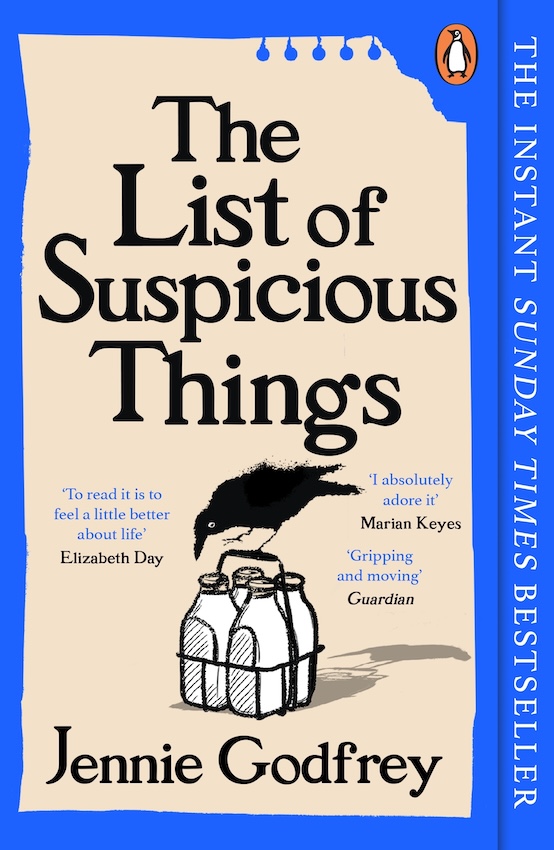
Book Review: The List of Suspicious Things by Jennie Godfrey – a story about friendship, growing up and a small town’s dark secrets

The List of Suspicious Things is a debut novel which takes you back to 1979. Thatcher has just been elected PM and the Yorkshire Ripper is at large, killing young women, while the police have few clues to his identity. In Miv’s Yorkshire town the mills have closed down, so things are already tough, and likely to get tougher. At home, Miv’s mother never speaks, Auntie Jean delivers food to the table and terse comments, while her dad seems a bit lost.

When the family thinks a move down south might be a good idea, Miv is desperate. At twelve, she’s bright but a bit socially gauche, partly due to her home life, so her friendship with Sharon is too precious to lose. She’ll do anything to save it so decides to investigate and catch the Yorkshire Ripper. She buys a notebook and makes lists, and with Sharon’s help, begins to look for suspicious characters close to home.

As names are added to the list, the reader is introduced to the people of the town, beginning with Mr Bashir who runs the corner shop. He’s one of the nicest adults Miv knows but he has dark eyes and a moustache, so makes the list. There’s a truck driver from her father’s work, people she knows from church and a teacher among others. Other people in the community include Helen at the library – because where else do you go for information in 1979?

Of course, the girls don’t catch the Ripper, but their investigations uncover some of the darker elements going on in the town – the racism, the misogyny, the prejudice against those who are a bit different. Miv learns one or two secrets that are a bit close to home, and finds herself caught up in some of the fallout. She’s a girl who is left too much to her own devices, there’s just too much going on at home for consistent parenting. But then in 1979, kids were often left to find their own entertainment and the town is their playground.

Through Miv you also see the struggles of the adults in the story. Sometimes the narrative shifts to Austin, Miv’s dad; Helen; or Mr Bashir, who each have personal sadness and secrets. The setting – the late ’70s is well realised. Mr Bashir is always singing along to his favourite Elton John songs, jeans go from bellbottoms to stovepipes and Sharon buys a glittery lipgloss to try. And it’s also very Yorkshire, though not posh Yorkshire – the kids go ‘laiking about’ and at least one character’s house has an outdoor loo.

While overall I enjoyed the book, I did feel at times that it was rather overloaded with issues. So many dark things happen with a lot to fall on Miv’s small shoulders. Still, The List of Suspicious Things is a quirky and interesting novel, easy to get lost in. I was reminded of Joanna Cannon’s The Trouble with Goats and Sheep – another novel about two young girls investigating – in this case a neighbour’s disappearance – also set in the ’70s, and which is well worth checking out. The List of Suspicious Things is a three-star read from me.

Book Review: The Treasures by Harriet Evans – an immersive family saga and the first of a trilogy

I was happy to put my hand up for this Netgalley offering as I’ve enjoyed several Harriet Evans’ novels before. She often centres her novels around an atmospheric house (Keepsake in The Butterfly Summer; Vanes in The Beloved Girls; Fane Hall in The Stargazers), which I’ve always found appealing. A bit like Manderley in Daphne du Maurier’s Rebecca.

Early on in The Treasures we hear mention of a house called Sevenstones. I imagined a grand old English manor, full of secrets and mystery. In actual fact Sevenstones has more of a cottage feel, a country bold-hole where various members of the cast of characters arrive when they need a break. For some, including Tom Raven’s parents, it was a chance to take a break from the war – World War II that is – and where relationships were forged.

But we first meet Tom as a young boy, living in a two-room cottage with his much loved Dad in Scotland. At the age of nine, he is uprooted by his Aunt Jenny, leaving the simple life behind for more opportunities in London and public schooling, even though his aunt and Uncle Henry really have no idea about children or even running a house without staff. We’re in the 1950s, and there are bomb craters everywhere, and children from the upper classes aren’t to mix with the lower orders, or so Tom’s told.

There’s also another grander house in this book – Valhalla, the American home of the Kynastons. Alice is growing up as best she can, with a father battling demons and debts owed on his orchards. When he takes his life, it seems Alice and her mother are to lose their home on the grounds of Valhalla. Wilder Kynaston was a good family friend and offers them a lifeline, but there’s a price to pay.

We’re well into 1960s by now, and as Jack and Alice grow up on opposite sides of the Atlantic, another war has arrived, and with it the rise of the protest movement, women’s lib and the chance of new freedoms and ways of thinking. The novel takes you through these changes as our two young characters’ stories are set to intersect. But family secrets lurk, throwing roadblocks in their way.

Harriet Evans captures the time really well, and the dilemmas faced by young women like Alice who are trying to forge a new path for themselves, only to find they’re still chivvying for the boyfriends they tie themselves to. The men of the establishment still hold all the power, while choices for women remain limited. But there are others too, like the fathers of both Alice and Jack, who have been left haunted by the past, plagued by guilt or disappointment, also unable to be the people they want to be.

I was curious that the book starts with a modern day setting and a character, Emma, who doesn’t appear again, discovering the ‘treasures’ of the title. These are little mementos Alice has been given by her father on each of her birthdays. But I now see that this novel is the first of a trilogy – I’ll be intrigued to see how the story continues to fill in the gaps in the books that follow. The Treasures is a rich, immersive read with terrific characters you empathise with.

The Treasures is due for release on 12 June. It’s a four-star read from me.

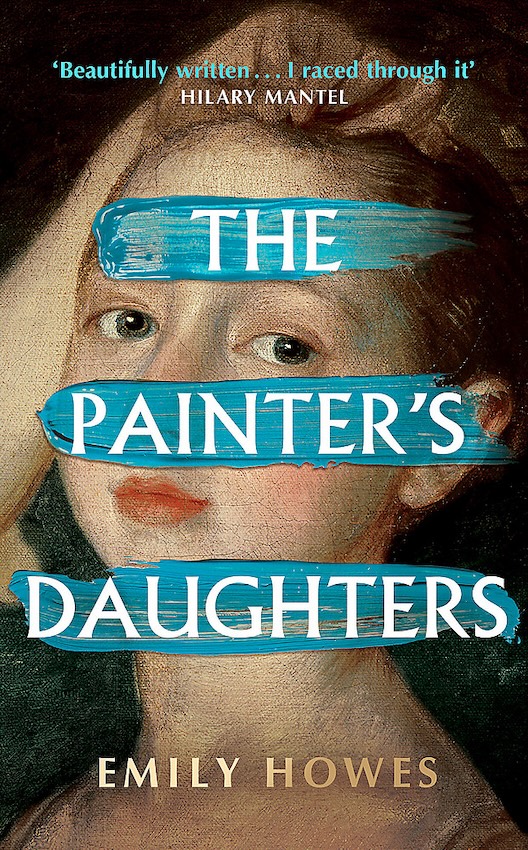
The Painter’s Daughters by Emily Howes – a stunning historical novel exploring the family of Thomas Gainsborough

I knew a little of the work of Thomas Gainsborough before I read this book, his striking portraits, the most famous of which is probably the Blue Boy, which frequently used to appear in tapestry kits. Such a pretty picture. But I remember looking at his portraits, marvelling at the light feathery brushstrokes, the use of colour, and how they seemed to capture the essence of the sitter. Then the way he might put them in a landscape setting rather than a fashionably lavish interior.

So it was interesting to learn that Gainsborough much preferred painting landscapes, was a great lover of the countryside near Ipswich where the book, The Painter’s Daughters begins. He wants his young girls to have a free and healthy country childhood just as he did. But his wife, Margaret, has other ideas. There’s no money in landscapes and the fashionable town of Bath is full of the kind of society that will want their portraits painted, and also where young Molly and Peggy might make a good marriage.

Emily Howes weaves a brilliant fiction around a well-researched collection of facts. Among them that Margaret was the illegitimate daughter of the Duke of Beaufort, although there also exists a document that suggests an even loftier parentage. Margaret knows about this and is desperate for the family to do well. She’s there in the background working on her husband’s accounts, calculating and chivvying.

Thomas is much more a bohemian character, carousing with friends, playing music and up all night. It’s a difficult household, so you can imagine how that might affect the young girls, particularly as early on, Molly appears to be mentally unstable. You would think fresh country air would be better than the sudden town environment in which young Molly and Peggy find themselves. In Bath they are kept inside, dressed in silks, the better to appear in the famous portraits painted by their father. These are his advertisements, as prominent visitors come to call.

The girls grow up, and Molly continues to be Molly, bright and seemingly well one minute, lost in a mental nightmare the next. Young Peggy adores her sister and promises to look after her, as she always has, trying to maintain a veneer of the normal in a polite society full of rules. Much of the narrative is from Peggy’s viewpoint, and she’s a constantly anxious child, watchful of her sister, but also desperate for the attention of her father.

Through the novel, is another story, that of Meg, Margaret’s mother, bullied by a brute of an innkeepr father. Meg slaves away, serving and cleaning, her life mapped out for her. When a German prince and his escort party descend on the inn, one of them dangerously ill from an infection, the men settle in until the invalid is fit to travel again. Meg catches the eye of the handsome heir to the throne.

The two stories, that of the sisters and Meg’s, make a rich contrast that brings 1700s England to life, warts and all. Both show a picture of the kinds of lives women led, with no power of their own, dependent on fathers and husbands for their livelihood. If they cannot make a good marriage, or keep their reputations intact, their futures are uncertain indeed.

This is such a satisfying read – fascinating with its descriptions of art and fashionable society, as well as the muck and mess of 18th century England. The struggle if you’re poor; the struggle to keep up appearances if you’re genteel. The book is full of images that stick in your mind from the feel of silk and lace and satin, to the stench of streets full of horse dung. A totally immersing story and so much my kind of book that it is, unsurprisingly, a five out of five read from me.

Book Review: The Berry Pickers by Amanda Peters – an emotional read about identity, guilt and the effects of childhood trauma

Amanda Peters won a cluster of awards, including a Carnegie Medal, for this novel. I’d also heard many recommendations from other readers, so have had this on my to-read list for some time. The Berry Pickers explores what happens when a young Mi’kmaq girl goes missing from the berry fields where her family are working. They are a family of five children, who with their parents travel from Nova Scotia to Maine every year to work in the berry fields to supplement their income.

Every year, they set up camp with other families, and there’s a strong sense of community as the pickers get to work. It’s the early 1960s when six-year-old Joe loses sight of his four-year-old sister Ruthie to look at something for a moment. When he returns, she is gone. An extensive search over the days and weeks that follow yields no clues while the police are reluctant to get involved; there’s even a suggestion that the family were careless. You can’t help feeling they would have been far more helpful for a local family, or a white family.

Joe grows up with this tragedy on his conscience, as well as the loss of his older brother Charlie in a fairground altercation. This sets in place a rage that will affect him for much of his life. When we meet him at the start of the book, Joe is dying of cancer. Now in his fifties, he still does not know what happened to his little sister. Is it too late now for him to find out?

The narrative flips between Joe’s story and that of Norma, a young girl growing up in a middle-class white home. Norma is disturbed by strange dreams and questions about why she is so much darker-skinned than her parents. Her mother, Lenore, is very loving, but over protective and watchful, not letting Norma out to play except in the back garden, hidden from view. It’s a strange, suffocating childhood, which has long-reaching effects on Norma and her adult life.

The plot follows the two main characters through the years – Joe trying to deal with his rage and Norma still questioning her identity, but unable to talk to her emotionally fragile mother about it. Both stories are immensely sad and this makes for quite an emotional read. There’s also the racism constantly directed at Joe and his family, particularly in the years following the loss of Ruthie and Charlie. The authorities are swift to criticise but offer no justice.

Which isn’t to say that the book is didactic or preachy. The storytelling through its two main characters brings the reader into their worlds, raising ideas about culture, motherhood, childhood trauma as well as grief and forgiveness, simply but effectively. It’s a terrific read, powerful and gripping. A four-star-and-a-half-star read from me.

Book Review: Guilty by Definition by Susie Dent – an enthralling mystery for word lovers

How to head up a book’s chapters is a big decision for any fiction author. Do you give them enticing titles or apposite quotes, or just leave them numbered? Susie Dent begins each of the chapters in Guilty by Definition with an interesting word and a dictionary-style description. Some are really old, like “mathom, noun (Old English): a precious thing; a valuable gift”; others more recent, like the verb “broggle (seventeenth century): to poke with a pointed instrument”; and there’s one or two that are quite new, like “zugzwang, (twentieth century): the obligation to make a move, but every move is detrimental”.

The main characters in the novel are lexicographers, editors for the Clarendon English Dictionary, so words are their thing. Not just words and their meanings, but their history, their earliest known usage and how they have changed over time. This alone would have been quite interesting as the characters are all engaging, have secrets and things happening in their personal lives. The team of four are headed by Martha, whose sister Charlie was a PhD student who went missing a decade before. Martha had escaped to Germany for a decade and hasn’t been long home, slotting back into the house she grew up in with her widowed father.

Also working at Clarendon we have Alex, a stylish older woman with a penchant for nice things; Safiya, a lively young woman who shares a flat with others her age; and Simon, who misses family life since his divorce. Their boss is Jonathan, a Shakespearean expert who is television’s go-to commentator for all things to do with the bard. He has good looks and charm in spades, perfect for the media.

They’re all just puddling along, lost in the rarified world of words, when a cryptic letter, penned by someone calling themselves Chorus, has them reaching for their pencils to decipher its clues. The letter starts them off on a quest to investigate Charlie’s disappearance, something Martha feels very sensitive about, as you might expect. Charlie was the golden girl of the family, and with Martha’s mother now dead, her father is still apparently grieving all this time later.

Then there are the postcards. This Chorus seems to be sending them not just to the core group at Clarendon, but other witnesses they visit to ask about Charlie. Seemingly quotations from Shakespeare, some of them verge on “poison pen”. There are more letters, and some wonderful scenes as Martha and co. delve into archives, visit old acquaintances, and uncover some disturbing facts about Charlie. We see Oxford in all its glory – old ruins and scholarly institutions, May Day celebrations, cafés and watering holes, leafy parks ideal for cycling. I was often googling as I read for images so I could imagine the settings all the better.

It all adds up to a wonderful read, erudite and witty, but not without its darker moments, as you’d expect of a good whodunit. Which this is. If you love cryptic crosswords, this will be a delight, but there’s still plenty to enjoy without trying to figure out the clues. I am thrilled to see that Martha will be back next year in another mystery in the series – Death Writ Large, out next March. Guilty by Definition is a four-and-a-half star read from me.

Book Review: Would You Rather by Maggie Alderson – a beach read about a grieving widow with a grievance

I picked up this book for a light holiday read, intrigued about the story of a woman coping with loss and redefining her life in order to move on. In this case, we’ve got Sophie who has two terrible things happen to her in one day. First Matt, her husband of thirty years, tells her he’s not going to move house with her after all, but stay on in London with his mistress. She’ll be off to their new house in Hastings on her own! And then Matt gets hit by a truck while riding his bicycle and killed.

Suddenly Sophie is an angry wronged wife and a grieving widow all at once. Thank goodness she has the support of her friend Rey, who helps her adjust to her new life, and she soon makes friends with her new neighbours: Agata in her nineties and Olive who calls a spade a spade, both of them widows too. Also among the huge cast of characters are Sophie’s sons, Jack who lives in Australia and Beau, the spitting image of his dad and just as big a hit with the ladies. Beau has also inherited his father’s talent as an artist, making his own brand of jewellery and working as a waiter to pay the bills.

Would You Rather follows Sophie’s story as she gets on with life, her work as a food stylist, and the questions she suppresses about the ‘other woman’. We also follow Beau who has overheard something at the funeral which has him digging into his father’s past. When he gets a rude awakening from girls he’s treated badly, he’s also on a learning curve. Then there’s Juliet, the mistress, a successful jewellery designer. She’s mother of little Cassady when we meet her, and is determined to live life according to her own terms.

These stories are all set to intersect in a fairly predictable way, although the characters have so much going on in their lives there’s lots to keep the reader interested. Sophie decides to keep Matt’s devastating decision to herself, which is difficult when his brothers and their wives are still a part of her world. There were five Crommelin brothers, all it seems larger than life and in their own way full of charm.

The story carries the reader through the dilemmas faced by its three main characters with lots of colour thanks to its attractive settings: seaside Hastings and elegant parts of London with its art auctions, jewellery stores and fabulous parties. I must say I got a little sick of all the parties. There’s plenty of wine and descriptions of sumptuous food too as you might expect with several characters who are terrific cooks and another who is a winemaker.

I did feel sorry for Sophie though. How is someone supposed to grieve or turn their life around when having to keep their chin up at parties? While there were plenty of lessons learnt and positive hopes for fresh starts, ultimately I couldn’t help finding these characters, with the descriptions of their lavish homes and lifestyles, all a little bit shallow. So while I am often up for a feel-good, second-chances story, this novel was disappointing. I’m still not sure why the book is called Would You Rather, but it’s a two-and-a-half star read from me.

Book Review: The Life Cycle of the Common Octopus by Emma Knight – an perceptive coming-of-age novel set in Edinburgh

I had no idea what to expect from this novel. Neither the title nor the cover gives a lot away, but I was soon caught up in the story of a young girl embarking on student life in Edinburgh. Pen and bestie Alice are from Toronto, and although neither wish to cramp the other’s style, they are there for each other as each explores opportunities as first year students together. They become friends with Jo, whose family have a country house they can decamp to, and whose brother, Fergus is soon attracted to Pen. All three girls, particularly Alice, are gorgeous in their own way.

Alice wants student life to be about experiences as much as study. She’s also hoping to land a role in a play and then, if that goes well, a part in an Edinburgh Festival production. She’s larger than life, a bit of a party animal and open to a dalliance with a lecturer – just another box to tick off. Pen, on the other hand, is quieter, more studious and intellectual. Studying in Edinburgh gives her a chance to connect with an old friend of her father’s, a famous author of mystery novels, Lord Elliot Lennox.

Pen wants to be a journalist, so talking to a writer makes sense. But she’s also digging around for reasons behind her parents’ divorce. Why did her father fall out with his best friend, a friend remembered with her middle name? Was there something between him and Lennox’s wife, Christina? Pen writes to Lennox asking to visit him in his stately home, and finds herself welcomed into the family by his wife Christina. She strikes up a friendship with George, a niece with a young baby, and is soon smitten by older son Sasha. But often while she’s there, Elliot Lennox stays in his study, only surfacing for meals.

She and Pen had been friends since well before they had discovered the need to construct an outer shell, like that of an invertebrate animal, to protect the soft inner substance of the self. Childhood friendships often lose their hold at that point, when one sees that the person one loved has learned to disguise herself and will no longer be reachable, or at least not often. What made Alice feel certain, as Pen helped herself to the roll of toilet paper on her desk to wipe her nose, that this friendship could take them through every stage of their lives, cushioning them against the bone-crushing loneliness of being human, was that they did not have to pretend with each other. Silently, she vowed to remember this.

So we have a couple of story threads: Pen’s student life on campus and her growing interest in Elliot Lennox and his family. There’s also her own family issues, too, and secrets from the past. The writing is nicely turned, and thoughtful. But Pen is an introspective sort, so we get a lot of introspection. Lots of Pen making herself miserable about the Lennox family, and what they all think of her, and about Sasha in particular. Just as well Alice is busy getting into strife and dealing with the fallout. This helps give the plot a bit of action.

Emma Knight is insightful on student life, that age when there’s so much to explore and experiment with. Both girls get things wrong, and help each other to move on. But there’s also an underlying thread about parenthood, particularly the demands on mothers, the difficulty of being your true self when there are others depending on you. Christina is a case in point, running a huge estate and keeping everything ticking over so her husband can write books. And she’s a mother on top of that. Which is where the octopus analogy comes in, in case you’re wondering.

This is a book you have to be patient with, it nearly lost me about half way through, but enough happened to keep me curious – particularly about what happened all those years ago and with whom. And the honed writing helps too. I wish I had been at eighteen as clever as Pen with the smart delivery of opinions, which even sparks Elliot Lennox’s approval. But it does make for a somewhat wordy novel, at times. I think Emma Knight is an author to watch, though, and will happily seek out her next book.

I read an advanced reading copy of The Life Cycle of the Common Octopus, courtesy of Netgalley. The book is due for release in bookshops on 10 April and it is a three-and-a-half-star read from me.

Book Review: Three Days in June by Anne Tyler – a charming novella about marriage, laced with humour and insight

If I had to choose a favourite author, (heavens, what a decision!), Anne Tyler would definitely be on my shortlist. I’ve been reading and rereading her for decades. So picking up her latest book, Three Days in June, I was instantly in my happy place, absorbed in a seemingly ordinary story about ordinary people, and which was unsurprisingly fascinating.

This time we’ve got Gail, who is sixty-one, an assistant school principal who’s about to lose her job. So she’s not happy about that. She leaves work in a huff and then finds her ex-husband, Max, on the doorstep with a cat from the shelter he helps out at. Max is visiting for their daughter’s wedding the following day, but can’t stay with Debbie because her fiancé Kenneth is allergic to cats. Gail isn’t happy about this sudden imposition either, and no way is she about to adopt a cat. No, thank you!

The cat soon settles in, and so does Max, and the former couple get caught up in the wedding arrangements – the wedding rehearsal, shopping for clothes and so on. But the hint of an indiscretion on Kenneth’s part has Gail worried that Debbie is making a huge mistake. She should know. The story flips back in time to the events that eventually led to Gail’s and Max’s divorce.

The clock gathered itself together with a whirring of gears and struck a series of blurry notes. Nine o’clock, I was thinking; but no, it turned out to be ten. I’d been sitting there in a sort of stupor, evidently. I stood up and hung my purse in the closet, but then outside the window I saw some movement on the other side of the curtain, some dark and ponderous shape laboring up my front walk. I tweaked the curtain aside half an inch. Max, for God’s sake. Max with a duffel bag slung over one shoulder, and a bulky square suitcase dangling from his left hand.

Anne Tyler packs a lot into this little book. We get a good deal of character development and insight into the family. There’s the usual gentle humour, which is always a plus, and the characters are wonderful. I instantly warmed to Max, also a teacher, working in a school where he doesn’t earn a lot and rents the same flat he’s lived in for years. He’s a scruffy, gentle bear of a man who doesn’t get in a flap. Early on you feel he’s a good fit for Gail, who’s a bit uptight and pernickety and not so good with people.

There’s also Debbie, a lively, determined kind of girl who doesn’t shirk from speaking her mind. There’s also Gail’s mother, who’s rather amusing in her little digs at her daughter, plus the well-to-do and at times hoity-toity in-laws. The way the different family members bounce off each other is very realistic but also delightfully entertaining.

Three Days in June is classic Anne Tyler – a lovely, warm-hearted read that charms from the first page to the last. I couldn’t help thinking it would make a nice little film, a cut above many wedding movies, that’s for sure. If you’re feeling in the mood for an uplifting read it’s well worth picking up. And check out Tyler’s backlist – she’s had a host of book award nominations, winning a Pulitzer for Breathing Lessons. Three Days in June is a four star read from me.